

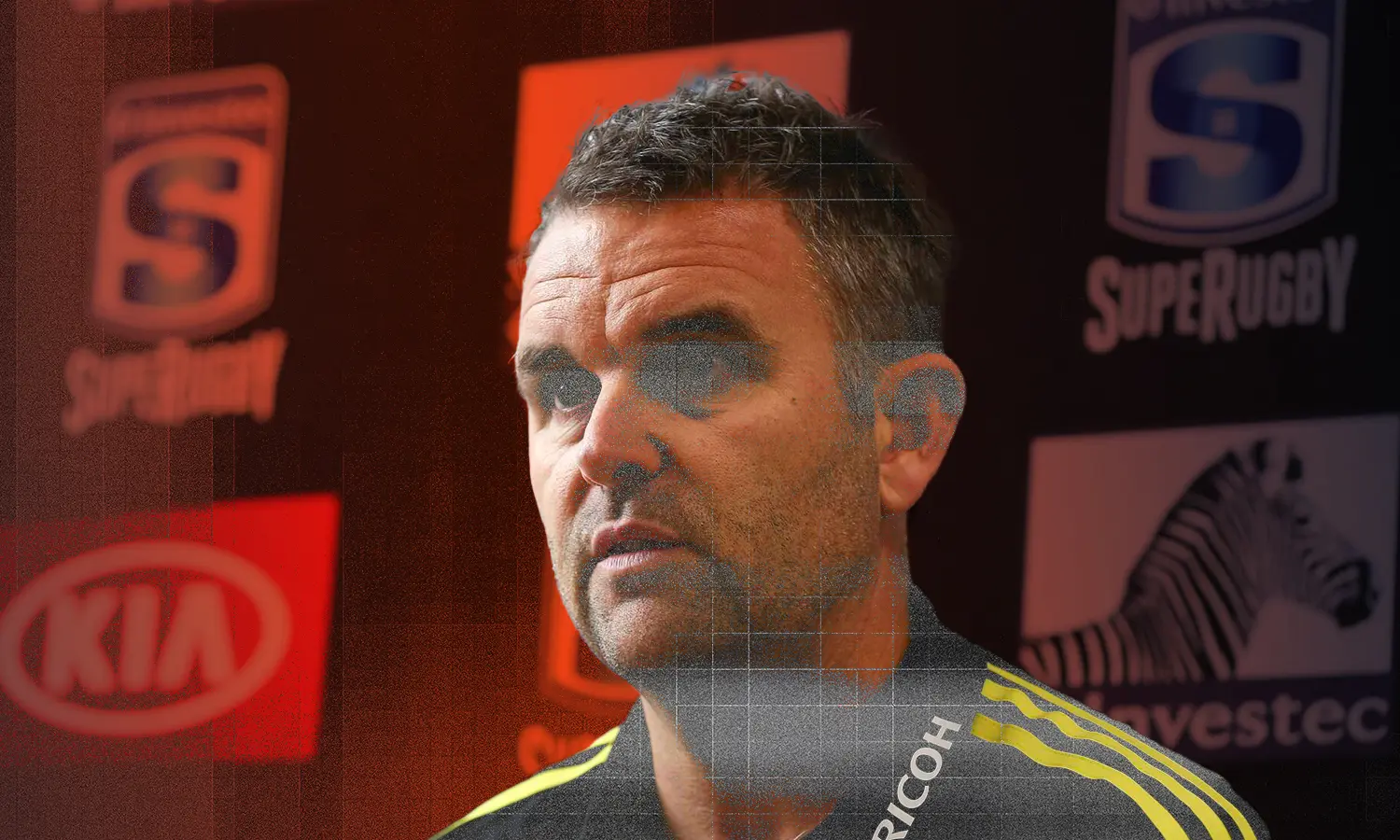
So there’s a new CEO.
Avan Lee is the Interim CEO, sure, but he’s here for at least the next year, so as far as I’m concerned, he is the CEO. If he’s here for 12 months, he has a good chance of becoming CEO long term, but that will play out over the next year.
At the very least, Lee will be here to implement whatever The Review suggests, and he’ll have the space and remit to do just that. As an outsider with no prior connections to the province, he’ll be in a great position to cut a few Gordian knots without accusations of bias or historic axe-grinding going back to the 2000s, or long before it, depending on how long in the tooth you are.
When Munster were officially made a professional entity in 1995 — and I’m using “officially” very loosely — nobody actually sat down and designed the thing. That, to an extent, was the first problem.
The IRFU didn’t want professionalism at all. On the eve of the 1995 World Cup, with every dog on the street aware of what was coming, the union put out a statement recommitting itself to the amateur game. Two months after the final, on 26 August, the IRB declared the game open anyway, and Lansdowne Road was caught with its trousers around its ankles.
So what did they do? The bare minimum, and slowly. For that first season only the internationals got paid. There was a one-year moratorium on payments to provincial and club players, and the match fees that eventually trickled down meant a Munster player who featured in all six games that year was in line for just under £3,000. Not a small amount of money in the mid-90s. Today, that same money is worth €7,300, more or less, which might be half of a modern appearance fee.
Jerry Holland coached the side, and Pat Murray captained it. Both were amateurs, and both had day jobs.
The decision to make the provinces the professional units wasn’t some grand strategic vision either. Brendan Fanning has told the story of ringing Bobby Deacy, the IRFU’s honorary treasurer at the time, and getting the gist of the union’s thinking: we’re lucky we already have four provinces, so we don’t have to go inventing franchises. The AIL clubs made a brief play to be the professional model. The union said no, picked the provinces, and then didn’t really resource them properly.
It’s hard to overstate how little anyone cared. Munster’s first-ever European game, against Swansea in November 1995, was played on a Wednesday afternoon because Thomond Park didn’t have floodlights. Roughly 5,000 people turned up. Six months earlier, 6,500 had watched Shannon and Young Munster grind out a 3-3 draw in an early round of the Munster Senior Cup. Liam O’Callaghan, who wrote Rugby in Munster: A Social and Cultural History, was at the Swansea game and remembers the crowd spending most of it talking about the previous weekend’s club fixtures.
And that’s before you get to the politics. In Limerick there was real resentment about a perceived Cork bias in selection — players from the working-class Limerick clubs felt they had to be twice as good to get a look-in (ask Ger Earls). Munster was, at best, a representative side you were picked for. Your club was who you were. You were Shannon. Or Con. Or a Cookie. Or whatever. Munster came after.
That’s the foundation we’re still building on. A professional club bolted onto an amateur branch structure, with two cities, two grounds and two sets of grievances. Garrett Fitzgerald arrived in 1999 and, through sheer force of will and a team that started winning, held the whole thing together for twenty years. When you’re winning Heineken Cups, nobody asks who sits on which committee or why. Sure, there was still wrangling over which stadium got to be the main one (and the capacity increase and investment required) strokes pulled and compensated for, more grudges formed, more wrangling over where the HPC would be built but being the biggest club in Europe for close enough to a decade will move the noise away from the mainstream.
The noise never really stopped, but once the winning did, it’s only gotten louder. That’s before you get to inter-club bickering and grudge holding.
I wrote last time that a Munster CEO can’t win on this front. You’re too Cork, or too Limerick, or not Cork or Limerick enough. Flanagan got further than most because, for all that he was a Cork man, he had no real rugby ties to either side of the divide. Lee goes a step further again. He’s a Kiwi, and the only club he’s ever lined out for is Clontarf, which has no stake whatsoever in who gets picked from Cork Con or Shannon or Young Munster or UL Bohs or whoever. Nobody can credibly tell him he’s too Cork. Nobody can tell him he’s too Limerick.
Thirty years on, some of those knots are still tied. Some of them have just been tied tighter as one grievance knocks into a grudge and a promise that next time, the next decision, will go our way.
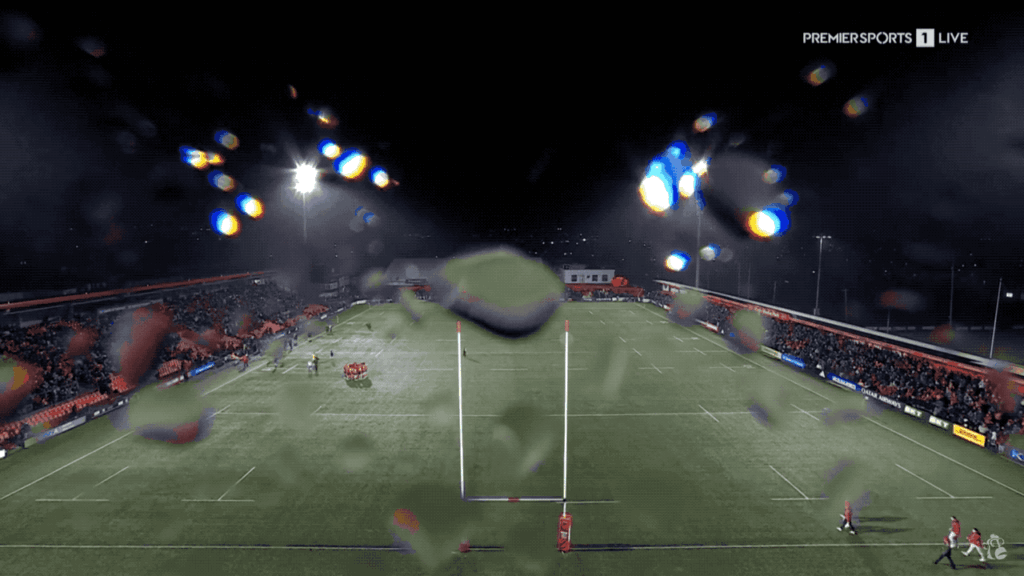
Which is why an outsider, for now, and maybe for the next few years, matters. Lee doesn’t have a dog in the fight. He wasn’t in Thomond Park on a Wednesday afternoon in 1995, and he doesn’t have a side of the Cork–Limerick line to stand on. He’s the first person in a long time who can look at the whole structure and ask the question nobody inside it has been willing to ask.
So what does he find when he does?
He’s already been on the phone to Peter O’Mahony and Donncha O’Callaghan, and he’s said publicly he wants people like O’Mahony back inside the camp. Inside the tent, you might say. That’s more (public) outreach in a week than we got in some full seasons under the previous CEO, and it’s exactly the kind of thing you can only do cleanly when nobody suspects you of picking a side.
Inside the tent
Let’s be honest about this, because nobody else in the conversation seems willing to be. For the best part of a decade, a fair chunk of the noise around Munster hasn’t come from Leinster, or the IRFU, or the English and French press. It’s come from our own. Donal Lenihan, Alan Quinlan, James Coughlan, Conor Murray, and now Peter O’Mahony himself. There’s more that I’m forgetting. Simon Zebo and Jerry Flannery are the notable exceptions.
Lads who wore the jersey, some of whom coached in the building, lining up on podcasts and TV panels to tell everyone what’s wrong with the place.
Some of it was fair. Some of it was right. Some of it, as I’ve said before, jumped the gun by a distance — Quinlan’s “root and branch” call in 2016 was followed by three straight Champions Cup semi-finals. Some of it was axe-grinding, with an intended audience of maybe 20 blazers that thousands of people got to read, oblivious to the subtext.
Once it’s said, though, it’s said, and it gets clipped, and it gets shared, and it lands in a dressing room full of players who have to go out and play the following Saturday with it ringing in their ears.
That’s the bit that sticks with me. O’Mahony, as a player, would have hated this. He’s the last man you’d expect to sit quietly while a former player cashed a media payment for telling the country his team was falling apart. He’d have used it as fuel, sure, but he’d have been furious about it first. So it’s a fair question: how do you bring people back inside who’ve spent years (in some cases) pissing in from outside?
I think you do it anyway.
The pundit economy rewards heat. It always has, but it’s worse now, with twenty podcasts a week feeding off each other’s clips. If you’re an ex-pro with a microphone and an opinion on Munster, the honest, measured take gets a fraction of the reach that “the place is badly run” gets. I don’t think most of these lads are acting in bad faith. I think they love the place, they’re frustrated, and they’ve been handed a platform that pays better the angrier they sound. That’s a structural problem, not a character flaw, and you don’t fix structural problems by sulking at them.
Garrett Fitzgerald’s solution was aura. Nobody dared, so nobody did. Lee can’t do that. He’s been in the job for about five minutes, and nobody in Munster owes him anything. What he can do is change the incentives. Give a former player a real role — not a ceremonial one, a role with responsibility, either implied or directly attached — and suddenly the criticism has a cost. You can’t go on a podcast and slate a decision you were in the room or on a call for.
Well, you can, but you’ll only do it once.
There’s a risk, obviously. Bring the critics into the tent purely to quieten them, and it looks like you’re buying silence. People can smell that a mile off. The point isn’t to stop people disagreeing. It’s to make sure the disagreement happens in the tent, and not in newspaper columns.
A united Munster is a juggernaut. I said that last time, and I meant it. But you don’t get there by asking everyone to stop talking. I think you get there by giving them something to say yes to, even if the ask itself is a courtesy.
Isn’t this just “jobs for the boys”, though?
It can be. Let’s not pretend otherwise.
Munster has never been short of people who’ll tell you the province is a closed shop. To be fair, there’s a version of “bring the legends back in” that’s exactly that: a few honorary titles handed out, a few seats at the right tables, and a lot of nodding. Everyone gets a lanyard, nothing changes, and the noise just moves from the podcast to the corridor. That’s not unity. It’s a truce — an expensive one.
So no, just having ex-pros inside isn’t the answer on its own. What matters is how they get there and what they’re there to do.
Jobs for the boys happens when the boys are handing out the jobs. A former player gets a role. He’s a former player, because he knows the right people, because his club needs a seat at the table, and nobody’s ever asked to justify it. It’s a compromise to a compromise to a compromise.
That’s the Munster everyone’s sick of. That’s where the Cork–Limerick bean-counting comes from in the first place.
This is where Lee being an outsider becomes important. He doesn’t have any boys. He’s got no club to look after, no old teammates to reward and no favours to call in from 1999. If he brings O’Mahony, or anyone else, into a role, the only reason he can credibly give is that the person is good at the job. That means it has to be a job with a defined remit, a person they report to, and a way of knowing whether it’s working. It’s not an ambassador, and it’s not a blazer.
If it’s done that way, the critic gets a real say and real accountability in the same breath.
I’d also point out that the most effective ex-player involvement doesn’t need a title at all. It needs a phone call before the decision rather than a press release after it.
That costs nothing, and it’s the bit that seems to have the highest return on investment.
There’s a practical limit here too. Munster can’t employ every ex-pro with a podcast slot. There aren’t enough roles, there isn’t enough money, and frankly there aren’t enough lanyards. Every season another batch retires, and a decent chunk of them end up behind a microphone somewhere. If the policy is to keep all of them sweet, the province ends up running a retirement scheme with a rugby team attached.
And it’s worth saying plainly: these lads already got their return from Munster. They were paid to play here, often across multiple contracts, some of them across a decade or more. That’s not a small thing. It was a professional relationship, with wages, bonuses, medical care, a platform and a profile, and it ran both ways. They gave the province their best years, and the province paid them for it. When the contract ended, the deal was done.
That sounds cold, I know. Rugby isn’t a normal business, as I’ve said before, and nobody wants Munster treating its legends like former employees who’ve handed back their swipe cards. But there’s a difference between respect and obligation. Munster owes its former players respect. It doesn’t owe them a job, a role or a seat at the table for life, and it certainly doesn’t owe them immunity from being disagreed with.
There’s another side to that ledger too, and it rarely gets mentioned. Why does a former Munster player get booked for a panel in the first place? Because he played for Munster. The badge is the credential. The profile, the reach, the media appearances and the after-dinner circuit were all built in red, in front of crowds that turned up for the province and not the individual. That doesn’t mean they owe Munster their silence (they don’t), but it does mean the relationship didn’t end when the payslips stopped. If you’re going to keep cashing in on the jersey, you can at least accept that what you say about it lands differently than it would from anyone else.
Lee himself admitted you’re never going to please everybody, and he’s right. So pick the few who’ll actually move the dial — the ones with something to offer beyond a name — and bring them in properly. For everyone else, the door should be open, the phone should be answered, and there should be a bit of honesty from the province about what’s going on so the vacuum doesn’t fill with guesswork and empty vessels rattling.
That’s it. That’s the deal.
Beyond that, if a former player or alickadoo wants to stay outside and keep pissing in, that’s his call. Just don’t expect Munster to keep handing him a fresh bottle of water.
The B-side of the last year has been the morale damage to the fanbase at large, which has had an impact on attendances.
It’s not the full story, of course, but there’s only so often you can open social media and see Munster In Crisis without it seeping in. In the last few weeks, for example, I’ve had a few conversations with people outside of the rugby bubble who, naturally, saw Peter O’Mahony’s comments and wondered why Munster would try to cut his contract like that?
When I pointed out that the IRFU had done the cutting — he was on a fully paid central contract and then informed he wouldn’t have one, despite going on to be Ireland captain that season — it landed a little like telling someone they got the big, controversial call right after they’d already left the ground fuming. Technically correct, and completely beside the point. They’d made up their minds.
That’s the problem in a nutshell. The facts don’t travel half as far as the headline does.
When James Lowe had the same thing happen last season — the IRFU wouldn’t put up its share of the top-up on the +1 year of his Leinster deal, so the extension never happened and he’s off to Japan — there was a legion of Leinster ex-pros lining up to pin it on David Humphreys and the union. So that’s where the blame stuck.
Same mechanism, completely different outcome. In Dublin, the story was the IRFU let Leinster down. Down south, with O’Mahony and Murray, it became Munster let their legends down, even though both of them were coming off IRFU national contracts, and the province was left to pick up half the tab afterwards.
The difference wasn’t the facts. It was who was telling the story, and which way they were pointing.
Leinster’s former players closed ranks and aimed outward. Ours, more often than not, have aimed inward. I’m not saying the IRFU deserves a free pass. It doesn’t, and I’ve made that case plenty of times. But if the people with the biggest platforms keep pointing at Munster, then Munster is what the punter in the pub, and the swing supporter deciding whether to buy tickets, ends up blaming.
To anyone outside the bubble, “Munster” and “the IRFU” are the same thing. Why wouldn’t they be? Nobody sitting down to their dinner looks at a clip of a Munster legend saying he was let down and stops to work out which line on which org chart made the decision. As I wrote last time, contracts, budgets and dispensation all run through the IRFU. That’s how Irish rugby is set up and has been since day one. But Munster wears the outcome either way. The province takes the hit for decisions it didn’t make, often couldn’t have made, and can’t really explain publicly without throwing the union under the bus. So it says nothing, and the silence gets filled in for it.
That’s just one story, too. Stack a year’s worth of them on top of each other — the redundancies, the Randle saga, the resignations, the contract rows, the bad results — and you get a drip-feed of Munster in crisis landing on people’s phones every other week. Even when an individual story doesn’t hold up, the accumulation does. People don’t remember the detail, but they remember the vibe.
And the vibe matters, because the vibe sells tickets. Or doesn’t.
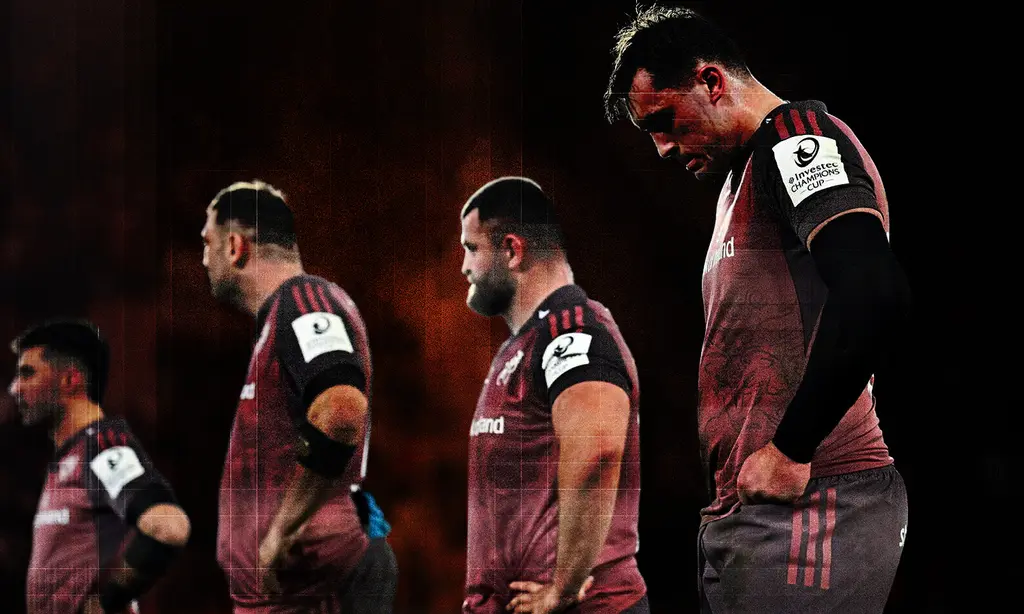
The diehards will turn up regardless. They always have, and they’ll be in Thomond Park in the lashing rain against whoever. But no club fills a stadium on diehards alone. The swing supporter is the one who brings the kids twice a season, buys a jersey at Christmas, and maybe takes a corporate box for work if things are going well. That person isn’t reading the Professional Games Committee minutes. They’re reading the general mood, and for a year the general mood has been that something’s wrong there. Why spend €40 a head plus parking and burgers on something that’s apparently falling apart?
That’s the real cost of the last year, and it doesn’t show up in any single news cycle. It’s the trust currency again. Munster runs on money and trust, and when the second one drains, the first follows it out the door — through the turnstiles, as it happens.
Again, that’s before you factor in the boring stuff like the cost of living right now, the cost of travelling to Limerick or Cork from pretty much anywhere outside of Limerick or Cork, and how easy it is to stay at home to watch the game on TV with your own food, your own drink and your bed less than 30 seconds’ walk away at full time if it’s been lashing for the week, as it so often is.
A winning team, as always, changes the sliders on that, and that’s what Munster have been trying to do. Wins, back-to-back, and important wins at home in Europe and interpros, are the way to build back attendances, albeit in the context of how tough it is to live week to week for too many people right now. Performances (and wins to go with them) make it attractive to pile into the car, or bus, or train, to brave the elements and watch Munster play in Cork or Limerick.
Avan Lee’s appointment is a great one, in my opinion, because he has all the recent relevant experience that you could possibly want. He’s got commercial experience, he’s got in-depth rugby experience in a directly equivalent role, and anyone I’ve asked about him, with no skin in the game, has told me that he’s an excellent appointment. It won’t be easy, but he seems like the right guy for right now, and that’s all you can ask for.
Even more than that, he’s a line in the sand.
As it’s become clearer that he’s been in the frame for this job for some time, this is an opportunity to leave the last year in the rearview mirror but, not just that, put a hard line under the simmering nonsense of the last 30 years. Do we want Munster to be successful, or not? Anyone who would prefer their own little fiefdom to be better off, even if it hurts Munster in the long term, needs to be left in the past to indulge their own version of shamateurism.
Much of the noise around The Review was focused on Ian Flanagan, Ian Costello and Roger Randle but, in reality, the scope of it went far, far beyond that.
Read the terms of reference, and it’s not a review of two men and one decision. It’s a review of the whole machine. The Board commissioned it to assess whether Munster’s governance, leadership, culture, engagement and communication, and organisational and operational arrangements are appropriate and effective. That’s not one appointment that went wrong. That’s everything, top to bottom.
It’s also not just the people on the payroll being asked. The views being sought cover playing and non-playing staff, and a broad range of others with a direct interest in how Munster Rugby is governed and run. In Munster, “others with a direct interest” means the Branch, the committees, the clubs, and every fiefdom I’ve just spent a few thousand words talking about.
That’s the bit that matters. The Randle saga was the trigger, but it wasn’t the cause. It was what happens when a structure that was bolted together in a hurry in 1995 gets asked to make a fast, high-stakes decision under pressure, and nobody’s quite sure whose call it is, who checked it, or who answers for it when it goes wrong. Martin Kelleher said the review was there to strengthen governance, accountability and decision-making. You don’t say that about an organisation where those three things are working as intended.
Of course, it’s more difficult than running the other provinces. Leinster is Leinster but, more accurately, it’s Dublin. Ulster is Belfast. Connacht is Galway. Munster have always been, and must always be, a balance between two rugby heartlands. That means what works in Leinster or Belfast will not automatically translate to Munster in 2026.
It’s also, crucially, not Munster marking its own homework. The conclusions are for the independent chair, the steering group and the reviewer, not for the executive or management. Nobody inside can water it down before it lands, and nobody inside can pretend it says something it doesn’t.
So when it does land, Lee will be holding the first independent look at how this place is actually wired in a very long time. He’ll have a document that names the problems, written by people with no axe to grind. He’ll have the mandate to act on it.
That’s the line in the sand.
So who’s willing to step over it?
Ultimately, we have to remember what this tent is. At its best, Munster is one of the best — if not the best — bandwagon to be on in this sport.
Think about what it looked like when it was rolling. Liam O’Callaghan tells a story about the run to the 2000 Heineken Cup semi-final against Toulouse. He walked into the Munster Branch offices on Penrose Quay in Cork and bought tickets over the counter. No queue, no fuss, no website crashing. Twelve months later, for the semi against Stade Français, the queue went all the way down to the train station.
Twelve months. That’s how fast it happens when it happens.
Tom English made a similar point about the early 2000s: you had people going to Munster matches who’d never watched a game of rugby in their lives, purely because everyone else was going. Mothers, grandparents, lads who’d only ever followed hurling, kids who knew more about Anthony Foley than they did about the Leaving Cert. They weren’t there because of the AIL, or the Branch, or which city got the bigger stadium. They were there for Munster, the whole of it, the idea of it.
That’s the tent. Not a committee room, not a Branch structure, not a club’s seat at the table. It’s the supporter who drives three hours from west Kerry or north Tipp, the kid in the oversized jersey, the man in the pub in Boston who’ll tell you about Munster vs Wasps in a half-built, rain-soaked Thomond Park in 2008 whether you asked or not. That’s who it’s for. Everyone else, me included, is a steward at best.
And for the best part of a decade, too many of the people who should be minding the tent have been arguing about who owns the pegs.
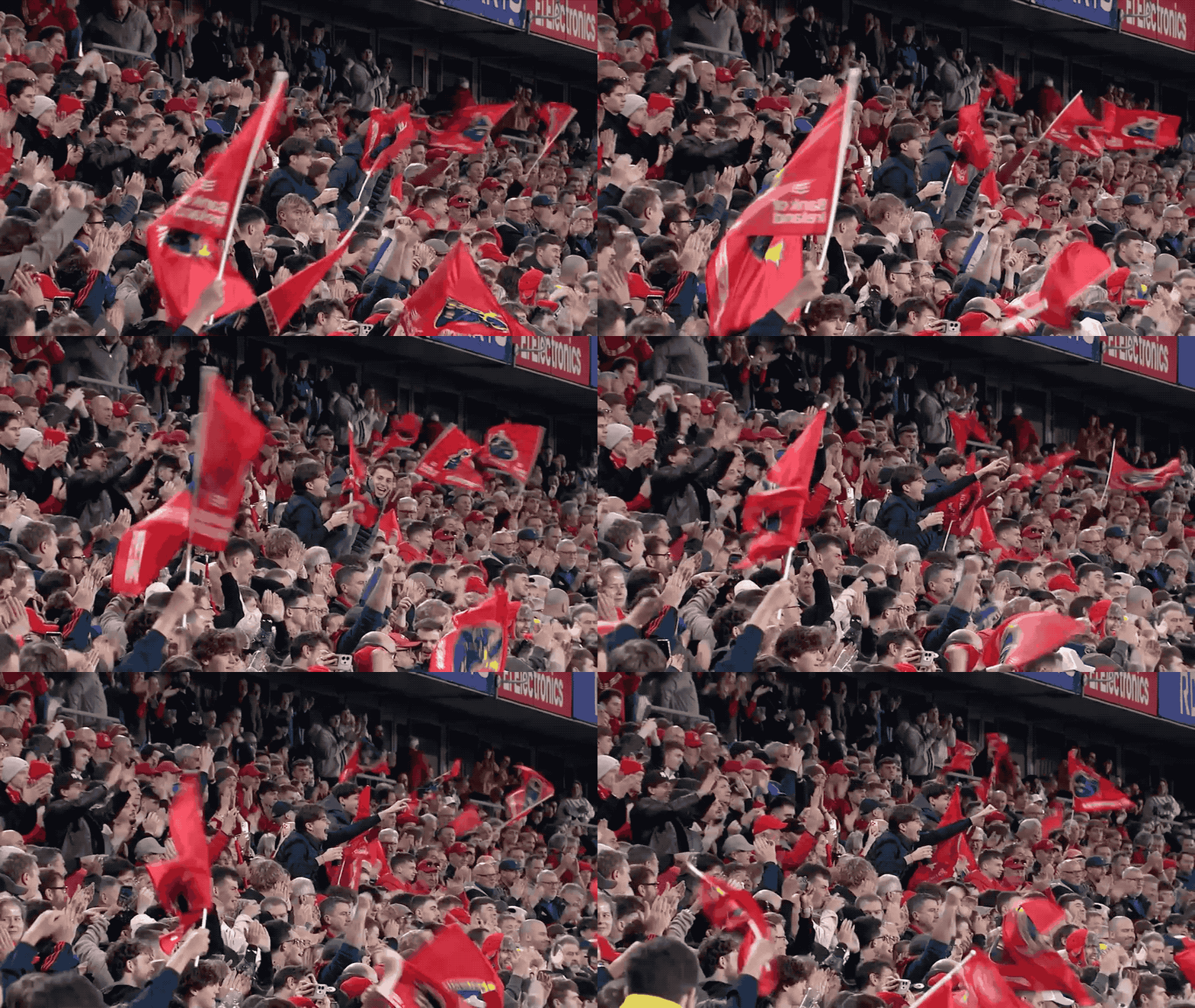
The bandwagon doesn’t need much to start rolling again. It never has. It needs a team people believe in, a club that looks like it knows what it’s doing, and a few big days at home where the noise does the rest. The diehards will push it. The swing supporters will jump on. The rest, history suggests, takes care of itself.
So the question for everyone with a stake in this — the clubs, the Branch, the ex-pros with microphones, and yes, the lads like me with a laptop — is a simple one.
Do you want to help it move again? Or not?
