


When Munster officially announced that Ian Flanagan would depart his role as CEO at the end of October, I can’t say I was too surprised.
No, not because Peter O’Mahony was critical of him, indirectly, on a podcast. Sure, it was a great podcast — they’re all great podcasts — but I think this decision was in motion for some time. If not directly announced or signalled, then certainly percolating in the background.
Rumours were rife back in April/May that the review, such as it was, was the precursor to Flanagan departing the province, but it’s unclear right now if that was the driving reason behind his decision to leave. I don’t know what the review will conclude or suggest. I also don’t think you need it to explain why someone would want out.
He could have easily decided that the personal and professional pressure that he was subject to — both behind the scenes and in public, both directly and indirectly, for the last few years — was not something he wanted to deal with anymore.
Being in the eye of a media storm is always bad. Being in the eye of a Munster off-field media storm is levels of magnitude worse, because the scale is large enough that it can’t be ignored professionally, and hyper-local enough that it always finds a way into your regular life.
They say “don’t read the comments,” and you shouldn’t, but you always do, or, if you somehow manage to avoid that psychic damage, someone belonging to you will.
I wouldn’t want to deal with it anymore either, were I in the same position. You need thick skin in sports — be that on-field or off — but nobody’s skin is that thick.
Then again, perhaps the review is quite damning of the CEO or, at the very least, the organisation he has led since October 2019.
Without wanting to pre-empt the review — which I haven’t seen, to be clear — it’s deeply unlikely that a review of that nature comes back with a gold star and a smiley face.
Clearly there were problems — there are problems — that exist in the set-up. What they are, and how they came to be there, has a root somewhere, and all roots lead back to the CEO the harder you pull at them.
That’s not a dig at Flanagan. It’s just how the job works. The CEO sets the structure, signs off on the senior hires and decides what the organisation prioritises, and when something goes wrong in any of those areas, the buck stops in their office, whether they made the specific call or not. That’s the deal you sign when you take the top job. You get the credit when it goes well, and you wear it when it doesn’t.
So if the review does land heavy, I don’t think anyone who’s been paying attention will be shocked. The more interesting question is what comes after it. A new CEO walking into a setup that’s just been told, in writing, where it’s falling short is either the best inheritance going or the worst. Which one it turns out to be depends on how the review itself is applied and who’s doing the applying.
In the last few days, I keep coming back to the idea that Ian Flanagan was the right CEO, with the right CV, in the wrong place. When he was hired, he came in with a really strong commercial track record. He’d been Commercial Director at Leicester City between 2012 and 2016, the same stretch in which the Foxes won the Premier League.
To be fair, the commercial department didn’t score many goals in the title-winning season — that was Jamie Vardy — but you won’t find a better line on a CV than that. He’d been Global Head of Football at Treble Group since 2016, and he was a Cork man coming home to replace Garrett Fitzgerald, who had retired after 20 years in the job.
On paper, it was a smart appointment. I thought so at the time, and I’d probably still think so if you handed me the same CV tomorrow.
It was long suggested that Munster needed to improve their commercial operation to compete with the financial juggernauts in France and England of the era, so a CEO who specialised in just that, with a background in sports specifically, was the smart play to make and, because he didn’t have any specific rugby connections, despite being from Cork, there was little internal strife (relatively speaking) between Cork and Limerick rugby in what was the first change at the top in 20 years.
Replacing Garrett Fitzgerald was never going to be easy. That’s actually underselling it. Fitzgerald was as close to irreplaceable as it’s possible to get. He’d been the Munster CEO since 1999 and was there when Munster became… Munster. It wasn’t just his tenure either — it was his aura.
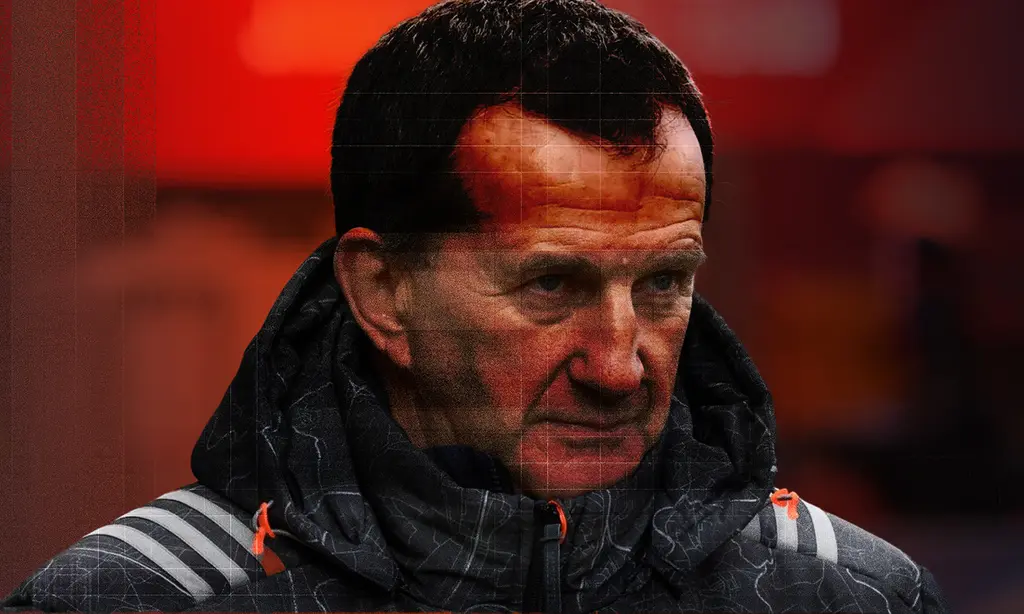
You’d never have dared fuck with Garrett Fitzgerald, not for a split second, be it on your best day and his worst, whether you were a legendary player, an official, a sponsor, a journalist, or the man on the street. Whether Munster were doing well or not, he had a feel for what the province needed at the time, and whether that ended up being right or wrong, no one could doubt his experience because he’d been there and done that.
Only in the dog days of 2015/16 did anyone — Alan Quinlan, specifically — suggest a “root and branch” examination of what the province was doing after a particularly dire loss to a 14-man Stade Français in Paris during a particularly dire season. There was no such review. It wasn’t really needed. I think, at the time, what we were seeing was a team deep in transition from one generation to the next, and results followed the usual pattern as they do in all team sports when that happens.
Instead, Munster and Garrett Fitzgerald hired Rassie Erasmus, and that started the latest cycle of the club that only really ended fully in June 2026 when all the coaching decisions and reactions connected to Erasmus and his abrupt departure unravelled. For the next three seasons after that decision, Munster made the semi-finals of the European Cup, suggesting Quinlan might have jumped the gun by quite a few steps. As he knows from his time on Ireland’s Fittest Family, you can’t do that, but that’s the media game. Once you’ve said it, it’s out there, and there’s no taking it back.
So you could fill the role of CEO, sure, but not the role that Garrett Fitzgerald embodied at the province.
In some ways, Flanagan came in trying to do the equivalent of replacing Alex Ferguson at Manchester United.
Flanagan took up the post in October 2019, so within five months his first big job was running a business with no gates, no hospitality and sponsors running for cover because of the pandemic. Name a worse first year for a commercial-focused CEO. The world rugby came back to after the pandemic was a different one — smaller, harder to get people back into stadiums, but with costs at the same level as before the pandemic, if not increased outright. His first three years were negotiating that pandemic, which I think is something worth remembering.
Beyond that, so much of what matters on the rugby side, like who gets contracted and on what terms, runs through the IRFU and the IRFU’s dispensation. Munster’s budget itself is heavily influenced by the IRFU, and it was cut by approximately €500k a year three seasons in a row between 2020 and 2022.
As a result, many of the levers you’d pull at a Premier League soccer club as an owner or CEO, for example, simply aren’t there in the same way. But there was a fundamental contradiction buried in there too — Flanagan wasn’t a rugby man, coming in to replace one of THE great rugby men in the history of the province. His CV was great, his experience as a professional was exactly what was required, but he was coming in to replace someone who was, in reality, far more than a CEO in the traditional sense of the word. He was a businessman, a sports psychologist, a unifier, and an enforcer.
Ian Flanagan would learn this pretty quickly into his tenure.
I said earlier in the year — either in an article, podcast or live stream, I don’t remember and can’t be bothered to search — that Ian Flanagan’s issues begin, and mostly end, because he is CEO in the traditional sense of what that means. Munster Rugby is both a business, in that same traditional sense, and also quite clearly not a traditional business at all.
No rugby club is, not really.
Take the redundancies. He told staff they needed a package of voluntary redundancies on a Teams call after flying back from South Africa, where Munster were on tour. Cost-cutting in professional rugby isn’t a scandal in itself; nearly every club in the world is at it. In the corporate world, redundancies get announced in far colder ways. Plenty of companies have done it by email. By those standards, a Teams call about voluntary packages is almost the personal touch, but that wouldn’t fly here. And it didn’t. It made him seem out of touch.
When he was asked about it afterwards, he rejected the idea that Munster was badly run and argued that club rugby is “a really fragile business model”. That’s true. It’s also exactly the wrong thing to say in public when the people who’d just been on that Teams call are reading it.
And then there was Roger Randle. The attack coach appointment drew heavy criticism; it was later ended by mutual agreement, and Flanagan took full responsibility for the original decision. Credit where it’s due; he owned it. Killian Keane, Mick O’Driscoll and Billy Holland stepped down from the Professional Games Committee off the back of it, but, more importantly, as far as Ian Flanagan was concerned, resignations from the Commercial Advisory Group followed. That’s his domain.
There were a few other issues — there always are with the top man. In a way, you can’t win when you’re the CEO of an organisation like Munster because someone, somewhere, will have a problem with you and enough friends to make it stick. You’re too Cork, or too Limerick, or not Cork or Limerick enough. You’re either too ostentatious, or too tight. You’re either too talkative, or a frigid dud. You’re either too standoffish and intimidating or too crawly; too in love with the prawn sandwich brigade, or a mullocker. CEOs don’t get the benefit of a middle ground when it comes to how they are perceived.
Ultimately, you are who most people think you are, whether that’s right or wrong.
Which brings me to what I think the real issue was. Gerry Thornley made the point in the Irish Times that Flanagan rarely tried to make his or Munster’s case publicly, unlike his predecessor. Fitzgerald didn’t say much either, but nobody ever doubted who was in charge. Flanagan’s silences filled up with other people’s opinions. You might well say that being so visible in the world of podcasts human-centipeding each other’s content twenty times a week, and omnipresent social media pressure isn’t a good idea either, but I think there was a middle ground there.
None of that makes him a bad person. He absolutely cared about the place, and as much as I’ve heard people complaining about him, I’ve heard more again who thought he was a grand man to work for. He had successes, too. The DHL sponsorship, the Cork HPC and offices finally being built to take the staff out of prefabs, he kept benefactors on board, got great value out of Virgin Media Park and Thomond Park as concert venues, and we won the URC title.
But Munster runs on two currencies: money and trust. He was hired to fix the first one, and he ran out of the second.
When people talk about the province being “badly run” — which I don’t agree with — what they’re actually talking about is “there is not enough money”.
That’s ultimately the be-all and end-all.
If there was enough money floating around so that Conor Murray and Peter O’Mahony could be easily looked after on whatever split contract they liked for however long they liked, while also strengthening the squad in other areas post-2023 World Cup, that’s two media cycles that likely never happen.
If there was the dispensation to hang onto RG Snyman and Jean Kleyn — there was the money for both, but not the approval from David Nucifora — or if Snyman chose to go to Bath, say, instead of Leinster, that’s another round of buffeting criticism that doesn’t happen.
If, if, if.
The reality is that Munster’s money comes from a small number of places, and almost all of them have shrunk or stalled at once. Broadcast income is one. Flanagan himself blamed the current EPCR and URC broadcast deals as a root cause of the financial difficulties, and he’s not wrong. Gate and hospitality are another. Munster haven’t had a home Champions Cup knockout tie since the quarter-final exit to Toulouse in 2022, and those were the days that used to pay the bills for most of a season. On top of that, all of this is set against costs that haven’t gone anywhere but up.
So no, I don’t think Munster were badly run in the way people usually mean it, as some sort of chaotic, rudderless mess. That’s probably what you’ve heard, but it’s not the full picture.
They were short of money in a sport where nearly everyone is short of money. But if you’re seen to be badly run by enough people, that mud will stick if results on the field stay broadly the same way, and they have. After last season, in particular, on and off the field, it’s a hard perception to shake.
A lot of what Flanagan was blamed for was outside of his, or any CEO’s, control, and I think that someone more popular with the rugby side of the business — which is most of it — could probably have ridden it out. That immediately reads as unfair, right? But ask yourself this: if everything played out exactly as it has for the last three years with [insert former Munster legend here] as CEO, is there as much heat on the perceived running of the club?
I think I know the answer.
So what does the next one need?
Not a better CV. Flanagan’s CV was excellent, and it wasn’t enough, ultimately. The next CEO needs to be someone Munster people will believe in. If that same person can halt the legion of ex-pros and AIL clubmen pissing into the tent — ideally they’d all be pissing out of it — even better again. A united Munster is a juggernaut, but it’s been divided for too long.
That’s a much harder thing to put in a job spec. For a start, “fix the orientation of metaphorical urine” doesn’t read well on LinkedIn, and even if it did, you can’t really interview for aura. But when the review lands, it’ll hand whoever comes next a list of what isn’t working. How they act on it in the first six months will decide whether the trust account starts filling up again or stays in the red.
Get that right, and the money tends to follow. It always has down here. The benefactors, the sponsors, and the people who renew their season tickets in a bad year back people, not business plans. A winning team helps too.
As for Flanagan, I hope he gets a bit of peace. Seven years in the eye of a Munster storm is a long time. Whatever the review says, he’s earned a few months of not reading the comments.
