


What’s your highest praise?
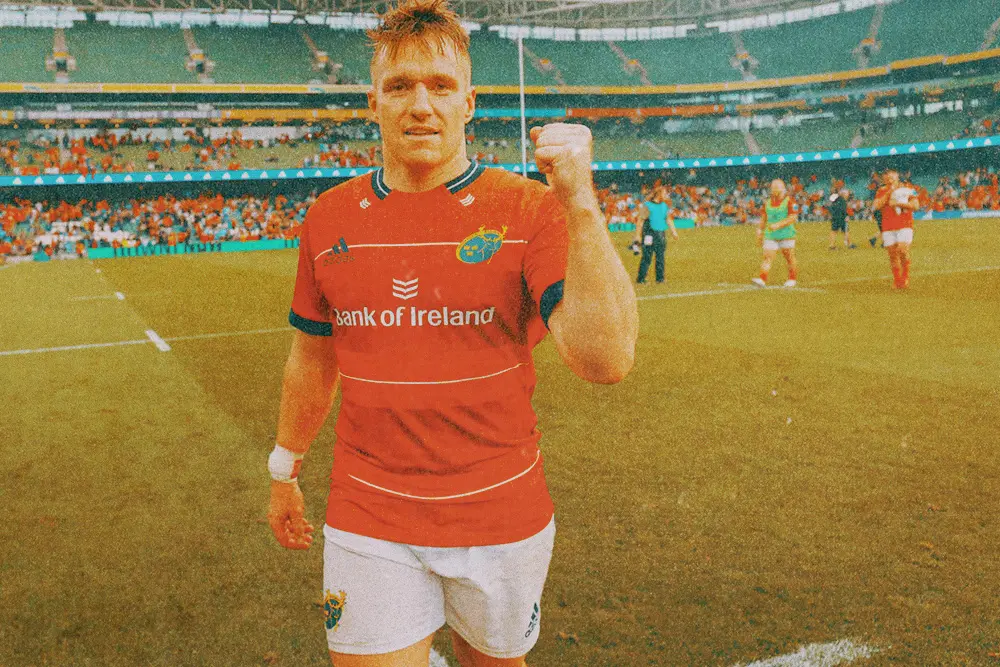
For me, it’s always what you’d love to hear about yourself from someone else when they didn’t know you were in the room. With that in mind, Rory Scannell is a player who, at the end of his career, I can say deserves what I would consider to be the highest praise, and it’s this.
Rory Scannell got 100% out of his rugby and physical ability to play at the level he did for as long as he did.
What else can you ask of the man? He will leave Munster this July. He hasn’t confirmed a retirement as of yet, but what we do know is that for 12 years and 200 Munster caps, Rory Scannell gave absolutely everything of himself to play at the highest level of club rugby for one of the biggest rugby clubs on the planet.
Every single season since he broke through for Munster, Rory Scannell has stood across from players who were physically bigger, more powerful men, and probably better athletes in general, to tell you the truth of it. But he never once stood across from a harder worker or a bigger grafter.
For me, that is the ultimate compliment you can pay a player who has played 200 professional games for a province like Munster in the modern era.
Don’t confuse that for damning a guy with faint praise either; in his prime, Scannell was a very good centre at a European Cup level and, were it not for guys like like Aki, Henshaw and McCloskey, I think he’d have would have wound up with another 10 or 11 caps for Ireland to go with the three he got in 2016. Maybe a bit more.
But we’re getting ahead of ourselves.
Born To Play #10, Destined To Hit It Up
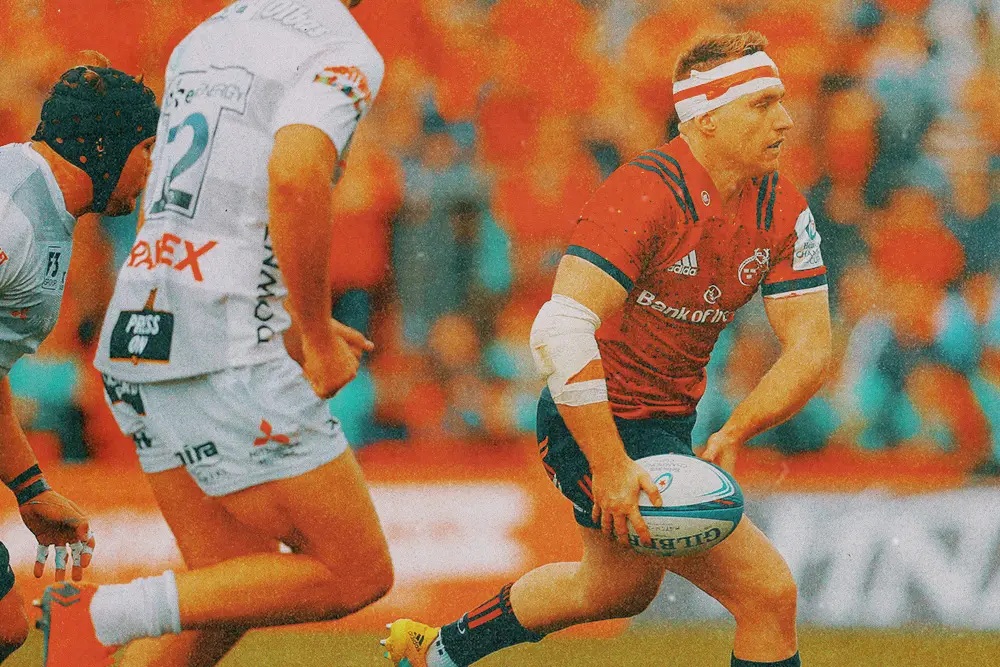
Rory Scannell has always been a throwback midfielder. In the mid-2010s, when most #12s were lads who probably would have been flankers if they broke through ten years earlier, Scannell was more John Kelly than Jamie Roberts. For much of his early career in the Munster academy and the AIL with Dolphin, Scannell played a lot of his rugby at #10, and that’s always informed his playstyle at senior level. At 5’10” and around 95kg for much of his career, Scannell was always going to get selected for the consistency of his skillset and performances, rather than for any raw explosive athleticism. Still, I’ll add here again that at his physical peak, he punched well above his weight on both sides of the ball.
Scannell’s core skills were his fantastic left boot, his excellent passing range off both sides and his game IQ. He was more than comfortable playing as an alternate #10 in any Munster system, and arguably his ascension from academy player to Munster’s starting #12 in 2015/16 had as much to do with his ability to take playmaking pressure off Ian Keatley as it did an injury to Denis Hurley.
Munster’s attacking system didn’t work at all that season, but when it did, Scannell was usually at the centre of it, especially in the latter half of the season when he developed a real understanding with Francis Saili at outside centre and Johnny Holland at #10. He ended the season with a real exclamation mark against the Scarlets in a high-pressure game when Munster had to win to secure European Rugby for the following year.
He scored two and assisted one in a blockbuster performance to top off what was a genuine breakout season.
A few things you’ll recognise there – the Scannell step and push off the left, that stocky, scrappy style in contact, and the popped short pass. They were all staples of his game as he pushed through the following seasons.
His 2016/17 was the perfect follow-up to his breakout year, where, under Rassie Erasmus, he was practically an ever-present with 29 appearances across the season, 24 of those being starts, where he started every single Champions Cup pool game and knockout up to the semi-final stage. He earned three caps for Ireland that summer during the Lions tour and properly established himself as a guy who firmly belonged at this level.
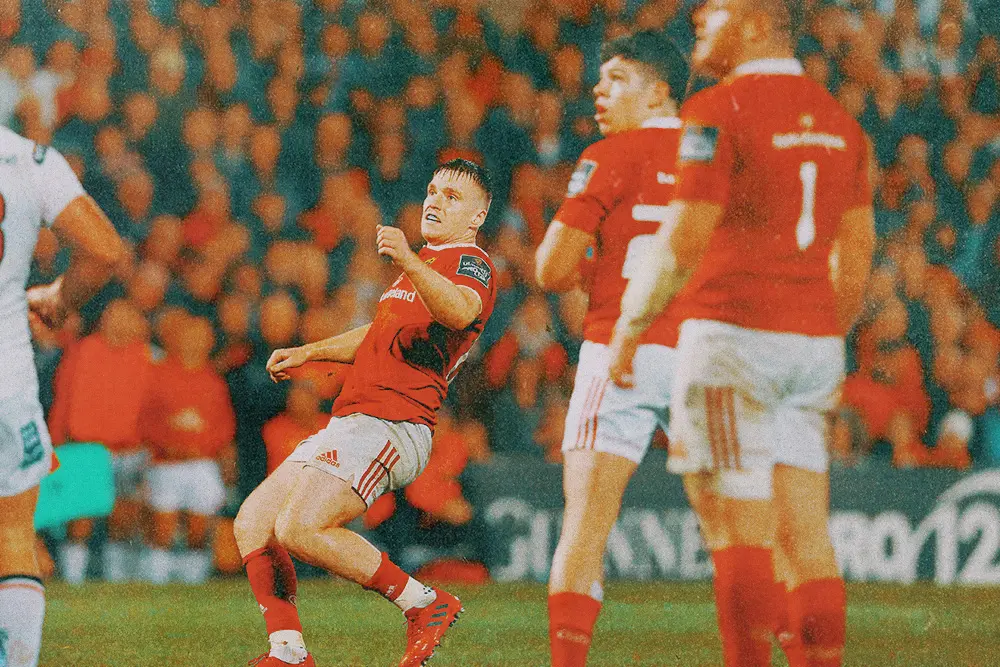
2016/17 was probably Scannell’s most consistently high-level season, and I don’t think it’s a coincidence that it was his only one as a core starter where there was true consistency at #10 for the entire season. Playing outside of Bleyendaal, Scannell was a consistent link to what Munster wanted in the backs from an attacking perspective, but, more importantly, he was an excellent kicker and intelligent defender in Neinaber’s nascent overlapping blitz defence*. Again, not the biggest or heaviest hitter, but incredibly dependable.
*Weirdly, I think Scannell provided a lot of the template for Lowe’s usage at Leinster under Neinaber in the last two seasons, but I’ll never be able to prove that.
It was around this time that Scannell started to stack on more size and became visibly stockier and bulkier as he moved into his third full year as a core starter. 2017/18 was a difficult one for Munster as Erasmus left halfway through the season to be replaced by Johann Van Graan. Scannell’s usage this season changed as Munster’s defensive system altered slightly, but Scannell did his usual job of keeping everything in that backline ticking over, with Chris Farrell being used as the primary ball carrier in midfield when he was fit. Rory did a little bit of everything that year and established himself as a valuable “glue guy”, especially with all the flux Munster were experiencing at #10.
Bleyendaal’s injury issues returned after one full season without them, and Munster rotated between Keatley and the returning JJ Hanrahan for much of the season, to mixed success. Scannell was, once again, Mr Consistent for Munster, but that does him a disservice in a way. He was consistent in a Munster backline that was completely inconsistent. We had obvious fireworks in the back three with Conway, Earls and Zebo, alongside a streaky Alex Wootton who was playing the best rugby of his career, but we weren’t great at utilising them in a system that was half-Erasmus/Neinaber, half-Van Graan. Both systems were similar – it was why Van Graan was hired – but teams had a full season of tape on Munster at that point, and had found ways to stymie our kick pressure system. More on that later.
That consistency saw Scannell added to the 2018 Six Nations squad, but he wouldn’t make his way into a match squad. However, it was this season where Rory Scannell produced an incredibly high-level performance and, arguably, the best of his career in a European Cup knockout game at home to Toulon.
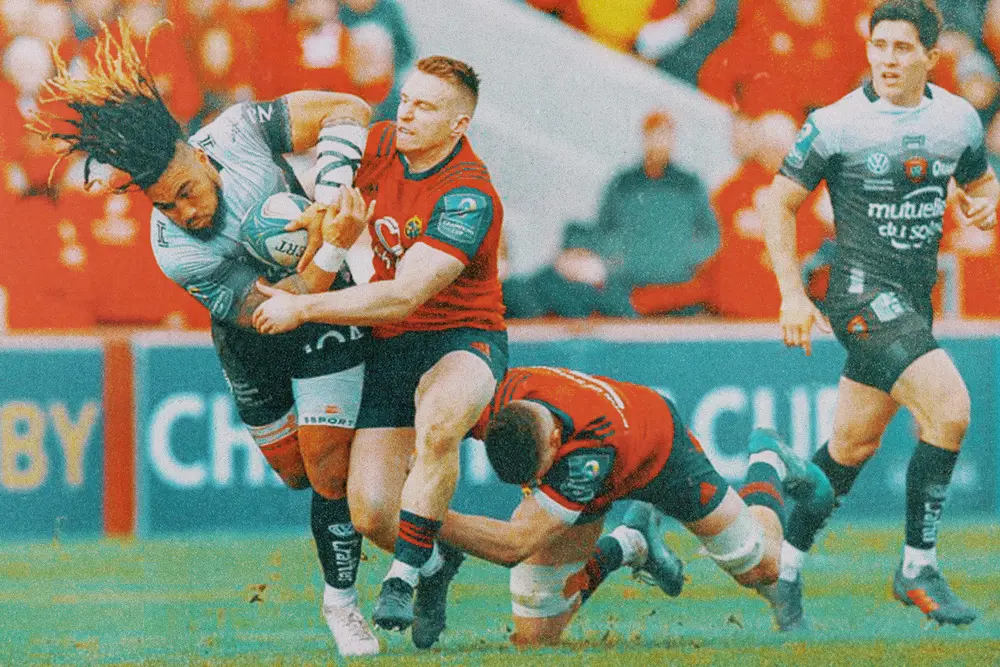
[…] Rory Scannell had a simple task in description – stop Nonu and Bastareaud. When you put it like that, it almost seems easy, doesn’t it? It’s anything but easy. Both [Scannell and Arnold] faced the biggest challenge of their young careers when they lined up against as big and as powerful a midfield duo as you could hope to see.
Both men came through that challenge with flying colours. Rory Scannell was as tough as they come on either side of the ball and didn’t put a foot wrong in defence all afternoon.
The Wally Ratings :: Munster vs Toulon, 2018
Rory Scannell and Sam Arnold vs Ma’a Nonu and Mathieu Bastareaud is probably the biggest name-for-name mismatch you could get in the European Cup that season on paper. On grass, they showed that it wasn’t about star power or test caps when it came down to it, it was about fucking heart and grit and playing for the jersey like your life depended on it.
How far would you go? What line would you cross? For Scannell (and Sam Arnold) that day, there was no line. They tore into their opposite numbers – and everything else that moved – with no regard for names, status or their own personal safety.

It was genuinely inspirational. The classic Munster trope of a relatively unheralded guy turning into a giant in Thomond Park to repel a star-studded opponent on the big day. Rory Scannell was right at the heart of it.
Here’s that bomber step off the left again.

Bang. He was at it all day. The rest of the season didn’t reach that high-water mark of performance – for Scannell or Munster – but one thing was certain: Rory Scannell was a core starter for this team, and he was genuinely unlucky to miss out on Ireland’s tour to Australia that summer.
That bad luck with Ireland selection is worth looking at for a moment because here, in Scannell’s peak years as a player, role build and athlete, he was playing in the same position as Bundee Aki and Robbie Henshaw, who would go on to become multi-tour test Lions. He was also competing with the 6’4″/114kg Stuart McCloskey, who offered Schmidt and, latterly, Farrell, the kind of physical heft in midfield that would soon start to bite at Scannell at club level.
Even then, his consistency and professionalism and raw system fit saw him become the youngest player to reach 100 caps for Munster in 2019 at just 25. In fact, in his first four seasons as a professional, he racked up 105 Munster appearances and played an average of 26 games a season, almost always as a starter.
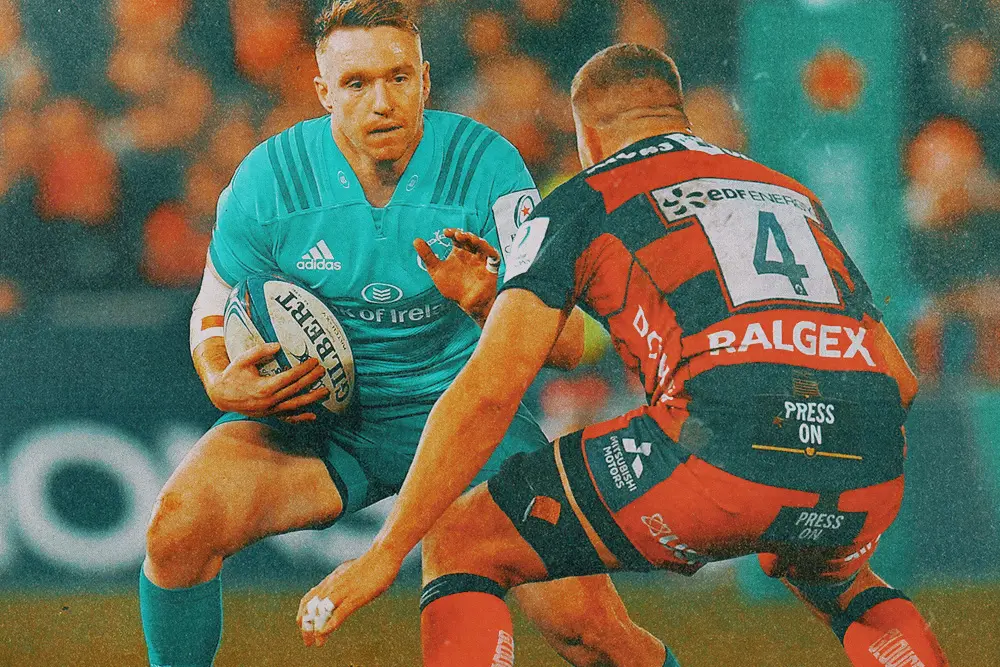
2018/19 was arguably the last full season Rory Scannell had as a core starter for Munster at #12, and it was another one marked by his usual traits: consistency. His performance levels were generally quite poor, though. At this point in his career, he was still very much a facilitator, but the fully expanded system under Van Graan saw him used as more of a direct ball carrier more often, which moved away from what I believed were his strengths at the time. A lot of this is directly tied to Munster’s signing of Joey Carbery, who Van Graan needed to hide in defence off the set piece in a way that didn’t have to be done with Hanrahan, Bleyendaal or Keatley. Carbery’s floating playmaker style also required more punch and physicality outside him off the set piece and during phase play, which saw Scannell’s role change.
I don’t think it suited him.
He was getting stuffed in contact on both sides of the ball far more often and, as a result, the performance peaks that we’d seen from him began to ebb away. His chances of making the World Cup squad as a wider player who could cover midfield and #10 in 2019 withered away to nothing, which was particularly badly timed given how close he was to the wider squad a year earlier in 2018. 2018/19 was a bad year for Scannell after three really strong years.
Van Graan needed to bed Carbery in because of the personal and financial capital he had invested in him and felt that he would be the guy to move Munster beyond the semi-final stage we’d been hard locked into in Europe and domestically for the previous three seasons. Whatever needed to be done to make that work would be done; Van Graan, Munster, and the IRFU had too much riding on it.
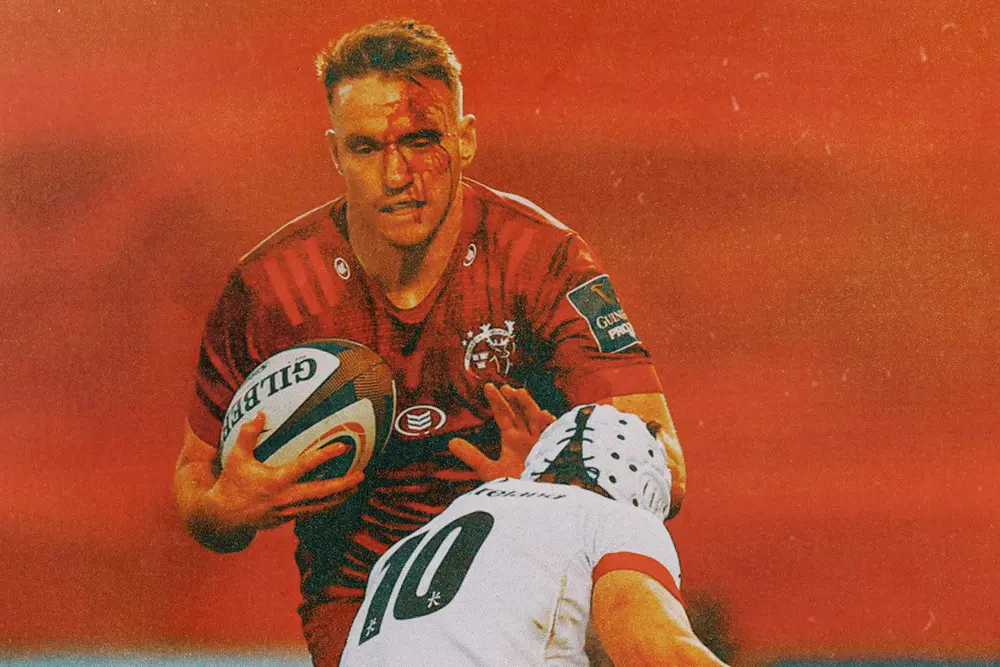
When 2018/19 failed at the same hurdle, Van Graan and Munster decided that, to get the best out of Carbery, a change was needed in midfield. This also reflected core issues with Munster’s pack in that we didn’t really have the power carriers (or stoppers) to play the style we had been to that point. When money was found for Damian De Allende, a world-class, World Cup-winning inside centre, to sign for Munster in what was initially meant to be July 2020, ahead of 2020/21, the writing was on the wall for Scannell as a core starter.
He played out 2019/20 as Munster’s starting #12, but his performance levels were well below what I thought he was capable of, and this would be followed by his worst year for the province from a performance perspective in 2020/21, at least in my opinion.
During 2019/20, Rory Scannell averaged 2.8 stars per game in the Wally Ratings on the games where he was eligible for a rating. The average rating for backs in 2019/20 was 3.2 stars per game, an underperformance of 0.4 stars per game compared to the other backs.
It didn’t get much better during 2020/21, where Rory averaged 2.6 stars per game in a season where the general rating for backs was 3.4 stars per game, an underperformance of 0.8 stars per game compared to the average performance of the other backs.
He wasn’t notably worse than the year prior; in reality, it’s just that he was involved in some poor squad performances this season, played at #13 on four occasions, and he had a number of games where he wasn’t on the field long enough to warrant a fair rating. That lack of involvement was a theme over the last season of PRO14.
I criticised Rory Scannell a lot at this time because I genuinely thought he wasn’t playing well. Sure, there were grander issues at play – Larkham’s attacking system not clicking, Munster playing without key players like Carbery and Snyman on top of Scannell having to switch in and out for Damian De Allende on a role-for-role basis. How could Scannell ever hope to do De Allende’s job as he does it? It didn’t fit.
But then… something happened. Scannell’s role switched for the Rainbow Cup, and he started to carry the ball less and pass the ball more. His performances instantly began to snap back to what they had been. Van Graan wanted to use De Allende and Chris Farrell as “twin tower” hitters in midfield to mitigate against some of the heft we’d lost in the pack around that time; CJ Stander, in particular, so Rory Scannell saw his usage fall back to the “third midfielder” role. When De Allende or Farrell were injured or needed to rotate out, Scannell slotted in when required.
His 2021/22 saw his game time slip back to just 14 appearances and 10 starts, with those starts coming in early-season games or on rotation weeks. Van Graan announced he was leaving mid-season, but the announced signings of Antoine Frisch and Malakai Fekitoa the same season showed no planned return for Scannell as a core starter, but at that stage, he had fitted pretty seamlessly into a supporting role in the squad. He seemed to slim down and bring his game back to the core parts of it. He still had that nice left-foot step, but he was finding himself in the second and third layer of the attack more often and finding room to show off his passing and kicking range.
That culminated in a spot on the bench for Munster’s semi-final against Leinster in the Aviva, a fixture he had long started and lost during that amazing four-season run at the start of his career.
It’s fitting that the key role he played in breaking Munster out of our 5m line in the sequence that lead to the winning drop goal featured all the core skills that brought him to the dance in the first place. The left power step, the scrappy contact work, the lovely short ball offload.
What a way to get the monkey off the back. He wasn’t in the squad for the final when Fekitoa returned from the concussion suffered against Glasgow the previous week, but he earned every moment of celebration when Munster eventually won the URC title two weeks later.
It was his first medal as a senior player.
Fekitoa would be replaced with Nankivell for the following season, and Scannell continued his squad role, a veteran despite being just 30/31 years of age. He would slot into the squad when needed and almost always produced decent stuff, bar the odd dud performance that broadly went in line with how inconsistent Munster were as a squad in general.
Finally, this season brought down the curtain on his Munster career when he finally earned his 200th cap off the bench in a URC quarter-final defeat against the Sharks. As you probably remember, he missed a penalty in the ensuing shootout, but who gives a shit about that. Someone has to miss in those shootouts, and, as bad luck would have it, it would be Rory.
He looked devastated walking off the field, as you’d expect, but I hope when the dust settles, he realises what a journey he went on as a player, how many eras of Munster Rugby he played a core part in and how valued he was by the squad, both as a player, a trainer and solid team man around the camp.
That, and he gave everything he had, every week, every game, without exception. Because it meant that much to him. You could see how much it meant, too, which was always noticed.
2oo caps, some good memories and the respect of his peers; what more could you ask for?
