There are two types of people in this world.
The people who know that Keith Earls is the best winger this country has ever produced, and people who are wrong. Keith Earls himself might not agree that he’s the best Irish winger of all time but Keith, if you’re reading this, with all due respect – you’re wrong. Let me show you why.
First, let’s talk about numbers.
In the all-time try-scoring list for Ireland, Keith Earls ranks second behind Brian O’Driscoll. Earls is joint ninth in the caps list with 101 appearances, the only winger to appear in the top 10. Earls, along with Brian O’Driscoll, is the only non-flyhalf to appear on the all-time top 10 chart for points scored, averaging 1.78 points per game across a 15-year career.
He’s Munster’s joint top try scorer in the European Cup with 25 tries and scored 320 points across 202 caps for the province.
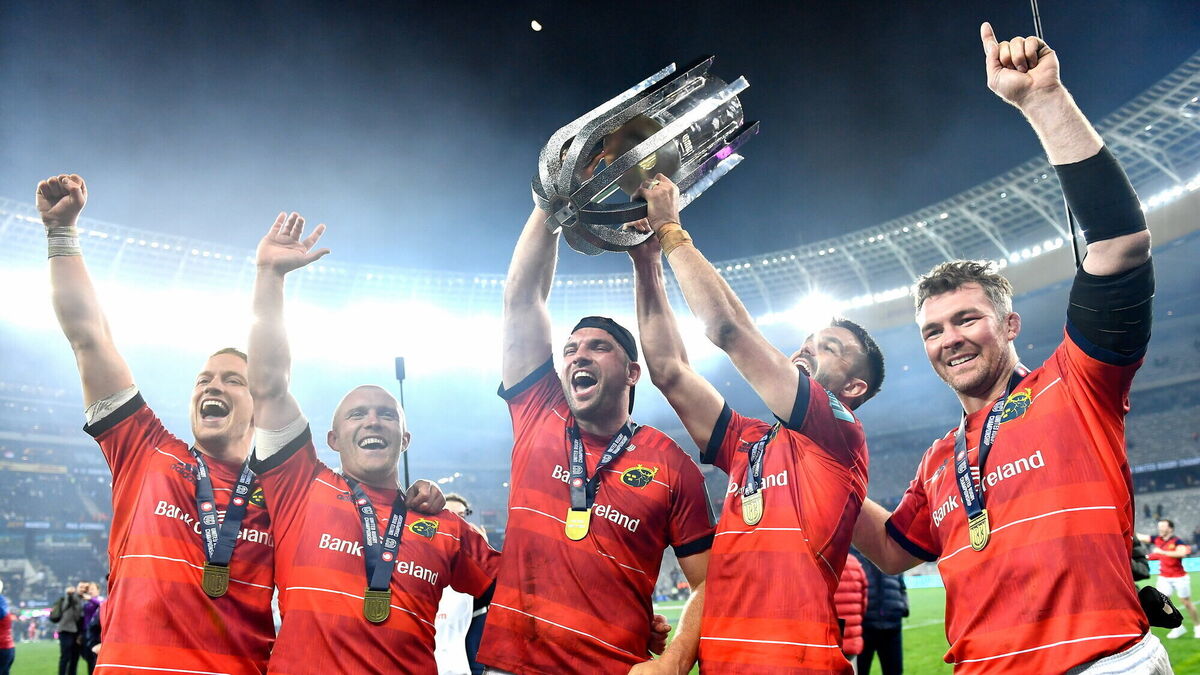
In his illustrious career, Keith Earls won the John McCarthy Academy Player of the Year award in 2007, the Munster Rugby Young Player of the Year Award in 2009, the Munster Senior Player of the Year award in 2018, a Heineken Cup as a wider squad member in 2008, three league medals and a Grand Slam with Ireland in 2018.
But those are just numbers and medals – the impact of Keith Earls as a rugby player and a man goes far beyond numbers and medals. As he announces his retirement, I wanted to talk a little bit about that impact.
It is 2008.
I have hair. I am in Musgrave Park on a wet Sunday afternoon. I’m actually in this screenshot I took from the game – somewhere in this yellow circle.
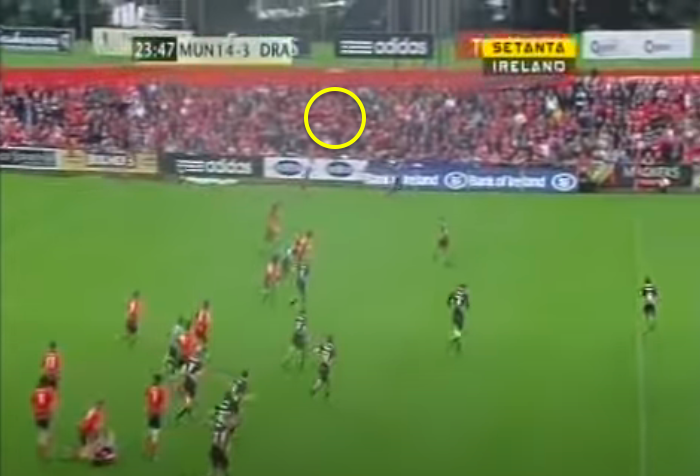
Munster had won the European Cup a few months before and, as I was living in Cobh at the time, I thought I’d slip in to watch the first league game of the season. My interest in Munster was at an all-time high at this point – we were the biggest club in the world at this point – and everyone wanted a piece of the glory. I was no different. I saw O’Connell, O’Gara, Howlett, O’Callaghan, Wallace and others on the teamsheet the Friday before and made the decision to go. I paid no heed to the lad named at fullback for that game – a young Keith Earls – but he was about all I could talk about after the game in part because of this;
O’Connell and O’Gara never made it off the bench for this but I didn’t care. Munster won 50-6 and that Keith Earls lad looked like a Christian Cullen re-gen at fullback. He scored a hat-trick in that game, including that show, go, kick and flick you saw above. Walking out of the stadium I still remember the talk about this guy. He was only 20 but he was playing with the kind of swagger that said he was the real deal, even at 20.
He’d make his debut for Ireland at Thomond Park a few weeks later and scored with his first touch.
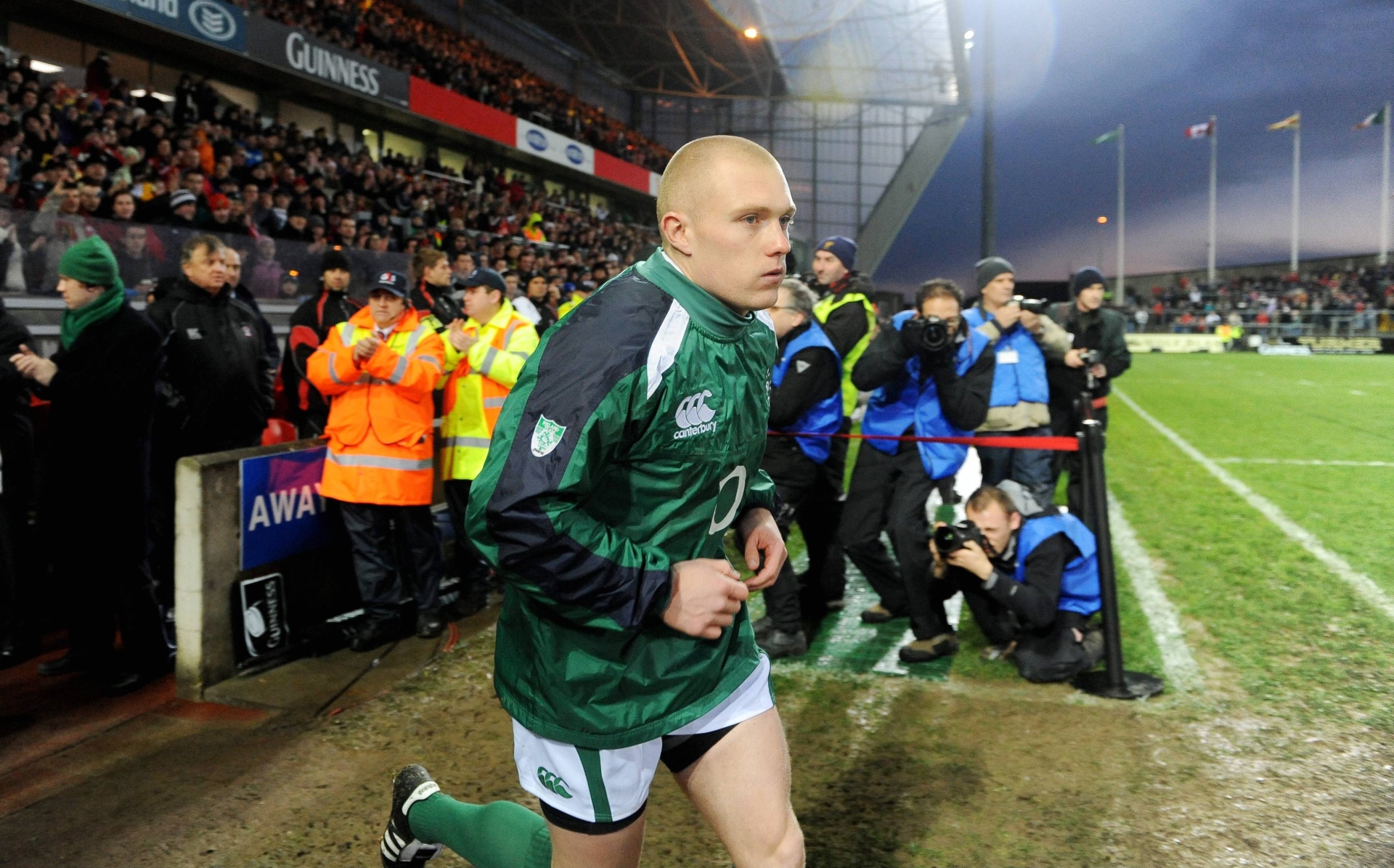
It felt like there wasn’t anything Keith Earls couldn’t do.
Throughout the coming season, he’d show that over and over again. He scored ten tries in total, including two against the Ospreys in Thomond Park during a European Cup Quarter-Final that is burned onto my retinas forever.
This game and these two tries are like super-memories. I remember where I was – at home in West Cork – I remember what I was doing – going mad in the kitchen – and after that game I felt, no, I knew a third Heineken Cup was on its way to Munster.
It didn’t turn out that way but man, to see Keith Earls playing out of his skin at #13 as a homegrown Munster guy – in a position that I felt we’d need sooner or later at Ireland level also – wasn’t a consolation after that loss to Leinster, but it was exciting. At Munster, we normally produced a tonne of forwards and halfbacks but outside backs like Earls? Normally we signed in that kind of fireworks but Keith Earls was from literally over the wall at Thomond Park. He basically replaced Rua Tipoki that season, did so flawlessly for the most part, and played well enough to get named on a Lions tour at just 21 years of age.
A young lad who grew up in Moyross, Limerick?
A British & Irish Lion only three years out of secondary school?
It felt like a dream for Ger Earls young fella but it was a reality. The world looked to be his oyster.
The Fourth Thing
By the middle of the 2010s, Keith Earls had delivered on the potential of the young man who tore into the rugby world in 2008 but maybe not in the way everyone envisaged.
The Lions tour in 2009 didn’t go well for Keith Earls. He had a nightmare game against the Royal XV in one of the opening tour games and never really recovered. His confidence seemed to be shaken by that tour the following season and he certainly wasn’t helped by constantly getting bounced around into different positions on the field. In 2009/10, Keith Earls started games at fullback, left-wing and outside centre. The year after, he flitted between the left-wing and outside centre. This would continue season after season and internationally, he would ping-pong everywhere from both wing slots to fullback and even both midfield positions. Earls always did quite well for Ireland at outside centre whenever he got a chance to play there but O’Driscoll playing on until 2014 meant that Keith Earls would be accommodated elsewhere while the IRFU always seemed to be keeping an eye on him as the guy to replace O’Driscoll eventually.
Keith Earls would say himself that keeping the extra KG on him that playing in the midfield in the early 2010s required made him more prone to injuries and it seemed to me that he was kept in a holding pattern – never allowed to settle on the wing fully, just in case he was needed post-O’Driscoll. After that Lions tour in ’09, Earls started at outside centre nearly 30 times across four seasons for Munster. The rest of his starts were on the left wing. He bounced around at Ireland level too, stepping in for an ageing O’Driscoll whenever he was injured but never forcing him out in the long term.
Those early seasons at the beginning of the last decade hurt Earls’ perception outside of Munster. Inside Munster, he was what he always has been – a legend. Year after year, game after game, Keith Earls showed up with big moments and the longer time went on, you started to notice just how consistently excellent he was. That really began to show when he was able to consistently start on the wing for multiple seasons. From around 2015 on, Earls was primarily a winger and one of the best around.
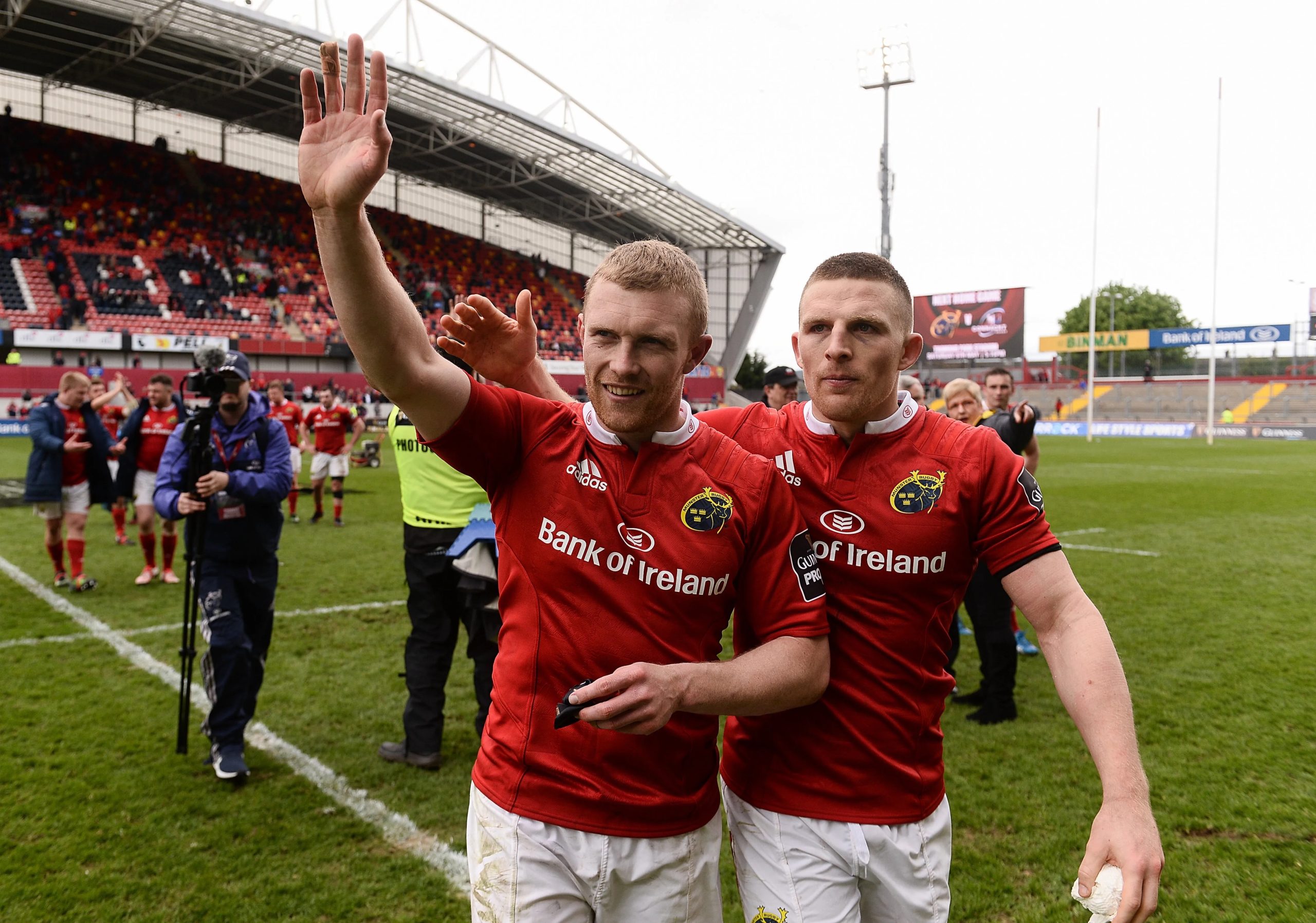
If you watch this game for long enough at the elite level, you’ll see how often young wingers burst onto the scene after a flurry of tries, and get lauded as the wave of the future before one of four things happens.
- Injury ruins them – this almost happened to Earls.
- They get videoed to death by opposition coaches in their third season and can’t adapt.
- They can’t sustain the performances that brought them to prominence and fall back to a less impressive level.
The fourth thing is the rarest of all; they become all-time greats for their club and/or country. Keith Earls embodies that. I put him on the same level as modern greats like George North and Bryan Habana – these weren’t flash-in-the-pan players, they had astonishing longevity in a position where injuries and dropoffs are the most likely thing to happen.
When you consider that Earls managed this level of longevity and productivity while playing at the highest level for his country AND his club, he enters that conversation as a world-class level-great. An underrated world-class talent, as he was through most of his career, but a world-class talent all the same. I’d put prime Keith Earls up against any winger you want to name and, over the full 80 minutes, I’d back the Moyross Express to come out on top.
Beware The Old Man in the Young Man’s Game
Late career Keith Earls is the perfect example of a player with the intelligence to move with the times. Since 2008, when Earls broke through at the elite level, the role of a winger has arguably changed seven or eight times. In some ways, I think the constant rotation to midfield prepared Earls really well for the game we would come to know in the last two World Cup cycles.
When Earls broke through, wingers were finishers and last-ditch defenders. By the time he retired, wingers needed to be layered handlers, high ball specialists, offensive ruckers, tactical kickers and have to know how to defend like a traditional fullback AND a traditional outside centre, all while being the finishers and line break specialists they were in the mid to late 2000s.
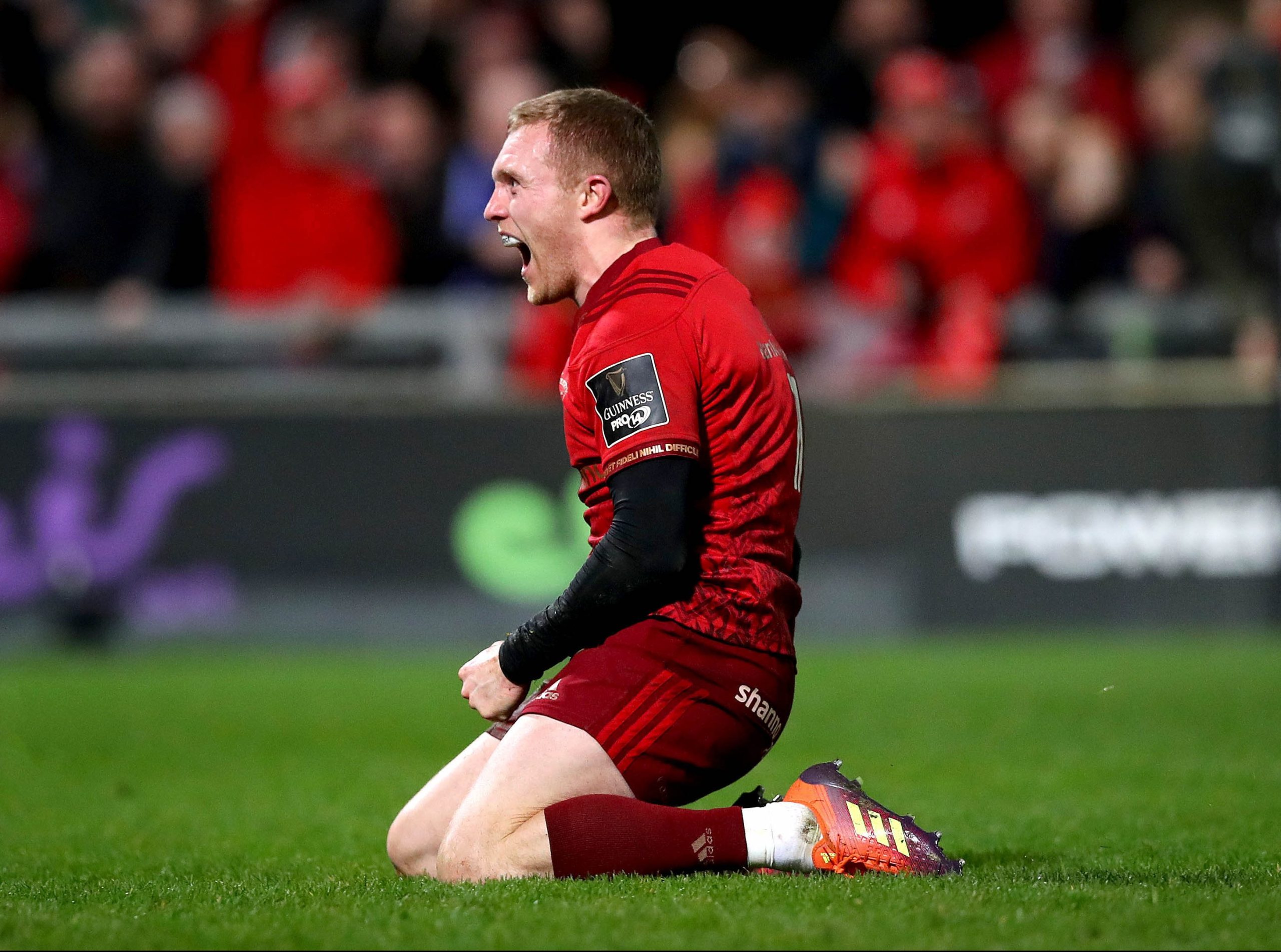
For Keith Earls to manage all of that – and not only manage it but to actively thrive as the game changed each season – shows just how good a player he actually is.
The back three is where the game moves the quickest and leaves players behind the fastest but Keith Earls was still a high-level operator at 36 years old. He retires while still being capable of playing at the highest level, which tells you all you need to know about Keith Earls the player – he long outplayed all the young pretenders who were meant to replace him in a game unrecognisable from the one he played when he started.
That alone makes him the greatest winger we’ve ever produced, in my opinion.
A Good Man For The Bad Guys
For a while there, Keith Earls was one of those players – like O’Mahony and Johnny Sexton – who drove opposition fans spare. Scottish fans in particular, for some reason, really hated his guts for a while there and I could never work it out. Sure, he was good, and scored a bucket of tries against all kinds of opponents, but I never got why anyone would have an issue with Keith Earls.
He is one of the best, nicest guys you could meet in this business. When I’ve seen him at pressers or media events, he’s been nothing but a gentleman, even when he’d have every reason to be the opposite at times with the media and with punters.
The greatest measure of the man that I can give is that rugby isn’t what I admire most about Keith Earls. Back in 2021, Keith Earls did an interview on the Late Late Show, where he spoke admirably about his struggles with mental health – specifically bipolar disorder.
To think that, through all the challenges on the field, all the hard training and the standards that he needed to hit to perform at his level for as long as he did, he was battling a disorder that made him feel like he was worthless, that he was garbage, and that he should just end it all is… remarkable. It’s inspirational. It shouldn’t be possible. And by speaking about this while he was still playing on such a massive stage, Keith Earls told every person watching that show that night that anyone, even a top-class rugby player – someone who people assume is living their best life at all times – can ask for help, get help and be vulnerable.
In telling Ireland how much he struggled, how close he was to ending everything, and how he went to get help when everything in his body was probably screaming the opposite, Keith Earls helped more people than he will ever know. All he did was tell his story, but sometimes that’s the hardest thing to do.
In rugby, like in life, you rarely get to finish things the way you want. For years, Keith Earls played in Munster teams that fell short and, even this past week, he was a member of a World Cup squad that fell short for the fourth time in his career.
But sometimes good people get the ending they deserve. I don’t want to think about Keith Earls ending his career in the stands of the Stade de France.
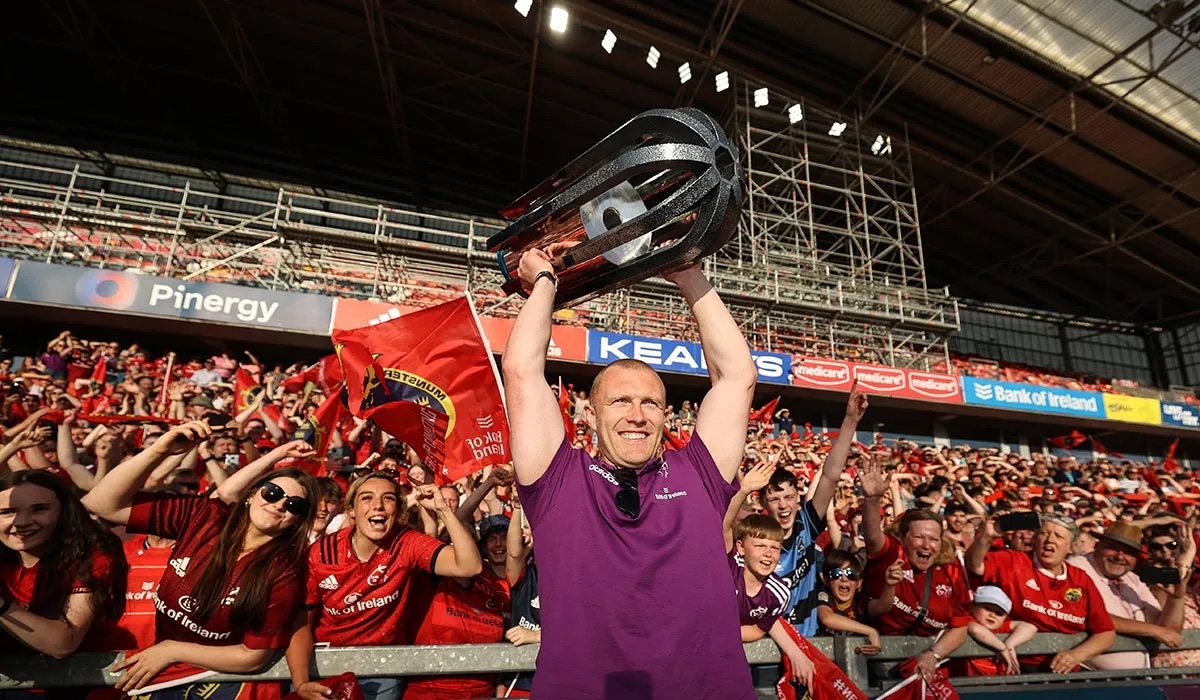
When I think of the end of Keith Earls’ career, I’ll think back to a sunny evening in May when he got to lift the URC trophy after winning it the hard way.
I’ll think of him walking onto Thomond Park with a team of young lads who worship him, a crowd who adore him and his family watching on.
I’ll think of the young lad I saw in Musgrave Park 15 years before going out as a winner. Through all the hardships, through all the struggles, through the struggles with his mental health, through the ups and downs of rugby at the highest level, Keith Earls won.
Ger Earls youngfella. The Kid. The Moyross Express.
The Man.
Thanks for everything.