


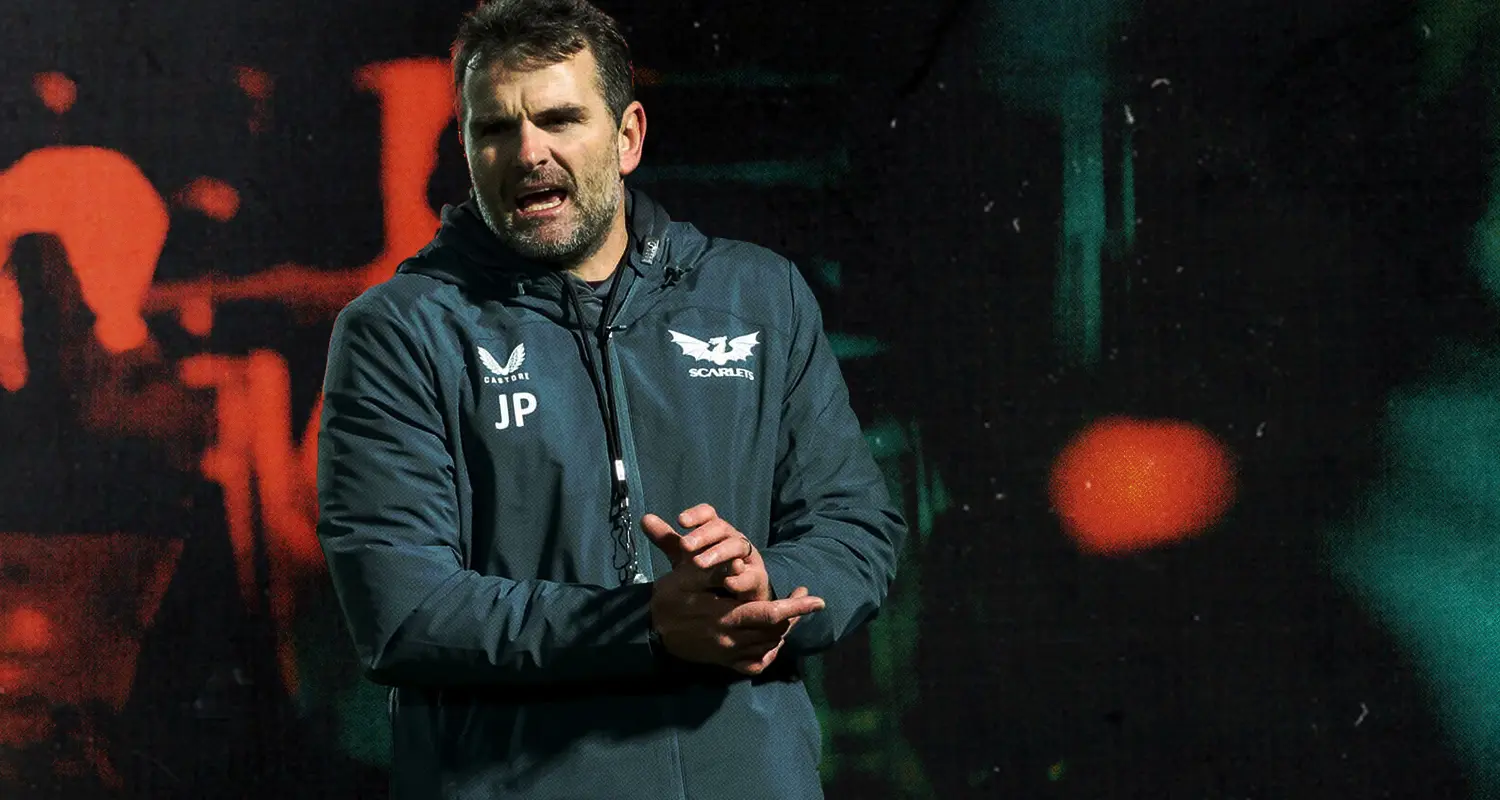
Munster have signed Jared Payne as an assistant coach for the next two seasons, and he, along with a newly extended to 2028 Mossy Lawlor, will help craft Munster’s attacking identity this coming off-season.
Lawlor and Payne are both signed as assistant coaches to manage the attacking side of Munster’s game as a specific unit until 2028. You know about Mossy, but what about Jared Payne?
Born in Tauranga in 1985, Jared Payne came through with Waikato, captained Northland and represented New Zealand at under-21 and Schools sevens level before three Super Rugby stints with the Chiefs, Crusaders and Blues. In 2011, he crossed the equator to join Ulster, and Belfast became home. He made 78 appearances over seven seasons, and, once the residency rule made him eligible, a Test debut for Ireland against South Africa in November 2014. Twenty caps followed, mostly at centre under Joe Schmidt, and in 2017 he was picked for the British & Irish Lions tour of his native New Zealand. It was there that everything turned: a head injury and the migraines that lingered afterwards forced his retirement a season later, in May 2018.
He never really left the game, though. He stepped straight into coaching as Ulster’s defence coach, holding that role until 2022 before taking an attack brief at Clermont Auvergne, where he briefly served as interim head coach for a single match in early 2023. That summer, he joined the Scarlets, assisting Dwayne Peel’s attack before returning to defence in 2024, before announcing he was leaving the club at the end of the 2025–26 season.
This July, he’ll be tasked with upgrading Munster’s attacking concepts alongside the incredibly highly rated Mossy Lawlor, who’s seen internally to the IRFU system as one of the best young coaches in the country, as well as being highly regarded by the Munster squad and Clayton McMillan himself.
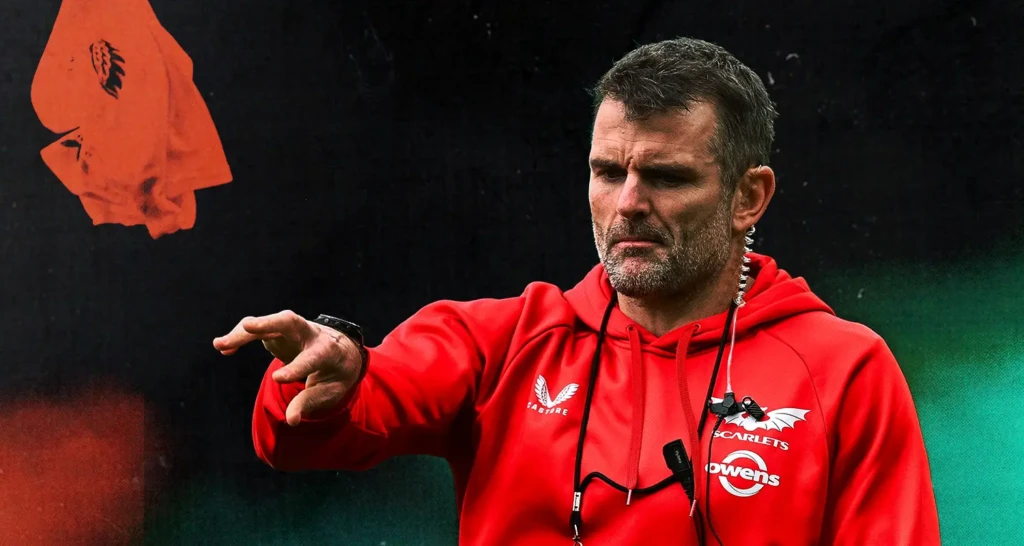
If there’s a thread that runs unbroken through Jared Payne’s coaching career, it isn’t a system, certainly not an attacking one anyway, as he’s mostly been a defence coach. It’s people. From the moment he arrived at the Scarlets in 2023, Dwayne Peel framed his value less around a hard, specific system than around the young players he could grow. That judgement proved durable: when the club confirmed his departure three seasons later, it was his work bringing talent through the system, and the standards he set in the environment, that drew the praise.
His method is quiet rather than dictating a hard, inflexible style. He tends to trust a player to take ownership — to listen, go away, and get on with it — and reserves his warmth for those who do just that. He has spoken with obvious affection about the emerging Scarlets backs he worked with, the likes of Ellis Mee and Macs Page, the kind of low-maintenance learners he describes as a pleasure to coach. It’s a coaching identity built on patience and credibility rather than hothousing a certain way of playing, and it explains why, across difficult results and shifting job titles, the developer in him is the part everyone keeps coming back to.
The most obvious critique of this signing is that Jared Payne, for most of his coaching career, has been a defence coach.
Does that mean that Payne can’t be a good attack coach? It was plainly an ambition of his at the Scarlets — he was signed to help run that side of the ball — but circumstances dictated he’d be doing something else.
For a side in need of a new attacking identity, and one that young players will mainly drive, Payne doesn’t really bring anything we can directly point to that says what his style is. Is that a strength or a weakness?
On the weakness side, I can’t show you any specific clips of what the Scarlets or Clermont looked like offensively and definitively point to Jared Payne’s fingerprints on it.
As a strength, he’s a very well-rounded coach whose big strength from everyone I’ve spoken to is his ability to read modern defences — the classic game keeper turned poacher that guys like Andy Farrell finetuned as Ireland’s attack lead since he took over as head coach, as well — as well as being big on empowering players’ decision making, problem solving and game intelligence.
It’s no secret that Munster are moving towards a more Chiefs-like structure next season — stay tuned to the Hard Reset for that — and that requires empowered players running a deeper system. Lawlor and Payne are going to be running all of that offensive side of what that entails, from tap plays to strike plays to kicking strategies, to exits, to phase play.
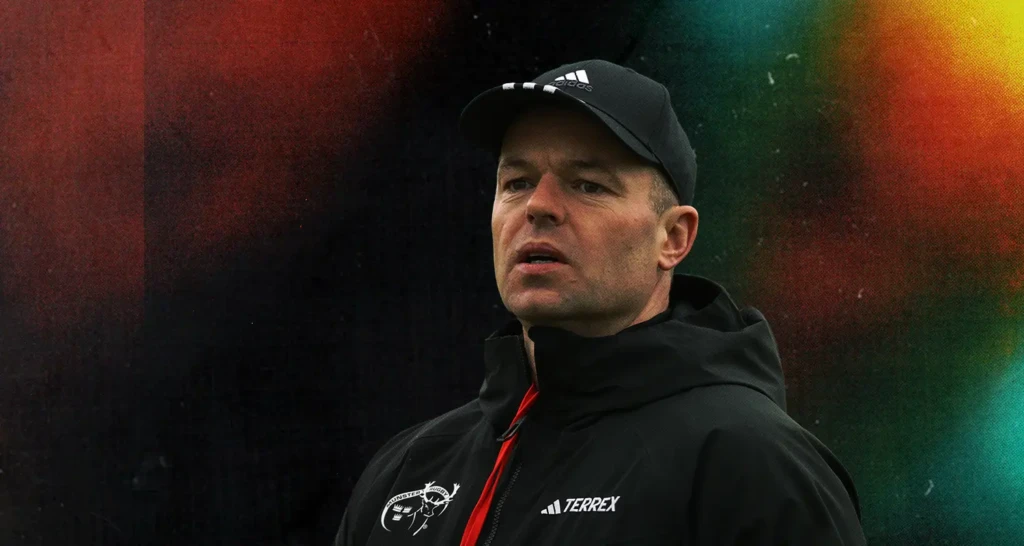
To do that properly, you need well-rounded coaches led by a strong head coaching vision, not shoe-horning one coach’s vision from one system into a system that demands the specific touches that Munster requires. That’s why Lawlor and Payne have such an important part in this; not as one lead and an assistant, but as two equally important and influential coaching voices as part of what Munster are looking to become.
Heavily scripted, heavily prescribed rugby is dead, and if it’s not dead, it’s dying. To compete at the top level, we need a group of empowered, intelligent, decision-making players who can play what’s in front of them with real confidence. Mossy Lawlor and Jared Payne are a huge part of setting us on that path.
