


Last season, Munster had a scrummaging problem.
It’s no secret.
You saw it yourself with your own eyes. While Munster have taken direct action to fix it by signing Jack Aungier for next season, with Conor Bartley, John Ryan, Roman Salanoa and Oli Jager departing, we needed someone else — a specialist — to bolster that unit for the next two seasons.
Kieran Brookes is that man, and he joins the club from USAP in the TOP14 on a two-year deal.
At 35 — he’ll be 36 in August — Brookes is solidly in the veteran category, but that doesn’t tell you the whole story on him, not even close.
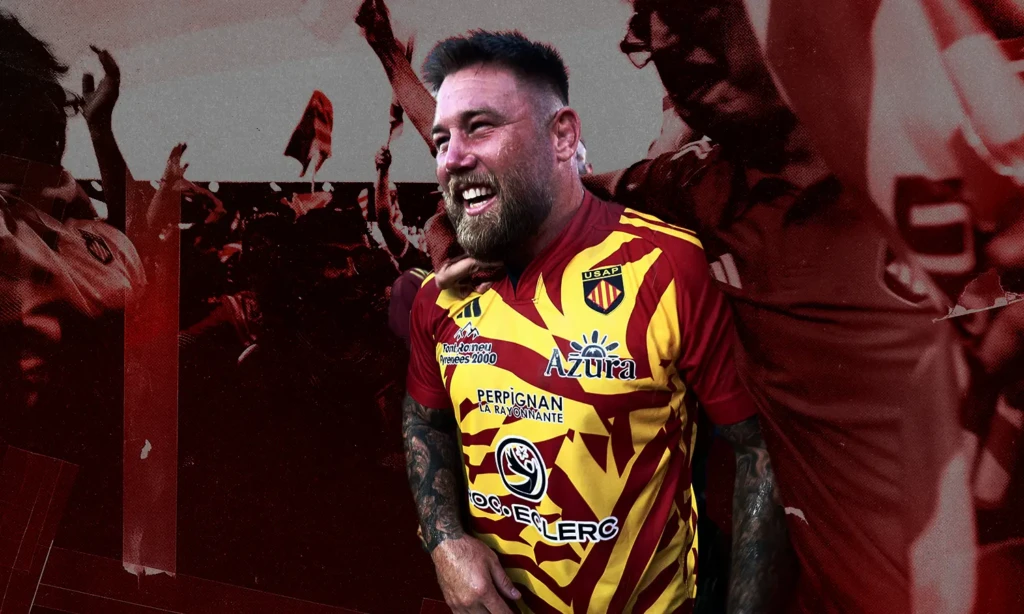
In the last five years, Brookes has been plying his trade in the hardest place going for a tighthead: the TOP 14. Three seasons at Toulon, then two at USAP in Perpignan. You don’t last that long at Toulon — where he played 70-odd games in two seasons — or make a move to a side like USAP, who badly needed scrummaging power when they came back to the TOP14, on reputation alone. You last by being good at your core job, week after week, against the heaviest and most cynical scrummagers on the planet.
Brookes hasn’t just tipped away out there either; he’s thrived.
In the last two seasons for USAP, he’s started 34 of his 43 appearances. That’s the headline as far as I’m concerned. Munster didn’t go looking for a prop who can carry at high volume or give us a “bit of everything” around the field. We went looking for a man who could win a penalty in the seventy-eighth minute or, at the very least, make sure we don’t concede one. Brookes is that guy. He’s had a five-year career in France, playing 800+ minute seasons year after year because of that part of his game: the tight, grinding business of the scrum.
It’s worth remembering how highly rated he was before France got hold of him. He made his name at Northampton as an aggressive, destructive tighthead. He got there, too: sixteen England caps, a Test debut against the All Blacks in 2014, and a place in the 2016 Grand Slam squad. Had the body held up and the timing fallen differently, he’d have been England’s first-choice tighthead for a long while. He later added a Challenge Cup winner’s medal with Toulon in 2023.
So what are we getting for 2026/27?
First, a specialist. There’s a temptation, when a thirty-five-year-old signs a one-year deal, to file him under “depth” and move on. That would be a mistake. Brookes is here to do a defined, high-value job: stabilise and sharpen the tighthead side of our scrum post Jager. The experience drain on that side was real. Aungier addresses part of it. Brookes addresses the rest — the been-there-and-seen-everything end of it.
Second, versatility. He’s primarily a tighthead but has scrummaged on the loosehead side across his career, which matters over a long URC and Champions Cup season when injuries and cards leave you scrambling for front-row cover.
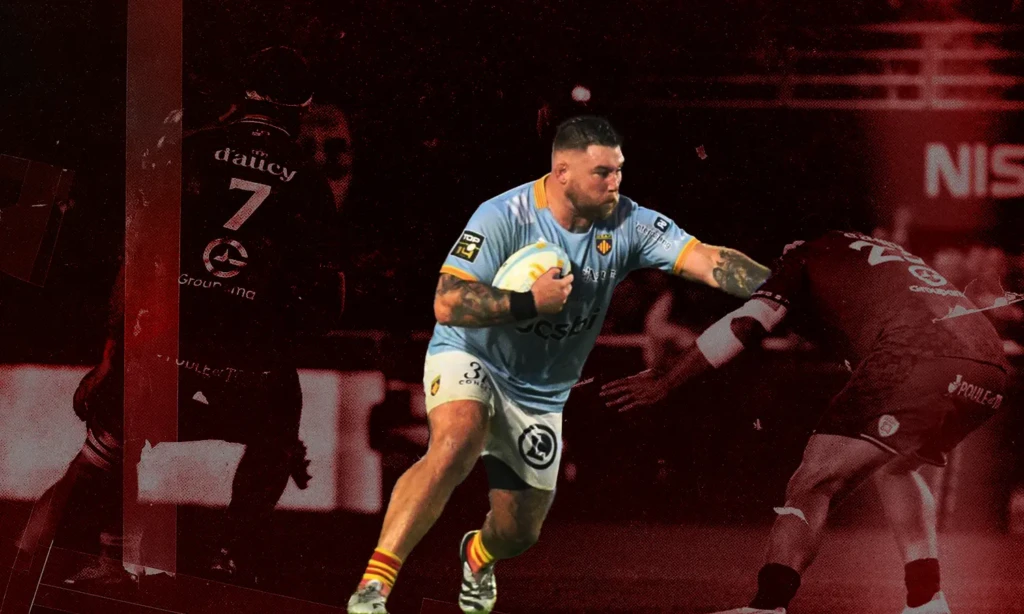
Third — and maybe most important — a teacher. Props make props. We have a clutch of young props coming through who’ll define Munster’s scrum for the next decade. There’s no substitute for putting them next to a man who has packed down all over England, Six Nations Tests and the cauldron of the Top 14 for the last 17 years. The subtle stuff — body height, the bind, the hit, managing a referee’s read of the scrum — doesn’t show up on a highlight reel, but it’s exactly what a young front-rower needs to learn. On a one-year deal, that value alone goes a long way to justifying the signing.
You might say, haven’t they been working with Stephen Archer and John Ryan for the last few years? Yes, that’s true, but Brookes brings something different: he has the same vast experience as those men, but in a different context.
There’ll be people who see the date of birth and worry. I wouldn’t. Tightheads age differently; the position rewards accumulated craft as much as raw power, which is why props routinely operate at the top level deep into their thirties. Brookes was a key man for a side scrapping at the bottom of the Top 14 this season, not a passenger being managed out.
Last season, Munster had a scrummaging problem. Kieran Brookes is the most pointed part of the answer — a specialist’s specialist, brought in to do a specialist’s work. Come December and January, when the lights are on, the rain is falling, and the scrum resets on our line, you’ll be glad he’s in red.
To understand the value of a Kieran Brookes, you have to know what he does, what he doesn’t do, and how his usage depends on that.
In his prime, Brookes was a dominant, heavy ball carrier. Even then, you wouldn’t load him up with 10+ carries a game — that’s not the best use of him — but he could bump guys off if allowed to do so. He can still do that now, sparingly, but he’s not really a ball carrier even in the way that you might imagine Michael Ala’alatoa doing. He’s still really good at his age — his gainline numbers are excellent, and his dominant ball carry percentage is genuinely really good.
Ball-carrying comparison
Kieran Brookes vs Irish-based props, with Wilco Louw as an elite benchmark. Hover bars for exact values.
Defensive workrate vs reliability
Tackles per 80 minutes plotted against tackle success rate. Hover points for exact values.
Per-80 rates; sample sizes range 413–973 minutes across different competitions. Scrummaging data not included.
Defensively, he’s the weakest of the Irish-based props I measured last season, but he pairs really well with Ala’alatoa in that regard.
The ruck work also stacks up when we compare both of them. Ala’alatoa was one of the highest-volume ruck forwards in the country last season.
Ruck contribution: Brookes vs Ala’alatoa
Ruck arrivals per 80 minutes and effectiveness on both sides of the ball. Hover bars for exact values.
Ruck arrivals per 80
Ruck effectiveness %
Per-80 rates; Brookes 973 minutes, Ala’alatoa 704 minutes, different competitions. Neither player recorded a jackal turnover per 80.
How they fit together as a pair: the profiles are almost perfectly complementary. Ala’alatoa is the glue player — high tackle volume (14.2/80 vs 7.7), solid completion, more ruck work on both sides — but the least threatening carrier of the whole sample (10.9% dominant, 37.5% gainline, literally zero evasion). Brookes is the opposite: a genuinely dominant carrier who does less of everything off the ball. That points toward horses-for-courses selection — Brookes when you want front-foot ball and a carrying threat off the bench or against tiring defences, Ala’alatoa when the game plan needs workrate, defensive volume and breakdown security.
If we were to examine what worked and what didn’t last season, though, we’d have to start there. First, with the system itself, what it demanded of the front row, and then what outcomes flow from that.
Last season, Michael Ala’alatoa carried the ball approximately 79 times for Munster across his 18 games for the province, the largest carrying load required of him since the 2022/23 season at Leinster. Defensively, it was the same.
All of that was required, both by the system itself and by necessity. Ala’alatoa wasn’t signed to play 950 minutes’ worth of rugby for Munster last season, but that’s what ended up happening due to injury. Even in the one game he was scheduled out for — Glasgow (a) — he was brought in late from the travelling reserves due to an injury to Josh Wycherley. John Ryan, on the bench as the tighthead replacement, moved across to reserve loosehead. Ala’alatoa came into the squad and ended up playing 63 minutes after Jager picked up an ankle injury inside the first quarter.
When it comes to heavyweight tighthead props, especially in their mid-30s (it applies in their 20s, too), using them too often lessens their effectiveness.
Too much carrying, too much tackling, and then the attacking ruck load on top of that will, naturally, take away energy from the scrum and lineout lifting. It’s a delicate balance.
Essentially, you want him dumping his energy into this — scrum and maul — rather than loading him up as a primary carrier or defender.
This is where usage comes into play. Ideally, you’d use a guy like Brookes on a strict 50/30 basis. He either does 50 minutes or 30 minutes, and even then, you limit that across 17/18 games due to injuries elsewhere. In an ideal world, he’d be doing around 800 minutes next season from September through to June.
Now, of course, injuries to either himself or other tightheads might change that, but I think that’s the ideal.
In the post-Jager depth chart, we badly need someone we can plug into any game and get solidity at the scrum. We don’t necessarily need an all-court, physical game changer in the loose. Brookes is a solid carry and a good defender in close, but that’s the default expectation. What we badly need is someone who can brace our tighthead side if we’re under pressure against Porter, Nche, Mchunu or any other of the looseheads that caused us problems this season.
It doesn’t have to be a dramatic improvement — going from where we were this season to something like the Bulls or the Stormers — but if he can help prevent us from conceding on the opposition put-in at the rate we were this season, and help secure our own ball at 90%+, he’ll have been more than worth it.
