



At the second time of asking, Munster finally completed the signing of Lee Barron from Leinster this coming off season and I think it’s fair to say that he’ll jump straight into starting contention in 2025/26 with Diarmuid Barron and that will likely mean Niall Scannell taking on the role of veteran cover as third in the depth chart.
Munster tried to sign Barron before he signed the two-year deal that is currently expiring – his first senior contract out of the Leinster academy – in 2023 for broadly the same reasons that we made the move this season; Lee Barron ticks a lot of boxes as a power hooker, a role set we’ve been crying out for in the last five seasons or more.
At 6’3″ and around 105kg, Barron probably needs another 3/4kg to get to where we’ll want him – and that’s a live question as to his potential here – but at the very least, he has a physical profile we don’t have. That is something we can work with.
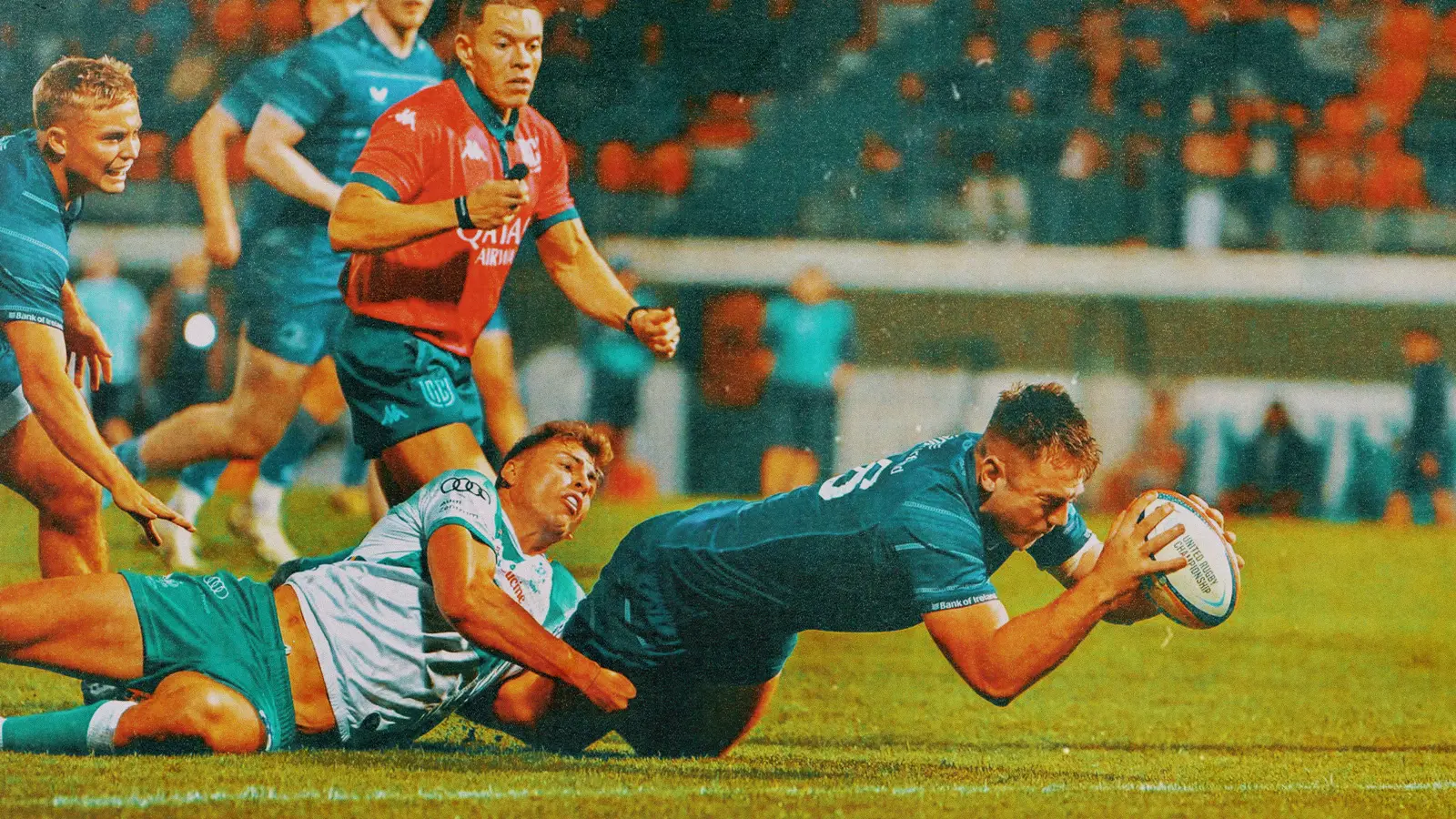
The natural comparison to make with Lee Barron is Dan Sheehan. Stature wise, they are very similar – Sheehan is listed as 6kg heavier, but they’re the same height – and fill near identical roles for Leinster off the set piece, where they both tend to stay wide as a power edge forward. This is a natural position for a hooker on bounce plays that intend to get the ball back to the tramline. Barron is quite good in these spaces as he’s quick and evades tackles well. His height also makes him that bit more dangerous than shorter hookers when finishing from around the 5m line in those “flow” scenarios where there’s more space to work with.
In years gone by, the idea of a 6’3″ hooker was incredibly unusual. It’s very common these days – led by Bismarck du Plessis in the first instance, followed by Malcolm Marx and then Dan Sheehan – but in the mid 2010s, the average height of a hooker was around 6’0″ at the very most, with many of the more notable hookers playing around 5’10”.
Traditionally, this was for two main reasons;
Scrum: Shorter hookers were able to maintain a lower center of gravity, which facilitated a better balance and stability during scrums, especially with the loosehead. Shorter legs and midriff allowed them to effectively ‘hook’ the ball back to their team – a fundamentally weak position which meant one leg would lose contact with the ground for a second, while the props attacked and held position.
Lineout: A shorter, more compact build was seen traditionally as being able to control the ball more precisely, with the idea that shorter levers had less scope for mechanical errors.
A lot of that has changed as the game has evolved through professionalism and, while the scrum is an area of potential weakness for taller hookers, taller guys with longer levers are showing real skill and control of the ball. Sheehan has a lovely, rolling throwing style and Barron has the same, with arguably better technique. The longer arms give a real “whip” to the ball that, with a roll through the ball on release, can fire really tight spiral throws at high speed.
Barron, like Sheehan, is probably at his best when he’s throwing at pace in a high tempo lineout scheme but the real advantage of being taller comes when the ball hits the deck. Taller, rangier hookers find it easier to play at heavier weights and be more impactful with the ball in hand. In years gone by, 6’3″ was a good height for an old school #8 and a lot of what a 6’3″ hooker is expected to do in phase play fills a similar role.
But first, look at the quality and variety of Barron’s throw, and how he translates that into a good carry position thereafter.
The throwing is the best part – fantastic spin efficiency – and while the carrying isn’t anything to write home about this season, he’s got way more punch in his carry than some of our senior hookers.
This example, from the Leinster game in Thomond Park is a good one to visualise – Niall Scannell getting dumped backwards. He’s being double tackled here, sure, but this is far from an isolated event.
It’s not Niall Scannell’s fault either, this kind of thing in a game against Leinster isn’t what you’d be selecting him for. He’s a good ruck work guy, with a great lineout and scrum and decent first-up defence, but he’s not close to an explosive carrier by any definition.
Lee Barron is a much better carrier – you can see it in his tap and go set up carries from 5m – and he’d be our most explosive hooker from a carrying perspective on landing.
Diarmuid Barron has had a pretty average season so far but I still see him as being someone that can be that 1A or 1B hooker going forward without necessarily being a ball carrying focal point.
Then again, can Lee Barron be that for us consistently? What do we actually want from our hookers outside of maybe upscaling our threat from the back of mauls and on the 5m line? That’s the question.
Lee Barron gives a bit more explosivity off the back of a maul or on a loop route from a maul feint. He’s also a guy we can put in the tramlines post-lineout or wider scrum in a way that we probably can’t do with Diarmuid Barron and Niall Scannell – that frees up other players to take up more central roles. Barron is a decent defender, covers a fair bit of ground and hits rucks pretty well in the minutes I’ve seen him. He hasn’t been hugely involved this season but that is likely tied up with his move here. Most clubs – Munster included – don’t sink minutes into players who are leaving for several reasons, and Leinster are no different.
2023/24 was Barron’s best year on-field for Leinster, and he probably would have had more involvement this season if (a) Gus McCarthy hadn’t jumped ahead of him in preseason and (b) he didn’t pick up an inconveniently timed ankle injury against Munster in Croke Park.

I think it was McCarthy’s emergence in pre-season that ultimately sold Barron on the move here, especially when McCarthy ended up getting capped in November. I think Leinster would have liked to have kept Barron – he’s got a profile and physical potential they don’t like losing, as well as a lineout game you can rely on in pretty hot atmospheres.
These are things that Gus McCarthy hasn’t shown as of yet, so while Barron was absolutely a downchart guy for Leinster, I think they liked that they could plug him in to get a Dan Sheehan-like experience in the URC games they primarily wanted him for. Lee Barron saw more opportunity to establish himself as a higher-chart player here, and we saw the potential to take a 10-game-a-season guy at Leinster and build him into something more.
***
We’ve cleared the decks a little at hooker this season and the next two years look like they’re going to be where we set our roster going forward. Lee Barron will immediately improve us, but will he be a focal point? That’s up to him, and whether or not his frame can handle the jump up to 110kg that we will likely require of him between now and the end of preseason.
Scannell is likely on his last senior contract here, and Diarmuid Barron’s deal runs out next season, so there is space for someone to make a run at making the first spot on the depth chart their own.
With no other senior hookers in the squad, next season feels like a big one for Max Clein and Danny Sheahan in the academy to showcase why they should take Niall Scannell’s spot as a senior player in 2026/27. With that said, I think it’ll be how the Barrons perform that dictates whether or not we try for a NIQ in the position for July 2026.
Lee Barron has the physical potential to be a test player because his set piece is already at a pretty high level. If he can make that jump from 105kg to 110kg and not fall victim to injuries, he’ll go very, very well here. If he stays as he is, he’ll look pretty good – certainly more athletic and rangy than what we have – but won’t fundamentally fix our front row issues on his own.
A lot of that is down to him, but I’d give him a great shot at doing just that.
