


When you’ve been around Irish rugby long enough, you’ll eventually see that some of the glib sayings around the green jersey are true.
The main glib saying that sounds bitter but is true is “It’s harder to get out of the Irish team once you’re in it, than it is to get into it when you’re not”. I first became aware of this saying in the early 2000s when Eddie O’Sullivan more or less named the same XV every single week for every single game of consequence barring injury, or so it seemed. I can still name that XV, more or less and if you’re the same vintage as myself you probably can too.
I wanted to see if it was true or not so I went through every Irish coach’s new caps and decided to count how many caps they earned after first being capped to get a distinction from the players who might get a smatter of caps on summer tours before disappearing out of the test arena.
Eddie O’Sullivan – 41 new caps that went on to earn 1,285 caps. 31 caps each on average. 6 new caps a year over seven seasons.
Declan Kidney – 41 new caps that went on to earn 1,367 caps. 33 caps each on average. 8 new caps a year over five seasons.
Joe Schmidt – 63 new caps that went on to earn 1,269 caps. 20 caps on average. 10 new caps a year over six seasons.
Andy Farrell – 35 new caps that earned 393 caps to date, an average of 11 caps per player. 5 new caps a year in his five seasons to date.
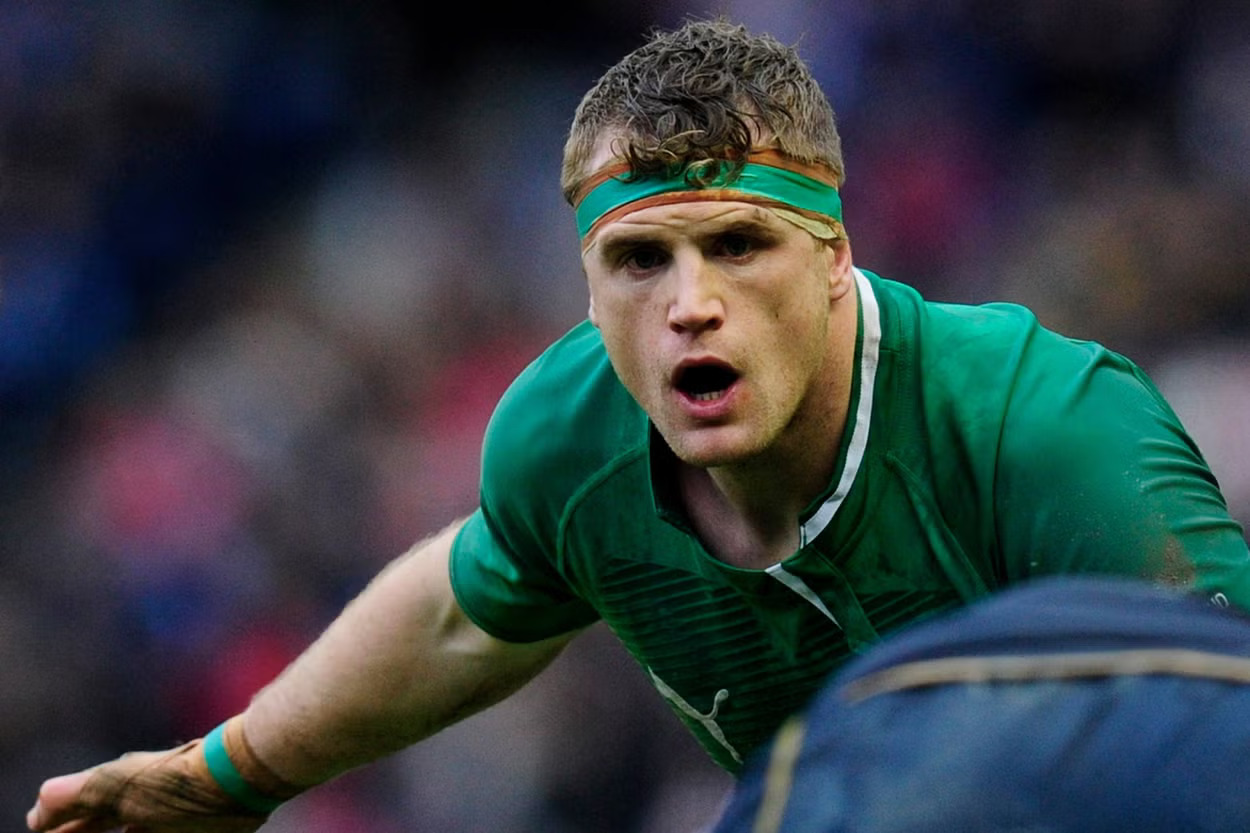
Eddie O’Sullivan had an incredibly long tenure by anyone but Warren Gatland’s standards. Even then, O’Sullivan’s average cap number was inflated by Rob Kearney and Jamie Heaslip who were capped right towards the end of his tenure and both were key parts of Kidney’s Ireland post-2009. Heaslip, in particular, would argue that he got something of a short shrift from O’Sullivan before the 2007 World Cup.
Declan Kidney did by far the most heavy lifting when it came to handing debuts out to players who would become hugely important pillars of the second great Irish team of the 2010s. Schmidt had more caps per year on average, but those players have, to date where applicable, earned fewer caps on average than Kidney’s caps. In the same way that Declan Kidney’s first year as head coach was helped greatly by the work Eddie O’Sullivan did, I think Joe Schmidt reaped the benefits of the players Kidney took a lot of lumps developing as regular test options; O’Brien, Healy, Murray, O’Mahony and Sexton in particular.
Kidney’s work transitioning O’Gara out and bedding in Sexton – and sticking with him during two or three ropey periods in his initial test career – was one of the most important coaching jobs in the last 20 years.
Farrell has largely been the most conservative selector in modern Irish rugby history, capping fewer players per year on average than his predecessors and fewer overall despite having the same time in charge as Declan Kidney. This has been hugely successful for Farrell as his “Club Ireland” concept has produced two Six Nations titles (one a Grand Slam) as well as multiple test wins over our top four rival nations home and away.
However when a coach isn’t selecting new players – Farrell capped just three players for the first time in 2023 and just two in 2024 – the advantage in selection usually goes to the incumbents. That is doubly true when it comes to experienced test #10s given how rare they are; seasoned test #10s do not grow on trees.
All those factors combined to make Andy Farrell’s decision to drop Joey Carbery – then a 37 cap international and the long-time heir apparent to Johnny Sexton – for the Six Nations before the 2023 World Cup one of the most “un-Irish Rugby” decisions I’ve ever seen.
***
We can’t talk about Joey Carbery’s time at Munster without talking about injuries.
It sucks. Players are more than the injuries that happen to them but Carbery is defined by them more than most. His first season at Munster was electric and it was an immediate justification for the controversial move down from Leinster. He picked up a mid-level injury during the Six Nations that year – something that would be a common occurrence in the years to come – and he never quite got back to the levels he’d shown from his debut until January 2019.
He rushed back from injury to play in Munster’s quarter-final away to Edinburgh but he didn’t make the halftime whistle before being replaced by Tyler Bleyendaal. He missed the next six weeks before showing up rusty and half-fit for a semi-final against Leinster that we subsequently lost. Carbery understood the responsibility of being the #1 flyhalf for a club of Munster’s side and wanted to be back for that semi-final but he didn’t play well – completely understandable given he’d only played twice since the end of Six Nations in March at that point.
It wasn’t that much of a big deal, though. We’d seen what Carbery could do with a run of fitness and, as he migrated to a new, big-money contract extension, the future looked bright.

Johann Van Graan sold Joey Carbery on the dream of being Munster’s #10 and, subsequently, Ireland’s #10 when Sexton eventually retired, something which looked impossible to achieve at Leinster. In his last season in blue, Joey played most of the handy Leinster games at #10, sure, but when the Big Games that players define themselves in came around he found himself solidly cast as a replacement with no start available at 10 for obvious reasons but also at fullback due to Rob Kearney.
For a player with Carbery’s ambitions, that wouldn’t do. When Paddy Jackson blew up his test career in early 2018, Joe Schmidt and the IRFU badly needed a new backup/potential replacement for Johnny Sexton. Carbery had announced himself two seasons before but Jackson was still the designated heir apparent to Sexton as late as 2016/17 when he played in every Six Nations game, starting two.
Jackson missed the next season entirely due to his legal issues – and I’ll leave it at that – which forced the IRFU’s hand. Jackson had a tonne of time invested in him since his debut but, almost more importantly, he was starting big games for Ulster as their undisputed #10. Joey Carbery was the next man up with some hugely encouraging performances under his belt for Leinster and Ireland but there was no way that Leinster were going to build around him while Sexton was at the club.
Something would had to give and with a choice between Ulster and Munster, Carbery chose Munster after Van Graan sold him on the project and the financial package while Nucifora and Schmidt assured him that he’d be given every chance to be The Guy as Sexton aged. In mid-2018 there wasn’t much expectation that Sexton would be playing in 2020, never mind making the 2023 World Cup so it made perfect sense that Carbery get every opportunity to show he could be a main man at Munster who could, in theory, force Sexton out to pasture.
I think that’s why, when Carbery badly injured his ankle in a World Cup warm-up game against Italy, there was no way he was going to miss that World Cup if at all possible. He would deal with the ankle after the World Cup if needs be.
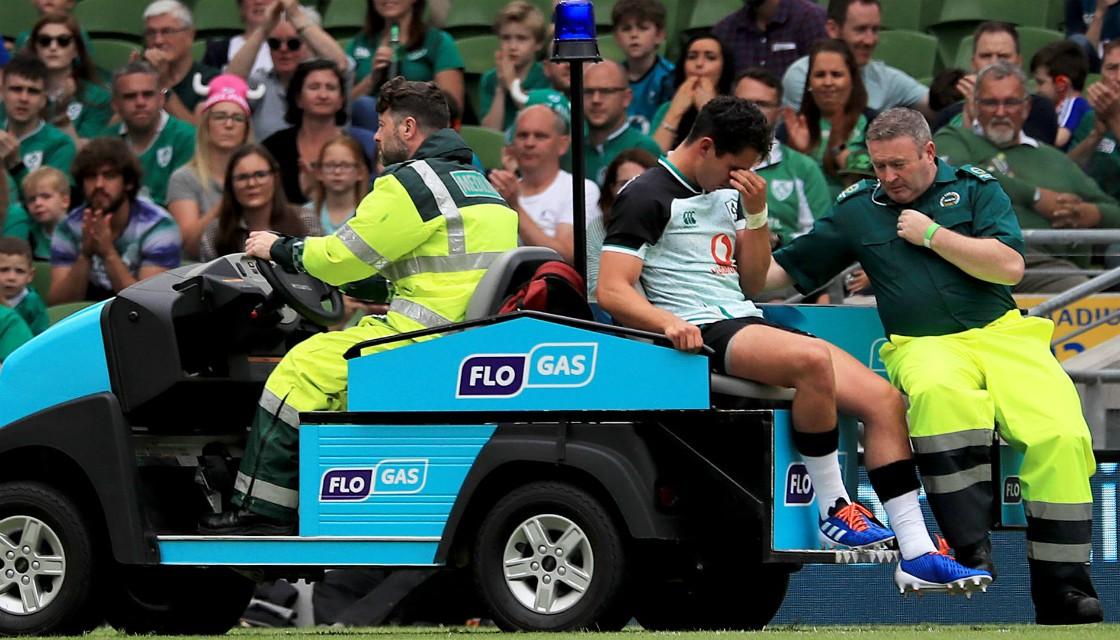
Carbery understood the importance of the moment. He moved to Munster to be The Guy for Ireland so missing a World Cup that he has even the slightest chance of playing in was not an option for him. He didn’t make the move to Munster and all that went with it, only to miss the World Cup. Neither was it an option for Schmidt whose only other option behind an ageing Sexton was Jack Carty, a good player on his day for Connacht but nowhere near the level required to win a World Cup or at least make a semi-final or better, as Ireland were expected to do at that point.
Carbery looked half the player he was at that World Cup. The same could be said for a lot of Irish players that year and they didn’t have the excuse of coming in hurt.
After the tournament, it was understood that Carbery was going to take some time to properly recover from his injuries. He returned to Munster for the Christmas interpros against Leinster and Ulster but he, once again, looked stiff, rusty and more than a little gun-shy in both games. Again, this was understandable. He played the full 80 minutes against Ulster with what turned out to be quite a serious wrist injury but his ankle wasn’t right. That electric step, change of direction and killer acceleration that he based his game on – he was a floating playmaker with the outside break of a winger – was gone. Rightly enough, when he was out after surgery on his wrist injury he also underwent surgery for his ankle. Then the pandemic hit.
When rugby started back up in June/July 2020 to restart the season in August 2020, there was still no sign of Joey Carbery. Eight months after ankle surgery and wrist surgery, you expect to see a guy back in full training, rightly or wrongly. During the various lockdowns we were all stuck in at the time there was an unnatural focus on when we’d get to see Carbery back, especially with RG Snyman and Damian De Allende joining in the extended offseason. But there was nothing. No pictures, no whispers – nothing.
Then we were hit with the worst injury update you can get without announcing a retirement; Munster released a status update that said that Joey Carbery was going to be out “indefinitely” with his ankle injury.
“As disappointing as the latest news is, we have Joey at the centre of it all, going through this, and doing everything right in making sure that when he returns to the pitch he stays on the pitch,” said Munster coach Johann van Graan on Tuesday.
“That’s what we all want at the end of this, and undoubtedly it has been a tough blow for him, but he has shown great resilience already and will do everything that’s asked of him for this next phase also. A serious injury like his can heal in different ways and now that we’re moving into the return to rugby stage the ankle isn’t where it should be in hitting those next markers. David (Nucifora), Andy (Farrell) and I spoke with Joey last week and all want what’s best for him. We know his standing in the province and Irish rugby and how important he is to us all. Our priority is to look after him. He is a young man with huge sporting talent and a bright future, we are here to support Joey at every stage giving him the time he needs.
“There is a lot of rugby to be played in the coming season and we look forward to welcoming Joey back when he is fully recovered.”
When he eventually came back in February 2021, the level of expectation was colossal. We hadn’t really seen Carbery at his best since January 2019 and here we were two years later looking to see if that guy was still there. With Snyman already into the first of his three long-term injuries at the club and Munster still treading water, the return of Joey Carbery was seen as the kind of thing that could push us to the next level.
It wasn’t to be. He made three appearances off the bench before starting three at #10 during the truncated end of the PRO14 season which ultimately ended in a familiar defeat to Leinster in the final at the RDS. Munster’s attacking system around this time wasn’t what it should have been. My feeling at the time and since was that our attack coach, to put a general name on his role, Stephen Larkham had already somewhat checked out but Carbery’s performances since his return had only ever shown glimpses of the player he was.
This slice and dice on a kick transition was probably the closest we got to January 2019 Joey Carbery that season.
Once again, though, the hope was that Carbery had turned a corner with his fitness and, with a full preseason, he might be back back. It was hopium, even then. Carbery wasn’t playing badly at the start of 2022/23 by any means, but it was clear that the electric, agile runner with the explosive step who could shake up games wasn’t there anymore. In his place was a composed, mature reader of the game and an excellent goal kicker but it felt like he was still trying to figure out what kind of player he was after all those injuries.
Carbery was never the sharpest passer of the ball, even at his best, in my opinion, but the separation and compressions he’d great with his explosive agility made up for that. He didn’t have to be a sharpshooter with the ball in hand because he would open up windows of space all on his own but without that confidence in his ability to break, his relatively average passing bit him again and again.
Even then, he started the season well enough to continue his incumbency under Farrell and kicked three penalties to beat the All Blacks off the bench in November 2021, before having another good game at #10 (and latterly #15) against Argentina.
He came back in time for that heroic game against Wasps in Coventry and played… pretty well. He wasn’t the top performer by any means but made all his kicks before getting another wrist injury that would require surgery. He played the 2022 Six Nations without really shooting the lights out in any of the games but trouble was already brewing. Andy Farrell didn’t trust him. You could see it in the minutes he voluntarily gave him.
He got just 16 minutes off the bench against Wales and only when the bonus point had been secured on the way to a 29-7 win. He started the game against France and played well when Sexton was injured and did the same against Italy, even scoring a try. Carbery got just one minute away to England and seven minutes at home against a Scotland side that were soundly beaten with twenty minutes to go.
The writing was on the wall, even though few could read it at the time. Sexton was pushing 36 at this point and Farrell still didn’t feel comfortable using Carbery, who at that point was an experienced, capable #10 in his prime years.

After the Six Nations, Carbery seemed to come back with a point to prove and had one of his best-ever Munster games in a European Cup Round of 16 second leg at home against Exeter after missing the first leg through injury. As I wrote in that game’s Wally Ratings;
This was a big game for Joey Carbery. A very big game. I think it’s fair to say that Carbery’s time at Munster has been in two segments. This first half a season he spent here was as exciting as it gets. Then he got injured and stayed injured for two full seasons, pretty much. Since his return to action at the tail end of last season and the start of this one, he’s been a guy finding his feet, building match sharpness and learning who he is as a player in 2022. We know the guy in 2018/19 was a top guy in waiting, but what about the player in 2022?
On the evidence of this game, he’s starting to really pull it together. He was sharp with the ball in hand, he kicked well, he was an assassin off the tee but, almost more importantly, he looked to have his eye in for what his body was capable of and he looked all the better for it.
This version of Carbery scaling up and up can win Munster a trophy. Long may it continue to scale because this was really good. ★★★★★
A bit of hopium of my own, I think, but it was a proper performance – one of the top five he produced at the club. If he could have kept that standard then, yeah, I think a trophy win was possible. Maybe not under Van Graan, but I believe that that version of Carbery was a top player capable of pushing Munster to a league final, at least.
That version of Joey Carbery would only be a fleeting appearance, however. He had a good game against Ulster in the URC out next before another solid run-out off the bench against Cardiff in the next round.
Up next was a massive, season-defining game against Toulouse. Carbery didn’t play badly but I think it’s fair to say that the game bypassed him a small bit. It was also quite telling that all of the big moments – Healy’s long-range penalty and red-time drop goal attempt in extra time – weren’t attempted by the club’s #1 flyhalf, even if he’d been bumped to #15 at that point for Ben Healy.
I asked myself after the game if Johnny Sexton would have left moments of that scale fall to a young #10 and I knew the answer immediately.
So do you.
Munster’s and Carbery’s seasons fizzled out from that deflating defeat. We lost to a heavily rotated Leinster team in the Aviva two weeks later with Carbery dropping an all-time stinker in the process. A week later against Ulster in a quarter-final, you could argue he was even worse again.
As seasons go, Carbery’s second full one after the electric of 2018/19 was a gigantic let-down in a season full of them.
***
Carbery signed a new two-year contract in 2022 under Van Graan but started the season under Graham Rowntree. The previous order of things was gone and everything was solidly up for grabs. There was a new head coach – one that didn’t have any capital tied up in Carbery being successful here – and a new coaching unit with a radically new way of playing from what had come before.

As I wrote in that summer’s Rebuilding The Big Red Machine article;
On the flip side, we’re gone well beyond the point where we can look at Carbery as a young talent or about his potential, though. He’ll be 27 this November and 29 by the end of his current contract. At 27, Ronan O’Gara had two Heineken Cup final appearances in his back pocket and a Celtic League medal as THE guy for his team. At 27, Johnny Sexton had three Heineken Cup medals in his back pocket as THE guy for his team. At 27, Owen Farrell had four Premiership medals and two Heineken Cups as THE guy for his team.
He has two years of security on his provincial contract – rumoured to be a reduction on the hefty extension signed midway through his first season here – but this season is huge. Carbery has to show signs of being THE guy here undeniably. That means big performances that aren’t just goal kicking with no two or three-game bedding in period, it means staying fit all season and landing as many games for Munster as he’s allowed, and it means making Munster look radically better with him than without him.
If he can’t, he’ll have his lunch eaten by Jack Crowley who looks suited to this new system down to the ground.
Carbery started the season pretty well but already found himself behind Ben Healy, who himself had one foot out the door with Scotland calling. Crowley had firmly pushed ahead of both Healy and Carbery in the off-season from a Munster perspective and was beginning to cause waves nationally with a dominant few weeks for Emerging Ireland. Crowley is a big personality who isn’t a bit afraid to grab a team by the scruff of the neck and “lead the week” in a domineering way. This is a marked difference from Carbery who just isn’t that type of character which, again, there’s nothing wrong with but it became clear that this is the type of guy that Farrell wanted for Ireland.
Carbery still got selected for Ireland but found himself limited to four minutes against South Africa off the bench before a brain injury forced him off the field against Fiji after 45 minutes a week later. Jack Crowley started against Australia a week later on short notice after Sexton pulled out before the game and the rest was history. It would be the last time Carbery would play for Ireland under Farrell, but nobody knew it at the time.
He went onto put a big run of games together at 10 for Munster over the next few months in what was probably his longest stretch of games without injury. Crowley was playing #12 at that point of the season as Malakai Fekitoa struggled with a release in his contract after his family failed to settle in Limerick.
The best I could say about Carbery’s run – 11 games in total as starting #10 – was that he was… OK. Decent. He scored two tries and had a few good performances dotted in here and there but that’s about all you could say about them. When he was dropped for the 2023 Six Nations it was a shock, but only that Farrell actually did it to a #10 as established as Carbery was at the time. I can’t say I was stunned, or that I was surprised when there was no reaction from Carbery.
As I wrote at the time;
Carbery’s Champions Cup pool was mostly underwhelming, as were his winter Interpro performances. When he was left out of the Irish Six Nations squad it wasn’t too much of a shock to anyone but I think what did shock people was Carbery’s reaction – onfield, there wasn’t really one at all that you could sink your teeth into. He did OK. He made his kicks, he had a few moments in all of the games since he was dropped from the Irish squad but nothing that makes you think “Farrell fucked up leaving this guy out”.
That came to a nadir with a brutal performance at home to Glasgow in a must-win game at the tail end of the test window. This was the perfect opportunity for Carbery to send a message to Farrell with a dominant, killer performance in a pressure game against a rival.
“Fuck you, you should have picked me.”
Instead, he played like a drain, was quiet as a mouse on the field and ended his time on the field with a flustered, panicked pass infield that almost defied belief.

He was taken off soon after, played 11 minutes off the bench against the Sharks a week later after we were well beaten and then didn’t play again for the rest of the season.
Munster went on to win the URC that season with Crowley as the main man at #10 and far from missing Joey Carbery, we looked infinitely better without him. He later revealed that he considered retiring around this point in time because he was, plainly, absolutely hating his rugby. I mean, he looked like it. That performance against Glasgow was as bad as I’ve seen from a guy with his resume and experience. He had no business being on a rugby pitch after that.
Far from being spurred on when he was dropped by Ireland, it seemed to hole his confidence below the waterline. He moved to Munster to establish himself as a viable contender to Sexton before the 2019 World Cup. I, he, everyone expected him to be the main man in the green #10 jersey by the 2023 World Cup but, instead, he was dropped from the squad completely. It was brutal, as only sport can be. Carbery looked like he was going through the motions for Munster as opposed to tearing into teams on a revenge tour, or so it seemed from the outside looking in.
When he didn’t play for the rest of the season, I thought it was almost impossible that he would sign another contract here and, as it happened, he didn’t.
***
Joey’s last season with Munster was… OK. Crowley was the undisputed #1 flyhalf for Munster and Ireland. Healy had left for Edinburgh the previous off-season so that put Joey Carbery in the weird position of being on a #1 guy’s contract while being a backup.
That could not last. Munster offered Carbery a contract but it reflected the Joey Carbery of 2024, not the Joey Carbery of 2019 with money to match. Carbery, quite rightly, didn’t sign it and is taking a move to the TOP14. It would have been a mistake for him to sign that deal for his own sake, but it also would have been the worst possible outcome for Munster. Joey Carbery is not a backup-level player, or shouldn’t be at least, and moving to a backup-tier contract after signing one of the most expensive provincial contracts in Irish rugby history in 2018 would head-fuck even the hardiest player.
For Munster, paying 2024 Joey Carbery anything more than backup money on the provincial wage structure would be a scandalous waste of money. The backup performances we got from Carbery all season while Crowley was playing for Ireland were decent when he was fit – he missed a good stretch of the season with another wrist injury before ending his season early with a thumb injury – but nothing that you’d be pining after.
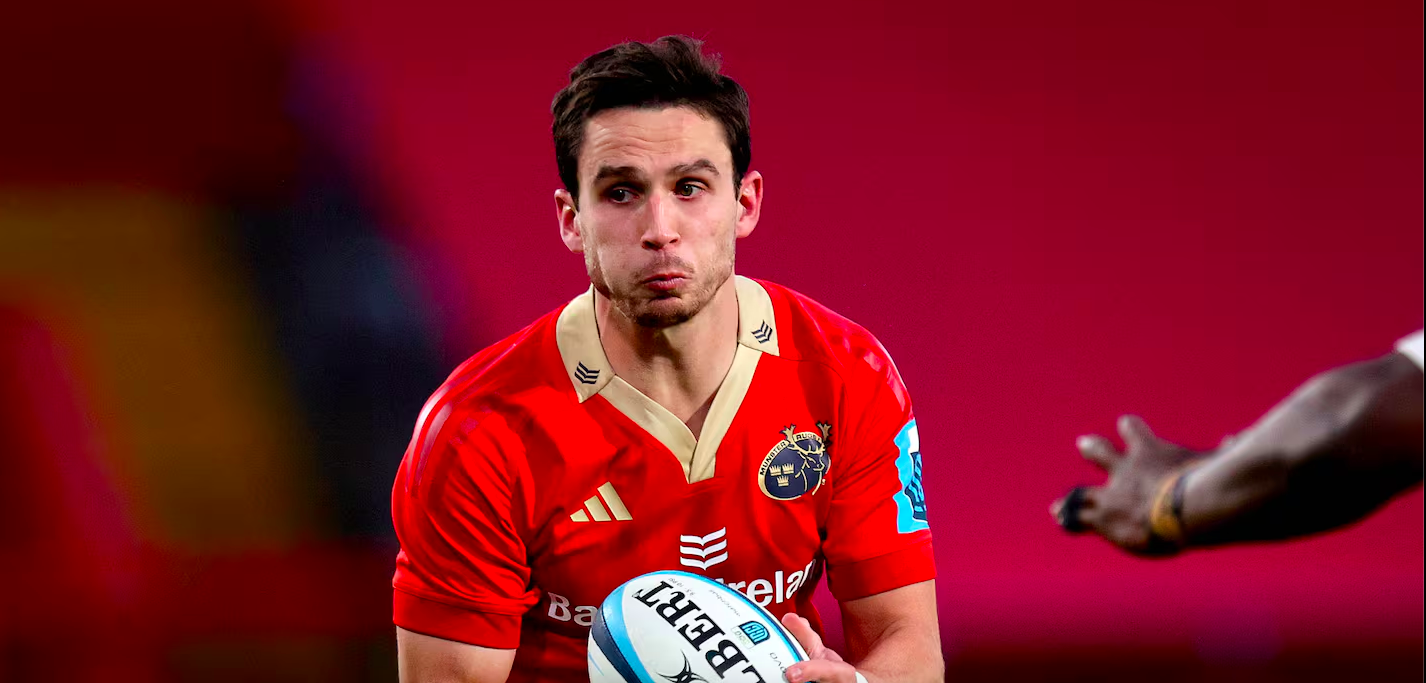
That feels unfair to write but I think it’s true. Nothing I saw from Carbery this season would, in my opinion, be worth offering anything above what we would have paid Ben Healy the season before.
The Joey Carbery we saw in 2018/19 was never going to return for Munster, in reality. No matter how much he was backed or how badly he or we wanted it.
There was too much baggage. He signed here to be our difference maker, to take us from perennial semi-finalists to trophy winners while cementing himself as the #1 flyhalf in Ireland but it just didn’t work out. Too many injuries, too many moments missed and too many false dawns.
It’s no surprise to me that when Van Graan handed in his notice, a lot of Carbery’s aura and status went with him.
It, again, feels unfair to write but I think once Jack Crowley and even Ben Healy got onto a level pegging with Joey Carbery from a status perspective, he lacked the fight to dominantly put himself above them in the pecking order. I think that he could deal with the ups and downs of the game week to week just fine as long as his position was without question but once it wasn’t, his confidence would fluctuate wildly. You can’t have a guy like that at your club, especially commuting from Kildare, as he did for a few years. In reality, that’s a sign that a guy has one foot out the door long before the second one follows.
At Bordeaux – where I think he’ll be a proper success story – he’s going into a situation where Jalibert is the undisputed #1 guy and there’s a possibility of getting minutes at fullback but Carbery is going there with his eyes open. He’s not taking backup money at a province he so controversially moved to be the #1 flyhalf in the country.
I wish him well, but I’ll be thinking of what might have been for a while yet.
