


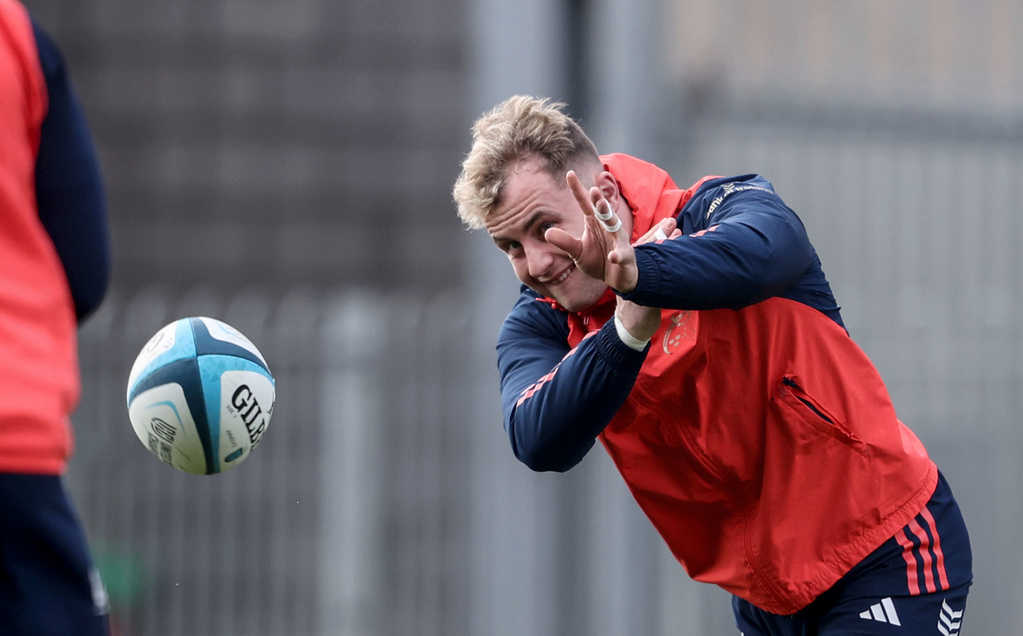
Momentum, momentum, momentum.
That’s what this game is about – sustaining the momentum of our first away win in the league all season against the Scarlets and sustaining the collective momentum we need to pick up 19 points, at least, in this four-game block. We have five points down, 14 to go. That starts tonight against Zebre.
Zebre rock up to this game on the back of five straight losses for two points total – the worst run in the league in that span of games – but find themselves having nothing realistically at stake here. That can lead to hopelessness or, as I imagine it does for Zebre, a little freedom. Nobody expects them to win this one, but I can imagine they’ll be talking about how they can catch this Munster team on the hop on a surface that suits both sides. If they play at their best and this Munster team produces a lowlight reel of the last few months, it’s possible. Unlikely, but possible.
In all likelihood, this is a game about Munster’s quest for five match points as we look to book a late surge up the table into the top four with third being a realistic target IF we nail down this 19/20 point block and win our remaining home games. With the right results elsewhere – the teams above us tieing each other’s shoelaces together ideally – I think a home quarter-final is more than achievable with our remaining fixtures.
Munster Rugby: 15. Mike Haley (Preston Grasshoppers); 14. Seán O’Brien (Mullingar RFC), 13. Antoine Frisch (Paris Université Club), 12. Alex Nankivell (Christchurch Boys High School), 11. Shane Daly (Highfield RFC); 10. Tony Butler (Ennis RFC), 9. Craig Casey (Shannon RFC); 1. Josh Wycherley (Bantry Bay RFC), 2. Niall Scannell (PBC Cork), 3. John Ryan (Muskerry RFC); 4. Tom Ahern (Youghal RFC), 5. RG Snyman (Afrikaanse Hoër Seunskool); 6. Ruadhán Quinn (Ballina-Killaloe RFC), 7. Alex Kendellen (c) (PBC Cork), 8. Gavin Coombes (Skibbereen RFC).
Replacements: 16. Eoghan Clarke (CBC Monkstown), 17. Jeremy Loughman (Athy RFC), 18. Stephen Archer (Cork Constitution FC), 19. Fineen Wycherley (Bantry Bay RFC), 20. Jack O’Sullivan (Sunday’s Well RFC), 21. Ethan Coughlan (Ennis RFC), 22. Rory Scannell (PBC Cork), 23. Ben O’Connor (Highfield RFC).
Zebre Parma: 15. Geronimo Prisciantelli (Club Atlético de San Isidro); 14. Scott Gregory (Hikurangi RFC), 13. Luca Morisi (A.S. Rugby Milano), 12. Damiano Mazza (Rugby Parma F.C. 1931), 11. Simone Gesi (Livorno Rugby); 10. Tiff Eden (Cheltenham Tigers RFC), 9. Alessandro Fusco (Amatori Napoli Rugby); 1. Luca Rizzoli (Unione Rugby Capitolina), 2. Luca Bigi (Rugby Reggio), 3. Muhamed Hasa (A.S. Rugby Milano), 4. David Sisi (Tottonians RFC), 5. Leonard Krumov (Crema Rugby Club), 6. Giacomo Ferrari (Unione Rugby Capitolina), 7. Bautista Stavile (Mendoza Rugby Club), 8. Giovanni Licata (c) (Miraglia Rugby Agrigento)
Replacements: 16. Giampietro Ribaldi (Caimani Rugby), 17. Samuele Taddei (Frascati Rugby Union), 18. Riccardo Genovese (CUS Torino Rugby), 19. Dylan de Leeuw (Western Province), 20. Davide Ruggeri (Rugby Como), 21. Thomas Dominguez (Club Atlético de San Isidro), 22. Jacopo Trulla (Rugby Vicenza), 23. Josh Kaifa (Auckland Rugby)
Zebre – like Italian Rugby generally – have embraced high-volume kicking as a core part of their game plan in the last 12 months.
This isn’t an accident. Zebre are controlled by the FIR, so the wants and needs of Quesada’s new regime at test level will be reflected closely in how they play.
I would be comfortable saying that Zebre is a high-kicking volume counter-transition team that plays a narrow, low PPC game when they settle into phase play.
In this regard, they are almost identical to Benetton which is to be expected, given that Italy could easily be described as playing the same way. So why don’t they have Benetton’s results?
Zebre are ranked 8th in the URC for kicking volume and distance for an average of 29m per kick across the season so far, Benetton are ranked 3rd for kicking volume and distance for an average of 27m per kick. Benetton have more possession than Zebre so they can kick more by volume and this is down to their far superior defence. Both sides put in a lot of tackles – because they both kick the ball to the opposition at high volumes to engage the opposition on defensive transition – but Benetton are the far superior team when it comes to winning the ball back. They are third in the league for turnovers won, while Zebre are 14th.
In short, Zebre kick as much per possession as Benetton do but they are really bad at winning the ball back and, on their possession, they are ranked in the bottom two in the league on turnovers whereas Benetton are middle of the pack.
So what should we expect from Zebre here? They will kick a lot, they will kick just beyond the mid-range to challenge us in the air, and they won’t be afraid of scrummaging off the back of those contestables because they have the third-highest number of scrum penalties won in the league this year albeit with a below average number for penalties conceded.
As a result of their tendencies this season, Munster should also expect to have a lot of multiphase possession in this game as Zebre will kick to us regularly and struggle to force turnovers if we retain that initial contestable.
Knowing what we know about high-kicking volume low PPC counter-transition teams with leaky defences vs high phase pressure on-ball teams, this is a really good matchup for Munster – on paper at least.
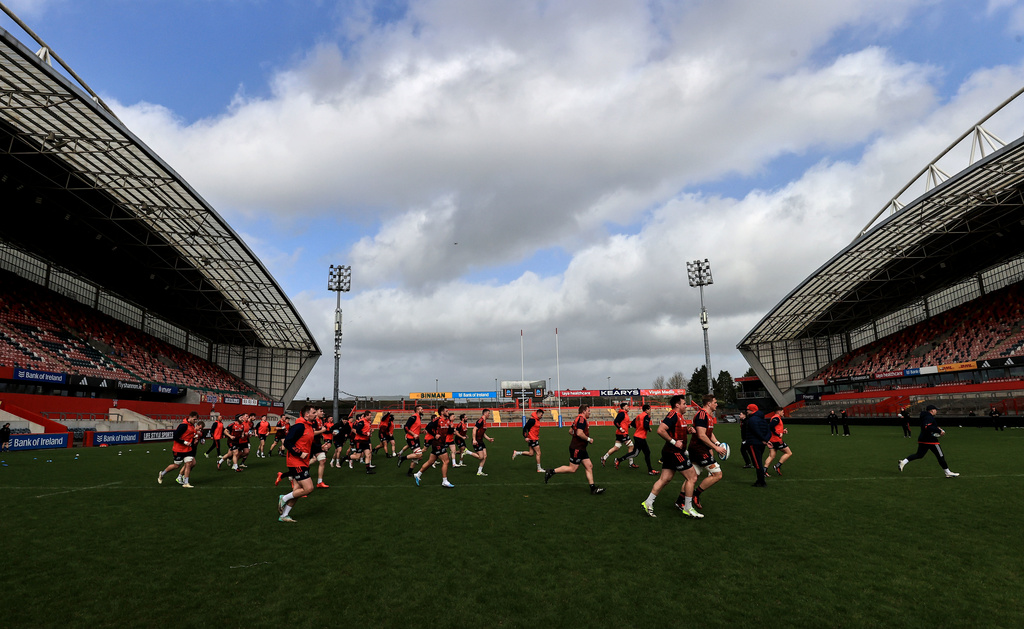
Just based on the theory of how Zebre plays, we should have more possession than we know what to do with, which will give us a good look at how our attack is developing in the last few weeks. Munster have been layering different looks and schemes onto our attacking structure to peak in the drier months on harder tracks.
We are a team that has realised that trophies are rarely lost in the wet of December, but are usually won on hard tracks in the sun in May. It’s slated to be cold and dry in Cork tonight so that gives us a chance to show how our 3-3-X on settled phase play and 3-2-X on transition are looking.
One aspect that I liked from our game against Quins last week was our ability to find the outside pod runner on the second three-man pod.
On this occasion, Carbery hit John Ryan on the outside of the pod but for this game, you could easily imagine that runner being someone like Snyman with Coombes acting as the compressor in the middle of the pod.
And it’s not just about the linebreak either, it’s the drift of the other pod players as offload options.
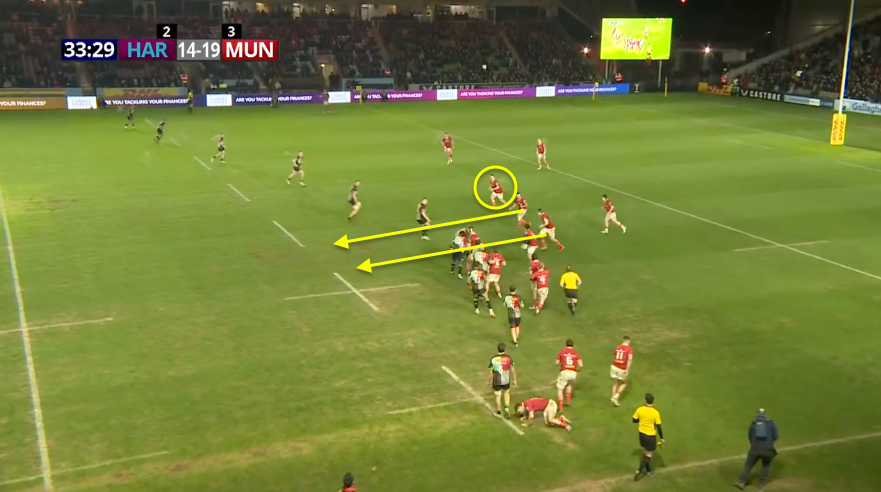
If Butler can hit that kind of pass right, we have the firepower to score from long range in this one, especially against a Zebre back five that is a little on the heavy side to facilitate their low PPC carrying game in attack.
When we hit the inside runner – and watch the quality pull back from Fineen Wycherley here – you’ve got the same principle and the same options. If it’s run accurately, there will always be runners streaming through in waves post break.
Our forward tip-on passing has been really improved this season and our starting front five have really good hands off #9, when they pass to each other and when they need to hit a playmaker running in the screen.
The screen running at first receiver is a hugely important part of our system and why it demands a certain type of #10 to make it work properly. Look at this sequence of phases here and watch how Carbery runs the screen.
He’s attacking off that screen looking for an offload. That is an expected possible outcome on these screens. It’s why that Munster #10 jersey needs players with pace, power and real acceleration – they aren’t just facilitators. Look at Carbery’s attack line here – it’s directly into that pocket of space outside the collision.
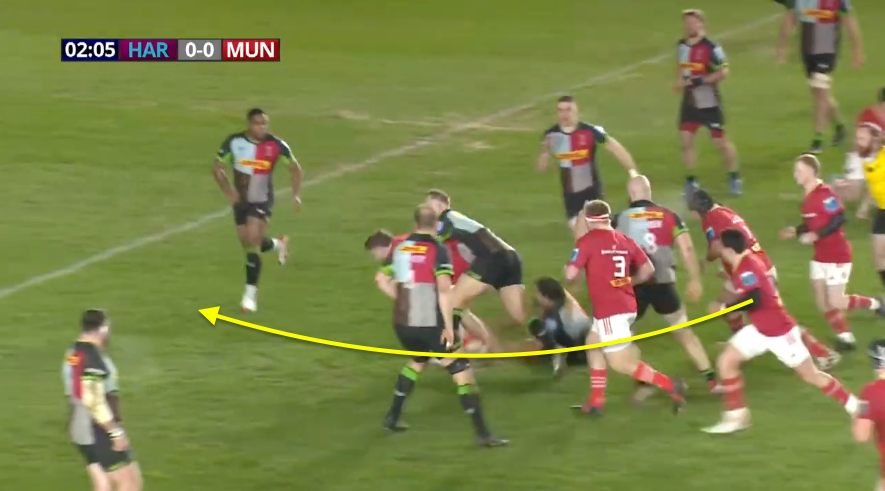
Butler is really aggressive in that screen and has the pace to recover quickly when he makes those break lines. Look out for Snyman offloading over the top of retreating defenders to Butler on this very offensive line.
That wide, flat three-pod is also really good at taking out edge defenders and opening up that 3/4 space for Haley, Frisch, Daly and O’Brien. The edge of the pod just runs their natural line and bumps off transiting defenders – Luca Morisi here – and that opens up so many opportunities.
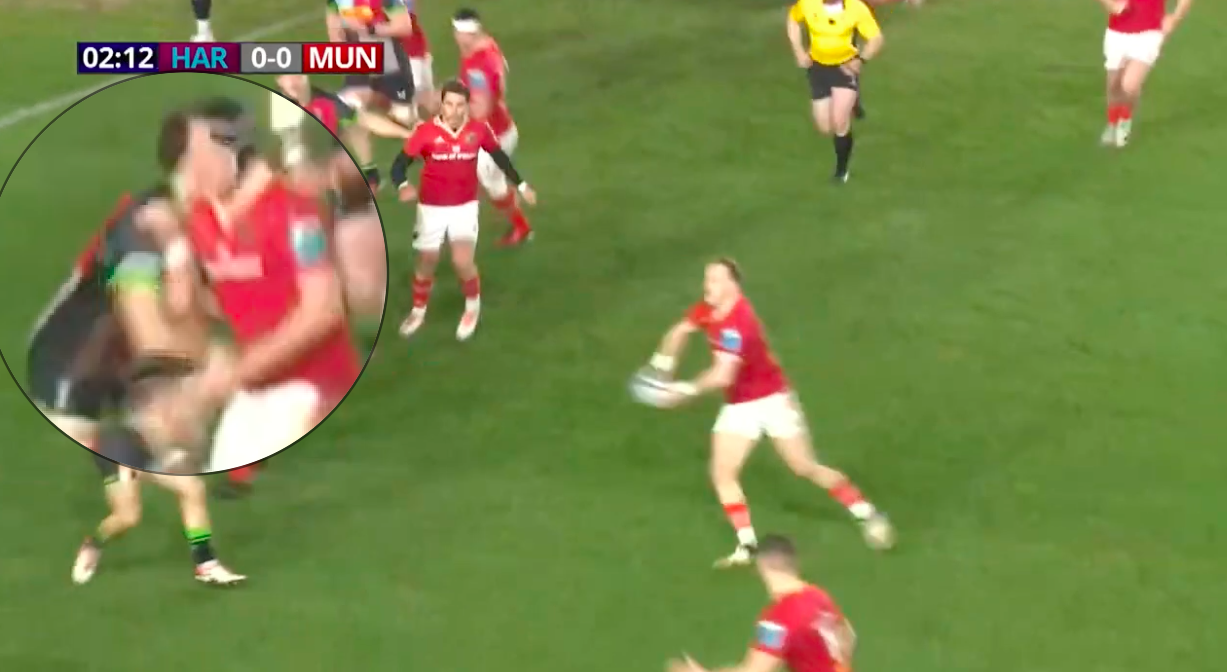
The ball got knocked on under no pressure here but I’d expect a similar edge spacing to be available early and often against Zebre if we can play with accuracy.
