



The Big Months never stop in this racket.
In the last three years, no month has been bigger or more formative for Munster’s season than December. The start of the European Cup, crunch interpros, Christmas shopping; it’s not a time for slipups.
But in the last two seasons, that’s all Munster have managed to do. The problems in December have typically meant a reshaping of priorities in the second half of the season to compensate. Munster have played eight games in December over the last two seasons and only won three of them, with two of those being home URC fixtures against rotated opposition.
So we know a Big December is coming but, before that, we have what is now a massive game against the Lions in Thomond Park right at the end of November. Our Big Months of September and October have made it so.
Munster have lost four games in the URC, three on the spin, and have also parted ways with the head and forward coach since the last time we played in this league. As shakeups go, they don’t get much shakier than that.
That, too, has put a big focus on this week’s game. With no Rowntree and no Kyriacou, people are rightly wondering what’s going on with this group. What have the three off-weeks in November allowed them to put together? The first six games of the URC season featured a tonne of injuries feeding into an imperfect team struggling against relatively quite strong opposition.
After doing the ORW scoring for the season so far, the only game where Munster radically underperformed was the away loss to Zebre closely followed by a scrappy win at home over Connacht. Munster played quite well against the Ospreys and beat them, then we lost three on the spin away from home against objectively difficult opposition.
In the cold light of day, none of these performances were a complete disaster – the Stormers was the worst of the three – but they all featured the same thing. Profligacy in the opposition 22, a lack of gainline in the middle of the pitch resulting in easily fumbled passing complexity and lineout performances so bad that they defy belief.

I wrote during the Wally Ratings about the loss to the Sharks that something had to change;
Like last week and the week before, you can concede a try or two early on and it won’t kill you IF you can fire back on the scoreboard when you have the chance. At 17-0, this game was pretty much dead and buried but the problem was that it should have been 14-10 long before. When the opponents have to play with a tight scoreline, they can’t play with freedom. We equalise the pressure. When we can’t convert the opportunity, all the pressure falls on us.
That’s been true three weeks in a row now.
But even with that, I can’t say that a majority of the team played badly here or well below their level. My star ratings reflect that which I think is another issue. We need a bit of power back in the team, yes, but I think we also need to attack tight opportunities like we’re aware of how lacking in power we are.
At least now we have over a month to sort the issue, one way or the other.
So what’s changed?
What even can be changed?
Quite a bit, apparently, but we’ll see exactly how much on Saturday evening against a physical, dangerous Lions side currently sitting third in the URC log. The URC doesn’t do easy games in 2024, and the Lions are the epitome of that; they are big, they are
Munster: 15. Mike Haley; 14. Shay McCarthy, 13. Tom Farrell, 12. Alex Nankivell, 11. Thaakir Abrahams; 10. Billy Burns, 9. Ethan Coughlan; 1. Dian Bleuler, 2. Diarmuid Barron (C), 3. John Ryan; 4. Evan O’Connell, 5. Fineen Wycherley; 6. Jack O’Donoghue, 7. Alex Kendellen, 8. Gavin Coombes.
Replacements: 16. Niall Scannell, 17. Kieran Ryan, 18. Stephen Archer, 19. Ruadhán Quinn, 20. John Hodnett, 21. Paddy Patterson, 22. Tony Butler, 23. Shane Daly.
Emirates Lions: 15. Quan Horn; 14. Richard Kriel, 13. Henco Van Wyk, 12. Marius Louw (c), 11. Edwill van der Merwe; 10. Kade Wolhuter, 9. Morne van den Berg; 1. Juan Schoeman, 2. PJ Botha, 3. Asenathi Ntlabakanye; 4. Ruben Schoeman, 5. Ruan Delport; 6. Jarod Cairns, 7. WJ Steenkamp, 8. Francke Horn
Replacements: 16. Franco Marais, 17. Morgan Naude, 18. Conrad van Vuuren, 19. Reinhard Nothnagel, 20. JC Pretorius, 21. Sanele Nohamba, 22. Tapiwa Mafura, 23. Erich Cronje
The Lions score the most amount of tries off kick returns in the URC so far this season, throw the highest percentage of 15m+ passes and, as a result, play to width incredibly often. They have size in the tight, power in the middle and scorching pace in the wider channels and they are a threat from all over the field.
What does this mean?
It means that if we produce the skittish, error-strewn rugby of the previous six rounds, they will hurt us and hurt us often. But, more specifically, it means we can’t kick long to them, probably shouldn’t spend too long trucking it off #9 either and can’t afford to let them get their phase play game going either, at least initially.
Avoiding kicking long to them is probably the most effective tactic you can bring to this game as 56% of their 19 tries have been scored with an origin in their half of the field.
The big x-factor here is riding out the Lions’ initial flurry of pace and power to outlast them in the second half. No team has scored more tries in the first half of games so far this season, no team has scored fewer in the second.
There are the bones of a strategy between all of those factoids.
Realistically, though, the key to winning this game is producing an 88%+ completion rate lineout performance, including nailing all the important ones. The Lions – like all heavy front-five teams – are prone to getting rolled in the maul, but we can’t hope to do that if we produce the lineouts we’ve shown so far this season.
A few key numbers; our general lineout return is 78.6%, the second lowest in the league. Despite this, we are in the bottom four in the league for throwing the ball to the front, and in the top four for throwing to the back. Surely, with a return below 80%, those numbers should be reversed? You’d think so, but no. We’ve suffered quite a bit from doubling down on bad schemes and bad calls, especially in the last three league games.
Almost all of the teams with the highest returns in the league – 90%+ completion – have over 50% of their throws going to the front of the lineout. Alex Codling’s job to simplify and rebuild our lineout more than likely starts with targeting those front areas. The Lions don’t usually compete at the lineout all that heavily – to conserve energy – so if we use the front space of the lineout with a mauling focus to sap some of their legs, I think that’s a good place to start. Throw short, maul, maul break, and attack the flanks of their maul with small forward and midfield pinch moves.
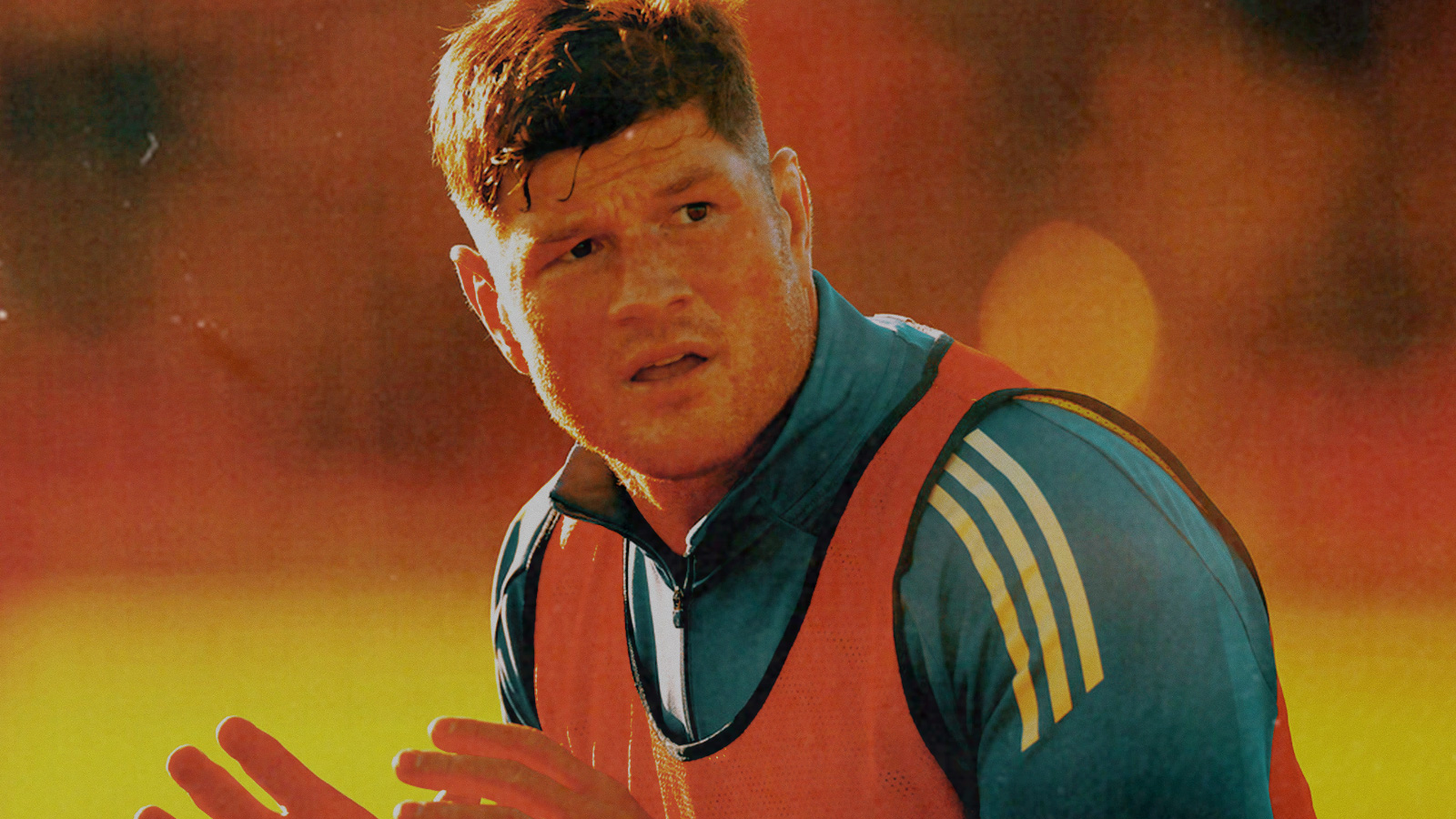
What’s killed us so far in this URC season has been a bad lineout causing sequence turnovers – losing territory, momentum and possession – which our opponents then use to stretch the scoreboard. A more conservative lineout builds on our strengths in that it allows us to hit the middle space of the Lions’ phase defence with two phases as opposed to a more aggressive strategy that tries to hit contested throws to the tail to open up easier attacking opportunities.
We need to simplify and strip back our lineout menu. If we can, I think we’ll have the platform to work and then exploit the Lions defence with a big push in the second half.
