


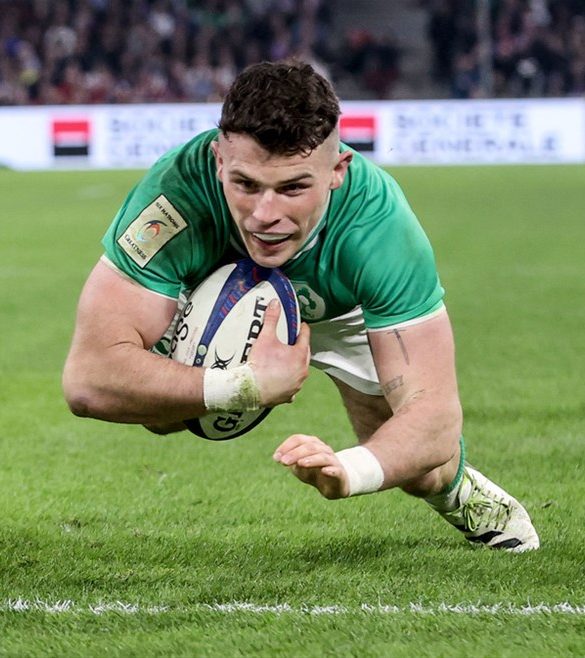
Playing Italy at home right after that away win against France last week is the ultimate vibe check on the coaching and playing group’s concentration levels. In a way, I think it would nearly be “easier” to go to Twickenham this week because the minds would naturally be focused on the massive challenge at hand. If beating France in France is one of the pinnacles of this game, beating Italy at home has become the slippiest of banana peels in that it’s a routine win that you are routinely expected to win handily. There’s no way to say that without sounding disrespectful to Italy – a rugby country I owe my current living to – but it’s the truth when it comes to the perception around this fixture.
Since the turn of the century, Ireland has lost to Italy once in 24 years. It will be 10 years this year since Ireland last won by 7 points or fewer. That is not a record that commands anything more than the default levels of respect you have to say you have for every team and it’s up to Italy to change that.
Internally, however, I think Farrell and his players see this game as being as close to a banker win as you can get in this tournament. How do we know this? Because it’s the game Farrell – head coach of Cohesion RFC – normally rotates out as many key players as he can afford. He will do this for no other game this spring unless forced to by injury or suspension. So when you see Aki, Furlong, Gibson-Park, Beirne and his new squad captain Peter O’Mahony rotated out for this game, it tells you that Farrell sees it as one that can be won without those core players.
That doesn’t mean that Ireland are certain to win but it does suggest that our coaching group thinks we are.
And 19 times out of 20, they’ll be right.
We just have to avoid that one.
Ireland: 15. Hugo Keenan; 14. Calvin Nash, 13. Robbie Henshaw, 12. Stuart McCloskey, 11. James Lowe; 10. Jack Crowley, 9. Craig Casey; 1. Andrew Porter, 2. Dan Sheehan, 3. Finlay Bealham; 4. Joe McCarthy, 5. James Ryan; 6. Ryan Baird, 7. Caelan Doris (c), 8. Jack Conan
Replacements: 16. Rónan Kelleher, 17. Jeremy Loughman, 18. Tom O’Toole, 19. Iain Henderson, 20. Josh van der Flier, 21. Jamison Gibson-Park, 22. Harry Byrne, 23. Jordan Larmour
Italy: 15. Ange Capuozzo; 14. Lorenzo Pani, 13. Juan Ignacio Brex, 12. Tommaso Menoncello, 11. Monty Ioane; 10. Paolo Garbisi, 9. Stephen Varney; 1. Danilo Fischetti, 2. Gianmarco Lucchesi, 3. Pietro Ceccarelli; 4. Niccolo Cannone, 5. Federico Ruzza; 6. Alessandro Izekor, 7. Manuel Zuliani, 8. Michele Lamaro (c)
Replacements: 16. Giacomo Nicotera, 17. Mirco Spagnolo, 18. Giosue Zilocchi, 19. Andrea Zambonin, 20. Ross Vintcent, 21. Martin Page-Relo, 22. Tomasso Allan, 23. Federico Mori
Italy’s chances of winning this game hinge on two things – attacking Ireland’s lineout and offensive breakdown – while also taking their chances on transition and at their set piece.
So, four things really, but the two keys are Ireland’s lineout and ruck.
Against England, Italy were railroaded, somewhat, into playing an on-ball game. This iteration of England is like the early version of Rassie Erasmus’ off-ball Springbok side where everything is kept incredibly simple. They kick absolutely everything inside their half, they don’t care if it bores you and they try to force turnovers and penalties with high-edge blitz defence. I think Italy wanted to kick the ball more but, at home for the first time under their new head coach, I think they ended up playing more ball than they will in this game.
For Italy, I think they will map very tightly onto Benetton, who are second in the URC at the moment and who are top three in the league for kick volume and kick distance. They had a Kick Per Pass ratio of one kick for every six passes against England, but I think that’s a by-product of England’s box-kicking and contesting.
I think Italy, in an ideal world for them, will kick a lot more in this game, with a few to hurting Ireland on transition rucks. Why do I think they’ll do that? Ireland’s starting pack build.
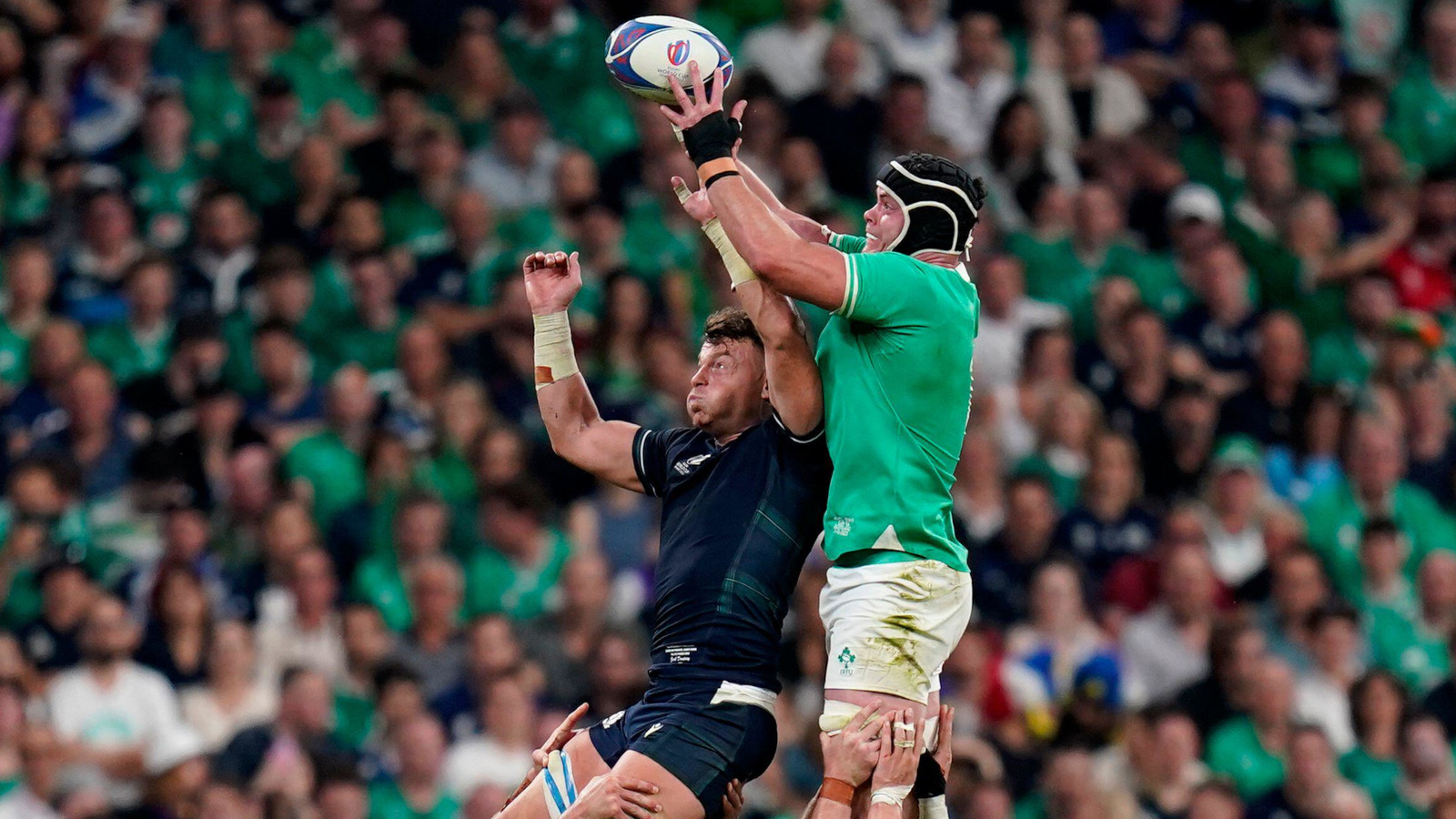
Ireland’s starting back five is about as heavy as we can currently field with this squad. James Ryan, Joe McCarthy, Ryan Baird, Jack Conan and Caelan Doris is a huge back five unit and, from a role set perspective, it looks designed to run over Italy early and often.
If we break down the rolesets in the terms I’ve described at length on these pages based on their usage we can see;
- James Ryan: Defensive Tighthead Lock Power Forward
- Joe McCarthy: Offensive Lock Power Forward
- Ryan Baird: Lineout Focus Offensive Half Lock
- Jack Conan: Heavy Wing Forward
- Caelan Doris: Heavy Combo Flanker
What sticks out there?
Well, no starting small forward build player, for a start. Josh Van Der Flier is on the bench for this one – and he’ll see around 20 minutes without any injuries – so there is a hint, a suggestion, a vague gesture in the direction of a lack of lateral mobility in this back five. All five of these players are genuine lineout jumpers and I think it’s a look at what a supersized Ireland pack build might look like against teams like South Africa, for example, who might look to attack us at the lineout as they did in the World Cup.
The one big hole in Van Der Flier’s game is that he’s not even a tertiary lineout jumper. I think he’s thrown more balls into the lineout in the last five years than he has successful jumps. As the lineout becomes ever more important, I think the test game will eventually move to all of the back five forwards being 6’4″ and above lineout targets, with the 5’10″/5’11″/6’0″ guys getting moved out of contention and, eventually into the midfield before they leave pro academies.
That won’t happen this year or next year, but when I see an Irish back five with nobody under 6’4″, you can see the beginning of the writing about to be applied to the wall.
Regardless, when we look at that back-five build the only natural offensive breakdown forward with any consistent record of high ORW scoring at this level is Caelan Doris. In the last 24 months, Ireland have almost always started with at least three natural ORW scorers in the back five, and sometimes four.
They are, by rank of average ORW scoring per game;
- Caelan Doris
- Tadhg Beirne
- Josh Van Der Flier
- Peter O’Mahony
Only one of those players is starting this game.
Looking at that Irish back five, there’s one big weakness that I can see and it’s that Caelan Doris is the only high-scoring offensive ruck work forward.
The big focus will be on James Ryan, who starts his first game for Ireland since the game against South Africa in the World Cup, a game where he scored five ORW points in 57 minutes. He hasn’t started a game for Ireland since. In truth, inaccurate breakdown work has been a feature of James Ryan’s game for most of the last few seasons. He has the most amount of marked Inefficient Entries in my records over the last two years and, in the last season specifically, he’s averaged an ORW score of 23.8 per start, which is low for an Irish second-row. By way of comparison, in the same period, Tadhg Beirne has averaged an ORW score of 37.5 in his starts.
It isn’t a case that Ryan is incapable of high-scoring. His highest score in the last 12 months came against France in the Aviva Stadium last year where he scored 45 points off 28 ruck entries. He’d have scored a lot higher if he hadn’t produced four inefficient entries in that game. You might well say that his role in those games where he scored 45, 22, 24, 21, 29, 21 and 5 was to be an offensive carrier and defensive stopper and you’d be correct. He always had Beirne or Henderson alongside him to balance out that area of his game. In a modern pack, there isn’t a massive need for all-rounders. Not everyone needs to rack up 40+ points at the breakdown to be effective. A good example would be Joe McCarthy who only scored 17 points off 19 involvements in that game but it didn’t matter. His job is to get over the gainline and smother opposition defensive rucks in open-phase play.
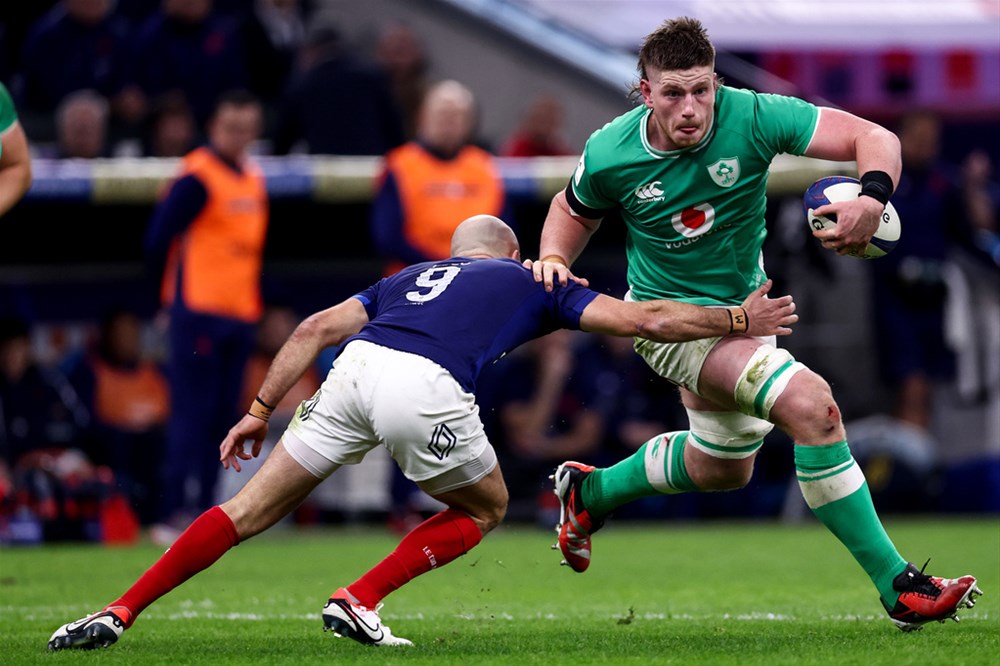
Sure, he’ll need to round out that aspect of his game but realistically, if he’s an impact ball carrier for us on 10+ carries, he can’t clean himself out or be expected to be involved as a cleaner in the next phase. As a result, others compensate for that area of his game to make the unit work. Doris – Ireland’s mechanic in the back five who can play multiple roles – will be vitally important against Italy because we know he can produce 40+ point games as a standard.
Can Jack Conan? Can Ryan Baird? We don’t know. Will James Ryan tailor his game to play more of a heavy support role? Or will he play his usual game and pass on the Offensive Ruck work to the front row for Bealham, Sheehan and Porter to increase their involvement?
Andrew Porter is capable of incredible ORW scoring. He has an average score of 29 ORW points in ten starts over the last year, but he’s regularly done 35+ against certain opposition. My pet theory is that Farrell limits his offensive ruck work involvements against teams where he’s expected to have a tough time scrummaging so his energy is conserved for that and defensive/lineout involvements. Against England and South Africa, for example, he’s scored below his average on multiple occasions and not just on points, but on involvements. I don’t expect Ireland to be overly worried about the Italian scrum in this game so I think if Ryan is going to play his primary role, Porter will cover the involvements we usually see from Beirne with the rest spread out amongst Sheehan and Bealham.
When you also consider that Ireland hasn’t selected Bundee Aki – our back with the highest offensive ruck involvements – you can see a path where this game could get sticky.
For Italy, I think the route to disrupting Ireland is clear. Kick long and often, meet Ireland on defensive transition with Lamaro, Zuliani, Brex and Menoncello attacking those first few transition rucks hard. Italy are without two of their best ball carriers – Negri and Cannone – so there’s no harm in playing a low pass counter-transition game early to frustrate Ireland, get the crowd groaning and see if there’s any joy to be had with some turnovers or over-eager Irish carrying.
If Ireland’s breakdown runs smoothly, we’ll win by 20+ points but if it gets sticky, Italy will cheese time off the clock and force us into overplaying, which can lead to issues when Ireland has rotated the team.
