


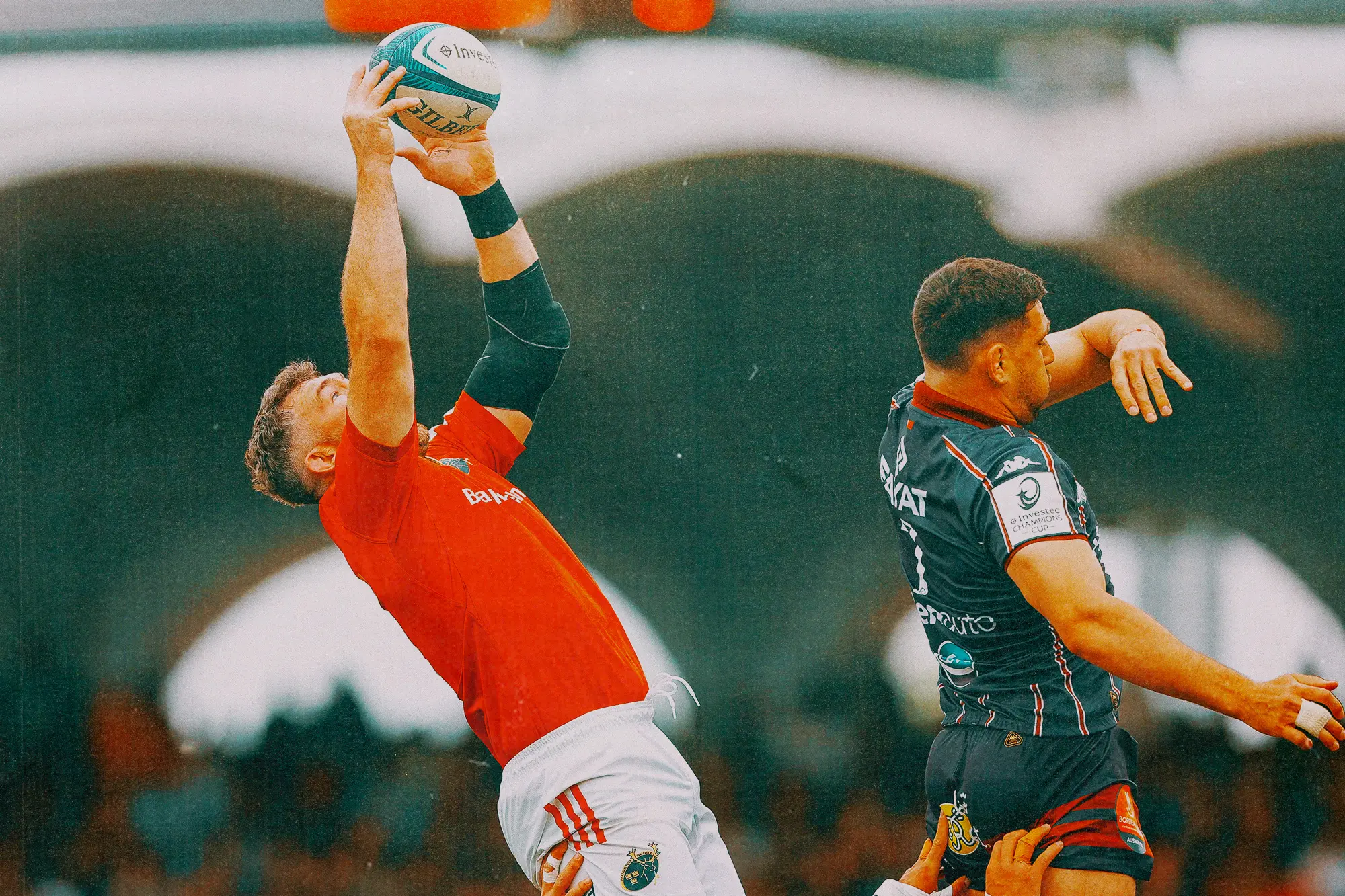
Playing the Bulls is never easy. It’s always hard. It always hurts.
Whatever about the completeness of their game under Jake White in 2025, their core fundamentals at the set piece and overwhelming physical power in the pack make them a constant threat in almost every phase of the game. Are they a fully complete, fully coherent attacking side with multiple facets to their game? No. Are they prone to tactical and defensive lapses? Yes. Can they be off-balled and counter-punched? Yes.
But to take advantage of those possible “ins”, you have to first get to grips with their incredibly formidable set-piece that can and will break the big rocks of your game into gravel.
Want some numbers?
They are second only to Edinburgh when it comes to the scrums they have won via penalty so far this season – we saw how that affected us in Cork a few weeks ago.
They have won the second-most opposition scrums in the URC behind Leinster (and Rabah Slimani).
Nobody has won more opposition lineouts in the league than the Bulls, and their early-season wobbles on their own throw have been mostly eradicated. As a result, they have one of the most physically imposing mauls in the game at the moment, with big men rolling off a platform of other, equally big men.
Put simply, the Bulls’ set piece has all the data points that have coincided with Munster’s most recent losses in the URC and Europe.
If we are not on it, or start poorly, or both, they can and will break us down and leave us chasing a result late in the game.
The x-factor in all of this?
Fatigue. Mental, emotional and physical.

How many days out of the last few weeks have you been sleeping in a hotel room, eating hotel food? How many bumps do you have on your card for the last month? How important is this weekend to you?
For Munster, this is week four in what has become a pretty gruelling five-week block. Connacht in Castlebar, Stade Rochelais in La Rochelle, UBB in Bordeaux, the Bulls in Limerick (this week) and then Cardiff in the Arms Park next Friday. Back to back to back. All of them crucially important to our season at every step, and all of them against hugely motivated opponents with business of their own to do. This is the part of the season where playing opponents with ambitions set on next season or a game the next weekend are a blessing – we haven’t had too many of those post Six Nations.
The Bulls, too, have been on tour for two weeks already. One week in France, one in Scotland and then here, with a game away to Glasgow coming up next week. How fresh are they? How do we make that hotel bed count for something? That’s the challenge. We can’t cod ourselves into thinking that they’re going to turn up sloppy, but we have to make their travel in the last three weeks costly. Use the ol’ home bed advantage.
Quite simply, this weekend has to be the finishing touch on the win away in Castlebar. A regular or bonus point win today gives us the breathing room to attack the next few rounds with a little freedom, knowing that, at the very least, fifth is more or less buttoned down. The Bulls, currently in third, have a buffer in third place and will see a second place finish as being more than achievable. Something has to give.
Munster Rugby: 15. Thaakir Abrahams; 14. Seán O’Brien, 13. Tom Farrell, 12. Alex Nankivell, 11. Andrew Smith; 10. Jack Crowley, 9. Craig Casey; 1. Josh Wycherley, 2. Niall Scannell, 3. Oli Jager; 4. Jean Kleyn, 5. Tadhg Beirne (c); 6. Tom Ahern, 7. Peter O’Mahony, 8. Alex Kendellen.
Replacements: 16. Lee Barron, 17. Mark Donnelly, 18. Stephen Archer, 19. Fineen Wycherley, 20. Jack O’Donoghue, 21. Conor Murray, 22. Diarmuid Kilgallen, 23. Ruadhán Quinn.
Bulls: 15, Devon Williams; 14. Sebastian de Klerk, 13. David Kriel, 12. Harold Vorster, 11. Canan Moodie; 10. Johan Goosen, 9. Embrose Papier; 1. Jan-Hendrik Wessels, 2. Akker van der Merwe, 3. Wilco Louw; 4. Cobus Wiese, 5. Ruan Nortje (c); 6. Marcell Coetzee, 7. Jannes Kirsten, 8. Cameron Hanekom
Replacements: 16. Johann Grobbelaar, 17. Simphiwe Matanzima, 18. Mornay Smith, 19. JF van Heerden, 20. Nizaam Carr, 21. Zak Burger, 22. Keagan Johannes, 23. Stravino Jacobs.
If you were the Bulls watching Munster’s defeat to UBB last weekend, one thing would have jumped out at you; the Munster lineout.
Of all the areas where the Bulls currently match up with us, their defensive lineout versus our lineout at its worst is a recipe for disaster. If we produce the same lineout performance here, we will lose; it’s as simple as that. In some ways, however, our preparation for UBB and the subsequent review we’d have done this week will be hugely relevant for this week against the Bulls. For me, Jake White’s side have a tonne of similarities with the UBB we played last Saturday; they are really heavy in the front five, but have dangerous counter-jumpers in the lineout and play with a very low pass to kick ratio. The Bulls aren’t as dangerous on transition as UBB or as we saw on first phase, but if we show them the errors we showed UBB, they’ll score the same tries in broadly the same way.
Where the Bulls differ quite a bit is in their use of possession; they are the lowest average pass per game team in the URC, play the fewest percentage of possessions beyond first and second receiver and have the narrowest attacking structure. All of this makes sense in context. They kick a lot of their possessions as contestables and when they do have the ball they are very good at using their heavy runners off #9 to grind down your tight defence. Even with that, they have a higher turnover count than that narrow, low-risk structure might suggest and a lot of this comes back to their offloading. Any side who plays as narrow as the Bulls has to use offloading and if they land their offloads – they are 10th in the URC for offload success, Munster are #1 – they have the highest percentage of try assists from offloading in the league.
But if you’re Jake White, you’ll be focused on one thing this week; doing to the Munster lineout what UBB and Guido Petti did. That’s the thing with the Bulls; they won’t really overthink this too much. They know they kick at a pretty high volume – they’ve averaged 4.6 passes per kick in their last two away games – and they will feel really comfortable getting the ball off the pitch from their exits because of how wobbly our lineout been when it comes under pressure.
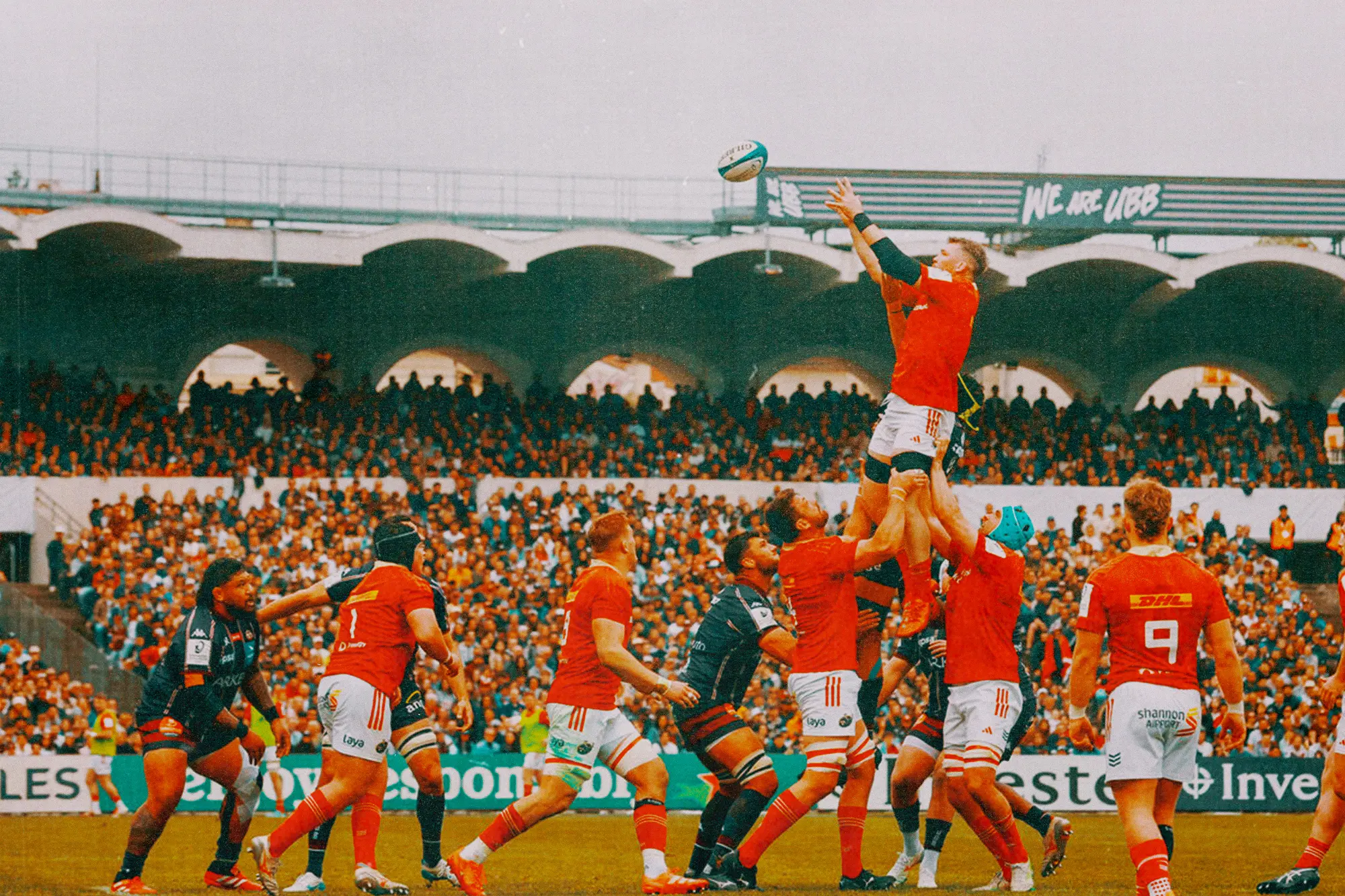
The Bulls will look to exert that same pressure consistently and they will see it as a core part of their sequencing here; kick long, get the ball off the field, load Munster up with 12+ lineouts outside of the Bulls 22, and disrupt, disrupt, disrupt.
Their typical counter-work will look like this on five man schemes with Nortje and Weise – Nortje in particular – being a very aggressive reader of the opposition lineout.
The Bulls don’t really have an explosive counter-jumper that they can afford to focus on purely the lineout, but they have very long, athletic counter-jumpers with really strong lifters. On six man lineouts, you’ll see the Bulls splitting their locks to the middle and tail with their props and other lineout players looking for cues to show counter-lifting routes.
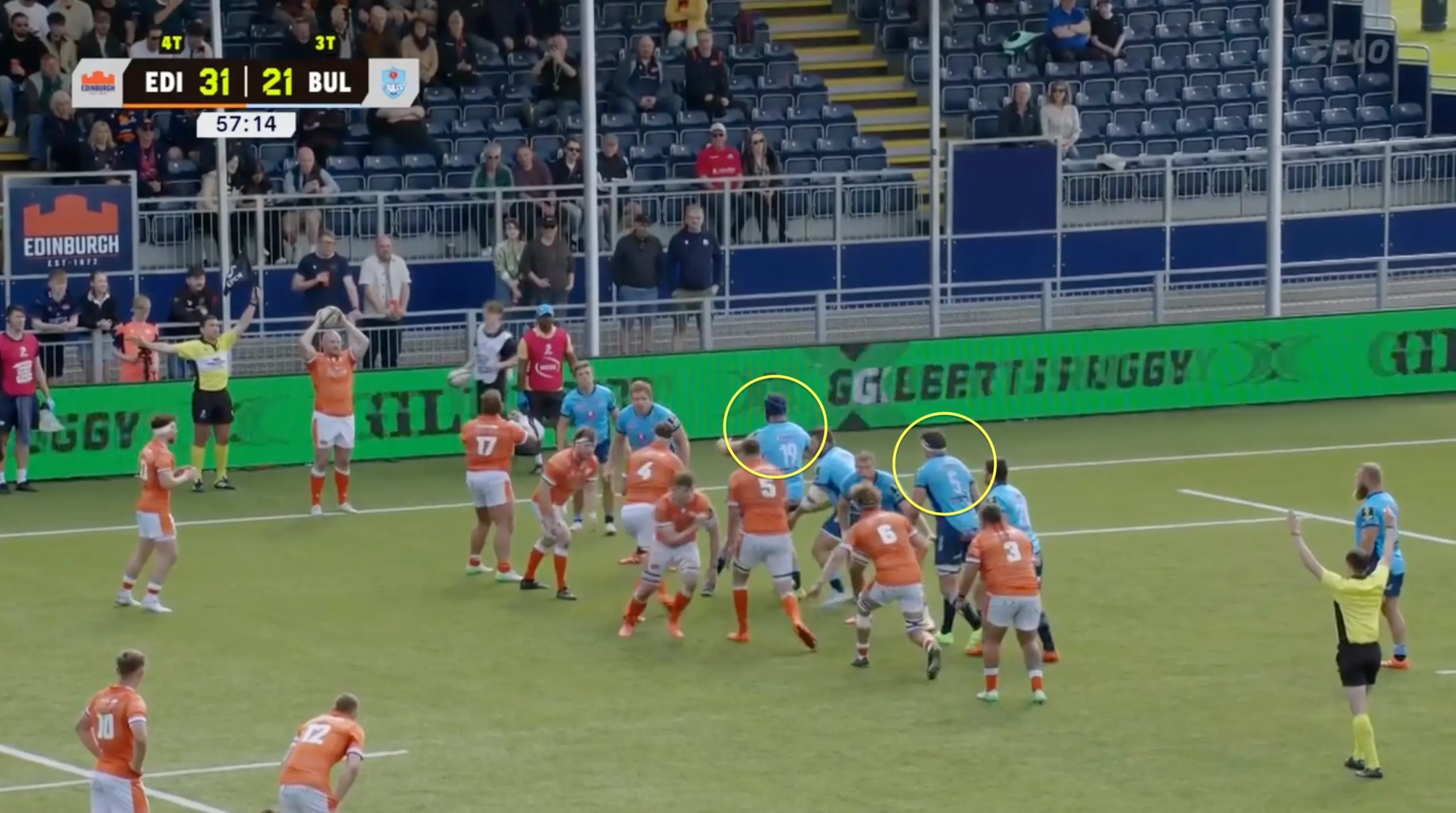
This is notable because they will do a lot of moving around in response to your pre-jump action but the counter-jumpers will mostly remain the same. We need to get our lifts and schemes spot on, especially on the five-man schemes where we’ll have Jager, Ahern, Kleyn, Beirne and O’Mahony to start. If we can get our rhythm going there are interesting options targeting
But it wasn’t so long ago that the Bulls were struggling badly at the lineout themselves. Even last week, they were down around 80% themselves on 20 lineouts, which isn’t as bad as ours in Bordeaux, but it’s not a lock down elite lineout either.
The Bulls love getting the middle space and typically use a 6 man lineout with Coetzee in midfield or a 5+1 with Coetzee as the rip when they’re between the 22s.
What if we decide to pressure their throw off the back of a low kick to pass ratio game of our own? They love that central ball to Nortje, so what if we use Ahern as a constant threat in that throwing window?
The Bulls don’t use a tonne of cut outs or feints on their schemes – they play a tall lineout with movements being quite straightforward, most of the time.
When they do use a cut-out, it’s usually a fairly simple one like this and almost always when they’ve had a lot of disruption on their throws to that point.
But the space they’re going after is the same – middle space to establish the maul early and stretch out the defence when they want to use Coetzee to force compressions.
They will also use this scheme to get Hanekom after Casey at least once, so Wycherley and Donnelly will need to be wise to it.
We know that a kicking game is easier to play against a team like this – on ball sequences can be physically demanding against the Bulls, so we have to use them specifically on post-transition. Kicking to their back pin can be a useful way to unbalance them, especially with that flow box kick that Casey has specialised in over the last season or so.
That space behind De Klerk and outside Williams will be there a lot, if we can find it, as well as the longer kick over the top of Moodie, although that is the riskier kick by far.
If our lineout holds, we have the game to hurt the Bulls directly on transition, post-transition and off the set piece where the Bulls give away a fair few key penalties if the rucks flow fast and get outside their forward line.
If our lineout implodes like last week, we’ll lose.
I know what one I’d prefer.
