


It is February 2007.
I’ve just caught a train back from Dublin on the morning of Ireland vs England which is being played in Croke Park for the first time. As I wait to get on in Heuston Station, I see throngs of Irish kit walking through the gates, some looking nervous, some looking boisterous, some looking like they’ve already had one too many pints at 9 am. For the last week or more, radio and newspapers have been full of opinion – for an against – as to whether or not England should even be allowed to play there.
On the walk down to the train station early that morning, I remember, clear as day, thinking that the pressure on those players in that match would be almost too much for anyone to bear. There was nothing at stake outside of winning a game in the Six Nations (Ireland had lost the previous game in Croke Park to France two weeks before with practically the last play of the game) but, in reality, there was everything at stake.
This was a game that Ireland could not lose.
No, like, beyond rugby into real-life shit. Ireland could not lose that game. The pressure was unbearable, as I would learn by reading Paul O’Connell’s autobiography well over a decade later. If you weren’t there to experience that two-week build-up first-hand, it’s hard to put it into words. There were 800 years of history distilled into a rebellion in 1916 distilled into a rugby game.
It meant everything.
I got back in the door in Cork city around 10 minutes before the anthems and I got ready to sit down and watch the game. There was a lot of discourse around the English anthem in particular. Would God Save The Queen be booed? Should it be played in Croke Park at all? What would it mean if it was booed? Would that mean we were an immature country, something that was actively debated in the media that week? What if GSTQ wasn’t booed?
At the time, though, I had no idea whether it was or it wasn’t because my housemate had to turn the TV off right before the English anthem because, in his words, he couldn’t bare to listen to it. He literally just changed the channel. Was he singing God Save The Queen in his head to time it? He must have been because when he switched back it had literally just finished and Amhrán na bhFiann kicked off almost immediately with roars from the ground before it started, so you know it was going to be good.
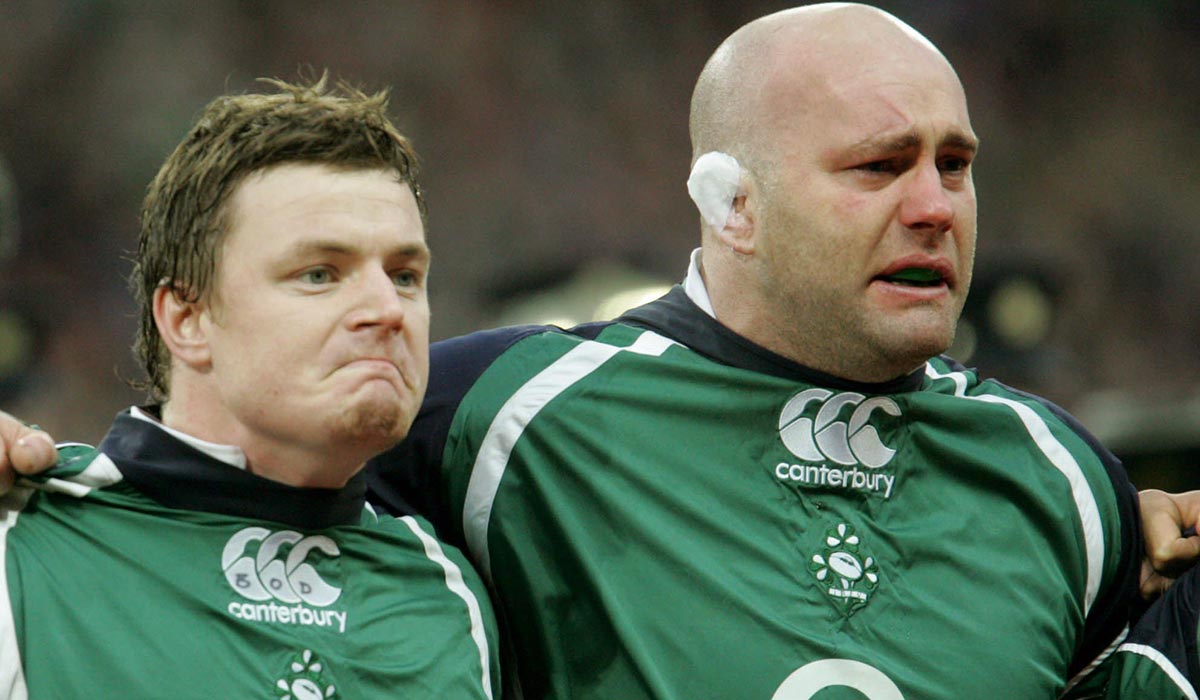
When I saw John Hayes, I knew we weren’t losing.
England were playing a rugby match, we were going to war. They took an early lead through Johnny Wilkinson but Ireland jabbed ahead with a series of Ronan O’Gara penalties before a try each from Girvan Dempsey and David Wallace knocked the stuffing out of England right before halftime.
Ireland ended up winning 43-13 and would end up finishing second on points difference behind France but beating England on that day in that stadium was worth more than a trophy, to me anyway.
I sat on the couch after the final whistle and just felt… relief. Relief that Ireland hadn’t lost, which was a weird emotion – the minor chord to the major I expected.
Andy Farrell, who lined out for England that day, has all the practical experience anyone could want when you talk about showing up for a rugby game in this fixture when the other side is turning up for war. Steve Borthwick, who captained England to a narrow 14-13 defeat in the same stadium two years later as Ireland went on to win a Grand Slam will have to learn those lessons pretty quickly this weekend if he wants to stop Ireland doing the same 14 years later.
Who is turning up for war? Who is here just to play a rugby game?
We’ll find out at five o’clock on Saturday.
England: 15. Freddie Steward, 14. Anthony Watson, 13. Henry Slade, 12. Manu Tuilagi, 11. Henry Arundell, 10. Owen Farrell (c), 9. Jack van Poortvliet; 1. Ellis Genge, 2. Jamie George, 3. Kyle Sinckler, 4. Maro Itoje, 5. David Ribbans, 6. Lewis Ludlam, 7. Jack Willis, 8. Alex Dombrandt
Replacements: 16. Jack Walker, 17. Mako Vunipola, 18. Dan Cole, 19. Nick Isiekwe, 20. Ben Curry, 21. Alex Mitchell, 22. Marcus Smith, 23. Joe Marchant
England have had a bad week. Their record home defeat to France last week (which beat out a huge loss at home to the Springboks in 2008 where Steve Borthwick was the captain, weirdly enough) has drawn the kind of criticism that you’d expect. The worst of it came from Nick Easter who basically accused England of being soft, which is about as bad an insult as you could ever throw at a rugby team, never mind a test rugby team with England’s reputation.
How do Steve Borthwick’s England react to a loss like last weekend? That wasn’t just any old loss. This was France v England. Le Crunch. In my twenties, that was almost always the Six Nations decider in one form or another. England losing to France in Twickenham by 43 points is remarkable. That’s the kind of loss that, if Borthwick experienced it next season, would have got him the sack in all likelihood.
But what does it mean for this week? A loss like that has the effect of kicking the airlock open on a space station. Everything not nailed down gets sucked out into the void. That’s the kind of defeat that should – should – suck out any bullshit that was lingering in the group.
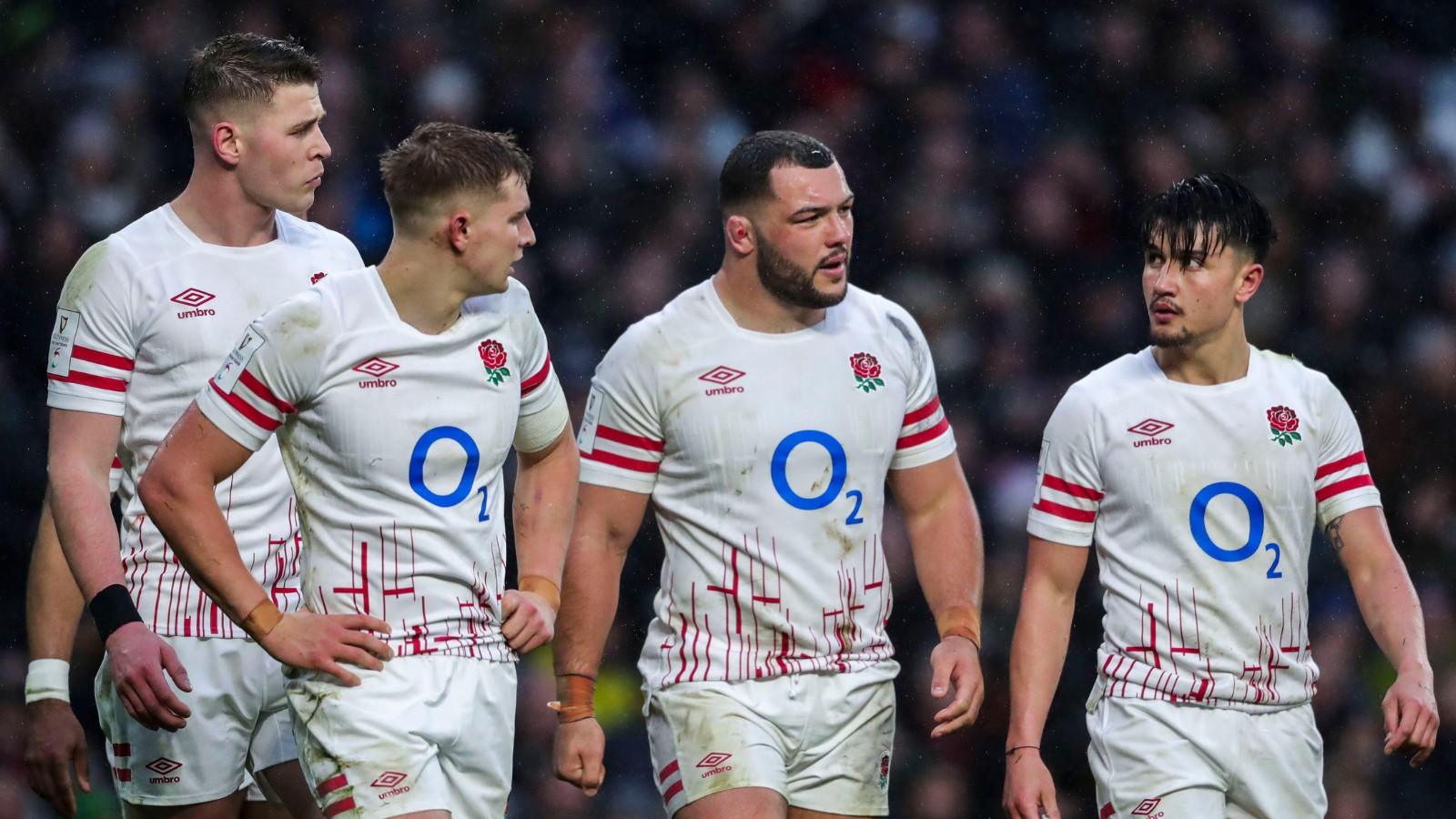
Their honour, their guts, their quality, their character – it’s all been on the line this week. They have to respond.
When I’m looking at a team ahead of a game like this, I try to ignore lopsided results like that loss to France because it was SUCH an aberration. Games like that can give you a bad read on what a team is about. I don’t think England are that bad. They aren’t great by any means but anyone who tells me they’re 53-10 at home to France bad, for me, is talking overegging the pudding.
England have a few problems that are double-crossing their really solid foundations.
They have the #1 ranked scrum and lineout in the Six Nations, they have the best discipline in the tournament and a credible ability to win turnovers (3rd overall). No one has more dominant tackles. England have the best Q2 defence in the Six Nations too because they allow the least amount of 22 Entries of all the sides in the tournament to date.
So what’s the problem?
Well, they have the worst red zone defence in the Six Nations – they concede more points per 22 Entry than anyone – and they concede more turnovers than any other side. England conceded six tries on the first phase and eight tries total with the set piece as the origin. As a comparison, Ireland has conceded one try off the set piece. One.
That wouldn’t be so bad if they weren’t an absolute disaster offensively, at least relative to their possessions.
England has 21 knock-ons in four games, which is 10 more than Italy. As a result, England creates a ridiculously low number of linebreaks per carry that is rooted in below-average ruck speed and a rake of offensive breakdown penalties.
England wins the gainline 54% of the time (enough to rank second behind France) so that inability to up the speed and accuracy at the breakdown is killing them. Most of their penalties have been conceded in the opposition’s half of the field and the vast, vast majority of those are at the breakdown.
So what’s the solution?
An off-ball game based on high kicking volume – which they already run – with a big focus on hurting Ireland at the set piece. This is where Manu Tuilagi comes in, the man who has never lost to Ireland in six games. He has always been super effective for England against Ireland because he is a structure breaker. It’s why so many English head coaches have stuck with him through knock after knock and long-term injury after long-term injury. Players who can break the opposition’s defensive structure off the lineout, primarily, are the most valuable players in a limited game plan because they create a conceptual shortcut. Ireland do not want Manu Tuilagi going one on one with Johnny Sexton, especially when he’s attacking on a crash ball with a late pass from Owen Farrell, who will hold Josh Van Der Flier’s attention until very, very late in the movement. As a result, that creates a compression for Owen Farrell to exploit because if Ireland want to protect Sexton – and we do – then Van Der Flier will be running closer and Aki will be stepping a little more narrow. That allows Farrell to use his own gravity to then find his back three on the screen or the inside pass, or extend the play through Henry Slade so he can attack Henshaw. It’s basic but that’s what England have to go back to.
To balance this, they’ve picked their best back three to counter a counter-transition-based team like Ireland. Freddie Stewart is a big powerful runner at fullback, Anthony Watson is an elusive, dangerous runner with the ball in his hands on transition and Henry Arundell can and will break open our transition defence if England can find him because I’d be very surprised if we kick to him anything other than full-on contestable. This is where Robbie Henshaw’s defensive coverage and match sharpness will be really tested; not in the collision, but in the deep waters of transition defence.
Look for Slade to drop back as a passing link between Steward and Arundell and Steward and Watson.
England will kick a lot and with a tonne of volume. They’re going to use this to try and take the sting out of Ireland’s usual fast start so look for a lot of long infield kicks down Lowe’s wing with Watson/Arundell tasked with preventing easy transition rucks or first-phase breakaways. They don’t have to nail the tackle, they just have to prevent him from making easy plays. From there, if England can hold their discipline and avoid conceding the penalties that Ireland uses to launch those edge-kicking plays early on in games, they’ll back themselves to frustrate Ireland for as long as possible. Take the crowd out of the game, put pressure on Ireland to play phase possession deep and pull us off structure. That will be England’s initial ploy, I feel, along with really hurting Ireland off the lineout and the scrum through Steward, Arundell and Tuilagi.
And like last year, I think this English pack feels they can get a dominant advantage in the scrum to a point where it will positively impact the game for them. Will Jaco Peyper punish Ireland’s latent issues at the scrum? If he does, that makes this game quite sticky.
England’s biggest problem this season has been Doing Too Much Stuff. This is the perfect week for them to strip back their game, back their physicality (in a week where they’ve been called soft) and try to off-ball Ireland. Will England be ready for war this week? Will Ireland?
Let’s see.
