



I know I’m getting old because I opened the presents on Wednesday morning, found some brand new boxers on top, and said, “Yes! I needed those!” because I did need them. There’s nothing like a new pair of boxers. And socks! Don’t get me started on new socks.
Leinster. Munster. Thomond Park.
As much a Christmas tradition as buying Baileys with every intention to actually drink it this year because it’s something you feel you should like, but it joins the other four unopened bottles under the stairs all the same. Merry Christmas, ya filthy animals.
When Leinster come to town in the last ten years, it’s almost always ended in a Leinster win. We have six wins over them since 2014/15 – three in Limerick, and three in Dublin. Thomond Park has been a pretty happy place for them to visit in the last while and I think they get more emotional energy from playing and beating Munster than they’ll ever realise.
We are not a peer to Leinster Rugby as it stands. They will judge their season on how they do against La Rochelle and Toulouse in the European Cup next week and in May. But their vibes always depend on how they handle Munster. Losing to Toulouse and La Rochelle has caveats aplenty. Losing to Munster doesn’t.
Leo Cullen has only ever lost twice in Thomond Park during his time in charge of Leinster. The last time Leinster saw defeat on the Cratloe Road, the idea of a global pandemic was science fiction.
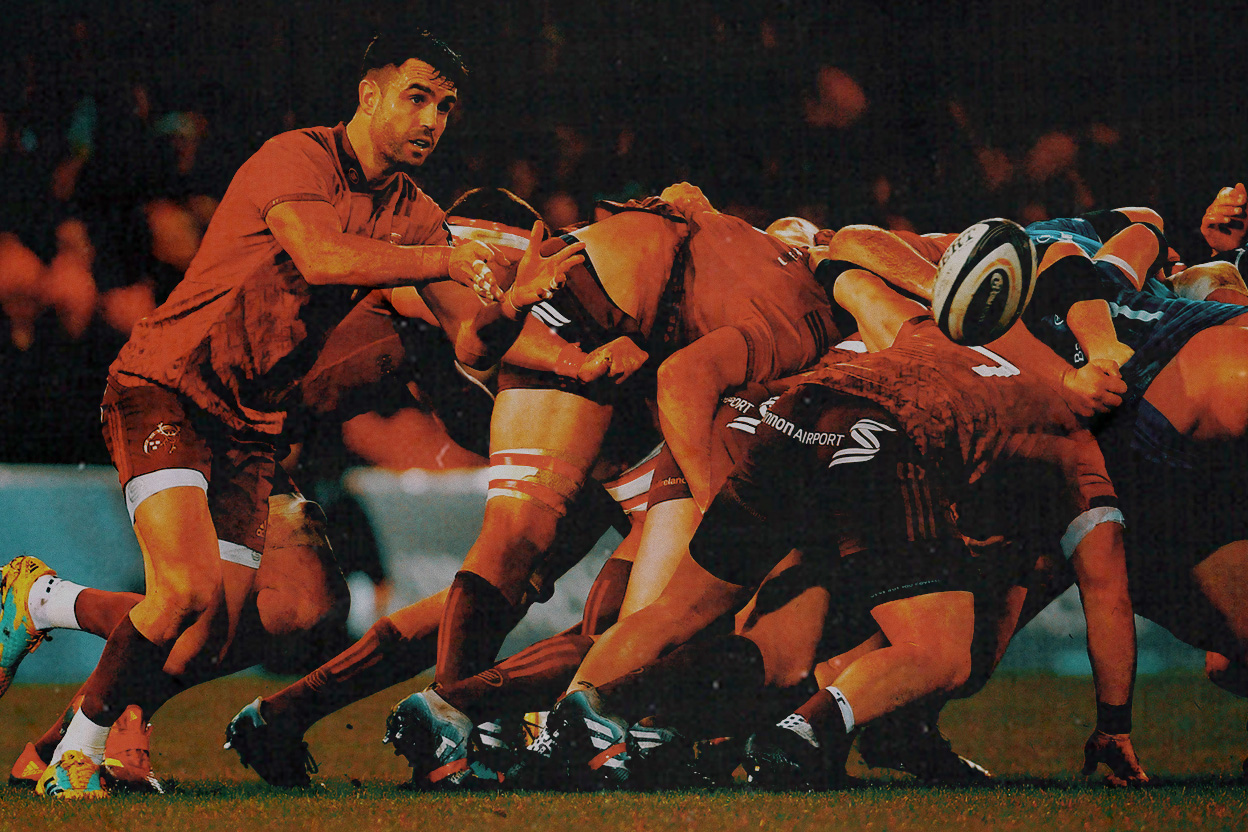
Yet it’s incredibly rare that Leinster ever ventures down the M7 without budgeting IRFU rest minutes to ensure they have as many of their level raisers as possible. Cullen understands the value of keeping the boot on the neck and knows exactly what happens when that boot slips.
Maybe we’ve been getting the idea of a mental block when it comes to playing Leinster all wrong. We’ve lost so often to them home and away in the last decade that it’s become part of Leinster’s regular season diet. Another loss for Munster here does… what exactly? Was it meaningful last year? Or the year before? Or the year before that? You still can’t get a ticket for this one, for love, money or nice boxers.
What happens if we can exert pressure ourselves? What happens if we can get Leinster asking questions about what a loss here means for them? That seems like an opportunity for me.
Munster: 15. Mike Haley; 14. Calvin Nash, 13. Tom Farrell, 12. Rory Scannell, 11. Shane Daly; 10. Billy Burns, 9. Ethan Coughlan; 1. Dian Bleuler, 2. Niall Scannell, 3. Oli Jager; 4. Fineen Wycherley, 5. Tadhg Beirne (c); 6. Tom Ahern, 7. Alex Kendellen, 8. Gavin Coombes
Replacements: 16. Diarmuid Barron, 17. Kieran Ryan, 18. John Ryan, 19. Brian Gleeson, 20. John Hodnett, 21. Paddy Patterson, 22. Tony Butler, 23. Ben O’Connor.
Leinster: 15. Jamie Osborne; 14. Tommy O’Brien, 13. Garry Ringrose, 12. Robbie Henshaw, 11. Jimmy O’Brien; 10. Sam Prendergast, 9. Luke McGrath; 1. Jack Boyle, 2. Rónan Kelleher, 3. Rabah Slimani; 4. Joe McCarthy, 5. James Ryan; 6. Ryan Baird, 7. Josh van der Flier, 8. Caelan Doris (c)
Replacements: 16. Lee Barron, 17. Andrew Porter, 18. Cian Healy, 19. Brian Deeny, 20. Scott Penny, 21. Fintan Gunne, 22. Ross Byrne, 23. Jordan Larmour.
Leinster are the most interesting tactical question in Europe right now.
Under Lancaster up until 2022/23, Leinster were probably the most complete team in European rugby. There was very little that they didn’t do very well, with the scrum being the one area you might describe as a weakness. When they were “on”, there was very little that most sides could do against the Kings of Counter-Transition. That was not enough to win the two extra Heineken Cups they probably deserved on merit in that period. Say what you like about that loss to La Rochelle in the Aviva Stadium – heartbreaking, hilarious, take your pick – Leinster’s run to the Heineken Cup final that season was probably the most intimidating club rugby you’ll see.
They blew away Leicester and Toulouse in the Aviva in the first 30 minutes and only took 12 minutes to take a 17-0 lead over La Rochelle in the final. Ultimately they would run out of steam in that game – and still should have won it, camped as they were on the tryline in the last five minutes – but very few teams other than La Rochelle could live with them.
When Lancaster decided he wanted a new challenge, Leinster faced a coaching conundrum. They were still one of the very best teams in Europe, but what direction would they go post-Lancaster? Nobody could have blamed them for going with one of the most decorated coaches in the game at that point – Jacques Nienaber – because who better than a coach with two World Cup winners medals in his locker?
However, I think Leinster were a little surprised at the outcome of Nienaber’s signing. They weren’t quite sure what his signing would mean for their overall game. If last season was a halfway house between Lancaster and Nienaber, this season is all Neinaber and Leinster currently reflects all the good (and bad) of what that entails.
They are the best defensive side in Europe, both to the eye and via metrics. No team scrambles better, and vanishingly few teams have a meaner defence inside their own 22. They scramble better than any side in Europe. You’ll think you have a linebreak against them, but it’s fake—you don’t really—and there are few sides better at busting up long on-ball sequences with an impact turnover. The energy they get from their defence is a core part of what they do at their best.
But to get that energy, you have to kick the ball a lot. What good is a proactive, aggressive defence if the opposition doesn’t have the ball? Leinster kick the ball long and contestable to the edges of the field or long downfield to reset the territorial equations from their own 22. They are top five in Europe for exiting their 22 through the boot, something I think we’ll try to attack with wider transition attacks in this game.
This has boiled down their game quite a bit. If they were the most complete team in Europe two years ago, they have sacrificed some of that completeness to make individual elements of their game unbeatable. They have adjusted their metaphorical sliders into impact defence, tactical kicking and execution of lineouts kicked into the 22 via penalties won in defence and, every so often, at the set piece.
It makes them a more dangerous opponent, albeit a less complete opponent than a few years ago. What does this mean in reality? In tweaking their approach as they have, they have created new weaknesses alongside their enhanced strengths.
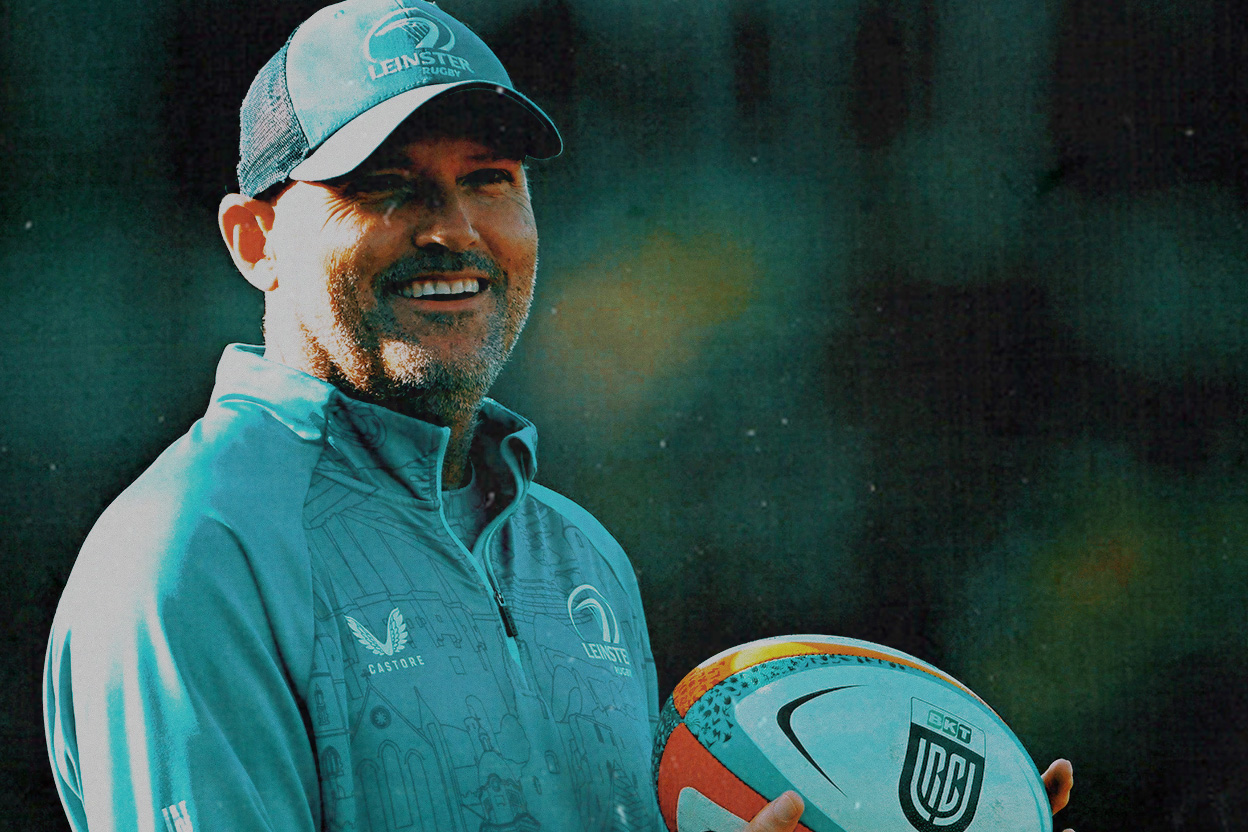
The only question is if Munster have a game that can attack those weaknesses, and there are two main problems with Leinster’s game as I currently see it.
For example, Leinster’s kicking focus off #10 – high and contestable in the mid-range – naturally produces more scrums than a longer, counter-transition style. This is classic Nienaber rugby. He wants that ball to be contestable because it’s a shorter, higher ball in the air which means your midfield and pack are right on the scene when the ball drops. But a contestable ball means a high chance of a knock-on and a scrum.
Problem #1: Leinster keep company with the likes of Exeter, Dragons and Newcastle Falcons in Europe when it comes to scrum completion rate in a European context and have conceded the second most scrum penalties as a percentage of scrums lost in the URC. This is mostly down to how aggressively they chase after scrums and try to create the impression of forward movement with either tight or loosehead bores and step rounds.
But against a team with a big scrum, this can often mean Leinster are giving up possession and then getting marched back down the line way more often than they’d like.
Leinster are one of the most lineout-dependent teams in Europe. 79.5% of all their tries this season – 32 of their 41 tries to date – have had an origin at the set piece, and mostly the lineout.
For a time this season, they had the best 22-entry conversion rate and rejection rate in Europe and that was almost entirely tied, on the offensive end of the ball anyway, to their attacking lineout.
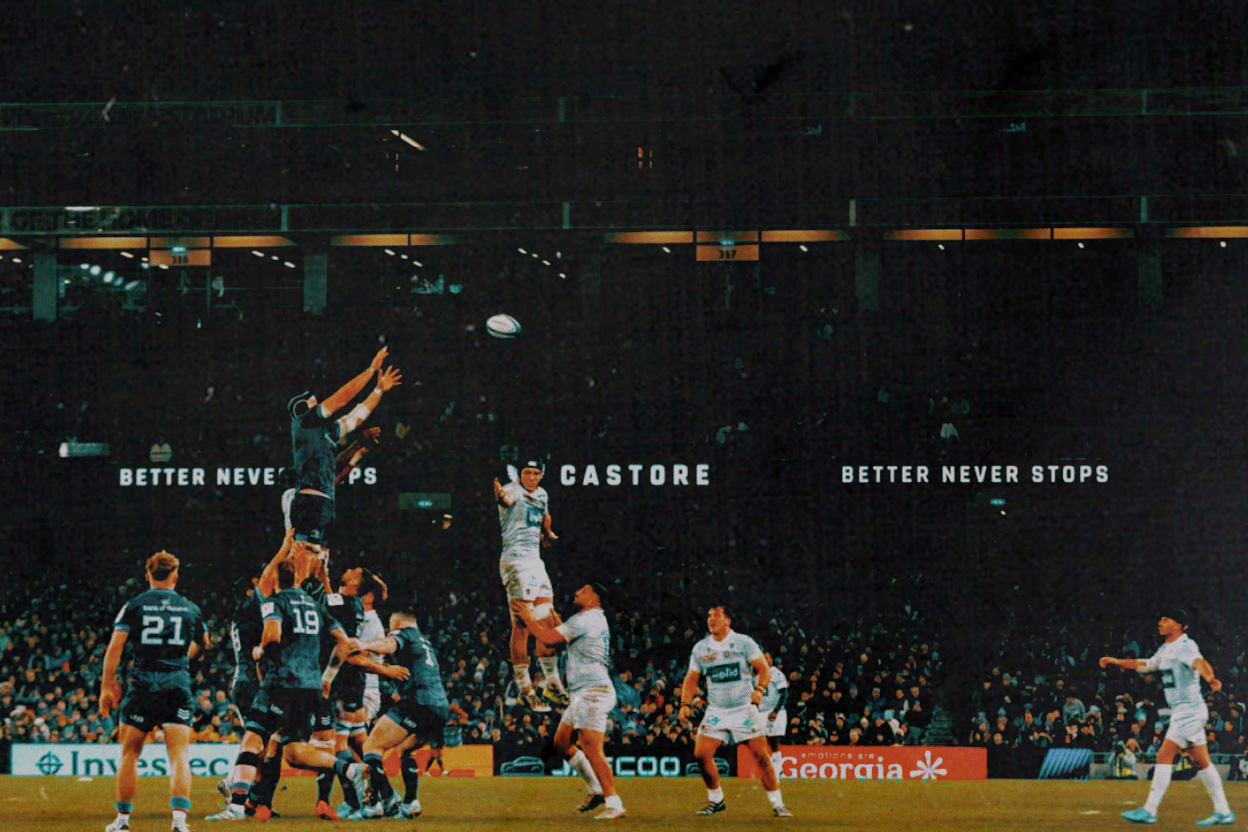
However, Leinster’s return post-November has seen their attacking efficiency drop down to fourth in the URC in line with their lineout plummeting to the lower half of the league when it comes to completion rate.
Why is this? Teams are attacking their lineout more often and getting better returns. Clermont, in particular, were incredibly aggressive on almost every Leinster throw and got huge rewards.
That brings us to Problem #2: When Leinster’s lineout isn’t functioning, they aren’t compensating by scoring via other means. Leinster are bottom four in Europe for scoring off turnovers and kick returns. They don’t play long stretches off on-ball rugby – multiphase possession – because they aren’t really built to do it. They use a pretty boilerplate 3-2-X shape in general phase play with is perfect for a team who plays at Prendergast’s depth.
As ever with Sam Prendergast, it isn’t that he never runs – he does – it’s that he doesn’t run into something he is 80% sure ends in a collision. As a result, most of their attacking work is based off loops and screens that you can cover if you don’t overcommit to rucks.
The real pressure point is getting at their lineout. If Munster can get good pressure at Leinster’s hinge – usually either James Ryan or Caelan Doris on 6+ schemes – we can disrupt a key scoring platform for them. If we can do that while also denying them penalty access to our 22, we’ll be going a long way to keeping this very tight. If we can be accurate on transition, we might even manage to take a lead deep into the game too.
