


To stay on model for the season, Munster need one losing bonus point in Croke Park this weekend.
Two points put us above the model for our 18-game regular season projection.
But this is Munster versus Leinster. It’s never as simple as staying on model. A lot more is at stake, in theory anyway.
The reality is that Munster have beaten Leinster in Dublin three times over the last eleven years. In those years, we’ve had good seasons and bad, and the wins we’ve had have either been meaningful — 2022/23 — or not. It’s just how it’s been. Leinster have been marketing this game as “Time Deepens All Rivalries” because the only thing that makes this game meaningful in 2025 is based on what the fixture used to mean in the nostalgia soup of the past.
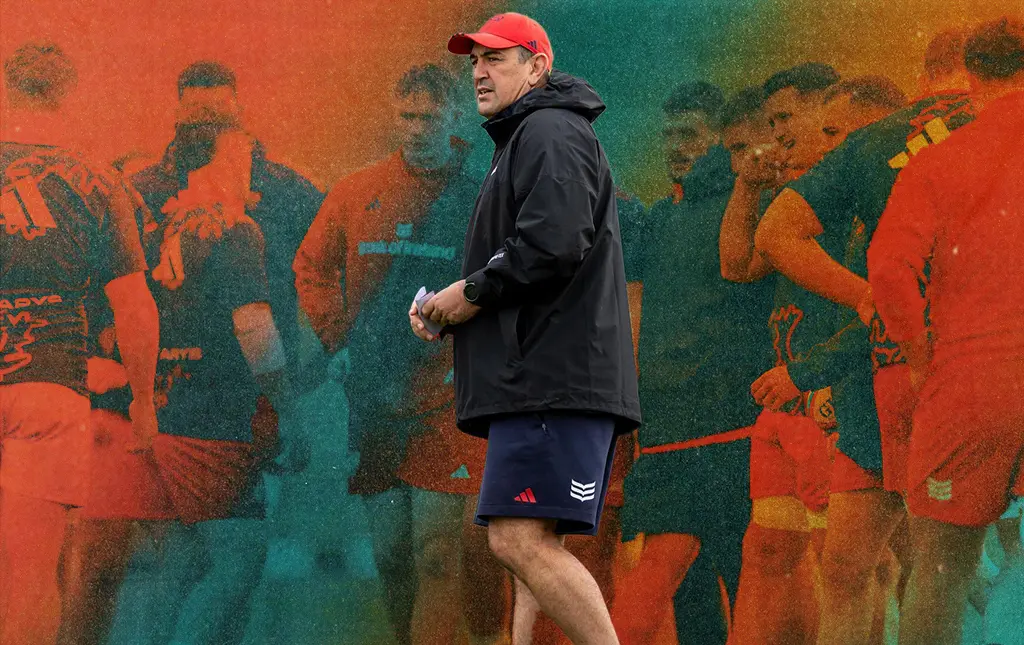
But every year is a new year, and Munster have a very different voice in charge this season. How much of a difference can Clayton McMillan make to the team this weekend? We’ll see. I’m not expecting miracles, but I am expecting a little more fight, a little more venom, and, one way or another, an excellent head coach who knows a little more about his squad in a very real sense.
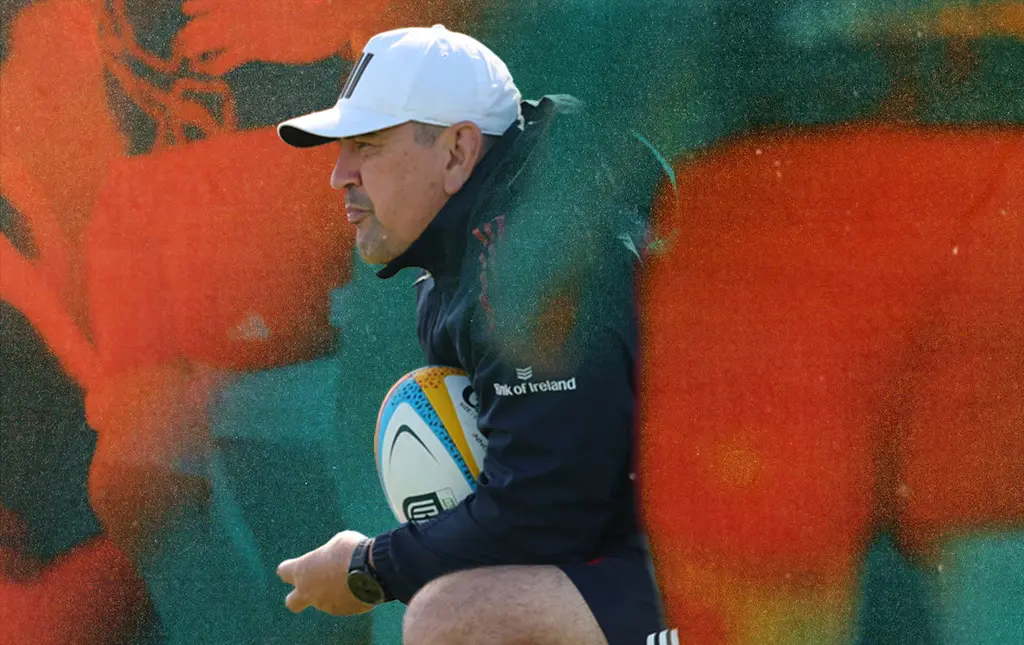
Who’s a good talker, but not a good walker? Who shrivels under the bright lights? Who turns up the dial on the aggression, puts a target on his back and loves it? Who performs when the heart is really racing? Who allows the occasion to wash over them?
These are all valuable things to know, and one way or the other, he’ll know them all by Saturday evening.
***
The x-factor to this game is Leinster’s Lions contingent, plus the returning RG Snyman. The Lions are both a gift and a curse for Leinster this season as they try to walk the tightrope of minute management, which is really injury management. Burn too many of your undisputed top guys — who will be used repeatedly over November, and then for the European Cup in December, before the same happens in the Six Nations — and they will break down, as sure as night follows day.
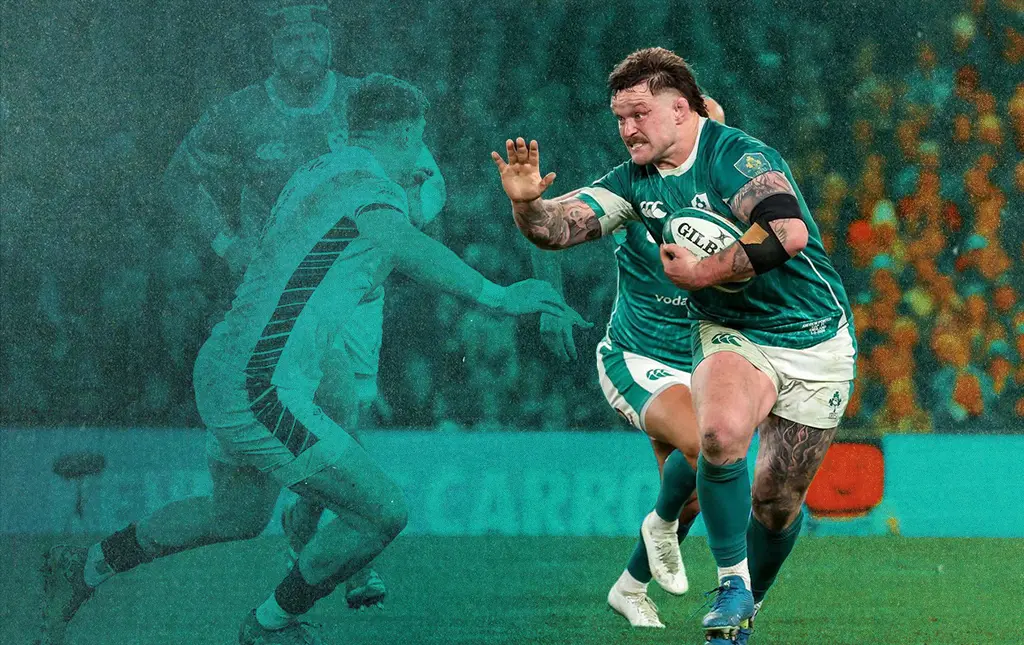
And for all the talk about Ireland’s depth, we are arguably more reliant on the fitness of two or three key players than any other Tier One, Top Four side in 2025.
That manifests itself in Leinster’s selection for this game, which requires their Lions contingent coming back in for their first or second game since July. You’d back them to come in and perform, of course, because that’s what very good players do — and that’s the thing with this Leinster team, they have very good players almost everywhere.
For Munster, the window of opportunity in this game is about making it incredibly scrappy, to the point that you attack what Leinster can’t have at this stage — fluidity. If they are just warming up for this game with a view to playing in Chicago against the All Blacks, as most of them surely will, the aim for Munster here is to attack what a lack of fluidity makes most vulnerable.
The easiest thing to drill when you’re not playing is defensive shape and action — so don’t engage with that side of their game anywhere outside of their 22 if you can help it.
The hardest thing to drill when you’re not playing is attacking shape, and feel — so engage them there with a high volume kicking game that pins them back around their 10m line and forces their podshapes into action. Use our match-sharpness against them at the point where it will be most effective, paying particular attention to making Snyman’s tendency for daft offloads as costly as possible.
If that means playing ugly, so be it. The uglier the better as far as I’m concerned. When this Leinster team have lost, it’s usually against teams who give them nothing, defend them high up the field while making the lineout a scrap and the scrum a stalemate at worst, and an advantage at best if you can paint Leinster as walking around the corner, as they almost always do.
***
The key point, for me, is looking at this game as a tough away game, and that’s it.
Buying into the narrative is for everyone else, for who we want to be as a squad, as a team, as a culture. Our approach to this game has to be consistent outside of the idea that it’s Leinster.
“We need to tear into them!”
We need to tear into everyone.
“We need to be psychotically physical!”
We need to be that team with everyone.
This game is a step along the road, nothing more, not much less. There are no Ireland spots “up for grabs”. That’s not how Ireland has worked for several years now. Play this game as it is, and I think it gets a lot easier to visualise as a concept. Once we realise that the animals needed to win this game, or leave a mark that counts as a win on our model with a losing bonus point, are the animals we need every week of the season, every day of the year, we’ll be on the right track.
Munster: 15. Shane Daly; 14. Andrew Smith, 13. Tom Farrell, 12. Dan Kelly, 11. Thaakir Abrahams; Jack Crowley, Ethan Coughlan; Michael Milne, Diarmuid Barron, John Ryan; Edwin Edogbo, Fineen Wycherley; Tadhg Beirne (C), Jack O’Donoghue, Brian Gleeson
Replacements: 16. Lee Barron, 17. Jeremy Loughman, 18. Ronan Foxe, 19. Jean Kleyn, 20. Gavin Coombes, 21. Paddy Patterson, 22. JJ Hanrahan, 23. Alex Nankivell
Leinster: 15. Jamie Osborne; 14. Tommy O’Brien, 13. Garry Ringrose, 12. Robbie Henshaw, 11. James Lowe; 10. Sam Prendergast, 9. Jamison Gibson-Park; 1. Paddy McCarthy, 2. Rónan Kelleher, 3. Tadhg Furlong; 4. RG Snyman, 5. James Ryan; 6. Alex Soroka, 7. Josh van der Flier, 8. Jack Conan (c)
Replacements: 16. Dan Sheehan, 17. Andrew Porter, 18. Thomas Clarkson, 19. Brian Deeny, 20. Max Deegan, 21. Scott Penny, 22. Fintan Gunne, 23. Ciarán Frawley
Leinster Notes
My read on this is based on their entire 2024/25 campaign, combined with what I’ve seen so far this season in the URC, with context applied for the South African part of the tour.
- Territory via boot: ~83 kicks from hand / 19 retained so far (≈23% retention). In exits, they kick ~81% of the time with ~93% exit success. Exit success here means that the ball does not return to the zone where it was exited from on the following sequence, if that ball doesn’t go to touch.
- Entries: ~10.4 22-entries for / 6.8 against. ~42% of their entries become tries; only ~29% against.
- Try origins: Heavy set-piece bias (≈69% of tries from lineout/scrum). First-phase threat is real.
- Carry profile: High gainline (~61%) and linebreak-to-try (~42%); good at turning clean breaks into points.
- Defence: Tackle success ~84% (not elite) but lowest “missed → try” rate (~7.5%) — i.e., they scramble and fold exceptionally well. This is the Neinaber high-edge blitz system in action.
- Set-piece: Lineout D steals ~15% of opposition throws (high). Scrum is stable; they don’t give many scrum pens.
How Munster beat this Leinster side
Starve entries; win the kicking duel on terms you set
Target: keep Leinster ≤8 entries. That means: cut exit penalties, avoid cheap touchfinders, and kick to compete, not relieve.
Use two-phase kick traps: phase to the edge, show width, then Crowley or Coughlan hangs a contestable to the tram with wing + 13 chase. Force Leinster into lineouts between their 5–10m (where their maul is more “gainline/penalty” than try-scoring base).
Back-field structure 2+1 against their volume: fullback opposite box-kick foot; wing folding early. Since they retain ~23%, double up on the primary catcher; trust the far wing to close the touchline. Be squeaky-clean on escorting angles.
Touchline discipline: when finding grass, aim inside the 22 or dead zones (between 10 and 22) where their exit is most predictable (box-kick lanes); then load the aerial contest again.
2) Break Leinster’s set-piece → first-phase pipeline
Lineout defence: Leinster’s tries skew set-piece; sack early to kill maul momentum; vary: 5-man contest with tail-gunner pressure vs 7-man non-contest + instant fold to first-phase lanes. Don’t feed maul penalties. Having four jumpers in the starting pack looks designed to go heavy on Leinster’s throw — get them a lot of lineout position in their own half to attack it.
First-phase D: show inside blitz at 10, deny pull-back shapes and back-door to the 13/wing. Edge defenders stay square; inside support arrives early to shut off the “linebreak → support try” (their LB→try rate is high).
Scrum: don’t chase marginal pens unless Ryan feels like he can put Paddy McCarthy into a technical torture chamber. Stable ball > penalties. Leinster gain a lot of field position when you overplay around the scrum — get in and get out quickly on our put in, lock out and don’t cede ground chasing penalties on their put in.
Secure your own lineout; attack fast away from touch
Their defensive steal rate is high. Use:
- Tempo lineouts (quick throw / 5-man) and front-ball disguises.
- Same-start, different-finish calls (show back, throw front) to beat the contest.
- Immediate +1 carry off the top, then back to the short side (blind reload) before Leinster’s inside defensive threats can fold.
- No slow maul battles in midfield; use maul feint → peel or 1-phase maul then shift to exploit their narrow guard reset and their tendency to blitz high at outside centre.
Carry/cycle with support to punish their scramble
Leinster’s primary tackles can slip, but they recover. So when you win a seam:
- Two-man latch through the 10–12 channel to guarantee gainline.
- Punch-punch-width: two heavy carries, then hit width on phase 3 when their scramble is mid-fold or resetting from a previous blitz.
- Target channels: 9–10 seam and the far-side guard after tramline exits from the set piece by Lowe (their spacing is thinnest right after exiting as they cycle Prendergast into the backfield to cover for Lowe, in essence, chasing his own kick). If Lowe kicks first, kick back at Prendergast — use Abrahams to press him.
Breakdown detail: slow them, speed us up
On D: selective jackal — one early contest per set to add exit stress, then push off. Watch for the Gibson-Park snipe. Avoid multi-penalty sequences that gift set-piece entries.
On O: keep our ORW tidy — first cleaner in <1.8s, carry in twos and threes, second cleaner scanning for counterjackal; kick anything +3s conceded inside a phase. A single steal inside their half is worth ~1 entry swing in this matchup.
Red-zone behaviours (both ends)
Attack: Leinster’s scramble is elite, so pre-call the finish. If the edge defender is tight, use a sweeping ball to wing; if he’s soft, unders back to 12. Have a pre-loaded forward shape — two or three forwards attacking in a line off the ruck to the opposite side of the previous phase to cash in advantage rather than recycling.
Defence: Ceiling: ≤30% Leinster conversion in your 22. Priority list: (1) no maul pens, (2) kill first-phase strike, (3) tackle + reload; live with them taking a 3.
Discipline & gameflow
<9 penalties total, ≤2 in your own half. Every penalty conceded vs Leinster is roughly +0.2 entries; three in a row usually equals a 5-pointer from the set piece.
Keep ball-in-play high for their second-string periods — Leinster are excellent systemically, but long sequences + aerial attrition blunt their edge.
Selection/role nudges
Back three built for air: Daly/Smith profile makes sense here; rotate the third back to keep the 2+1 backfield intact all game. Leinster are going to kick at Abrahams a lot — he has to stick his battles and punish them for any isolations they give him. If Prendergast goes too long, burn them.
12 as traffic director: a carry-first 12 to dent 10–12 and free Crowley as a runner on second touch.
Bench: prioritise impact jackal, and aerial wing at 60’ — the kicking duel often swings late.
Simple win conditions
- Leinster entries ≤8; Munster entries ≥9.
- Red-zone D: Leinster ≤30% conversion; ≤2 maul penalties conceded.
- Kicking duel: ≥24% retention (beat their ~23%) and net territory +5% after kicks.
- Lineout: Own throw ≥86%, ≤1 loss in attacking 40.
- Penalties: ≤9 total, ≤2 in our 40.
Hit 4/5 of those and we’re in with a big shout.
