


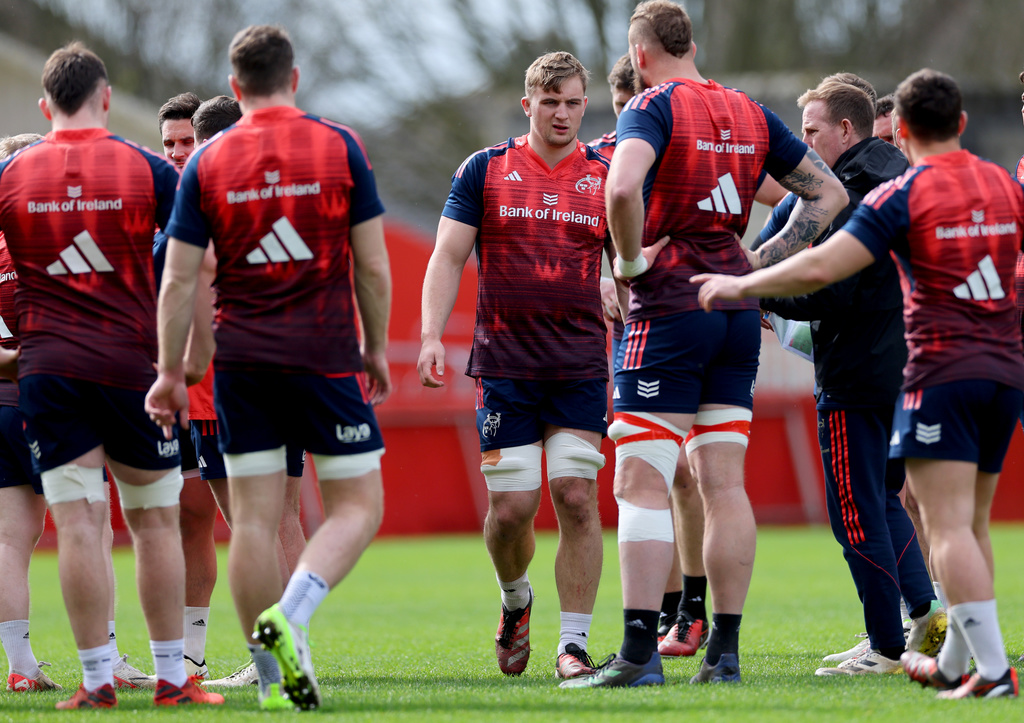
This is a big one.
It’s not too much of an exaggeration to say that taking control of one of the four home knockout games at a crucial point in the season. In the previous two rounds of this block, we’ve gotten the maximum ten points available. Another nine from the next two games would put us into fourth, maybe even third if results go our way.
Ulster and Edinburgh, currently ahead of us in the log, are on South African tours this round and next so any drop-offs there could give us breathing room as we head into the last four games of the regular season.
These next two rounds are vital and this round is what it all pivots on. Bonus point it and a home quarter-final looks quite likely with the games we have left. Win it without a bonus, and that home quarter-final looks favourable with some luck. Lose it and another hard, but not impossible, road awaits to a home quarter-final with another away run the most likely outcome.
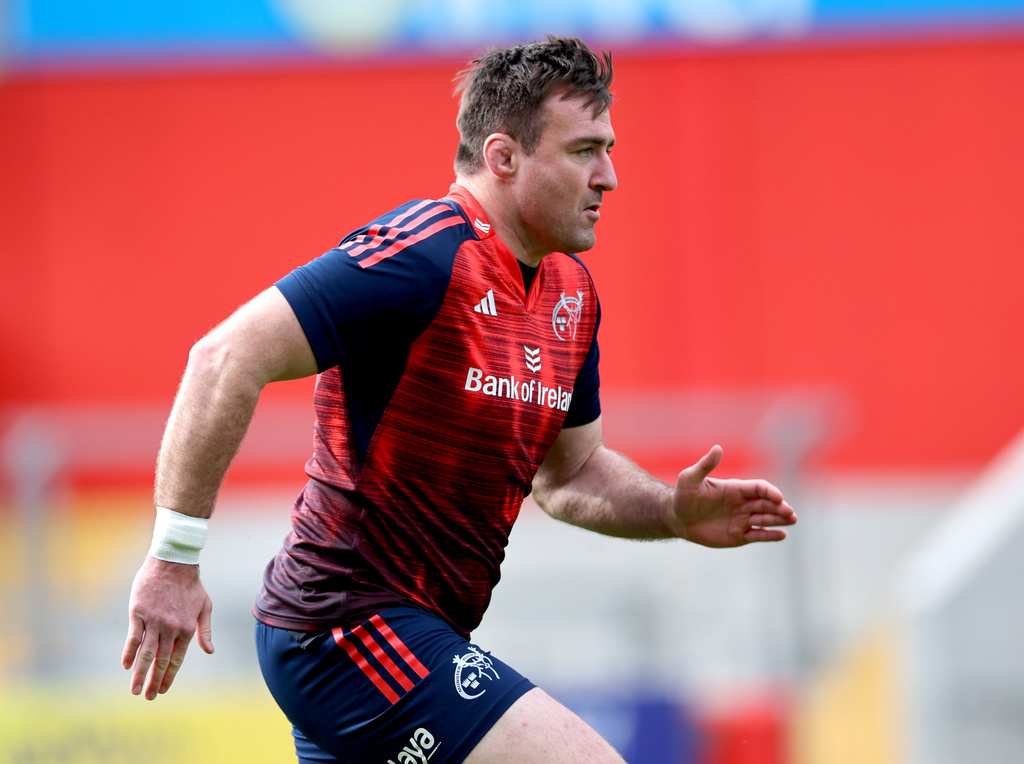
Last year around the same time, we fumbled a version of this pivot game when we decisively lost at home against Glasgow Warriors. Have we learned the lessons of that week and the fallout that followed?
Our opponents, the Ospreys, have been the best Welsh side in the URC this season so far and, at home in particular, they’ve been playing with real energy. They are that sticky combination of pragmatism and enough firepower in the backline to hurt anyone if you give them a chance.
They will see a chance to advance up the table themselves in a ground where they’ve lost once in the league all season.
Munster: 15. Mike Haley; 14. Seán O’Brien, 13. Antoine Frisch, 12. Rory Scannell, 11. Shane Daly; 10. Joey Carbery, 9. Craig Casey; 1. Josh Wycherley, 2. Niall Scannell, 3. John Ryan; 4. Tom Ahern, 5. RG Snyman; 6. John Hodnett, 7. Alex Kendellen (c), 8. Gavin Coombes.
Replacements: 16. Eoghan Clarke, 17. Jeremy Loughman, 18. Stephen Archer, 19. Jack O’Donoghue, 20. Ruadhán Quinn, 21. Ethan Coughlan, 22. Tony Butler, 23. Shay McCarthy.
Ospreys: 15. Iestyn Hopkins; 14. Alex Cuthbert, 13. Evardi Boshoff, 12. Keiran Williams, 11. Keelan Giles; 10. Owen Williams, 9. Reuben Morgan-Williams; 1. Nicky Smith, 2. Sam Parry, 3. Tom Botha, 4. James Ratti, 5. Rhys Davies, 6. Jeandre Rudolph, 7. Justin Tipuric (c), 8. Morgan Morris
Replacements: 16. Lewis Lloyd, 17. Garyn Phillips, 18. Rhys Henry, 19. Huw Sutton, 20. Harri Deaves, 21. Cameron Jones, 22. Jack Walsh, 23. Owen Watkin
Toby Booth has used a very well-worn and effective template for pulling the Ospreys around from the nose-dive they were in a few years ago. Booth has been in charge of the Ospreys for four years now – he joined during the pandemic so time has warped my perception of how long he’s been there – and you might ask, what has he done to warrant all the praise he’s gotten for the job he’s done.
It’s like this; he’s managed to keep the Ospreys around the top ten challenging for the play-off spots while his budget and top-level playing squad have been slashed to pieces.
Even ahead of this season, the Ospreys lost Joe Hawkins, Ethan Roots, Rhys Webb, Scott Baldwin, Sam Cross, Gareth Anscombe, Dan Lydiate, Bradley Davies, Tomas Francis, Dan Evans and Alun Wyn Jones, amongst others, to other clubs and retirement. He’s patched up his remaining squad with multiple loans and smart, good-value pickups but all logic suggests that the Ospreys should be languishing – a nice woe word, that – in the sub-20 point zone with the likes of Zebre, Scarlets and the Dragons.
But here they are, challenging for a playoff spot with a big win over Ulster two rounds ago being a proper highlight. That said, most of their wins have been against other Welsh sides, Zebre and other woe-stricken outfits like Sharks and, as I mentioned, Ulster.
This game is one of the most difficult of their season to date, but they know that and their baseline system leaves them with a lot of wiggle room.
Booth has brought stability to the Ospreys by stripping back the overly complex game they had under his predecessor Allen Clarke with a pretty bombproof off-ball system, that he has gradually changed into a long-distance counter-transition game.
The Ospreys Kick to Pass ratio falls between 1:4 and 1:5 with a Pass Per Carry ratio of around 1.3 on average. What does this tell us?
- They will kick incredibly long almost exclusively (ranked second in the league for kicking distance and third in the league for kicking volume).
- They will then look to meet us on the transition gainline off these kicks, where they are really good at winning turnovers (3rd in the league).
- They will live with any scrums that result from their high-volume kicking and off-ball tendencies because they have won the second most scrum penalties in the league.
Their scrum is a concern, especially with the amount of knock-ons we tend to concede, especially with the Ospreys being more than willing to kick the ball to us and defend. The base sequence of this game will be the Ospreys kicking long off #9, #10 and #15 on almost every possession inside their half, which will then bring our transition, post-transition and then settled phase play game into effect. If effective, we will score tries from long range after multiple phases of possession.
Too many handling errors from us on these sequences, however, bring Nicky Smith into the game and he is a devastatingly effective loosehead scrummager.
On the other side of it, though, the Ospreys base system tends to produce a lot of opposition lineouts. If you’re accurate there – and have a good maul – there is ground to be made against them, almost by default. They look to exit off the field, you take the ball down and advance. If you have a lineout position within 10m of the tryline, the Ospreys can struggle to keep out teams with a bigger maul.
They almost lost to Ulster because of their maul defence and the only reason they lost to Glasgow earlier in the season was their maul defence.
Munster hasn’t really been that good a mauling side this season but as long as we have Snyman on the field, we will be threatening in that facet of the game. The Ospreys have a relatively small back five – two combo-flankers, two small forwards and a relatively light loosehead lock starting for them – so if we can get decent lineout position, mauling is generally a good plan against the Ospreys, especially if we can hit the middle or the back of the middle.
They split easily, they don’t fold well and they have poor instincts when it comes to contesting.
We don’t need the maul to win this – preventing them from winning breakdown turnovers on transition will be enough to limit their game considerably – but it’s a good place to start as a weak point that can lead to cascading penalty opportunities and easy points.
