


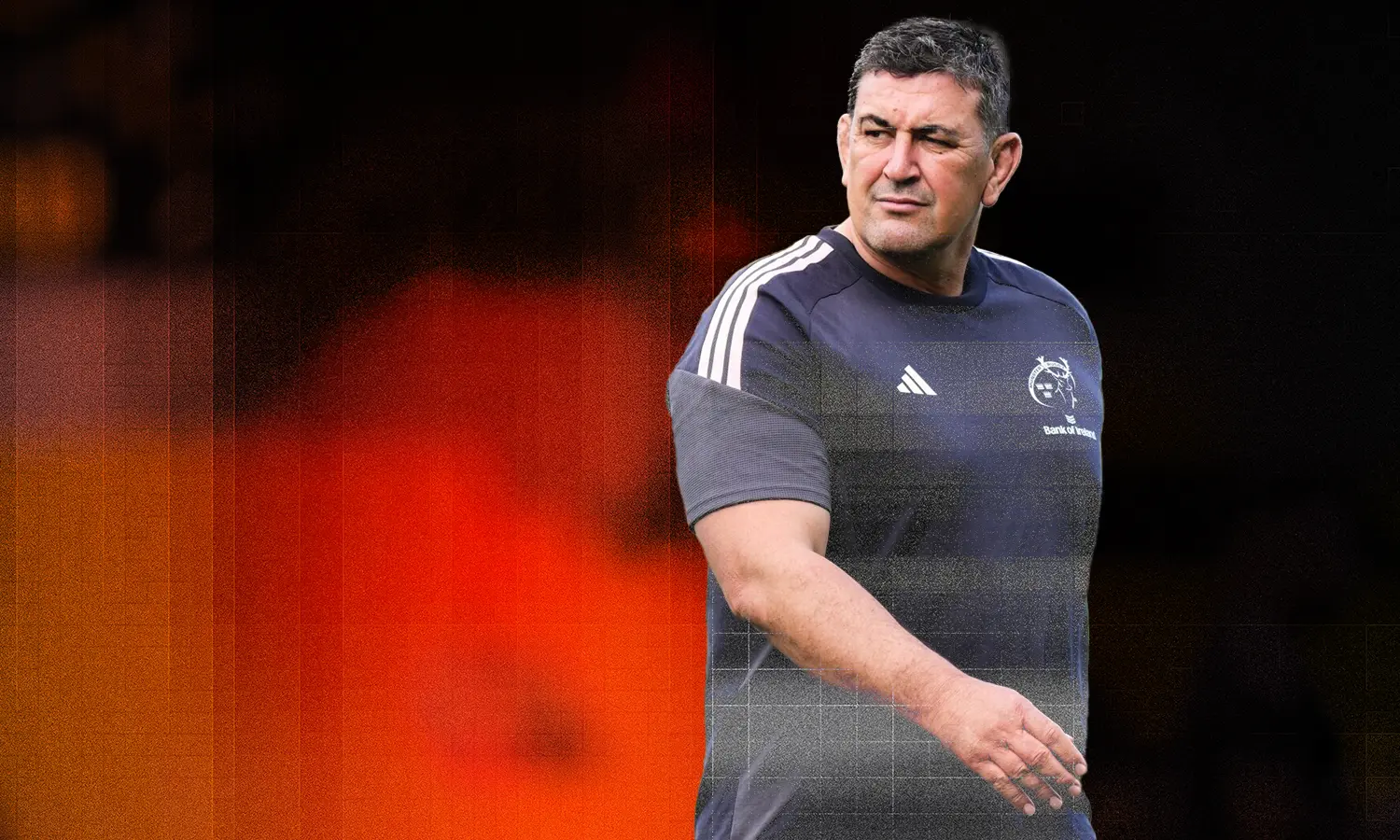
In the last few weeks, I’ve been writing a lot about the players Munster might retain and recruit, but the short, medium, and long-term success of this project, whatever that looks like, will be defined by what is already here. That has always been the case, whether it’s 1996, 2006, 2016 or 2026.
In the Irish system, you can’t sign your way to success. The budget, the scope, the top-down nature of the IRFU make that a completely unviable way to go from where you are to where you want to be. Sure, you can sign players who are, in effect, the finishing touches to a squad ready to compete at the highest level. Sure, you can also sign guys who help raise your squad level — to get them to a point where they can or might compete. Or you can sign someone to help you cover for an established international, which is a form of success in and of itself, at least within this system.
But the fact is that how far you go depends almost entirely on how far your academy talent takes you. That is always how it’s been.
Prime Leinster ran from 2017 to 2023 on the strength of four generational years of academy graduates from 2014 on.
In their 2013 academy group, for example, they had these future high-level club players and internationals in each year group. Some of these guys don’t play for Leinster anymore, or had short runs at their top level, but they were all part of the waves of talent that came through in a sequence.
Year 1: Ross Molony
Year 2: Ed Byrne, Tadhg Beirne, Jack Conan, Dan Leavy, Josh van der Flier
Year 3: Tadhg Furlong, Luke McGrath, James Tracy
In their 2014 group, they added Ross Byrne and Garry Ringrose to that graduating, or soon-to-graduate group, in their year one intake.
In their 2015 group, Joey Carbery and Jeremy Loughman.
Two decent years by any metric, but in their 2016 group — possibly their best — they added Will Connors, Max Deegan, Hugo Keenan, Jimmy O’Brien, Andrew Porter, and James Ryan to their year one, which was right on time to back up the group which were added in 2012 and had began to impact the senior team by 2015/16.
That was followed in 2017 with Jack Aungier, Caelan Doris, Ronan Kelleher, Tommy O’Brien
and Ciaran Frawley.
Since 2017, the number of players close to this quality and/or the honours they’ve achieved has decreased in volume.
Dan Sheehan was added as a year two player in 2019, with Tom Clarkson in year one. Joe McCarthy joined the 2020 group. 2022, Sam Prendergast. 2023? Paddy McCarthy.
The main core of those successful Leinster squads came from within, across multiple seasons, to be added to by outside signings like Fardy, Lowe, Gibson Park, Henshaw, Ala’alatoa, Snyman and Slimani as the years progressed, as well as their established core of internationals at the time like Kearney, Healy, O’Brien, Heaslip, Toner and, of course, Sexton.
So for Munster, the aim is clear. We can’t hope to duplicate that output from 2013 to 2017 because not only was it a once-in-a-generation group of players, Leinster themselves haven’t managed to do it since then either. Of course, it would be great, but what makes a top player in 2026 is an order of magnitude different than it was in even 2016. We have to start a chain of progression.
The good news is that we seem to have that in place. There are still question marks, of course, but the same was true between 2015/16/17 at Leinster when there was talent, obviously, but talent doesn’t always translate to a top player for any number of reasons. Luck with injury, whether the player is behind a stack of other established players, so they don’t get the right opportunities at the right time, and the intangible stuff like whether a player takes to the mental and emotional demands of being an excellent rugby player.
So, after preseason, who is there to make a big step up this upcoming season for Munster?
The first name on my list is Evan O’Connell.

O’Connell has had a long runway to this point. He joined the Munster academy straight out of secondary school as an 18-year-old — incredibly young for a lock — and before his two Irish 20s years. Why? The answer was obvious to anyone who watched him playing for Castletroy. He was an easy 6’8″ and, sure, needed size, but his lineout work was already hugely advanced for his age, and whatever about who he was related to — his dad is Justin O’Connell (an excellent second row and coach in his own right) and his uncle Paul O’Connell (do I need to list his accomplishments?) — Evan was clearly a high-potential talent in his own right.
His two years of 20s rugby ate up his second and third academy seasons, as they tend to do, and last season — the first year of his senior contract — was the first one where he had a full senior season under his belt without the back-and-forth of a 20s Six Nations and World Championship to prepare for. He made six appearances for Munster, played for Ireland A, and this season he’s ready to break out as an established senior player.
The demands for what makes a modern lock forward have changed quite a bit since the middle of the last decade. James Ryan, often an analogue for O’Connell, broke out in a different time and a different game. He was 21 during his big ascension year — 2017/18 — but there was room for a lighter lock in that version of the game. Evan O’Connell, who turned 22 back in May of this year, has spent the last four seasons building himself to be a lock for this decade’s game, and all the noise in preseason suggests this year can be the one where he properly attacks that mantle.
He’ll have the space to do so. Beirne won’t be available for much of this season — and even less of the opening rounds of the season — so O’Connell will have the first four of five rounds to cement himself into the starting squad.
He’s got all the tools to do just that with an excellent lineout and maul game, as well as the expected fundamentals around the maul and carrying.
The next name on my list is Tom Wood.
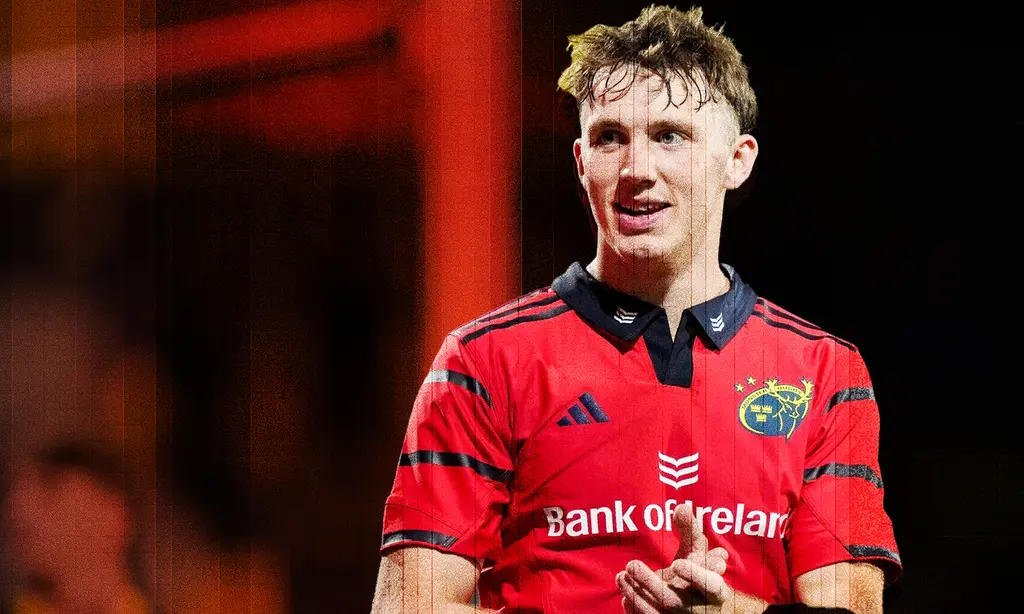
This one seems obvious on the face of it, but it really isn’t, or should be.
Wood, like O’Connell, came into the academy incredibly young — he was 18 when he joined the Munster academy, having played for the Irish 20s a year young — and his second campaign as the starter at #10 for the 20s came in his first year of the academy. Despite that, he made a senior appearance for Munster right before that 20s Six Nations, which is incredibly rare for an outhalf, and that tells you a lot about what you need to understand about this guy.
He’s got the maturity, the confidence, and the skill set to be a big player for Munster this season, and while he’s far from the finished product at this point, he’s got all the tools to be a guy who Munster can rely on this season, especially with Crowley out until the new year. I’d be patient, though. He’s going to get opportunities — either from the start or off the bench — but all young outhalves should be expected to fluctuate up and down week to week with the massive tactical, mental and physical burdens that are now expected of them by default.
But I’ll put it like this: if we have a set piece that can give him a platform to play with, he’ll progress farther and faster than even his biggest fans (myself amongst them) might expect.
Up next? Ruadhan Quinn.
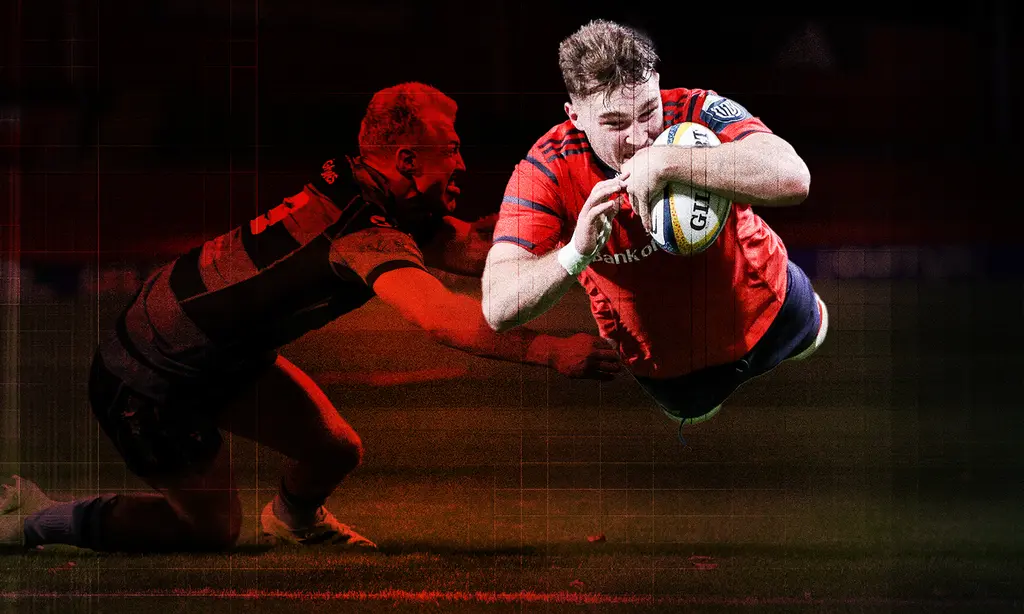
Quinn, like the other two names on this list, came into the academy incredibly young, to the point that he was getting his leaving cert results at broadly the same time as he was banging over for a try in preseason against Gloucester in his first ever game against adults back in the preseason ahead of 2022/23.
Since that point, he’s been on a steady enough track of development. Three URC appearances during his 20s season. Four the season after, albeit disrupted by injury. In 2024/25, he made 11 URC appearances and then last season — his first on a two-year deal — he made four European appearances in total, alongside six URC appearances, in between a few knocks and AIL action for Young Munster.
Looking at him walking around during preseason on two occasions, he has that specific quality of back-rows in his role type in that he looks like a child’s drawing of a superhero. He is massive. Bigger than he was last season, by a distance, and if not for the untimely ankle injury he suffered during preseason, I think he’d have started the season starting in the Munster back row.
Last season and, really, the previous season, I think Quinn suffered a little bit by being the guy who should be doing well as an edge forward, albeit in a system that wasn’t really producing the output that would have empowered him to do well there. He’s big, he’s strong, he’s fast. I mean, he looks like Maui from Moana; if Maui got a haircut, that might fit an Irish college student.
Tell me who looked effective on the edges for us consistently in the last two seasons? It’s a short list. An even shorter list when you start factoring in edge forwards. That’s part of the problem, I feel. Last season, the opportunities he did get were minutes, in the purest sense, but not really minutes that put him in a position to succeed. If you put Ruadhan Quinn in an edge isolation with any back or midfielder, he would thrive, but we couldn’t do that for our own wingers, let alone an edge forward.
He’s 6’4″, 115kg and has a Sean O’Brien-esque game that’s ready to roll this season once he gets back from injury, which will be soon enough, hopefully.
