

The Lions are a fundamentally weird concept in 2025.
It shouldn’t really work, but it rarely fails to be anything less than compelling once the actual business of winning a tour starts in earnest. On the face of it, it’s an impossible job. This sport is a game of cohesion, understanding and relationships when it comes down to it. A cohesive team will always beat an uncohesive team if the levels are anywhere equivalent, and that’s almost always the Lions’ biggest problem as a concept.
How do you achieve cohesion in a team drawn from four different rugby nations?
It’s becoming increasingly difficult at test level. Ask Fabien Galthié, Steve Borthwick, or Rassie Erasmus what their biggest challenge is ahead of any big tournament or test window and I’d hazard that all of them will probably explain to you a variant of getting players from multiple different club systems and environments on the same page quickly enough to win the games you need to.
That’s the tantalising thing; it’s not impossible, it just takes time, and time is the one thing a Lions tour doesn’t have.
That brings us to the green elephant in the room: Andy Farrell’s Ireland. Ireland’s success under Farrell – two Six Nations titles, a tour win in New Zealand, a drawn series in South Africa – rests on the solid foundations of excellent players playing in an incredibly cohesive, low-noise environment where everyone knows their roles, their drills, and their detail inside out and back to front because they live that way of playing every single work week of the year. Ireland’s training is machine-like in its ability to prepare the team for whatever challenge they might face because there is no “noise” from minute one of their test camp.
What is noise? It’s doubt. It’s the question, “Hang on, what are we doing?”. It’s guys having to get up to speed, which means sessions are done at a slow pace.
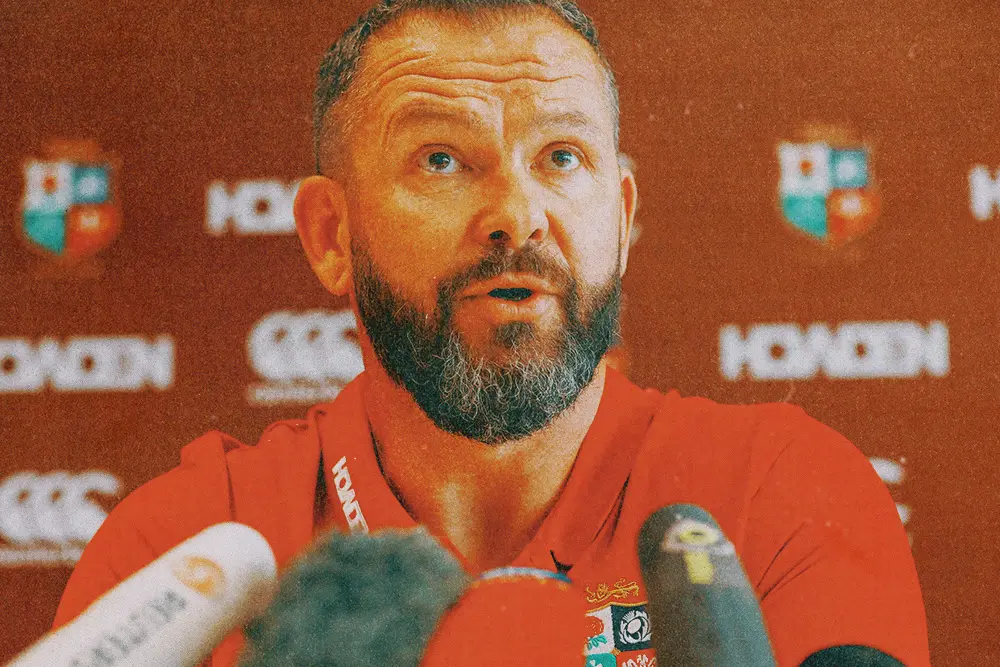
The biggest challenge any test coach faces on day one of any test camp is noise, because that degrades the core signal of what your vision is. What is Andy Farrell’s vision for this tour? To win, obviously. He’s been incredibly upfront this aim from day one, to the point that it seemed to me that he was almost laying the groundwork for how that win would be achieved; heading off any criticism at the pass with the promise of a first Lions series win since 2013.
“It is about being successful,” he said over and over again. The rest of it, which he described as the “brand of rugby” and “all those bits”, are someone else’s business. Farrell is in it for the winning, same as he has been ever since he made his rugby league debut for Wigan in 1991.
– Andy Bull, The Guardian, at Andy Farrell’s inaugural press conference as Lions Head Coach.
But ultimately, when the bulk of this Lions squad arrives from Leinster next week, Andy Farrell will have his first proper meeting of this squad as a whole and will have to address some key questions to everyone in the room, but the biggest question is a simple one.
Who are these 2025 British & Irish Lions?
Playing Politics
To understand who the British & Irish Lions are, we have to first see where they come from, and this is where it gets difficult for Andy Farrell and his coaching staff.
Lions tours are inherently political because every single rugby team is political. Making decisions about a team where careers are affected is political. Not making decisions is political, too.
Who you select, who you drop, who you back, who you don’t – everything you do creates a new paradigm that relates to the decision that created it. You find out pretty quickly that there’s no putting the toothpaste back in the tube when the stakes are high enough – all you can do is try to rewrite history if you get the chance.
The problem here is that Andy Farrell hates politics, doesn’t see why he should have to play them at all, doesn’t understand the potential fallout if you get it wrong or how damaging that can be.
There’s a very pertinent recent example of this involving Andy Farrell, and that was the Prendergast vs Crowley culture war that he carelessly ignited last November after a series of tone-deaf decisions that damaged both players in one form or another, and left Ireland in a weaker place as a result, which the Six Nations later showed.
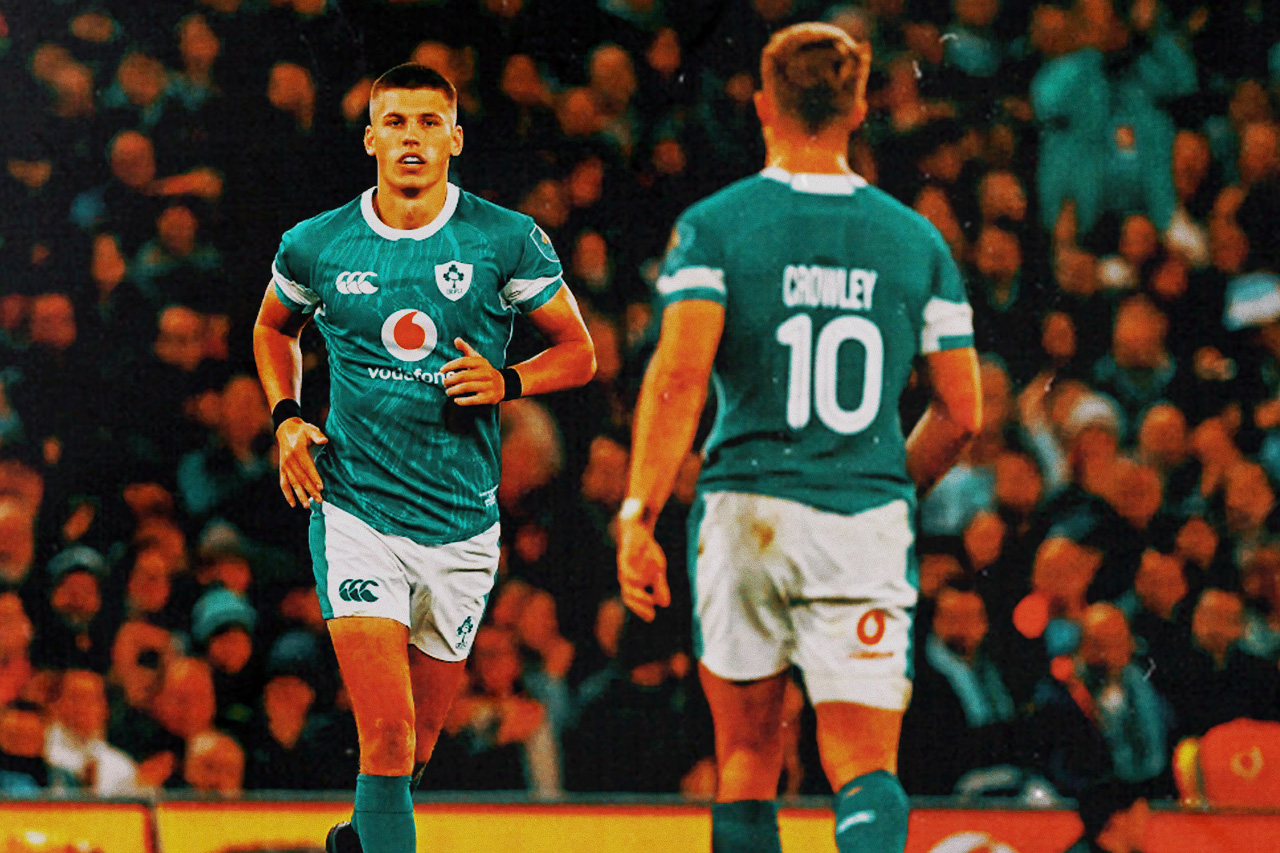
I’m not here to relitigate that entire thing, but Farrell’s famous “man-management” in this instance was shown to be seriously lacking as he piled pressure on Prendergast, ignited the Irish fanbase against each other, and was so careless in handling Crowley during the entire fallout – who had been the starting #10 for the Six Nations title won earlier that same year, let’s not forget – that it looked like Farrell had iced him out completely.
The entire fiasco was topped off when Farrell didn’t select Sam Prendergast for the Lions tour after a series of dud performances that Farrell’s own decisions had set in motion. My, admittedly uncharitable, opinion is that Farrell threw Prendergast into the spotlight as a punt, and then left him wither there. That’s even before we get to the way he binned his previous pet project, Ciaran Frawley, after a bad 20 minutes off the bench against the All Blacks.
But I digress.
What Andy Farrell would say, I’m sure, about Prendergast vs Crowley is that he didn’t really care where Prendergast was from – Leinster, in this case – it only mattered that he’s the right guy for the team at that point. To a lot of the country, it was Non Leinster Player swapped out for Yet Another Leinster Player in a team already dominated by them, and people’s emotional response to either side of that debate depended on their proximity to the areas involved and various enemy of my enemy is my friend scenarios. Farrell has always tried to avoid this particular question when he’s been asked about it over the years because there is no answer he can give that won’t beg more questions.
Most of the team he selects for Ireland comes from Leinster. They are great for Leinster and then for Ireland because they are (a) excellent players and (b) Farrell has seen that selecting them en masse has given Ireland a palpable advantage over our rivals. Whenever Farrell has deviated from this selection policy, Ireland’s performances have faltered because of noise. New combinations and players new to the test environment playing together against other test sides lead to unpredictable results and janky performances.
Andy Farrell does not see it as being his job to develop players for test rugby, which is why he almost always picks players who have shown they can fit in seamlessly to whatever Leinster are doing and your best chance of getting into his set up from outside that paradigm is by performing well in a position that Leinster have trouble with. Ask a player involved in the Ireland setup about this, and they will tell you the same thing. I have.
Farrell understands that this would be a fundamentally unpopular position to the general Irish audience, but he also knows that it’s not one you ever have to address in any seriousness as long as results stay positive, which they usually do if you stick to the formula that has worked since 2021.
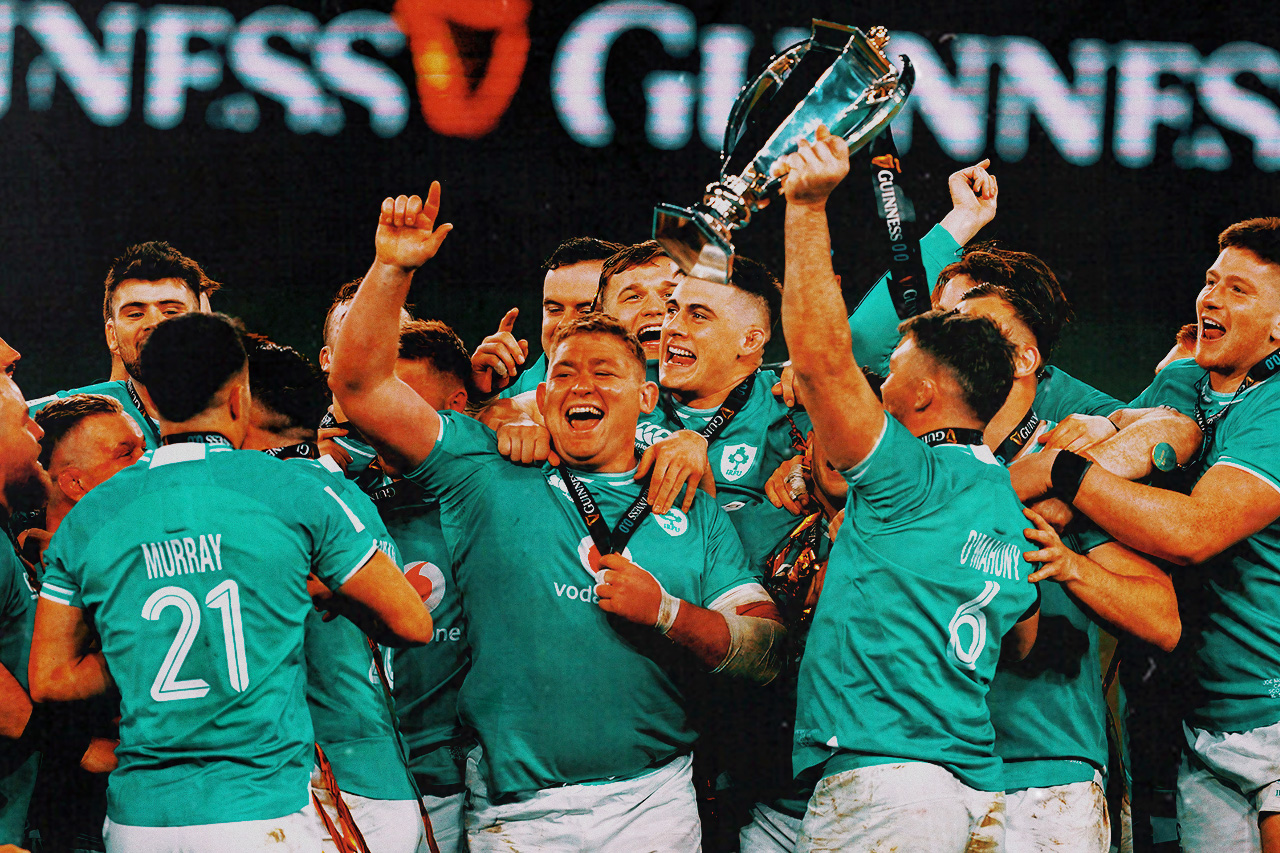
This was Farrell’s thinking around Prendergast and Crowley. He wasn’t thinking “Leinster vs Munster”, he was thinking “What cuts down on noise and helps me get the most out of Gibson Park, Henshaw and Ringrose and the rest of his backline”? As you might expect, a lot of the national setup was blindsided by the controversy it caused. Talking to a few people in and around the camp – from both Munster, Leinster and the other provinces – the noise around the #10 jersey was palpable in the Ireland camp during both the November series and the Six Nations, in particular. And it affected cohesion.
These are the kinds of politics that Andy Farrell can’t really understand, and that was shown in his comments after he announced his Lions squad last month.
I think I spoke about this a few weeks ago as well, in regards to selection, not just of players, but of staff as well. Well, after we selected the squad, Iuean and Ben came in, because everyone, you know, they need to know the answers for today. And Iuean and Ben were counting the numbers from different countries. And we [the coaching staff] hadn’t honestly done that. It’s not in our interest to do that. Everyone’s an individual. It doesn’t matter where you come from.
Andy Farrell, when asked by the press in the aftermath of naming his Lions squad, about the historically low number of Welsh players selected.
Of course, to everyone watching the Lions tour and playing in it, it really does matter where you come from, and, not only that, to go a step further, the idea of “where you come from” is almost the entire point.
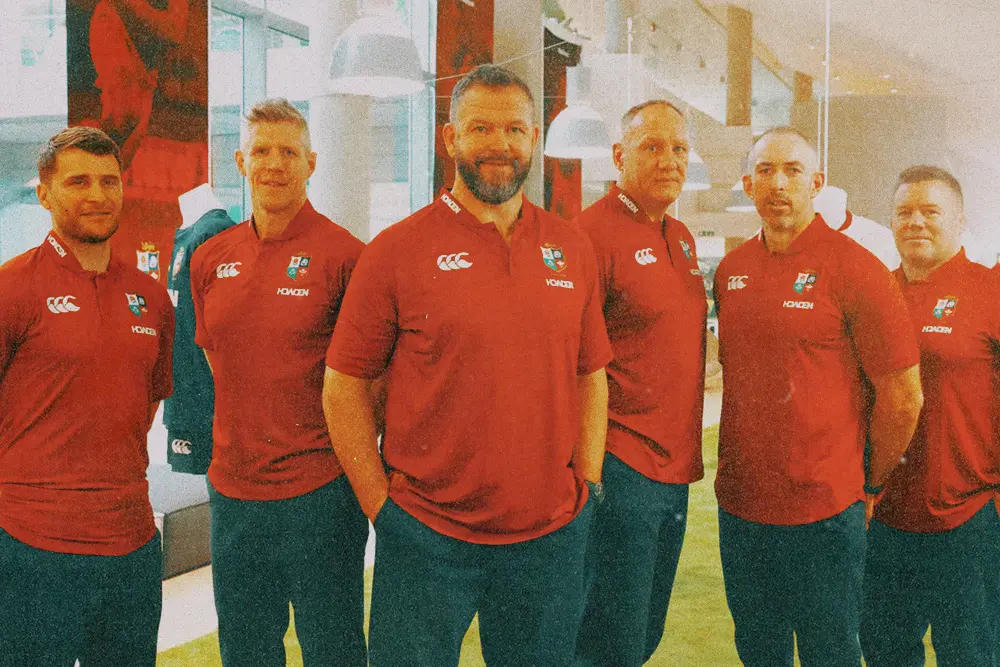
It also strains credibility that a coaching staff made up of all but one of the current Irish test team were blissfully unaware that they were selecting 15 of the Ireland squad from the Six Nations just gone. It’s the same thing for the idea that Andy Farrell cast a wide net over the coaching staff working in the four Lions nations, and that net just so happened to land on every single coach he was sitting with at lunch in the Irish High Performance Centre, bar Paul O’Connell. It gets people outside of the bubble offside on Day 0 of the project because it makes them feel like they’re being bullshitted.
That kind of thinking can work at Ireland level because the many Irish players that Andy Farrell has iced out over the years don’t have a ton of options outside of Fit In or Fuck Off. The Irish media, on the whole, is pretty compliant with Farrell’s decisions because, outside the first 18 months of his tenure here, results and performances have almost always been good.
But that is not true on a Lions tour.
There are competing interests at play. Victory is not the only metric.
A case in point: back in 2013, the Lions won the third test and the series over Australia, but right before the third test, head coach Warren Gatland dropped Brian O’Driscoll from the squad entirely in favour of Welshman Jonathan Davies. It created an absolute firestorm in Ireland that wasn’t dampened down by the Lions’ victory in the series. Speaking after the tour on Sky Sports with former teammate Shane Horgan and reported in the Irish Times, O’Driscoll said;
“I was making myself a coffee and I got a tap on the shoulder and Gats was there and Rob Howley was there behind him and I thought, two is trouble. I got asked, can we have a word in the team meeting room, and we went in, and it pretty much just came out that ‘we don’t have a place for you this weekend.’
I didn’t actually know about Manu [Tualagi], and I didn’t ask them what the bench was. So until the team was read out, I didn’t know that Manu was the spare outside back on the team, so that was kind of a kick in the guts.
Do I resent him? Yeah, there’s resentment, of course. Is he on the Christmas card list? Unlikely.”
Davies was one of ten Welsh Lions named in that decisive final test, which caused enough friction in the media of Ireland, Scotland and England on its own without O’Driscoll’s dropping, and it was framed as a Welsh head coach feathering his own nest for what came after the Lions tour.
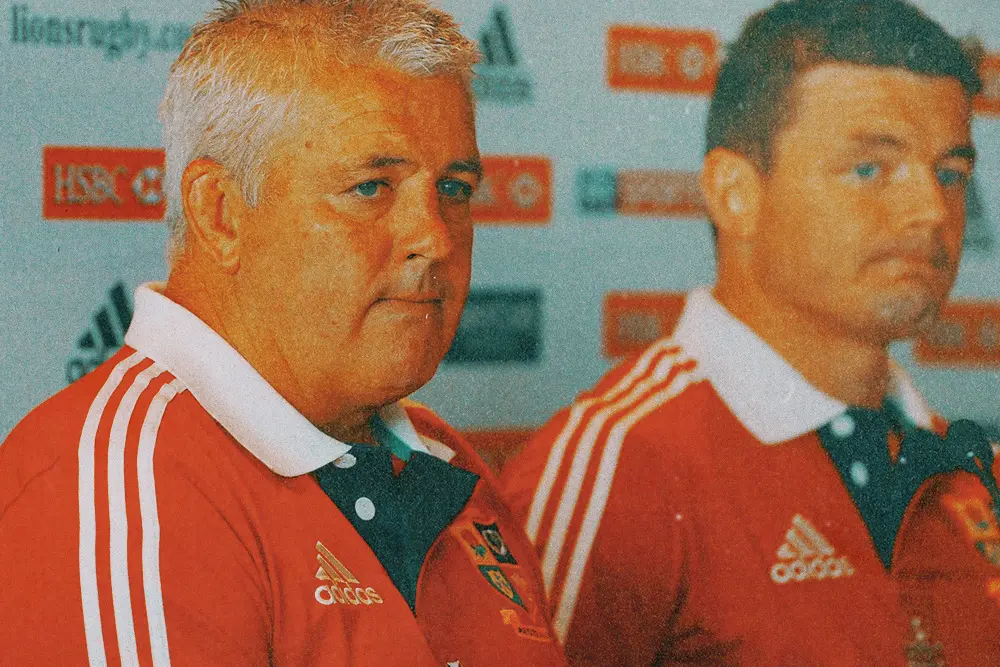
Part of me always wonders if Gatland went with that heavy Welsh squad for the last test because he knew, come what may, the final whistle meant the tour was over one way or another. Going Full Welsh for the first test, including dropping O’Driscoll, was a far more dangerous game, and Gatland knew it well.
Before that 2013 tour, Gatland said of Graham Henry’s 2001 Lions tour;
“Part of the problem in 2001 – and I think it would be Graham’s criticism of 2001 – was there were probably too many Welsh players selected. Some of them weren’t probably good enough to go on the tour in the first place.”
That isn’t the case with Farrell’s Irish Lions – almost all of them are there on either direct merit this season or strong credit in the bank – but these are the choppy waters that Farrell and his majority Irish coaching and backroom staff now have to navigate. In Ireland, guys on the outside have no voice. In a Lions tour, if enough English players feel like they aren’t getting a fair shake, they have the Guardian, the Telegraph and Sky Sports to heap pressure on Farrell and drive wedges into his squad.
It isn’t just about winning – it’s about finding a way to win together, even if that means changing up what’s worked for Ireland in the past.
Deeply Involved
If Andy Farrell wanted to give himself the best chance of winning this tour, he’d select a starting XV with nine Irish players on it the second he got that group of Leinster players into camp for a week or two, with two or three more on the bench, and fill out the rest of the spots with the players from the other nations, albeit with a special focus on making sure the #10 is as comfortable as possible.
However, in doing so, I think he’d doom the tour from the start.
I don’t think many could argue with a test one selection of;
15. Hugo Keenan; 14. Mack Hansen, 13. Garry Ringrose, 12. Sione Tuipulotu, 11. James Lowe; 10. Finn Russell, 9. Jamison Gisbon Park; 1. Andrew Porter, 2. Dan Sheehan, 3. Will Stuart, 4. Joe McCarthy, 5. Maro Itoje (c), 6. Tadhg Beirne, 7. Ben Earl, 8. Tom Curry
16. Luke Cowan Dickie, 17. Ellis Genge, 18. Tadhg Furlong, 19. James Ryan, 20. Ollie Chessum, 21. Jac Morgan, 22. Alex Mitchell, 23. Marcus Smith
But this selection would bring with it a ton of problems for Farrell, both after naming it and once it became clear that this was his strategy in the build-up to the first test. Remember, he’s only got six weeks between that first game against Argentina in Dublin and the first test against the Wallabies in Melbourne. He’s also got to navigate five brutal games in the build-up, none more dangerous than that Invitational Australia & New Zealand side the week before the first test.
Every instinct I’ve observed in Farrell’s time at Ireland between 2022 and this season just gone tells me that he will see that condensed build-up with only five full training weeks before the first test, see those landmine games against the Super Rugby Pacific sides and that hatchet man game against a combined AU/NZ team and decide that the prudent course of action is to go with what he and his coaching staff know best.
