


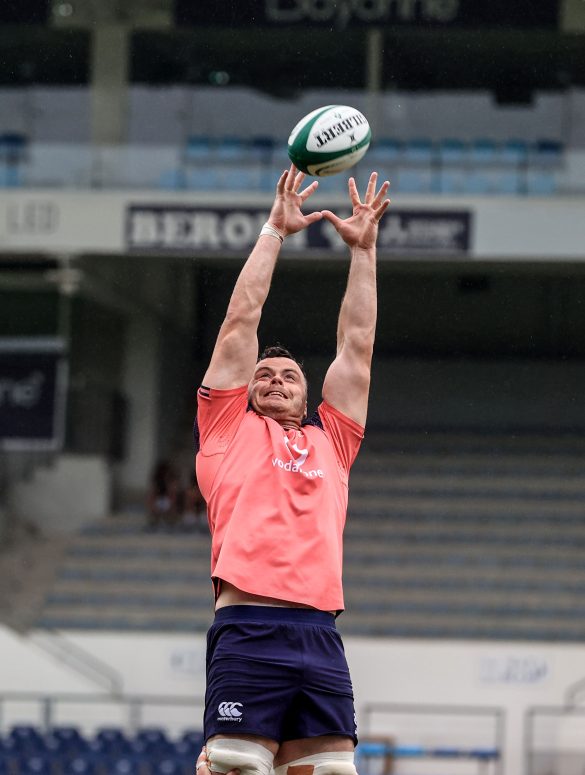
Ireland should win this game by 30/40 points. I don’t mean that to sound disrespectful to Samoa, who have improved this year, especially with an influx of newly re-eligible players but it’s just the reality of the growing gap between Tier 1 and Tier 2 at the top end of test rugby.
As a result, this game isn’t so much about winning – because losing it would be a bit of a disaster – it’s about making sure you don’t lose your World Cup before you even start by losing players you can’t afford to lose to injury. In that regard, you might think that it’s something of a shock to see Beirne, Doris, Van Der Flier, Ryan, Henshaw, Ringrose and Hansen in the matchday squad – until you look at Samoa more deeply. To see all of them involved tells us something about our own mindset and what Andy Farrell wants to see before things get serious.
And the problem is that they won’t get serious for a good few weeks yet.
No one will talk say it aloud because, well, it’s Mocker God Bait but Ireland will have two more warmup games to come in the World Cup pool before we get to the two games that will define our World Cup this year against South Africa and then Scotland. We will play Romania and Tonga first and any version of this Ireland squad should be beating those two teams by 80 and 40 points respectively. As far as prep for the Springboks goes, it’s about as bad as you can get when it comes to actually assessing where you are as a group.
But that’s the luck of the draw and we’ve known what our schedule is for years at this point. The big worry for Ireland is that we’ll rock up to that game against South Africa undercooked and coasting.
Look at our schedule so far.
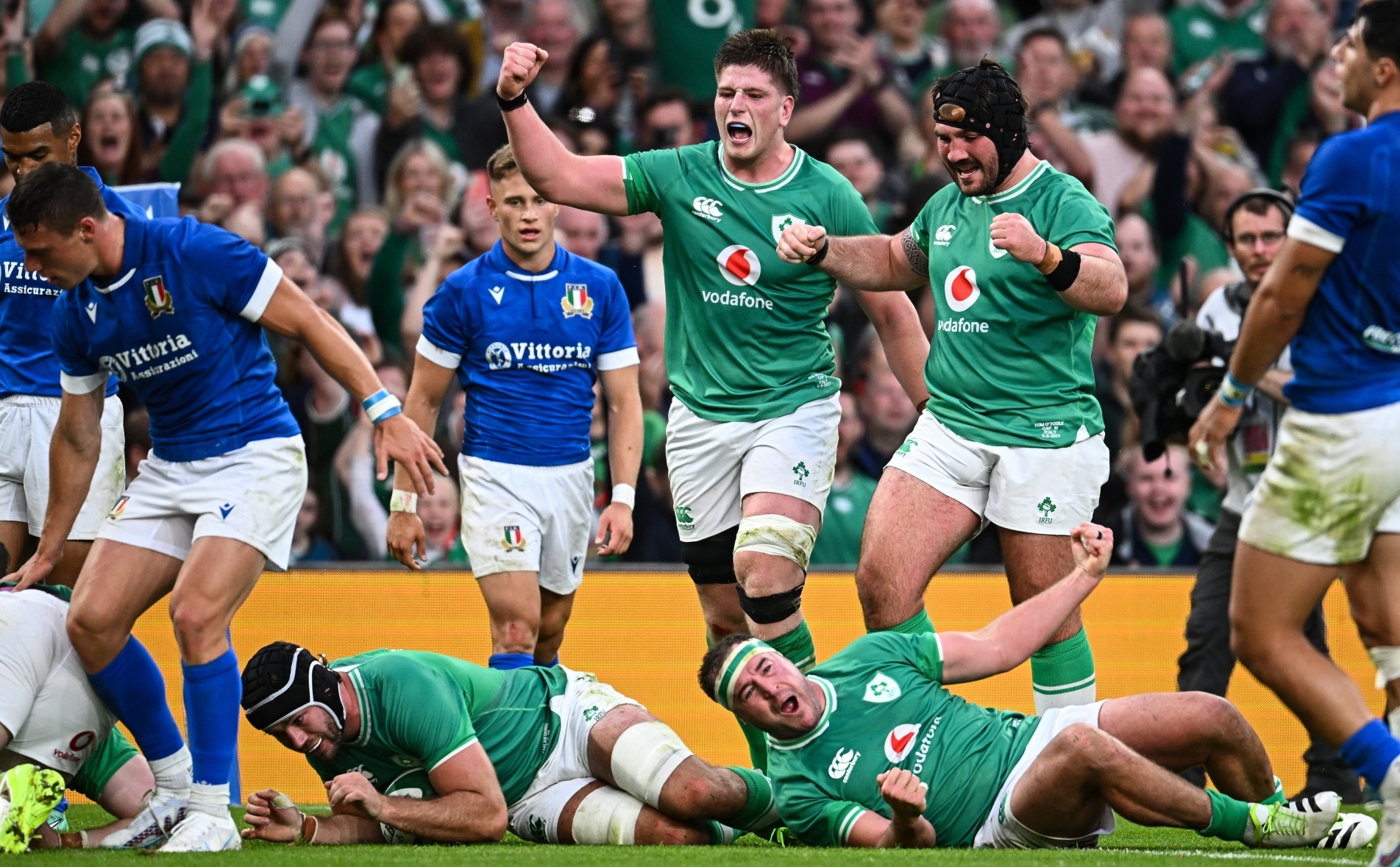
- We beat a below-average Italian side in Dublin with a rotated squad that we pretty much had to select to assess options. We didn’t get the run out we wanted because we were working so hard to get a disjointed team together against an opponent who play the exact style we want to test ourselves against.
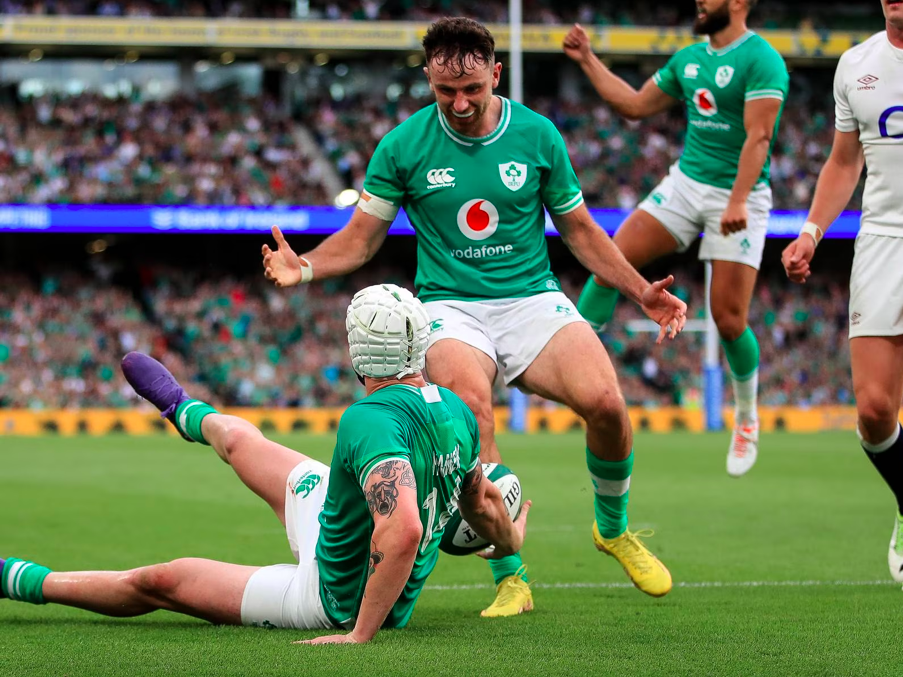
- We beat a chaotic England side who plays a lower-quality version of France’s game plan with a tonne of off-scheme role selections in their own game plan. Half the time, England beat themselves for you. And, again, we did it in Dublin.
That’s on top of a year where our only really serious game away from home was against Scotland, where they were so off the boil in the second half of that game that we managed to win with Josh Van Der Flier throwing into the lineout. We beat France and England at home in the Six Nations but… that was at home.
When you also consider that the bulk of Farrell’s squad playing every single serious game for Leinster in the Aviva Stadium from April on, I think you have a bit of a problem. Is this team too cosy? We’ve been home birds for every traditional test we’ll face this year and, to me, you really find out who you are as a group in difficult away games.
With that in mind, why has Andy Farrell selected, arguably, nine certain Category A starters in this squad? It’s just a game against Samoa, who we’d be expected to beat even without them being present. We don’t need those players to beat Samoa, with all the respect possible.
So why are they here? Let’s have a look.
Ireland: 1. Cian Healy, 2. Tom Stewart, 3. Finlay Bealham, 4. Iain Henderson (c), 5. Tadhg Beirne, 6. Ryan Baird, 7. Josh Van Der Flier, 8. Caelan Doris; 9. Conor Murray, 10. Jack Crowley, 11. Keith Earls, 12. Stuart McCloskey, 13. Robbie Henshaw, 14. Mack Hansen, 15. Jimmy O’Brien
Replacements: 16. Rob Herring, 17. Jeremy Loughman, 18. Tom O’Toole, 19. James Ryan, 20. Peter O’Mahony, 21. Craig Casey, 22. Ross Byrne, 23. Garry Ringrose
Samoa: 1. James Lay, 2. Seilala Lam, 3. Paul Alo-Emile, 4. Chris Vui (c), 5. Theo McFarland, 6. Taleni Seu, 7. Fritz Lee, 8. Steven Luatua; 9. Jonathan Taumateine, 10. Lima Sopoaga, 11. Nigel Ah Wong, 12. Tumua Mani, 13. Ulupano Seuteni, 14. Ed Fidow, 15. Duncan Paia’aua
Replacements: 16. Sama Malolo, 17. Jordan Lay, 18. Michael Ala’alatoa, 19. Miracle Falilagi, 20. Jordan Taufua, 21. Ere Enari, 22. Christian Leali’ifano, 23. Neria Fomai
With our upcoming games against Scotland and South Africa in mind, this particular Samoa side is probably the best system test we can get outside of playing Fiji. Italy are also a bad matchup for us stylistically, but we heavily rotated for that game to assess depth options and so we lost our opportunity to fully test ourselves.
Playing Samoa with nine core Category A starters is the next best thing.
Why?
Only Fiji kick less often per game on average than Italy and… Samoa. Manu Samoa kick the ball 19 times per game on average compared to Ireland’s 29 times per game – which is up by 0.5 for the year after last week’s game against England by the way.
What does this mean in principle? To understand that, we must understand Ireland’s principle of play.
The biggest system challenge to a counter-transition team like Ireland – who primarily play off the opposition’s return of the ball after we kick to them – is a team that doesn’t kick the ball back to us at the same volume that we kick to them.
When the opposition holds onto the kicks we kick to them, we become dependent on winning the ball back in contact, either by forcing a handling error or winning a breakdown penalty to get the ball back. If you can’t force those errors, the opposition holds onto possession for extended periods and they can start imposing themselves onto your defenders. Attacking in rugby is quite tiring but, if you’re conditioned for it (and you have the heavy ball carriers you need to make it work) you can start to beat up the opposition with the ball in hand and make their use of possession very expensive. Ireland are a team that kicks the ball away at such a high volume because we expect to get it back.
Ireland have gained an average of 524 metres per match in 2023, more than any other Tier 1 nation because we play so much of our game on transition and post-transition. We kick to the opposition, and they fear our breakdown threat (7+ turnovers won per game on average) so they kick back to us early in their own possession. When they do, we attack on transition and post-transition, or they kick off the field giving us a lineout which we’re just as happy with. It all starts with our kicking.
So you can see why playing teams who don’t kick the ball back to us as a first option becomes a problem, especially when they have elite talent in the squad. We saw what Ronan O’Gara’s On Ball La Rochelle team did to Leinster in the Heineken Cup final when they hung onto the ball for long periods in the second half against Leinster. Between the 40th and 73rd minute of the second half, La Rochelle kicked the ball in phase play four times. Leinster were locked out of the game without La Rochelle answering their kicks with a kick in return and when Leinster were unable to win breakdown penalties – which are always at the referee’s discretion – it allowed La Rochelle to grind up the field on long multi-phase sequences.
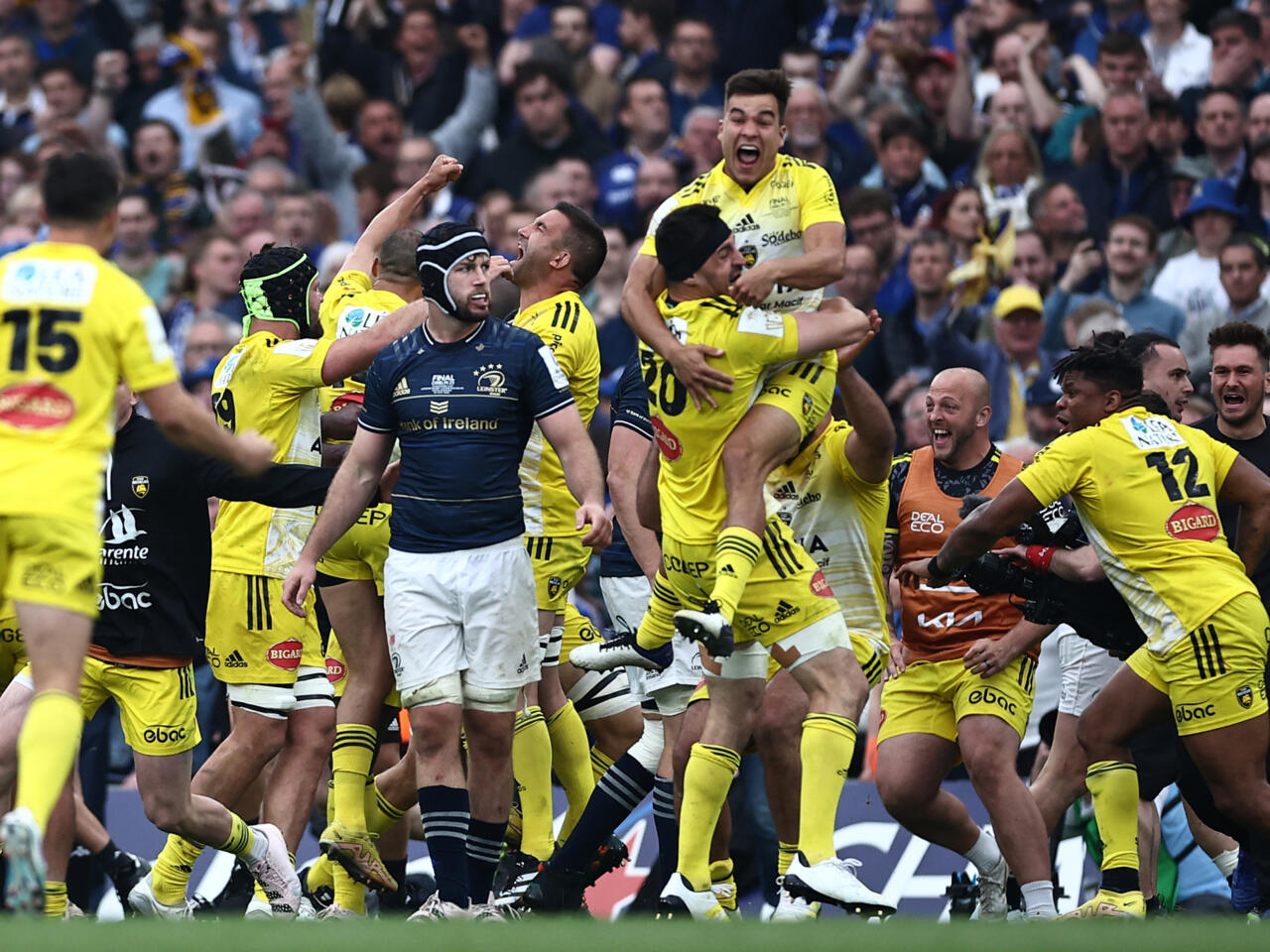
Leinster were exhausted by the constant, relentless defence and they only got back into the game when La Rochelle started to kick to cheese the clock from 73 minutes on. Leinster are not Ireland but the same game principles apply. If we kick to an opposition that won’t kick back at the same volume, we need to be able to force the ball back from them.
If you were wondering why we decided to “risk” Caelan Doris and Tadhg Beirne from the start in this game with Peter O’Mahony on the bench, it’s in part because of their ability to win the ball back at the breakdown – that will be important in this game if Samoa stick to the framework they have used so far this year.
We’ll still win – or should do – but we’ll need to navigate the Samoan’s ability to retain the ball and manage the clock. Their lineout and maul are key weaknesses that we can and will exploit, but how we navigate them on phase play will be an interesting part of our buildup to the Springboks.
