


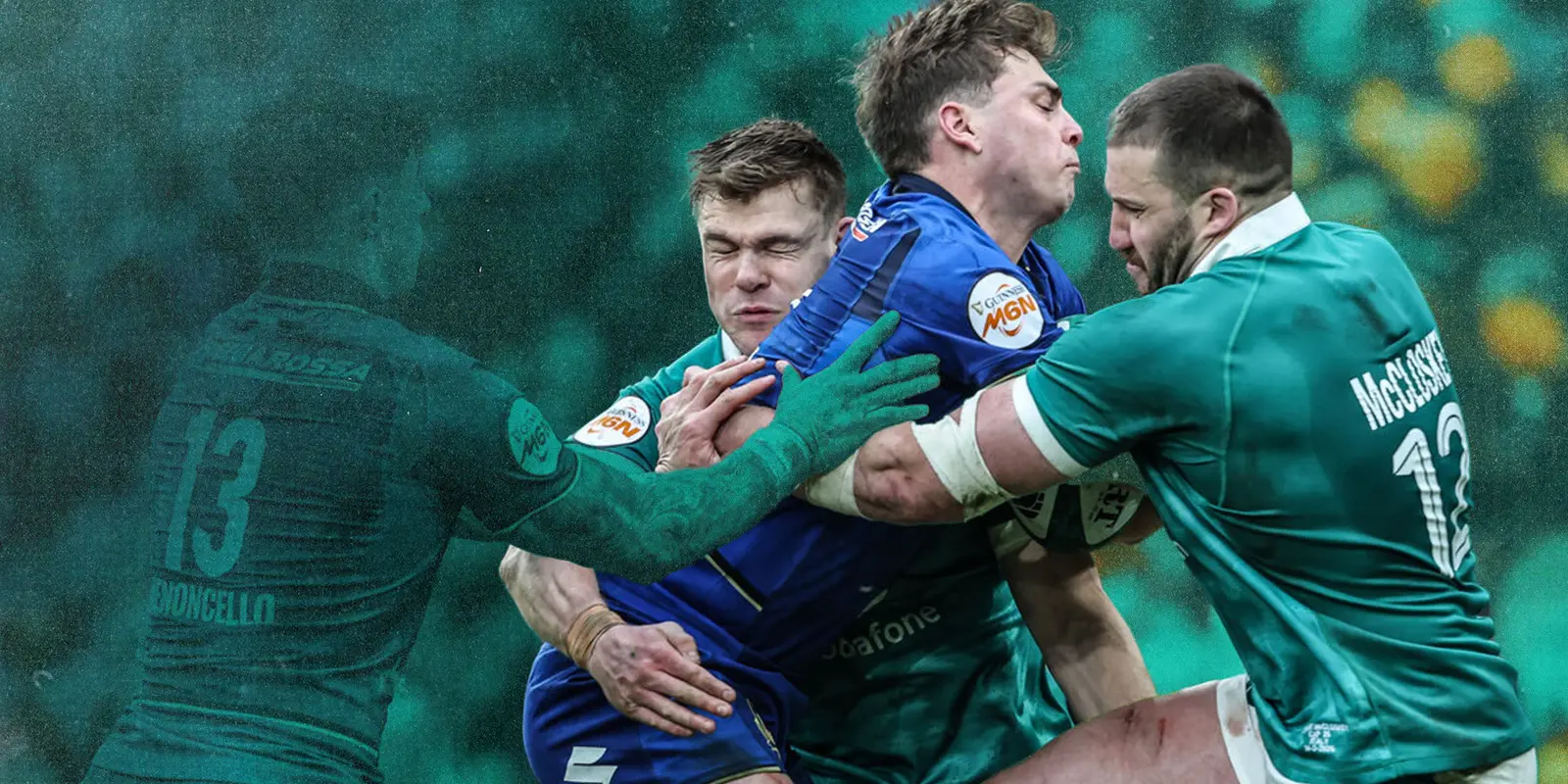

This is Ireland’s biggest game since the World Cup quarter-final in 2023.
Does it feel that way? It should. That quarter-final defeat was, in truth, a natural endpoint for the great Irish team that had emerged in the summer of 2022, and what has come after has been a slow deflation from that point.
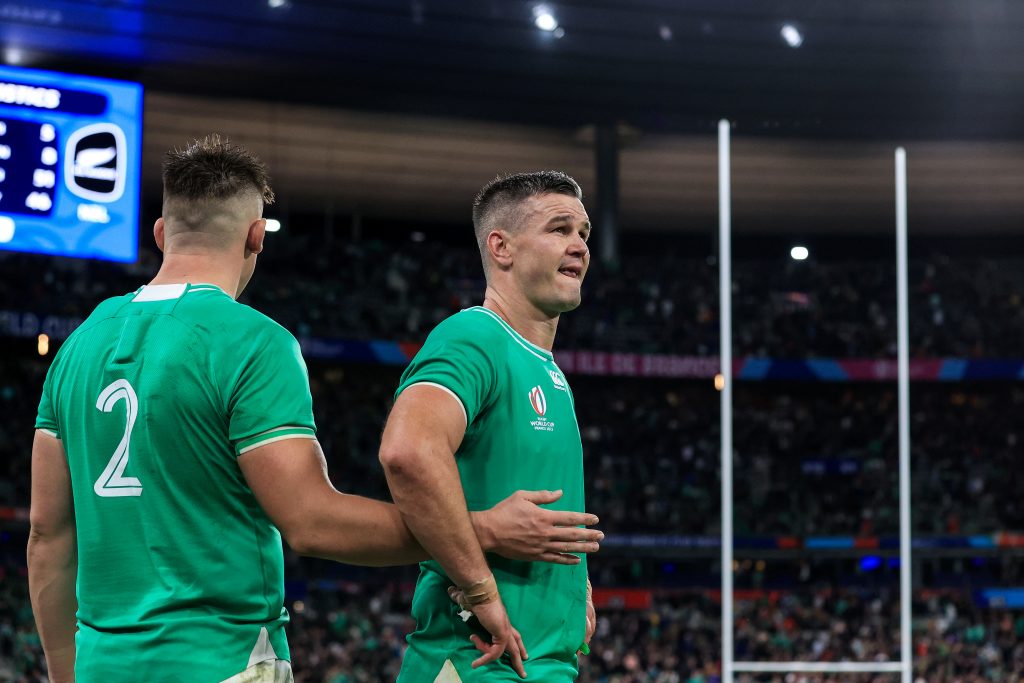
The talk of Ireland being a team in decline puts you in the mind of the full decline having already taken place, but that isn’t true. We are declining, not declined. We don’t know where this Irish team will settle once it’s all said and done, but after this weekend in Twickenham, we will know a lot more about the speed and intensity of the slide we can both see and feel.
We haven’t become a bad team overnight. It would be more accurate to say that we’ve gone from one of the best teams in the world to one of the chasing pack behind the current best teams in the world.
This isn’t necessarily a bad thing. After all, nobody could accuse this Irish team of peaking before the World Cup this time around, but that would imply that a further peak is coming. That is far from a guarantee. Sometimes you just slide from your peak, and you stay there longer than anyone expected.
It’s only natural to rage against this. To deny it. To hope it isn’t happening. This is particularly true of the coaches who are currently overseeing it; nobody wants to be the ones left figuratively holding the bag when the music stops, to mangle two metaphors together.
As I’ll show in this piece, key metrics of Ireland’s game have been slowly declining year on year, and while the game against England is far from a lost cause, it will showcase whether or not we have the capacity to live with opponents who have both the power and game tendencies that lean heavily into the modern meta.
They will kick early and often, they will chase aggressively, they have a back row built to disrupt on the ground, and they won’t waste phases for Ireland to catch a breath, all backed up by a dominant scrum.
That mix has been a problem for Ireland in the last two seasons, and it will be here unless we can dictate the context of the game.
But what is that context? What state naturally suits us at this point? That’s why this game is so important. If we can win, we will show that there is life in this team yet. Lose, or lose badly, and the worrying noises of the last few months will turn into a deep existential crisis, to which there are no easy fixes.
I feel, one way or another, that a crisis is coming one way or another, but I want Ireland to win. I want to believe, for a while, that what inevitably happens to all great teams might not happen to us.
Ireland: 15. Jamie Osborne; 14. Robert Baloucoune, 13. Garry Ringrose, 12. Stuart McCloskey, 11. James Lowe; 10. Jack Crowley, 9. Jamison Gibson-Park; 1. Jeremy Loughman, 2. Dan Sheehan, 3. Tadhg Furlong; 4. Joe McCarthy, 5. James Ryan; 6. Tadhg Beirne, 7. Josh van der Flier, 8. Caelan Doris (c).
Replacements: 16. Ronan Kelleher, 17. Tom O’Toole, 18. Finlay Bealham, 19. Nick Timoney, 20. Jack Conan, 21. Craig Casey, 22. Ciaran Frawley, 23. Tommy O’Brien.
England: 15. Freddie Steward; 14. Tommy Freeman, 13. Ollie Lawrence, 12. Fraser Dingwall, 11. Henry Arundell; 10. George Ford, 9. Alex Mitchell; 1. Ellis Genge, 2. Luke Cowan Dickie, 3. Joe Heyes; 4. Maro Itoje, 5. Ollie Chessum; 6. Tom Curry, 7. Ben Earl, 8. Henry Pollock
Replacements: 16. Jamie George, 17. Bevan Rodd, 18. Trevor Davison, 19. Alex Coles, 20. Guy Pepper, 21. Sam Underhill, 22. Jack Van Poortvliet, 23. Marcus Smith
Stylistically, England and Ireland aren’t that different.
In the Six Nations so far, there are quite a few similarities.
Have a look at this panel to see where the two teams stack up.
In straight number terms, England’s linebreak-per-ruck average across their first two games (0.103) is significantly higher than Ireland’s (0.068), but the spread matters more than the average. England’s output against Wales — 0.152, or roughly a linebreak every 6.5 rucks — is elite-level penetration, but against Scotland, they dropped to 0.053, which is almost identical to Ireland’s worst output against France (0.057). Both teams, when facing a quality defensive line, compress to roughly the same floor: one linebreak every 17-19 rucks. That’s a lot of phases to chew through for very little reward. The question for Saturday is which version of each team shows up — and whether Twickenham produces the kind of defensive stress that drives both sides, Ireland in particular, toward that compressed floor.
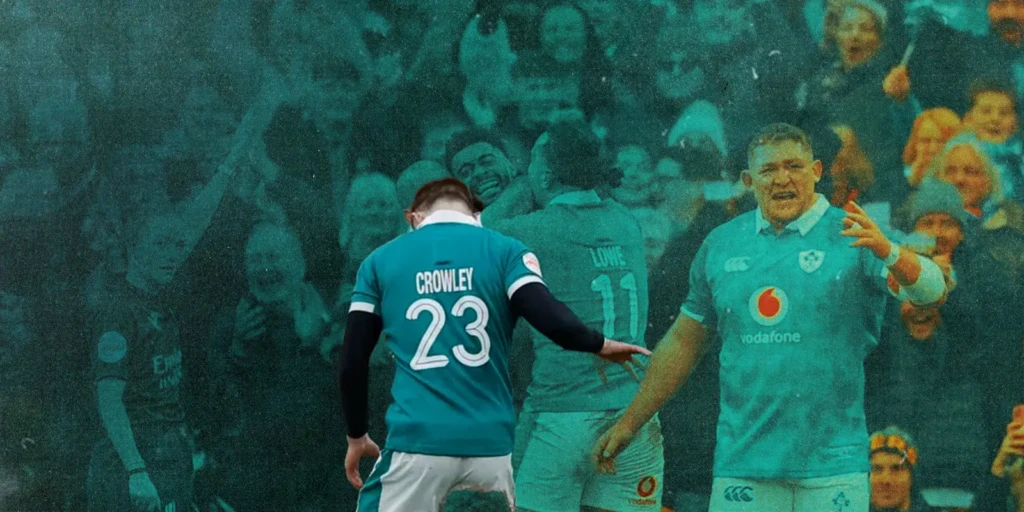
The kicking game is the x-factor here, because against Scotland, England didn’t get what has been their usual return, and struggled to retain when they were kicked to.
That depressed their LBR scoring because it meant they had to play more into set defences, rather than transition windows. Can we duplicate that? If not, this will be a long, long day.
Where England actually separates from Ireland right now isn’t necessarily in how often they break the line — it’s in what they do when they get into the 22. England averaged 3.2 points per-22-entry against Wales and 1.4 against Scotland. Ireland averaged 2.2 against Italy and 1.7 against France. England’s ceiling is higher (3.2 vs 2.2), but their floor is comparable (1.4 vs 1.7). The real concern for Ireland is the volume gap: England generated 14 entries against Wales and 12 against Scotland — even in a game they lost, they were getting into the danger zone regularly. Ireland managed 9 against Italy and just 8 against France. So even if we defend our 22 well on Saturday, England are likely to knock on the door more often, and that volume creates cumulative pressure that Ireland’s exit game will have to handle.
When we look at Ireland’s 22 efficiency, that’s when we get a real flavour of how we’ve dipped from the highs of 2022/23/early 24.
The numbers don’t lie, and right now they’re telling an uncomfortable story about where Ireland are as an attacking force.
Across 10 Tier 1 tests — Six Nations ’25, Autumn ’25, Six Nations ’26 — Ireland’s 22m entry data points in one direction, and it’s… uh, not up. We averaged 8.9 entries per game, attacking into the opposition 22, against 8.3 conceded. That differential sounds manageable on paper. The problem is what’s happening inside those numbers across the window.
In the first five tests of the cycle, we were averaging around 9.8 entries. The last five? That’s dropped closer to 8.0. At the same time, our points per entry have followed the same trajectory downward — generating roughly 2.2 points per entry in the early games, and that’s eroded noticeably since. We’re getting there less and doing less when we arrive. Decline.
The contrast with opponents is stark. Opposing teams have been remarkably consistent at turning their 22m entries into points against us — France put up 3.6 per entry in the ’25 Six Nations, New Zealand 3.7, and even in games Ireland won, opposition sides were averaging well above 2.0. Ireland’s red-zone defence isn’t pulling its weight at the rate the attack needs it to.
When we win the entry battle — more entries than we concede — the system still functions. The results follow, mostly. But we’ve only won that territorial fight in a handful of these 10 tests, and the trend across the window isn’t pointing towards a correction.
Heading to Twickenham, Ireland will need a defensive performance bordering on flawless — and nothing in this dataset suggests that’s where our red-zone defending is right now.
But that highlights the bigger problem; we have the softest defence in the Six Nations.
Our dominant tackle percentage rate is 3.8% — just 0.6% above Wales, and 6% fewer than fourth-place Scotland. Our tackle completion rate is only better than England’s, who play with more of a blitz profile than we do, and 42% of our missed tackles lead to a linebreak or a try, the highest in the Six Nations. England’s rate in that metric is the second best behind Italy, which showcases how much better their scramble cover is.
This directly relates back to our declining 22 efficiency in a general sense. It is generally easier for teams to break our line, force back our tacklers and create compressions, especially on transition, which will be hugely important here.
Can we win the aerial battle that’s coming? Can we play out of it if we do? How will we handle the scrum pressure that’s coming with a 5/3 bench and no fresh locks to come on when the scrummaging pressure cranks up in the second half? That’s the key to this game.
