


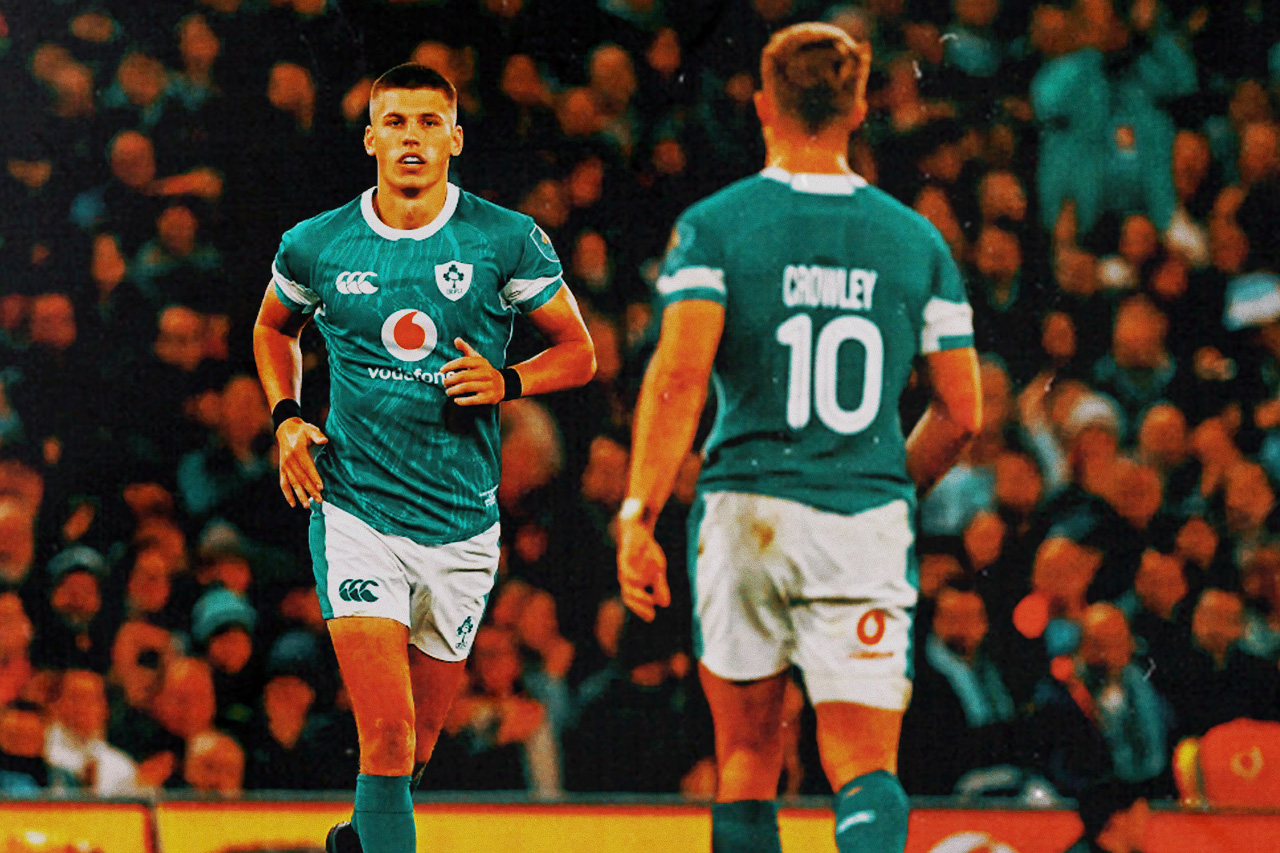
We are beginning to enter a very interesting phase of Irish Rugby, one where we’ve been consistently at a peak for what feels like the last four years but is probably a little shorter than that, with key players starting to pick up a few knocks throughout the season that last a little longer than they used to, and with the extra target of being defending back-to-back champions on our backs.
Ask around the game, and everyone has a theory about how you beat Ireland. Only very few are capable of it when Ireland plays well, but they all have their theories. In some ways, Ireland are a greater conundrum than the World Champion Springboks. We are like a pub quiz question that you think you know but would have to google to know for sure. Every team have their theories – England certainly do – and they’ll all get a shot at the double champs to test them.
One thing is for sure; change is coming. This is one of the oldest Irish squads that we’ve ever fielded in the Six Nations and even the guys hovering just under 30 do so with a tonne of rugby miles on their rugby clock, that they keep in their rugby locker.
The danger of being known looms large for this Irish team and I can’t shake the feeling that too many guys we’re still relying quite heavily on are coming close to their last legs at this level. Eleven of this matchday squad are 32 this year or older. That is… concerning.
Ahead of us is something that nobody has ever done – a hat-trick of Six Nations titles. Back-to-back-to-back champions. The great French sides of the 90s and 00s never did it. That England team who seemed like they’d never lose again in 2003 didn’t manage it. Ireland under the mechanical excellence of Joe Schmidt couldn’t manage it. Warren Gatland’s Wales team couldn’t manage it in the early 2010s when they seemed like they had an answer to every possible question. Eddie Jones had a World Cup calibre team featuring a tonne of peak Saracens – and, in reality, peak English Premiership – players in his squad and he couldn’t do it either.
Can this version of Ireland do what nobody has ever done?
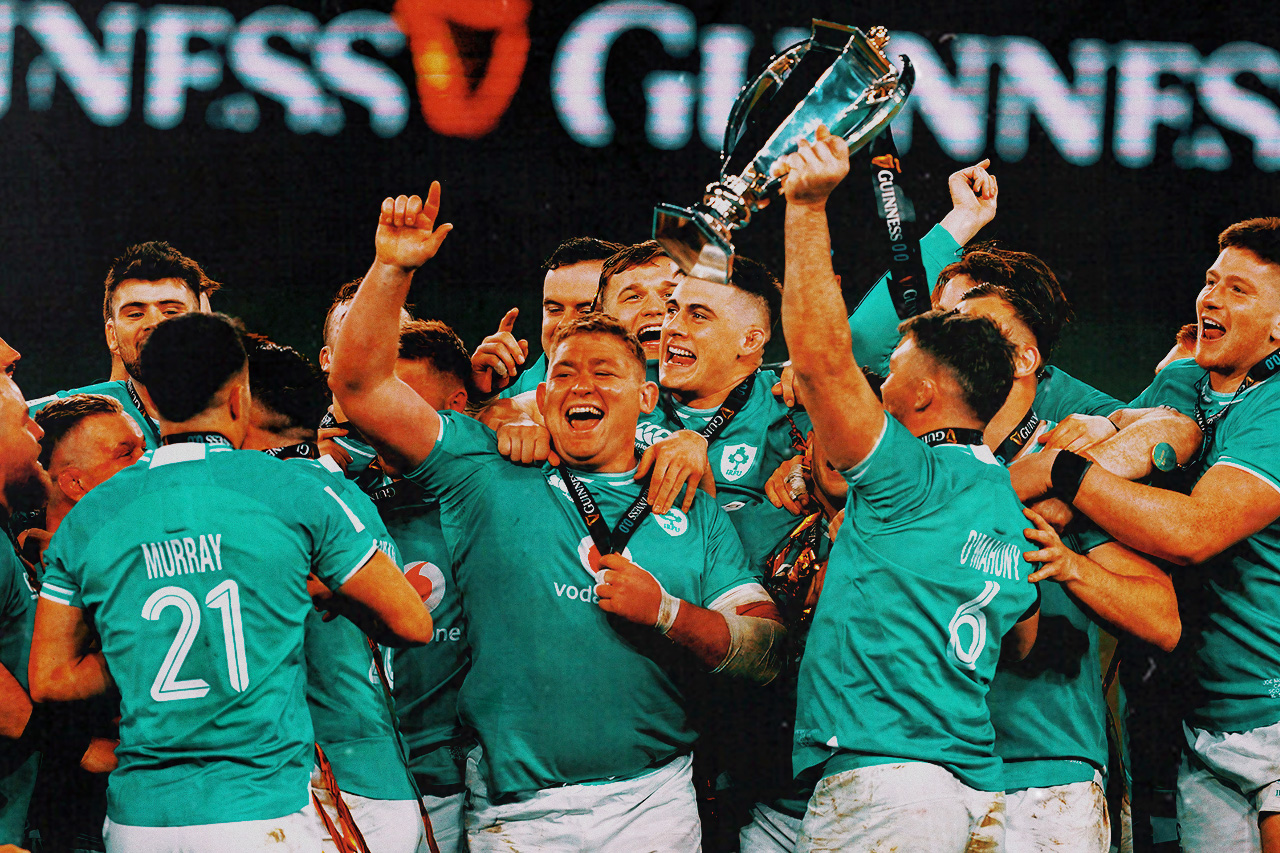
Maybe.
The reason why this hasn’t been done before is because it’s incredibly difficult to stay consistent at the highest level three seasons in a row. Injuries bite you, players dip in and out of form, and opposition teams figure you out before finally putting the resources together to stop you cold.
That’s why nobody has ever done it.
To do what nobody has ever done, Ireland will have to find a lot more answers than normal after a November series that ended broadly successfully but went a lot of ways towards damaging the aura built up under Farrell since 2021.
Easterby’s biggest challenge is kickstarting this Irish side’s best rugby in a way that we haven’t truly seen since the 2023 Six Nations. Easier said than done, especially with Farrell sitting over his shoulder demanding a strong Ireland performance relative to the other Lions-eligible sides to justify what would otherwise be a pretty unpalatable squad selection later this year. A bad Irish Six Nations – a third-place finish or second to anyone but France – will put big political pressure on Farrell and that can’t be allowed to happen for any number of reasons.
“Don’t fuck it up”.
Ireland: 15. Hugo Keenan, 14. Mack Hansen, 13. Garry Ringrose, 12. Bundee Aki, 11. James Lowe, 10. Sam Prendergast, 9. Jamison Gibson-Park; 1. Andrew Porter, 2. Rónan Kelleher, 3. Finlay Bealham, 4. James Ryan, 5. Tadhg Beirne, 6. Ryan Baird, 7. Josh van der Flier, 8. Caelan Doris (c)
Replacements: 16. Dan Sheehan, 17. Cian Healy, 18. Thomas Clarkson, 19. Iain Henderson, 20. Jack Conan, 21. Conor Murray, 22. Jack Crowley, 23. Robbie Henshaw
England: 15. Freddie Steward, 14. Tommy Freeman, 13. Ollie Lawrence, 12. Henry Slade, 11. Cadan Murley, 10. Marcus Smith, 9. Alex Mitchell; 1. Ellis Genge, 2. Luke Cowan-Dickie, 3. Will Stuart, 4. Maro Itoje (c), 5. George Martin, 6. Tom Curry, 7. Ben Curry, 8. Ben Earl.
Replacements: 16. Theo Dan, 17. Fin Baxter, 18. Joe Heyes, 19. Ollie Chessum, 20. Chandler Cunningham-South, 21. Tom Willis, 22. Harry Randall, 23. Fin Smith
I think England are going to try and off-ball this Irish team and that they are banking on Ireland’s tendency to kick more and longer with Prendergast at #10 to make gains in kick transition.
Their selection of three small-forward-build players in their back row to start – all three are tackle machines that cover a tonne of ground on transition and laterally – is an immediate tell that they are planning on kicking in depth to this Ireland team. One of the things that kept coming back to me since November when I spoke with friends of mine working in New Zealand is how slow we are perceived to be in the backfield, and in general. It’s something that I hadn’t really considered but, when you think about it, only Hugo Keenan has proper wheels in that outside backline. On transition, he’s about the only running threat that we have capable of engaging the likes of Freeman and Murley in open space on a like-for-like basis. Hansen, Lowe and Prendergast – who England will kick to a lot when he files into the backfield – are far more comfortable passing to open space or kicking for territory, but the perception is that if you kick them in the mid-range, you can catch, scrag and pressure them.
As a side effect of this, I think England will be happy enough to take the increased scrum count and see a favourable matchup with Ireland’s tightheads for the full 80 minutes.
You know what that means. High contestables, no kick escorting, and pressure on kick receivers in the air and on the drop with England seeing little downside in returning to that tactic again and again.
Bath and Clermont have seen good returns from this tactic against Leinster in this year’s Champions Cup and they’ll be playing more or less the same transition unit in this game. This one from Finn Russell in the game against Leinster a few weeks ago shouldn’t have been so effective but it effectively targeted Prendergast’s relative lack of mobility in the backfield. In the same scenario here, Prendergast will likely dump this off to Lowe to get a kick down the edge of the field but I feel England will feel that going after Prendergast in the backfield will yield rewards.
That sequence of contestable, pressure and living with the scrum outcome is the danger for Ireland here, especially if England feels that our post-transition phase play isn’t up to our usual standards.
This is where the key differences between 2025 Leinster and 2025 Ireland come into play. Against Bath, for example, Leinster got back into the game after going down 14-0 in the first ten minutes primarily off the back of dominant, penalty-generating scrum penalties generated by Rabah Slimani on Beno Obano. Will that same counter to a heavy-kicking game exist here? I feel England will fancy the matchup between Genge and Bealham and it’s up to Ireland to find a potential answer to this potential problem.
Defensively – to go back to those English small forwards – I think the key for Ireland will be winning ruck penalties against England’s low tackle, no jackal focus in the middle of the field. Against Australia, New Zealand and Argentina in the Autumn, we had all the quick ball we wanted but withered in the face of heavy line speed clogging our passing lanes and drawing repeated kickaways under pressure. Winning our contestables will be key, and we’ll have to be wary of giving Marcus Smith too much space to work in transition because if England get separation there, they have the pace to hurt us over and over again.
I think a winning strategy for Ireland is a patient one; kick quite conservatively, roll the dice on contestables and see where we stand on the drop of the ball. The first five scrums are crucial to set the tone – we just need stability and to keep Genge away from Bealham. Ultimately, we will know if England are clued in early if they start kicking for three points on any penalty inside our 10m line. If they start at that, we’ll know they know us. And that’s where it could get difficult.
