


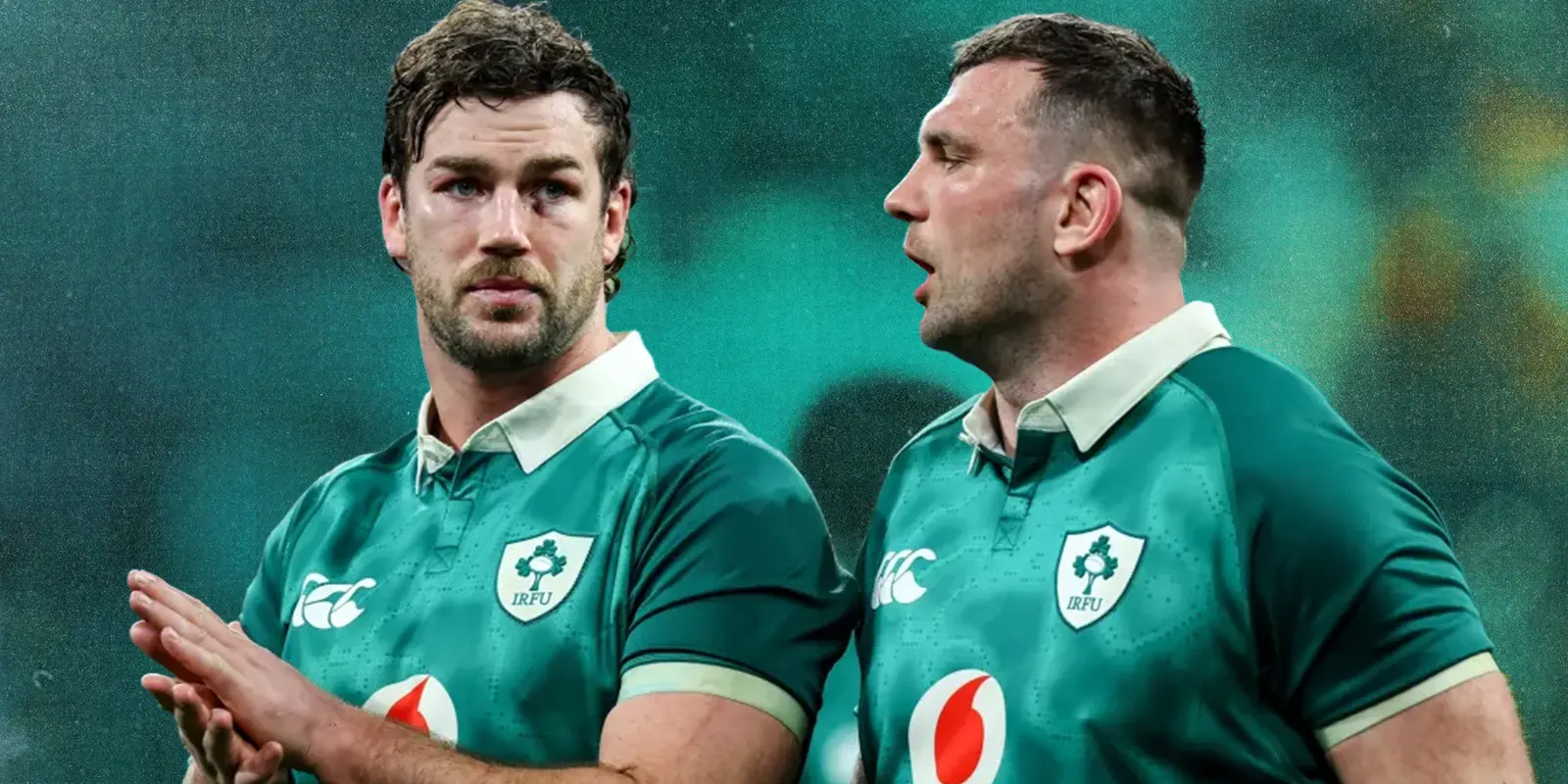

How do you recover from a beating like the one in Paris last Thursday night?
We have genetic muscle memory of it, in one way — losing badly playing a lesser, depreciated version of the game in France is something Ireland have traditionally excelled in, Back In The 90s. The 90s have come back in vogue this week. We were rubbish then, as you either remember or have been recently reminded. We’re not rubbish now, despite trending in that direction a little more than we’d like to fully take on board. But Back In The 90s, we knew how to recover after a loss. With effort, with heart, if not always a result.
Losing can become a habit, just like winning. We knew that back then, too. Winning is a habit that self-enforces, like going for that walk first thing in the morning to help your silly #mensmentalhealth while also helping the weighing scales tick downward. -1kg, -1kg, -2kg. It’s working! Better keep doing it.
Losing is the opposite; like convincing yourself that the big can of Red Bull you drink in the morning helps you get up and ready for the day, despite the ever-present thought that you are literally drinking heart-attack juice that tastes like the good Calpol from back in the day. But what can you do? You take the mini-loss, and accept that another one is coming the next day when your willpower fails again.
But this week, at least, Ireland will play Italy in the Aviva Stadium. It’s a game we have never lost in the Six Nations, although we have lost to them once in Italy. That streak has been maintained by good, bad and indifferent Irish sides. Ones in the middle of a transition, ones at the peak of their powers, and ones somewhere in between. But we’ve always won. Always.
I expect Ireland to win this week, too, but the context is more challenging than it has been for some time. Andy Farrell knows this well. The team he’s picked has the usual rotation he saves for Italy in the Six Nations, but he, we, and they need a little more than that this week. The loss to France knocked the stuffing out of us. Made us doubt. Made us think “what if” for a game that always says “when”. When we beat Italy. When they tire in the second half. When our class pulls us away from any sticky scorelines.
I certainly wouldn’t have blamed Farrell for giving the squad that lost to France another bite at the cherry with Twickenham on the horizon. A chance to right the wrongs. Get some semblance of form and understanding back. A little of “see? this is what we do” at a time when that’s never been more nebulous. We win. When we beat Italy, we’ll remember we’re supposed to be a top-three side in the world, not a side looking down the rankings at the teams we were and hope to never be again.
But that would have been fake.
Instead, Farrell has decided that the group need the energy of change. Not radical change — nobody would expect that realistically — but change nonetheless. Nothing focuses the mind of a team like a player getting their debut or an opportunity. Their excitement refocuses yours. At a time when the green jersey can feel like a ton-weight, seeing someone sit on the bench in the changing room looking with awe at the green jersey they’ve just earned after years of work can remind you of what it’s supposed to be about. It shouldn’t weigh you down; it should excite you, too.
Being a test player when things are going well is like being the most popular kid in every school in the country, all at once. You can do no wrong. You can be a giant. The only issue is that you’re often reminded of when you stopped. Worse again, you have to pretend as if the “outside noise” doesn’t affect you. Like you’re the only human being in the history of the species who doesn’t have an interest in what bad stuff people might be saying about you or your team. Of course the outside noise has an impact. Of course players see the social media posts. Of course they read the reviews and skip to the player ratings. That doesn’t mean outside noise shouldn’t exist. It just means you have to drink a little bit of poison over the course of the week and hope your hands don’t start shaking by the end. No poison is good. Some poison can be OK. Too much poison? Well, it’s not good.
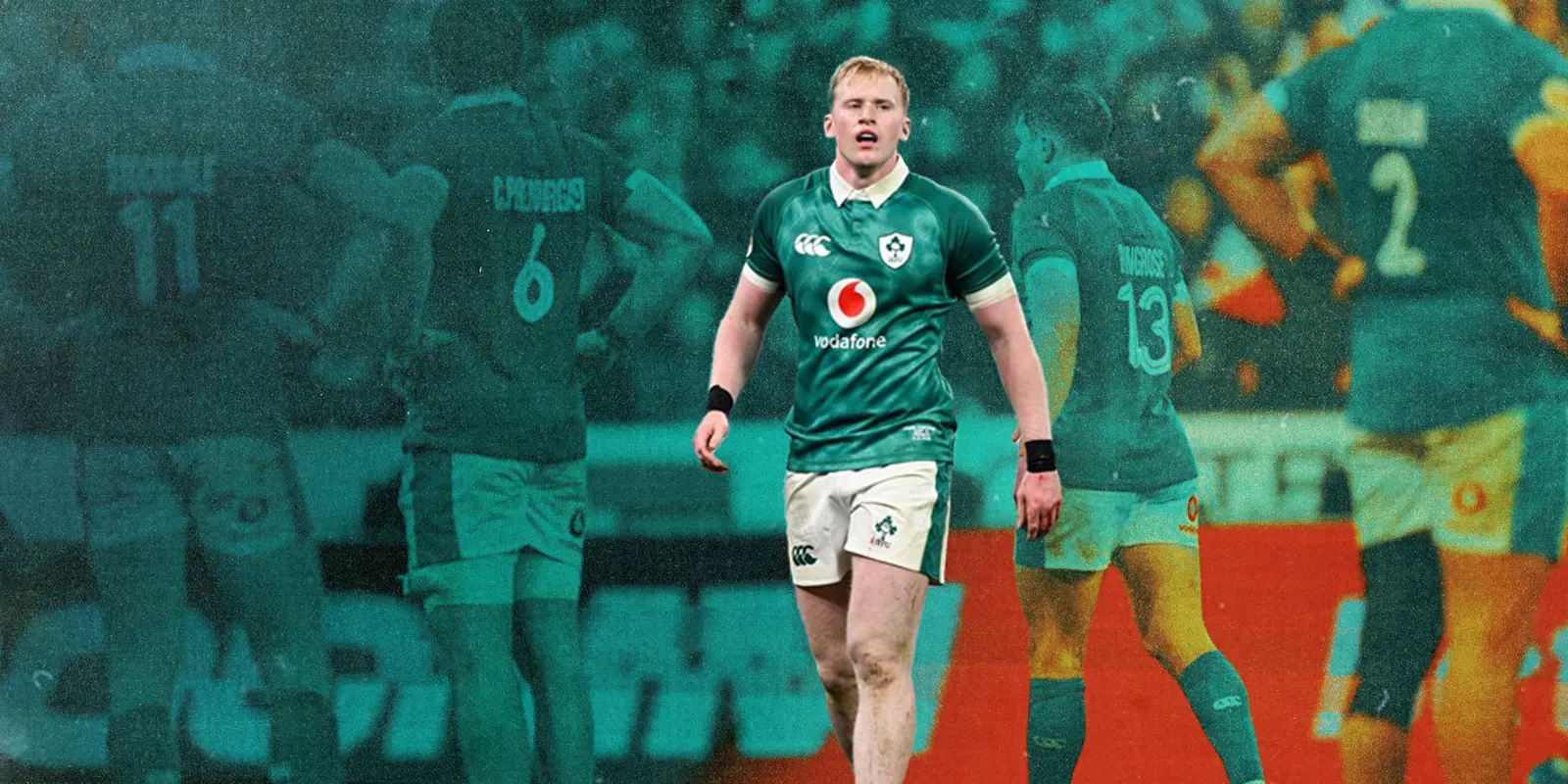
Ireland were bad against France. They played badly. France looked like they were playing a different version of the sport, at times, and the players and staff well know that. They feel the pressure to “have a response”. They feel the fear of what if we were to lose to Italy this coming weekend. That would make the harrowing night in Paris look like a two-pint buzz on a first date that’s going better than you ever thought.
It would be a nightmare.
The talk of “decline” would become common knowledge. Something your neighbour, who only half pays attention to rugby around the Six Nations, asks you about, because you’re into The Rugby. What’s Going On? More than anyone else, the players know the ledge they’re walking on this week, this Six Nations, and if you’re Andy Farrell, you’ll want to remind them that you can step back from it one step at a time, just like you walked up to it one step at a time.
Change helps with that. Look at the new faces. Look at the guys buzzing to be getting this opportunity. Sometimes believing that things are fine can make things fine, as long as that belief can hold out against reality. It’s not a lie if you believe it.
Italy aren’t a hard version of reality, although they will bring reminders of the reality that has found out small toe like the corner of a wardrobe in the last 18 months.
A big scrum. A high-volume kicking game, with a transition game to match. Pace and evasion in the outside backs. More power, smarts and quality in the back five than they’re given credit for. And their own knowledge that Ireland have rarely been as “get-at-able” as this weekend, all wrapped up in nothing to lose.
For Ireland, beating Italy in Dublin is expected. From a narrative perspective, it’ll put a dent in the doom-spiral after Paris ahead of Twickenham, but only if we win well. Like, really well. The problem is that no win over Italy will truly halt what everyone is feeling; that can only be achieved in Twickenham in round 3.
A loss, however, will hit like a box of rats loose in a hospital ward. Panic. Contamination. We can’t possibly get them all back in the box. Who even brought a box of rats in here in the first place?
Let’s deal with the When, rather than the What If.
Ireland: 15. Jamie Osborne; 14. Robert Baloucoune, 13. Garry Ringrose, 12. Stuart McCloskey, 11. James Lowe; 10. Sam Prendergast, 9. Craig Casey; 1. Jeremy Loughman, 2. Dan Sheehan, 3. Thomas Clarkson; 4. Joe McCarthy, 5. James Ryan; 6. Cormac Izuchukwu, 7. Caelan Doris (c), 8. Jack Conan.
Replacements: 16. Rónan Kelleher, 17. Tom O’Toole, 18. Tadhg Furlong, 19. Edwin Edogbo, 20. Tadhg Beirne, 21. Nick Timoney, 22. Jamison Gibson-Park, 23. Jack Crowley.
Italy: 15. Lorenzo Pani; 14. Louis Lynagh, 13. Tommaso Menoncello, 12. Leonardo Marin, 11. Monty Ioane; 10. Paolo Garbisi, 9. Alessandro Fusco; 1. Danilo Fischetti, 2. Giacomo Nicotera, 3. Simone Ferrari; 4. Niccolò Cannone, 5. Andrea Zambonin; 6. Michele Lamaro (c), 7. Manuel Zuliani, 8. Lorenzo Cannone.
Replacements: 16. Tommaso di Bartolomeo, 17. Mirco Spagnolo, 18. Muhamed Hasa, 19. Federico Ruzza, 20. Riccardo Favretto, 21. David Odiase, 22. Alessandro Garbisi, 23. Paolo Odogwu.
Some of what France do well, Italy also do well, but the game won’t really look like how it did in Paris; at least I don’t think so.
Ireland’s loss to France was really notable because of how “clean” it was. Both scrums ran at 100%, and the lineout was not really a factor. Neither side contested the set piece all that hard; there was no massive pressure at the scrum on either side — even if the referee could have penalised one or two moments — and that mainly comes down to France deciding not to make that part of the game a focus. They were fully in control of the layout of that game, and they decided before the game that they weren’t going to be compressed by Ireland in any facet if they could avoid it.
Italy, on the other hand, will heavily chase Ireland’s scrum and lineout as a core part of what they hope will be a winning performance.
Before the France game, this was the big concern, and it turned out to be a non-factor, but the opposite could be true here. Put simply, if Italy can do this to Scotland against the head, they can do it to us.
They also contested heavily at the lineout against Scotland, and while, yes, it was wetter than whale’s eyelids in Rome, our lineout is the very definition of simple at the moment.
If we’re hoping for a lot of middle ball off the top, they’ll be quite comfortable testing our windows with two counter pods.
They will do that here, early, to spook our lineout and narrow it to front ball. We’ll need Izuchukwu to be pretty across his lineout detail, because I think we’ll be using him a good bit as a change-up in the middle.
On their own lineout, actually, look out for this maul feint to attack Lowe and Casey. Cannone hides as a maul driver on the feint, then runs an inside line like a winger would.
If we overcommit on the maul, they’ll run this to catch us if Doris is overchasing to cover Prendergast — essentially use how hard he’s covering to attack him against the grain.
Most of Italy’s forward energy is used on offensive/defensive set-piece and on D. Their 6/2 split is two locks, one power forward, so you know what to expect here. Lots of kicking, lots of heavy defensive sets, and a 50/30 from their front five to keep up the set-piece pressure.
That’s empowered by their kicking game, which is almost always high volume, low pass per carry against elite sides when they are in the game. They averaged a Pass Per Carry ratio of 1:4 across their elite test opponents this season, but when they have a sniff of a result, and certainly early, they will kick almost everything — long if they’re on their own 22 or near it — and high and contestable if they’re anywhere outside that. Fusco has his limitations as a scrumhalf, but he’s selected because he’s usually pretty reliable at box kicking, and Italy do that a lot.
They’ve got pace in the chase, and multiple jackal threats on the ground, and every single one of their backline is quick, direct and a ball of pain in contact. They don’t have Capuozzo here, but nobody in this backline is a slouch.
This clip should be all you need to know;
Their ruck work isn’t number-limited. They kick so much that almost all of their rucks are about preventing turnovers rather than number management in their attacking line. What ball they’ll carry, they’ll likely keep, but it’s not going to be lightning-quick possession unless they’re running off the set piece. Most of their carries outside the 22 are a setup for a kick of some description, and then dug in transition defence.
The problem with Italy is that they roll the dice too much at the defensive breakdown, and they’ll likely do that here too. They have really good defensive numbers — tackle count, dominant tackles, duel winning — but the issue is almost always the second action. The late shot, the jackal they should have left, the arm tug in the lineout. That’s what usually kills them. Have they taken it out of their game? We’ll see.
The team we’ve picked here is arguably as heavy and as front-foot — in theory — as we can manage from this particular squad. Italy have the most dominant tackles across the last two Six Nations, powered by a really low tackle profile, which almost their entire starting backrow is selected to do repeatedly. They have the best scramble defence in the first round of this year’s Six Nations. How much of that was due to Scotland’s issues?
Again, we’ll see.
The start of this game won’t be easy. Italy will make it uncomfortable and look to squeeze our duels, our scrum and our lineout, and they’ll kick at volume to activate that.
If we come through the first 15 minutes without any of these causing an issue, we’ll win pretty easily.
If we start getting into trouble in the scrum — something I’m a little concerned about, I have to say — then this could turn into a really, really nervy game for an already brittle Irish side.
I do think we’ll win, however, but I think it’ll be relatively tight unless we can catch them on a strike play, which they’re a bit prone to conceding from, especially maul feints.
