


Where It Always Ended
I’ve made it my business in life to avoid being a hostage to history. Just because a thing always has – or has not – been, doesn’t mean that it will stay that way forever. In 2015, for example, no one was making a living in rugby media unless they were attached to a newspaper or mainstream website. If I made the assumption that what always was would always be, who knows what I’d be doing now?
Ireland’s record at World Cups is blighted by history. All we have to look at is disappointment and hurt. I was thinking this week what the worst World Cup exit was and I was able to rank them. They are, in order;
- Losing to Wales in the 2011 Quarter Final.
- Losing to Argentina in the 2015 Quarter Final.
- Not making it out of the pool in 2007.
I will not hear any debate on this; those are the worst. Our Quarter Final exit to the All Blacks in 2019 isn’t on that list – despite them going on to be walloped in the semi-final – because the woe from that defeat had been cut, almost, with the bespoke woe from the loss to Japan a few weeks before. In terms of pure, uncut, 100% Bolivian street woe, nothing touches those three exits.

So that’s the fear this year. In 2019 we were #1 in the world in name only but this year, we’re arguably the team of the tournament so far with two of our most difficult games and biggest wins against the most credible opposition loaded right before the knockouts. We took the Pool of Death and dominated it.
New Zealand, on the other hand, lost their pool decider decisively on the opening night and have spent the last month sticking 50+ points on Tier 2 sides any way they wanted. Is that an advantage to them or us?
Ireland are battle-hardened but have a few bumps and bruises. The All Blacks are coming in off a by-week fresh as a daisy. We know this Ireland team gets better with every game they play and nowhere was that more visible than last week after three straight games of more or less the same team racking up big minutes on top of two years where they’ve played almost every minute God sends together.
This is what we’ve been building towards. This game. Call it revenge for 2019. Call it finally delivering a win over New Zealand in a World Cup. Call it delivering on this team’s potential to take us to where this country has never been before.
Call it what you like. This Saturday is going to be a war. More physical, even, than our game against the Springboks. We embarrassed these All Blacks in their own backyard where the talk afterwards was how they allowed themselves to be bullied. They’ve been talking us up in the press all week because, make no mistake, they are coming for blood on Saturday night.
A few years ago, I spoke about how the ultimate respect in rugby is earning the hatred of another team and New Zealand in particular. They don’t rate you until they hate you. Forget all the nice words from Ardie Savea and Richie Mo’unga this week. They hate us down there. We’ve earned that hatred and I want us to revel in it.
We were jokes in green for long enough.
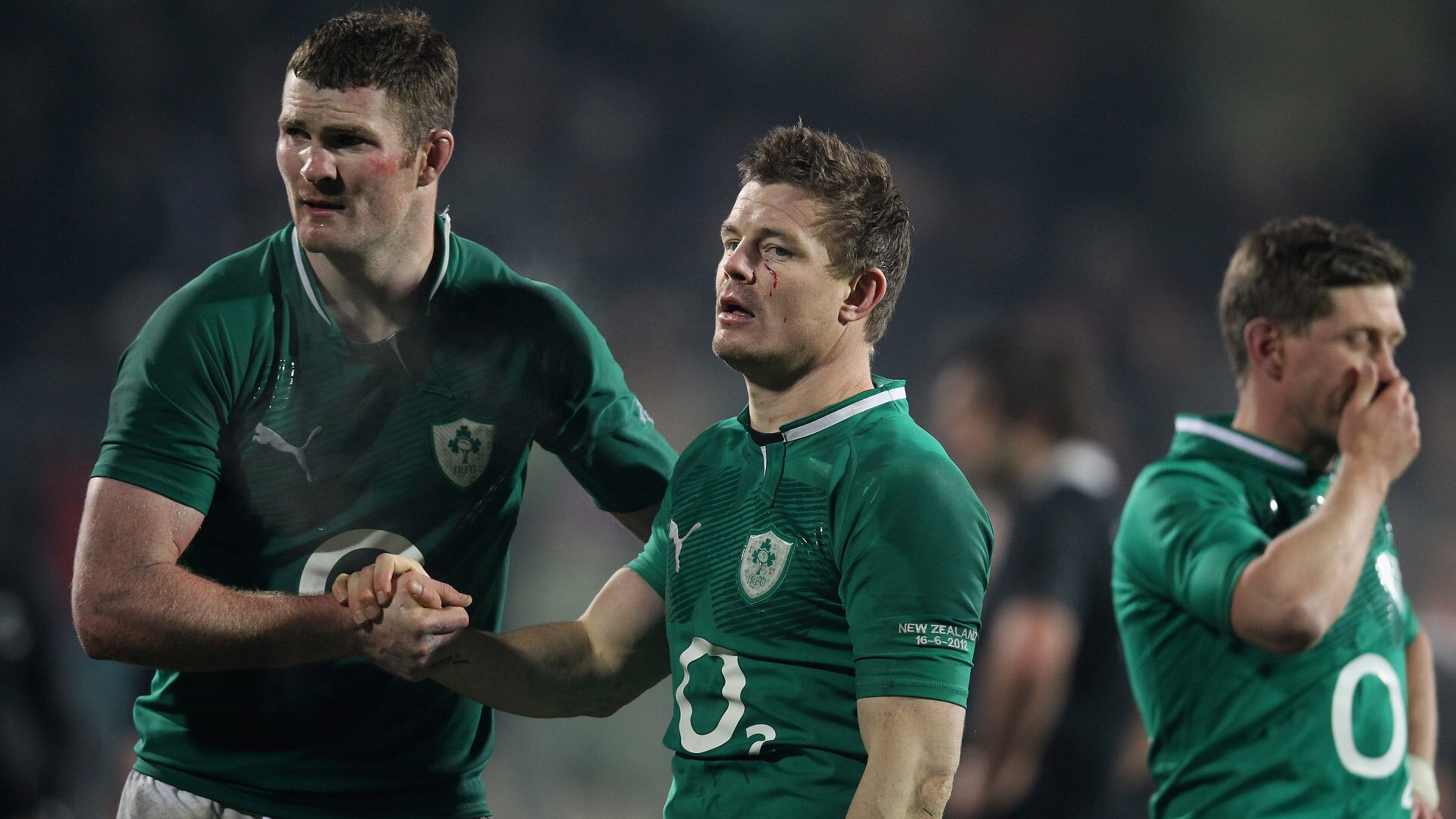
For over a century, New Zealand weren’t bothered to get the names of our players right because outside Brian O’Driscoll and, when pushed, Paul O’Connell, they didn’t rate us. Not even a little bit. Chicago was a “black mark” to them because they lost to us – little old Ireland. They looked at it the same way as losing to Italy. We picked up another win off them a few years later but they beat us when it counted in Japan, so all was right with the world. Order restored.
But since then we’ve played four games against them and won three. It should have been 4-0. We know it, they know it and in that knowing they have come to hate us in the way we want but not as much as we need.
They think they hate us now, but we want more.
This is an opportunity to knock off one of the great Gods of this sport. On their sleeve – all the evidence you need of that godhood; a gold Webb Ellis trophy and three years.
1987, 2011 and 2015.
For decades they were untouchable to us in the same way that the gods of myth were untouchable to ordinary men. In the last few years, we’ve seen them stumble, fall and lose skirmishes. We’ve grown with each one of those but we’ve only won battles. The war remains and, one way or the other, it ends this Saturday night. Old Gods in Black versus New Titans in Green.
If you ask me, now’s the time to kill off the old Gods. It’s beyond time. Lose, and the world will paint everything this team has achieved as a joke, as nothing but Sunshine Boys winning when winning was easy and losing the minute the stakes cranked up.
Win, however, and the All Blacks throne awaits. Kill off this All Blacks team and, in a way, we tear that Webb Ellis off their sleeve. It’s not a cup of our own, but it’s as close as you get. The opportunity is fucking enormous.
All we need to do is reach out and take it.
Ireland: 15. Hugo Keenan, 14. Mack Hansen, 13. Garry Ringrose, 12. Bundee Aki, 11. James Lowe, 10. Johnny Sexton (c), 9. Jamison Gibson-Park; 1. Andrew Porter, 2. Dan Sheehan, 3. Tadhg Furlong, 4. Tadhg Beirne, 5. Iain Henderson, 6. Peter O’Mahony, 7. Josh Van Der Flier, 8. Caelan Doris
Replacements: 16. Ronan Kelleher, 17. Dave Kilcoyne, 18. Finlay Bealham, 19. Joe McCarthy, 20. Jack Conan, 21. Conor Murray, 22. Jack Crowley, 23. Jimmy O’Brien
New Zealand: 15. Beauden Barrett, 14. Will Jordan, 13. Rieko Ioane, 12. Jordie Barrett, 11. Leicester Fainga’anuku, 10. Richie Mo’unga, 9. Aaron Smith; 1. Ethan de Groot, 2. Codie Taylor, 3. Tyrel Lomax, 4. Brodie Retallick, 5. Scott Barrett, 6. Shannon Frizell, 7. Sam Cane (c), 8. Ardie Savea
Replacements: 16. Dane Coles, 17. Tamaiti Williams, 18. Fletcher Newell, 19. Samuel Whitelock, 20. Dalton Papali’i, 21. Finlay Christie, 22. Damian McKenzie, 23. Anton Lienert-Brown
It’s quite telling that Ian Foster, in the biggest game for the All Blacks since the 2015 World Cup final, picked 14 of the 15 starters he selected back in July when New Zealand beat South Africa in the Rugby Championship. You could argue that win is the best, most credible performance by this All Blacks side in the last two years so, no surprise, he has selected an almost identical team to do, he hopes, an identical job.
Why is it telling? That was the All Blacks’ best illustration of their version of Counter Transition rugby. Ireland are the best Counter Transition team in the game right now but if the All Blacks play to the level they’re capable of, they can hurt us as much as we, in theory, can hurt them.
I would expect a lot of kicking in this one over the full 80 minutes, or way less kicking than you’d imagine, but nothing in between.
When two counter-transition teams meet each other, those two ends of the kicking spectrum can often be the outcome with (a) neither side being willing to engage in the kind of transition phases both sides are set up attack so kicking for position is the preferred outcome or (b) both sides want to take the opposition’s kicking game away from them by playing longer on-ball sequences.
When we examine the All Blacks’ last four games against serious opposition – for reference, that’s South Africa x 2, Australia in Dunedin and France – there is one outlier.
Against France in the World Cup, South Africa in Wellington and Australia in Dunedin, the All Blacks kicked within the range of Kicks Per Pass we associated with Counter-Transition rugby. The counter-transition range stretches from one kick for every three passes at the extreme lower end of the scale to one kick for every eight passes at the very highest end. Kick ratios higher than that fall into the On Ball range and kick ratios below that number fall into Off Ball/Kick Pressure style games with a bit of fuzziness around the lower and higher end depending on in-game scenarios. Every game is different, of course, but over the course of a few games teams will settle into a style that puts them on this spectrum.
Ireland are kicking once every 5.9 passes on average against South Africa and Scotland, as an example.
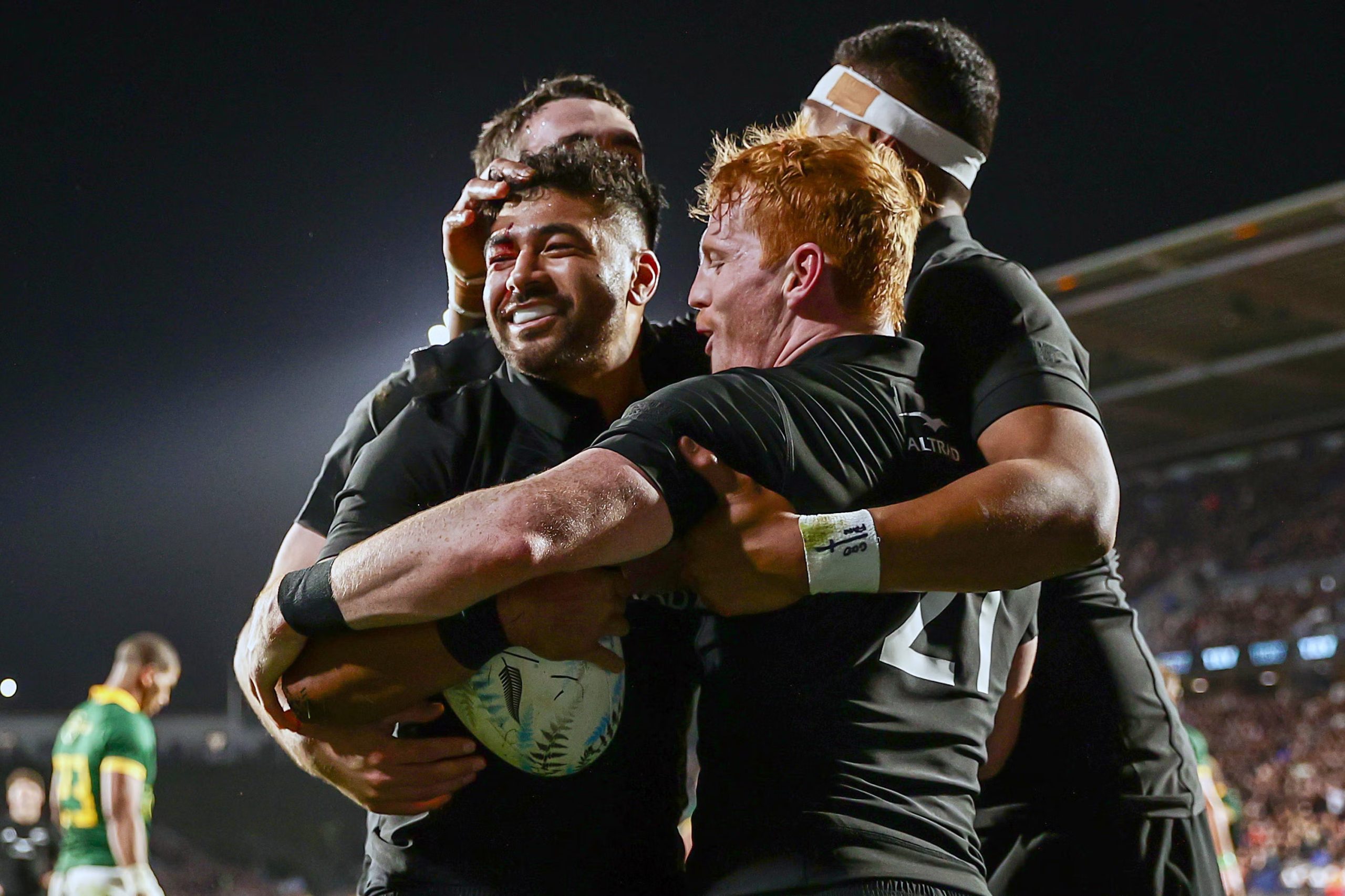
They won two of these games and lost one (to France). In those three games, they kicked the ball once every 5.7 passes – almost identical to Ireland’s ratio.
The outlier performance* – South Africa in Twickenham – saw the All Blacks playing with a far higher KPP ratio, solidly in the On-Ball range (kicking every once every 9.2 passes) and they were beaten out the gate.
*For completion’s sake, I didn’t include the first game against Australia in Melbourne where the All Blacks played On-Ball rugby (one kick every 9.2 passes) given how ragtag Eddie Jones’ Australia were on the day in his first game. They missed 40% of their tackles, which makes this a non-elite game in my opinion so it would skew my metrics.
What does this tell us that’s useful? Well, it tells us that the All Blacks are far more likely to play a high-volume counter-transition game against Ireland if they have a chance to dictate the game based on their patterns in games of this scale against teams with high blitz defensive characteristics.
When we go even deeper, it also tells us that, when the All Blacks have lost in the last few months, regardless of their kicking tendencies, the winning opposition has kicked once every 3.2 passes on average.
That means that Ireland are likely to kick a little with more frequency than we did against South Africa. Why do teams do this? One simple reason; when the All Blacks play more than 40% of their possessions inside their own Q2 – between their own 22 and the halfway line – they are way more likely to lose. When you kick with more frequency, the All Blacks are far more likely to start – and end – their possessions in this zone, especially against teams with modern blitz defences.
The reasons for this are complex but, essentially, the All Blacks don’t have the size to play through teams in heavy multi-phase like a true on-ball team and because their particular brand of Counter-Transition involves a lot of short-range kicks over the top of the defence to the middle space behind it and in behind the secondary defensive line of the edges of a blitz defence.
They kick way more aggressively than Ireland would in the same position BUT, as you can see here, France’s backfield coverage on phase play locked them up in these spots and the same responsibility with fall to Gibson Park on the drop from the primary line and our back three. Want to know why Jimmy O’Brien made the bench ahead of Stuart McCloskey? For me, it’s the direct threat of the All Blacks kicking from this zone – if we lose Hansen or Lowe early, we need a guy who’s primarily a back three cover player to slot in. For the same reason, I feel that Earls would have been wearing #23 if he was fit for his experience in covering these zones.
If Ireland can kick early and with impetus, we can hem the All Blacks into their Q2, powder them physically in defence and wait for them to try and chip their way out through Jordan, Mo’unga or the Barretts. If we mop those kicks up, there are opportunities in post-transition phases, especially down Leicester Fainga’anuku’s wing.
