


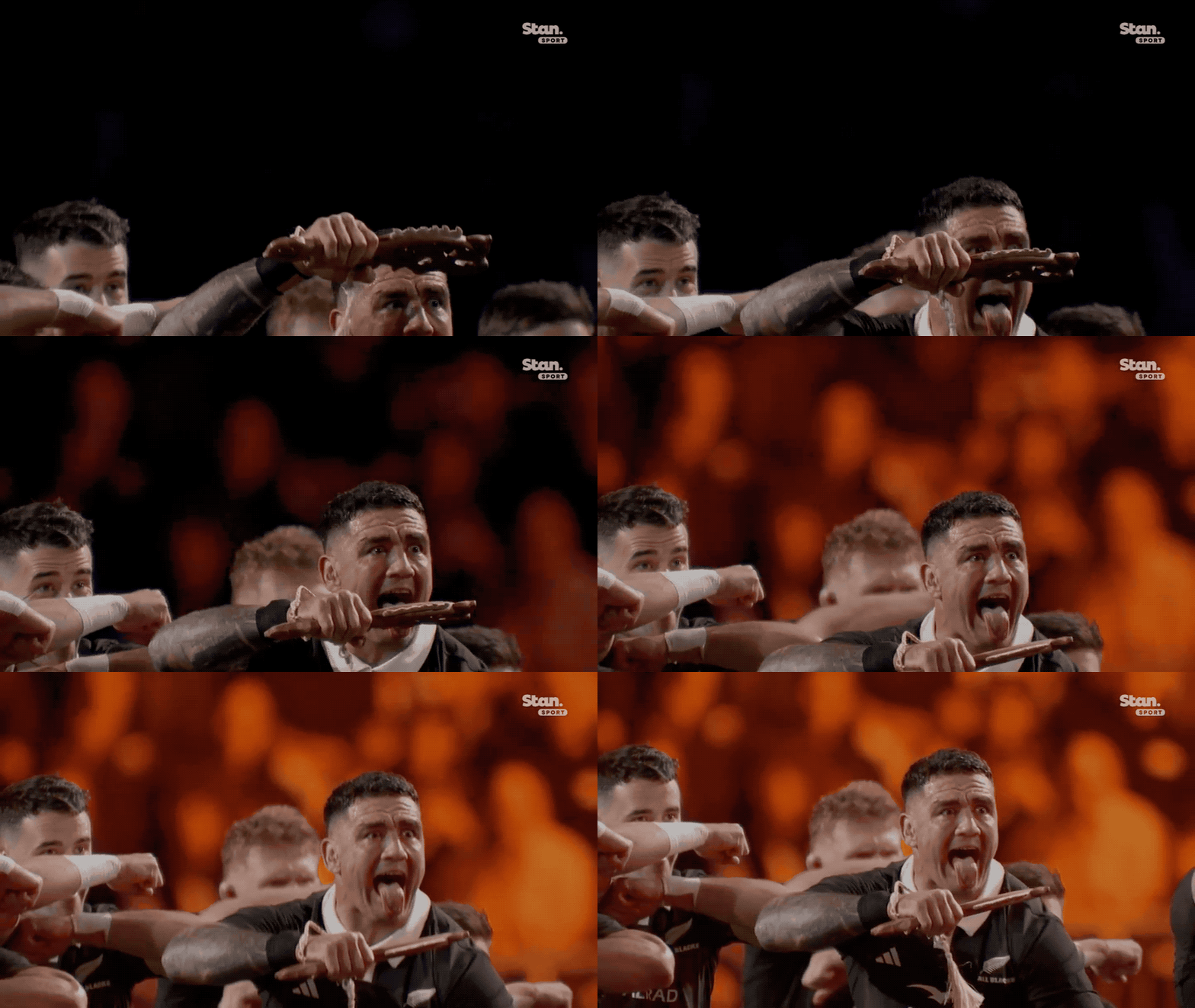
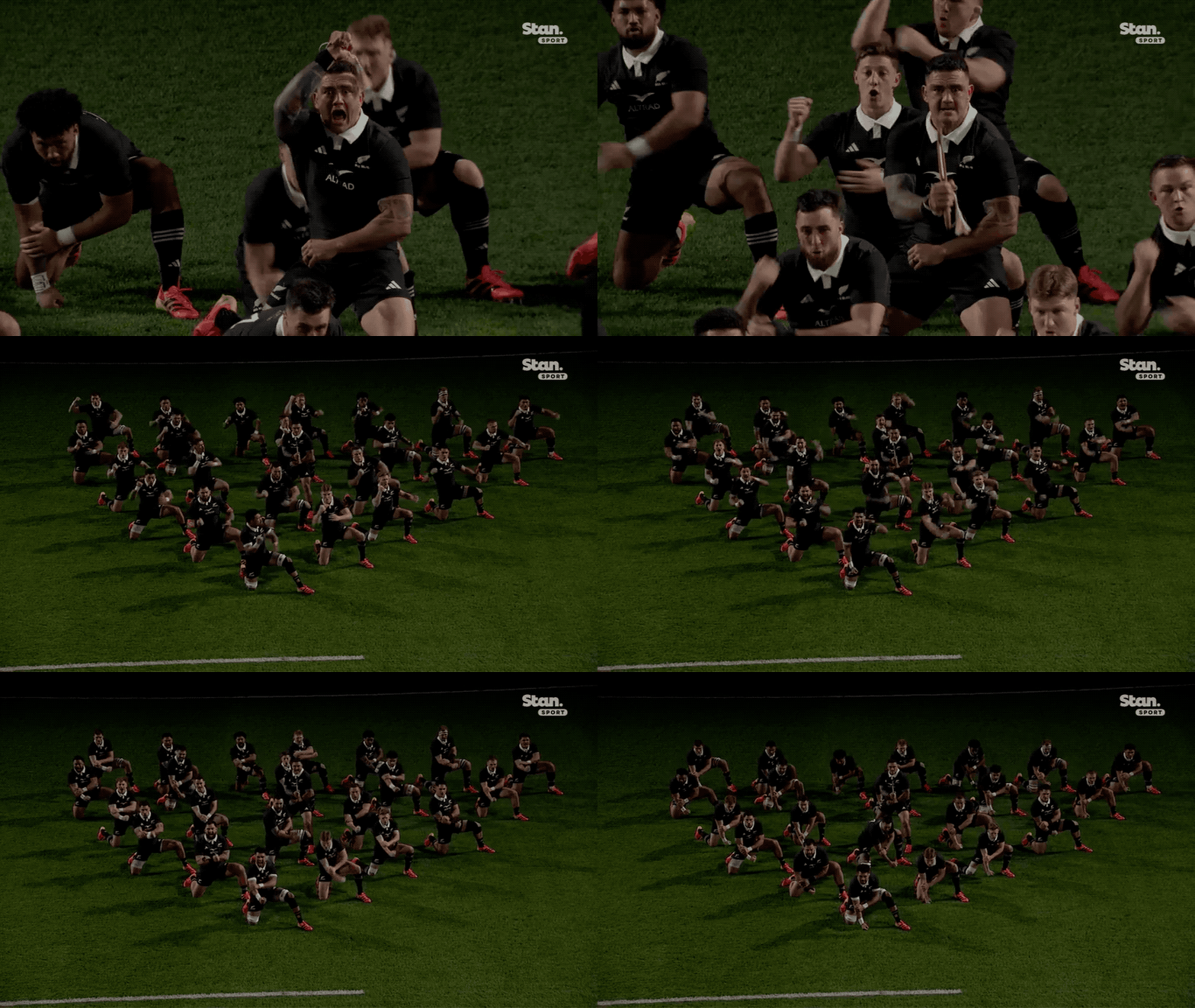
You don’t need the Nations Championship to make playing New Zealand in Eden Park important.
It is important by default. New Zealand haven’t lost there in 52 games, stretching back over 32 years. It is the graveyard of ambition. For 32 years, teams have riled themselves up in meetings and in the dressing room — we’re going to be the ones to do it — and for 32 years, they’ve all been different flavours of wrong.
Will it be any different for Ireland this Saturday morning?
That’s the question.
I don’t think there’s any argument that Ireland have gone backwards against the elite sides in the game since the 2023 World Cup.
In that time, we’ve managed one win against South Africa — courtesy of two late drop goals — and lost every single time against New Zealand, France and the Springboks since. This is a problem for a team with Ireland’s reputation and ambition. If we continue to fall behind France, we risk becoming a team that relies on French inconsistency to sneak a Six Nations title — assuming we stay consistent against the rest — or end up locked out of the top echelon of the test game. In this racket, you become the best by beating the best.
Between 2021 and 2022, we beat the All Blacks three times out of four before losing that 2023 World Cup quarter-final to them, and haven’t beaten them since.
Since 2023, we’ve played the Springboks three times and lost twice. Before that, we played them six times going back to 2016 and won four.
Between 2014 and 2019, we played France seven times and won six. Since 2020, we’ve played seven times and won twice.
These teams are the top three sides in the world, regardless of what the World Rankings currently say, so our results and performances against them are far more meaningful than anything we do against the inconsistent rest.
If I were to rank it right now, based on performances over the last 12 months, I’d have it as follows.
Rankings
Top 10At the moment, I think we’re closer to the Tier 2 sides, on this ranking, than we are to the S Tier sides. I think Ireland are better than all of those Tier 2 sides and, even on a moderate off-day, we should expect to beat them far more often than not as it stands. I think the opposite is true of the top sides — we need our best day; they need an off day. Sometimes those two states intersect, I know, but I think the point stands.
Saturday is an opportunity to change that perception.
But it’s easier said than done, especially in Eden Park, and especially against an All Blacks side who see their record against Ireland between 2016 and 2022 as emblematic of their decline from their peak between 2005 and 2015. Imagine Scotland went on a run of games where they beat us three times in a row. Imagine how we’d see that, as good as they are against most other sides?
It would be proof, right there for all to see, that we’d slipped off our perch.
New Zealand haven’t forgotten that, or that the last time we played them in New Zealand, we won a series. They’ll look to make a point of showing how keenly they remember.
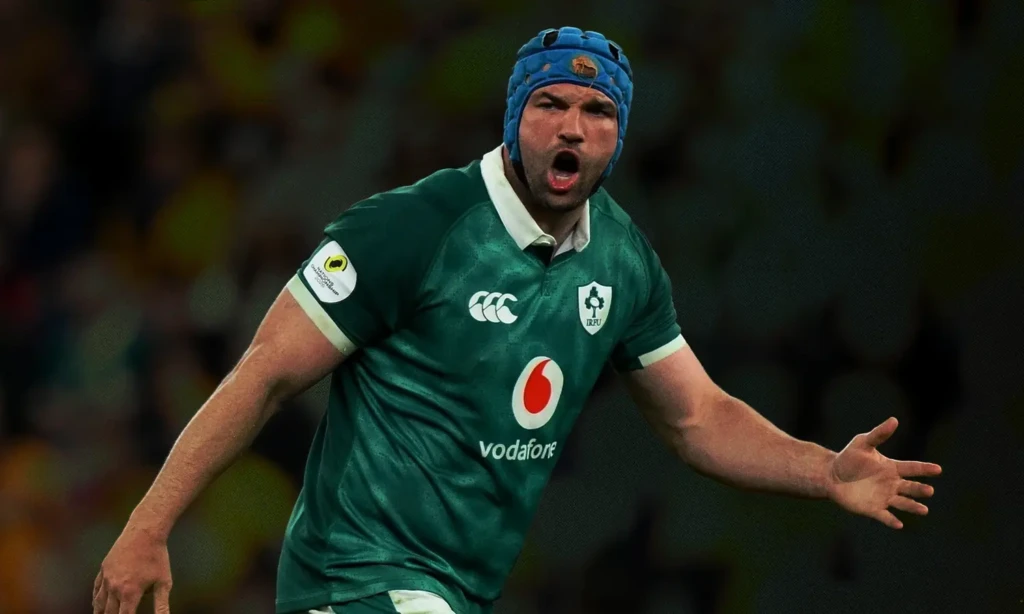
There’s no hiding from the fact that Ireland are going to be seriously up against it here. Without Porter, Crowley and Doris, this team is missing the guys that push us to our best, but that doesn’t mean it’s unwinnable by any means. We are many things at the moment, but we are most of all consistent and hard-working — if New Zealand are “off” or forcing it, that could make all the difference.
Ireland: 15. Hugo Keenan; 14. Robert Baloucoune, 13. Garry Ringrose, 12. Stuart McCloskey, 11. Jimmy O’Brien; 10. Sam Prendergast, 9. Jamison Gibson-Park; 1. Tom O’Toole, 2. Dan Sheehan (c), 3. Tadhg Furlong; 4. Joe McCarthy, 5. James Ryan; 6. Tadhg Beirne, 7. Josh van der Flier, 8. Jack Conan
Replacements: 16. Rónan Kelleher, 17. Jeremy Loughman, 18. Thomas Clarkson, 19. Nick Timoney, 20. Sean Jansen, 21. Craig Casey, 22. Ciarán Frawley, 23. Bundee Aki
New Zealand: 15. Damian McKenzie; 14. Will Jordan, 13. Quinn Tupaea, 12. Jordie Barrett, 11. Josh Moorby; 10. Ruben Love, 9. Cam Roigard; 1. Ethan de Groot, 2. Codie Taylor, 3. Tyrel Lomax; 4. Josh Lord, 5. Patrick Tuipulotu; 6. Tupou Vaa’i, 7. Luke Jacobson, 8. Ardie Savea (c)
Replacements: 16. Asafo Aumua, 17. Xavier Numia, 18. Fletcher Newell, 19. Anton Segner, 20. Peter Lakai, 21. Cortez Ratima, 22. Anton Lienert-Brown, 23. Caleb Clarke
At our best, Ireland win games by cramming teams into spaces where our system can break them down — like feeding rocks into a grinder. Sometimes that happens because of what we do, sometimes it’s because of what the opposition does. Go back and watch our game against England in the Six Nations, for example. We had struggled badly with France and Italy in the previous two games, two teams that kicked and contested at high volume and pinned us back in transition. England decided they would go a different way by keeping the ball in hand, burning themselves out on phase play and while, sure, they coughed up two or three opportunities that could have changed the context of the game, they leaned into questions Ireland are good at answering.
Can you defend multi-phase sets while slowing the ball down at every ruck? Yes.
Can you scramble and punch out an opponent going off-script? Yes.
Can you punish undisciplined teams that keep giving you penalty access? Absolutely.
I think our selection for this game is a hint at doing just that.
New Zealand haven’t really kicked to contest a lot in the last two games under Rennie, and while it’s a little too early to get a baseline on what he wants to do with the All Blacks in the grand scheme of things, that does suggest that he wants a high-possession, high ball in play time team.
In the last two games, they’ve averaged a Pass Per Kick ratio of 16.2. If they bring that to our game on Saturday morning, and I think they will, that gives Ireland a chance.
Fundamentally, this is the kind of rugby — high pace, lots of possession — that the All Blacks feel they should be playing.
Structurally, they run a narrow 1-3-2-2/2-3-2-1 shape in settled phase play with lots of depth and Love/McKenzie alternating at first receiver and strike playmaker. They do run a four-pod and 3-3 pods in the phases after set piece, but that’s specific to post-set piece.
That’s a similar shape to Ireland, but the concept behind it is different. Ireland are known as a possession team, but we aren’t really. We are a possession team inside certain zones, once we get access, but our means of getting that access vary quite a bit.
We tend to use possession in short bursts where there is either a linebreak, which brings another phase of possession, or a kick to move the ball down the field, and it’s almost always contestable. This usually happens inside four phases.
The All Blacks are looking to play a lot more of those possessions, and from deeper than Ireland, because they feel they have the weapons to do so.
Here’s a good example of a scrum launch that I think Ireland would probably look to exit off.
The All Blacks feel they have the pace to feasibly attack from this range. The key part of this is the speed of their initial break, the comfort handling the ball at pace from deep and having someone like Jordi Barrett who can stitch plays together as an alternate handler when needs be.
But the key to this is their ball retention itself. They seem to view kicking as something they do once they’ve exhausted options, rather than as a starter play in and of itself. Almost all of their kicks against France were long, territory-finders, where they shot up the field to hold France in defensive transition.
In a way, they play a lot like Glasgow, which is somewhat fitting, given that Dave Rennie started the high-possession, high-tempo style that Franco Smith continued.
This kick, for example, came at the end of a long, 117-second sequence of possession where New Zealand had the ball, lost it to France, France kicked to contest, New Zealand retained it before kicking crossfield to attack directly off that retention, before kicking a long crossfield contestable in the other direction.
In total, this entire sequence lasted 268 seconds — four and a half minutes — with France kicking a penalty after a breakdown infringement from Barrett, but this is the kind of game that New Zealand want to play. High ball-in-play, constant attack, and kicking to further an attack rather than to reset the field.
As you might imagine, this also applies to their work on transition, where they are all about pace, direct attack and finding wide runners.
Look at how McKenzie flows in behind the pod here as it moves across the field, and how comfortable Love is attacking directly.
New Zealand would score on the following phases.
But this approach, naturally, leads to more opportunities to lose the ball in possession, and Ireland are particularly good at forcing that if we can slow the All Blacks’ transit across the field on those progressions. This is where the loss of Doris is particularly painful, but there are poaching opportunities there if we can get our timing right.
The problem is whether the All Blacks give us those windows; Jacobsen, Tupea and Savea are particularly good at getting to those isolated rucks that a high possession game often produces and, in Roigard, they have a sniping scrumhalf who can kill us stone dead if we overcommit at the defensive breakdown.
This is where the All Blacks want to go — if you try to off-ball them, they want their pace and power at the edges to punish you for kicking long, while they feel they have the scrum and lineout to hurt you if you want to play shorter contestables consistently (meaning more knock-ons and more scrums) or go for the touchline.
Last season, the All Blacks felt that teams got too much joy from kicking contestably and while they have decent aerial players, they feel this approach with the ball in hand is the best counter to it, along with a very strong scrum and maul.
Essentially, if you kick the ball away against Dave Rennie’s All Blacks, they intend for you to only get it back when they score a try.
For Ireland, I think the only way around this is with a contestable kicking game that we win cleanly, and that can then force the All Blacks into overcommitting at the defensive breakdown themselves, which will give us what we want — penalty ladders up the field that we can convert into short-range lineouts that we are very, very good at converting.
In a general sense, this will lead the All Black to exit more — if we kick to contest more, there’ll be more scrums and, in all likelihood, more exits — which will bring the focus back on our lineout. If you were Dave Rennie or Jason Ryan, your focus here is obvious; use Josh Lord and Tupou Vai’i to get into the air on almost every Irish lineout to take away our ability to launch into our system.
If they can drag Ireland back to sub-85 % completion, that will make this game deeply uncomfortable. In a general sense, I think we want to hold the All Blacks around the 10m with our possession and see what their read is like at the breakdown; if they are being very aggressive there, we need to ride that out and see if there are penalties there for us, or broken field when Tupea goes hunting after Prendergast’s outside shoulder. They want to spook Prendergast into turning back infield when Ireland DO get into our structure, so we never get the kind of width that could promote disconnects in their defence.
Prendergast’s instinct here will be to sit back and see if Gibson Park can find any sniping opportunities around the ruck if the All Blacks go hard after our breakdown, but he can’t do that — it’ll lead to him taking the ball too far away to influence the game, unless he can find a rhythm with his long range passes or crossfield kicking game and, even then, it will mean McCloskey and Ringrose acting as sitting ducks for blitzing All Black defenders.
This will be an incredibly difficult game, but if Beirne and Van Der Flier have very visible games on the defensive side of the ball, and our lineout holds, we’ll have the weaponry to keep this game tight and, with a bit of luck, that might be enough to win it. It’ll be incredibly difficult. Almost impossible. But that’s the beauty of playing the All Blacks in Eden Park.
