


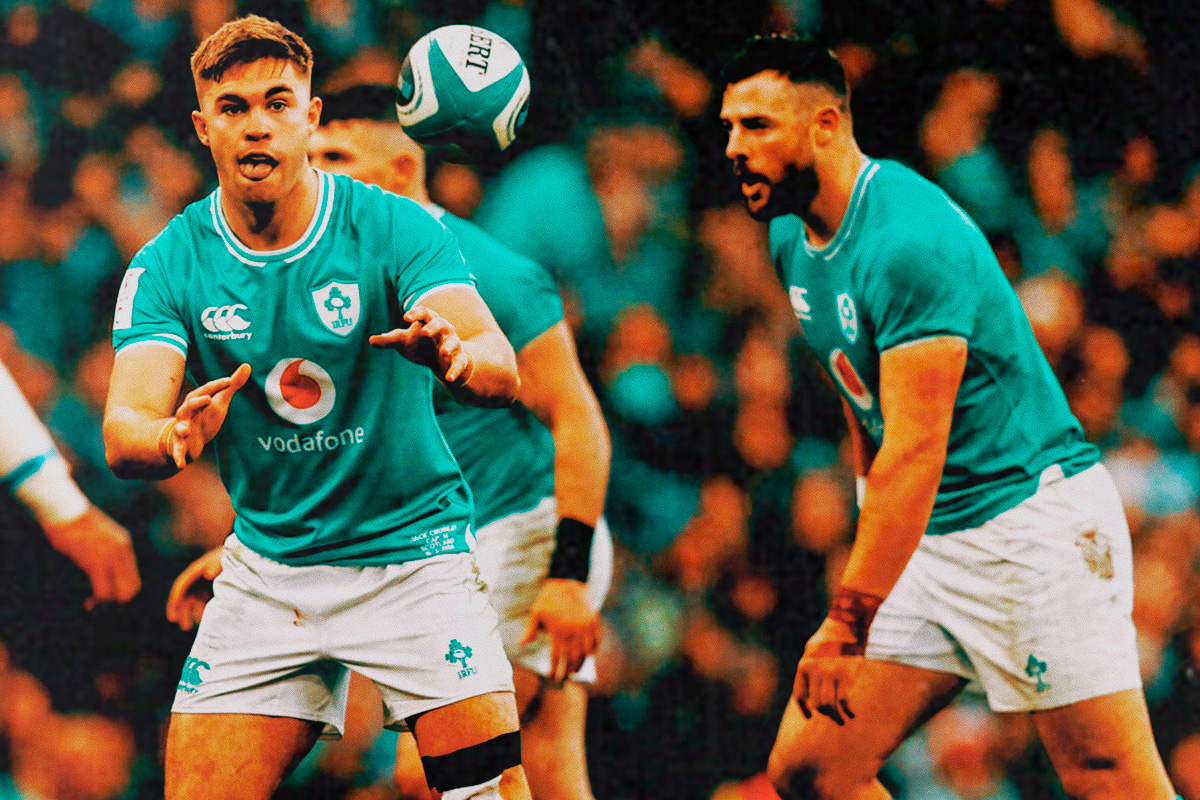
It wasn’t meant to be like this.
How did Ireland go from being a game away from a second Grand Slam in three years and a historic third Six Nations title in a row – something nobody had ever done in 142 years – only to wind up staring down the barrel of a third-place finish regardless of what we do in Rome today?
The whiplash is hard to deal with.
Sure, a condensed league format will often see teams bouncing up and down the rankings, but even allowing for that, a first third-place finish in four years would feel… somewhat ominous.
If you go back to the turn of the decade, Ireland finished third in three Six Nations in a row from 2019 to 2021, albeit with the proviso that two of those were during that weird COVID era when results were all over the place. You probably remember Wales winning the 2019 Six Nations before the 2019 World Cup later that year, but do you remember the title they won in 2021 in front of zero spectators that was only confirmed a week after the main tournament ended when France lost at home to Scotland in a rescheduled game due to a COVID outbreak?
France needed to win with a bonus point and by +21 points to pip Wales to the title but somehow managed to lose to Scotland in the last minute after Scotland had Finn Russell red-carded.
My point is that the last time Ireland finished third in the Six Nations was during this insane period that I’ve already re-forgotten about, and I only looked it up a few seconds ago to write that paragraph.
Since Ireland ascended to the level we’ve been at since the summer and, latterly, the Autumn Series of 2021, we haven’t finished any lower than second in the Six Nations and, in that time, beat the All Blacks multiple times, the Springboks multiple times, and were on the cusp of Six Nations history as recently as a week ago.
Ireland might still win this Six Nations title, don’t get me wrong, but it would require a pair of freak results that we haven’t seen in many years. Scotland, by the same token, can still win the Six Nations with a similar run of freak results later today. So it’s possible, sure, but not likely and, in my opinion, it would be an unfitting way to achieve such a historic feat, not that anyone on the island would care too much about that. I wouldn’t. Nobody reads the asterisks.
The reality is that Ireland are not playing well, and haven’t been for a while now so finishing third would be a fair reflection of this year’s tournament overall.
Sometimes it feels like other rugby outlets in this country are reluctant to talk about that fact out loud, almost as if speaking about it will somehow alert our opponents. Don’t worry about that, they already know. Some of that denial of reality is part of the ongoing culture war over the #10 jersey, albeit with the traditional polarities reversed. If you told Munster fans in 2011 they’d be advocating for the more athletic, hard-hitting running flyhalf fourteen years in the future and then told Leinster fans that they’d be shouting for the willowy, kick-first stand-off flyhalf, both groups would have thought you were writing bad allegorical fiction.
But here we are.
I do feel that a lot of the denial I’ve seen on broadcasts, podcasts, radio segments and newspaper columns is rooted in an odd intellectual sunk cost in Sam Prendergast. It’s almost as if accepting that Ireland aren’t playing anywhere near what we’ve seen in 2023 and 2024 will reflect badly on Prendergast and, as a result, on the pundits and journalists promoting him relentlessly in the last 18 months.
The equation is this; Ireland winning regardless of the performance = Ireland playing well = “I was right about Sam Prendergast guys, see? See??!”
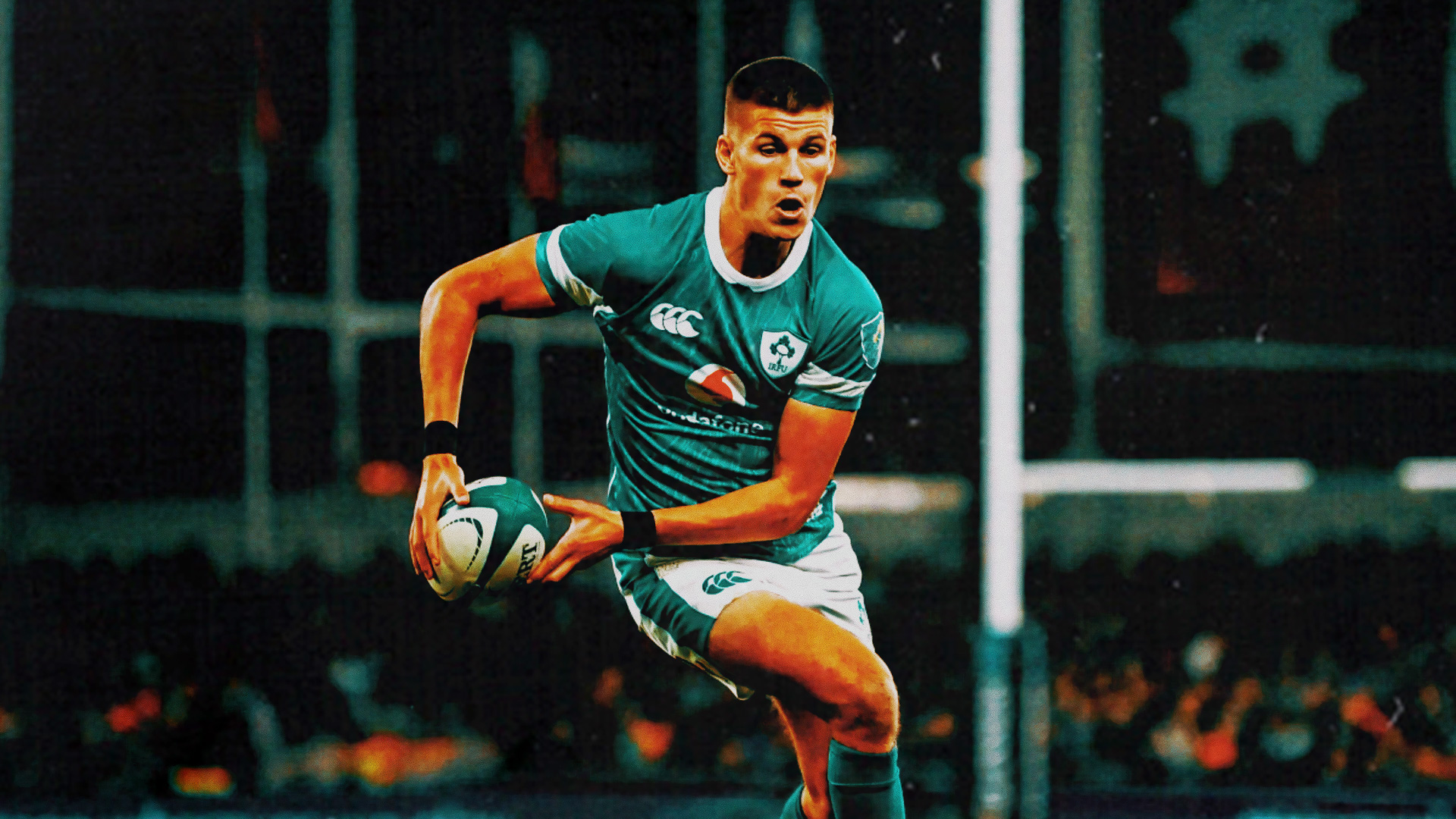
I also feel like most of the commentary on Prendergast’s meteoric ascension seems to be based on rhetorically booking his spot in the #10 jersey for the next five years with the idea being that any weaknesses in his game – which can’t be discussed in any detail* – will work themselves out in time.
* As an aside, my criticism of Jack Crowley’s game at the moment would be that he almost carries to the line too much and takes on higher risk passing in smaller passing windows. He also hits too many rucks even when he doesn’t carry, which takes him out of the next phase too often, meaning our key playmaker is hitting rucks at a rate closer to a midfielder or supporting back three players.
In just the last few weeks alone, I’ve seen a segment on an RTE podcast discussing how Prendergast is a brave defender who would never be hidden on the blindside wing, all while I’m looking at clips from before and after that broadcast where Ireland did just that.
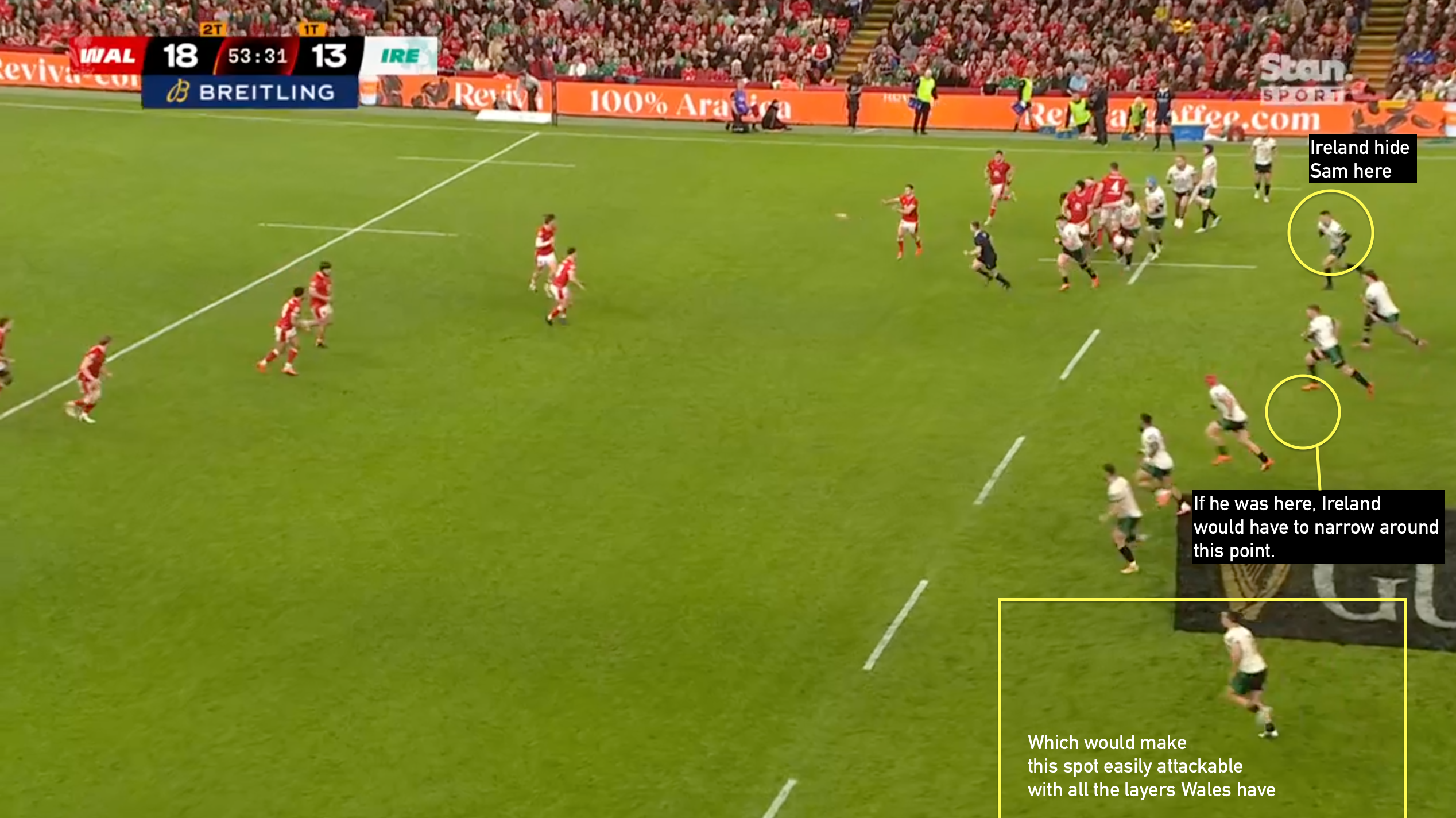
X is Y, up is down, don’t believe your lyin’ eyes.
There’s no arguing that Ireland are objectively worse in several areas. The obvious ones; we’re scoring fewer tries, conceding more tries and points while also conceding penalties at a rate that would make my hair fall out if my grandfather’s genes didn’t do that for me at 28.
But go a little deeper and the numbers are even worse;
We were #1 for linebreaks in the 2024 Six Nations with 36 across five games – an average of 7.2 per game.
This season we’re 4th, with an average of 5.75 per game.
Read most newspapers and you’ll hear that Prendergast is a better passer and creator than Crowley. If that’s so, why has our ability to create linebreaks collapsed?
Worse again, we’re fifth in the championship for converting linebreaks into tries – we were #1 in that metric last season. We are carrying less, passing less often, kicking incrementally more per phase and tries on turnover and kick transition have evaporated.
These are facts.
If you want to know why we struggled against England until 60 minutes in, why the worst Welsh team since professionalism almost beat us and why France beat the brakes off us at home, it’s because of this style change and that isn’t because of Sam Prendergast.
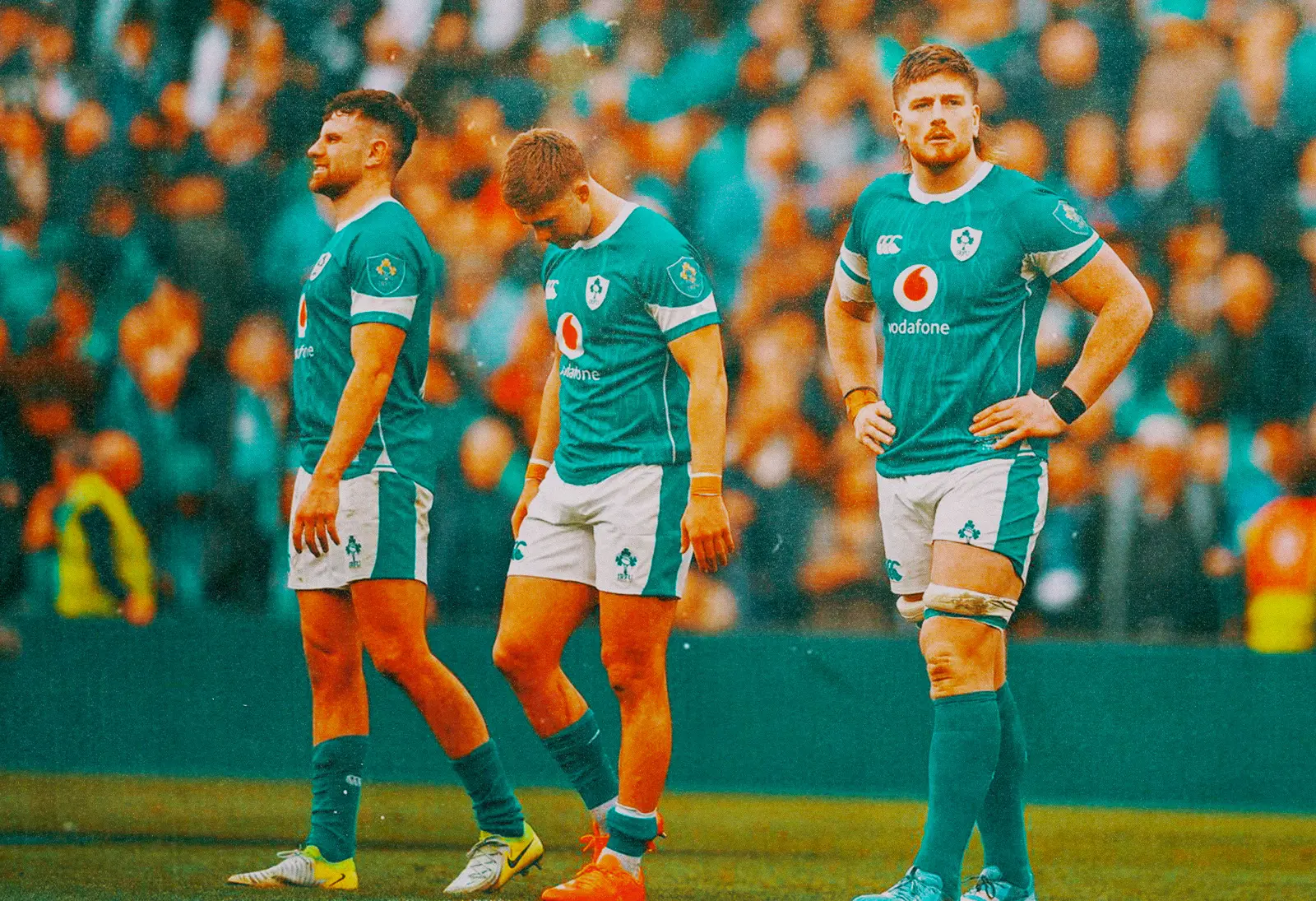
It’s like getting run over by a Rolls Royce and blaming the hood ornament. He is an expression of the system change, not the cause of it.
For me, Ireland are playing poorly because of a janky system change that hasn’t translated up a level from Leinster while relying on a bedrock of ageing forwards and midfielders to make it work.
We’ve gone from a counter-transition team that baited opposition kick returns before killing them on the return into a kick-pressure team with the second-worst scrum and lineout in the Six Nations, all with the same group of players.
It’s Marge Simpson’s Pink Dress turned into curtains.
Since the week break between the second and third rounds, and the subsequent down week between rounds three and four, the feeling among people I speak to working elsewhere in the game is that this version of Ireland has become simpler to defend and easier to score against. I think this style change is rooted in five games across 2023 and 2024 – our loss to New Zealand in the World Cup, the loss to England in the Six Nations, the tour of South Africa where bar two freak drop goals in the last five minutes, we would have lost both tests and the loss to New Zealand in November.
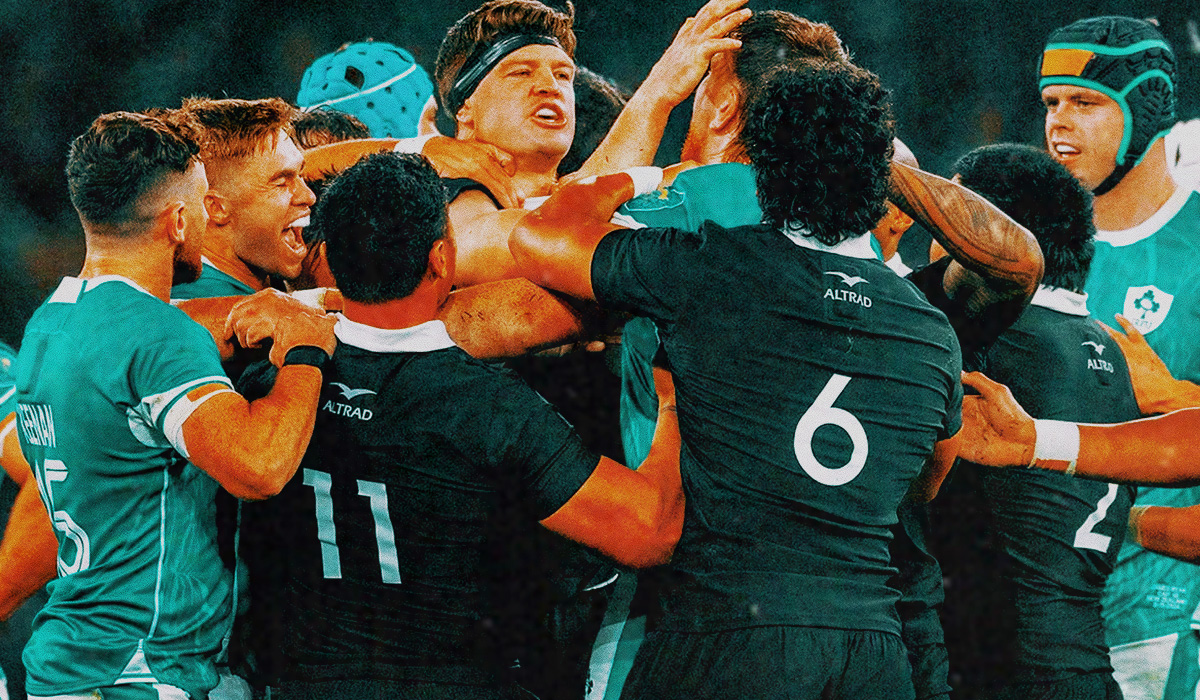
In all five of those games, the opposition stopped blitzing us. Ireland’s attack up to that point had been based on short passing pulling the sting out of blitz defences and then passing around it. The opposition’s defensive actions had, traditionally, created the environment for linebreak opportunities but, in all of these losses, the opposition stopped blitzing. In its place, they allowed Ireland to pass in front of them, stopped contesting at the ruck and filled the field with defenders, only going after Ireland’s rucks in the wider channels.
That action alone pulled our scoring stats down last season over the full calendar year and, for me, prompted Farrell to make the change in style or, more accurately, have Easterby do it for him while took a break for the Lions.
We are kicking more, attacking on transition radically less and when we do carry, we are more dominant than we have been previously but we are well behind France and England when it comes to getting over the gainline.
That’s in part because we get a lot of “fake” gainline in the edge spaces. We pass beyond the second receiver more than any other team in the Six Nations and have the longest percentage of “long” passes so we find the tramline quite often and that’s where a lot of our best work is done.
For example, Lowe has gotten to the gainline on 74.2% of his carries. That’s better than other wings like Van Der Merwe, Bielle-Biarrey and Penaud but he’s about the only one of our backs who is finding that forward movement. We no longer play with dedicated edge forwards so most of our forwards are running into two-man tackles at a massive rate in the middle of the field when we do carry the ball.
Look at our primary forward carriers’ numbers;
- Joe McCarthy has gotten to the gainline on just over half of his 13 carries this season for Ireland, with evasion on just 25%.
- Tadhg Beirne has gotten to the gainline on just 40% of his 14 carries. Beirne has evaded 14.3% of the tackles he’s faced.
- James Ryan has only carried the ball 7 times but he has got to the gainline on 62% of those but evaded none of the tackles he faced.
- Andrew Porter has 25 carries into contact, made the gainline on just 20% of them and evaded just 4.2% of those carries.
- Dan Sheehan has made 25 carries into contact, made the gainline on half of those carries and evaded 16% of the tackles he’s faced.
- Finlay Bealham has made 12 carries into contact, made the gainline on 33.3% of them and evaded 8.3% of the tackles he’s faced.
- Caelan Doris has made 35 carries into contact, and made the gainline on 66.7% of those but only evaded 6.1% of the tackles he faced.
- Ronan Kelleher has been our best tight-forward carrier. He made just 8 carries but he made the gainline on 77.8% of those carries and evaded 41.7% of the tackles he faced.
This tells you most of the story. We are struggling to get to the gainline and our three biggest carriers by volume exchanges – Sheehan, Doris and Porter – are getting stopped in the tackle almost constantly and making the gainline roughly half the time.
What does this mean? The problems haven’t gone away with a kick-first policy. If anything, it has made them more visible. Teams are still ceding quick ruck ball to us. They keep numbers on their feet and stuff our primary carriers so we don’t get momentum. We aren’t breaking tackles. Teams keep kicking back to us because they can see that our work with the ball in hand has not only regressed, it’s been mostly taken out of our game.
We have met more problems on the road we took to avoid them.
Italy will kick to us at an enhanced rate – similar to England in volume – and while they are not as good defensively as England and France, they will fancy a crack at the code that others have already deciphered.
It’s not about the #10s. It’s not even about our forwards degrading physically year on year at an advanced rate. It’s about a system change that has based itself on kick pressure while having a below-par scrum and lineout; you can’t have a kick-pressure game with a leaky set-piece. It is a contradiction. Kicking more creates more set pieces on both sides of the ball. If you are losing more of those set pieces than your opponents, you will find yourself going backwards more often than not.
That is what the coaches have to get right today. They probably will, and should win well but, as it was during the 2021 Lions tour, I think the summer tour and November window will go a long way to showing where this Irish team can go.
