

“When I set out to lead humanity along my Golden Path I promised a lesson their bones would remember. I know a profound pattern humans deny with words even while their actions affirm it. They say they seek security and quiet, conditions they call peace. Even as they speak, they create seeds of turmoil and violence.” — Leto II, God Emperor of Dune
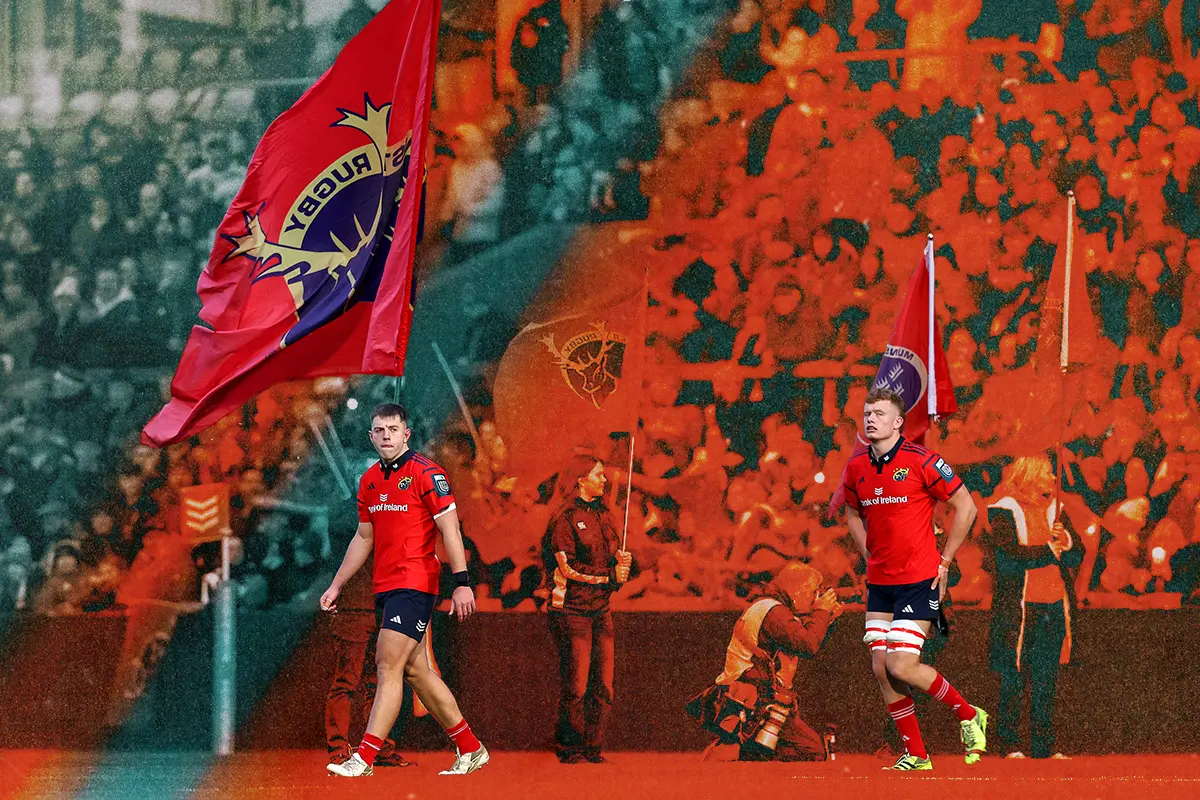
Every club is a thread of memories.
You are what you remember, and what you remember is what you aspire to be.
In Munster, our thread is strong.
It runs unbroken from Foley’s day, through O’Connell’s and O’Gara’s, into whichever red jersey is currently being pulled over a young Munster player’s head. That thread is useful. It is inspirational. The problem has always come from the aspirational side of what that thread, those memories, demand.
It is not acceptable for Munster to ever be in a managed downswing. What do I mean by that? A season, maybe two, where you are deliberately refreshing the squad, moving on from veterans, backing youth and taking whatever bumps in the road that come with that, with the hope that you’ll be in a better, fully renewed position at the end of it. Maybe you miss out on the Champions Cup one year, take a year mopping up the bums and espoirs in the Challenge Cup until it finally gets serious at the semi-final level.
You can’t really survive that here, optically or financially. The newspapers, the podcasts, the TV coverage, the fans themselves — it would be seen as a club giving up.
The thread to the past is too strong for that, and everyone knows it.
Every single year, Munster must compete, or be seen to compete. When that doesn’t happen — as it often has in the last decade or more — it is not seen as a natural part in any club’s life cycle; it’s framed as an existential decline.
So if you’re working on the game side of Munster Rugby, that is baked in from the start.
That creates a kind of pressure that shortens timelines and, with it, thinking. When that happens, the regular bumps in the road that every club has to deal with — signings not working out, prospects getting injured, coaching churn — turn into cavernous potholes.
Since 2012, Munster have been in varying degrees of a downswing, despite the very real knowledge that it isn’t acceptable. Coaching churn then became the norm, for myriad reasons. Some in Munster’s control, some not.
What follows is the bare ledger of the last twelve years.
2014 — Foley succeeds Penney
- July 2014: Anthony Foley promoted from forwards coach to head coach on a two-year deal, replacing the departing Rob Penney.
- Foley’s ticket: Mick O’Driscoll, Brian Walsh, Ian Costello, Jerry Flannery — a deliberately Munster-centric setup framed at the time as a return to “the Munster way.”
2016 — Erasmus arrives, Foley kept as head coach
- April 2016: Rassie Erasmus announced as the province’s first-ever Director of Rugby on a three-year deal, taking over on-field strategy and selection. Foley, contracted to 2017, retains the head coach title but loses team selection and the right to choose his own staff. Costello and O’Driscoll depart; Walsh confirms he is leaving.
- June 2016: Jacques Nienaber joins as defence coach (3 yrs); Felix Jones joins on a 1-year technical role; Flannery extends 1 year as scrum coach.
- 16 October 2016: Foley sadly passes away before the Champions Cup opener against Racing 92. Erasmus assumes both Director of Rugby and head coach duties for the rest of the season.
2017 — Erasmus exits, Van Graan in
- June 2017: Erasmus’s departure to take over as South African Director of Rugby is confirmed for December.
- October 2017: Johann van Graan announced as new head coach.
- 13 November 2017: Erasmus and Nienaber officially leave, both heading to the Springboks setup.
- December 2017: JP Ferreira joins from the Lions as defence coach, following Van Graan from South Africa.
2019 — Larkham and Rowntree join, Jones and Flannery go
- June 2019: Felix Jones and Jerry Flannery both leave as their contracts expire.
- Summer 2019: Stephen Larkham joins as senior coach, coming from the Wallabies setup. CEO Garrett Fitzgerald retires; Ian Flanagan replaces him.
- October/November 2019: Graham Rowntree joins as forwards coach following his Rugby World Cup duties with Georgia.
2021 — Van Graan announces departure
- December 2021: Van Graan confirms he will leave at the end of the 2021/22 season for Bath.
2022 — Rowntree era begins, ticket overhauled
- April 2022: Rowntree promoted to head coach on a two-year deal from July 2022.
- Summer 2022: Larkham returns to Australia as Brumbies head coach; Ferreira follows Van Graan to Bath. Mike Prendergast returns to Munster from Racing 92 as attack coach; Andi Kyriacou (originally an academy hire in April 2021) is promoted to senior forwards coach; Denis Leamy joins from Leinster as defence coach on a 3-year deal.
- May 2023: URC title — Munster’s first trophy in 12 years.
2024 — Rowntree gone after six games
- September 2023: Rowntree had signed a two-year extension to July 2026.
- 29 October 2024: Rowntree leaves “by mutual consent” six games into the 2024/25 URC season, with 20 months left on his deal. Ian Costello, Head of Rugby Operations, takes over as interim head coach. Recruitment process opens.
- November 2024: Leamy and Prendergast sign two-year contract extensions as defence coach and attack coach, respectively.
2025 — McMillan in, Costello to general manager
- 26 February 2025: Clayton McMillan, Chiefs head coach, announced as the next Munster head coach on a three-year deal, joining in July 2025. Costello moves into a newly created general manager role. Mike Prendergast, who missed out on the head coach role, stays on as senior coach.
- Summer 2025: McMillan arrives, bringing fellow New Zealanders Brad Mayo (head of athletic performance) and Martyn Vercoe (team manager).
2026 — Prendergast out, Randle in, then out
- April 2026: Mike Prendergast confirmed as departing for Bath at season’s end, following Van Graan and Ferreira on the same path. Roger Randle, former All Black, was named as his replacement; Munster publicly defended the appointment after an internal backlash, before later announcing the contract would not be taken up.
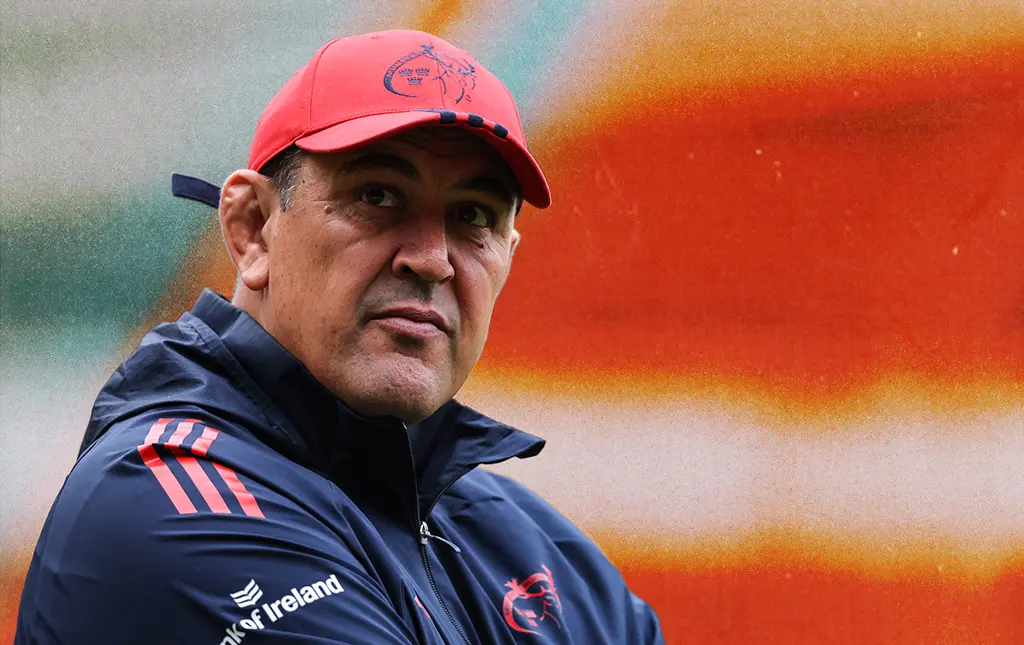
Will Clayton McMillan stay on after the Randle Debacle? Can he? Should he? That remains to be seen. Last week, I thought it was not possible. This week, I think it’s more likely than not that he stays. I sincerely hope he does, and he can get in a coaching team around him that enhances his vision.
Let’s presume, for the moment, that he does.
Either way, Clayton McMillan at once inherited and now lives in a dressing room that has been told, in deeds rather than words, that nobody stays.
Five head coaches in a decade. A Bath pipeline that has now claimed three senior coaches in four years.
An attack coach appointment so contested it had to be publicly defended and then not so quietly withdrawn.
The Golden Path for Munster isn’t another reset, another project, another fresh start with another coach and another carefully worded statement about ambition and identity.
It is the boring, unglamorous, organisationally difficult work of ensuring this one run, whatever has to happen upstairs to make it happen. Of accepting a season that looks like a managed downswing, with all the ticket-office and talk-radio consequences that entail, because the alternative is the loop the province has been stuck in since Foley passed away. Is that this season? It looks like it, when you consider our European campaign. Champions Cup next year looks likely, but we have to grab that too, and not let it slip.
Herbert’s humans, in the quote that opens this piece, claim to seek peace while planting the seeds of its opposite. Munster have spent a decade seeking a project while, either through plans or circumstances, planting the opposite. The harvest, this time, has to be different.
