



On these pages over the last few years — through the Derailing the Big East series, and others — I’ve focused a lot on how Munster could close the gap on the dominant force in Irish Rugby since the mid-2010s; Leinster.
It’s a natural angle to take. Whatever team is on top, they are usually the benchmark, and you want to replace them as that benchmark.
Clayton McMillan spoke about that very thing in the aftermath of Munster’s narrow loss to Leinster in Thomond Park on Saturday night.
“I don’t take too much notice of what gets written in the media, but I’ve been around long enough to know that not many people really give us a chance, like a little bit of an outsider’s chance, because we got the job done against them last time.
“But when you compare the two teams, there’s no way that we should be right in the contest to the last minute of the game, but we are. They’ll be celebrating the win, but I wonder whether they’ll start to think that people are starting to catch up?
“We feel like we’re catching up. We lost today, we take it on the chin. We congratulate them for the win, but nothing distracts me from the trajectory we’re on.”

That quote will upset the Leinster fans in the Irish Independent, the 42 and the Irish Times more than it will anyone in Leinster Rugby.
It does reflect the reality of the situation, though.
There has been and continues to be a gap between Leinster and the other provinces for most of the last decade, on several different metrics; however, for whatever reason, that gap appears to be closing.
Are Munster and Ulster improving? Or are Leinster declining? Yes.
It’s both. While Munster and Ulster are improving and building with young cores, it’s also true to say that Leinster are ageing out.
The core of their great side, who broadly ascended en masse to that level in 2016/17, is getting to the point where they are showing a post-prime drop in top-end production. This is entirely natural for a generational side.
If the majority of a championship side like Leinster is home developed, or is essentially home developed — like the great Saracens side of the mid to late 2010s — they can generally expect approximately eight seasons of a “prime” before the rate of player “depreciation” is larger than can be feasibly replaced through internal production or external signings. Leinster’s mini-prime between 2009 and 2012 was based on a core of highly experienced players finally clicking alongside a core of smart signings (and re-signings), like Mike Ross, Leo Cullen, Eoin Reddan, Rocky Elsom, Nathan Hines, and Brad Thorn, alongside younger talent like Heaslip, Sexton, Healy and O’Brien delivering on their potential.
Munster’s prime in the 2000s was broadly the same as Leinster’s run from 2016/17. I would class 1999/00 as the start of Munster’s ascension, with the prime from around 2001 on, and that broadly ended in 2009. The parallels are clear; approximately eight seasons where we were consistent at the top end in Europe, made finals, and arguably lost a few we should have won, alongside the ones we did win.
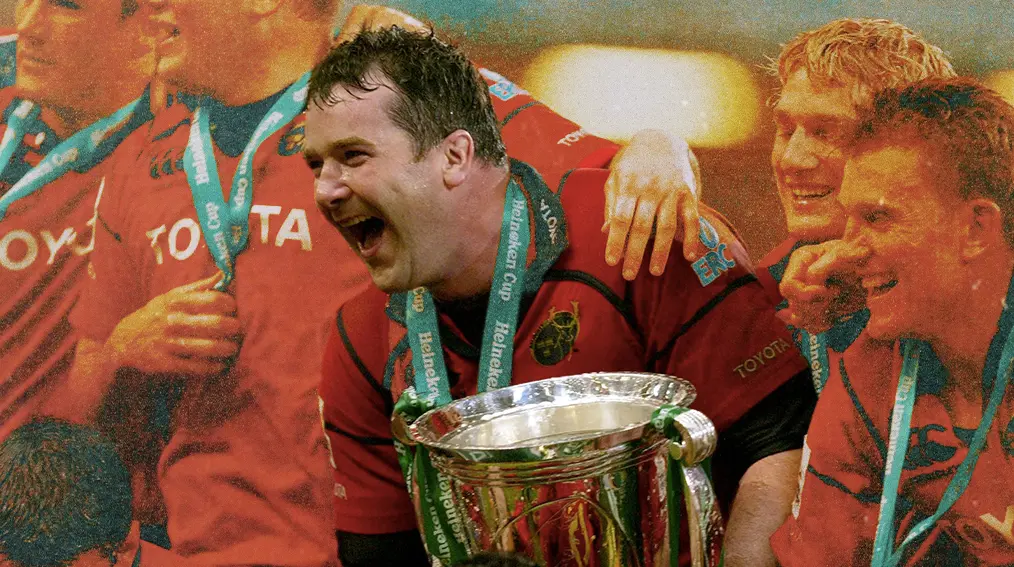
A strong home-grown core, augmented by good signings and strong coaching.
The great Toulouse side of the mid-90s was untouchable until they began to decline in the early 2000s — approximately eight seasons — before a mini-revival in the late 2000s, which led to a long decline between 2012 and 2018, when they were a shadow of what they once were. Again, mass ageing out of generational talents, plus a stall in internal production, plus a few coaching and player signings that didn’t quite work out.
They are currently six years into their current prime.

Toulon is slightly different in that their prime was almost entirely based on signing a core of hugely experienced world-class talent at the same time. Their prime lasted as long as the gas those players had left in the tank, and as long as they could afford to replace whoever aged out with adequate replacements.
When your prime is powered by mostly homegrown players, or close enough to home-grown that it doesn’t matter, your prime will be longer. If your prime is powered by outside recruitment, it’ll be shorter and more prone to fluctuation. Keep an eye on Newcastle Red Bull for an example of this in the near future.
It’s a general rule, but it fits.
The real question is: what happens after?
The period after a prime looks different for everyone. Well-funded teams, or those that benefit from strong natural demographics, will generally have shorter fallow periods, all things being equal. Teams that have both will generally spend 2/3 seasons max in a “down” swing, unless mistakes are made on the coaching side, or you have a bad cycle of academy production.
The key rule to remember is that no team has an inbuilt right to success. You either have the players to be successful, and you will usually be successful in turn, or you don’t have them, and you won’t. It’s that blunt.
So how do you get those players?
This is where the conversation gets uncomfortable, because it forces us to admit that player production is not purely a meritocracy. It is partly a systems question — coaching, pathway, minutes, strength and conditioning — but it is also, unavoidably, a numbers question. The discourse can dress it up however it wants. The truth is that elite players are rare, and the provinces that have the most chances to find rare outcomes will find them more often.
If the raw materials aren’t showing up around 15/16/17 in all of the main positional families — tight five, back row, halfbacks, midfield, back three — you can’t coach your way out of that forever. You can fudge it for a season. You can patch it for two. But over time, the shortage shows up the way shortages always show up in rugby: you start asking one type of player to do a job they’re not built for, and the whole structure becomes less stable.
This is where demographics comes in, and it’s the part of the discussion that people tend to avoid because it sounds like you’re talking about destiny. I’m not. I’m talking about probability.
Elite rugby players are statistical outliers. That’s just reality. For every player who becomes a test-quality tighthead, there are hundreds — thousands — who played rugby at some level and never got close. And because those outcomes are rare, the biggest advantage you can have is not a magic academy model. It’s volume.
More people in your catchment area means more teenagers playing the game. More teenagers playing the game means more athletes entering the funnel. More athletes entering the funnel means more chances that one of them is the one-in-a-thousand profile you can’t manufacture: the freaky coordination, the early growth spurt that holds together, the speed-power blend, the temperament, the ability to be coachable, which is an ability regardless of what anyone says. The things you can develop only matter if you have the raw ingredients to begin with.

That’s the simplest way to explain Leinster’s structural advantage over the last decade. It isn’t that Leinster “deserve” better players, or that Munster “deserve” worse ones. It’s that Leinster have more rolls of the dice, and the dice are weighted further by participation.
Think of it like a funnel with four gates:
1) Base pool (demographics).
How many kids are there in the right age bands in the first place?
2) Participation.
Of those kids, how many choose rugby over soccer, GAA, athletics, and everything else?
3) Retention and volume.
How many stay in the game long enough to be properly formed — through the churn years where lads grow at different rates, where injuries arrive, where school finishes, where life gets in the way? How do you react if a generational prospect tears his ACL playing five-a-side with his friends? How do you react if a potential international has a bad coach at 16 who fucks him off with rugby to the point he can’t be arsed anymore?
4) Conversion (the pathway).
Coaching, S&C, medical, competition level, consistent minutes, and a professional environment that actually turns potential into performance.
Leinster’s edge is that they tend to win early at Gate 1 and Gate 2 — and then the system they’ve built is extremely efficient at Gate 4, because all of the previous gates have so much input.

That combination is hugely effective. It doesn’t guarantee a prime, but it reduces variance. It reduces the “fallow years” where you do everything right and still come up empty.
This is the part that matters for Munster, because it reframes the whole “catching up” conversation. If Leinster’s prime core is ageing out — which it is, as all primes do — the question isn’t “will Leinster fall off?” The question is “how quickly can Leinster replace that core, and how quickly can we replace ours?” Who wins that race?
And the uncomfortable answer is that replacement is always partly luck. It is always partly timing. You can have a great academy model and still have an unlucky cycle where the right positions don’t come through at the same time. The key difference is that a bigger, denser, rugby-leaning catchment gives you more protection against that.
This is why I keep coming back to the idea that Irish rugby doesn’t operate on a level playing field between provinces. It’s not political, more than it is arithmetic.
Big catchment areas don’t create talent; they create frequency.
They create a world where an elite player shows up “often enough” that it starts to look like a plan, when in reality it’s the numbers game doing what the numbers game does.
And it’s not just about producing one star, either. Volume changes the quality of selection. When you have large numbers, you don’t just get a better chance at the outlier; you get a better chance at the right mix. You can be picky about profiles. You can build a squad that has a genuine distribution of skill sets — the hard-carry 12 and the playmaking 12, the pressure 9 and the tempo 9, the athletic lock and the tighthead lock. You can afford to let players develop later because you’re not forced to throw them in early, just to fill the jersey.
A smaller catchment doesn’t have that luxury. The smaller the pool, the more likely you are to end up with gaps — not because you’re incompetent or can’t develop talent, but because you can’t develop what isn’t there. You can do excellent work and still end up with a three-year window where the tighthead pipeline is thin, or the midfield age profile is wrong, or you’re trying to convert a lower potential back-rower into what might be a higher potential hooker, with all the risks baked in that you end up with a guy who maxes out at AIL level, because you don’t have the right bodies for the right role.
That’s why “closing the gap” can’t just mean “be smarter than Leinster.” It’s not about being smart, because that assumes you can out-think demographics, which you can’t.
It has to mean: how do we maximise Gate 2 and Gate 3 in Munster, and how do we become ruthless at Gate 4? If we can’t out-volume Leinster at the top of the funnel, we have to win on participation, retention, and conversion.
Which, in practical terms, means this: the most important sign of Munster “catching up” is not one narrow loss in Thomond Park. It is whether Munster can keep feeding the professional squad with a steady progression of players who are good enough to start URC games in bulk — not one or two exceptions, but a conveyor belt of our own. The prime doesn’t begin with silverware. The prime begins when you look at your 25–32-year-old core and realise you have replacements already sitting behind them who are believable. Who aren’t punts. At Munster, that has to look like one or two prospects getting bedded in, season after season. It probably won’t be four or five guys plugging in over a four-year cycle. It has to be more gradual.
That’s the real test of the McMillan era. Not whether Munster can occasionally beat Leinster — we already know that can happen. The test is whether Munster can sustain a level where beating Leinster stops being a special event and becomes just another consequence of having the same underlying thing Leinster have had for a decade: depth.
The Price of Success
This is where Leinster’s current frustration with the 40% central contract model actually becomes the neatest proof of the point I’m making.
From August 1st, 2026, the provinces will have to cover 40% of the cost of National Player Contracts. The IRFU have been explicit about the purpose: the extra money is being ring-fenced for pathway investment in Connacht, Munster and Ulster. Some contracts are already taking that 40% this season.
In other words, the union is admitting — quietly, bureaucratically, but bluntly — that Irish rugby has been running with an imbalance baked into the inputs for the last decade or more.
Leinster don’t just have more international players. They have more international players because they have the biggest and densest production base — and for years, that reality had a second-order effect. The more players Leinster supplied to Ireland, the more of Leinster’s top-end wage bill sat off the provincial balance sheet. That freed up budget space for what really separates elite teams from good teams: squad depth.
Under this new model, that advantage gets completely re-priced. Leinster still get the prestige of being the main supplier to Ireland, but now they also carry way more of the financial burden that comes with it. When you provide 11 of the 14 national-contract players, you don’t feel that as a simple policy change; you feel it as a tax on your success. I get it, to be honest.
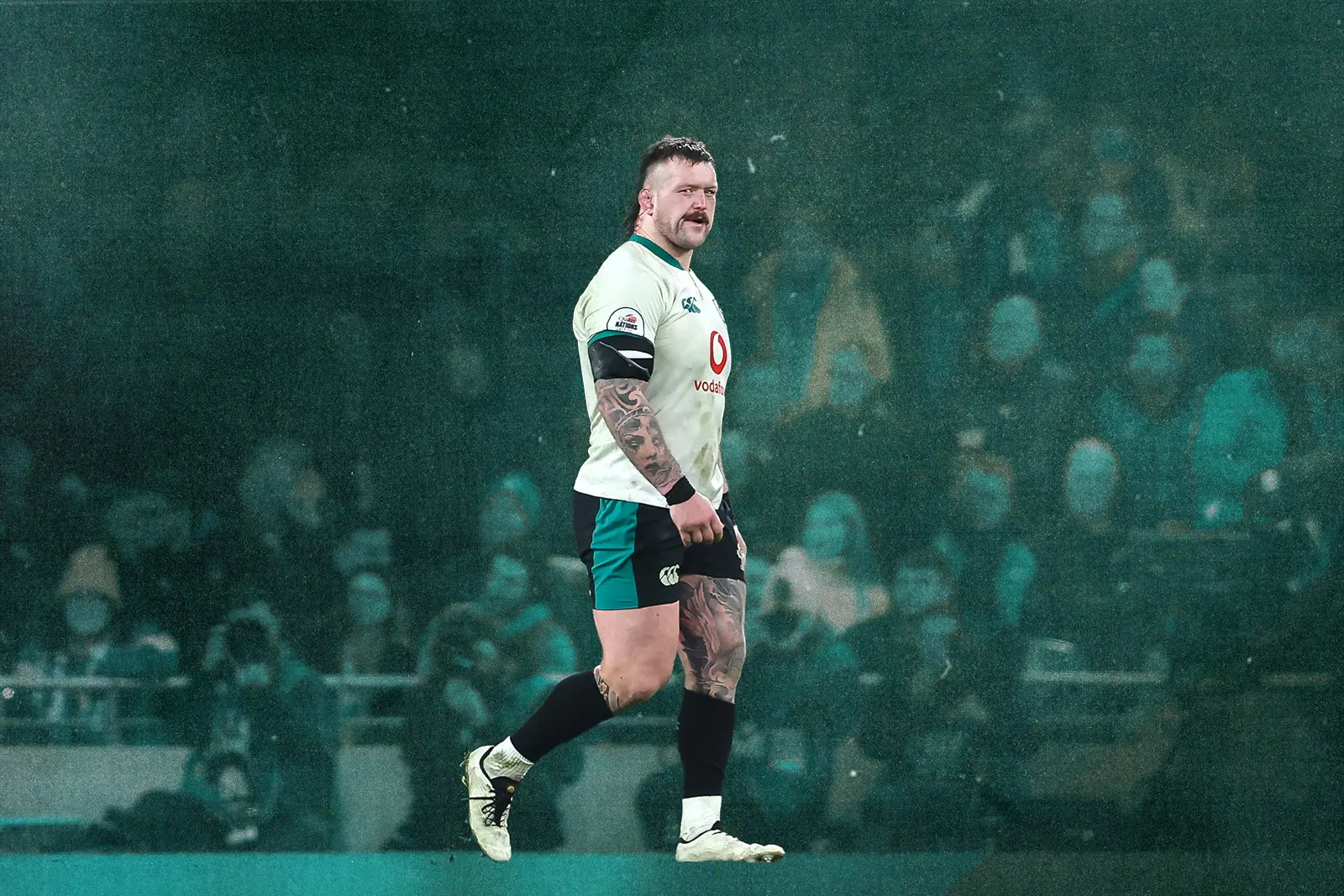
The downstream effect is obvious. If Leinster have to spend more to keep their Test core where it is, they will inevitably have less room for the middle of the squad — the players who are good enough to win URC games, good enough to cover European pool rounds, good enough to keep standards high in training, but not quite entrenched as first names on test team sheets, or in Leinster’s Category A team with everyone fit.
Those are exactly the players the other provinces need, and exactly the players who will now look around and see a clearer path to minutes, influence, and money elsewhere. Connacht’s signing of Ciarán Frawley for the 2026/27 season is a good example of that type of movement: a high-value, flexible, Ireland-level squad player who can start more regularly in a different environment. Would Leinster have liked to keep Frawley? Almost certainly. Is Leo Cullen’s recent displeasure in the media related to this contract loss, and others to come? Absolutely.
When Cullen complains about “Leinster guys” at the other province, what he’s really saying — whether he intends to or not — is that the system is finally doing something it hasn’t done enough of for a decade, namely forcing Leinster to live closer to the same scarcity economy as everyone else.
That won’t erase Leinster’s demographic advantage. Nothing will, bar geopolitical events so much bigger than rugby that it’s barely worth mentioning. But it does change the shape of the fight. Closing the gap isn’t just about Munster playing better on a Saturday night. It’s about what happens on the other 351 days of the year: who can afford to keep their 30–45th men, who gets to hoover up the best of someone else’s depth, and who has the pipeline strength to make a bust survivable.
In that sense, McMillan’s point lands differently. Leinster will celebrate the win, and rightly so. But if the IRFU have decided to make Leinster Rugby pay more for being Leinster, the province, then yes — structurally, the rest of the provinces are being given a better chance to catch up.
