



When the news broke that Tyrel Lomax had re-upped with the NZRU, my first reaction was… shit.
I’d gone pretty big on Lomax — bigger than most prospective signings — because people I spoke to in Munster and New Zealand were so sure he was moving up post World Cup, to the point that they were worried about how Dave Rennie, the new All Blacks coach, would take it, along with the media blowback. Maybe that, in the end, was the difference maker when it came to the NZRU offering Lomax what is essentially a four-year deal with a sabbatical option baked into it. How that works is that a player — like Jordie Barrett, for example — might sign a three-year deal that is actually a four-year deal, when you include the option to defer a season to play somewhere else, be it in Japan or in Europe.
Needless to say, Munster were very, very close to signing Lomax on a two-year deal post-World Cup, but that is now dead in the water. On Wednesday night, I texted the lads I was chatting to in New Zealand about it, and they seemed as surprised as I was. Then it came through. Very late change of tack from the NZRU, three years instead of the one they were offering to the World Cup, and the option to make up the shortfall in money with a sabbatical option.
I put the phone back on the side table. Shit.
The last thing I thought about before closing my eyes was how I was going to repurpose the What’s The Story article I’d written on Lomax. That’s how sure I was. There is no way to repurpose it, so I’ll just use the very tasteful graphics I made back in March and a little bit of the article preamble to salt the wound a little bit.

After a spell of poor performances in Super Rugby, he was dropped from the All Blacks and had a spell with the Māori All Blacks, but he was recalled to the national side for the 2022 Rugby Championship and became a regular starter from that point on. He was picked for the 2023 Rugby World Cup and started in the Final — an 11–12 loss to South Africa.
In 2024, Lomax earned 12 caps for the All Blacks, starting in eight of those matches, and played a pivotal role in the team’s Rugby Championship campaign.
He has been capped 48 times in total, the most recent of which came during a strong 2025 campaign that was cut short due to injury right before the All Blacks’ somewhat ill-fated Northern Tour.
Lomax is a genuinely elite tighthead prop at a world-class level, but with a compelling backstory of development.
His scrummaging is his calling card at this point, which looked like it would be something he’d never quite pull together. At 6ft 4in, Lomax fits into the super-heavyweight bracket of tighthead, and like many players who move to scrummaging relatively late in their career, he had to make considerable technical adjustments, as some of his predecessors like Carl Hayman did before him.
In 2024, Lomax was named in the World Rugby Men’s 15s Dream Team of the Year, selected alongside Ox Nche at loosehead and Malcolm Marx at hooker.
At 6’4″ and 130kg, Lomax has all the size and power
When you’re in the game, nothing about this is too much of a shock.
Signing current All Blacks — or very recent All Blacks — is incredibly difficult and only really possible when some static in the coaching box leads to uncertainty around contracts. Signing All Blacks who decide to retire from international rugby is still possible, but again, expensive. In recent years, most of those departing All Blacks have gone to Japan, but there’s still a decent throughway of players going to Europe, especially as contract sizes have decreased in New Zealand and increased exponentially, driven by a very strong exchange rate.
Recent enough examples would be Jerome Kaino going to Toulouse post Lions tour in 2018, with Nepo Laulala going to Toulouse, Sam Whitelock going to Pau, Jack Goodhue going to Castres, and Leicester Fainga’anuku going to Toulon post 2023. Jordi Barrett and Rieko Ioane going to Leinster in back-to-back seasons for their sabbaticals was another example in 2024 and 2025, respectively.
For the NZRU right now, they have two main targets — the 2027 World Cup in Australia, which they feel they’re in a great position to win, followed by the Lions tour inbound in 2029, which they have to win. I know you have to win every game when you’re the All Blacks, but losing a Lions tour is borderline unthinkable. Their contracting will reflect that, and it’s likely anxiety over the future of their tighthead jersey that drove the late break to give Lomax a three-year deal, ahead of the one year they had been offering, plus a sabbatical year. For Lomax, the right sabbatical plus three years of guaranteed money makes up for what he would have got here, which was an eye-wateringly large sum of money over two seasons, and all without having to uproot his family to go halfway across the world. He was more than willing to do it too — it wasn’t just smoke and mirrors to get a deal out of the NZRU — but it’s a completely understandable decision. And that goes for the NZRU, too.
For Munster, it’s a setback. Lomax was set to be a core part of upscaling our pack to the next level with a proven, world-class player in a real area of positional need, and we’ll have to go back to the drawing board on that one.
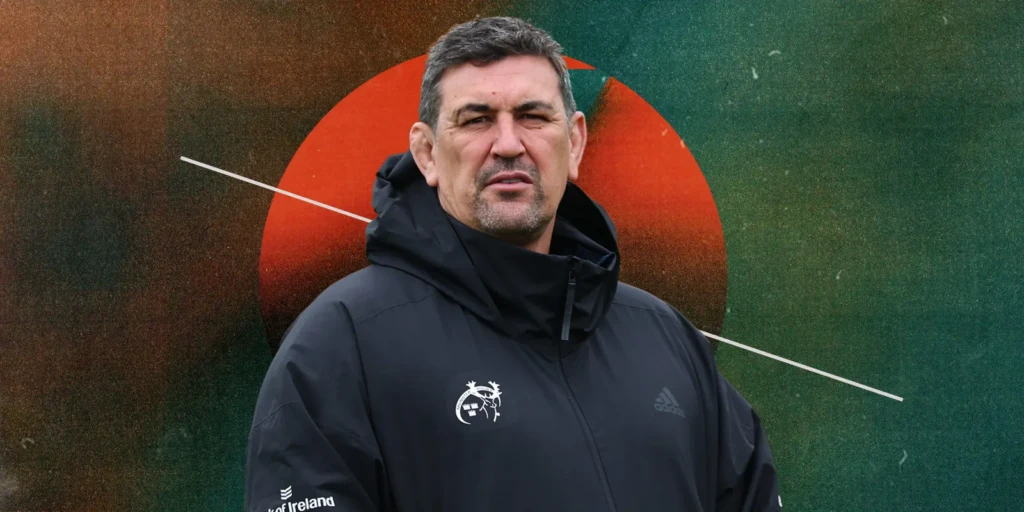
On the one hand, if Lomax were looking for a one-year sabbatical, we’d likely be a very attractive spot for him to choose. We, plainly, have the money to spend and doing it for one year rather than two would leave us significant wiggle room, but the only question is “when”? If the one-year sabbatical happened after the 2027 World Cup, Lomax would arrive in November 2027 to play out for the rest of the season.
That would be completely fine if we had another year to use him after that, with a full preseason to go with it, but if it was only going to be one year — seven months, in reality — that does change the maths around it. If it’s a one-year sabbatical, at the price that would cost, we’d really need to be ready to Win Now that season, and that means going deep in Europe and the URC with Lomax, and one or two others, being the finishing piece. The last bit of the jigsaw to put us over the top. You would hope we’d be at that point, of course. Jumping between 15-20 in Europe to the top five is actually pretty straightforward, especially when you have a good to great half-back pairing in situ, high potential young prospects popping up almost all the way through the pack and backline and, bar Beirne, very few top guys who are likely to retire post 2027. You still have to do it, of course, but we’re well placed to do so even if it doesn’t seem likely right now.
The World Cup is a huge driver for test players, especially ones nearing the end of their career, and the post 2027 landscape is going to be quite different to the one we see today in June 2026. How will Toulouse look post 2027? How will Leinster look at that point? Will UBB keep up their elite run? We’ve already seen how going a year too long can impact a juggernaut like La Rochelle, for example. Getting into that top five conversation can happen in 18 months.
Jumping from top five to top two, though, is witheringly difficult.
That’s where you look at finishing pieces. Lomax was intended to be ours, and still might be, but having him for two years means you have more wiggle room than just one.
Ulster this season, for example, used the sabbatical signing of Angus Bell as something of a kickstarter for them after a difficult 2024/25. He helped drive them to a Challenge Cup final — that they ultimately lost decisively — but they missed out on the Champions Cup again for next season, so that money was, essentially, wasted as far as outcomes are concerned. Any player you sign for big money has to lead to big outcomes. It doesn’t always work that way. Leinster didn’t sign Jordi Barrett to win a URC title, for example; that was to win in Europe. But the maths on it are simple; when you pay big money, you have to make sure you’re timing it to when that big money puts you over the top relative to your aims.
So that’s where our calculations have to start.
If we choose to go after Lomax for a sabbatical, and if he chooses to come here, will we be ready to utilise that outlay to Win Now? Ideally, we would, yes. A great player is always good to have, regardless of how long you have them for, but would it be more efficient to use that spend on someone else for two years, maybe even someone who could start in 2026/27?
That’s the choice we’ll have to make, but it’s never easy. Last summer, the supposed best slam dunk available was Taniela Tupou, but he’s only managed 298 minutes for Racing 92 since he joined, picking up two yellow cards in back-to-back weeks off the bench in the last month or so. You can only imagine the consternation if he signed here last summer and produced the same.
Around the game at the moment, Lomax was probably the biggest name that was readily available in the next year or so. All of the other players in his bracket are either heading towards their mid-30s or on long-term deals at their clubs, so it’ll take a bit of imagination, or some luck with contracting, to sort that position in the short to medium term.
