


Very few areas of your squad define how you play and where you play like the front row. We learned that the hard way last season.
It’s not the entire reason why 2025/26 was so up and down, but it was a large contributing factor. The game, as it stands in the mid-2020s, runs through the front row. Maybe it always has, but for now, you won’t get as far as you want consistently without a dominant or mostly dominant front row.
Munster, as you might expect, were very aware of this as the season wore on — and even beforehand — so a lot of thought was given to who could help improve us from the outside, especially with a few guys earmarked for retirement and many younger players looking for development.
So how are our hooker and tighthead stocks looking as we head into 2026/27?
Tighthead
This is the chart Munster were most focused on fixing up, so let’s start there. For clarity on these charts;
- 1A — refers to the core player in the chart. They don’t always have to start wearing #3. They will end up getting most of the “primary” minutes in big games, depending on the opposition.
- 1B — refers to the main alternate in the chart, usually a player with a specific role focus
- 2A — either a veteran backup or a young player who is earmarked for development minutes.
- 2C — an academy player or a much older veteran player who isn’t expected to have many minutes outside of very specific games, unless there’s an injury crisis.
Tighthead prop — depth chart
Munster, next season · contract expiry in brackets
- Core
- Exiting
- Development
- Academy
Tier 1 · first choice
Jack Aungier (2028) Core starter
Signed to be the 1A. Good all-rounder with a strong scrummaging focus.
Kieran Brookes (2028) Core veteran
Experienced heavyweight, strong scrummager. Mentors the younger options.
Tier 2 · rotation and development
Michael Ala’alatoa (2027) Likely released at end of deal
Experienced all-rounder. Ideally used less than last season.
Ronan Foxe (2028) Development
High potential. Earmarked for development minutes if fitness allows.
Jamie Conway (ACAD1) Academy
Big, strong, plenty to learn. Mainly AIL and A rugby, with a route into Tier C games on form.
At a base level, this chart looks as healthy as it has in a few years, even with the unfortunate retirement of Oli Jager, who was the undisputed 1A in that chart when he was fit. In a way, that was the problem.
Jager was signed to be the definitive Irish-qualified answer to Munster’s issues at tighthead prop in 2023/24, and it’s a great shame that he was never quite able to do that consistently. When he was fit — most of 2023/24 — he showed how valuable his power and scrummaging were to this team, either starting or off the bench against big South African/French packs.
But there were consistent issues behind him, the same ones that made his signing such a priority after the URC title win. We were still heavily reliant on Archer and Ryan, two hugely established veterans, with several a failed prospects behind them, the biggest (and most intriguing) being Roman Salanoa. During the 2022/23 title run, Salanoa showed what he had always been capable of: that he was a powerful, explosive tighthead prop with all the qualities — either in situ or soon to be — to be a potential Irish international in the next season or two.
Injuries put paid to that. A routine knee operation turned into multiple follow-up surgeries — for one reason or another — and Salanoa missed the next three seasons despite a few moments where it looked like he’d finally put the injury issues behind him. There was always another knock waiting around the corner.
We were blessed that Stephen Archer and John Ryan were as durable as they were in that period, but they would often end up having to cover most of the season as functional 1A and 1B because of Jager’s repeated injuries. The best ability is availability.
This season, we seem to have sorted that with the signing of Jack Aungier from Connacht.
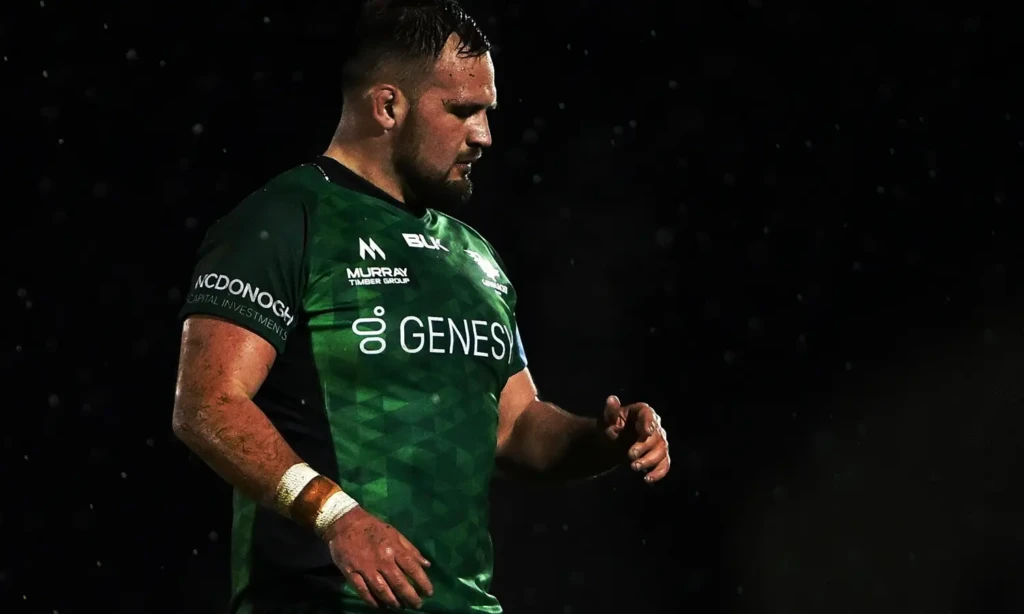
As I wrote back when he signed, Aungier is not the kind of tighthead prop signing that jumps off the screen at you. He’s functional. He hits his rucks, carries well in certain spots and scrummages extremely credibly against almost anyone, but he’s a bit like anchovies simmered in at the start of a beef stew. He makes the whole thing tastier, more savoury, and as if it were simmering for twice as long as it was, all without a fishy aftertaste of any kind, but not many people would be eating those fish straight out of the tin. Definitely try this in your next stew, by the way.
Aungier makes us better in ways that will only be clear once you see it, and he was a hugely important signing in a position that, as it turns out, was badly needed. The initial plan was to pair him as the 1B with Jager — mainly as a starter, with Jager being the heavy hitter off the bench — but when Jager was forced to retire, we needed to rethink the chart pretty quickly.
As I found out in the last few days or so, Munster were heavily considering keeping Ala’alatoa on as early as March of this year. Looking at the chart for the following season, with ongoing doubts about the pro-game suitability of Bartley and Salanoa, Ryan retiring, Foxe missing a key window with a shoulder knock, and a few doubts as to his current level in the scrum, as well as anxiety over Jager being one knock away from a serious life decision, Ala’alatoa was the one constant. Yes, we were forced into overplaying him because of those injuries, and yes, he looked completely wrecked by the end of the season as a result, but he was a heavyweight, durable option that showed whenever he had limited minutes — away to Benetton, Toulon, and Exeter, to an extent — that he could offer something valuable to this team. Physical ruck entries at high volume, impact defence and good scrummaging when he wasn’t scrummaging for 70 minutes against two fresh looseheads back to back to back to back.
The problem wasn’t Ala’alatoa; it was Ala’alatoa playing minutes that would wipe out a guy ten years younger than him.
So another signing would be needed. That was a “nice to have” up until Jager’s concussion, and then it became a priority. Brookes was available, in theory. He had an out in his deal with USAP, but they would only countenance talking about it after their TOP14 relegation playoff in mid-June. The NIQ market was either incredibly risky, expensive, or both. Munster did target Tyrel Lomax and were very close to closing that deal, but the names outside of Lomax all carried a ton of risk that Munster couldn’t really afford.
It’s still the intent to sign a world-class option at tighthead for 2027/28, but any guy you’d sign now that wasn’t in that world-class bracket would prevent you from moving in 2027 post-World Cup. Sione Ahio, for example, was considered, but the jump from non-test rugby Super Rugby Pacific scrummaging to the URC and European Cup is something that can’t be predicted with ease. Ahio would be an exciting signing on the face of it, sure, but Munster couldn’t afford to take on the risk that he would sort out our scrummaging issues up here in the way that we needed. He might, but you could equally say that he might not.
And if we signed him — it would have to be for two years plus on big money — that would remove our wiggle room to target someone from the test game post-World Cup.
Kieran Brookes was the guy we kept coming back to. He had worked with Ian Costello before, which helped, as did his eagerness to redeclare for Ireland and play for Munster, specifically, but better than that, he was as close to a slam dunk as possible for that 1B slot. There were no doubts over his scrummaging — and that was our first, second and third filter on this signing — and because he was Irish-qualified, it gave us wiggle room to work with after next season.
On a two year deal, Brookes will essentially go from 1B to 2A across his two year deal, allowing us to chase that big name tighthead prop knowing that the veteran cover is already in the building.
After Brookes was sorted, we decided to go with Ala’alatoa as our 2A cover, essentially upgrading on John Ryan from last season. We know we can use Ala’alatoa to either start or finish with Aungier, Brookes and, more pertinently, Foxe with no issues.
I was smartened up on this by a guy working in the Gallagher Prem a few weeks back. Your third choice prop, more so than any other third choice player, determines the freshness and availability of your entire chart.
The key young player to watch for next season is Ronan Foxe.
Foxe turns 24 this season after three full seasons in the Munster academy, and he’s got everything you’d want in an ascending tighthead prop: size, power and weight. At nearly 130kg and with some hard lessons in the scrum last season, Foxe is the exact type of player who could have a breakthrough with the right support around him.
Last season, Foxe’s main usage was off the bench in the early going of the season in what turned out to be very tight games before he had something of a nightmare against the Stormers in Thomond Park at the end of November. He’s far from the only tighthead, young, old, experienced or inexperienced to have a torrid time with the Stormers scrum — and Oli Kebble, in particular — but he’s got a lot more in his favour this season.
He’ll be working with the likes of Brookes, in particular, who closely maps onto Foxe stylistically, but he’ll also be working with a very experienced forwards coach in Jimmy Duffy. Project-wise, Foxe is the exact type of young prop who should benefit from more clarity in our attack and set-piece systems, if he can stay reasonably fit and available.
A lot of it depends on how quickly he hits the ground running this preseason, but he’s got all the qualities that should be enhanced by being in a very experienced, scrum-first tighthead chart.
Hooker
Hooker — depth chart
Munster, next season · contract expiry in brackets
- Core
- Expiring
- Development
- Academy
Tier 1 · first choice
Marnus van der Merwe (2028) Core starter
Springbok international and the biggest signing by any Irish province this season. Huge scrummager and ball carrier.
Diarmuid Barron (2028) Core
Solid leadership option and a good all-rounder.
Lee Barron (2027) Contract expiring
High potential. Needs size and consistency.
Tier 2 · rotation and development
Max Clein (2027) Development deal
Great athlete, fastest forward on the team. Needs set-piece solidity.
Danny Sheahan (ACAD3) Academy
High potential. Needs size and set-piece development.
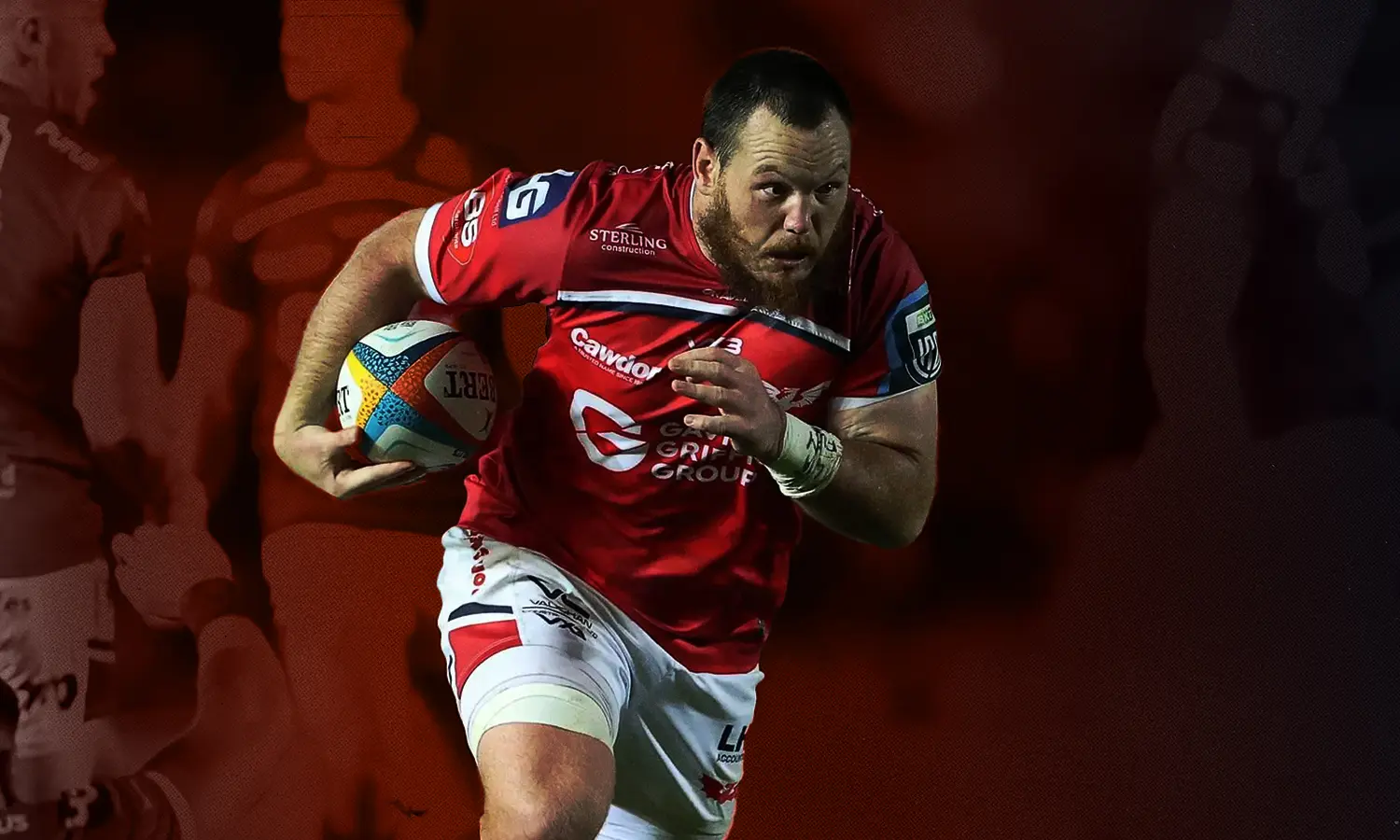
Munster’s hooker chart has seen the biggest signing to the provinces for next season in the imposing Marnus Van Der Merwe. Without wanting to overegg the pudding here, Van Der Merwe is the exact profile of hooker we’ve been looking for at Munster for several seasons; …a genuine, relentless nuisance at the breakdown who does his best work in the ugly places.
The first thing to hold in your head while reading his numbers is the company he’s keeping. Grobbelaar has been packing down for a Bulls side with arguably the biggest front five in the club game. Kelleher plays in a Leinster pack that dictates terms to most of Europe. Aumua is part of a winning and physically dominant Hurricanes team, while Mauvaka and Lamothe are operating for two of the biggest clubs in Europe, Toulouse and Bordeaux, respectively — teams that spend the bulk of their games firmly on the front foot. Van der Merwe has been doing his work for a Scarlets side that spent last season getting beaten, often heavily.
Which makes the poaching numbers look faintly ridiculous. Van der Merwe averaged 1.1 jackals per 80 minutes. Grobbelaar, a fine defensive breakdown operator in his own right, managed 0.6. Kelleher and Mauvaka — two men who would walk into most matchday squads on the planet — sat at 0.2. He turned the ball over at close to double the rate of anyone in this group while hitting 10.3 defensive rucks per 80, more than any of them by a distance; Grobbelaar hits 5.5, Aumua 3.7. He was at more breakdowns than anyone else in the conversation, and he was arriving first, with 62.6% of his tackles made as the lead man. A hooker on a beaten team gets far more chances to jackal, true. He also gets far more chances to stop trying, and the volume says that never happened.
I’ll put it like this; in the world game last year, the closest map to his tackle count, defensive ruck attendance, efficiency and turnover rate is Jack Willis.
The same applies with the ball. His attacking ruck efficiency of 91.1% is the best of the six, ahead of Grobbelaar’s 87.6% and Mauvaka’s 80.2%, which means that when he arrived to clear, the ball came back clean — behind a beaten pack, against defences with their tails up and time to set. Give him a system with more carriers, more power and on the front foot, and that number should hold or climb.
His carrying tells a similar story. A dominant carry rate of 32.2% is second only to Aumua and comfortably clear of Grobbelaar (24.5%) and Kelleher (14.6%), while 61.7% of his carries drew in two or more defenders. The gainline figure of 46.7% is the lowest here, and the evasion rate is modest, but consider what he was being asked to do: take the hard ball off nine, with no momentum behind him and a settled defence in front. He still went forward on contact a third of the time. Do that on phase play that actually functions, and the yardage follows.
The underlying traits — the engine, the poaching instinct, the willingness to carry into traffic — are the ones you can’t coach into a player, and he produced them in the least forgiving environment on this list.
That’s before we get to his set-piece work; his scrummaging, his throwing and his ability at the back of a maul. This is where the dominant carry numbers are most intriguing; off the back of a maul, against a one or two man isolation, Van Der Merwe goes forward at a rate that we haven’t had in the club since… actually, I can’t think of anyone who comes close to his profile in this regard. His throwing is also really, really solid. He was the primary thrower for the Scarlets last season, and they were running at 90.6% completion across the season. He’s accurate, consistent, and he hits his targets all through the line.
Even with that throwing, it’s his scrummaging that offers the most promise as far as Munster are concerned. He is a beast of a scrummager. It’s not that we have bad scrummaging hookers at the club — Diarmuid Barron is a particularly crafty scrummager — but we have nobody with the mass of Van Der Merwe, and that’s of particular concern with the tightheads.
The relationship between the two shows up most clearly when it breaks. Watch a tighthead who has lost faith in the man to his left, and you’ll see it in the setup: he starts pre-loading, taking his weight forward before the set, hunting for an early advantage because he knows he won’t get a second one. He does that because he knows that if he can’t hold off the opposition loosehead and hooker for long enough, then the drive is going diagonally through him right onto the hooker. He can’t dominate because he’s got a guy surviving to his left, rather than dominating. He starts binding shorter on the loosehead, gripping rather than binding, trying to control an opponent he can’t afford to let move. Referees see all of this, of course, or most of it. The penalty count climbs, and it climbs against him, though the cause sits half a metre to his left. You see more belly flopping, more “lifts” where the opposition loosehead unbalances and hoists you into the air and across. You can’t really scrummage square.
Remember how many of our scrum penalties last season looked like that diagonal peel in from the tighthead?
A hooker with real mass changes the physics before the ball is anywhere near the tunnel. The tighthead can hold his own weight back, stay long in the spine, and wait — because he knows that when the hit lands, the front row holds its shape. That patience is worth a scrum penalty a game at the top level, and scrum penalties are three points, or a lineout in the corner, or a yellow card at the end of a sequence of them. Very few individual duels in rugby have a shorter path to the scoreboard.
There’s a psychological dimension too, and coaches will admit it privately more readily than publicly. Front-row play is trench work. It is dark, it is compressed, and it’s ugly. Nobody outside the front row really knows what happened in there. Tightheads talk about the difference between a hooker who arrives at the scrum wanting the contest and one who’s trying to survive it. The first kind will call the timing, push the hit, take a share of the opposition loosehead’s problems onto himself. The second kind is a passenger you have to carry while also winning your own fight.
Van Der Merwe has the size and power to transform our scrummaging, alongside what is probably the heaviest tighthead rotation in the country for next season.
Alongside Van Der Merwe, you have the versatile, hard-working Diarmuid Barron, who was our hardest-hitting forward tackler last season among players who made more than 10+ tackles per game across the season. He’s starting the first season of a new two-year deal and is an established senior player at this point in his career, with vice-captain credentials.
He’s not in the conversation for Ireland caps at the moment, but I think he’s more than good enough to find his way into the rotation this season if Munster can get the set piece nailed down this off-season. More so than most, I think Barron has been hurt the most by our ongoing problems oscillating from scrum to lineout, game to game, even half to half.
You might say he’s played his part in those set-piece issues, and while that might be technically true, it doesn’t really tell the whole story. Diarmuid Barron is an excellent thrower, with great control and consistency, yet too often in the last four seasons, we’ve been undone by inconsistent lifting, jumping and schemes. That’s the second thing in Jimmy Duffy’s inbox — get our lineout to be a threat, rather than a restart.
In a general sense, I think Barron will look much better in a better front five overall, where he can bring his work rate and consistency on the front foot, rather than on the back foot.
Lee Barron, whose contract expires this season, needs a big year. In a general sense, he seemed a little light to me last season, even if he had some of the best offensive ruck and defensive work (tackle completion, defensive ruck and efficiency) in the squad during his limited minutes last season.
His best carrying work was done at the edges, and while that is valuable, he wasn’t as evasive as he needed to be given his lighter frame. We need more hitters in central spaces. At 6’3″ and 108kg, his natural comparison is to Dan Sheehan and, like Sheehan, I think Barron needs to crack that 110kg mark to get his frame to where it needs to be.
His height is an issue at the scrum — the connection to the loosehead and tighthead is distorted the taller you are as a hooker — but that can be offset by playing heavier. That said, I think playing alongside Aungier and Brookes, in particular, will really help Barron offset what I feel is the big weakness in his game, and a better lineout structure will only enhance his excellent throwing mechanics. At the moment, he’s probably at his best as a change-up option off the bench with his pace and work rate, but I think his next contract really relies on him moving up a gear physically, although a better set-piece foundation will enhance him as much as anyone.
Max Clein is an intriguing player. He’s on a one-year development deal, and I think if he can show two things — better lineout throwing and scrummaging — he’ll find himself on a two-year deal pretty quickly. It’s not unusual for a relatively late conversion to hooker, even if he did play there when he was younger, but getting the fundamentals together at pro level is a difficult task.
Athletically, Clein is arguably one of the most gifted young players in the country, as long as his set-piece work comes together. He is ridiculously fast and punchy in contact — he reminds me a lot of Asafo Aumua from a build perspective — so if he can pull the set piece together, he’s got a great chance of URC minutes that could really push him on. Again, if we have a good, functional scrum and props that can make life easier for him, he’ll have a great chance of impressing.
Danny Sheahan is another good young option who looks to have the lineout part of his game down, pretty much, but whenever I’ve seen him, he’s come across as a guy who needs another year of S&C to really bang at URC level. He’s got the frame for it — 6’1″ and already around 105kg — but I’d like to see him hit closer to that 110kg mark to really lean into his potential. He could be in the frame for minutes this coming season and nail down a dev contract or a longer senior extension.
