


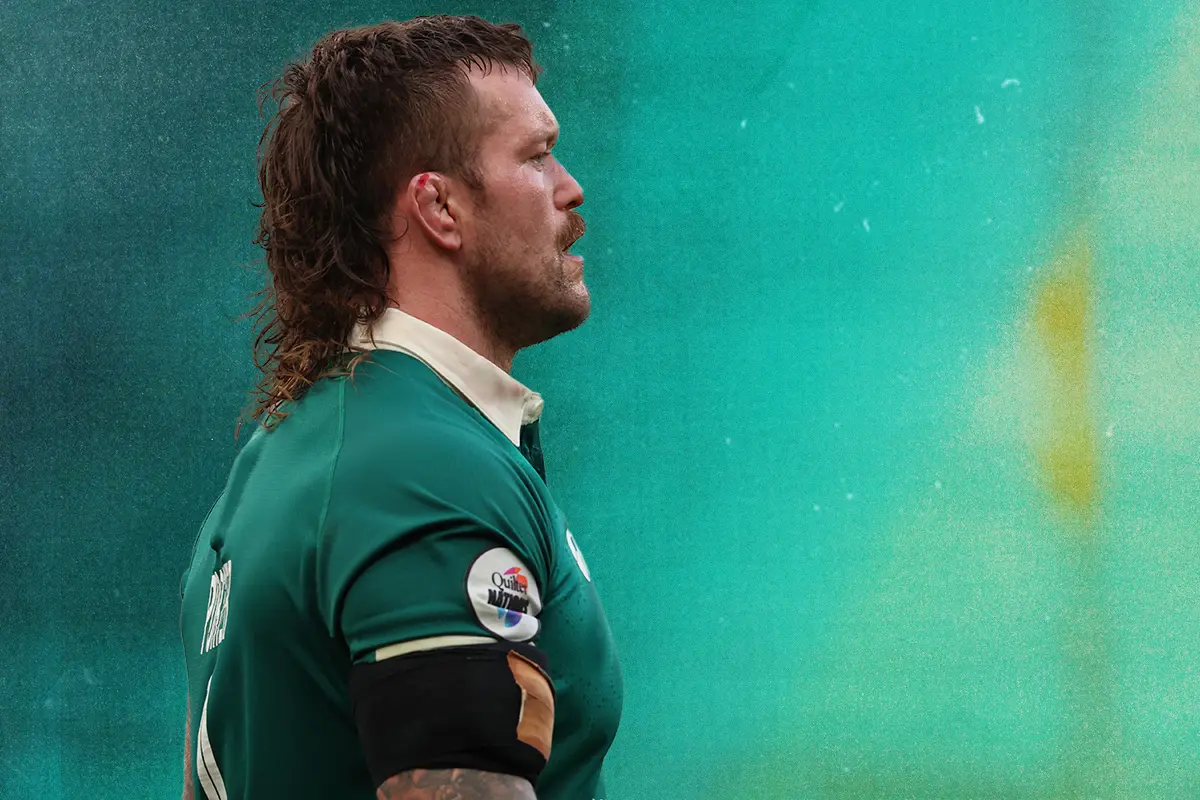
When I was trying to explain my thinking behind the logic used in this week’s Green Eye, my brain ran into the problem it usually does when I see something complex.
Is this clear?
Am I explaining myself well?
Is there clarity to my thought process?
There was, I decided, but not enough.
In the last few years, I’ve been focusing on roles more than classical jersey numbers. I went some way to explaining this in my Glossary series — of which this article is part of — with my first two role glossary articles (here and here). Even then, I found I was losing people.
So, with Caelan Doris about to start in the #7 shirt for Ireland, I thought it was the perfect opportunity to expand on that logic.
For me, Caelan Doris is a pretty classical Combo Flanker.
I defined that as follows.
Combo Flanker: This is the most common type of back-row specific player in the game. I call them Combo Flankers because they usually have a combination of two or three of these classic flanker traits, but never all of them
Those traits are: offensive and defensive lineout jumping, primary central ball carrying, offensive and defensive ruck work, primary wide ball carrying, primary defending, and edge defending.
Some combo flankers specialise in the lineout, carry in the wide channels and high-volume ruck work. Some are excellent defenders, passable ball carriers in the right channel and only occasional lineout jumpers. These players are usually core leaders in their teams and often end up as captains as a result. They are players who bring balance to pack builds by offering size and specific skillsets that keep everything running.
Physical Traits: 6’2 to 6’6″ and weighing 105/112kg
High-Level Examples: Peter O’Mahony, Caelan Doris, Siya Kolisi, Jamie Richie, Jack Conan, Alexander Roumat, Pierre Boudehent
So the trade-off you get by including him over a Small Forward build player is pretty simple. You get extra size in defence, midfield ball carrying, central ruck work, and a possible lineout option in place over a wider carrying forward who specialises in wide-ranging (across the full width of the pitch) ruck security, and wide-coverage defence. What Caelan Doris brings, as a balance to this, is that he’s a high-volume defender like Van Der Flier/Timoney, is a good defensive breakdown player and can handle the ball quite well.
Very little of what Caolan Doris will do minute-to-minute against Australia will look wildly different from his baseline. He might be wearing #7 instead of #8 — and remember he broke through for Leinster and Ireland wearing #6 — but he’s still the same player. He’s not going to be doing a Josh Van Der Flier impression, nor should he; it’s about trying to alter what your system produces by changing the jobs of the players within it.
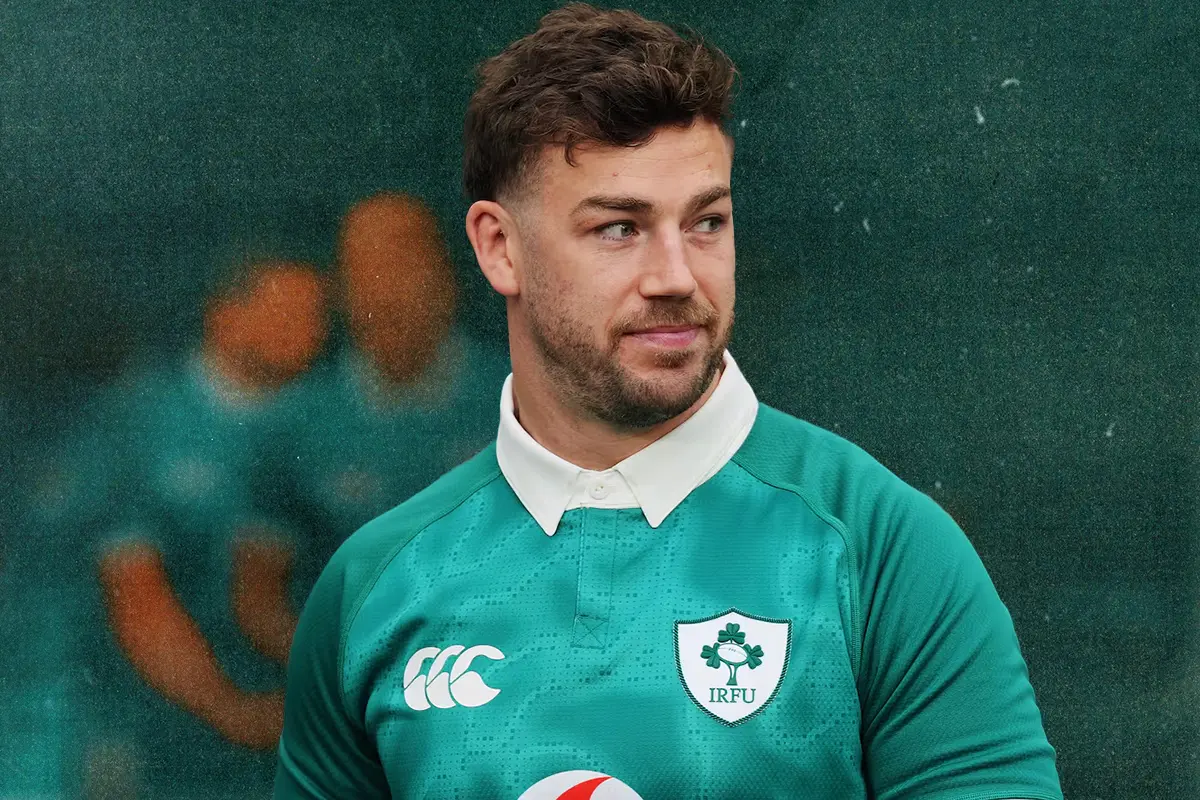
In some ways, the real value for Andy Farrell is what moving Doris to another backrow slot allows him to select in the other. So, in a way, you pay for getting Jack Conan in as an extra hitter by trading some of the wide-ranging ruck security you get with a specific small forward build player.
Caelan Doris won’t be expected to be an “openside”. He will do well or not based on how well he can be Caelan Doris.
For me, that’s the key thing that gets lost when people argue about jerseys. We still talk about “6/7/8” as if those numbers come pre-loaded with fixed behaviours, when in reality it’s the jobs that matter – and the jobs move around depending on who you pick.
In any given game, you need a certain amount of central carrying, a certain amount of ruck work, a certain number of lineout options, a certain number of dominant tacklers and breakdown threats. You can buy those from a Combo Flanker in the #8 shirt, a Small Forward in the #6 shirt or a Ninth Forward built in the midfield or on the wing. The shirt isn’t the important bit — the job package is.
Doris at #7 doesn’t magically turn into an “openside”. What’s really happening is that Farrell is saying: “I want Doris’ Combo Flanker job package in a slot that lets me get Conan’s job package onto the field as well.” The system is buying two different sets of jobs, not two different numbers on a teamsheet.
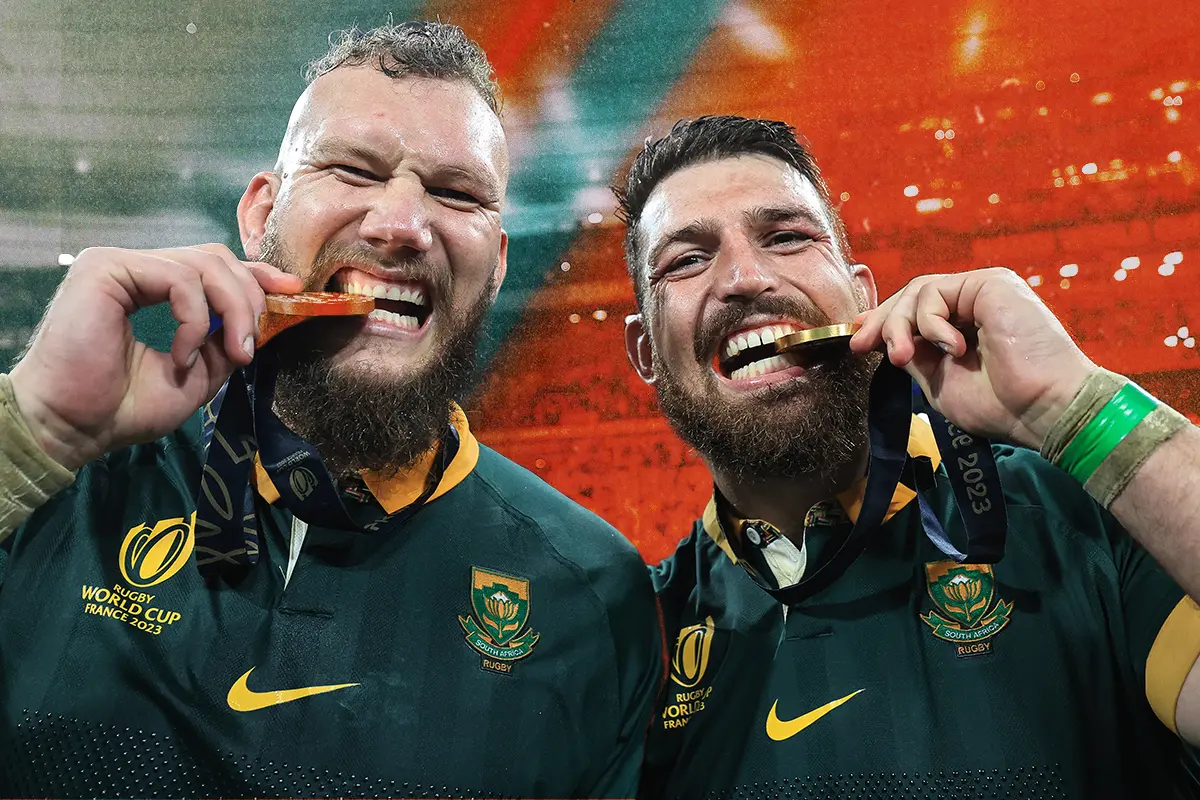
There are often ructions over these kinds of positional “swaps” in online spaces. Just check out what happens whenever Siya Kolisi is named to start at #8 rather than his usual #6 — the traditional South African “openside” jersey.
But there is functionally no difference in the outcome. Erasmus selects Kolisi at #8 — the only true specifics to that position are control at the base of the scrum — because he wants his qualities in the back five alongside other role types.
The Combo Flanker allows you to do this, but you don’t need them to make a successful pack build.
You could run — and many teams have — a build with a traditional heavy front five, with a lock and/or half lock on the flanks, with a power forward or small forward in the mix.
That would limit the ruck coverage of that pack, but you compensate by picking what is essentially a Ninth Forward build midfielder or winger who, for all intents and purposes, plays like a traditional openside.
Long story short, there’s more than one way to skin a cat.
***
Ultimately, rugby is a game of costs and benefits.
On defence, this shows up most clearly. However you dress it up, you need three broad things:
– Tight stoppers who live around the ruck and stop teams winning easy metres in the first two channels.
– Mobile hitters who can move a bit wider, pick up big carriers off 10/12, and still win collisions.
– Edge and backfield defenders who can survive in space, make hard reads and tidy up whatever leaks through.
A Combo Flanker like Doris is valuable because he can be a tight stopper and a mobile hitter across the course of a game. If you load your pack with more “brick” builds – even if they aren’t front-rows – you’re basically saying, “We’re going to win the tight stopper/mobile hitter battle over 80 minutes and live with what that costs us somewhere else.” If you go lighter, with more Small Forwards and Ninth Forward builds, you’re saying, “We’ll have fewer pure stoppers, but we’ll try to win on width, pace and coverage instead.”
What you add into one unit, you have to pay for in another to achieve systemic balance at a macro level. It should also be noted that this is fundamentally a collision sport, and almost everything in your system has to account for that. It can’t be the only consideration, but it’s a consideration that eventually permeates into everything.
If you aren’t winning collisions, the workaround to success is so complex that it’s almost impossible to achieve. Ultimately, when it comes to winning the biggest games against the biggest teams, the fundamental question is whether or not you can win offensive and/or defensive collisions at enough of a clip to do the job.
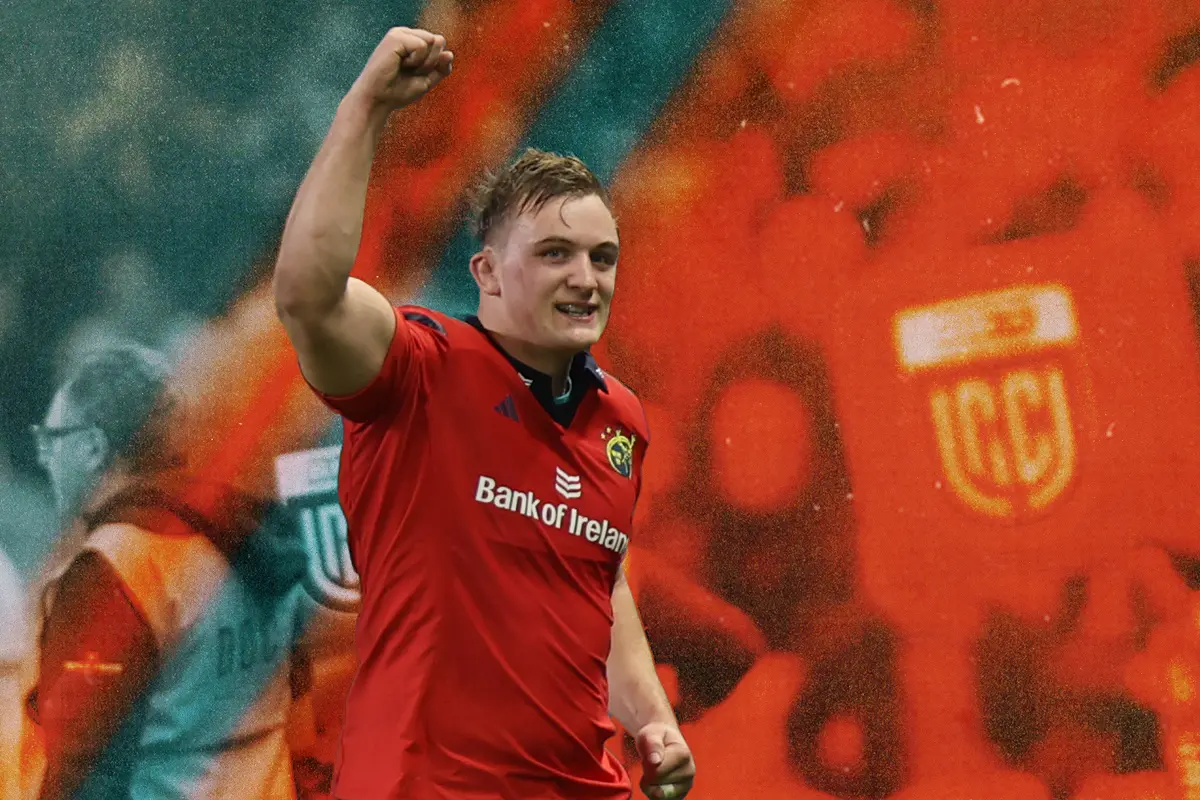
Between 2022/23 and 2024/25, Munster attempted to “hijack” this traditional truth, but to mixed success, especially without access to both Jean Kleyn and RG Snyman on the same match day 23, along with other key injuries and an IRFU-level problem in signing NIQ players who might have made the solutions simpler.
This manifested itself in signing pace and creativity in edge spaces — Kilgallen, Farrell and Abrahams. If we couldn’t consistently win collisions in the middle of the field, we’d compensate with ruck security and then try to blitz teams in the edge spaces and in transition. We weren’t the biggest, most physically imposing team — even when fully healthy — so we decided to array our resources to compensate in the areas where we might have an advantage.
With pace on the edges and in transition, plus a core of excellent ruck security players and a game-altering half-back pairing, the logic was that we could win away from the tight exchanges, but this was very much feast or famine, as you’ll probably remember.
In a way, the logic was sound. This is a game that seemed to be leaning heavily into transition; the laws of the game were encouraging transition and seemed to be trying to move away from the attritional, power game that dominated the late 2010s and early 2020s.
But, realistically, was this sport ever going to go away from that?
The kick escort laws, in combination with the 50/22 laws, were designed to make the game more vertical and, at the same time, create more lateral spacing. But the fundamental truths of the game are the same. In a way, I think the kick escorting law has increased the value of a dominant scrum, something World Rugby have been actively trying to depower through various law tweaks and outright changes.
The meta of the game is firmly still in the Power Wins Almost Every Single Time band, and in my opinion, nothing is going to change that.
But there’s more than one way to skin a cat.
From a role build perspective, we’re at the point where collision winning has to be the primary concern for any team, especially in the forwards. That has always been true, but it’s even more true now. You can force-multiply this systemically. A narrower forward carrying formation can literally add to collision work through numbers. You’re carrying in twos and threes, rather than individually with a tip-on option. That comes with a cost — heavier collisions, less movement to width on most phases, more attrition — but the benefit is that you lean into the meta of the game. That needs heavier players, more explosive runners and players who are focused on hitting rucks and collisions, rather than leaving a step outside and back for a tip on, but the right players in the right roles will always produce better outcomes.
That’s really all this Doris-at-7 conversation is about. Ireland are nudging their back-row mix a little further back towards collision and stopper density, having spent a long time with a more classic Small Forward/openside profile. Munster, over the last few seasons, tried to push harder in the opposite direction: accept that we weren’t going to dominate every collision, lean into ruck security and edge pace, and see how far transition and width could take us.
Same sport, same laws, same fundamental truth — power still wins almost every single time — but two different answers to the same question: where are we willing to be light, and where do we absolutely have to be heavy?
Doris in #7 is just the latest iteration of that trade-off.
