



Contract season is back – it seems like it’s sooner and sooner every year – and this year we’re presented with a doozy of a choice; a Morton’s Fork, if you’ll indulge me for a minute. A Morton’s Fork dilemma is a choice between two unpleasant things with the origin of the term coming from a tax collector in the 15th Century known as John Morton.
To get around what he felt was the middle class feigning poverty, he decided if a man lived well, he was rich and thus could afford the taxes but also that if the man lived frugally then he must have savings and, thus, could afford the taxes.
Being stuck on Morton’s Fork meant that whatever way you turned, there was no escaping the tax if he deemed you could afford it.
Whatever way Munster turn this November/December, a tax will be paid. The only question is who pays and how much.

When Rassie Erasmus called up Jean Kleyn to the Springbok’s squad for the Rugby Championship, the contracting situation at Munster changed almost immediately.
Before that callup, Jean Kleyn was a straightforward re-signing for Munster – not an easy signing, but relatively straightforward.
Kleyn might not have been on Andy Farrell’s radar but he is one of a tiny group of players who operate in the Tighthead Lock role set at an elite level. Straight away, that makes him incredibly valuable, especially to French clubs where that role set is very highly valued. When you also consider that he was a recent trophy winner at Munster, that would also play a factor in the world of signing players in Rugby Union.
“He won a trophy at Munster and if we sign him, there’s no reason why he can’t win trophies here.”
Munster would still back themselves to re-sign him in that context, given that he has a house built here, has lived in Limerick for nearly eight years now and loves the club. In any contract negotiation where all other things are equal, the club the player is currently at tends to have the advantage.
It would be a big contract he’d sign – make no mistake about that – but it would be manageable because we’d need zero IRFU dispensation to keep him as he was still Irish-qualified and the only question would be if we could afford his wages and if retaining Snyman alongside him was feasible.
Then a phone call from Rassie Erasmus changed everything.
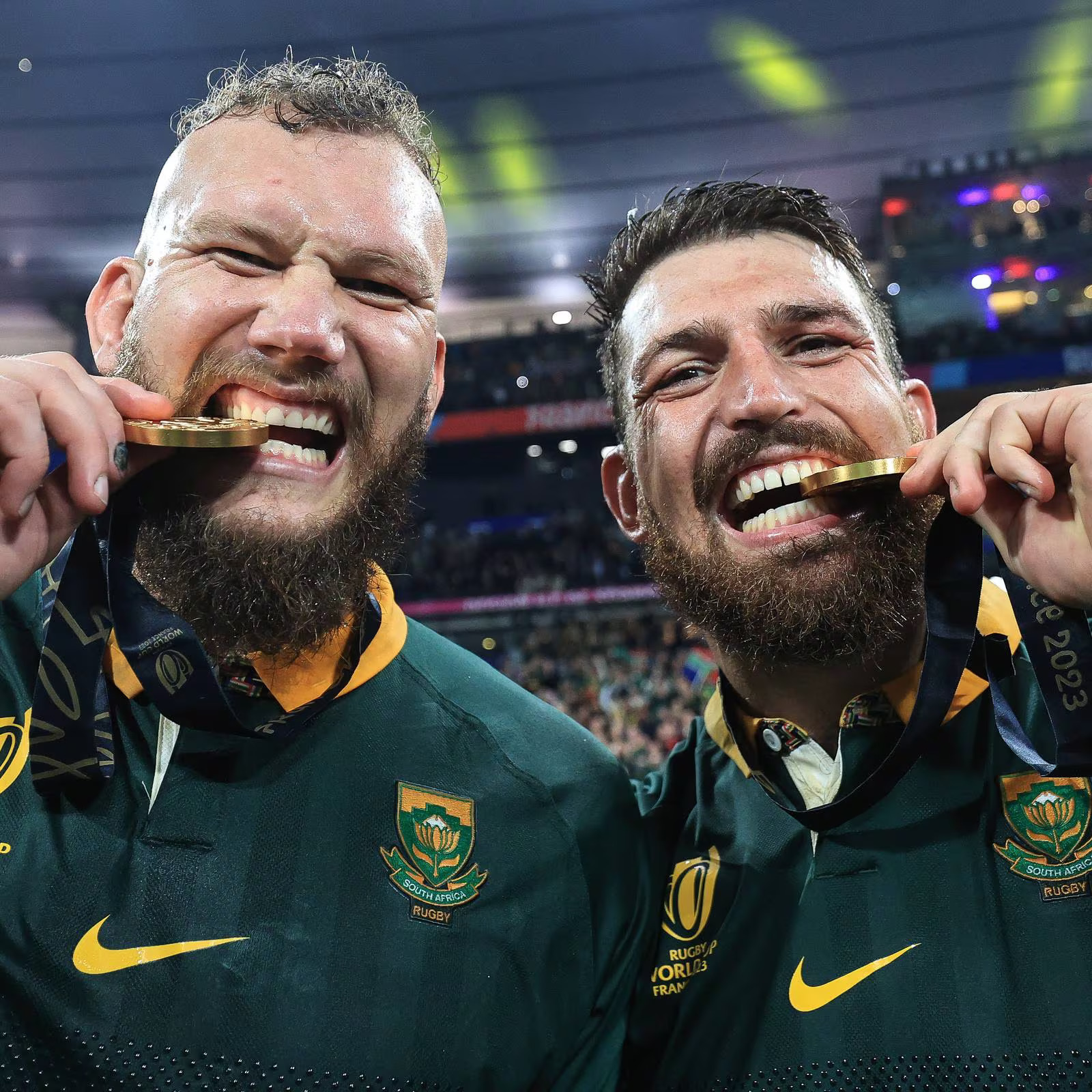
Fast forward a few months and now Jean Kleyn is not only Non-Irish Qualified, he’s also a World Cup-winning Springbok second row who played in and won a World Cup final. Not only that, his newly found NIQ status means that it’s almost impossible to keep both Snyman and Kleyn.
We will have to choose.
“The price of the brick just went up.”
– Marlo Stanfield, The Wire.
It’s fanciful to think that, if Jean Kleyn hadn’t been called up to the Springboks side, we could have used the potential of an Irish recall as a carrot to keep his wage demands down. That gambit would not work. Jean Kleyn had been an Irish international since 2019 but he didn’t get called into one Ireland camp since Farrell took over as head coach of the Irish national team. There was no test rugby that we could reasonably offer as a makeweight when the inevitable competition for Kleyn’s signature would arise from France and elsewhere.
Do you want to know the value of a 6’8″, 125kg tighthead lock with a big scrum, breakdown and maul focus? Ask a head coach in the TOP14.
So, when we were going to be competing for his signature, it would be with his love for Munster, his settled life in Limerick and the lack of hassle in moving abroad, as well as being in a side that seems to be going places.
And, oh yes, around 300k a year for two or, more than likely, three years to take him up to 33/34.
But, when Kleyn won a World Cup medal with the Springboks, his contract value went up and rightly so. At 30 years of age, this next contract is Kleyn’s “banker” deal, likely his last big one before his value starts to slump due to wear and tear in his roleset as he reaches his mid-30s.
On the face of it, Munster re-signing Kleyn to a two (or three) year deal makes a ton of sense. He’s experienced, he’s settled in the area, he’s really good in a valuable role, and he’s a core part of the Munster front five – that hasn’t changed since last season.
But would we be contracting the same Jean Kleyn? Jean has averaged 19 games a season for Munster over the last seven seasons, with an average of 17 starts.

If Jean Kleyn continues to be a part of Rassie Erasmus’ plans at test level, it’s an inevitability that something will have to give. Right at the end of this season, for example, he could well be involved in a physically intense three-game series against Ireland in South Africa. If he’s then in the wider Springbok squad for the Rugby Championship, that means he misses core parts of our preseason and arrives back in the HPC in mid-September, which is usually a round or two into the URC in a non-World Cup year.
If he’s involved in the November tour, that will mean a release in late October for involvement in three or four physically intense games for the Springboks in whatever capacity he’s used.
That extra training load, never mind the games he’ll be involved in as a travelling reserve, bench option or starter, along with the air miles involved, means that it’s almost impossible that he can produce that 17-starts per season on average for Munster in the seasons to come
If we can accept that his price is rightly going up due to his profile and role value, that means we’ll be paying more on a per-game basis for Kleyn’s services, while also dealing with a much higher injury risk.
That is a new factor that we have to consider because, at a certain number, it becomes a contract that would eat into other areas of our squad build. It would, essentially, leave us in a more vulnerable place on-field where we’d be paying much more per game for a player that now has a split focus between Munster and South Africa.
When it comes to RG Snyman, we are faced with old factors first and foremost – his injury record.
RG Snyman’s injuries at Munster have been absolutely brutal – there’s no other word for it. In his three seasons at the club to date, Snyman has played 268 minutes. In the offseason this year he played 342 minutes for the Springboks before getting another hefty injury in the World Cup final which looks set to keep him out for three or four months, maybe even more.
From a “time on field” perspective, he’s arguably up there with Christian Cullen as one of the most expensive players we’ve ever had at the club on a per-minute basis. Nobody wants to get injured and nobody wants to spend months in the gym rehabbing injuries. At the same time, 268 minutes across two contracts and, in all likelihood, less than 600 minutes total in a four-year World Cup cycle is unsustainable, as good as Snyman is.
But a few facts remain.
Is RG Snyman one of the best, most impactful second rows in the world when he’s fit? Yes.
Is RG Snyman a level-raiser on par with Will Skelton at La Rochelle? Yes.
Has Snyman had an impact off-field that, while not in any way compensating for just 268 minutes of rugby in three seasons, has had palpable results on young players like Ahern and Edogbo? Yes.
Are we a more feared pack with RG Snyman in it? Without doubt.
I suppose the equation, ultimately, is this; Kleyn raises our floor, and Snyman raises our ceiling.
Which is more valuable?
All of these discussions come without the other key factor in this conundrum – the development of Edwin Edogbo and Thomas Ahern, with Evan O’Connell as a medium-term consideration. In a situation where we can’t keep both players – which looks like the most likely option as of now – who is the best player to help their development? I don’t buy the idea that the best thing for these young players is for both Snyman and Kleyn to leave. Ahern has yet to complete a season without a long-term injury stalling him and Edwin Edogbo will only move onto a senior contract next season. The idea that these two young players, along with Fineen Wycherley, are ready to anchor the Munster pack next season is as much of a risk to their long-term development as signing Kleyn and Snyman to three-year deals.
From a top-level perspective, it’s Snyman. From a practical perspective, it’s Jean Kleyn.
In my opinion, there’s only one decision to make here if possible and it’s retaining Jean Kleyn up to a limit of €450k per annum on a two-year deal or €380k per annum on a three-year deal. If the sliders on those start to go above those numbers, that’s when the really tough decisions have to be made.
