


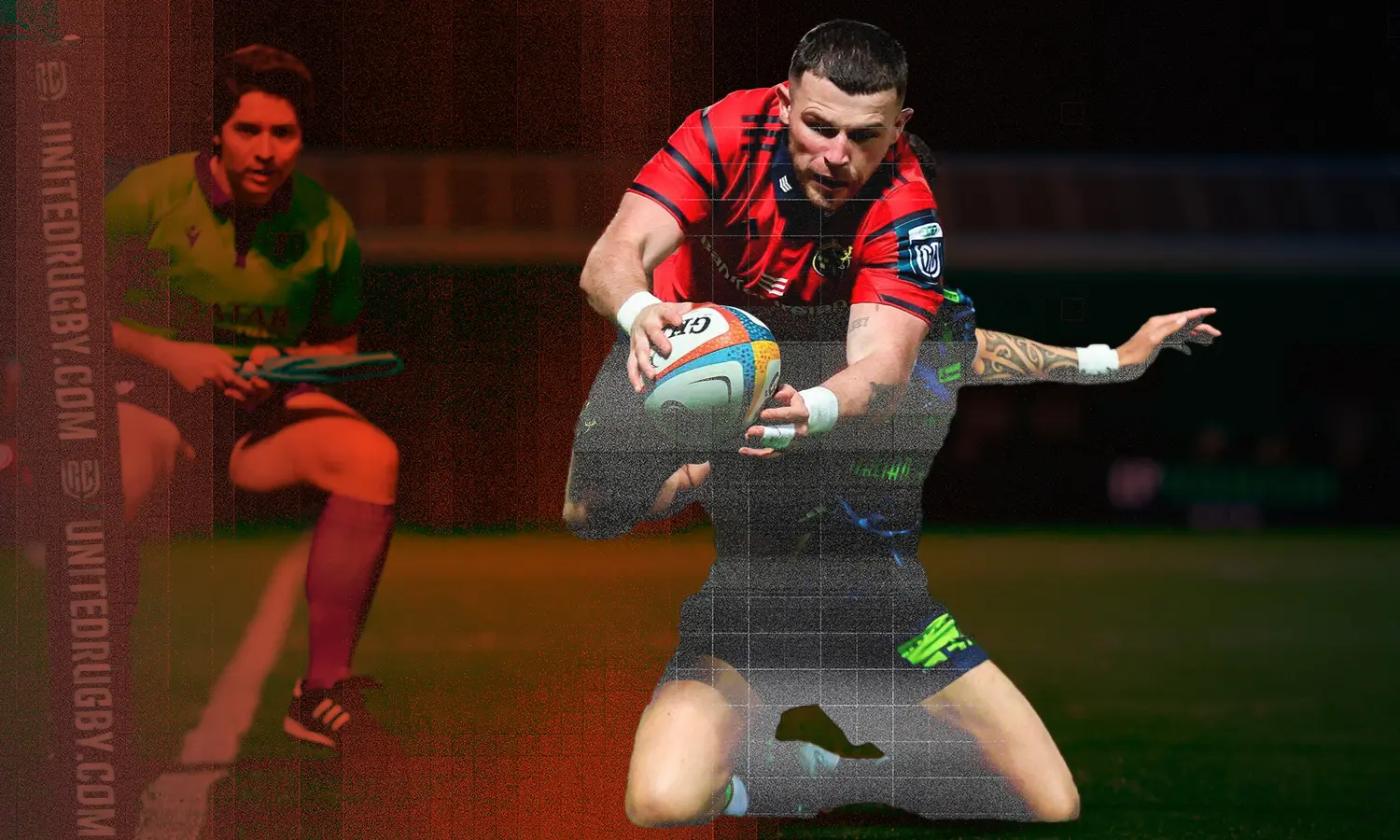
Munster’s back three is in the weirdest spot of any unit within the team at the moment. I can probably tell you one of the set starters — Calvin Nash — but other than that, it becomes a little murky.
Your wingers and fullbacks are the greatest drivers of territory in the modern game, off the back of some recent law tweaks. In years gone by — many years gone by — your wingers had two jobs: get on the end of a passing sequence to fall over the line, make a tackle on your opposite number the three times a game it might be required, and that’s it.
You’d often hear old codgers going on about how a winger missed a tackle for Ireland back in the 80s, and they never played for Ireland ever again off the back of it. As if missing tackles in 20m of space isn’t the easiest thing to do in this game, even back then. Never mind now.
In the URC last season, of the back three players who played 700 minutes or more, the highest tackle success rate was 78% (Werner Kok), and the average winger successfully made a tackle just 65.9% of the time.
So I think sometimes when we’re judging wingers, we can end up looking at the wrong things to decide who’s good, who’s bad, who fits and who doesn’t.
In the last two seasons, it seems like we haven’t quite known what to do with our back three; it’s been a reactive approach, rather than proactive.
I’ll explain what I mean.
For the last two seasons, one of our NIQ signings was in the back three — Thaakir Abrahams.
By the end of the season, when we were under pressure for results, we thought it best not to select him for a variety of reasons. Thaakir Abrahams has since left the club for the Bulls, and I think the two seasons we had him tell you more about us than about him.
Here’s the strange thing about Abrahams: when he ran, he was one of the most effective carriers in the league. Not one of the busiest — one of the most effective. Against every URC back three player who managed 700 minutes or more last season, his 86% gain-line rate bettered all but a handful. He beat a defender on 0.40 of his carries, comfortably into the top quarter, and got over the gain line on nearly nine of every ten runs. Give him the ball with a metre or two to work in, and he hurt people.
The problem is how rarely that happened.
5.8 carries per 80 put him in the bottom quarter of that same group, and his territory — the actual ground his game moved us up the pitch — came in at 58.9 metres, down near the floor at 16th percentile. So we had a winger who was lethal with the ball but barely on the ball, and those two facts aren’t a coincidence. That’s the reactive usage I keep coming back to. We never built him a platform, so the one genuinely elite thing he did sat in a drawer most weeks while we used him to plug holes, or plugged other lads into the holes he left.
Defensively, he couldn’t be used proactively. His tackle success was 48% — the bottom of the entire cohort, against the 65.9% winger average I quoted above. He wasn’t shirking it; he went for a normal enough number of them; he just missed close to half. And in the air, where I’ve argued the modern back three earns its corn, he essentially opted out — 1.4 aerial contests per 80, rock bottom again. (His aerial win rates look grand in isolation, but that’s five contests wearing a nice percentage, so pay them no mind.)
So you get the vicious little circle that defined his time here. We couldn’t give him the back-field, kick-chasing, aerial-duelling role, because he’d lose us those duels — so he only became of use when we were chasing a game, which is the exact situation least likely to hand a carrier clean, front-foot ball. We couldn’t trust him to defend, so we never gave him the space to attack. Both things were true, and each one fed the other.
When Daly was fit, he was the guy we usually reached for instead, and he was the near-perfect inverse of Abrahams.
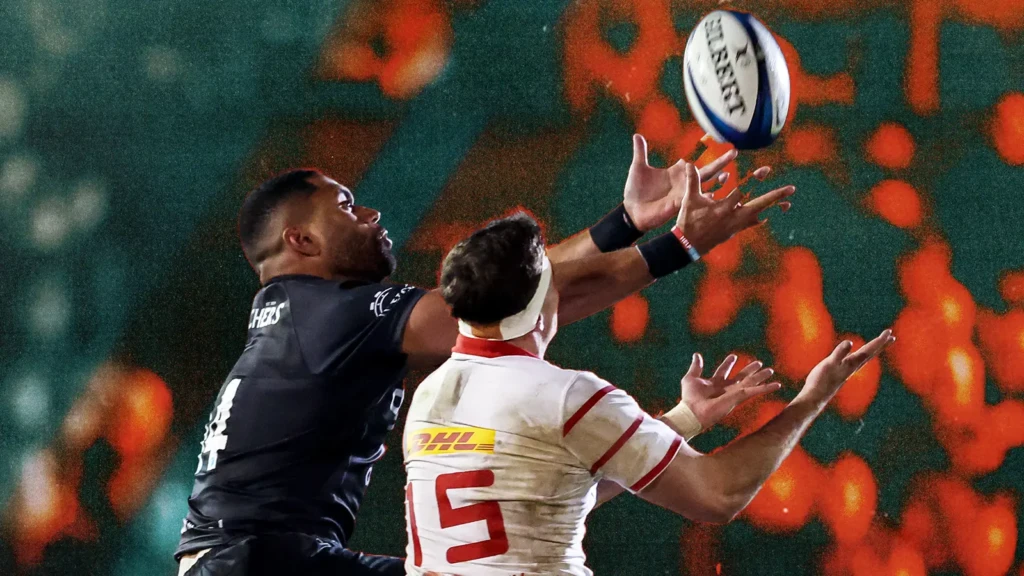
Everything Abrahams couldn’t do off the ball, Daly does. He’s always involved — 92nd percentile for touches among wings, 93rd for passes — he doesn’t cough it up, he hits the ruck, and crucially he owns the air. A 33% aerial win rate puts him in the top fifth of wingers, 31% on the defensive side is better again, and he gets a tap-back away more often than most. That’s the “lock-down” reputation, and the numbers back it.
Just not the part of it you’d assume.
Because here’s the thing people miss about Daly: he’s not actually a big tackler. His completion was 61% last season — below the 65.9% winger average I quoted earlier, 32nd percentile — off unremarkable volume. What makes him a safe pick isn’t a wall of tackles; it’s that he wins the ball back in the air and he’s rarely, if ever, out of position.
His territory tells the same story. 102 metres gained per 80 looks like a running threat until you see where it comes from — 87th percentile for kicks from hand, 90th for attacking kicks, 83rd for kicks retained. Daly moves us up the pitch with his boot and his chase, not his legs.
And his legs are the issue. This is where the mirror gets a little unkind. Abrahams beat his man on 40% of his carries; Daly does it on 13% — 4th percentile among wingers. Line breaks per carry, 5th percentile. Metres after contact, 11th percentile. He carries plenty, and he gets over the gain line at an average clip, but as a threat to actually break a defence off the wing, he’s close to the bottom of the league. Whatever Daly is, he isn’t the fella who’s going to consistently change a game from nothing.
So look at what we did when the performances fluctuated. We took off the winger who could break a line but couldn’t be trusted, and we put on the one who could be trusted but couldn’t break a line. That’s the whole thing in a nutshell.
Those decisions were all over our back three last season. It’s like we knew that we needed to have pace on the edges to make a lot of our system work, but the guys with pace couldn’t be trusted in the system as it was for a variety of reasons, so we compromised on whatever could get us through on defence and aerial work, for the most part, in almost every instance.
The man we don’t compromise on
So let’s go back to the one starter I said was completely uncontroversial or debatable.
Calvin Nash isn’t a compromise. He plays when he’s fit, he’s picked on merit, and we actually give him the ball. 9.0 carries per 80 is 80th percentile among URC wings, so whatever excuse I’ve just spent four paragraphs making for Abrahams, I can’t make it here. Nash gets the ball, a lot.
Look at what comes back. Just 4.3 metres per carry. That’s down in the fifth percentile.
That’s not a wobble or a bad month. Our most-used carrier in the back three gains less ground per carry than 95% of the wingers in this league, and less than Daly, who I’ve just finished describing as no threat to break anything. Gain-line rate of 53%, 8th percentile, against the 86% Abrahams was posting off half the volume. Dominant carries, 7th percentile. Line breaks per carry, 7th percentile.
And yet he beats defenders. That’s what stops this from being simple. 2.9 defenders beaten per 80 (71st), 0.32 per carry — sitting between Abraham’s 0.40 and Daly’s 0.13, and much closer to the top of that range than the bottom. So it isn’t that Nash can’t get past the first defender. He gets past him, and then nothing happens. 0.7 post-contact metres per carry, 28th. Line-break assists of zero, 12th percentile — he doesn’t beat his man and put someone else through the hole either. Now, I’ll also say that his season was completely derailed by injury and then recovering from the injuries until a hamstring pull against Ulster finished off his season early, but, in a general sense, it was beat the tackler, meet the cover, go to ground. Again and again.
I can’t tell you from a percentile whether that’s Nash or the ball he’s being handed, and I won’t pretend otherwise — that’s a season of clips, not a spreadsheet. But a winger who beats his man and gains four metres is a winger taking it into traffic from a standing start, and that’s a description of where he’s receiving it, not how quick or evasive he is.
Because he’s genuinely good at things — they’re just the defensive and aerial things, same as Daly, and in Nash’s case he’s better at them. 5.6 tackles at 69% success, above the 65.9% winger average at last, and he makes them going forward: 0.8 dominant tackles per 80 is 92nd percentile, 14% of his tackles dominant is 84th. Then the air, where he does one job better than nearly anyone in the league. 1.5 aerial tap-backs per 80. Ninety-ninth percentile. He isn’t out-catching people; he’s out-jumping them and knocking it back to the support, and on attacking contests he wins 60% — 97th percentile. Genuinely outstanding. Kick it long, chase it with Nash, get it back.
He doesn’t jackal (0.2 turnovers won, 16th), and he’s not a link man (1.8 passes, and 1.1 of them going astray, 8th percentile). Fine. Nobody’s picking him at first receiver, even though our system often put him there.
But here’s where it leaves us, and it’s a worse problem than the one Abrahams gave us. Abrahams could break a line, and we didn’t trust him. Daly can be trusted and didn’t really break the line at all. Both of those are selection problems, and a coach with a bit of nerve can fix a selection problem.
Nash is neither. Nash is the fella we do trust, do pick and do feed — and we didn’t really get a return from it, which points to a guy returning to form after injury and a guy struggling like everyone else in a system that wasn’t really producing what we wanted.
The fullback doesn’t rescue it
Mike Haley’s numbers come with a warning attached, and I’ll flag it before I quote a single rank: his card is scaled against fullbacks, not wings. You can’t line his percentiles up beside Nash’s or even Daly’s, fully. His 56% tackle success comes in around average in that pool, where, on the wing benchmark I opened with, 56% would be pretty awful. Different cohort, different tackle positions, different expectations.
So take the raw rates as the comparison and the ranks as fullback-only.
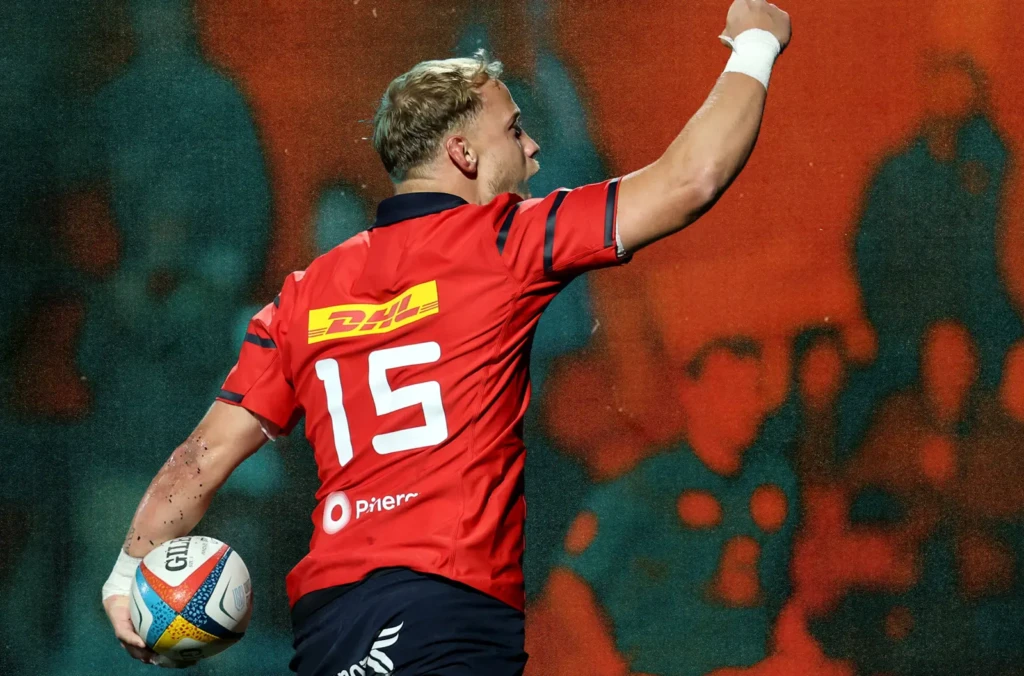
With that said. Haley is the best pure carrier in this unit, and it isn’t especially close. 55.7 metres gained per 80 (73rd among fullbacks), 5.2 metres per carry, 8.6 post-contact metres, and a 69% gain-line rate off 7.4 gain-line carries — 76th percentile on both. Compare that to Nash. Sure, wing to fullback here, but Nash beats more men per carry, 0.32 to 0.25, and gains a metre less each time. Nash gets past the first man and stops. Haley doesn’t beat as many and keeps going. He’s also a serious worker — 10.0 ruck arrivals, 9.3 of them fast, 82nd percentile, constantly in the game as a support runner.
But this is what we want from our fullback and Mike Haley in particular. He is most likely to get the ball on a long kick downfield and be tasked to run it back directly. That’s where a lot of those numbers come from.
He doesn’t create, either. Line-break assists of 0.2, 11th percentile, off 4.1 passes. And the boot is flat average across the board — kicks from hand 47th, kick metres 40th, retention 12% at 46th. That’s important, because the territory case I built on Daly (87th for kicks from hand, 90th for attacking kicks) doesn’t transfer to Haley at all, even with Daly’s usage at fullback.
Whatever is generating our exit game, it isn’t coming from Haley.
And then the aerial card, which is the one that stings. 19% aerial win, 21st percentile among fullbacks. 20% on the defensive side, 32nd. Tap-backs of 0.1, 44th. He’s under enough of them — 1.4 defensive contests per 80, 76th percentile — he just isn’t winning them. Alongside that: 1.2 dropped balls per 80, 8th percentile, with zero knock-ons at 85th. Those aren’t spills in contact. They’re drops.
I’ll be careful here, because 1.5 aerial contests per 80 is a small number of balls across a season, and I don’t want to hang a fella on a handful of them. But set 19% and 20% beside Daly’s 33% and 31%, and you’re looking at the same problem the whole unit has, except you’re looking at it from the other end. The man playing fullback isn’t winning the ball back in the sky. The man best equipped to do it in the whole squad has been playing on the wing.
That’s not a strike-threat problem anymore. For me, it was a unit picked in the wrong order.
Two games of an answer
Which brings me to Ben O’Connor, who had just 160 minutes of eligible minutes in the URC, although quite a bit more in Europe.
I opened this piece by using a 700-minute filter, and O’Connor’s card is two games’ worth of rugby divided by two. One line break per 80 means he made two of them. 1.5 tackles per 80 means he made three. And it’s a fullback cohort too, so the ranks come with the same asterisk as Haley’s. Anyone quoting these at you as evidence — me included — is quoting a fortnight.
Here’s the fortnight anyway, because it’s the only thing in this article that looks like the answer.
0.15 line breaks per carry, 85th percentile. 0.31 defenders beaten per carry, 79th. Put that in the row we’ve been building all along — Abrahams 0.40 beaten per carry, Nash 0.32, O’Connor 0.31, Daly 0.13 — and then notice that on line breaks per carry he’s clear of the lot of them. He’s the only player in this unit whose card says something happens when this man runs.
He’s tidy with it, as well. Zero bad passes (94th) in the URC, 0.5 turnovers conceded (95th), no knock-ons, total errors at the 82nd percentile. He doesn’t lose it.
He also barely has it. Some of that is down to the injuries he had through the season, and occasional usage at #11 where touches seem to be limited. Touches at the 8th percentile, carries at the 8th, passes at the 2nd. And he’s small in the collision — 8% dominant carries (11th). He beats you with his feet, and when he’s stopped, he’s stopped. Defensively, 33% tackle success is worse than Abrahams’ 48%, which was bad enough that I used it to explain why Abrahams couldn’t be selected. At fullback, it’s OK. At wing, it’s not.
Three tackles from nine attempts, though. That’s not a case, necessarily; that’s two afternoons. Abrahams’ 48% came off a full campaign, more or less.
So read the two paragraphs above back-to-back. A young lad who beats defenders and breaks lines, who can’t be trusted in the tackle as of yet, and who also doesn’t really get the ball that often.
We’ve read this one before.
What the unit actually is
Stack the five of them up and the same hole appears in every column.
Abrahams could break a line and couldn’t defend, so we stopped picking him, and he’s gone to the Bulls. Daly can defend, own the air and move us up the pitch with his boot. He beats a man on 13% of his carries. Nash defends brilliantly, tap-backs better than anyone in the league, is fed more ball than any of them, and gains four metres with it. Haley carries the best of the lot and is losing the aerial battle that’s supposed to be his job description. O’Connor might be the strike runner — on the evidence of small minutes and a defensive record that would keep him out of the team anyway.
That’s not five players with five problems; it’s one problem, five times.
We have built a back three that is very good at getting the ball back and very poor at doing anything with it once it’s there. Every safe pick we made last season was defensible in the week it was made — you can’t put a lad out there who misses half his tackles, and you can’t keep picking a 15 who isn’t winning his high balls either. But the compromises stack up. Pick for safety twenty-odd times in a row, and you don’t have a cautious attack; you have no attack from the back three at all, and the numbers say that’s exactly where we ended up.
So the question for this season isn’t who starts on the left wing. It’s whether we’re willing to carry the cost of a line-breaker for long enough to find out if he’s worth it — because on this evidence, the last time we had one, we made a decision that it wasn’t worth it when we considered all the options.
That brings us to this season, and this season’s depth chart.
Last season, our back three, much like our system in general, didn’t really work and led to some self-imposed filters.
One of the more controversial decisions last year was Andrew Smith’s selection towards the end of the season ahead of Diarmuid Kilgallen. Smith was released at the end of the season; Kilgallen got a new two-year contract.
Those two sentences don’t really reconcile, do they? We picked Smith when it mattered and then let him go. We left Kilgallen out and then tied him down for two years. Somebody in that building concluded in May what the team sheet hadn’t.
I’ve gone through both of their cards for the season, and I think the team sheet was wrong but selected for the right reason.
Start with what the case for Smith actually was, because it wasn’t nothing and it wasn’t sentiment either. He’s the most physical carrier in our back three by a distance — 31% of his carries dominant, 1.1 metres after contact per carry. He goes through people rather than around them. And he works: 11.6 ruck arrivals per 80, 11.1 of them fast ruck arrivals, both 92nd percentile.
In a defensive system that was asking its wingers to cover an enormous amount of grass, he covered it. His tackle success reads 53% — 14th percentile, ugly, worse than Daly’s 61% — but he attempted 11.1 tackles per 80, which is 96th percentile and roughly double what we were asking of Daly. That’s a lad defending himself into the ground. He also lands them hard when he connects: 0.7 dominant tackles, 87th percentile. That’s good.
So if you’re picking for physicality, work rate and a lad who’ll make twice as many tackles as the next winger, Smith is a completely defensible selection. That’s the version that makes the most sense, and I’d rather write it than pretend the coaches were being mad.
The problem is what you’re giving up, and it’s the exact thing I’ve spent this whole article saying we prize above everything else.
Smith wins 7% of his aerial contests. Fourth percentile. He’s under 1.6 defensive high balls per 80 — 87th percentile, so it’s not that he’s hiding from them; we (and the opposition) are putting him under a serious volume of them — and he isn’t winning them.
No tap-backs. Set that beside the standard I’ve been applying all piece: Daly at 33% is why Daly plays, Nash’s 99th-percentile tap-back rate is his best asset, and I’ve just given out about Haley for winning 19% of his. Smith is at 7%. And he’s the least secure ball-carrier in the group — 2.1 turnovers conceded per 80 (7th percentile), possession security 7th, handling errors 11th.
Now Kilgallen. And the health warning first: 272 minutes. Three and a half games. Every number I’m about to quote has error bars you could drive a bus through, and I’d normally not write about a sample that size at all — I set my stall out on 700 minutes at the top of this piece.
But.
He makes 1.8 line breaks per 80 — 81st percentile, the highest of anyone in our back three. He offloads 1.2 times a game (87th) with a line-break assist rate at 71st, which makes him the only player in this entire unit whose numbers say he brings somebody else into the move. Every other man I’ve written about here has line-break assists down at the 11th or 12th percentile. He tackles at 72% (84th) with 0.9 dominant tackles (96th) and 17% of them dominant (95th) — better than Nash on every defensive measure that isn’t volume. He intercepts (92nd). And he wins 36% of his aerial contests, 89th percentile, off normal volume, with 50% of attacking contests won.
Line breaks, offloads, dominant tackles, and the best aerial win rate of any winger on our books. That’s not a compromise pick. That’s the profile the last four thousand words have been looking for.
He’s not perfect, and the flaws are pretty big rather than cosmetic. He beats a defender on 0.13 of his carries — 2nd percentile, level with Daly — and gets over the gain line 52% of the time, 5th percentile. That’s a boom-or-bust runner: he’s either through the hole or he’s stopped behind the line, with very little in between. He’s poor at the breakdown, 5.9 ruck arrivals and 18th percentile, where Smith is at 92nd. And he coughs it up at almost the same rate Smith does: 2.1 turnovers conceded per 80.
Which is the whole thing, isn’t it? Our two line-break threats are also our two loosest ball-handlers, and last season we solved that by picking the one who struggled in the air.
We took the physical, hard-working, low-risk-looking option over the one who might actually break a game open. Same call we made when we replaced Abrahams with Daly. Different players, different reasons, identical instinct — and this time the club overruled it contractually, released the compromise and re-signed the risk.
Which suggests they know. The question is whether they’ll pick him — I think they will, because the system we’re using this season is different to last season.
Ready for a hot-take sub-headline? Here it is.
Last Season, Our Wingers Were Forwards
Or, more generously, work-rate midfielders.
I’ve written about five players now, the ones who were selected most often, and given you five different reasons why none of them really broke the line all that consistently in the one area where breaking the line is easiest, or easier anyway. That’s usually a sign that I’m writing about the wrong thing. Five separate problems is a coincidence.
One problem five times is your system.
So here’s what I think was actually going on, and it comes from watching the season back rather than from a data readout.
We wanted our 11 and our 14 looping inside. Not purely as edge threats who focused on either their own wing or as a double up on the other — as an extra pair of hands and a body at the ruck in the second layer of the attack. Winger comes off his wing, appears on the inside shoulder, takes a flat one off a forward pod in the middle third, gets up, cleans the next one. Over and over, week after week. Or they get the ball on a clustered edge and have to cut back inside for support.
Once you’ve seen it, Nash’s card stops being a mystery. It makes complete sense.
This should be impossible, right? Nash beats a defender on 32% of his carries — that’s 51st percentile, better than Daly, in the same postcode as Abrahams. And he gains 4.3 metres per carry, 5th percentile. Those two numbers cannot both be true of a man running in space. If you beat your opposite number with grass behind him on the edge, you get metres; that’s what beating a defender is. Unless the beaten defender was never the problem — unless he’s fending through first contact with a second body already arriving, because he took the ball in a crowd. That’s not a winger’s carry. That’s an edge forward’s carry, done by a fella built for a different job.
And look at who we picked when it got tight, because the ruck numbers give the game away. Smith arrived at 11.6 rucks per 80, 92nd percentile, 11.1 of them fast. Haley: 10.0, 79th percentile. Daly: 72nd for arrivals and 81st on the attacking side. All three of the men we selected under pressure are in the top fifth of the league for turning up at attacking breakdowns.
Now Kilgallen. 5.9 arrivals. Eighteenth percentile. Bottom fifth for the exact thing the other three are elite at — and 81st percentile for line breaks, 87th for offloads.
That’s your controversial selection explained, and it isn’t a coaching whim. Against the job as we’d written it, Smith was passing, and Kilgallen was failing.
One correction to my own instinct, mind, because I went looking for evidence they were being used as passers, and it isn’t there. Nash passes 1.8 times a game, with 1.1 of them going astray, 8th percentile. Smith 2.3. Only Daly, at 93rd, handles like a link man at all. And the linebreak assists are damning across the board — Nash zero, Haley 0.2, Smith zero, all down at the 11th or 12th percentile. Kilgallen’s 0.3 is the highest in the unit, and he played three and a half games.
So they weren’t extra hands. They were extra bodies. There’s a difference, and it’s the difference between a creative use of your quickest players and a wasteful one — we were paying for pace and spending it on ruck arrivals in the 15-metre channel.
I can’t prove this the way I’d like to, though.
There are two stories that produce the same set of numbers. Mine, where the system dragged the back three infield and starved them of edge ball. And the coaches’, where these particular players couldn’t be trusted with edge roles on either side of the ball in the first place — Abrahams missing half his tackles, Kilgallen coughing it up at the 10th percentile, Smith winning 7% in the air.
Both stories predict low metres per carry and high ruck arrivals. The data can’t separate them, and it can’t separate them for a very specific reason: the two lads who look like edge threats played 272 minutes and 160 minutes between the pair of them. Selection is doing the sampling. I’m reading a season that was written by the decisions I’m criticising.
What I’d say is that it doesn’t have to be one or the other, and it probably isn’t. You can start with players you don’t fully trust, build a system that hides them, and end up with a system that no longer has any use for the players you’d need to change it. That’s not a conspiracy. That’s just how a bad year compounds on itself.
But some of it is on the individuals, and I’m not going to pretend otherwise. Nash’s 0.7 post-contact metres per carry is 28th percentile, and that’s a poor number even for a man carrying into traffic. Traffic explains the four metres. It doesn’t explain what happens after the collision.
Either way, the effect is the same, and it’s what I’ve been building towards. We turned our back three from an attacking lever into something that we needed to defend with kick-and-clean rucks — and then we went looking for a line-break threat in the one part of the field where we’d stopped putting anyone.
So what does that leave us with going into this season?
Back three — depth chart
Munster, next season · contract expiry in brackets
- Core
- Expiring
- Departure risk
Tier 1 · first choice
Calvin Nash (2028) Core starter
When fit and firing, our best winger by some distance. Signed a new two-year deal last season; in year one of it, the challenge is getting back fit and showing his best as he enters his prime.
Shane Daly (2027) Departure risk
When fit and available he’s been selected almost every time — and that doesn’t happen by accident. One of the best outside-back defenders in the league across wing and fullback; a lock-down option you can plug in anywhere without worrying about the aerial game or positioning. But he turns 30 this season, and he sits in the same veteran defence-and-aerial bracket as Haley — so we may end up choosing between the two rather than keeping both, which puts a question over his deal despite the quality.
Tier 1B/1C · rotation
Mike Haley (2027) Departure risk
A solid veteran and core glue guy in the back three for several seasons. Elements of his game have degraded and there are questions over his stylistic fit at fullback, so as he turns 33 a new deal is far from a guarantee — especially given the fullback profile we seem to be moving toward.
Ben O’Connor (2028) Core
Signed through 2028, a core building block for the back three at fullback or on the wing.
Diarmuid Kilgallen (2028) Core · prove-it season
Signed a new two-year deal last season despite limited minutes, on his projected suitability for how we want to play. With contract security in place, he now needs a big season of output and availability.
Shay McCarthy (2027) Expiring · worth retaining
Out of contract this season, with a unique profile in the back three despite some drawbacks. Probably our most imposing carrier in the outside backs bar Nankivell and Kelly, with clear work-ons still — I’d look to offer him something to keep him around at least another year.
With a decision, I think.
Last season, we didn’t create a whole lot through our back three. I wanted to know how badly, so I pulled every wing and fullback in the URC and sorted them by line-break assists — the number of times a player put someone else through a hole, per 80 minutes. It’s a blunt metric, and it misses the pass before the pass, but it’s the closest thing we have to asking who makes things happen for other people out here.
The top of that list is Willie le Roux at 1.3, then a cluster at around one a game — Nagy, Gelant, Stockdale, Mike Lowry, Jack Walsh. Quan Horn just behind them. So the realistic ceiling for a creator in the back three of this league is about one line break created per 80, and you’re still a serious contributor at 0.5. Werner Kok — the fella I quoted at the top of this article for having the best tackle success rate in the competition — sits on 0.6.
Scroll down twice on that metric, and you won’t find a Munster player in the top 20/30 players.
Nash: zero. Smith: zero. O’Connor: zero. Haley, our starting fullback, 0.2 — eleventh percentile. The best of them is Kilgallen at 0.3, and he played 272 minutes. Whatever else this back three did last season, it did not create for anybody, and I don’t mean it created rarely. I mean the column reads as zero.
That’s the thing I’d point at if you asked me for one number to explain the whole season when it comes to my issues in the back three.
Look at who’s actually doing the creating. Le Roux, fullback. Nagy, fullback. Gelant, fullback. Stockdale, fullback. Lowry, fullback. Walsh, fullback. Horn, fullback. You have to go down to Tommy O’Brien and Jimmy O’Brien at 0.8 before the wings turn up in any number.
Creation from the back three is a fullback job in this league. It just is.
And look at the passing volumes underneath those names — le Roux 12.9 passes per 80, Walsh 12.9, Naughton 10.5, Siyaya 9.8. These are men touching the ball a dozen times a game and playing it. Our wingers are nowhere near that: Nash 1.8, Smith 2.3, Kilgallen 2.6. Daly is the one exception, 93rd percentile for passing among wings and 92nd for touches, so he’s constantly involved — but being the busiest handler in a cohort that barely handles isn’t the same as being a playmaker, and it hasn’t turned into line breaks for anybody else. That’s not a criticism of any of them; nobody’s asking a winger to be a distributor. It’s a description of a job we simply haven’t been asking anyone to do.
So we signed a #10.
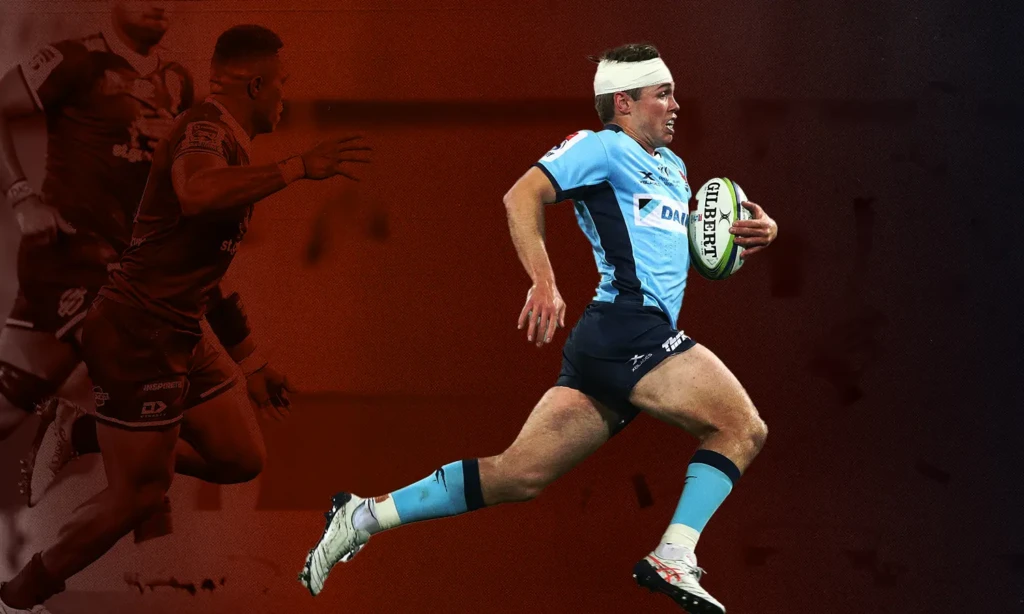
Will Harrison is nominally an out-half who spent a lot of the last two seasons in Japan at fullback, and if you’ve been reading the list above, that’s pretty relevant. A man whose instinct with the ball is to move it and whose passing volume comes from a different position entirely. If the plan is a second playmaker in the back three, that’s what one looks like — and it’s the first time in years we’ve gone looking for that specifically.
Which is where the decision comes in.
Looking at the profiles, I think Shane Daly probably needs to be our starting fullback, or at least used there regularly. It isn’t for creativity. Daly is the busiest, tidiest player in our back three with the ball in hand, but he still doesn’t put anyone through a hole consistently. What Daly at 15 gives you is the specialist post done traditionally: 33% in the air, 87th percentile for kicks from hand, 90th for attacking kicks, 83rd for kicks retained, and rarely, if ever, out of position. He wins you the territory battle, and he wins the ball back. He’s good — really good — on that first transition runback. That’s half the modern fullback’s job description.
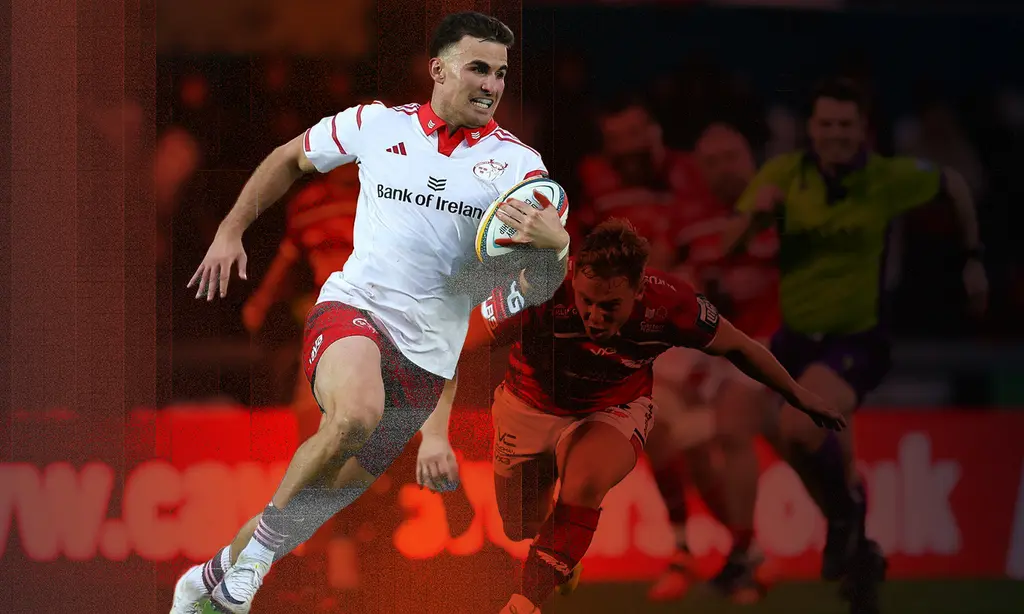
From a contract perspective, as is the actual point of this article, I think Haley and Daly expiring in the same year points one way: Daly replacing Haley as the lockdown, traditional fullback for the next two seasons. Haley is 33 next June — and still effective — but the decision will come down to what we want at fullback profile-wise, I think, and for me, I think we need one lockdown fullback specialist going forward, not two. Contractually speaking, I’m not sure re-signing both guys makes sense, but that depends on usage too.
If Daly is going to find himself more on the wing, and Haley is then used as a veteran calming presence at fullback quite regularly, then it makes sense to keep both.
Harrison is the other half of the equation. Daly is territory and security; Harrison is the second set of hands that our back three hasn’t ever really gone with in recent history.
We can’t have both in the same shirt, of course.
That’s the call, and it’s a weekly one rather than a season-long one. Against a side that’ll kick contestably all night, Daly at 15, win the aerial exchange and start from there. Against a side we need to take apart, Harrison at 15 with Daly on the wing, where his aerial work still covers us. It’s a genuine selection question with two good answers, which is something we have not been able to say about our back three since Simon Zebo retired.
Harrison is still something of an unknown — and he’s currently injured and on a one-year deal — so we need an element of “future-proofing”, even if we are to go with a change in our stylistic set-up. Is Harrison going to be here next season? Bar a superb season, and even then, probably not. With Crowley out until January, will he see more minutes at #10 than we had drawn up for him? That depends on Hanrahan and, really, how well Tom Wood adapts to a bigger role.
Ben O’Connor, also on a new two-year deal, has potential to be our long-term fullback, but (a) we’ll need to see what he looks like there regularly and (b) he can be used in the #11 jersey as an alternate position, like Daly.
But so much of this discussion comes back to what we want from our wingers. If we’re looking for guys who can make ground on the wing and win collisions at speed, I think we have to look at Shay McCarthy at least for a run of games to see if he can be, if not the answer, an answer.
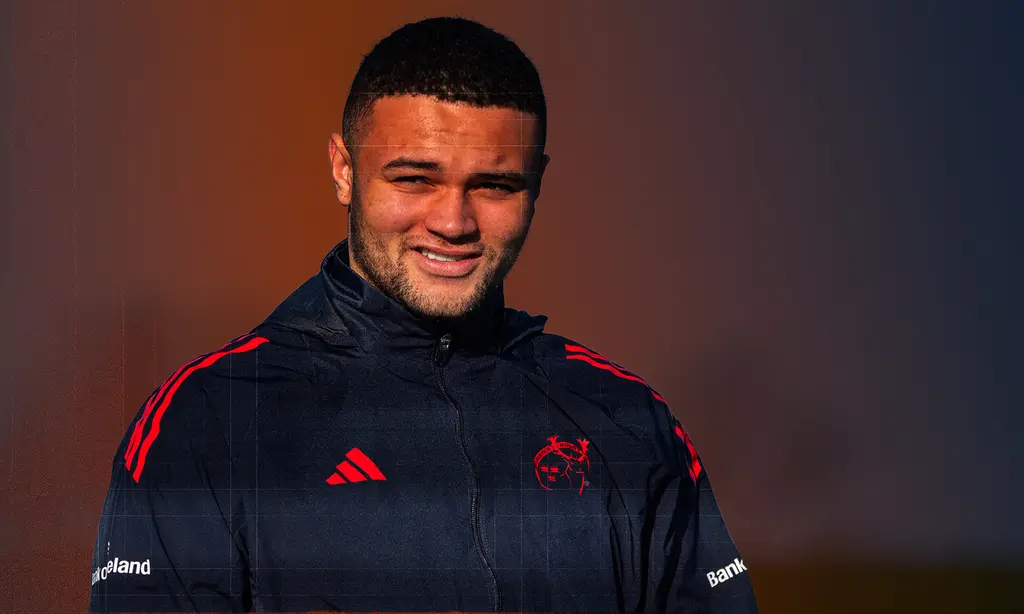
Sure, he’s raw in some areas of his game — kicking, defensive positioning — but if we want to use our wingers to set an edge for us, I think he’s got a lot of qualities to like. He’s strong, fast, violent in contact and hits hard in almost everything he does.
He only had 65 minutes for Munster last season in the URC, so his data points are limited, but even in those minutes, he beat a defender on every single carry he made. Could a scaled-up version of Shay McCarthy, even with the defensive issues, work in a new system?
He’s on an expiring contract this season regardless, and unless there’s a big case to move on from him, I’d keep him around for at least another year.
We don’t have any academy players who specifically profile as wingers — even though guys like Carney can play there — but this opens up a bigger question.
Are we setting up for a few signings in the back three after the World Cup?
Looking at what we have — and what we might be looking at for fullback creatively — there seems to be a gap for a collision-winning winger. If that turns out to be Shay McCarthy, cool. If not, it could be someone with a power winger profile like a Stravino Jacobs (Bulls), or a Chay Fihaki (Crusaders).
We seem to be lacking a true edge collision winner, looking at the data. Someone we can hit on the edges and know, more often than not, we’re winning that collision. You could also say that, with a different, deeper attacking system that produces more edge spacing to attack that all of our wingers will see a big bump in post-contact metres per carry and line breaks per carry, but we’ll have to see how that develops.
That’s the irritating thing about this chart. On paper, a rejuvenated Nash, a developed Shay McCarthy and a more trusted Diarmuid Kilgallen solve a lot of our problems on the wing. A potential last season for Haley, more of Shane Daly at fullback, and the potential of a second playmaker alternate at fullback change a lot of these equations, but we haven’t seen it yet. Until we do, a lot of the decisions will be preceded by a hefty period of waiting and seeing.
