


It feels like I’ve been writing about Munster’s front row depth chart for six months.
You could be forgiven for thinking that it’s the only area of intrigue — and you might be right, actually — but there are a lot of interesting things going on elsewhere too, and no more so than in the second row.
Lock — depth chart
Munster, next season · contract expiry in brackets
- Core
- Expiring
- Departure risk
- Development
- Academy
Tier 1 · first choice
Thomas Ahern (2027) High departure risk
Clear talent, but a question over his profile as a lock — possibly best used as a third lock in the backrow. Coming into his prime years and seemingly locked out of the Ireland squad, so a difficult re-signing. Needs consistent fitness across the season.
Tadhg Beirne (2027) Expiring · retirement possible
Club captain and world class on his day. Turns 35 this year and is on an expiring deal running into a World Cup — a high chance of retirement.
Edwin Edogbo (2027) Core · extension expected
A core player in the role post-Kleyn. The one-year extension points to a high-value offer for the following two seasons. Needs to keep showing availability.
Evan O’Connell (2027) Priority re-signing
Talented and looks ready to step up to possible 1A usage this season. Needs to add size over pre-season. A key re-signing with the future in mind.
Fineen Wycherley (2027) Expiring · likely retained
A squad veteran at this point, with really good availability over the last few seasons. Likely to be kept on.
Tier 2 · rotation and development
Michael Foy (2029) Academy + two years
High-potential young player. The deal structure points to expanded minutes next season.
Conor Ryan (2028) Development
Heavy lock profile, rated highly in that role and signed for two years despite needing development.
Conor Kennelly (ACAD2) Academy
Talented young lock who is putting size on well. Likely A rugby and AIL.
Joe Finn (ACAD1) Academy
Needs size, but a good hard-working lock who will get opportunities in A rugby and the AIL.
The top of this chart is in something approaching flux as we head into the World Cup contract cycle. All of our 1A/B options are out of contract next season, which leaves an element of flexibility but also presents a big risk if we get the contracting wrong. The first and most obvious place to start is in our most proven second row, Tadhg Beirne.
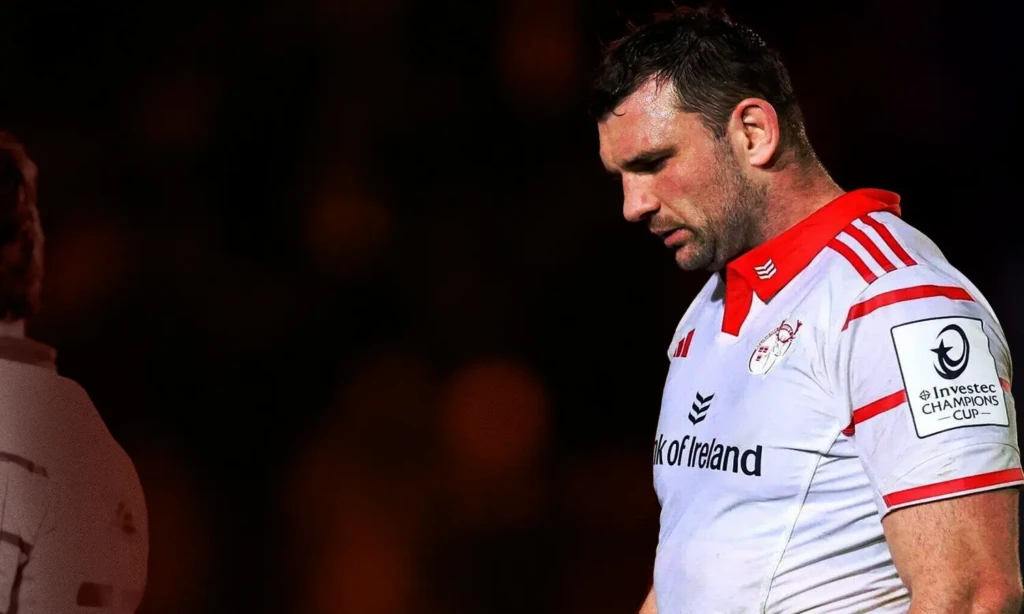
For the last two or three seasons, Beirne has been the only Munster player you could comfortably say was in the conversation for a World XV. Yet, as he turns 35 this coming season, with the World Cup on the horizon, it’s time for Munster, and the player himself, to look at what the post-Beirne era looks like. Beirne is arguably the best signing Munster have ever made — all the way back in July 2017 after a transformative two seasons at the Scarlets — but as he runs into the last year of his central contract with the IRFU, the end is far, far closer than the beginning.
Will he sign a new contract here? Or with the IRFU? It’s certainly possible. He has fewer elite miles on the clock than a lot of locks his age, given he didn’t really start the test grind until he was 27/28, and only became a regular pro-starter at 24, but just because a player can continue to play at the highest level doesn’t mean they will. He’s not a guy I look at and immediately see ageing out as we’re looking at him. I think it’s fair to say that, of all the locks who might be in the discussion for Best In The World over the last few years, he is the least reliant on outstanding physical gifts. Sure, he has an unnatural ability to ride out punishment at the defensive breakdown in a way that genuinely redefined what was expected of locks when he broke out in the mid-to-late 2010s. Still, he’s not a power guy as we might typically describe most second rows. His biggest strengths are his innate sense of timing, his skill set, and his game IQ.
Yet, if I were to pick one guy who might look to dip out of the elite game while his body was still mostly intact, it would be Tadhg Beirne, who, not for nothing, already has a house ready to go back in Kildare. I suppose, if you’re Beirne, do you see the 2027 World Cup as a natural end point to a fantastic career? If he does, he will retire (or move on), and the question for Munster becomes “what comes next”? As the current captain at the time of writing, and one of Andy Farrell’s Circle of Trust, I think he could easily continue and maintain his current status quite easily. As I said, he’s not really a guy who has relied heavily on the physical gifts that naturally decline as you age into your mid-30s, but that’s not to say that he isn’t slowing down a little bit or prone to dipping in and out of games.
We also have to allow for the fact that when you select Beirne at this point, you’re making a trade-off in direct ball-carrying impact in a way that we’re already doing for quite a few other positions in the pack as it stands. It’s mad to even write this for a guy who would make most World XVs between 2020 and 2025, but has Beirne become something of a luxury player for Munster in the last two seasons?
I want to say no, instinctively, but I think there’s an uncomfortable truth there.
Either way, Munster will quite likely only see Beirne for fewer games than we’d think this season. He played 10 games for us last season (12 for Ireland, including the Nations Championship), and, while his appearances were affected by a late-season injury against Ulster — he’d have played the next three games for certain, taking him close to the average of 16 games he’s played for us across the previous three seasons — I think it’s inevitable that his appearances will be heavily limited this year as Ireland build to the World Cup.
That leaves ample opportunity for others to make a run at becoming regulars, especially with Jean Kleyn’s departure.
This is where it gets interesting — or worrying, if you’re disposed that way of thinking — because if Beirne’s minutes are heavily limited, we’ll have to grapple with the loss of Kleyn’s usual availability. For the guts of six or seven seasons, Beirne and Kleyn were our 1A lock partnership with everyone fit, and this season will be the first one in several years where that is automatically off the table.
Is this the opportunity that Tom Ahern has seemingly been waiting for?

That depends. On the one hand, Tom Ahern looks like a guy who should have 20+ Ireland caps at this point, and what he does well would be enough to get him into most teams in the world, most of the time. He’s flitted pretty seamlessly between the second row and back row in the last few years, with notable highlights and in a general sense, plays like something of a unicorn.
He’s 6’9″ and 118kg but has the pace to be a viable edge threat, and has the lineout chops that make him an automatic option for Munster.
On the other hand, he’s gotten badly timed injuries ahead of every single test window, bar the one last summer during the Lions tour when he made his debut so whenever an opportunity came for him to make a case that his skills would be broadly useful to an Irish team that, on the face of it, could really use them, he’s been on the shelf.
Ahern will turn 27 this year, and enter what we assume will be his prime years, and I think there’s still quite a bit of debate as to where he’s best utilised. He doesn’t play a different game when he wears #4 or #6, but that’s the problem.
Ireland (and Munster) are looking for tight forwards who can impact up the middle of the field. Ahern can do that, but his best work is on the edges where his freakish pace and agility can tilt games in your favour — in theory. The problem at Munster last season, and in previous years, is that we were rarely able to get him into a position to do that, on top of never really using him as a counter-jumper at the defensive lineout.
So of the best things he does — lineout jumping on both sides of the ball, edge running — we only really get to see his offensive lineout jumping, which itself has been impacted by everything from subpar lifting to a malfunctioning lineout in general.
Ahern is at the stage of his career where, given his talent and one-of-a-kind physical traits, he should be a regular or semi-regular international, with a contract to match. Munster would, surely, offer him a contract that reflects that — his importance to Munster, especially with the post-Beirne world coming sooner rather than later — but I don’t think it’s as simple as that. Ahern is, quite likely, well aware that his traits would be quite highly valued in France and England, so if he’s going to be a provincial player only with no realistic chance of making it into Andy Farrell’s thinking, he might well decide that this is the year that he explores those options. By all accounts, he was pretty close to moving ahead of his last contract here before a late change of heart, but if Andy Farrell isn’t for turning this season, there might be no realistic contract that Munster could offer that would turn him around.
Of course, a lot can change in that time; a good start to the season in a refreshed system that showcases his strengths could, in theory, see him jump the queue at Ireland level, either in the second row or as a stretch hybrid lock in the backrow, especially with his lineout game, but, looking at who Andy Farrell has typically chosen to use and the rolesets he tends to value, that might be an uphill battle. At a base level, he needs to be available for Ireland when he’s playing his best stuff. Some of that is durability, but it’s mostly luck.
He was having an excellent season in 2023/24 — primarily in the second row — but a badly timed concussion off a dogshot against Northampton in Thomond Park put him out of contention at the worst possible time.
I think his start to the season leading up to the November window will tell an awful lot about his story, but I think his best chance of advancement will be excelling in the second row, rather than the back row. Given where Ireland are looking ropey at the moment, that’s the clearest route to success for him, I feel, but that might require him to play a little more centrally than he has for the last few seasons. Ahern needs to find the Brodie Retallick type player in his game to really kick on. One to watch.
The other big story is Edwin Edogbo, who signed a one-year extension last season, kicking his next big contract down the road to this October/November/December.
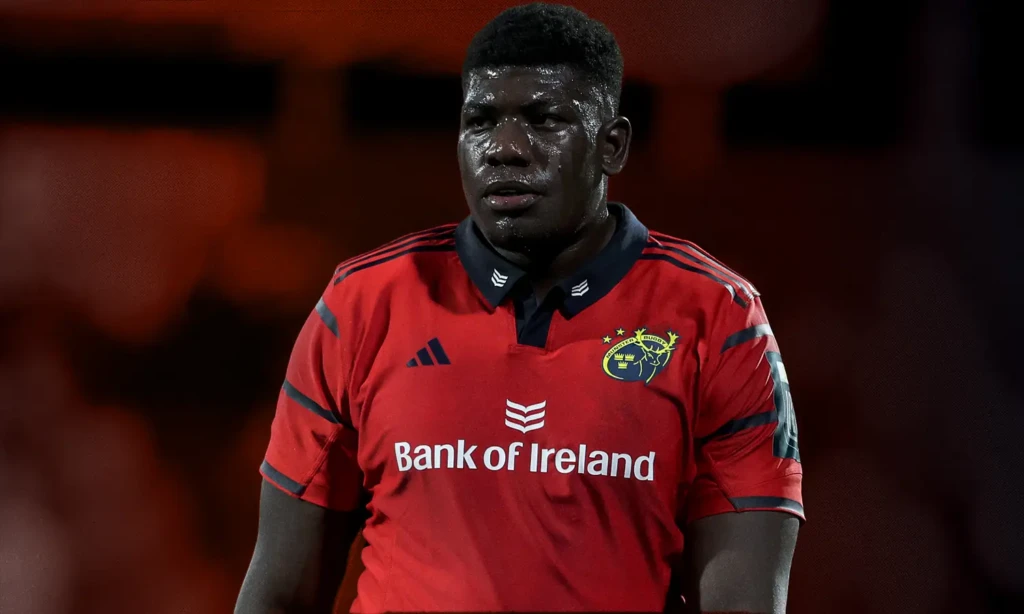
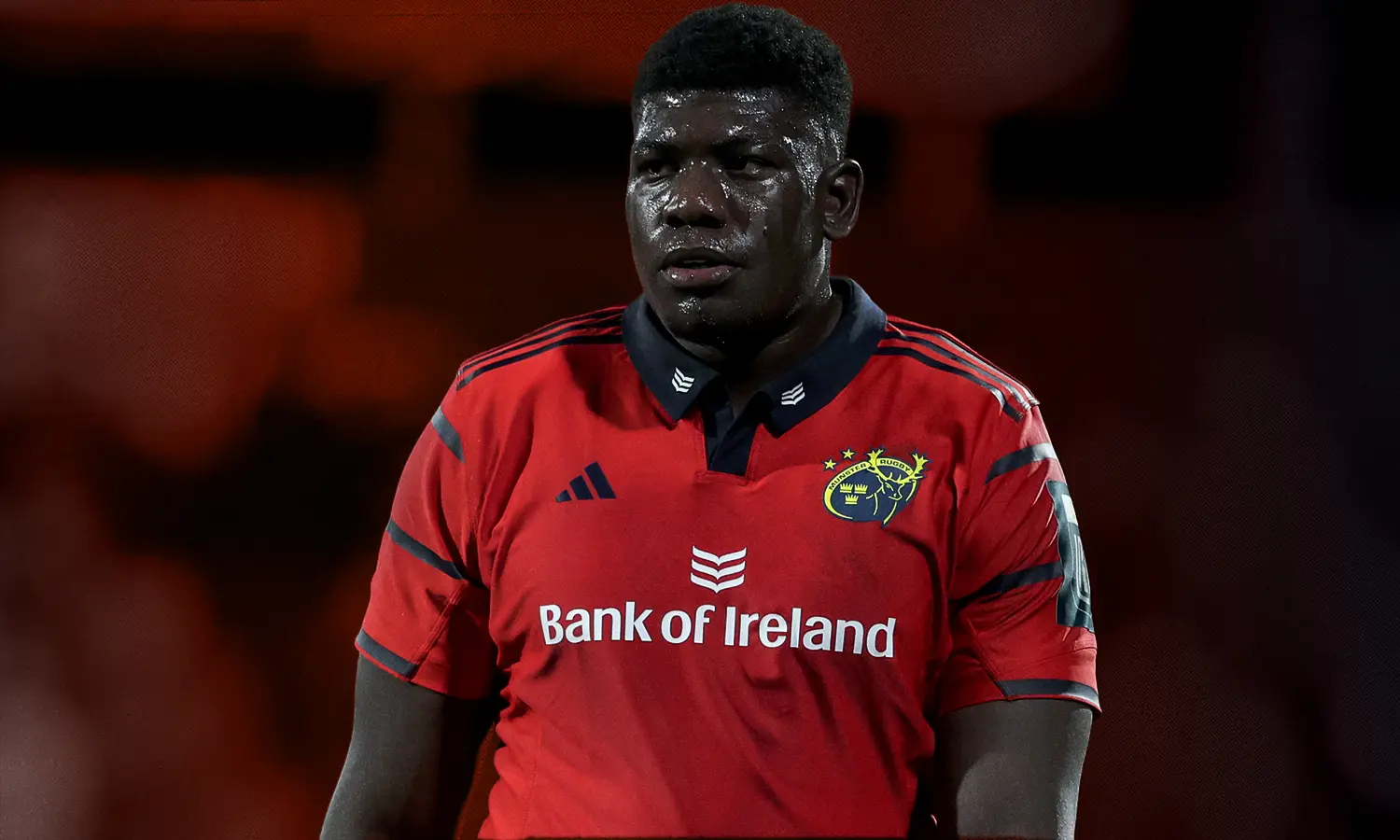
For Munster, Edogbo is the natural successor to Jean Kleyn and, if he can show durability this season, is a guy we should be looking to tie down on a big, three-year contract as soon as possible. There is nobody in the Irish system who can do what Edwin Edogbo does in the second row, and very few players globally. This, naturally, makes him someone who will be highly sought after in France and England, so Munster will have to work quickly — if we haven’t agreed a deal already — to make sure we lock him down. Sure, there are elements to his game that are still raw. He’s played 30 pro games since his breakthrough as an academy player in 2022/23, with a long list of serious injuries before and during that time. Without those injuries, Edogbo would probably have 5-10 test caps at this point, as opposed to the one he picked up in this year’s Six Nations.
Edogbo, like Ahern, will be well aware of his specific profile and its value. A one-year deal, especially at 23/24, is almost always a negotiation ploy of some kind, and almost always from the player side with a view to making the next contract a big one.
From Munster’s POV, there should be space to do just that, although the same space was there last season. Post Kleyn, Edogbo is the only player in our lock chart who provides anything near the kind of elite, heavyweight profile that every player needs, and it could well be a case that he’s our statement retention next season as a result, especially if he meets the Player Of National Interest marker with a strong start.
The question for Edogbo is whether he can make the step up to be the Skelton-esque presence he has the potential to reach. How this intersects with Ireland and Andy Farrell is a key question. I think Edogbo will be best suited as a 50/30-60/20 player this season; he either sets a heavy platform for the first segment of the game, or comes off the bench to steamroll the end of it. Irish Rugby seems to have an allergy to using players like this — you either play 80 minutes every week, or you’re “not fit enough”. I can’t help but think that Edwin Edogbo could be the key to unlocking the best out of Joe McCarthy at Ireland level, if there’s an appetite for Ireland to do that. Other teams use this heavyweight one-two punch all the time, but in Ireland we have a fetish for turning heavy hitters into middleweights.
For Edogbo, I think a big marker for him will be turning into a 900+ minute guy for Munster this season and building on the potential he’s shown so far. For Munster, a key aim is (a) re-signing him and (b) making sure he’s got a pack around him that ensures he isn’t the only guy worth stopping phase after phase. With those things in place, Edogbo has the potential to be a game-changing, level-raising cornerstone of this Munster pack for the next five seasons at least.
But the expiring contracts don’t stop there.
Fineen Wycherley and Evan O’Connell are at opposing ends of their careers at the moment, and I think they have more in common than it might seem on the face of it.
Fineen Wycherley is the classic glue guy who isn’t necessarily the flashiest name on a teamsheet, but when you go back and check through the season, he’s almost always there whenever he’s needed, and usually with more than decent output.
Wycherley is the classic hard-working, do-a-bit-of-everything workhorse. Wycherley isn’t an impactful ball carrier by any means — he will carry and repeatedly — but if you need someone who’ll make 90%+ of his tackles, hit around 20 rucks a game and give you a more than decent set piece platform and good lineout calling, without necessarily being an elite power player, while being available for most of the season, he’s your guy.
That might seem like I’m damning him with faint praise, but it’s really not — I think it’s the highest praise you can give to a guy who’s a little below test level from a size perspective, and who you’ll inevitably end up leaning on throughout the season. Wycherley understands that his best ability is availability and reliability. Is Fineen Wycherley going to physically dominate a game at the top end of the club game? Not reliably, no, but with the right team around him, he can help facilitate those who can.
That’s a valuable role in the squad, but the question might well be for Wycherley if he can step up to a higher-profile role elsewhere, where he’s a 1A/B as opposed to a glue guy. That said, I would be surprised if Munster didn’t offer him something in line with his current deal, as he’s quite a valuable role player in this squad, who you wouldn’t be fretting about in bigger games. I can see him getting another two-year offer and clocking up another 15+ game season, although the tier of those games, and his usage in them, depends a lot on the younger options.
Evan O’Connell is on the other end of his career. If Wycherley has been all about putting back-to-back 20+ game seasons in the last three years, O’Connell has been in the frustrating “not quite yet” period of his career.

I get both sides of the argument.
O’Connell is a former Ireland U20 captain who has all the qualities of a very high-level workhorse lock; he’s 6’7″, with a big frame, a good lineout game — as a jumper and a caller — and looks perfectly suited to playing in the heavy-leather, central collisions both in possession, out of possession and at the ruck, while having a lot of the softer skills demanded of the modern second row. He could easily be an elite lineout caller and jumper, who gives you impactful collisions and 20+ ruck entries a game.
Yet, at the same time, he still looks like a guy who needs a bit more size — how much depends on your own perception of what a modern swing lock expected to do a bit of everything should carry — and his usage, to me anyway, seems like a guy who should start most games, rather than getting impact minutes. I don’t think he is that impact player, as of yet, not in the way Edogbo would be, which informed his almost immediate usage out of the academy.
He’s coming into the last season of a two-year deal out of the academy, and it’s fair to say that he’s been a long-term project for Munster; he was brought into the academy straight out of school and spent three full years in the academy before stepping up to a senior deal last year, where he played six times, plus an appearance for Ireland A.
I think he played a little too many A-games and AIL for his liking last year, before playing the full 80 minutes in the last two games of the season against the Lions and then away to the Bulls, although that was almost certainly injury-enforced due to the absence of Edogbo, Kleyn and Beirne.
What does that say about O’Connell? He’s highly valued in the club, and is absolutely considered a blue-chip prospect because he turns 23 this season and has been in the pro system since he was 18. The natural comparison to O’Connell is James Ryan, so people compare Ryan’s minutes at the same age — and his immediate usage at test level — as a negative. One, they are two different players with different builds and development cycles. Two, the game has moved on quite a bit since 2017 when it comes to the demands on locks in this role, and Ryan jumped up to immediate 1A usage around a year younger than O’Connell is now.
Is ten years that long a time in this game? You know it is. Two years is an age. I suppose the real question is whether O’Connell is ready this season. I hope he is. I think in the last two games, he showed that he’s got the capacity to at least keep his head above water against South African sides, and while he’s still a work in progress physically — we won’t see him at his physical peak for another two seasons, I would say — I think he should comfortably be in the conversation for much more usage this season. If he doesn’t get it, for one reason or another, especially with the lane cleared by Kleyn and the projected usage of Beirne, O’Connell might well look elsewhere. I think this year — with another big preseason in the bank and some luck with injury — O’Connell will be ready to be the starter he needs to be almost immediately. When it comes to the finer details, I think he’s mostly ready to roll. The question will be whether he’s ready to deal with the brutality of the game at even the modern URC level.
We’ll know that pretty soon.
And then we get to Conor Ryan.

When you see a guy who didn’t spend any time in the academy move from a development contract onto a two-year senior deal without a whole ton of senior minutes to back it up, you take notice. When Jean Kleyn tells you that the guy he thinks is most like himself in the Munster set-up is Conor Ryan, you take even more notice.
There aren’t a lot of 6’7″, 118kg heavy hitters like Conor Ryan walking around, so when he kept picking up training reps during the last two pre-seasons, it was only natural that his heavy workhorse tendencies would keep pushing him to the front of the line. Throw in a tough-as-nails performance against Argentina XV where he, for all the world, looked like a Jean Kleyn regen and you can see why Munster would want to invest in a guy who has the capacity to be a guy who sees regular usage in the next two seasons. At just 22, Ryan still has years to grow into his massive frame, and I could easily see him hitting 120kg+ in the next season or two, with the capacity to be a set piece rock and a big hitter in the tight exchanges. One to watch, as he’s someone who, if he scales up appropriately, could be a surprisingly easy player to select.
Under the senior players, we have some good prospects. Conor Kennelly and Joe Finn project as decent to good workhorses. They’ll primarily play AIL and A rugby this season as they mature, but both have really good fundamentals and mostly need to find something they can make the headline feature of their game. They will both have ample time to do that.
Michael Foy is the player to watch here in the near term.
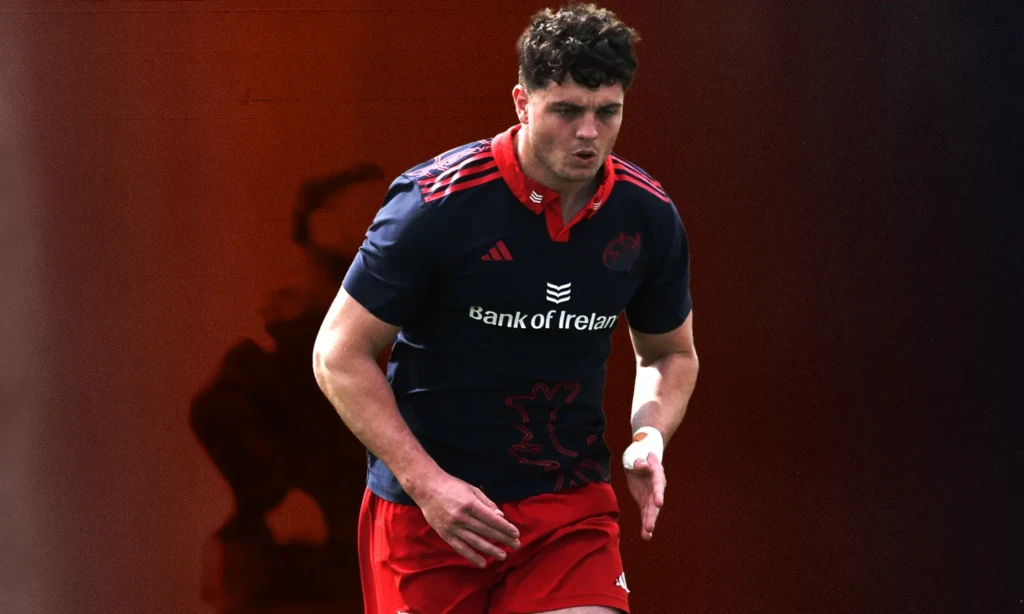
Foy is a bit like Evan O’Connell in that he’s plainly a long-term project for Munster — he came into the academy straight after his Leaving Cert — so people see his trajectory in the last two seasons and wonder why he’s not being fast-tracked. This is, let’s not forget, the same guy who had a running battle with Henry Pollock when their 20s campaigns overlapped but, as ever, the context matters quite a bit.
Munster project Foy is going to be a second row who can play in the back row, not a back row who can cover the second row, so the physical conditioning and demands are quite different from that of a small forward build back row, like Pollock. He signed a 1+2 deal last year to give him one more year in the academy — this year — before jumping onto a senior deal straight after. Those deals tell you a lot about how highly a player is rated, as they are quite rare.
Foy has all the qualities that mark out an elite forward prospect, albeit with some qualifiers. Foy, like O’Connell — a recurring theme — needs more size to handle what will be required of him in his role. He’s currently listed at 6’5″, 107kg, and while the weight there is likely out of date, he’ll need to play north of 112kg, at the very least, to be selectable at URC level. Foy doesn’t need to play too heavy — he’s quite like Beirne in a lot of ways, actually — but there is a base entry level that you need to reach to be regularly selectable at even URC level. Foy’s biggest strengths are the things you can’t coach — aggression, dog and instinct for the game — and they will help him accelerate ahead of the size in the same way it did for Peter O’Mahony, albeit in different roles. When selected, you won’t have to worry about Foy playing shy, that’s a guarantee.
Not to hype him too much, because I’ve seen the dangers of that myself in the past, but I think Foy, at his best, will be something of an O’Mahony/Beirne hybrid. I know, I know, but watch him play for Con or Munster A and you’ll see the same thing.
A nasty, aggressive hitter at the ruck and in the tackle, a huge instinct and aptitude for jackal turnovers on the floor, a great lineout game (defensively especially) and all the good fundamentals in possession as you’d expect. Will we see that this season? Maybe in a couple of games, but who knows? Foy seems like a guy who could get thrown in early and make himself undroppable quickly, but I could equally see another year mostly loading on size and building out a heavier game. He has time, though, and when that time is through — however long and short it is — there’s a serious player there.
