


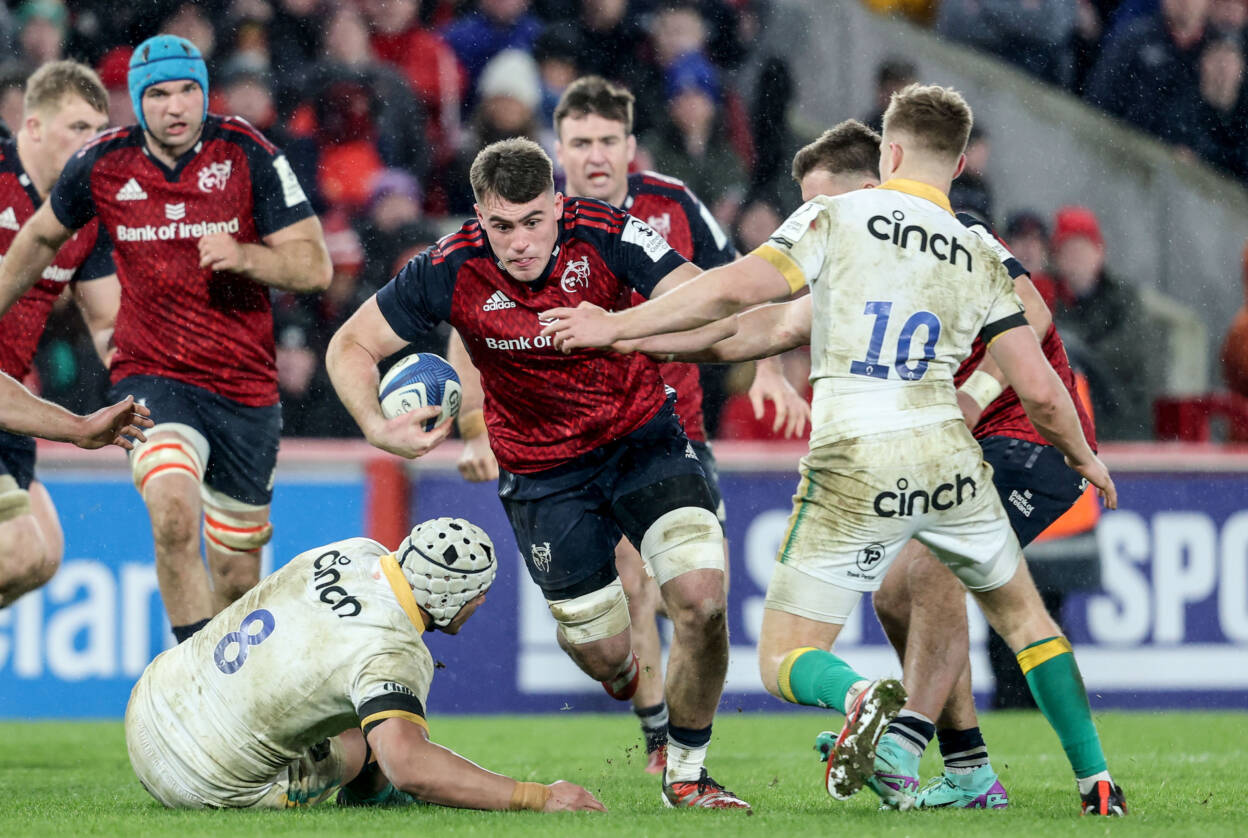
Look at any elite team and you’ll see elite backrows.
They define the very best teams. Look at the great All Blacks side of the early 2010s and you think of Jerome Kaino, Richie McCaw and Keiran Read. Think of Warren Gatland’s great Welsh side and you see Warburton, Lydiate and Faletau. When you think of that World Cup-winning English side of 2003, you’ll think of Dallaglio, Hill and Back.
Go back to Munster in the mid-2000s and you’ve got Quinlan, Wallace and Foley closely followed by Quinlan, Wallace and Leamy. They are iconic.
If the front five is the engine of the pack the back row is the chassis because they often define what your team is. Gatland’s iconic Welsh team was built on impact defence (Lydiate), turnover ball (Warburton) and a sting on transition (Faletau). What your back row is built out of tells a lot about your team’s philosophy when it’s good and what you have yet to figure out about yourself when it’s bad.
Modern backrows are heavily integrated into wider pack builds in a way that maybe wasn’t the case in years gone by as we get closer to positionless rugby in phase play but that isn’t to say that these three pack slots have lessened in importance; far from it. Your team’s preferred game state is often reflected most acutely in those who wear 6, 7 and 8.
At Munster, it feels like this off-season is a transformative one as we try to figure out what we learned from last season.
For a start, how do we want to play? What way are we best set up to play given the players we have right now and will have, with any luck, going forward? There are larger questions of style and trends in the wider game to be addressed, and these are usually specifically addressed in the make-up of the back row.
- CORE 1: A vitally important player who will start most games or play an important role.
- CORE 2: An important senior player who will likely make squads as a starter or replacement in elite games.
- SQUAD 1: A player who can slot in for one of the CORE 1/2 players if injured and can be a match day 23 player for lower tier games as a starter or replacement.
- SQUAD 2: A player who is an intermittent option in the match day 23 regardless of opposition.
- FOUNDATION 1: A young player – under 25 – who can become a CORE 1 player.
- FOUNDATION 2: A player expected to top out around CORE 2 or SQUAD 1 level.
- PRIORITY 1/2/3: A player who needs to be cycled out inside one year (most pressing), two years (wiggle room) and three years (ageing but not a pressing matter)
| Player | Role | Age on Jan 31 2025 | Contract Expiry | Rating |
|---|---|---|---|---|
| Peter O'Mahony | Combo Flanker | 35 | 2025 | REPLACE 1 |
| John Hodnett | Strike Wing Forward | 25 | 2026 | CORE 1 |
| Alex Kendellen | Heavy Wing Forward | 23 | 2025 | CORE 2 |
| Gavin Coombes | Half Lock Power Forward | 27 | 2025 | CORE 1 |
| Jack O'Donoghue | Heavy Combo Flanker | 30 | 2025 | ASSESS 1 |
| Jack Daly | Heavy Wing Forward | 26 | 2025 | ASSESS 1 |
| Brian Gleeson | Power Forward | 20 | 2026 | FOUNDATION 1 |
| Cian Hurley | Half Lock | 24 | 2025 | ASSESS 1 |
| Sean Edogbo | Half Lock Power Forward | 20 | ACAD | FOUNDATION 1 |
| Ruadhan Quinn | Heavy Wing Forward | 21 | ACAD | FOUNDATION 1 |
| Luke Murphy | Half Lock Power Forward | 19 | ACAD | FOUNDATION 2 |
Last season, injuries seemed to force something of a happy accident; Thomas Ahern wearing six on his back and playing in the wider Munster #6 role, such as it was last season.
Ahern had a breakout season as a result and played six games in a row in that role. When O’Mahony returned from injury, Ahern moved back into the second row from a number perspective but kept the same role as a towering, 6’9″ and 118kg edge forward with unicorn pace, agility and acceleration. Ahern kept that general role even when he transitioned back to the second row more regularly in the second half of last season, and I expect him to continue that this season.
That seemed to force something of a role change for our #6 role going forward; it became a tighter, more physical job in my opinion. You had to be able to mix it in tight but also offer real explosivity in the edge spaces, while also being a primary lineout target.
But maybe it wasn’t anything to do with Ahern – maybe that was also to get the most out of Peter O’Mahony as a starter once he returned from injury in January after missing most of November and December.
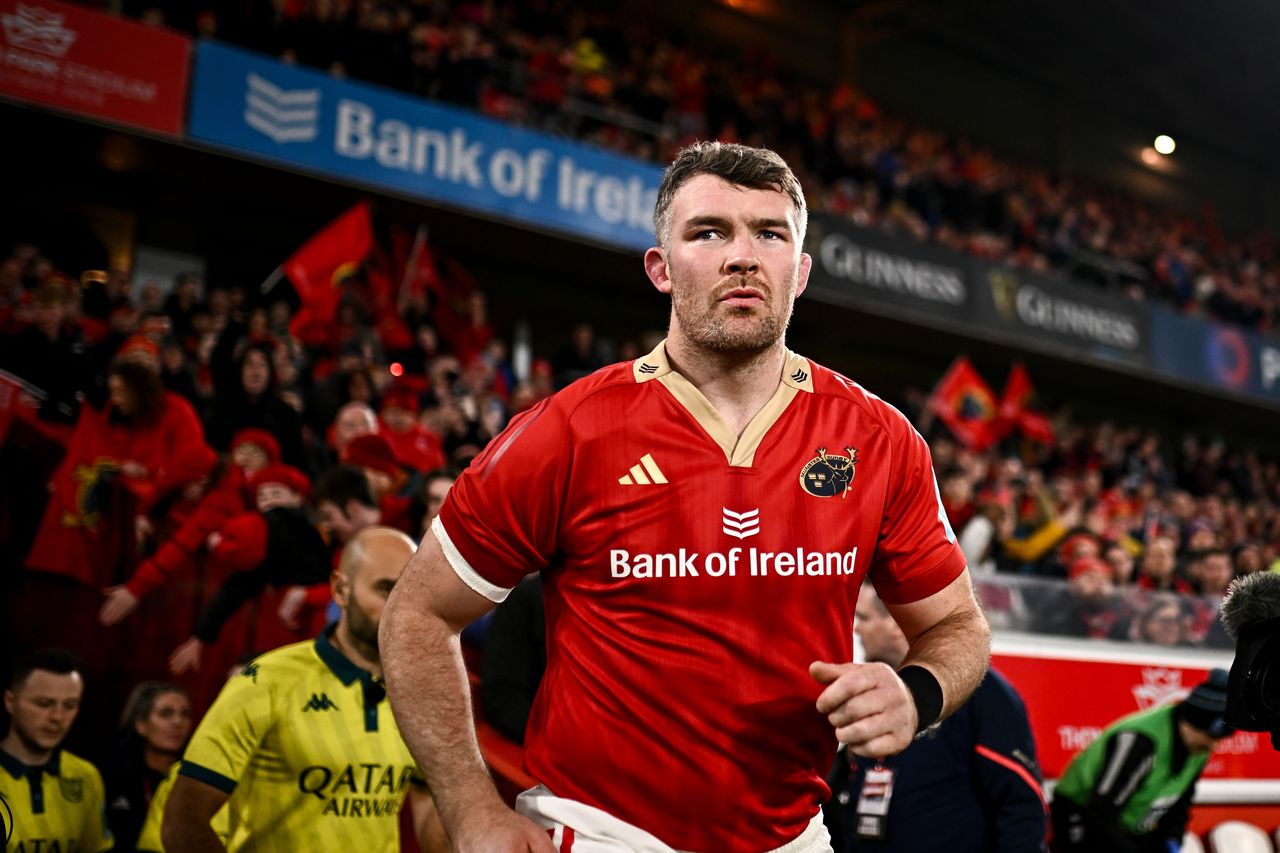
Once he was back fit, Peter O’Mahony started every game of consequence for Munster at #6 and that leaves something of a question mark for this coming season and beyond – what does Munster’s back row look like without Peter O’Mahony as a near-certain starter?
That question is coming over the hill fast. O’Mahony signed a one-year PONI extension with Munster last season after an unseemly contract season where David Nucifora seemed to very much kick O’Mahony off a central contract in October to make it Munster’s “problem”, so to speak, before Andy Farrell made O’Mahony the Irish captain for the 2024 Six Nations and subsequent summer tour.
There was a tonne of briefing in the media about this, mostly focused on ensuring the pressure was on Munster to “get the deal done”, which it eventually was. Rumours were flying left right and centre before and after the deal was done and none more so than when O’Mahony spoke to the press just a few days before a URC semi-final against Glasgow.
“It could have been done a lot quicker, yeah. It was messy. Look it, if it was done 12 weeks earlier it would have been a lot easier for everyone. But it wasn’t and it panned out the way it did. That’s business as well. That’s the way things go. That’s part and parcel of the job.
“Not to sound arrogant but I don’t need to state my case around here. I’ve played for this club for a long time now and I’ve never gone into contract negotiations saying I don’t want to stay. That’s the first thing I’d say, upfront, ‘I want to stay’, ‘I want you to look after me fairly’.
“It was the same this time around it just took a bit longer and look, it got sorted and that’s the way it went.”
That raised more than a few eyebrows around the province. Seeing a former captain of O’Mahony’s experience speak so loosely and self-indulgently ahead of a big knock-out game was disconcerting. It’s the kind of thing that O’Mahony himself would have scorned if he saw another player do it just a few years prior. It showed a weird lack of focus on O’Mahony’s part before a knock-out game in Thomond Park and he duly dropped a one-star performance a few days later as Munster crashed out at home.
There’s no doubting O’Mahony’s importance as a trainer, a standard setter, a speaker and, importantly, as a player in 2024. The reality is, though, that he’ll be 35 this year and appears to be visibly declining from his physical peak. He isn’t as springy in the lineout as he was even 18 months ago, he’s not as quick around the pitch as he was, he doesn’t really pack too much of a punch on either side of the ball these days either and I think he’s solidly in that 50/30 veteran role at this stage of his career. This is all incredibly normal. These are the exact things you would expect to see from a 35-year-old flanker when it comes to the physical side of the game, regardless of who they are. You either start O’Mahony for 50 minutes or spring him for 30 off the bench and, even then, only against certain opponents. There’s no doubting O’Mahony’s accuracy at the offensive and defensive breakdown, his elite-level game sense and his passing skillset which are all as good as they have ever been, but the question will come about pretty quickly about how valuable those things are in the face of inevitable physical downturn.
Is what we saw against Glasgow in Thomond Park now the norm? Or is it what we saw against South Africa off the bench in the second test?
If it’s the latter, O’Mahony can be a valuable contributor this coming season for Munster but Munster have to start looking beyond the former captain immediately as I expect him to retire or leave the province for a jaunt abroad at the end of next season.
What does that back row look like then? That really is the question. At his peak, O’Mahony provided elite-level offensive and defensive lineout work, a great maul forward for his size all alongside high-skill edge-forward work and high volume, high-quality offensive and defensive ruck work. His lineout dominance was (and is, to an extent) his super-strength in a game that got more heavily reliant on that set piece as the years went on. O’Mahony’s ability at the lineout on both sides of the throw gave Munster and Ireland the option to select players with their skillsets focused elsewhere.
Essentially, with O’Mahony’s lineout prowess in a back five, you could select two or even three players who maybe weren’t as good in the lineout but who specialised in carrying the ball or in high-volume defence, for example. When you have Peter O’Mahony as a primary jumper, you can carry non-jumping players like Josh Van Der Flier or John Hodnett, for example.
As we piece together the back five jigsaw for 2024/25, we see that while O’Mahony must be replaced, replacing him with one player is likely impossible.
If you were going to replace O’Mahony with one guy it would probably be Jack O’Donoghue. From a roleset perspective, O’Donoghue is as close to O’Mahony as we have in the squad. A lot of what O’Mahony is good at, O’Donoghue is also good at.
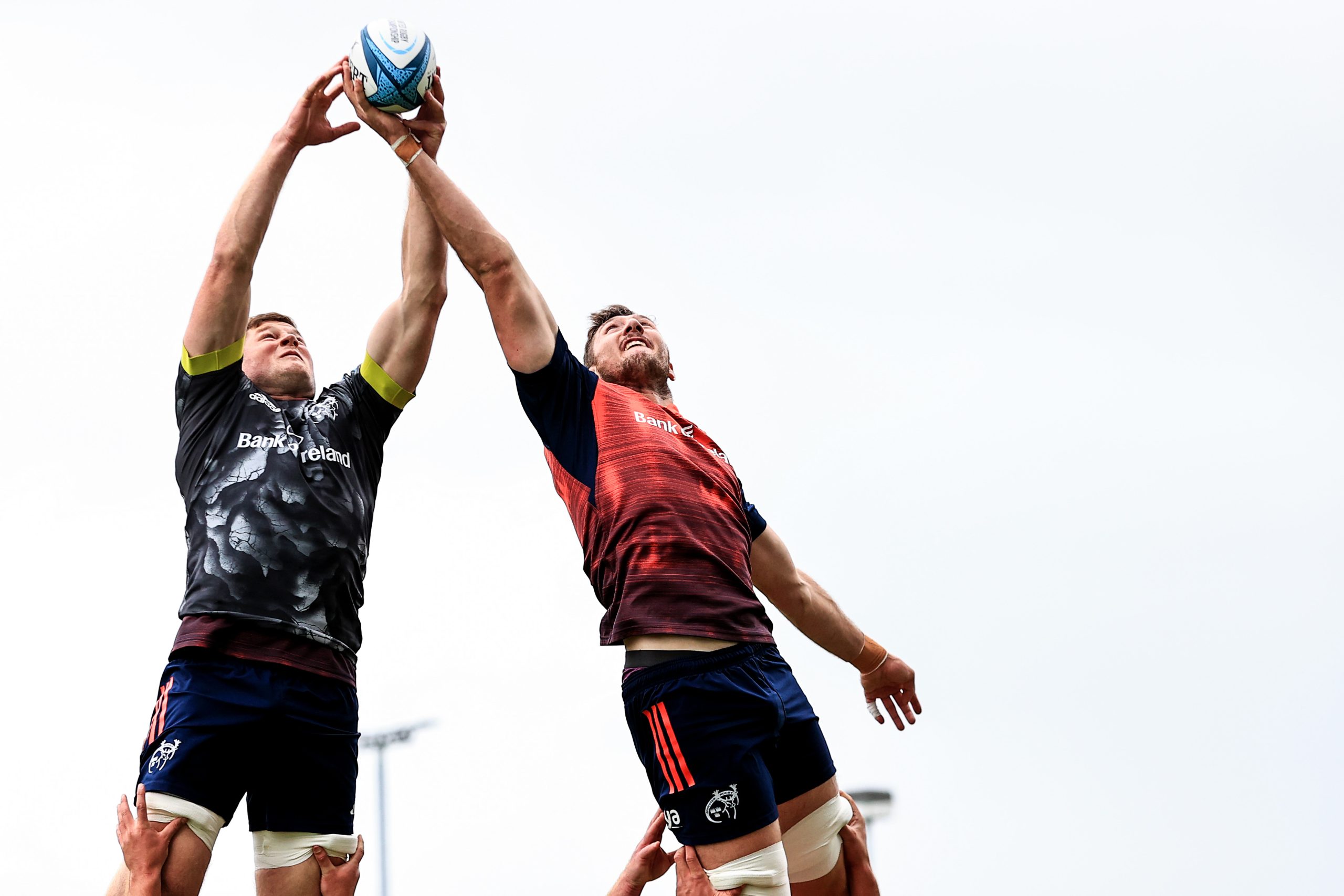
He’s a good lineout forward offensively, a decent one defensively, a really good maul forward (especially in defence) and a springy, pacey runner in the wider channels with decent offensive ruck output. On the downside, he’s never really brought all of these together to an elite level while also lacking some of the punch in the tighter channels that he’d need to compensate for being a good, rather than a great, lineout forward.
O’Donoghue is a really good leader in the group; he’s a mature player with a lot of valuable experience which makes him a good mid-season captain or as a role filler in a young back row. You can easily put the pressure of captaincy on Jack with no worries about him as well as give him that Heavy Combo Flanker with a lineout focus role that might free up a young power forward or wing forward build player to focus purely on their strengths.
He’s the youngest Munster player to ever reach 200 caps and that tells you an awful lot about the guy in that he rarely lets you down and, for me, only looks out of his depth at the very highest level of club rugby against very good or elite teams. O’Donoghue is in a contract year this season and his retention on a one-year deal makes sense to me if it can be done at the right price. The price is the key because O’Donoghue would not be a “keep at any price” player given the minutes and opportunities we will want to hand out to our potentially foundational younger players in the next two seasons.
At the same time, O’Donoghue’s experience and skillset would be highly prized elsewhere at most Gallagher Premiership teams and all but the super-elite teams in the TOP14 so a one-year deal might not be enough to get the deal done, even on a slightly inflated per annum price. In the post-O’Mahony era, O’Donoghue’s experience and skillset are going to be valuable for every single Category B/C game in the URC so the question Munster will be asking is if a two-year deal can be done on mid-level money for the role cover O’Donoghue brings. O’Donoghue must also be asking himself if, at 30 years of age and looking at his last opportunity for a big contract, he’d be better off looking elsewhere for more money and/or time.
Look at Ross Molony, for example. He picked up a very tasty three-year deal at Bath at 30 years of age that will take him right up to 33/34 with a pretty important role at Bath under Johann Van Graan. Molony probably wasn’t going to get that kind of offer at Leinster and Jack O’Donoghue is in a very similar spot here where he’s not a regular international and probably isn’t going to be. Ross Molony saw where he was going to get squeezed – McCarthy emerging as a core player for Leinster and Ireland, Ryan already being an established core international and Leinster bringing in RG Snyman. The writing was on the wall there for Molony, regardless of what Leinster were offering. O’Donoghue doesn’t have the same squeeze here but at the same time, he’s got to be aware of the upward pressure coming from the likes of Brian Gleeson, the emergence of Hodnett as a core player and how many minutes Munster will need to give to guys like Ruadhan Quinn and Sean Edogbo this season coming but, crucially, next season.
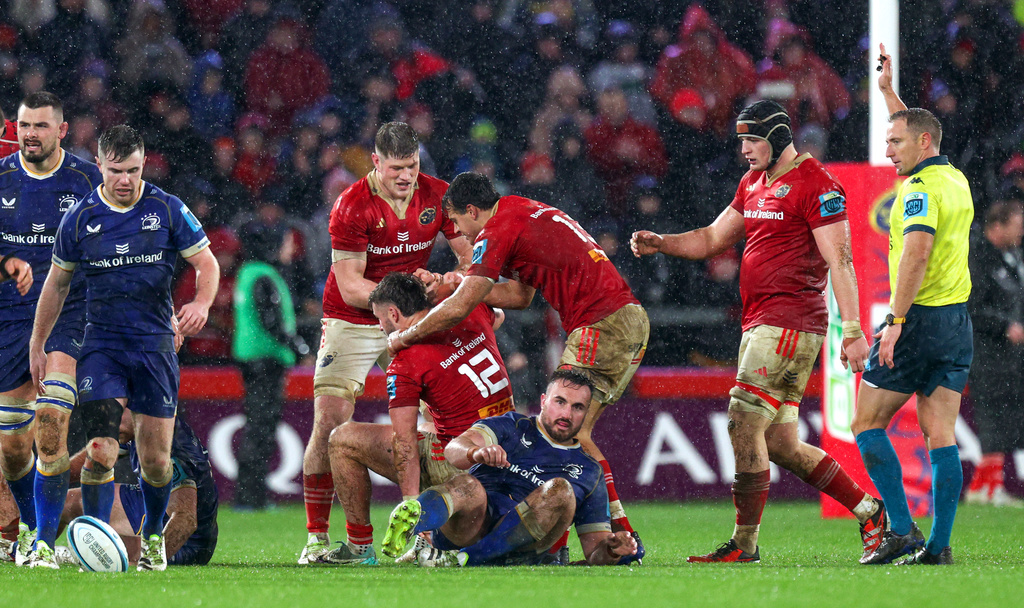
You don’t want to be a 31-year flanker looking for sizeable offers coming off a season where you’ve slowly moved down the depth chart all things being equal. O Donoghue’s value will never be higher than this season coming so it’ll be an interesting decision, one way or the other.
It won’t be as interesting as the contract noise that is almost sure to whirl around Gavin Coombes, though. That’s for sure. Forget what you might think about Coombes as a player relative to Caelan Doris. His complete exclusion from the Irish test set-up is almost exclusively framed along the lines of “well, you’d drop Doris would you?” as if the two things were mutually exclusive.
As a result, I’ve seen a lot of fans and pundits try to dampen down what they’re seeing with their own eyes over the last two or three seasons; that Gavin Coombes is one of the best, efficient and complete backrows in Europe.
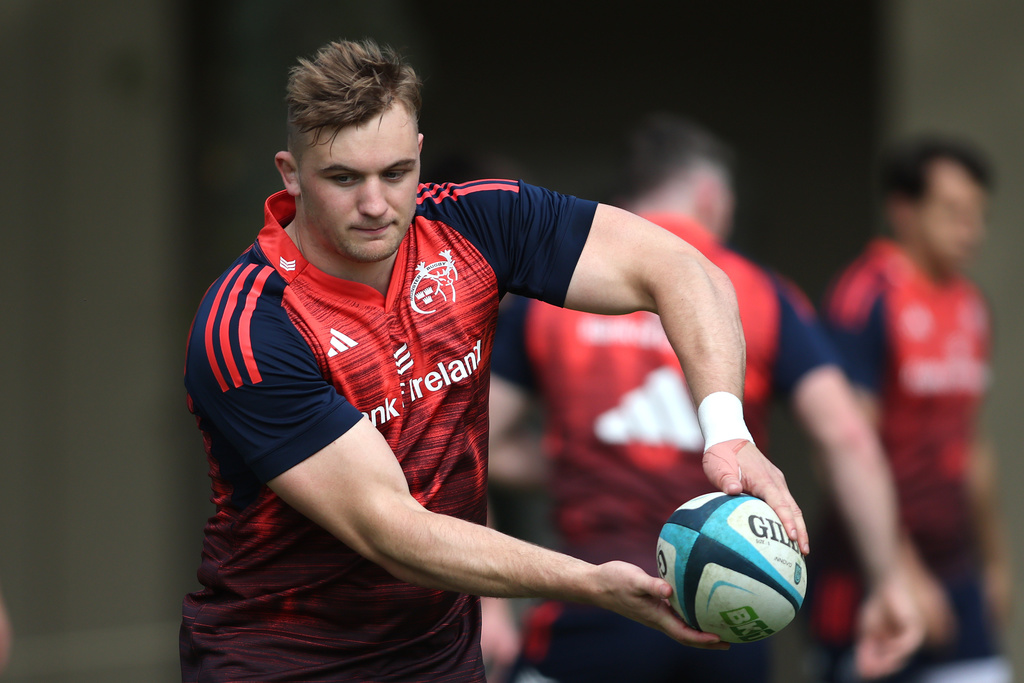
But, because Andy Farrell doesn’t select him, people assume that what they’re seeing must be false. He can’t be the best carrier in the URC while also being a top-three tackler and one of the highest-scoring ORW players I have on record all season. There must be something wrong. But there isn’t. No player has suffered more than Coombes when it comes to Farrell only playing four backrows for the last four seasons.
He isn’t an easy role duplicate for Doris like Prendergast is, or a heavier small-forward role dupe for Van Der Flier like Timoney is. If Coombes was actually 6’6″ instead of 6’4″ and played around 120kg, I think he’d be in contention for Ireland as a second-row in more or less the same role as Joe McCarthy or Iain Henderson. But he isn’t. This idea that he can just mythically “play better” after a season where he rounded out every single bump in his game is asinine. He’s not in Farrell’s plans and that’s that.
I’ll put it into simpler terms.
If Gavin Coombes was Gavin Van Der Coomberink and he played for the Bulls for a few years with two Springbok caps in the same way as he has been for Munster, he’d end up with a big move to Racing 92, La Rochelle, Saracens or Stade Francais for 2025/26. He’s that good. Gavin Coombes is a vital player for Munster who produces incredibly complete performances on the regular as a Half Lock Power Forward. What does this mean? He still carries 10+ times a game and usually more, mostly off #9 where the going is the hardest and the tackles more impactful. But not only that, he’s also one of our most consistent ORW scorers so not only is he carrying a tonne of our ball, he’s also cleaning out the carries of everyone else in the middle of the pitch at an astounding rate.
He’s a reliable tight defender, a solid lineout player on both sides of the ball and an absolute menace inside 5m. He’s a really good scrummager too, with the ability to cover lock in the scrum on the loosehead side if needs be. He’s rarely injured and you can change his role to a ball-dominant heavy carrying power forward off the bench if you want to run a different configuration.
In short, Coombes is a CORE 1 player in this team and he was absolutely beyond vital last season. And he’s in a contract year. For me, there’s no question that he’s got to go on a top-tier provincial deal for two years at least, ideally three. It’ll likely be an expensive deal to make. We can’t offer him test rugby because, well, he’s not stupid and it seems like Andy Farrell is not for turning in that regard.
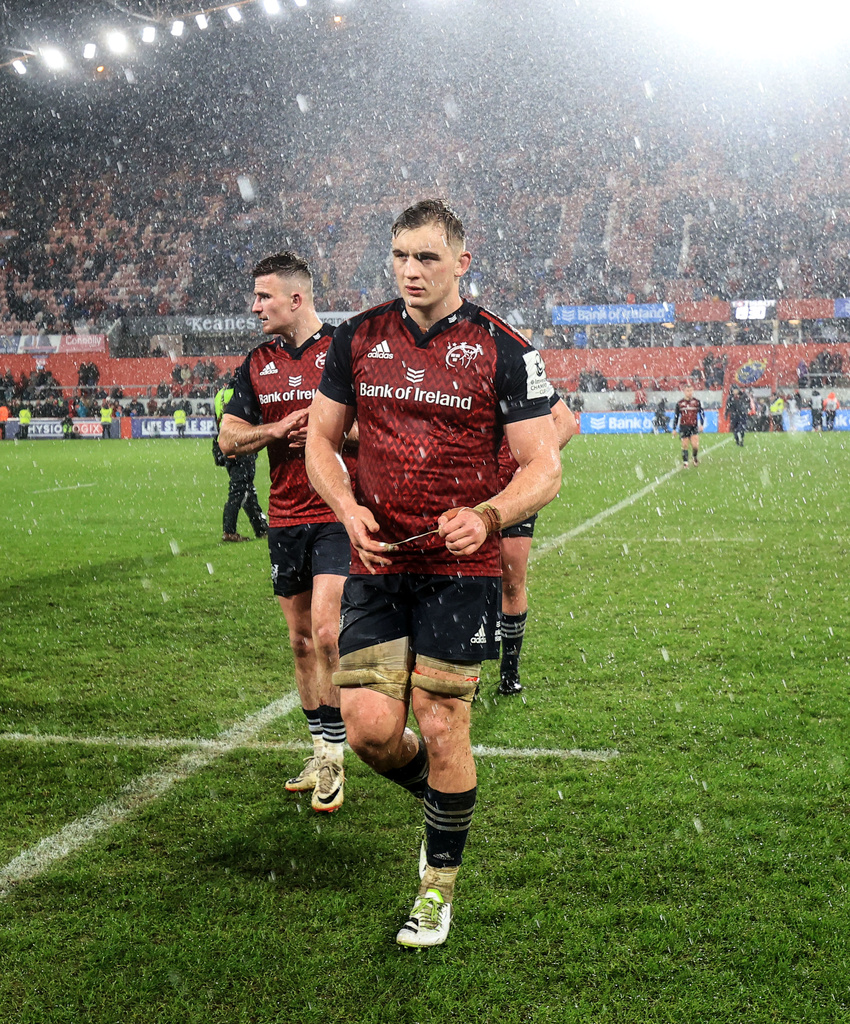
As a result, we’ve got to contract him like he’s actually Gavin Van Der Coomberink and pay accordingly for a non-international in his prime, who offers you international-tier performances and gives you 20+ games a season as standard while scoring a try every other game across his entire career to date.
He is likely to be sought after by most of the best teams in England and France, so we’ve got to move quickly. I asked the question earlier about the Munster #6 role going forward and how it’s a slightly heavier role now – I think Gavin Coombes is perfect to take up that spot, regardless of the number on his back.
Brian Gleeson is often framed as a ready-to-roll replacement for Gavin Coombes. From a role-set perspective, he’s quite close. Gleeson is probably the most impactful Irish u20 international I’ve seen since James Ryan and the praise that has come his way has been richly deserved.
Frankly, not many 19-year-olds can do this to Juarno Agustus on a wet grass surface on a set line.
Both Gleeson and Agustus knew this collision was coming from a few seconds out and Agustus had nothing for him in the carry. This is not normal. It’s one thing to run over other teenagers in u20 rugby but another thing entirely to do it to seasoned players in the Champions Cup.
Gleeson signed a two-year professional deal after just a few months in the academy which puts him on the same kind of track as Jack Crowley and, crucially, he’s pretty much physically ready for pro-rugby at just 20 years of age. Twenty. He’s 6’4″ and plays at 115kg with scope to go a little heavier all while being ridiculously explosive.
Gleeson is a player of national interest and will be used as such this season in a role that will showcase his strengths as a lineout forward and as an explosive carrier off #9, #10 and even in the edge spaces. He is a FOUNDATION 1 tier player who, if he works out as it seems, will be a CORE 1 player for Munster and Ireland in the next few years.
From here, we move to our Small Forward roster and find a difficult depth chart to manage.
At the head of it is John Hodnett, who had a breakout year when it comes to gaining national attention outside of the typical Munster-obsessed sicko. He’s a CORE 1-level talent, contracted to 2026 and finds himself on the bubble of test consideration. Not enough to get him on the plane to South Africa this summer, but enough that his omission was something of a surprise; if Andy Farrell’s conservatism when it comes to selecting back rows could be said to be a surprise at this point.
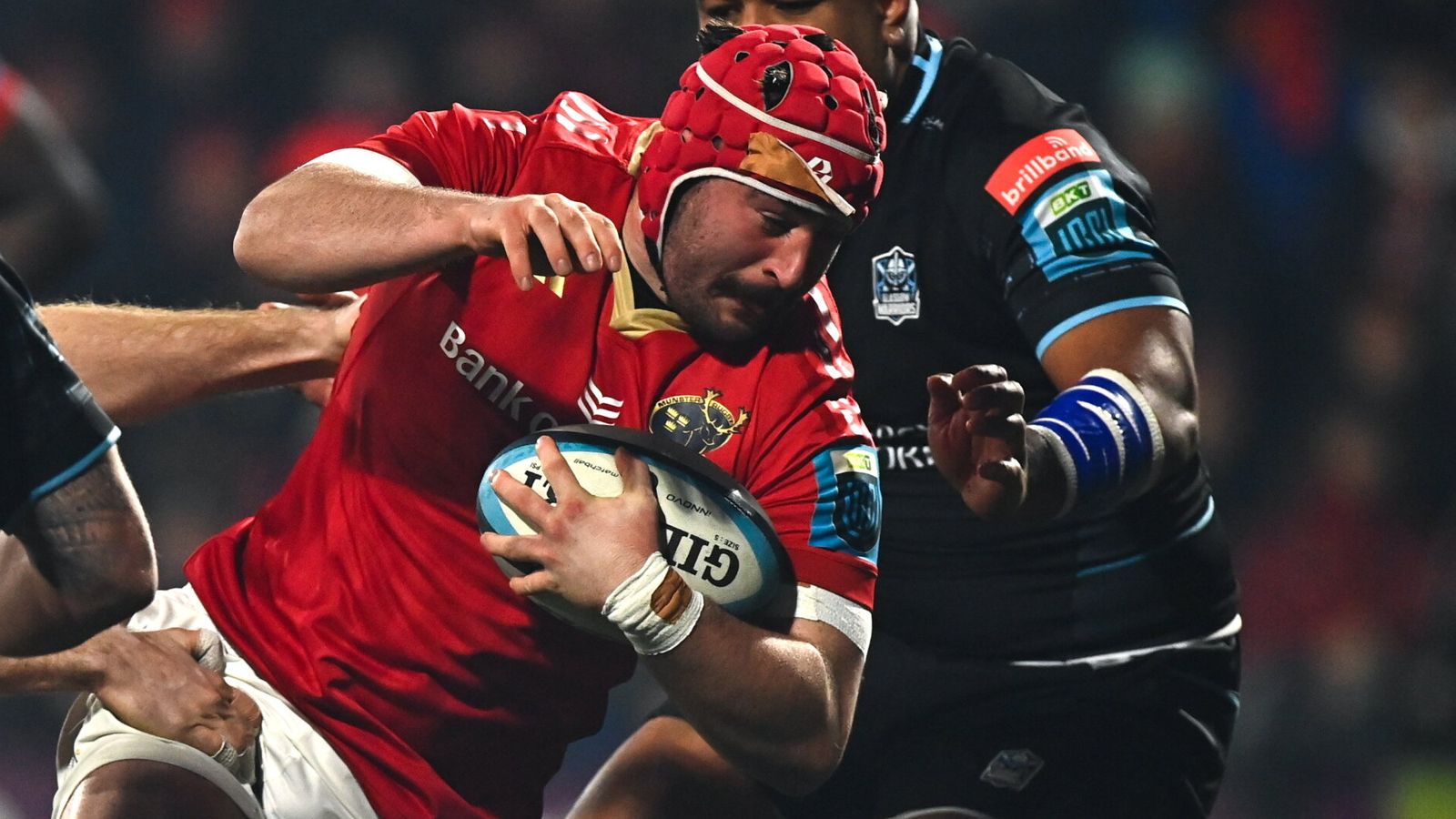
Hodnett is an explosive, blisteringly quick edge forward who packs a punch on both sides of the ball and the breakdown. He doesn’t have a lineout game to speak of but the growing quality of his passing game makes him a proper threat as the +1 on any lineout scheme.
I wouldn’t be surprised to see an Irish cap for him this November if he can stay fit for the run-up to the Autumn Internationals. He’s a guy that you can slot in and out of this back row because of his effectiveness as an edge forward. You can easily start him or deploy him off the bench as a pacey game-changer in the last 30 minutes as he’s easily capable of making big plays on both sides of the ball.
I would rate the academy’s Ruadhan Quinn as the natural successor to Hodnett from a role-set perspective. Quinn is a bigger, heavier player than Hodnett but no less explosive. Once I get a good look at Quinn this season he might end up more of a power forward but right now he fits the criteria for a Heavy Wing Forward in that he’s an occasional lineout target but devastating in edge spaces as a ball carrier. He’s ridiculously quick, durable in contact and has the kind of leg drive that puts him into elite-level conversations, potentially.
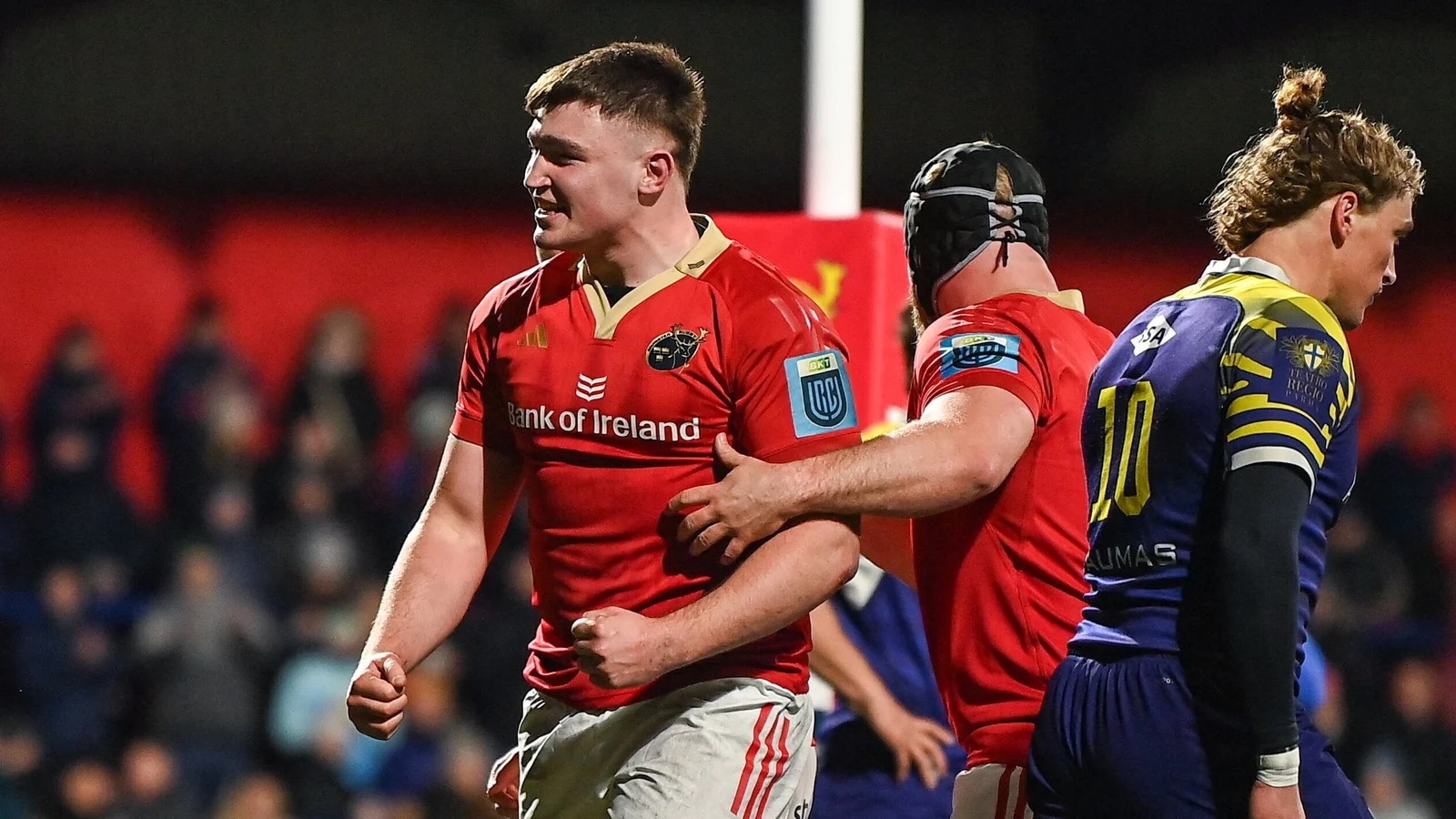
His game does need a bit of rounding out but Quinn answers the core question about using “small forward” build players. Typically elite-level edge pace and power, ruck dominance, and defensive coverage come with selecting smaller, lighter players which can hurt your overall size and physicality but at 6’3″ and 114kg, that doesn’t apply to Ruadhan Quinn. If he can balance out his athleticism with defensive solidity and more accuracy at the offensive breakdown, I think he’ll have a standout year and end up on a two-year Munster contract in July 2025. He is a Foundational talent that needs exposure this season.
That brings us to Alex Kendellen. Kendellen captained his U20 class for Ireland and has already played for Munster 68 times at just 23, even captaining the province during the season. Kendellen is a very well-rounded player with good carrying, good impact defence with high volume tackling and really good offensive and defensive breakdown work. Unfortunately, at 6’2″ and 105kg he’s not as explosive in the edge spaces as Hodnett or Quinn, so has had to round out his game a little bit more to find utility in Munster’s system. He did this by adding a serviceable lineout game as a front jumper last season, becoming a really good mauler and tightening up his offensive ruck game.

That’s the kind of utility he’ll need to keep pace in a witheringly competitive back-five unit where he doesn’t have the size of Gleeson, Coombes, Edobgo or Murphy, nor the explosivity on the edges that Hodnett and Quinn do. I can’t help but think that his future and Jack O’Donoghue’s are pretty closely tied together, from a contract perspective. Essentially, if you resign Jack O’Donoghue as a back-row utility player to cover the edge role we currently have at #7 – albeit in a heavier configuration – while also offering proper value in the Munster #6 role, are you essentially squeezing the minutes of Alex Kendellen who is still a highly valuable CORE 2 level player with excellent leadership qualities?
I think you do business with Kendellen first, before O’Donoghue, and get him on a two-year deal as a guy who’ll soak up plenty of minutes at #6, #7 and #20 in big games throughout the season while also being a core member of your new leadership group because he’s too valuable to lose as of yet. The big question will be if he can add a little more verticality and pace into the air with his lineout; if he can, there are plenty of big games waiting for him post-O’Mahony and beyond.
I’d rate Cian Hurley and Jack Daly in that ASSESS 1 bracket. Both players have a great rep around the HPC as good characters and good trainers but both men have been littered with injuries in their young careers to date. Jack Daly is a really well-balanced Heavy Wing Forward with a very well-developed lineout game that makes him a great depth option. If he can stay fit and pick up four or five appearances, he’ll be doing well and could easily put himself in the shop window for a Championship or PROD2 side.
Cian Hurley is a really interesting player in that he’s 6’5″ and 105kg+ with a good lineout game, a decent tight carry and pretty good stopping power in defence. He’s always played well for Garryowen, even since his comeback from an Achilles injury that robbed him of any chance to impress during his first senior contract. He can cover lock but I think his best chance at elite level would be in that heavy #6 role for Munster.
Who knows what some good early appearances might bring?
If I were to pick one player who I feel is almost a super-charged version of most of Peter O’Mahony’s best qualities it would be Sean Edogbo. Whatever about his leadership qualities and “dog” – both unknowns to me – he’s got every single quality I would want for that blended heavier role we’re looking at for that #6 jersey.
At 6’5″ and 106kg with scope to grow into a massive frame, Sean Edogbo is devastatingly explosive in the edge space and off #10, while also packing a punch close in AND on transition.
On top of this, he’s got a fantastic lineout game on both sides of the ball as he ably demonstrated once he became a starter for the Irish u20s this season. He’s got real power in the cleanout too and that will only improve once he adds polish to his game. Edogbo is an excellent tight defender who can cover wide spaces and offers a good defensive breakdown threat too. Edogbo has elements of Ahern’s size and unicorn physicality along with top-end lineout along with some of the breakdown dominance that we’ve seen from O’Mahony on the offensive side of the ball.
He’s a year one academy player but his lineout chops and physicality could see him rack up early URC minutes if he’s fit and firing. Long term, I think signing Edogbo onto a 1+2 deal similar to what his brother Edwin got for July 2025 and beyond would be smart business for Munster this season if they’re sure about what Sean can bring. It might even be worth moving straight to a two-year deal to nail down that Half Lock Power Forward roleset. He’s a Foundational talent with the ability to impact early this coming season with a bit of luck.
