


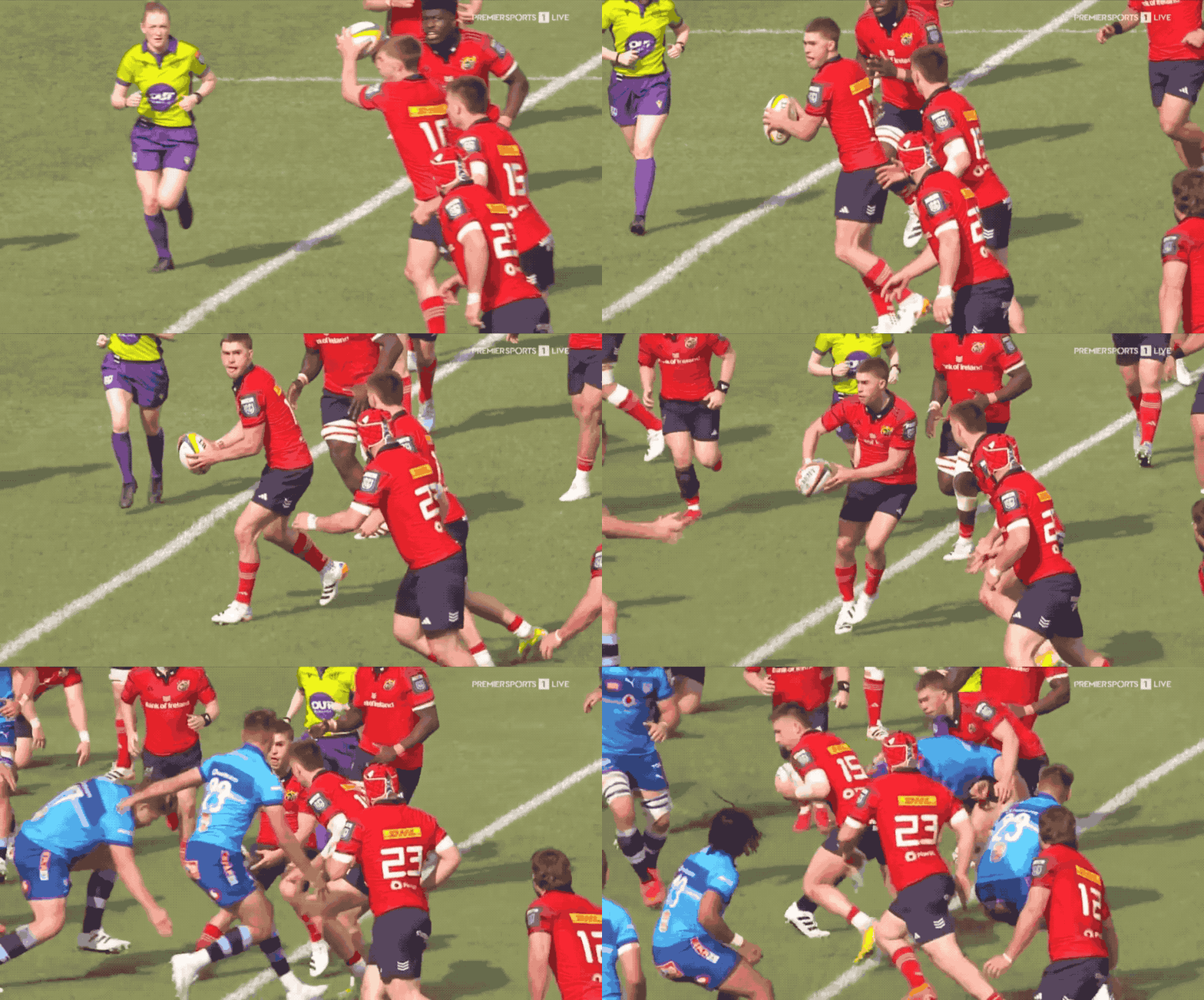
This Chart article is pretty easy, all things considered. Jack Crowley and Craig Casey are our two most important players, and keeping them locked into the province for the next three or four years — at least — is arguably the most important task facing the club in the next two contract cycles.
Thanks for reading!
…
I suppose the word count should be a bit longer than 65 words.
Let’s get into it.
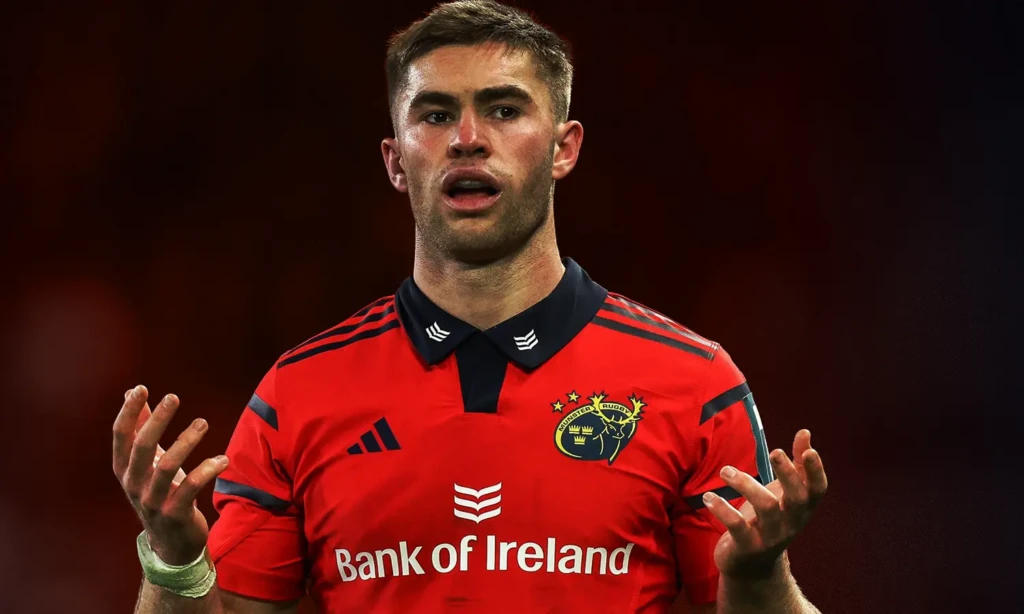
Let’s get to the stuff you already know first.
Fly-half — depth chart
Munster, next season · contract expiry in brackets
- Core
- Expiring
- Development
- Academy
Tier 1 · first choice
Jack Crowley (2027) Expiring · key re-signing
Our most important player and a key man for Ireland. Contract expires this year; retaining him will likely mean negotiating a 60/40 IRFU deal. The single most important contract on the books.
JJ Hanrahan (2027) Expiring · retirement likely
A veteran fly-half coming into what is likely his last season, with retirement probable at the end of the campaign. Provided plenty of cover last year and will be a key bridge player this season.
Tom Wood (ACAD2) Development · sign early
A high-potential prospect who needs enhanced minutes at 10 this season, and should be contracted accordingly as early as possible.
Will Harrison (2027) One-year NIQ
A one-year non-Irish-qualified signing who will end up playing a lot of fullback, but can and will cover 10 in the early part of the season.
Tier 2 · rotation and development
Charlie O’Shea (ACAD1) Academy
Likely a lot of AIL and A rugby, and probably another academy year before stepping up — though he could be an immediate development option at fullback.
The most important re-signing at the club this season is Jack Crowley. I don’t think there’s much debate on that one. You could argue that he’s the most important signing for the IRFU this season, too, although his rhetorical tie to Sam Prendergast makes that a controversial, deeply political contract to make happen for several different reasons.
To understand the contract renewal as it stands, we have to look back at the previous contract signed ahead of last season.
In 2024/25, Crowley was the biggest flight risk in the country with Leicester Tigers, in particular, lurking with a massive contract offer. At the time, Andy Farrell — and his surrogate Simon Easterby — were right in the middle of the Sam Prendergast experiment. Crowley had started the season as the 1A for Ireland in a tenuous sense, but that had completely inverted by the 2025 Six Nations, where Prendergast was given chance after chance after chance to become the Sexton replacement that Farrell so badly wanted.
That never quite stacked up onfield, though, and we had to endure the unedifying spectacle of Prendergast being graded on a curve that would be only slightly less acute had a random 16-year-old been plucked from the stands.
The Ireland coaching staff wanted Prendergast to be great; most of the media did too, so he would be given every chance and every grace to do just that. That would come to an end — not permanently, but there was a reprieve at least — after Ireland lost to France and Leinster lost to Northampton that season, which saw the Prendergast hype train spend a few months in the station for repairs. Farrell didn’t select Prendergast for the Lions as the first real doubts about Prendergast’s capacity to even be a top-level international at all crept into the public eye.
Crowley was, at that point, purely in the “backup” category at a national level, and this was reinforced by the Irish management every chance they got. Given his contract was up for renewal at that point, it couldn’t have come at a worse time. I don’t think Crowley needed to be told he was the undisputed 1A to re-sign — because he certainly wasn’t when he ultimately did re-sign — but the manner of his immediate downgrading post Argentina in November 2024 and for the 2025 Six Nations would have rattled anyone. It was a failure of management at the coaching level. Rotation is good, having options is good, but flip-flopping between players for esoteric reasons — Crowley was blamed by Farrell internally for the lineout malfunctioning at one stage — meant that it was really easy, sensible almost, to assume that they just want rid of you.
Crowley went from starting every game in the 2024 Six Nations, which Ireland won, to being the backup #10 and sometimes auxiliary fullback off the bench for the 2025 Six Nations, without necessarily doing anything wrong and without the player ahead of him doing anything all that remarkable when the levels went up.
Prendergast was on an expiring contract at the same time, and the IRFU managed to avoid something of a revolt by signing both players to PONI deals, rather than making a concrete decision around who would get the (or a) central contract.
Crowley signed his contract in April 2025, which was a huge relief to Munster. Irish players have something of a reputation for stringing along foreign clubs to get a better deal from the IRFU, but that was absolutely not the case here. Crowley had been so badly managed at the national level that he was incredibly close to signing with Leicester, and it was a much closer run thing than many realise.
Last season, Crowley and Prendergast split the November window between them. Prendergast started the Six Nations as the incumbent before two disastrous performances against France, and then Italy saw him jettisoned from the national side completely, which was copperfastened by Crowley’s outstanding performance at #10 away to England in the third round, as part of the best Irish performance in over a year to that point.
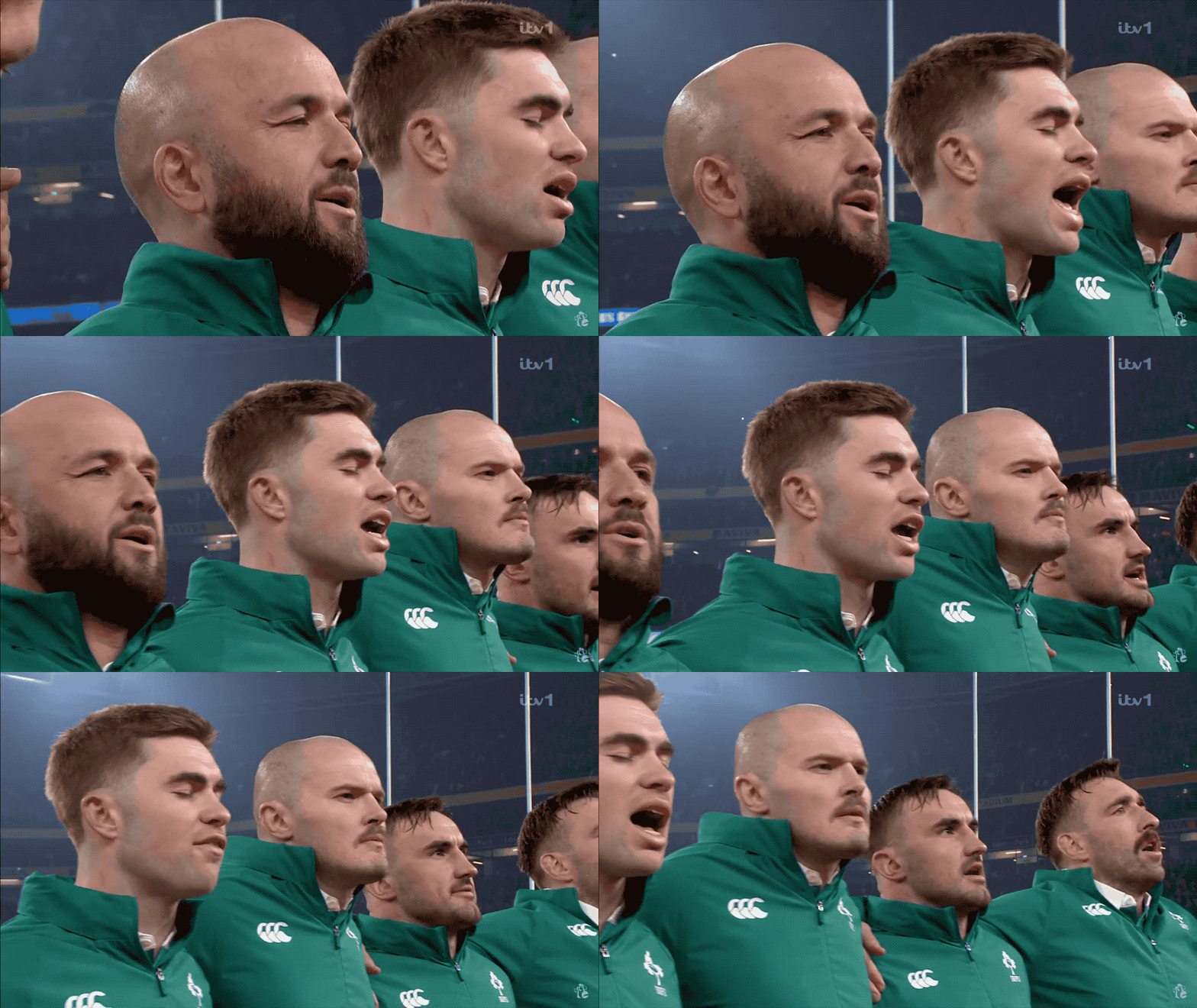
He kept the #10 jersey for the rest of the campaign, which likely would have continued in the Nations Championship this summer without a nasty injury that curtailed the end of his provincial season.
In the interim, Prendergast came back into prominence after being dropped by Leinster for the European Cup final off the back of some deeply concerning performances post-Six Nations. He started the last few URC games post-Europe, including the playoffs. He managed to come out on the positive side of the ledger as Leinster won the URC without ever really dominating any game individually. He kicked his goals, got good distance down the line and kept the defensive and offensive lapses to a minimum, albeit while on a long run of very winnable home games.
He had a big opportunity in the Nations Championship with Crowley out, but never really managed to do much of anything, really, as Ireland struggled to put away a ropey Australian side and were routinely dismissed by the All Blacks in Eden Park. That isn’t on Prendergast — not even close — but it’s relevant for this contract coming up, as both men are due to renew.
Crowley was the only Irish player, bar Joe McCarthy, whose stock went up post-Nations Championship, and he watched all of it at home.
Will that translate to 1A status nationally by November? Well, he has to come back from injury first, but I think if he’s fit, he’ll start against Argentina, and then it’ll be down to who gets the start vs South Africa.
Of course, Crowley may already be in negotiations with the IRFU on this, and he might well be sorted on a two-or-three-year contract before November becomes a talking point. This is the thing with central contracts — in an ideal world, they should be relatively meaningless. It’s all, broadly, the same money anyway whether you’re splitting it with the province in whatever increment, but central contracts come with an expectation of heavy international usage.
If you sign a central contract (60/40 deal) with the IRFU, that says more about your status than a 50/50 PONI package, even if the money is more or less identical. The IRFU have created this perception through their use of central contracts since the middle of the last decade.
If you have a central contract, you are a core player for Ireland, and selection will always reflect this. If you are on a PONI, no matter how big the number, you are subject to the whim of the coach, and that’s especially true in a core position like #10.
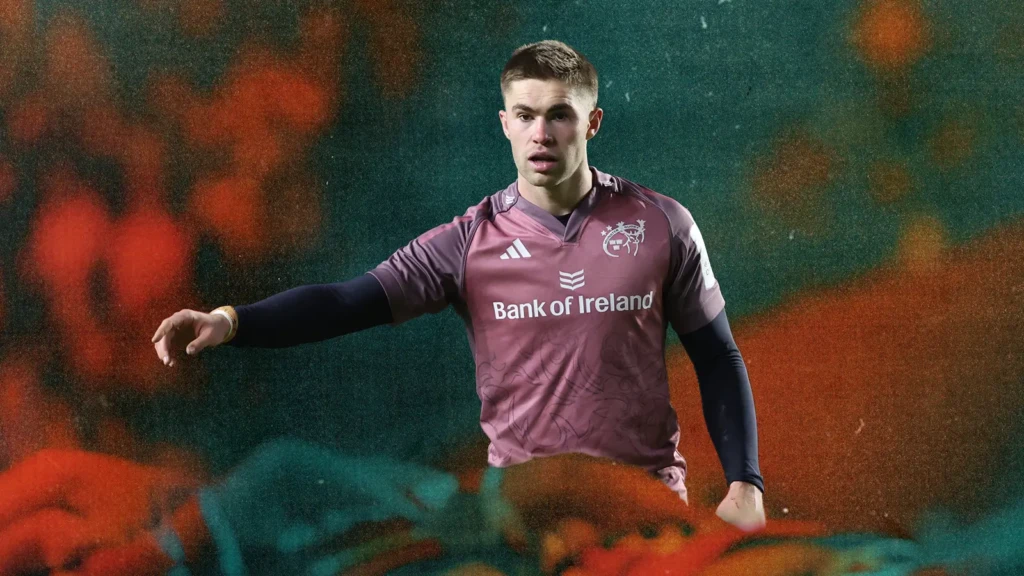
If you’re dealing with this for the IRFU, a central contract for Crowley should be an easy political win. In the last five seasons, the only non-Leinster player to get added to the central contract ranks was Connacht’s Mack Hansen. Once Tadhg Beirne retires, that would leave Munster with just one. Crowley is the best-placed player right now to redress the balance a small bit while also being broadly deserving of one.
A lot of that depends on Farrell’s read on who his #10 should be, which is unpredictable. Without a central contract, Crowley will be difficult to retain. Not financially — Munster would find the money — but it’s what it would mean for Crowley’s test future if all he was offered was a PONI deal.
The easy way out for the IRFU heading into the World Cup is to offer both Prendergast and Crowley a central deal, but for me, there’s only one player who’s actually deserving of that status if we’re to go with actual impact, versatility, completeness and consistency.
These metrics are purely from the URC last season — where Prendergast played 300 more minutes — but they go some way to showcasing the differences between the two.
Jack Crowley vs Sam Prendergast — head-to-head
Each axis is scaled 0–100 across the URC fly-half cohort, so 100 means best in the URC on that metric. The attack panel splits volume (passes) from efficiency (assists per 100 passes) to separate how much a 10 does from how productively they do it.
- Jack Crowley
- Sam Prendergast
- Toward the edge = better
| Metric | Crowley | Prendergast |
|---|---|---|
| Attack — volume vs efficiency | ||
| Passes /80 | 15.4 | 29.8 |
| Line-break assists | 1.9 | 1.9 |
| LB assists / 100 passes | 12.3 | 6.4 |
| Try assists | 0.7 | 0.9 |
| Try assists / 100 passes | 4.5 | 3.0 |
| Gain-line % | 69% | 46% |
| Dominant carry % | 6% | 5% |
| Pass accuracy % | 91% | 93% |
| Kicking | ||
| Kicks from hand | 10.2 | 10.6 |
| Kick retention % | 27% | 16% |
| Contestable kicks | 3.9 | 2.2 |
| Kick metres | 254.6 | 292.0 |
| Goal-kick % | 71% | 80% |
| Defence | ||
| Tackle success % | 88% | 60% |
| Tackles made | 10.6 | 6.1 |
| Dominant tackle % | 3% | 8% |
| Turnovers won | 0.3 | 0.4 |
Cohort = URC fly-halves in the source tables. Axes read “toward the edge = better”; ball-security metrics are excluded, as is possession-security (distorted by outliers). Rate metrics are per-game and minutes vary, so treat fine gaps with caution.
The numbers show pretty clearly, for me, why Crowley should be the #1 guy at flyhalf for Ireland while also showcasing his value for Munster.
The headline from the head-to-head is that these two arrive at the same destination by opposite roads. Both created 1.9 line-break assists per game in the URC last season — identical end product. But Prendergast did it off 29.8 passes a game to Crowley’s 15.4. Normalise for that, and the gap is stark: Crowley produced 12.3 line-break assists per 100 passes to Prendergast’s 6.4, and 4.5 try assists per 100 to his 3.0. Crowley touched the ball roughly half as often and made almost every pass count. He also posted the best gain-line percentage of any URC fly-half at 69%. Prendergast is the higher-volume distributor; Crowley is comfortably the more efficient one.
The kicking splits along similar lines. Volume is near-identical — 10.2 kicks from hand to 10.6 — but Crowley saw 27% of his kicks retained to Prendergast’s 16%, and won the contestable battle 3.9 to 2.2 per game. Prendergast’s edge is territorial distance and goal-kicking, where his 80% clears Crowley’s 71%. Crowley kicks to compete and re-win; Prendergast kicks for ground and points. There is value there on Prendergast’s numbers, but only in specific systems.
Defence is where any notion of interchangeability collapses. Crowley made the most tackles of any URC fly-half (10.6) at the highest completion rate in the league (88%). Prendergast made 6.1 at 60% — the worst success rate in the cohort. That’s not a marginal difference; it’s the single widest gap between them, and it’s the one column that speaks directly to test-match readiness, if only because of the load it takes off other players on set piece defence. You don’t have to babysit Crowley, and you kinda need to with Prendergast.
None of this is a Prendergast hit job — he’s on a curve, he’s younger, and 300 extra minutes flatter some of his raw totals. But on completeness, efficiency and defensive reliability, the data doesn’t split the two down the middle. It points one way. Crowley is the better athlete, the more complete player in all facets and, by some distance, the more efficient of the two before you ever factor in the defensive side of the ball.
If we exclude Prendergast from the comparison (it’s relevant to this contract, but less so in a general sense), the differences are starker again.
Jack Crowley — attack, kicking & defence profile
Each axis is scaled 0–100 across the URC fly-half cohort, so 100 means best in the URC on that metric this season. The shaded shape is Crowley; the dashed line is the cohort median.
- Jack Crowley
- URC fly-half median
- Toward the edge = better
| Metric | Crowley | Cohort median | Rank |
|---|---|---|---|
| Attack — volume vs efficiency | |||
| Passes /80 | 15.4 | 22.5 | lowest of 15 |
| Line-break assists | 1.9 | 1.0 | 1st of 15 |
| LB assists / 100 passes | 12.3 | 4.9 | 1st of 14 |
| Try assists | 0.7 | 0.4 | 2nd of 14 |
| Try assists / 100 passes | 4.5 | 2.0 | 1st of 10 |
| Gain-line % | 69% | 58% | 1st of 17 |
| Dominant carry % | 6% | 22% | 15th of 17 |
| Pass accuracy % | 91% | 92.5% | 12th of 16 |
| Kicking | |||
| Kick retention % | 27% | 17% | 1st of 15 |
| Kicks retained | 2.8 | 1.1 | 1st of 15 |
| Contestable kicks | 3.9 | 1.5 | 1st of 18 |
| Kicks from hand | 10.2 | 6.7 | 2nd of 15 |
| Kick metres | 254.6 | 190.9 | 3rd of 15 |
| Goal-kick % | 71% | 71.5% | 10th of 18 |
| Defence — tackling | |||
| Tackle success % | 88% | 72% | 1st of 21 |
| Tackles made | 10.6 | 6.4 | 1st of 21 |
| Tackle attempts | 12.1 | 9.5 | 2nd of 21 |
| Turnovers won | 0.3 | 0.25 | 9th of 20 |
| Dominant tackles | 0.3 | 0.3 | 7th of 18 |
| Dominant tackle % | 3% | 4% | 12th of 19 |
| Ball security & errors (lower is better) | |||
| Turnovers conceded | 2.2 | 1.5 | 2nd most of 17 |
| Handling errors | 1.2 | 0.6 | 3rd most of 17 |
| Knock-ons | 0.6 | 0.3 | most of 15 |
Cohort = URC fly-halves in the source tables. Ball-security rows are inverted in wording: a high rank there is a concern, not a strength, and they are deliberately kept out of the radars, whose axes all read “toward the edge = better”. Possession-security is excluded from scaling because two outliers (Roger 226, Sheedy 117) distort a linear axis. Rate metrics are per-game; sample sizes and minutes vary across the cohort.
Step out from the Prendergast comparison and the wider picture is even more flattering: across the URC last season, Jack Crowley was singular. Run a similarity check against every other fly-half in the league and nobody comes close to matching his statistical shape. The nearest neighbours sit around 44 on a 0–100 distance scale, where a genuine stylistic twin would score in the teens. He is, in the truest sense, one of a kind in this competition.
The profile that sets him apart is a rare combination of efficiency and workload. In attack, he posted the best gain-line percentage of any URC fly-half at 69%, and the most creative output per touch by a distance: 12.3 line-break assists per 100 passes against a cohort median of 4.9, and 4.5 try assists per 100 against a median of 2.0. He did that as the lowest-volume passer of the fifteen fly-halves with usable pass data — least ball, most damage. Out of hand, he led the league for kick retention (27%) and contestable kicks (3.9), and his defensive numbers are the standout: the most tackles of any URC ten (10.6 a game) at the highest completion rate in the division (88%).
The context is the most important part of this. Crowley put up those figures behind one of the worst scrums in the league — a set-piece that routinely went backwards and handed him slow, retreating, on-the-back-foot ball to play from. He was operating outside one of the lowest dominant-collision packs in Europe, too, meaning the gain-line was rarely won for him before he’d received it. A fly-half’s gain-line percentage and creative efficiency are supposed to be propped up by the forwards ahead of him; Crowley’s were achieved despite them. That 69% gain-line rate, in particular, looks less like a favourable platform and more like a player dragging a struggling pack over the advantage line by himself.
The honest caveats remain — his ball security is a genuine weak spot (second-worst turnover count in the cohort) and likely closely tied to the lack of platform that he was playing with, but his goal-kicking is middling at 71%.
It’s the goal kicking, more than most, that hurts Crowley, and it’s the core work-on for him this season.
JJ Hanrahan is a different kind of conversation, and I’ll be honest, a fonder one. The metrics won’t tell you he’s a frontline URC #10 anymore — they’ll tell you he’s 33, on what’s probably his last season, and settling into the exact role we’ve earmarked him for. But that’s not a knock. For me, that’s a player who knows precisely what he is now, and there’s real value in that.
Look at the passing and you’ll see it straight away. Hanrahan still gets his hands on plenty of ball — 27.6 passes a game, third-most of any fly-half in the league — but the days of him unlocking a defence regularly are probably behind him. His line-break assists are the lowest in the cohort, and for a lad who used to play with genuine sharpness and penetration at his peak, that’s the part that stings a little. What’s replaced it, though, is exactly what a bridge player should offer: control. His 95% passing accuracy is among the best in the URC, and — this is the big one for me — he’s the safest pair of hands in the entire cohort. A league-low 0.7 turnovers conceded per game. If and when you bring JJ on to close out a tight one, the ball doesn’t go on the floor. That’s the whole job.
The kicking has shortened, as you’d expect — he’s not launching it 60 metres anymore — but he still competes for what he puts up, with a retention rate better than plenty of younger men on this list. The goal-kicking at 69% is emergency-cover level rather than first-choice, and I think we all know that, even allowing for some unusually bad goal-kicking from him last season. Defensively, he’s as willing as ever, chopping in at a decent volume even if he’s not knocking anyone backwards. He’s a solid, relatively effective defender.
Here’s the thing, though. Not every number has to scream “starter” for a player to matter to the squad. Hanrahan is the guy who steadies a young dressing room, who covers 10 without the whole thing wobbling, and who lets us bring Tom Wood along at the right pace instead of throwing him in cold. If this is the last lap, he’s earned the right to run it on his terms.
We are infinitely better with Crowley at #10; that’s a fact, but that doesn’t mean that Hanrahan has no value in comparison.
I’d expect him to retire at the end of this season, to be honest, but he’ll be a valuable squad guy up until that point.
That brings us to Tom Wood.
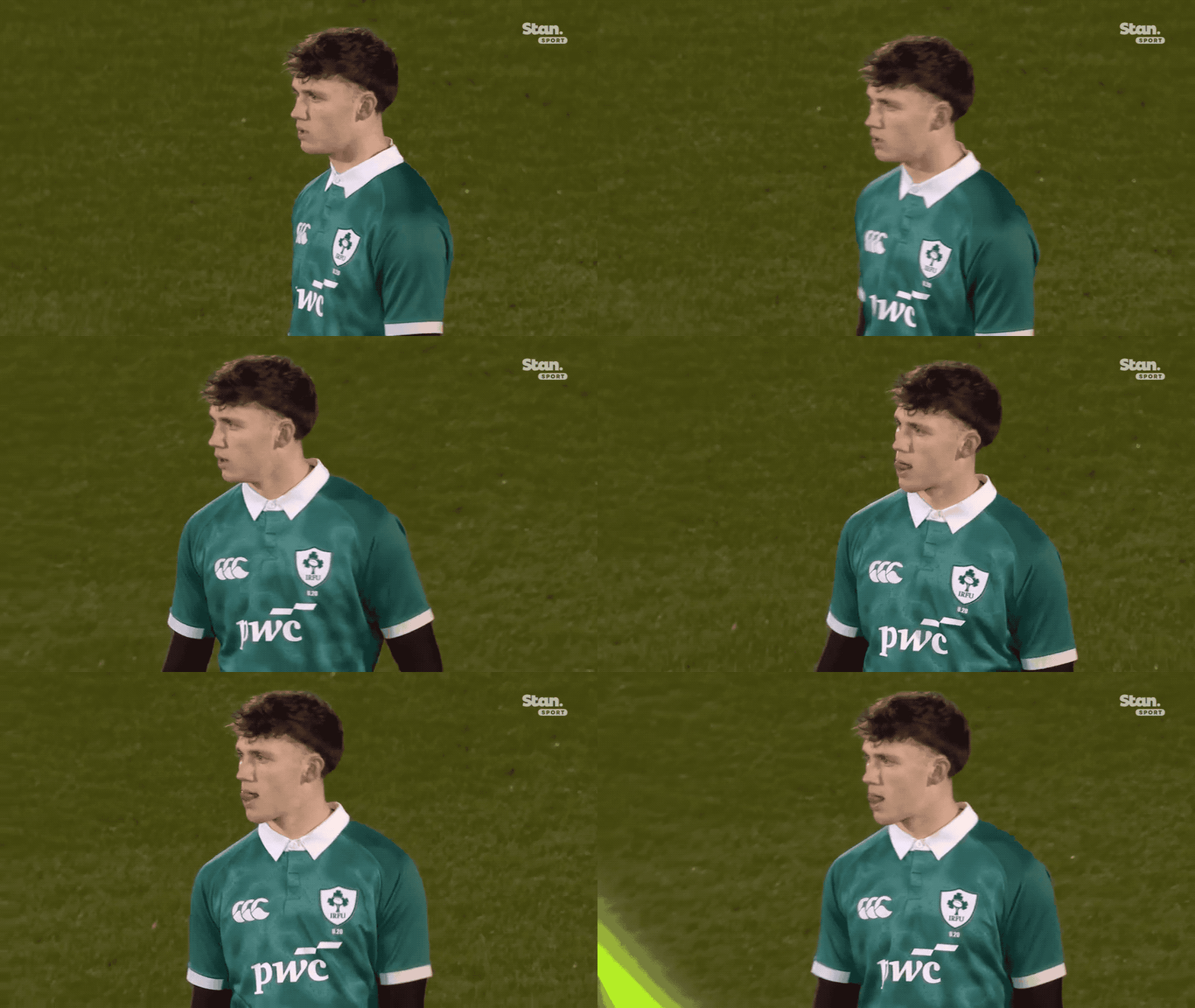
Tom Wood is, arguably, the most valuable U20 player in Ireland over the last few years when you consider his potential impact for both Munster and Ireland in the next two to three years. In the last five seasons, the only other flyhalf to showcase this level of potential was Sam Prendergast. I think Wood, even at this stage, is tracking as the more complete player when viewed through the lens of the modern game.
He missed out on the global perception boost that a strong U20 World Championships brings due to injury, but he didn’t really need that to underline his importance. Given the timing of the contracts, this is the perfect season to move Wood into the 1B spot held by Hanrahan last season, with a view to accelerating his minutes as that guy this season.
He should be signed onto a two-year deal, at least, by December, before anyone else gets any ideas.
Will Harrison and Charlie O’Shea are on different tracks this season. O’Shea will likely play mostly A-rugby and AIL as he gets up to speed with the full rigours of the pro game, but watch out for him when he gets a run at fullback, as I think he will. At a base level, keeping both himself and Wood together for as long as possible is just good business and forcing them both into a chart behind Crowley — who’s just entering his prime — would be a good way to ensure we lose one of them. Players with their potential can and must be utilised as best as possible and, for me, O’Shea has all the fundamentals of an outstanding fullback.
Harrison will, by all accounts, play at fullback mostly this season, but Crowley’s injury spreading into the early going of the season might see him play at #10 in the early rounds depending on a few other factors. I think his best usage for us this season will be at fullback, though, given that you don’t really sign NIQs to stick them on the bench for too long, and as he won’t be displacing Crowley when fit, I see fullback as the natural outlet for him.
Scrumhalf, like #10, is relatively straightforward and has the least amount of contract drama tied up in it of any chart in the squad this season.
Scrum-half — depth chart
Munster, next season · contract expiry in brackets
- Core
- Development
- Academy
Tier 1 · first choice
Craig Casey (2028) Core starter
The clear No. 1 in this chart, signed through the end of 2027/28.
Ethan Coughlan (2028) Core cover
A decent backup with real high points last season alongside some lows. Turns 25 this year, so has the experience to be at least solid cover — and if he sorts his consistency, a good option. Time is on his side.
Ben O’Donovan (2028) Core · high potential
Signed mid-season to the academy last year, then jumped straight to a two-year senior deal after interest from elsewhere. At 21, he has a great chance to nail down the spot behind Casey this season.
Tier 2 · rotation and development
Jake O’Riordan (ACAD3) Academy · development
A good prospect who needs a few minutes this season to gauge his development status.
Christopher Barrett (ACAD1) Academy · high ceiling
An excellent prospect who needs time to settle into the pro game but has an incredibly high ceiling — and could draw attention from elsewhere if he isn’t moved onto a full senior deal sooner rather than later.
Casey is the #1 player in this chart by a distance, but midway through last season there were some real concerns about what was going on behind him.
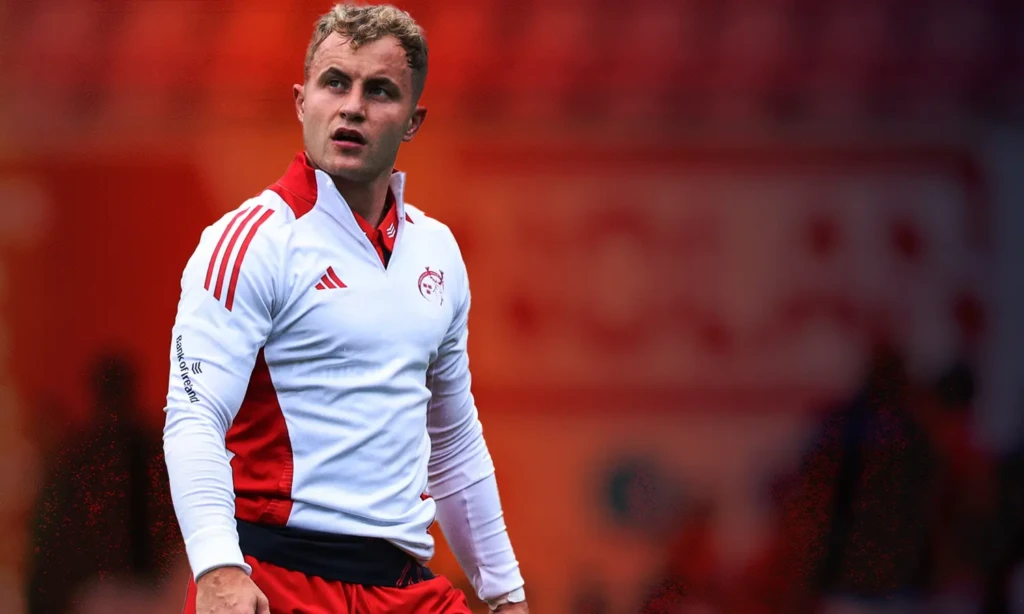
Coughlan has shown flashes of quality in his time at the club, but his biggest issue has been consistency, albeit with the proviso that when he’s looked bad, it’s been closely tied to our pack losing collisions. He’s more prone to fluctuations in that scenario, but he’s got good fundamentals: a good pass, decent kicking and proper pace, but when the pack is under pressure, those qualities can waver. He’s good cover, though, and with a better platform, he might well surprise people with his quality.
In a lot of ways, the emergence of Ben O’Donovan as a genuine URC-level option at least took a ton of pressure off this chart. Without him showing, almost immediately, that he was capable of backing up Casey towards the end of last season, we’d have likely looked abroad to the incredibly scatty and hard-to-predict NIQ market for scrum-halves. At just 21, and with a very different profile to Casey, I’d have him in the box seat to start the season as the back-up.
All of the senior scrumhalves are signed up until the summer of 2028, so there’s plenty of time to assess where we stand post-World Cup. Casey will likely continue to be the 1A for the next three or four seasons at least, but there’s real scope to add a true alternate to him of the ascending scrumhalves in the squad. It could well be Ben O’Donovan, it might be Ethan Coughlan, or it could be one of the academy #9s who both have admirable qualities.
Jake O’Riordan is into his third year of the Academy and, as with all players of that tenure, this is the season where he has to show something. Forwards can get away with training reps and AIL to showcase why they should progress, but halfbacks need on-field minutes. That will be the challenge for O’Riordan this season, but he showed in a few flashes last season that he’s got the pace and tempo to his game that can make for a standout performance when given the opportunity. He, like Barrett, is something of a winger-#9. They are fast, they run deep support lines, and their true quality comes from how well they are able to utilise their fundamentals — pass quality, consistency and kicking — to allow their pace and evasion to stand out.
Chris Barrett first showed up on my radar three years ago when he did this as a winger for CBC against Pres.
In the interim, he made the eminently sensible decision to transition to scrumhalf, but he’s avoided a lot of the pitfalls that come with that. Late-ish converts to scrumhalf often struggle with pass quality and consistency, and while his kicking is still something of a work-on, he’s got the kind of pace, evasion, sniping threat and line-running instincts to be a guy who gets an opportunity with the seniors, scores two or three tries, and then becomes something of an undroppable.
He had a standout U20 World Championships for Ireland off the back of a very strong Six Nations and AIL campaign with UCC, and he comes into the academy with serious interest from abroad.
That tells me two things: first, that his quality is obvious, even at this age, to other clubs outside of the Irish eco-system, and second, that if his progression to a senior deal isn’t quick, those same clubs will offer that deal sooner rather than later.
As a result, Barrett may find himself getting URC minutes sooner than you might imagine for a year one academy man, and if he does, find himself on a senior contract for next season.
