


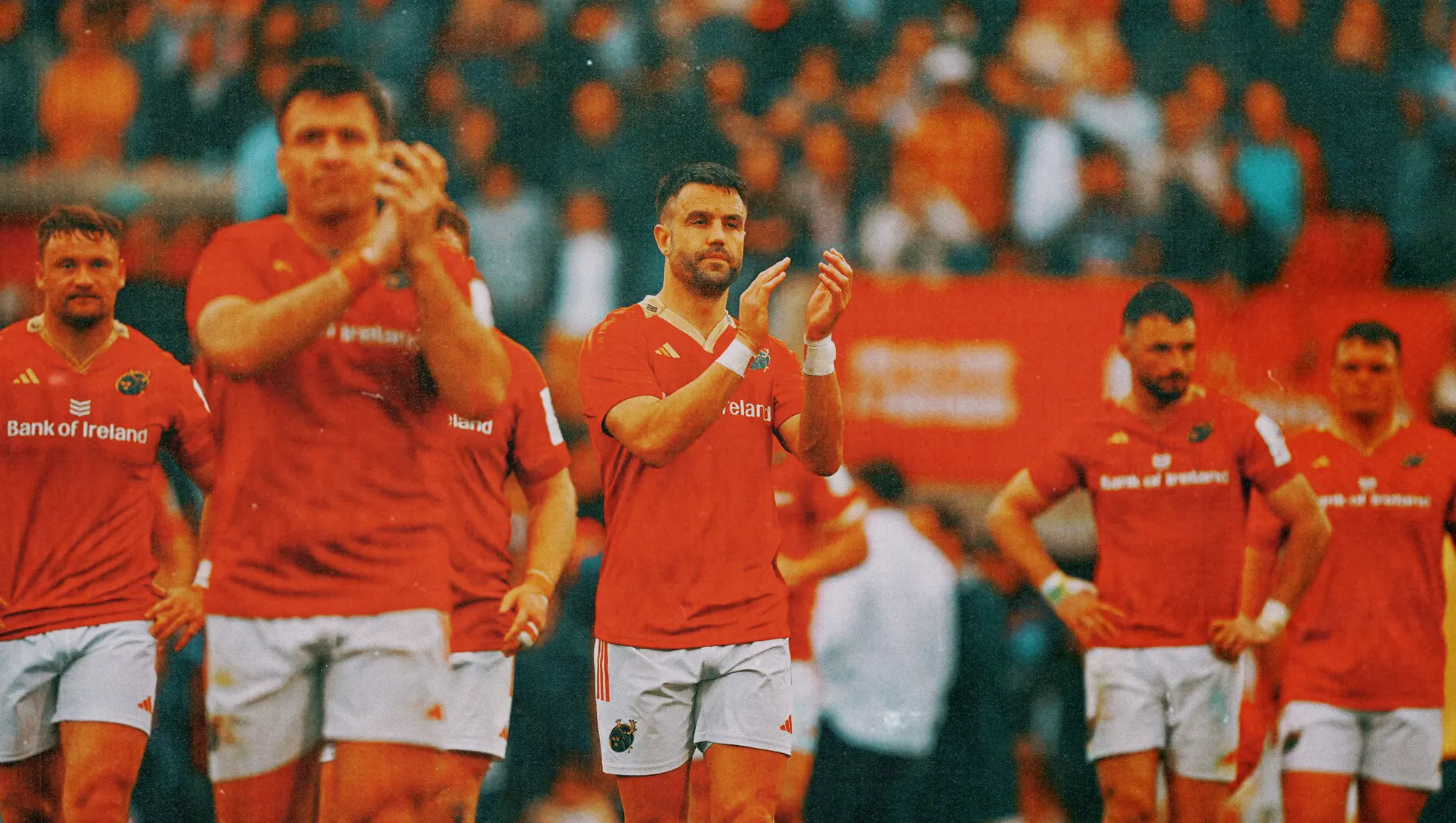
At this point in Munster’s season, I think the need for a big reset at the club is more than overdue, for a few reasons.
On the face of it, the main one is Munster’s precarious position just outside the top eight, but that’s only one of the reasons and not even that big a reason for me. We have a weaker squad this season compared to last season, and, in truth, we’ve been losing depth and quality – and quality depth – since the URC title win of 2022/23. It is more complex than “our budget was cut for three years in a row and Andy Farrell’s use of call-ups meant we lost three IQ players in three consecutive seasons”, but those are the broad strokes.
The reality is that nothing in this life or this sport stays the same. If you’re standing still, you’re going backwards. Of course, every rugby club sometimes has to trade on negative terms. Sometimes you lose players before you’re ready – either through injury or a contract elsewhere you can’t – and it’s impossible to replace them like for like.
Sometimes you have a good young player, or a group of talented young players, that aren’t quite ready to make the step up you’d like individually or, ideally, en masse.
Sometimes, like in the Irish system of a few years ago, you have artificial limits put on your recruitment, so if you can’t find an Irish qualified prop or hooker, you are prevented from signing one from abroad. So if you don’t have a youth prospect ready to go, you find yourself relying on who you have in the building long beyond their prime or taking punts in the IQ market from abroad, which can be unpredictable and a complete waste of money. Let’s put it this way: Mack Hansen and Rob Herring are moonshot outliers. You’re as likely to sign five duds in a row chasing even a Rob Herring-level player as anything else.
So if you want to know why Munster are where they are this season, the headline answer is squad stagnation – part accident, part mismanagement, and part courtesy of budget cuts handed down like tablets from the mount.
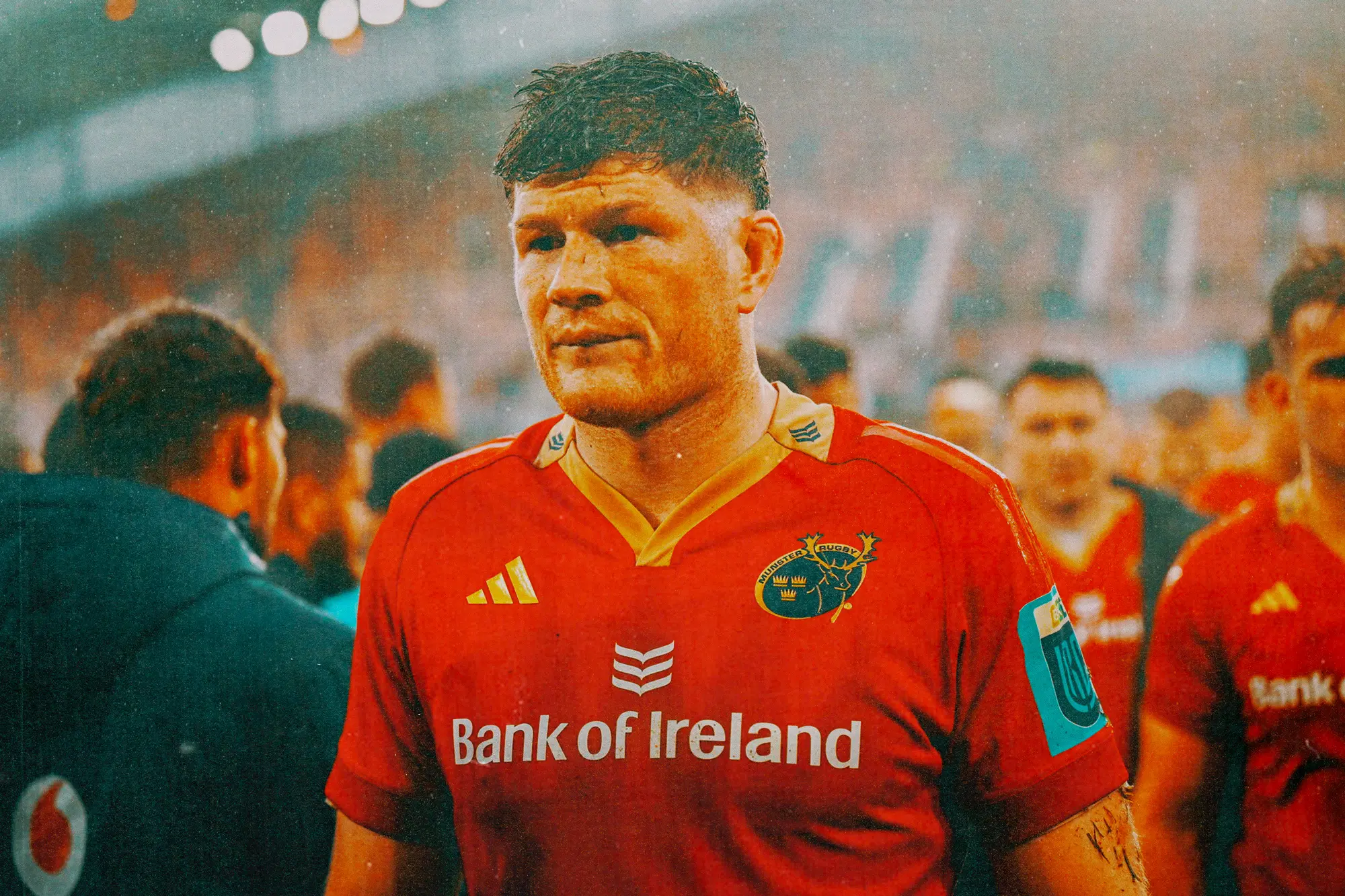
In practice, this means a slow degradation every season. Guys that should have been cycled out or down two seasons ago end up in the same spot or even in enhanced spots because budgets going down means their value as relatively inexpensive squad players goes up. This isn’t their players fault – it’s natural for most slightly sub-elite guys to degrade in performance as they age up and out – but it means that the core areas of the squad, the tight five most notably, needs a rehab, especially with injuries to guys like Salanoa and Edogbo who we hoped would be general level raisers in that unit this season post-injury.
So when guys like Niall Scannell, Stephen Archer, and John Ryan – all bona-fide legends of the club without question – play 53 times this season so far for an average of 731 minutes each, it’s a sign that (a) we’ve had a lot of injuries and (b) we haven’t been able to move on from these players either as a result of those injuries or being unable to upgrade them from within or without.
That’s 22 games where there were 132 possible slots for front rows, and Scannell, Archer, and Ryan had 40.15% of them in 2024/25 – so far.
While there’s always scope for crafty veterans in this game, and their availability has been outstanding, I think it’s fair to say that all of their peaks as both athletes and players were two or three seasons ago, maybe a little longer in some cases.
Jager’s knocks this season, combined with Salanoa missing two full seasons at this point, have meant more reps for Archer and Ryan than planned, certainly in Archer’s case after he signed back-to-back six-month deals. Scannell’s minutes this year have been massive, in part because of a few injuries to Diarmuid Barron – combined with iffy individual performances – but also the realisation that Chris Moore wasn’t a high level option and the decision this year to move on from Scott Buckley and Eoghan Clarke, who we signed to a one year extension last season when he came to the province on a short term deal.
Diarmuid Barron has 40% of the possible hooker slots so far this season, with Scannell taking up 45%. This is a HUGE percentage and is a complete outlier at this level. That means 15% of the possible slots are split between Eoghan Clarke, Danny Sheahan – with only Clarke getting 56′ actual minutes at hooker because Sheahan played his role off the bench in the backrow – and Lee Barron.
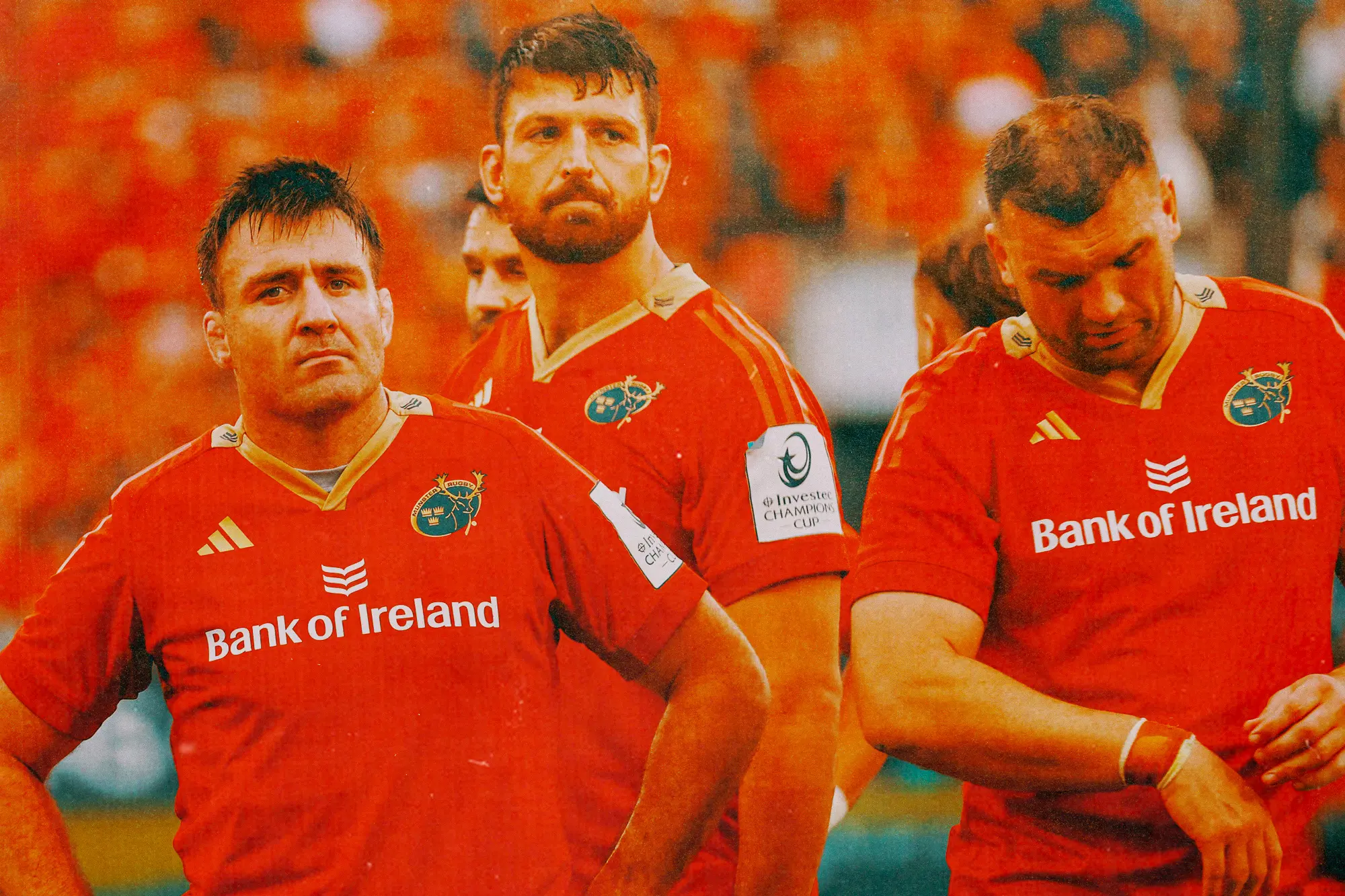
Why do Diarmuid Barron and Niall Scannell look like they’re trudging around the place the last few weeks? That’s why.
By the same token, Jean Kleyn only being available for 16% of the 66 possible lock spots (assuming a 5/3 split most weeks) and Edogbo being available for zero of those so far has also been pretty costly, especially with the loss of RG Snyman.
That has meant Fineen Wycherley – an undersized lock in the modern game – playing in 32% of those slots, and the rest being filled in by Beirne (21%), Ahern (12%), Evan O’Connell (7.5%) with Gavin Coombes filling in as a lock in the second half of games 6% of the time, assuming a 5/3 split for half of those and not including 6/2 splits that were essentially to accomodate Peter O’Mahony doing 50 minutes before being replaced by Ahern.
Add in Loughman only featuring in 18% of the possible loosehead blocks, Wycherley featuring in 20% and Kilcoyne managing just 4%, has meant loan signing Dian Blueler still has 15% of our loosehead block appearances this season. John Ryan has made up 11% as named on a teamsheet, but has covered across on a few occasions, Mark Donnelly has a pretty decent 9% for his age and relative development while Kieran Ryan has a whopping 18% of our loosehead prop slots – enough to be our second highest usage player in the position by relative appearances.
***
There are other areas where squad stagnation has hit. Our midfield rotation has been hit all season by a few knocks to Alex Nankivell and has only been kept going by a remarkable run of durability by Tom Farrell, who has played 50% of the possible starting midfield spots at outside centre.
We had planned to use Farrell, Nankivell and Frisch in that unit but Frisch’s move to Toulon last season mid-contract to chase test rugby with France meant that we had to bring in Bryan Fitzgerald as a part-time backup option in the summer and use Rory Scannell in 6% of our starting midfield slots. Sean O’Brien has been injured himself and mostly covering the back three, but has rotated into midfield more over the last few weeks.
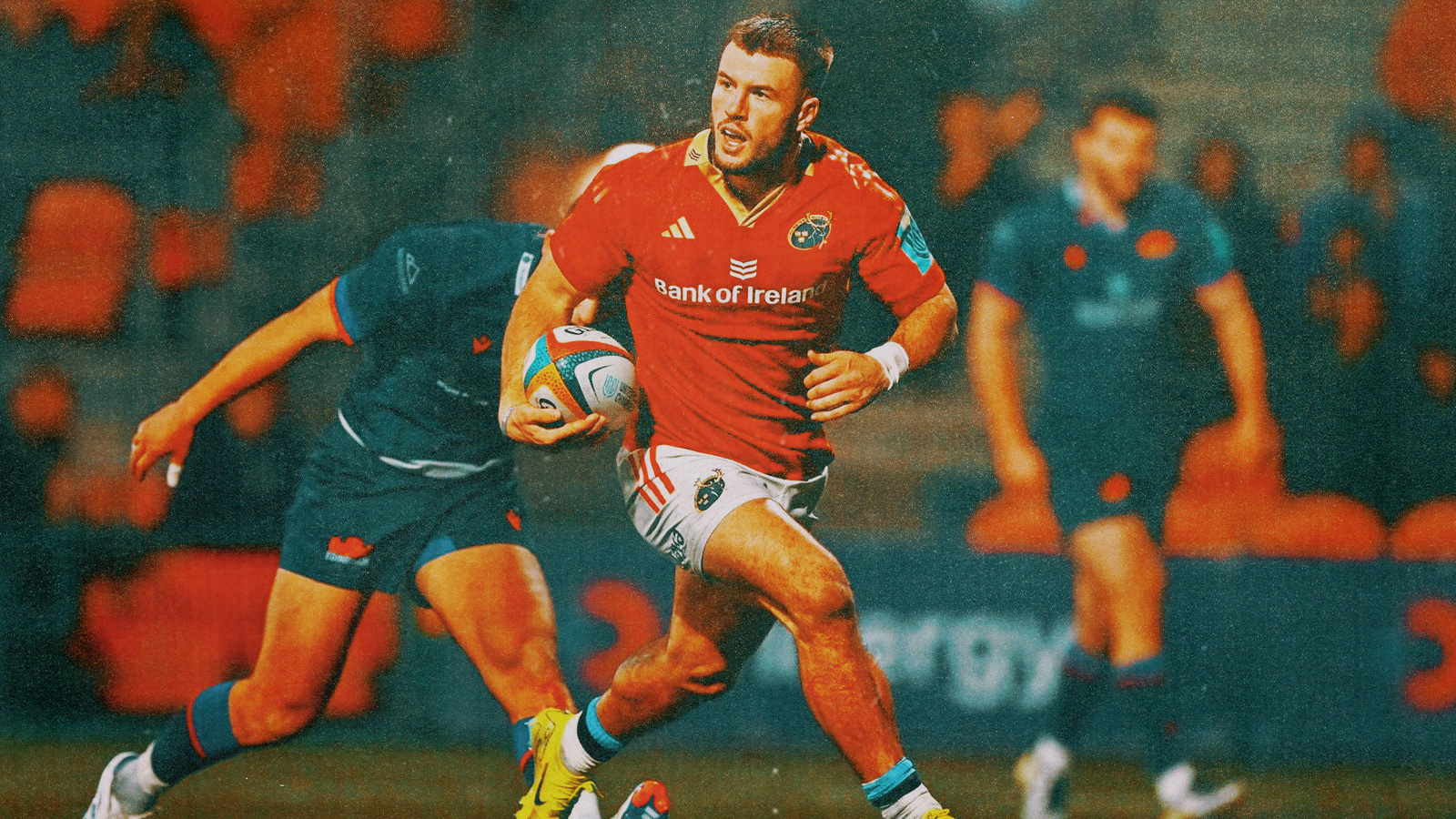
The biggest area of overload is probably in the #10 jersey, especially since the turn of the year. Munster have only run with a specific back-up #10 on the bench 14 times this season. So that means for just 63% of the season, we’ve had the option to split game time at #10. Billy Burns’ injuries have wrecked his season as Crowley’s potential backup, even allowing for the really poor performances he had at the start of the season.
This has meant that Jack Crowley has played 100% of every eligible game he’s been fit for this season. He has played 80 minutes back-to-back-to-back since the Connacht game at the beginning of this block, with no plausible player who can come in to even freshen things up mid-game.
Even accounting for Burns injury, the current alternative is utilising Tony Butler in a larger role which, given the importance of the games, just isn’t plausible.
This is exactly where Joey Carbery would be showcasing his value and where we hope JJ Hanrahan will do so next season. It wasn’t possible to contract Carbery and Crowley, even allowing for the fact that Carbery absolutely needed a change of scenery. His contract value was too high for what we were able to afford in that spot. The people I’ve spoke have told me independently that we had to come in under 100k for that primary back-up spot at #10. Carbery is on at least double that in Bordeaux.
Without that quality backup, you need players to go back-to-back-to-back during key weeks of the season, and if they don’t get injured, performances will falter through fatigue, even if we allow for the concept of being “battle-hardened”.
All of this translates to a squad that is running on fumes in key areas as the season draws to a close. When you strip out guys like Snyman, Frisch and Carbery – all players in their prime – and you’re unable to replace them (either at all in Snyman and Frisch’s case, or like-for-like in Carbery’s), you will see a decline.
Next season sees crucial reinforcements at loosehead, hooker, #10 and midfield with another prospective signing at tighthead. There will also be scope for guys like O’Connell, Gleeson, Quinn, Sean and Edwin Edogbo, Sheahan, Foxe and a good few others to become more regular features of Munster’s season, but they’ll have to.
With a bit of luck and one or two more bodies in through the door before the start of next season, as well as a sea-change in S&C – more on that soon – we should be in a position to make sure the right players are in the right spots for longer and, crucially, at key points in the season without being overloaded.
