


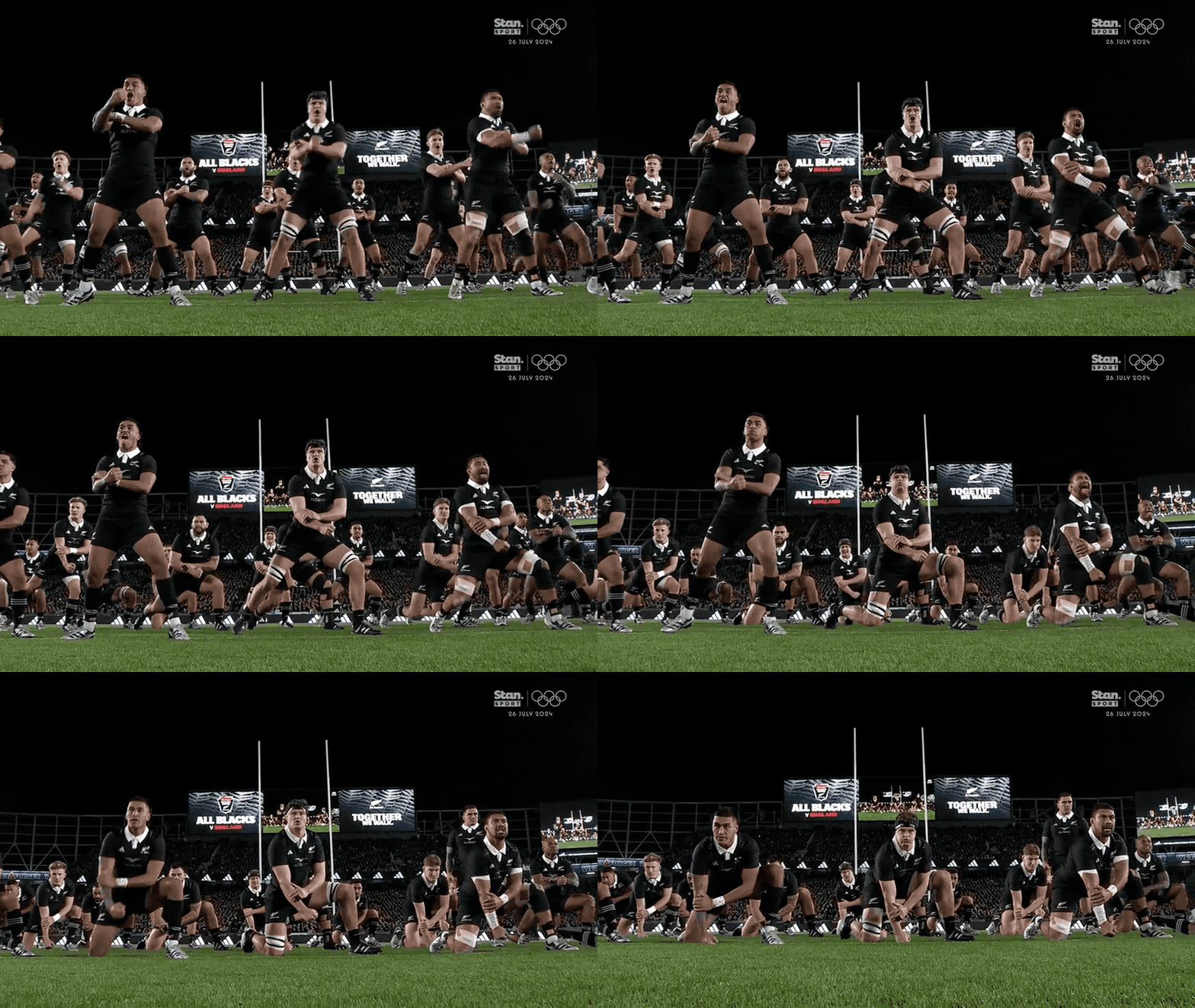
The All Blacks under the stewardship of Ian Foster were not the fearsome winning machine that we’ve come to expect as standard. Foster was the chain-end of a line of coaching succession that stretched back to Graham Henry in 2004. Appointing Foster in the aftermath of Steve Hansen’s exit instead of the more popular (and some would say obvious) choice of Scott Robertson was classic NZRU to that point. Foster had been an assistant in the All Blacks set-up, most notably during their killer run as World Champions post-2011 when he was first appointed. At the 2015 World Cup, they became back-to-back World Champions and were arguably the best test side of all time with Foster as a key part of that elite set-up.
Post-2015 World Cup, the All Blacks naturally began to lose a little bit of their aura as all-time greats like Dan Carter, Richie McCaw and Conrad Smith all retired. To compound this, key parts of the squad began to age out like Jerome Kaino, Kieran Read, Owen Franks, Dane Coles, Sonny Bill Williams and Ma’a Nonu. The All Blacks weren’t replacing these players with like-for-like quality because that was almost impossible. To a certain extent, they had already done the impossible by plugging in Beauden Barrett for Dan Carter at #10 which, for a time at least, looked to be one of those vanishingly rare cases where a test side replaced one all-time great flyhalf with another.
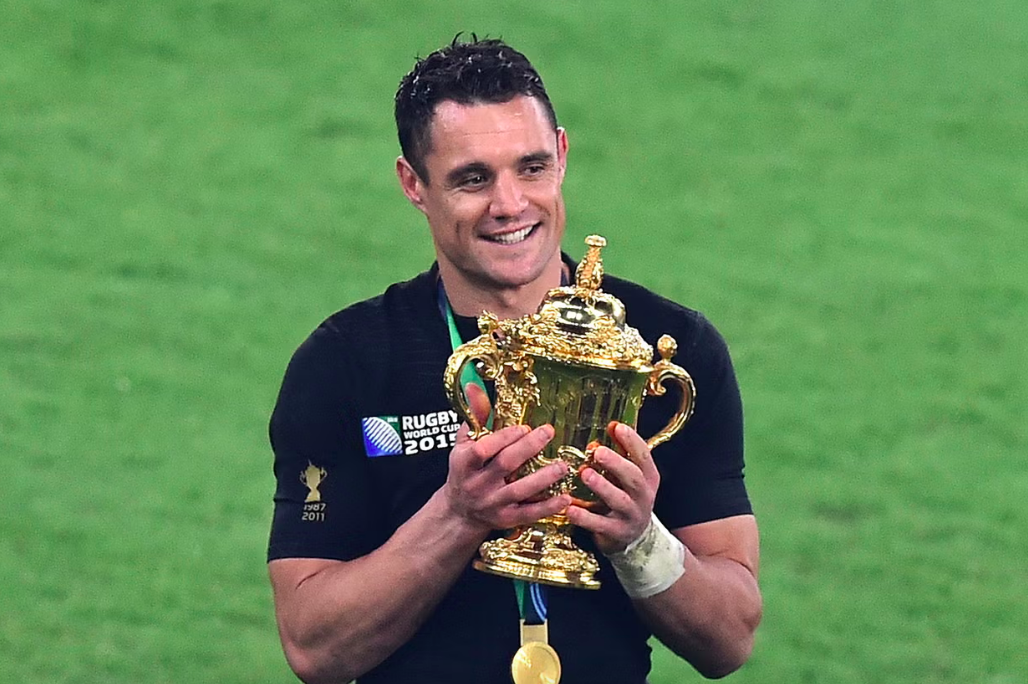
I think Beauden Barrett found Carter’s crown a little too heavy. New Zealand lost to Ireland for the first time in 2016, just one year after becoming double World Champions. That loss had a lot to do with Ireland’s improvement under Schmidt but we can’t disentangle it from an All Blacks decline, either.
A year later the All Blacks would draw a series with the Lions – another sign of decline, in my opinion – before going on to lose to Ireland again in 2018. They’d go on to smash Ireland in the 2019 World Cup quarter-final a year later after beating the Boks in the pool stages, only to get smashed themselves by England in the semi. They finished third in that World Cup to add to their drawn Lions series and three Rugby Championship trophies out of four in that four-year cycle.
This is an objectively outstanding series of successes for anyone except the All Blacks that we had come to know from 2004 to 2015. It was time for a change at the top and this is where NZRU’s innate conservatism drew them to Foster, as opposed to the more radical choice of then Crusaders coach Scott Robertson.
Foster was the safe, continuity pick; a stalwart of the All Blacks coaching group when they were at their terrifying best who knew the players, knew the systems and had already navigated the political waters around the biggest brand in the sport. I understand the NZRU’s conservatism here; at the time Robertson was a very popular choice but he was incredibly inexperienced as a head coach. In 2019, he had only coached at the elite level of the game for two seasons, albeit two incredibly successful ones where he won back-to-back Super Rugby titles.
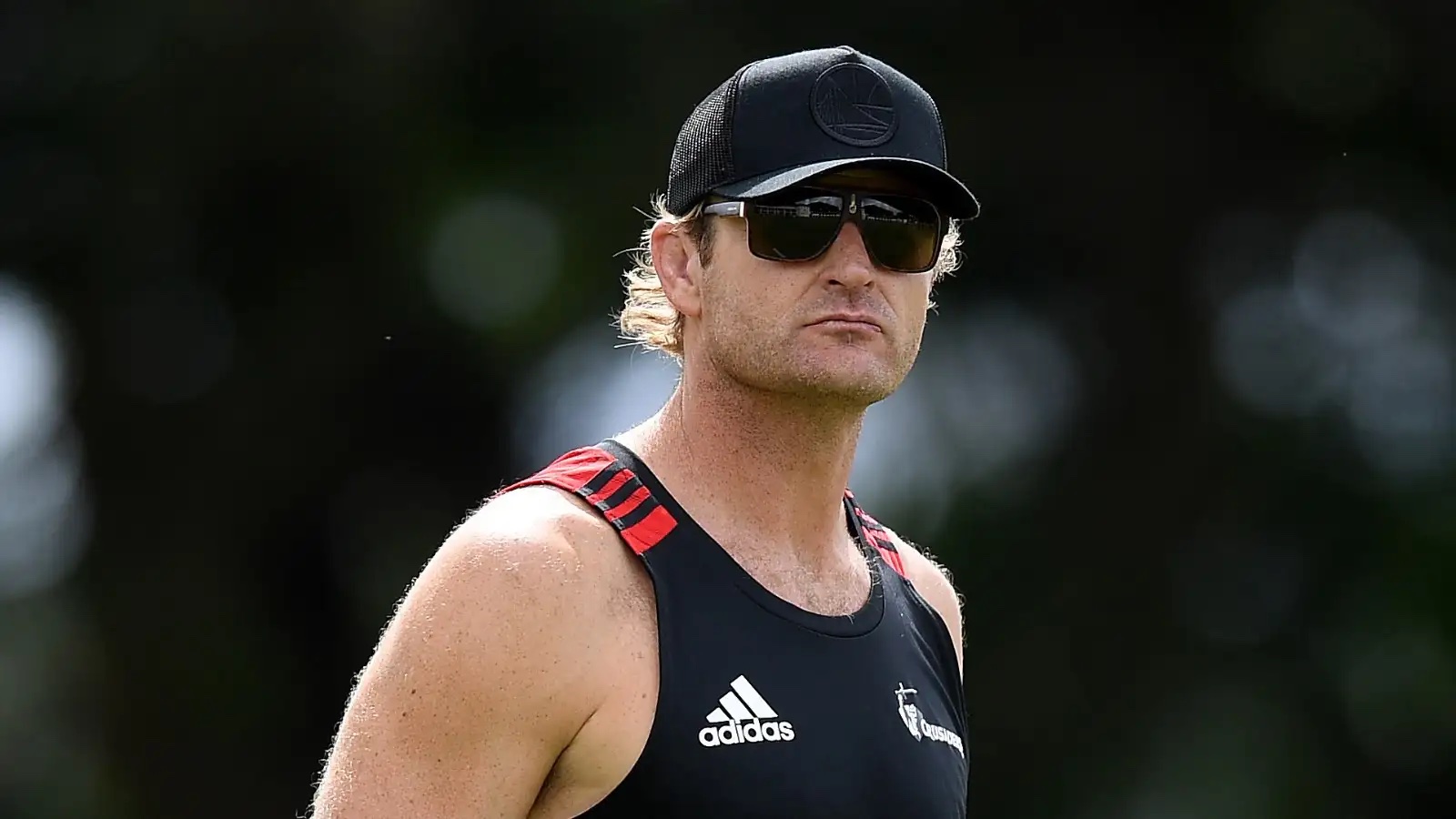
Before coaching the Crusaders, Robertson had a mixed time in charge of the Baby Blacks where he won the World Championships in his first season before failing to get out of the pools a year later but, as with a lot of things at that age grade, a mediocre year for you can end in massive success if everyone else is having a bad year. Robertson’s first year with the Baby Blacks was arguably a wild overperformance given the quality available to him, with his second year being a wild under-performance with a side dotted with future All Blacks like Dalton Papali’i, Luke Jacobson, Quinten Strange and Jordi Barrett.
So I won’t say there was uncertainty about Robertson’s quality but there were real questions in New Zealand about the possible ramifications of installing a “rookie” coach at this level when the All Blacks were so visibly declined from their peak. The NZRU can’t afford to take risks with a brand that important to, not only the game of rugby union in New Zealand but to New Zealand as a whole.
It’s a bit like if you’re ordering pizza for a party. If you just order Dominos and the pizza is bad, your friends will blame Dominos. If you order pizza from the new artisan shop down the street and the pizza is bad, they’ll blame you.
So Ian Foster was duly appointed and I think it’s safe to say that despite being a kick of a ball away from winning the 2023 World Cup and dominating the Rugby Championship for his entire tenure, Foster was something of a disastrous hire. It made all the sense in the world to hire him but the All Blacks looked jaded from almost his first serious game.
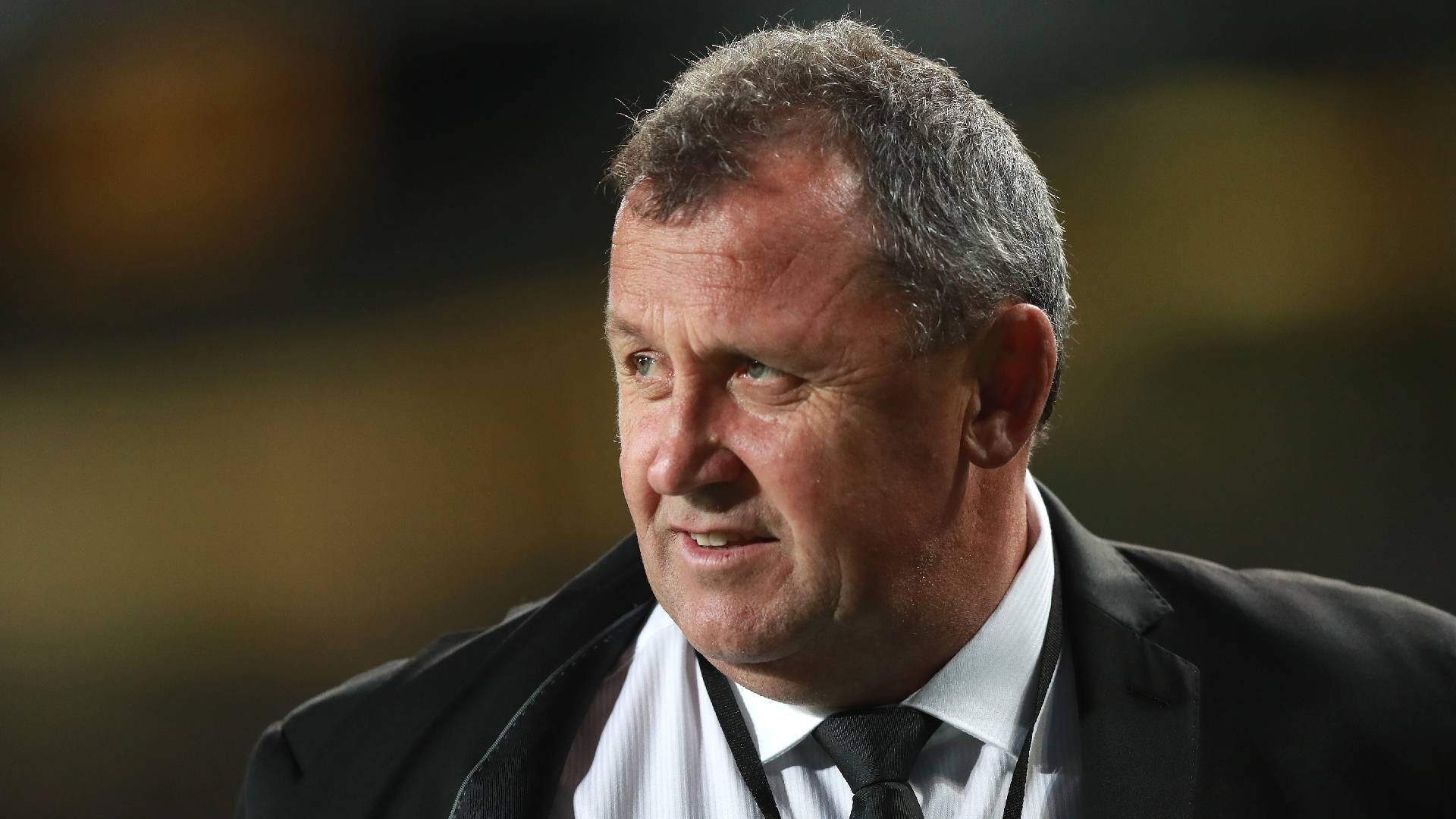
He won four Rugby Championships in a row, sure, but you could argue that the tournament has never meant less in that time.
Foster’s win rate of 69% was the worst since Laurie Mains in the mid-90s. When the All Blacks lost a home series to Ireland in 2022 and followed that up with a limp loss to the Springboks a month later, he needed a massive All Blacks win in Ellis Park to, essentially, save his job. He was publicly backed by the NZRU in the aftermath of that win.
“I feel good about the confidence that I’ve got from Mark (Robinson) and Stewart (Mitchell) in terms of supporting both myself and the group,” Foster said.
“I think we’ve got our leadership and our senior players at a point that is probably as strong as I’ve seen them in recent years, and they want to own it. And that’s a massive part of where we need to go, so they’re pretty good foundation points.”
Foster sacked John Plumtree and Brad Mooar and replaced them with Jason Ryan and Joe Schmidt. Parallel to this, the NZRU told Scott Robinson in the aftermath of the decision to keep Foster on that he would have the job post-2023. The All Blacks playing squad made an emotional plea to the NZRU to retain Foster until the World Cup and, to keep the All Blacks equilibrium on an even keel, the NZRU relented. They didn’t want a playing revolt at the same time that results were in the toilet.
As Sam Whitelock would go on to say in his autobiography;
“It’s no great secret that our win over South Africa at Johannesburg in August 2022 saved Foster’s job. We were coming off five losses in six Tests, including that unprecedented home-series loss to Ireland,” Whitelock wrote.
“Long story short, there was a group of players that went to New Zealand Rugby chief executive Mark Robinson’s room following the Test to lobby strongly for Fozzie to remain in the role.
“As part of the leadership group I was among them, but I can honestly say I was blindsided by the idea. Others in the group were really keen on going, while some members of the squad didn’t even have a clue it was happening. Was it the right thing to do? Good question. It’s a sticking point for me because, as I’ve said, it is not our job as players to back or sack the coach. If you flip that scenario on its head and we had a group of players approaching the CEO to have a popular coach sacked, how do you think that would be received by the public?
“What we had was a group of emotional people, in an emotional situation, influencing decisions that should not be based on emotion.
“To me, what happened that night is not what good leadership looks like. As a player, the first thing you have to be loyal to is the team, the jersey, the fern, whatever word you want to use.”
As you can imagine, it was something of a false dawn. The All Blacks would lose at home to Argentina, the first time they had ever lost to Los Pumas in New Zealand. A Joe Schmidt-inspired shift to more pragmatic counter-transition rugby was an interesting departure at home to the Springboks later in the Championship but it only worked fully for them in fits and starts.
They’d still win the 2023 Rugby Championship but a few weeks before the World Cup, Foster’s All Blacks shipped their biggest-ever defeat in Twickenham to the Springboks before losing again to France in the first game of the World Cup proper.
They had a very soft run of games thereafter – and picked up a few facile wins over some pool minnows in the process – before blowing away a nervous-looking Ireland side inside the first twenty minutes of the quarter-final before doing just enough to hold off a late comeback in a game they were never losing on the scoreboard.
Argentina never stood a chance against them in the semi-final and, despite everything, they only missed out on becoming four-time World Champions by a single point in the final. A loose last-minute drop-goal would have seen Foster’s All Blacks finish their World Cup cycle with four Rugby Championship trophies and the Webb Ellis but the fundamental fact remained that things were not right.
Sam Whitelock spoke about this directly;
“We needed to change. I recognised that after the northern tour at the end of 2021, when we were well beaten by France and Ireland and, in my opinion, had prepared too many excuses for our underperformance. The balance of the coaching group wasn’t right. They all had strengths, but we didn’t have enough strengths across the board. There were holes in the group.
“Just as I believe the All Blacks is no place to select development players, it should also be reserved for the best of the best coaches, but the appointment process doesn’t really allow for that because you’re forced to assemble a team beforehand.
“In fact, the best coaching team might be a mix of candidates from the various groups put forward. Fozzie didn’t have enough international experience and skills in his team.”
That brings us to Scott Robertson and his long-anticipated tenure as the All Blacks head coach. When Foster was floundering and flailing with the All Blacks, Robertson was the main man at the head of a Crusaders winning machine. I wasn’t in the know on whether or not Scott Robertson was nailed on to be the new All Blacks coach in 2022, but when I saw Jase Ryan leave the ‘Saders for the All Blacks gig without him… let’s put it this way; I felt it was an inevitability that they would coach together in black sooner rather than later.
So what can the All Blacks expect as we track them during this year’s Championship?
Well, for a start, Scott Robertson has immediately set about changing the athletic profile of the All Blacks. This was enforced, in some ways, with several key retirements, sabbaticals and overseas transfers in place in the aftermath of the 2023 World Cup. Longtime veterans Dane Coles, Sam Whitelock, Aaron Smith and Brodie Retallick all retired from international rugby with Sam Cane to follow at the end of the 2024 season. Richie Mo’unga took a three-year contract in Japan that looks to have ended his test career, while Nepo Laulala and Leicester Fainga’anuku took up big money offers in France that have taken them out of All Blacks contention. That’s a lot of caps and leadership walking out the door, especially in the back five, but that gives Robertson an opportunity too – and he’s taken it.
He’s brought in some strapping newcomers – Sam Darry, Pasilio Tosi, George Bell, Wallace Sititi and Samipeni Finau in the pack – and has a chance to build on some guys without a tonne of caps under the previous coach like Asafo Aumua, Tamaiti Williams and Josh Lord. To be honest, it’s been long overdue. Whitelock and Retallick are legends and all-time greats but at times during the last few years, craft and guile were about all they were bringing. That is an underrated quality, sure, but the modern test game leans more on brutality, especially in the front five. Scott Barrett is a loss for the early rounds of the Championship, for sure, but that gives Robertson some room to experiment too. Quite frankly he needs to see how his newer lock and half-lock rotations look against the likes of South Africa and Australia before the November internationals up north.
This week, Robertson has gone for a lighter build against Argentina in Wellington with a more familiar double combo-flanker and power forward back row build behind the tight power of Tupou Vaa’i, Ethan Groot and Tyrel Lomax. Look for the All Blacks to go with a half-lock against South Africa and Australia with Samipeni Finau the favourite to hoover up most of the minutes there. Scott Barrett and Patrick Tuipulotu are the two incumbents in lock post Whitelock and Retallick but both men are injured; that gives some early opportunities to Darry and Lord, two athletic stretch locks.
Stylistically, watch for the All Blacks to play high-kick volume counter-transition rugby here. That will translate to a Kick to Pass ratio of 1:4/5 with a higher Pass Per Carry ratio than they showed in the second test against England; around 1.5/6. The All Blacks have a square to circle in that they want to play counter-transition rugby and have multiple talented kickers in their backline to facilitate that and genuine gas on the wing to support it, but the build they need against the Boks, France, England and Ireland requires more size and heft than can support a high pass per carry version of counter-transition. They were really vulnerable at the breakdown against England when they had a wider passing game, so the selection of Blackadder instead of Finau this week – along with Lienert-Brown at #13 – is Robertson experimenting with his ruck support units.
I fully expect New Zealand to run away with this game, especially on transition, but watch for their 3-3-X shape on settled phase play as well as playing with a lot more depth than you typically see with that shape. Robertson and his staff have a grand plan to break teams who play a narrow edge blitz, like England, France and South Africa by killing them with depth, layers and speed. Look out for variants of that in this one.
NEW ZEALAND XV vs ARGENTINA
1. Ethan De Groot (25)
2. Codie Taylor (87) (Vice Captain)
3. Tyrel Lomax (34)
4. Tupou Vaa’i (28)
5. Sam Darry (1)
6. Ethan Blackadder (11)
7. Dalton Papali’i (34)
8. Ardie Savea (84) (Captain)
9. TJ Perenara (82)
10. Damian McKenzie (50)
11. Mark Tele’a (11)
12. Jordie Barrett (60) (Vice Captain)
13. Anton Lienert-Brown (73)
14. Sevu Reece (26)
15. Beauden Barrett (126)
16. Asafo Aumua (9)
17. Ofa Tu’ungafasi (59)
18. Fletcher Newell (16)
19. Josh Lord (4)
20. Wallace Sititi (1)
21. Cortez Ratima (2)
22. Rieko Ioane (71)
23. Will Jordan (31)
