

Coaching Munster Rugby is an immense job.
The scale of this organisation and the love and interest people have for it are dizzying. I’ve only seen a small degree of it in doing Three Red Kings, a fraction, and it can be immensely intimidating. I was walking to the Munster vs All Blacks (XV) game back in November after the pub with herself and a group of friends and family. I wasn’t even working the game, and I had four different people come up to me on the way there to shake my hand and tell me that they love what I do and talk about the game. Five did it after the game on the walk back.
It’s Munster; it means more.
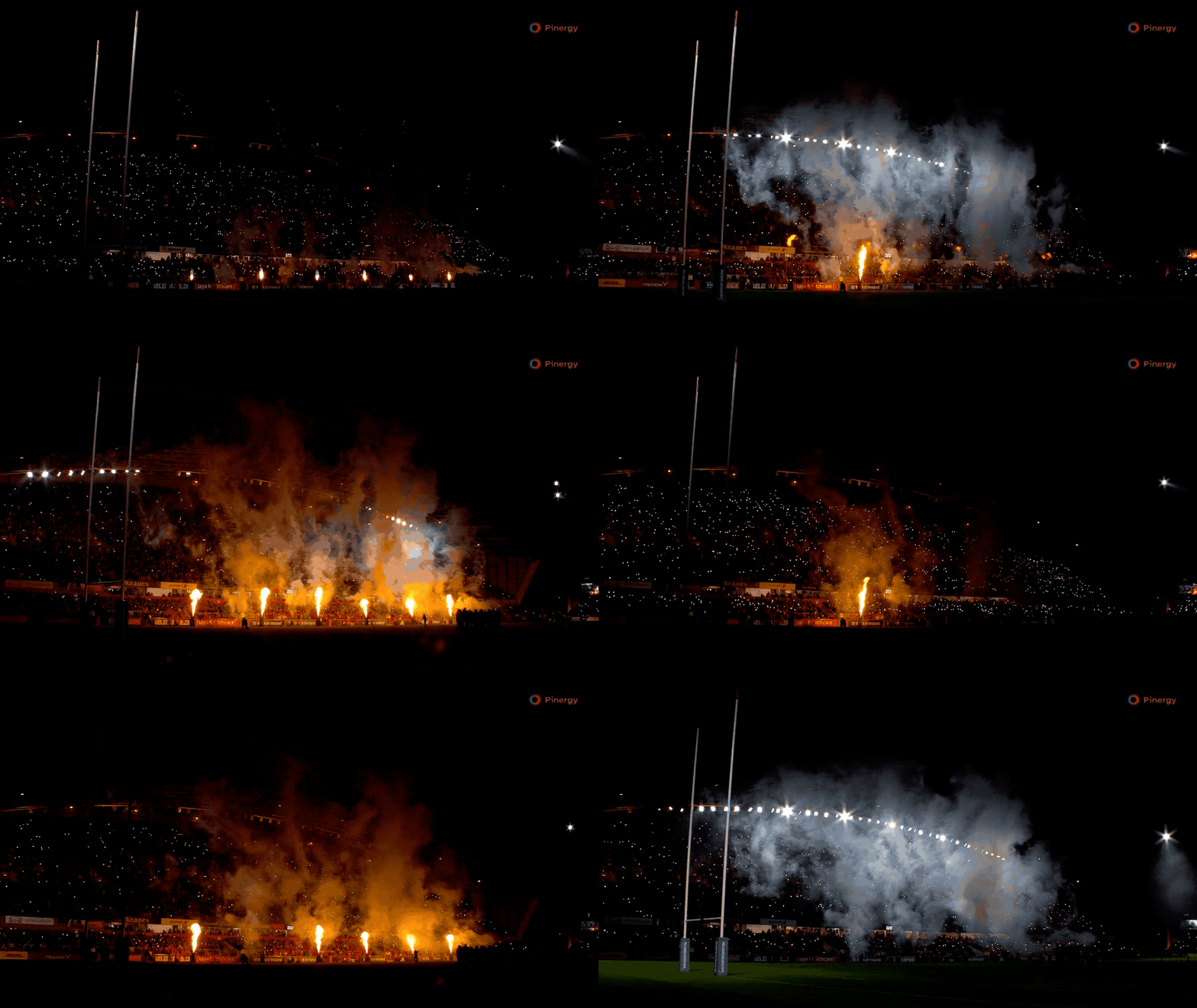
Imagine what it’s like being a player.
Imagine what it’s like being the head coach.
It doesn’t matter how Munster are doing, the interest level never wanes.
When Munster are doing poorly, it’s like you’re standing in front of a hurricane in your jocks.
When Munster are doing well, it’s as if you’re the warm, fuzzy centre of the world, and everyone wants to shake your hand.
If you win something for Munster? Shit, you cease to be a normal person, and you start becoming a God.
Being the head coach, the focal point of a club of this scale, is like being under a magnifying glass on a sunny day. The heat can either make you or melt you. You know the ones it made, and the ones it melted.
When I spoke to Johann Van Graan – someone who I think got out before it melted him fully – about this in 2019 and then again a few years ago when I met him in Musgrave Park after he joined Bath, he told me three things;
- Munster are never given the context of budget differentials or player quality; you’re expected to win as if you’re expected to perform miracles. Frustratingly, sometimes you do, which makes all the times you don’t hurt even worse.
- You only realise how intense the job is after you leave.
- You’re a Munster man for life.
He didn’t directly tell me that the only job that could come close from an intensity/scrutiny perspective would be the Boks’ job, but that’s the impression I got. Oh, and that he was fantastically happy at Bath; fantastic club, fantastic city, but “very different”.
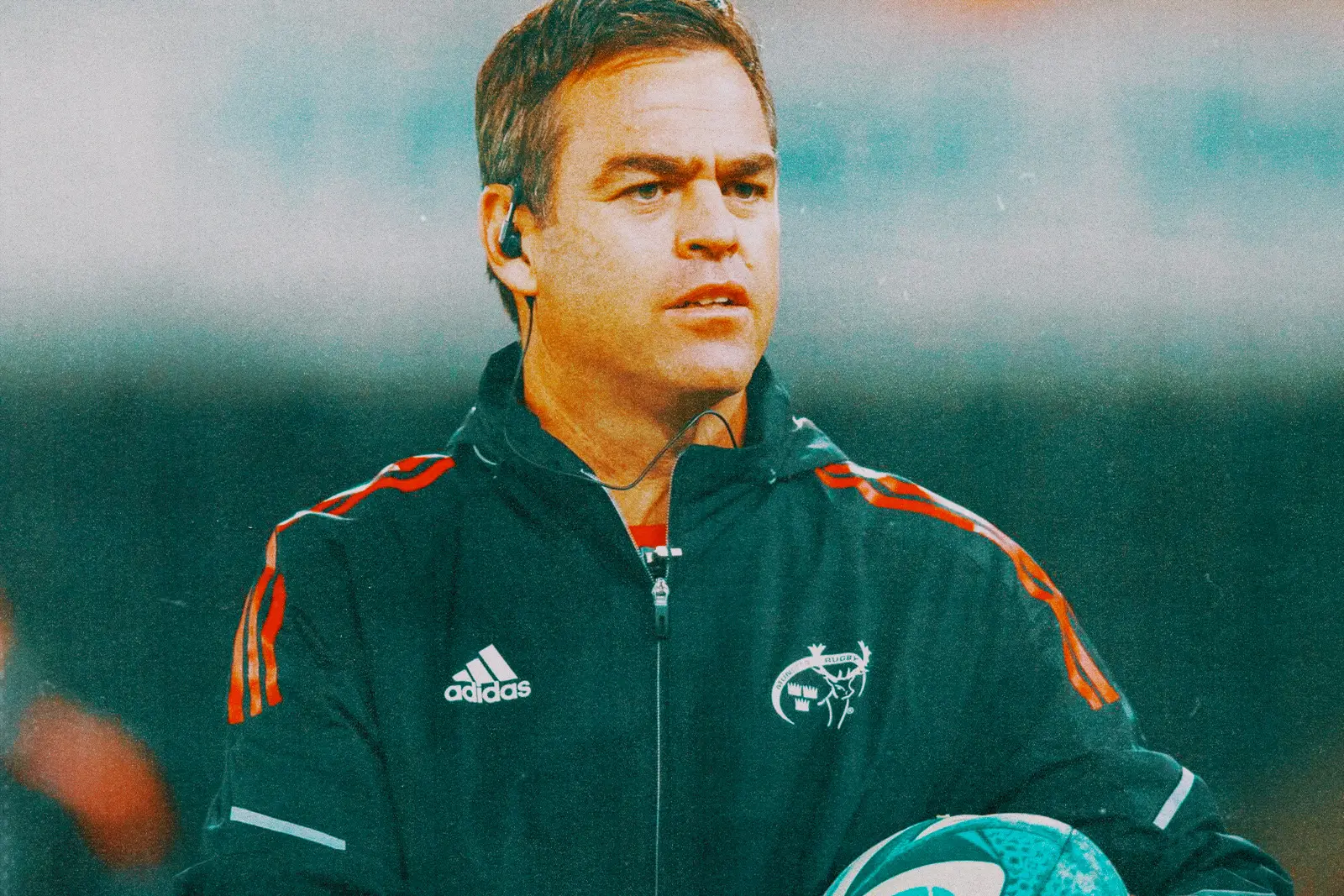
I still think Johann gets a rough ride, perception-wise. A good man who arguably deserves more credit for the URC win in 2022/23 than he’ll ever get. He couldn’t have done it, but I don’t think we could have done it without him either, if that makes sense.
Anyway.
Johann Van Graan is in the past. So is Graham Rowntree.
The new man, Clayton McMillan, will still have to unravel some of the problems laid down by both of his predecessors when he arrives in late June, early July. Some problems will be unravelled immediately, some will take a little longer. What comes after the problem is often the hardest part.
McMillan will need solutions, and lots of them, if this squad is to achieve what I think it’s capable of; and that’s a European Cup win and another URC title in the next three years.
Never Lost, Just Eroded
Talking about a squad “culture” in rugby often falls into the worst kind of guesswork that looks at your recent Win/Loss record and assigns “good culture” next to a team with lots of Ws and “bad culture” next to a team with a lot of Ls. It’s a good job the Llanelli Scarlets officially shortened their name, I’ll put it that way.
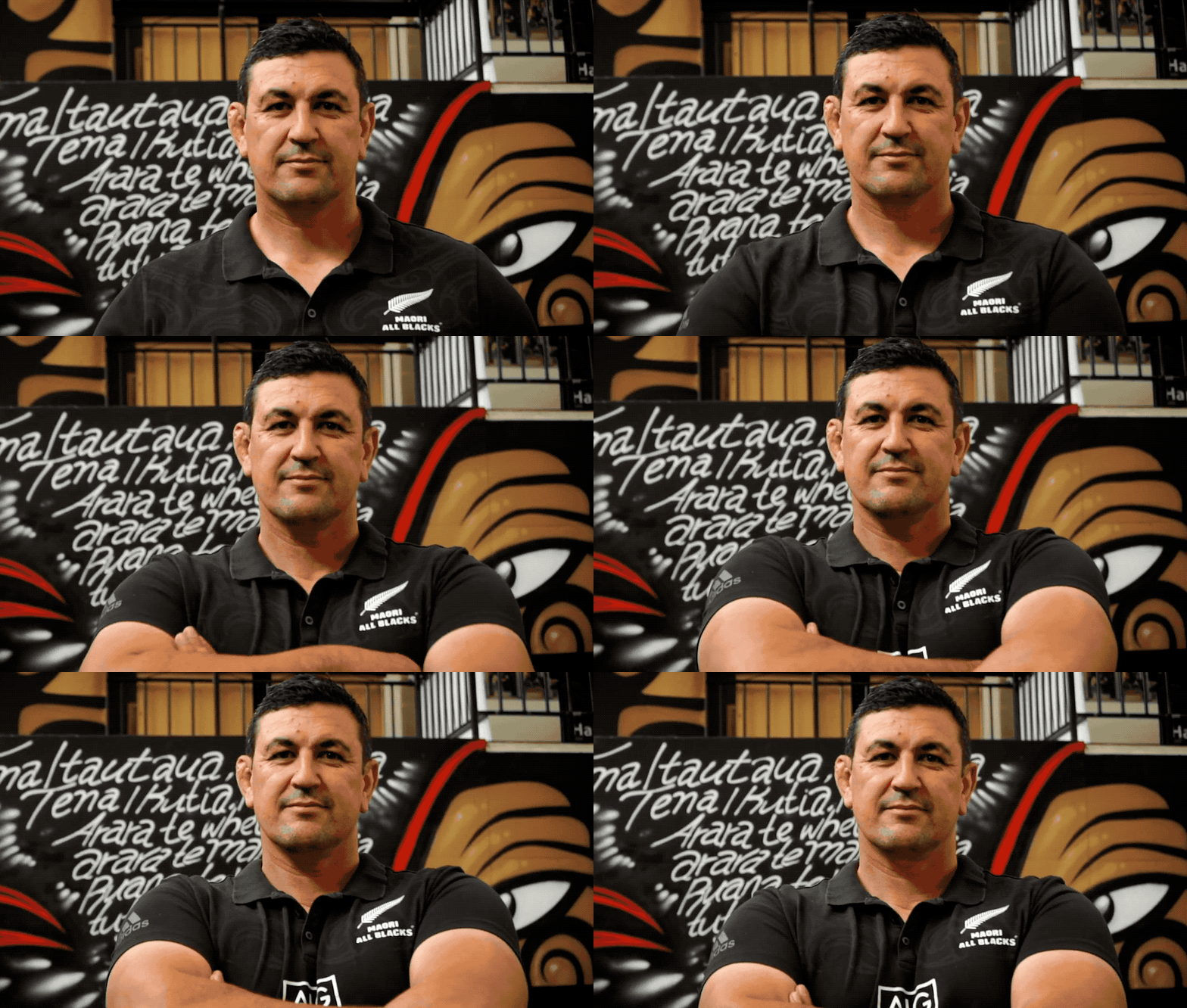
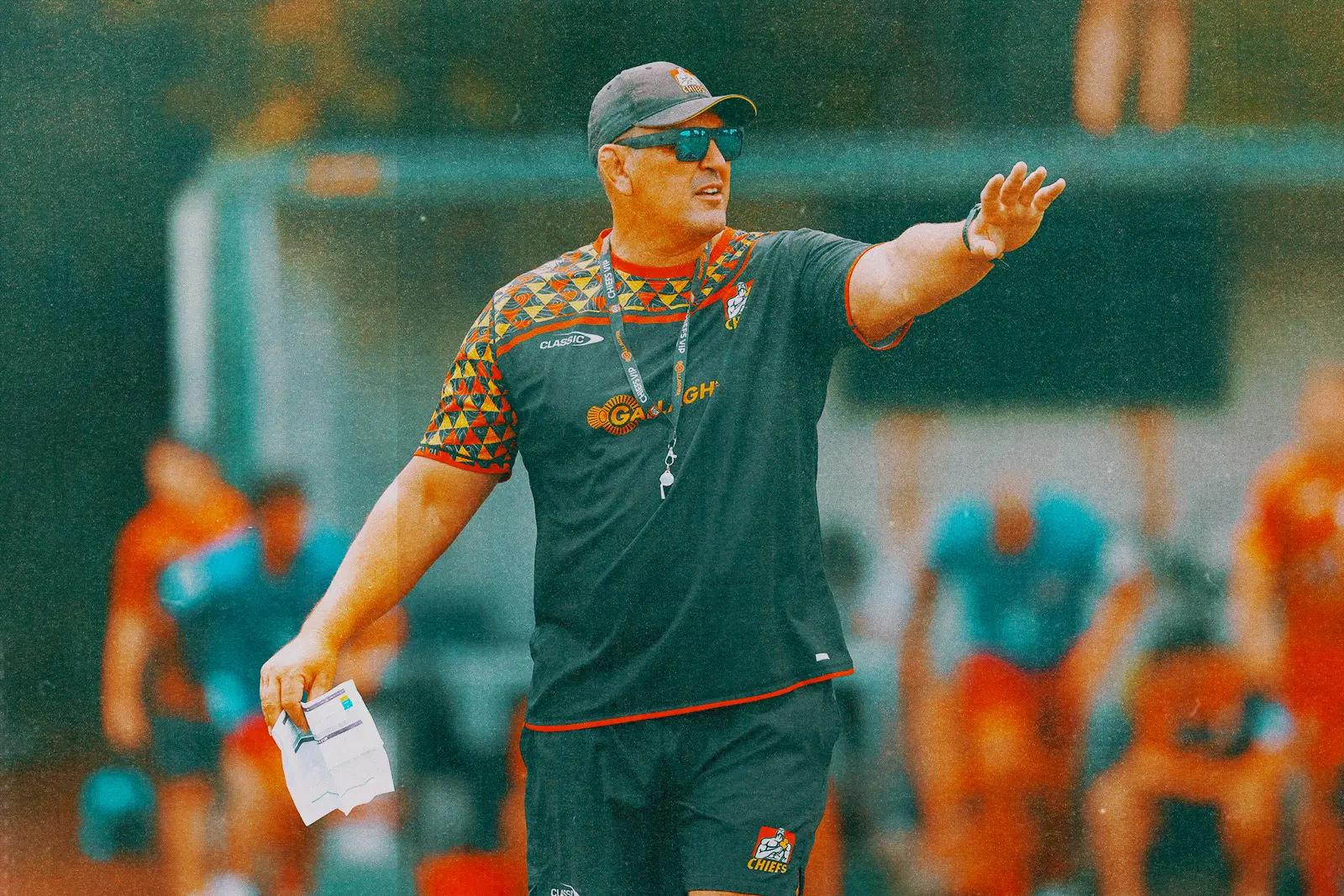
When McMillan officially took the reins of the Chiefs, one of the first jobs he took upon himself was to rebuild what they call “Chiefs Mana” – the unique team spirit and cultural heritage that many at the Chiefs believed had faded in recent years. If you’re unfamiliar with the concept of mana in a New Zealand rugby context, it is both a weapon and armour.
At a base level, Mana is spiritual authority, prestige, power, or influence and can be generally split into;
- Mana tangata – the mana of a person, which can come from achievements, leadership, generosity, or personal conduct.
- Mana whenua – the mana held by a group over territory, often linked to ancestral connections and custodianship.
But it’s more than that, too. It’s charisma, bravado, and machismo rolled up with a sense of place, both locally and in your place amongst ancestors, while being as grounded as possible within the group itself.
Chiefs Mana would be a form of Mana Whenua that was deeply rooted in the club when they were at their best under Dave Rennie and Wayne Smith. McMillan is a proud Māori himself, so he was able to draw on the te ao Māori worldview to strike a chord with the group, and that was the starting point of their cultural rebuild from within.
As McMillan himself said in 2021;
“The benefit of going in the previous season was that not only did I see all the good stuff that they were doing, but I was able to identify a couple of areas where I thought that I could have an impact or bring some influence. I pushed those couple of areas really hard – and they were specifically around our identity and how we wanted to be perceived in the community, both on and off the rugby field, and what we needed to do day-to-day to hold ourselves accountable and bring that identity to life.
“That identity has been there for a long time, I just think with coaches and management and experienced players moving on over the years, it had never been lost, it just had become a little bit eroded. It was always there, the narrative had just become a little bit confused.
“It was around taking all the good stuff that had been there for a long time and remodelling it to be ours, so we could own it, and it wasn’t just repetition of something that had been done 10 years ago. The messages were the same, just done in a different way so that we actually had ownership of it.”
McMillan became an “influential kaumātua (elder) and leader” to the Chiefs that they won’t easily replace, and that we must take full advantage of. This club needs a totemic figure. You could argue that we haven’t had a personality like that since Rassie.
There is no Māori cultural heritage to draw on here, but there is 100% a Munster identity that, if we don’t know what it is, others certainly do. I was talking to a guy working in Wales for the BBC last week before the game against Cardiff, and he was telling me how he’s expecting a typical Munster battle at the set piece and confrontational forward play.
I had to break it to him – and maybe I’m breaking this to you, too;
We don’t really do that anymore.
We have one of the worst lineouts in Europe, we have scored zero maul tries in 2024/25, and our scrum work is passable at worst, sometimes dominant on our own ball at best. We don’t really compete on the opposition’s lineout or at their scrum.
From a ball-carrying perspective, we are pretty indirect. Few teams pass the ball more than us, and, as a result, we’re pretty unremarkable with our dominant carries or gainline earned. Defensively, we’re in the bottom three in Europe for tries conceded from missed tackles alongside the Dragons, Bristol and Northampton, weirdly enough. We are middle of the road when it comes to Dominant Tackles. No team in the world concedes more tries from 22 Entries.
What do we do on a rugby field better than anyone else?
Right now? Nothing.
That’s where you start.
Ultimately, culture is what you deeply believe it is. It’s the story you tell yourself about why you do what you do. Culture is translated into non-negotiables: being on time, hitting training targets, how you behave in the gym, and how you treat staff.
Players are held accountable – not just by coaches but by each other. Peer accountability is massive. But it’s more than that. I would define culture as a 24/7 thing that exists most strongly when you’re on your own.
It doesn’t just exist in the walls of the building or during meetings.
One example I love to use is the shopping trolley theory. It’s not illegal to leave your shopping trolley in the car park after you put your shopping into the car. Nobody will ever remember you not doing it. You can just drive off, and nobody will care. At the same time, nobody will give you a round of applause for bringing it back to the trolley bay.
But you bring it back because it’s the right thing to do. Nobody will know if you didn’t bring it back, except you. And that’s what counts.
That’s what a good squad culture comes back to: I will do X because it is the right thing to do, I believe in the reasons for doing it wholeheartedly, and it would be impossible for me to do something contrary to X as a result.
But the biggest hurdle to that is the belief itself. You can say whatever you like in the meeting room or during Players Only sessions in the changing room, but talk is the cheapest thing there is.
To generate real belief, you must find the right story to tell yourself.
***
I don’t know Munster’s internal culture because I’m not in the building.
I believe most of the failings this season have a much bigger root in injuries, a thinner squad than the last two seasons combined and huge off-field disruption in the coaching box that goes as far back as the preseason, as they do in things like our culture, and whether it’s good or bad.
But then again, how did Munster drop a loss at home to Edinburgh like we did? Because they came into the game stronger and more focused than we were, it was more important to them, so they won. This isn’t about “wanting it more”, it’s about Edinburgh seeing a game where we would be incrementally weaker than they were because of the Six Nations, so they loaded up for it and got the result.
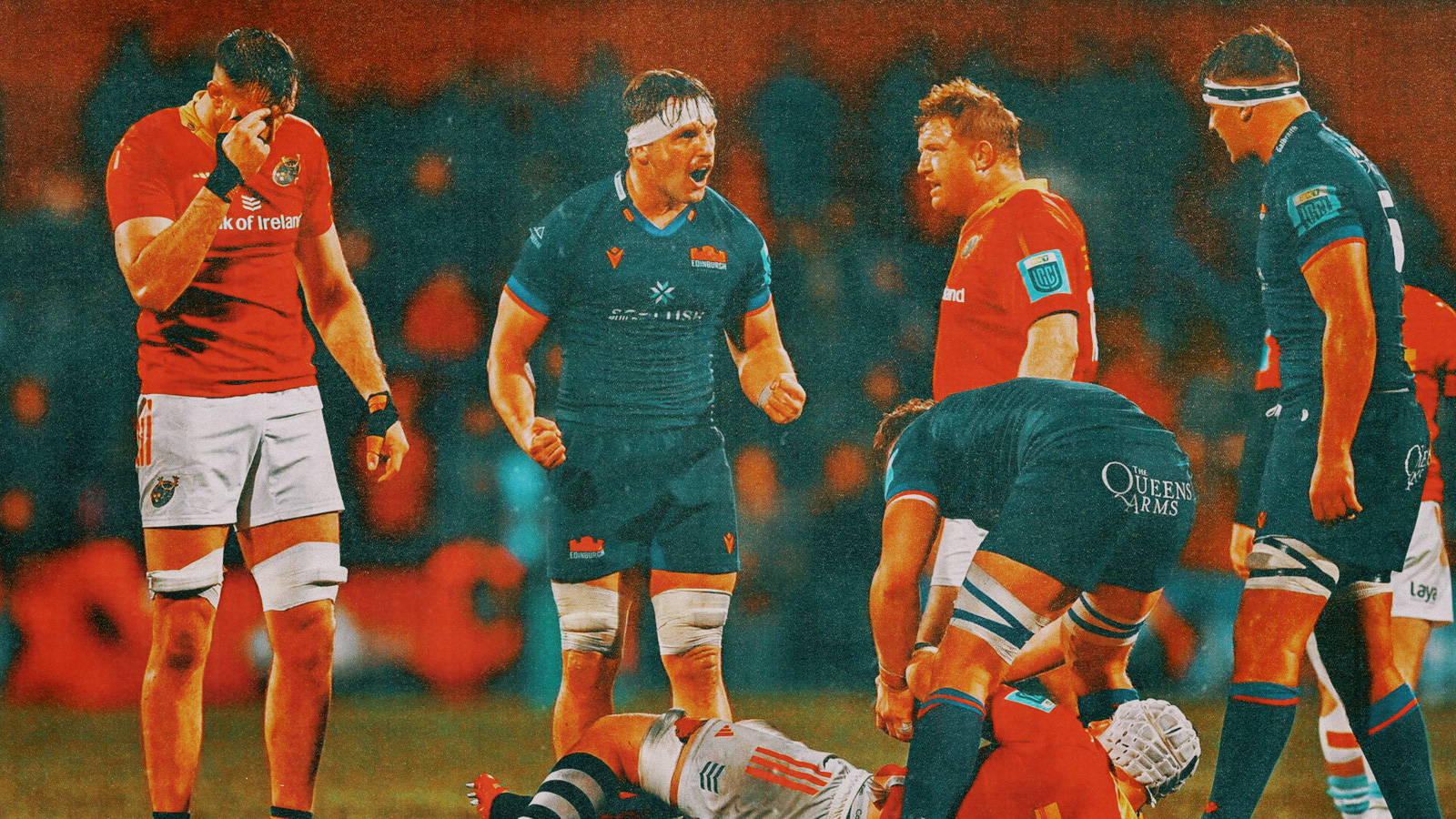
As Alex Nankivell said a week or so later;
“Where it went wrong was everything we’d prided ourselves on, working hard, being physical in the collisions, our small details around our breakdown; all that kind of little stuff that’s kind of not the flashy stuff, but we hold it in really high regard, doing that stuff really well.
“We were just looking back on it for the review, and we were just off on that Friday night, and I think that’s a bit of a mental thing. I didn’t personally, but maybe there was a bit of a general theme of taking Edinburgh lightly after they lost to Zebre.
This isn’t proof of anything other than a player seems to think the group lost focus. Of course, that can happen to any team, but it’s happened to Munster a fair bit this season. The Edinburgh and Zebre games are just one example. An even bigger one is the Leinster game in Thomond Park, where we looked like a beaten team in the warmup, and were a beaten team inside the first half an hour. Look at the bad start away to UBB in the quarter-final for another example.
I think it’s fair to say that this team lacks belief. They lack mana. There are reasons for that, too. I was told during the year that Munster’s lineout was like “an open wound” that, even with Codling in the building, was pretty much in “let’s just get to the end of the season and rebuild this” mode. It’s hard to have too much belief in anything you’re doing when you have a core part of the game that is that damagingly below par.
But tell me this: when’s the last time you remember any team getting a physical shock from this Munster team, through raw aggression and physicality? I’m not talking about body slamming a super-heavyweight French pack or anything like that – I’m talking about the last time you can remember Munster leaving a physical, brutal mark on an opponent. Look at the last few Leinster games; we lost the games, and we had a few moments of Good Rugby, but when did we last, to paraphrase Paul O’Connell, make them stand back and think what the fuck is going on here?
This is where we come back again and again.
Culture. Identity. And a question I come back to a lot this season since Christmas.
Have we forgotten who we are in an attempt to play around the realities of modern rugby?
We’re a team that plays with the ball a lot, possession-based, on-ball rugby, which is fine – it’s a viable way to win games and trophies. We’ve won a trophy doing just that.
I think it’s also true to say that, since then, we’ve struggled to adapt to the adaptations other teams have put in place to thwart us: high volume kicking, no-counter ruck defence and a high blitz, just as an example. When I saw our work against Cardiff last Friday, it felt like the inverse of the Van Graan era. Instead of one out carries going nowhere, with a kick to finish, we ran complex narrow screen plays that went nowhere and burned calories.
I feel like sometimes we have so much complexity in our game that it takes up most of the squad’s mental bandwidth just to run that, and even then, it rarely runs perfectly on either side of the ball.
Whatever about the tactical changes McMillan might make – and I’ll get to that in the second part of this series – I keep coming back to a quote Clayton McMillan had in an interview on New Zealand television a year into the job with the Chiefs. I’ll leave you with it, until next week.
“I think each team does have a bit of an identity around how they play. It’s been a big part of our discussions as coaches [at the Chiefs] around “what is our identity, does our [player] profile match our way of being able to play?”
But when I think Chiefs Rugby, I think relentless, go all day, brutal. I don’t think that a lot of teams really enjoyed playing the Chiefs because they’ll bring the niggle, they’ll bring the aggression, they’ll put bodies on the ground.”
