


A few things happen when a new head coach joins a team.
The first thing, in most cases, is excitement. A new head coach always represents something new. That new thing might be good, might be bad, but it’s different, and sometimes that’s half the battle when it happens. Change is a catalyst. We’ve experienced the ups and downs of this at Munster in the last ten years. When Rassie Erasmus took over as Director of Rugby in July 2015, we got hope. Munster had just put down their worst season in professional history, so the only way was up, and Erasmus, plus the team he built around him, were new, exciting and brought a refreshing emotional simplicity to the squad.
When Erasmus left in December 2017, we got to experience the other change, the trepidatious kind. Nobody really knew who Johann Van Graan was. We were his first head coaching job, so, like Anthony Foley and Tony McGahan before him, he’d be learning as he went along.
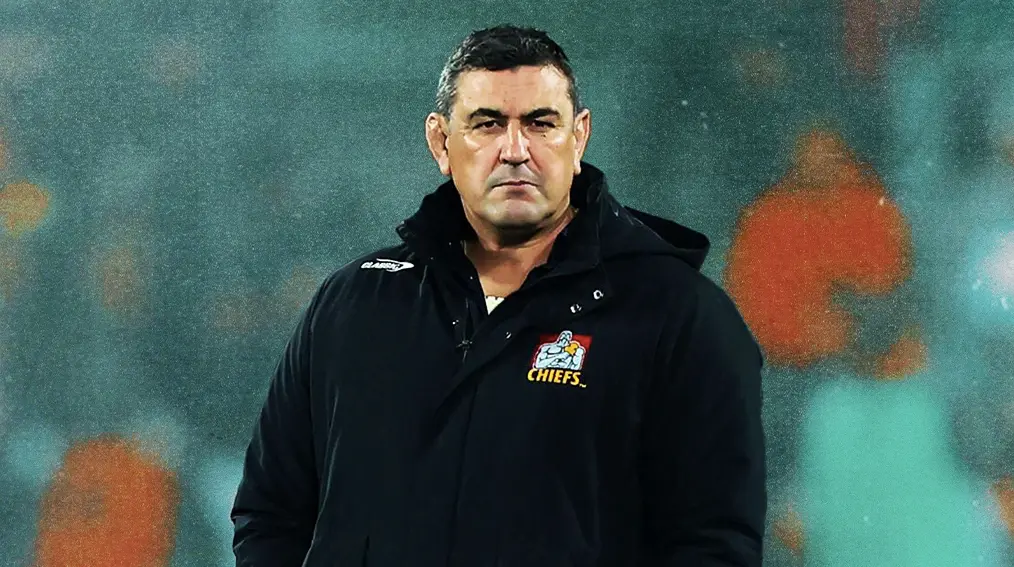
The arrival of Clayton McMillan is firmly in the Erasmus camp. I said it when he signed, and I’ll say it now after their narrow defeat away to the Crusaders in the Super Rugby Pacific final; McMillan is the best possible hire Munster could make right now, and it’s the kind of luck that we don’t usually have that he wasn’t snapped up to coach a test side in the last two seasons before the stars aligned for these three seasons to come.
The big question is what McMillan will bring to Munster this summer to immediately launch an assault on both Europe and the URC next season. I believe that Clayton McMillan hasn’t arrived in Munster this week for a slow build and a transitional season; I think he wants it all, and not only that, most of the tools he needs are already in the building.
Respect The Past, Embrace The Future
The past is important for any big club because, with most clubs, the reasons they are big in the first place all lie in a time before today. That is particularly true at Munster, more so than at other clubs of this scale. Without looking down at the work gone in over the last 20 years, when most people think of Munster, they think about this.
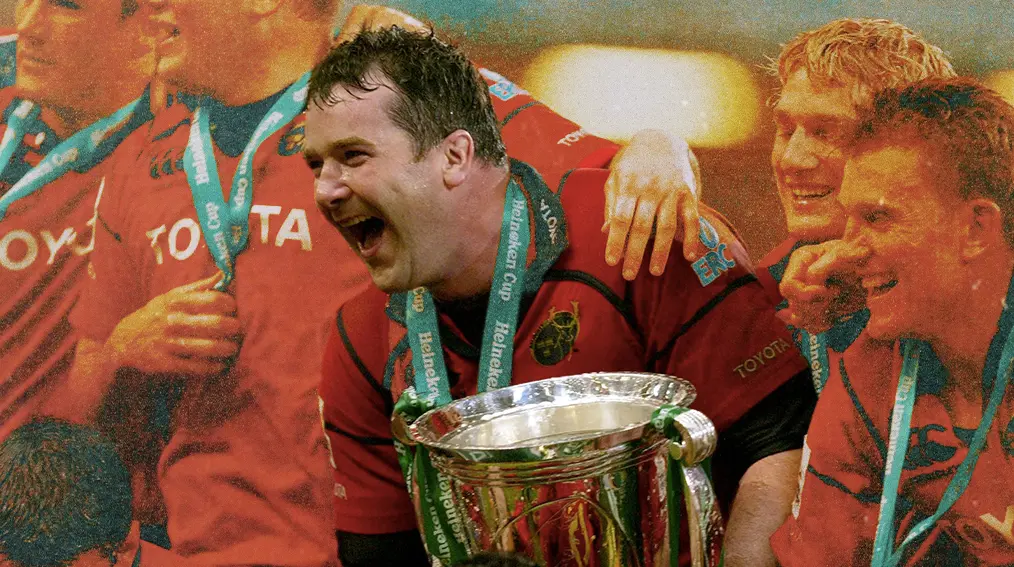
They don’t think about laboured home draws against Bayonne, they don’t think about tense run-ins just to make Europe for the following season, and they don’t think about Munster in terms of “transition”.
You are either good or you’re bad, and as I wrote earlier in the season, people are sick to death of context. Munster were all over the place last season, for obvious reasons, and the roots stretch back to decisions made ten years ago, or longer in some cases. If Rassie Erasmus didn’t quit in 2017, then Munster would never have hired Van Graan, who wouldn’t have brought in Graham Rowntree, who then wouldn’t have been made head coach in a hasty hire once Munster got sick of David Nucifora dragging his heels back in 2022. If all of those things happened differently, then maybe Munster wouldn’t have had a new head coach who, while vastly experienced as a unit coach, had a good few ideas and concepts that just didn’t work in 2025. Maybe they were more suited to 2005, which is ironic given that’s where so much of the concept of what Munster should be as a club still lives.
I think McMillan is perfectly placed to bring the Old Munster into 2025, but to do that, he needs a clean slate, and that’s exactly what he’ll be working with this summer.
***
One thing that bothered me about Ronan O’Gara’s piece about Peter O’Mahony a few months ago – outside of his then weekly musings about what test rugby jobs he would and would not like in the Examiner, before no test jobs at all materialised – was his suggestion that McMillan needed to see if Peter O’Mahony would stay around for another season. Nobody loves the past at Munster like the Munster ex-pros in the media who can’t stop talking about the club for money.
From the outside looking in, and this goes for Murray and O’Mahony both, the last six or seven seasons of their Munster careers were spent toiling in squads that got progressively weaker and weaker every year. Up to 2018, Munster were regularly making the semi-final stages of Europe, while getting consistently beaten by Leinster at club level in the then PRO14. Post 2019, Munster were doing well to make the quarter-finals most seasons because, and this should be obvious, that iteration of the squad peaked in 2018.
Meanwhile, at the national level, they were core parts of a team that consistently played in and won huge games on huge occasions, while, back at Munster, everything was a constant slog of losing mid-level games, never mind big ones, with bad vibes swirling around the club almost constantly. You look at teamsheets over the last few seasons for some of those big Champions Cup games, and you realise just how many mid-level guys we’ve had to rely on against big teams, and then somehow remain shocked when we keep losing.
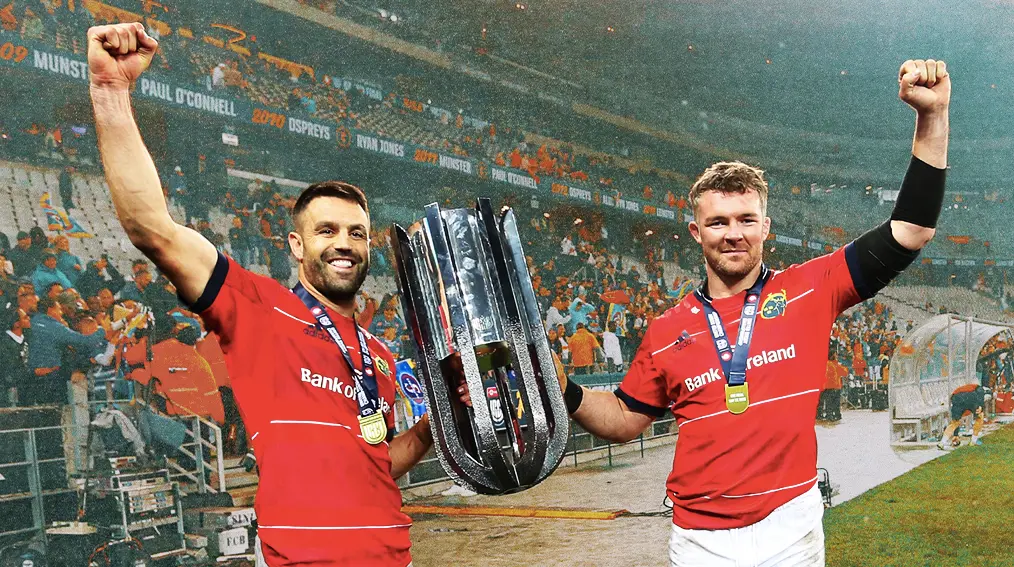
Sign Joey Carbery? He gets injured and is never the same player ever again. Sign RG Snyman? He gets injured and stays injured for four years. Sign Damian De Allende? You never get the best out of him because Carbery and Snyman are always injured.
One thing after another, after another.
It’s no wonder that O’Mahony and Murray while, obviously proud Munster players who sacrificed a lot for the club when they could have easily doubled their money elsewhere, I think it’s fair to say that it was the green jersey doing most of the anchor work for them, rather than what had become of the red one. They were both a victim of Munster’s slump post-Golden Generation and a core part of it.
Back to O’Gara’s point on McMillan asking O’Mahony to stay on; to me, the last thing that Clayton McMillan needed was – and I mean this as respectfully as it can be put – one of the core leaders of a Munster side that won one trophy in 14 years. We all needed to move on and have the clean break that probably should have happened a season earlier.
O’Mahony, Murray, Archer and others had their time in the jersey, but that time is gone. It’s long past time for younger leaders and talismans to shape the squad into something of their own, and that can’t happen if the old guard is still in the room.
More importantly, they need something new to believe in.
***
I spoke to a few players in the last month or so, and the reviews of the last two seasons, in particular, were not good. One thing that constantly came up was how lacking in “aura” Munster’s coaching was. Technically, it was mostly pretty good, and the reviews of Prendergast, Murray and Leamy were mostly excellent, but Rowntree, while well-liked as a character, didn’t engender a whole ton of the kind of respect you need to push Munster on after an against-the-odds trophy win.
Van Graan was seen as a bit boring, a bit holy and too sweet to be wholesome at times, but he was an incredibly technical head coach who could assassinate lads on detail if they were off the mark. Your cough got softened pretty quickly. It was a difficult job for Rowntree to make the transition from charismatic, great craic unit coach to main man. In hindsight, it’s almost an impossible job that he did incredibly well to succeed in for his first season. At that stage, Van Graan was seen as quite divisive, even as milquetoast as he can somehow seen in the media. Those who hated his guts for Munster’s “boring, South African” style of play – players and former players – were incredibly vocal behind the scenes and to mainstream journalists, and those who saw him as a pragmatic squad builder playing a style that has shown to be successful elsewhere were never going to agree.
When Rowntree took over, I don’t think he was anyone’s first choice given his lack of head coaching experience, but he went a long way simply by not being Johann Van Graan for that first season.
But things began to slide after that, not helped by repeated budget cuts from the IRFU, even after winning the URC. It’s notable that when Munster won that league title, we finished the following July with a weaker, cheaper squad.
That would be manageable, but Rowntree would often cut a fairly despondent, cranky, and luck-worn character around the place during his second season. Hating the world because of the injuries that kept throwing the season into disarray, all while the lineout, coached by the guy he promoted and pushed for to get a longer deal, kept getting worse and worse.
The players were looking for inspiration, to feel like the head coach had a plan to not only turn the season around, but also kick it up to the next level again, but that kick never came. Instead, it felt like every week had an element of panic, like looking for your passport in the suitcase at the airport.
The players who had been around for Rassie Erasmus’ tenure, short as it was, knew how important that feeling of belief was and how it permeated down through everyone in the building. The players in the Irish camp saw how different it was under Schmidt and, later, Farrell.
Back at Munster, the two environments just didn’t compare. That isn’t to say that the players were unhappy, or unmotivated or anything like that; it’s just that they knew things were better elsewhere. It isn’t as simple as nailing everything on “standards”, but that’s a decent boilerplate to start with. Chris Boyd wasn’t hired in as a consultant by the IRFU to examine Munster’s high-performance program – how we coach, what we coach and why we coach – for no reason.
McMillan, as much as anything else, will immediately bring that “aura” into the room that Graham Rowntree and Johann Van Graan simply could not, both for different reasons. That is because he’s new, yes, with no pre-existing relationship with anyone bar John Ryan and Alex Nankivell, but because he brings an intimidating energy with him. He commands and demands respect.
And with him, he’s brought Martyn Vercoe to replace the outgoing Niall O’Donovan as Munster’s team manager.
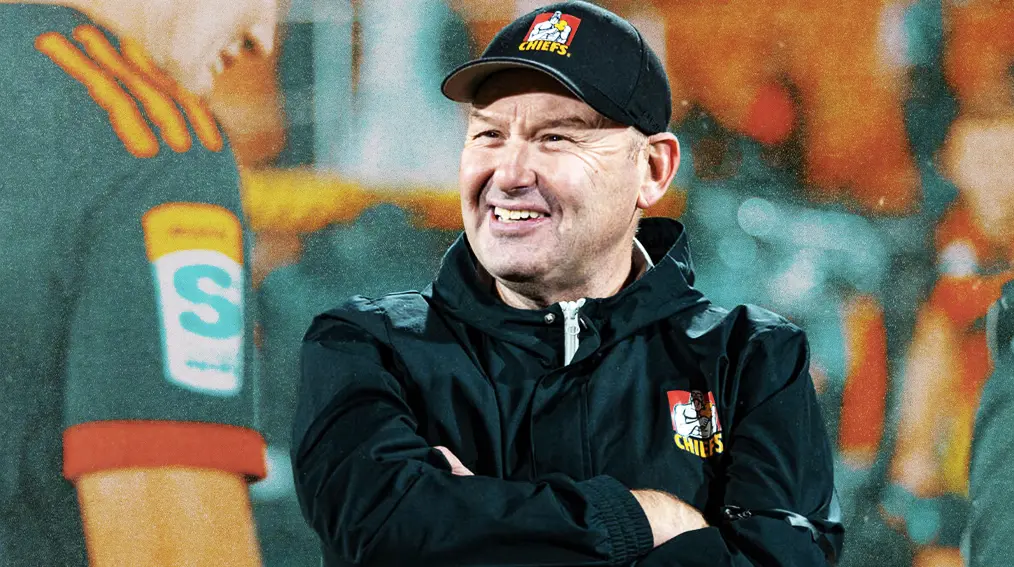
This is another break from the past. O’Donovan has been Munster to the bone marrow since the advent of professionalism and the club’s team manager since 2012, when he replaced Shaun Payne. Aside from numerous logistical tasks, the team manager is, essentially, the hand of the head coach. That’s why Vercoe – a hugely experienced manager, logistician, educator and coach in his own right – was the perfect fit to get McMillan’s feet under the table immediately. It’s also another New Thing to hammer home the blank slate that McMillan will work with.
I think sometimes there’s a temptation to “go local” with hires like this because they “know the club”, but the intent here isn’t about familiarity, it’s about re-framing the idea of Munster Rugby from top to bottom. Not changing everything for the sake of it, but having everyone who walks through the door for pre-season in a few weeks think “this is new, better up my game”.
New Feel, Old Munster
At its best in the 2000s, Munster felt like the perfect synergy of a club reflecting the style the fanbase needed to see, rather than what they said they wanted to see.
That means winning rugby, by hook or by crook. Johann Van Graan’s problem at Munster wasn’t playing a kick-heavy game based on pressure defence and transition rugby; it was playing a kick-heavy game based on pressure defence and transition rugby, and losing to Leinster every year in knockout rugby and not making it beyond a quarter-final in Europe post-2019 and losing semi-finals a little too toothlessly when we were making them regularly.
Munster never kicked more or played more pragmatically than under Rassie Erasmus, but there were no questions of style being a problem because we won big games.
Under Rowntree and in the 3/4s of a season post-Rowntree, we’ve played a very expansive brand of rugby as a means of working around key deficiencies in the pack from a power perspective. Essentially, it was felt that we didn’t have the power to live with the very best teams directly through the forwards, so playing more expansively mitigates that power differential.
This hasn’t worked if we count the three seasons since we’ve adopted this style, bar that run to the URC title in 2022/23. When it comes to it against the biggest teams in Europe, we are far more likely to fluctuate week to week because we have more elements of our game to go wrong.
I think McMillan has a fix for this, and it’s based on the style he will bring to the club.
Join me for Part 3 of this series on Friday, where I go over the Chiefs’ data from the last three seasons and how it’s the perfect way to bring Old Munster into the mid-2020s.
