


In last week’s instalment, I spoke about some of the principles that McMillan’s game model/system at the Chiefs ran on, and how the same model might fit at Munster.
Systemically, the need for props (and a scrum) that could win penalties and disrupt opposition put-ins is vitally important if McMillan brings the same game model to Munster, and it’s a fair assumption to make that he will do just that, if not identically, then with so little difference as to be indistinguishable.
In the next few instalments of this series, I’m going to focus on what I think that will actually look like as Munster goes through this Big Reset.
Midfield Power Projection

The modern midfielder has to be good at everything. If you’re going to be one-dimensional, that one dimension had better be world-class because if it isn’t, you’re a luxury most teams can’t afford. Your midfield rotation embodies the core principles of your game model. A great example of this is Scotland’s 10/12/13 combination of Russell, Tuipulotu and Jones. All three players supercharge a quality in each other, on both sides of the ball.
Every team is looking for this. Last season, Leinster spent an absolute fortune on getting Jordi Barrett into the building for seven months to upscale their rotation at #12. Why? It’s pretty simple, outside of the “signing World Class players makes you better” thing. Barrett was able to enhance the qualities of Prendergast as a playmaker, in particular, creating spacing for Ringrose, as well as being a genuine game breaker in his own right.
Munster have been looking for a midfield combination to hang our hat on for a while now. You might say 20 years, but I’ve been over this particular quirk in Munster’s chains of succession quite a bit. Even if we zoom out a little, it’s incredibly rare to see any team competing at the elite end of the European game with an entirely club-grown centre partnership.
The last one I can point to with any reliability is probably Brian O’Driscoll and Gordon D’Arcy. Those lads last played together in the PRO12 final of 2014. Eleven years ago.
For Munster, it’s about finding the right players and then sticking with them. That’s been the challenge over the last few seasons, although not for the want of trying.
In the last three years, Munster intended to anchor our midfield with the then-Irish qualified Antoine Frisch, but that didn’t work out for several reasons. We had to restart the midfield rotation from scratch late in the season and tried to build it around Alex Nankivell and Tom Farrell last season, but you can’t rely on just two front-line players in midfield in 2025.
You need three players of the required level, at least, even if one of those midfielders can double as an inside winger. All of the elite sides in Europe rotate their two midfield slots between three or more players.
Last season, we were saved by the ridiculous durability of Tom Farrell, who played an insane amount of rugby for us across the URC and Europe. Alex Nankivell wasn’t as lucky and was snake-bit by hamstring injuries — one of them really serious — for most of the season and never really hit the heights he showed in 2023/24.
This July, Dan Kelly joined from Leicester Tigers and the former England international — and soon-to-be Irish international — wasn’t signed by Munster to be the lower part of the midfield triangle, at least in my opinion.
Munster, finally, has the three front-line midfielders we’ve wanted since at least 2021/22, so the only question now is how Clayton McMillan will want to use them.
For a guideline, I thought it would be useful to look at how McMillan used his front-line midfielders at the Chiefs last season. Why did I do this? Because a team’s system and/or game model are most often exemplified by the midfielders.
And that’s when it got interesting.
Offensive Head-to-Head (league-minutes normalised to per 80 min)
| Player | Club | Carries/80 | Dominant % | Gainline % | 2+ Tack% | Try Inv 80 | Tackles/80 |
|---|---|---|---|---|---|---|---|
| Tom Farrell | Munster | 12.7 | 42.3 | 53.8 | 44.0 | 0.71 | 7.2 |
| Alex Nankivell | Munster | 10.2 | 46.9 | 50.5 | 60.0 | 0.58 | 9.4 |
| Daniel Rona | Chiefs | 7.8 | 30.4 | 62.7 | 39.2 | 0.77 | 9.6 |
| Quinn Tupaea | Chiefs | 13.5 | 41.7 | 63.5 | 66.7 | 0.43 | 12.1 |
Defensive and Ruck Head-to-Head (league-minutes normalised to per 80 min)
| Player | Club | Tackles/80 | Tackle% | Dominant% | Turnovers/80* | A.Rucks/80 | D. Rucks/80 |
|---|---|---|---|---|---|---|---|
| Tom Farrell | Munster | 7.2 | 84.1 | 7.6 | 0.44 | 10.1 | 3.0 |
| Alex Nankivell | Munster | 9.4 | 85.6 | 4.1 | 0.68 | 9.8 | 5.8 |
| Daniel Rona | Chiefs | 9.6 | 82.4 | 3.2 | 0.31 | 7.4 | 2.3 |
| Quinn Tupaea | Chiefs | 12.1 | 89.3 | 6.5 | 0.71 | 8.4 | 7.4 |
* turnover-tackles + break-down steals per 80 min
What Jumps Out?
Carry Profiles
| Volume | Collision Profile | Line-breaking style | |
|---|---|---|---|
| Quinn Tupaea | Highest (13.5) – almost a carrier every 6 min | Big contact load (175/189 carries into contact) & commits the most defenders | Elite gain-line (63.5 %), but evasion low (19 %) – pure power runner |
| Tom Farrell | 2nd (12.7) | Close to Tupaea for dominant % (42 %) but does more damage after the tackle – best evasion (33 %) | Slightly lower gain-line, but mixes outstanding footwork with good collision work and offload threat. |
| Alex Nankivell | Lower volume, best dominant % (47 %) | High 2+-tackler rate (60 %) – draws help defenders | Productive link man (6 try involvements) |
| Daniel Rona | Lowest volume (7.8) | Least dominant (30 %) but uses angles – best gain-line % (62.7 %) | Highest try involvements (0.77/80) despite few touches |
Defensive Workloads
- Chiefs’ system puts more work on the 12/13 channel – Tupaea (12.1) and Rona (9.6) tackles/80 dwarf Farrell (7.2).
- Tupaea pairs volume with class-leading accuracy (89 %) and the most turnovers (0.71).
- Munster pair dominate the breakdown: both Farrell & Nankivell log 6 steals each, giving Nankivell the best turnovers/80 of the set (0.68).
- Farrell’s dominant-tackle rate (7.6 %) is the most physical of the four, despite the lighter workload.
Ruck Involvement
- In attack, Munster centres are pseudo-forwards – Farrell (10.1) & Nankivell (9.8) rucks/80 keep ball secure.
- Chiefs defend more rucks: Tupaea 7.4 defensive rucks/80 nearly doubles Farrell’s. Rona plays wider, almost like a winger, which scans with his usage for the Maori All Blacks as a blindside winger (only 2.3).
4. Style Contrasts
| Centre Pair | Attack Identity | Defence Identity |
|---|---|---|
| Munster (Farrell–Nankivell) | High work-rate in clean-outs, mixture of footwork (Farrell) and power (Nankivell); strong link play (19 try involvements combined) | Fewer tackles but higher breakdown threat; Farrell offers dominant hits, Nankivell jackals |
| Chiefs (Tupaea–Rona) | Heavy-contact, gain-line focused; Tupaea the battering-ram, Rona the line-breaker | Massive tackle load with top accuracy; Tupaea turnover machine, Rona picks spots but blitzes rucks efficiently |
Overall, Chiefs’ duo shoulder the bigger defensive burden and hit the gain-line more consistently, while Munster’s pair provide higher ruck security and breakdown turnovers, with Farrell offering the most attacking variety.
But, as ever, there usually is a primary pairing and a rotation option that allows the coaches to keep players fresh throughout the season. While Tom Farrell’s durability was a godsend during 2024/25, it is not intended that he back that up with another iron-man season this year.
Then the real question becomes: what projects as Munster’s ideal midfield combination with everyone reasonably fit and available?
To get there, we have to look at what our current combination gives us.
The stats tell us one thing, the eye test does another. Here’s a hot take: Tom Farrell’s remarkable season for Munster in 2024/25 was facilitated by a role shift for Nankivell that limited his attacking output. That, combined with an injury-bitten season, was the primary reason why Alex Nankivell in 2024/25 looked so different from the Alex Nankivell we saw in 2023/24.
In 2023/24, Nankivell and Frisch had the same situation, inverted. I think Nankivell’s outstanding 2023/24 came somewhat at the expense of Antoine Frisch’s best role, albeit with the proviso that his head was in the process of being turned by France at the same time.
Frisch’s role in 2023/24 was slightly different to Farrell’s in 2024/25, but I think what it allowed was Nankivell to wear #12 but play much more often in the 3/4 space, whereas this season, Nankivell had to do a lot of dogwork in the middle channel to free up Farrell.
When we compare Nankivell’s two seasons, we start to see the trends.
| Metric | 2023/24 | 2024/25 | Δ (24/25 – 23/24) |
|---|---|---|---|
| Carries /80 | 10.7 | 10.17 | –0.53 |
| Attacking rucks /80 | 10.43 | 9.78 | –0.65 |
| Tackles /80 | 8.18 | 9.39 | +1.21 |
| Turnovers (TT + steals) /80 | 0.90 | 0.68 | –0.22 |
| Try involvements /80 | 0.45 | 0.58 | +0.13 |
| Defensive rucks /80 | 4.31 | 5.81 | +1.50 |
| Dominant-carry % | 51.1 % | 46.9 % | –4.2 |
| Gain-line % | 53.8 % | 50.5 % | –3.3 |
| Commit ≥ 2 tacklers % | 62.2 % | 60.0 % | –2.2 |
| Tackle-evasion % | 34.8 % | 31.5 % | –3.3 |
| Tackle-success % | 79.1 % | 85.6 % | +6.5 |
| Dominant-tackle % | 3.3 % | 4.1 % | +0.8 |
| Def.-ruck effectiveness % | 25.0 % | 16.7 % | –8.3 |
For me, that paints a picture of a player struggling for form in between injuries that bugged him from the very first game of the URC season, but who also found himself running more narrow truck lines than the season before.
Weirdly enough, we already have a good idea of what Alex Nankivell’s usage with the Chiefs would be because, as you know, we signed him from the Chiefs after working with McMillan for two seasons. Nankivell was primarily used in the #13 shirt for the Chiefs during his time there.
So when we assess 2023/24 Nankivell with the Chiefs midfielders from this season, we see an interesting trend.
Nankivell (2023/24 sample) and the 2025 Chiefs
| Skill block | 80-min rate or % | Chiefs-template comparison |
|---|---|---|
| Power carries | 10.7 carries / 51 % dominant | Very close to Quinn Tupaea’s collision profile. |
| Line-breaking craft | 34.8 % tackle-evasion, 62 % 2-man commits | Exceeds Daniel Rona—makes him a genuine strike 13. |
| Attacking ruck engine | 10.4 rucks/80 | Elite for any back; matches what McMillan demanded from his 12. |
| Turnovers | 0.9/80 (steals + TTs) | Top of the Munster group – valuable at 13 where jackals come late. |
| Defence | 8.2 tackles/80 at 79 % success | Volume okay; accuracy is only blemish → better hidden at 13. |
Takeaway: Nankivell can credibly play either channel. His ball-in-hand and turnover threat scream “edge weapon (13)”, while his collision and ruck work let him rotate back to the #12 shirt when required.
Where does Dan Kelly slot if Munster leans into Clayton McMillan’s old Chiefs’ blueprint?
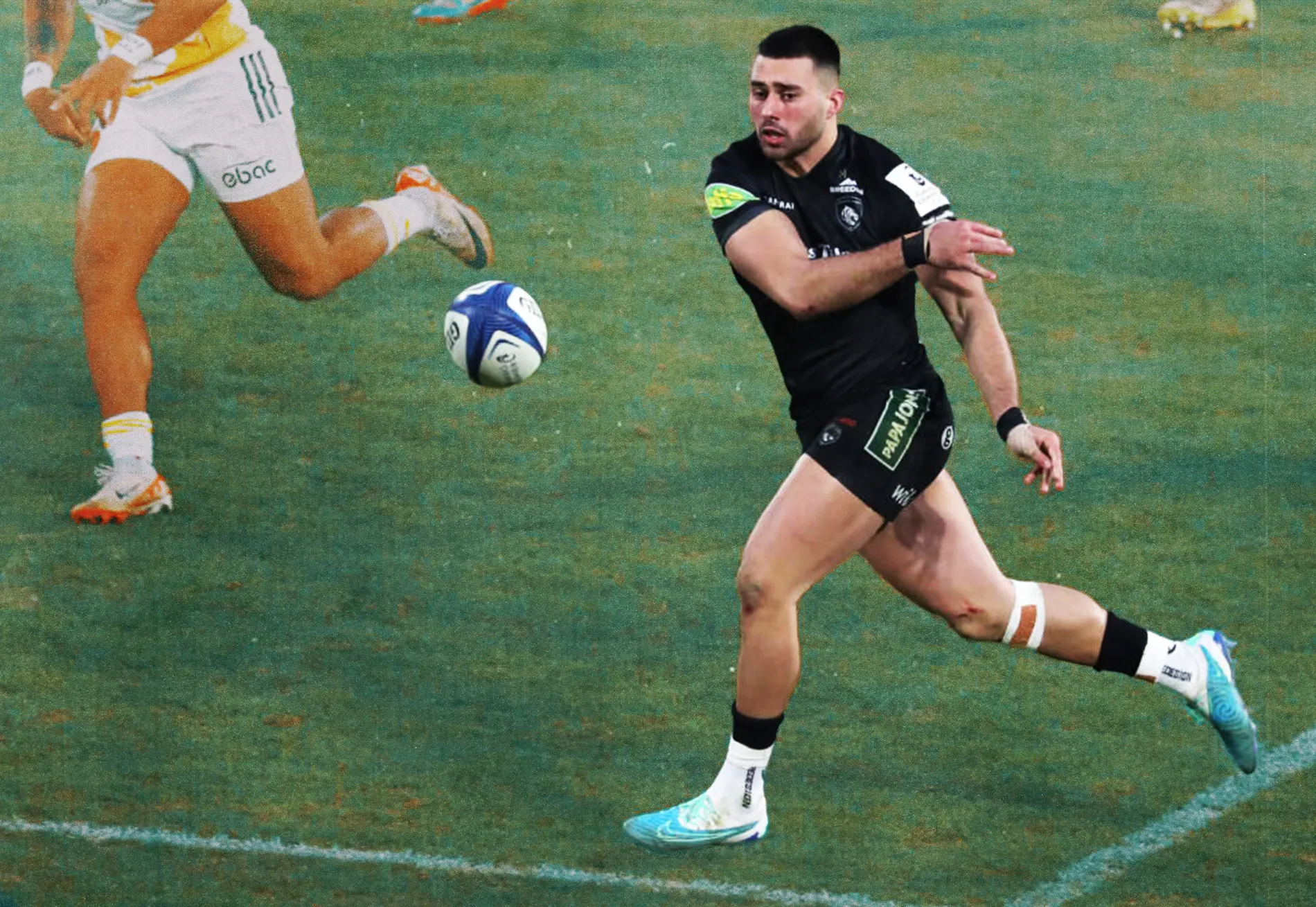
I do not believe that Kelly has been signed to be a guy Munster leaves out when it comes to the big URC and European games. He hasn’t been convinced to move away from future England caps — remember, opportunities are much easier to come by in the English midfield — on vague promises of game time.
I think he’s been signed to be a core part of Munster’s model, but as a #12.
To get a proper look at his stats, I blended his 2023/24 season with his 2024/25, but a quick note: Leicester’s 2023/24 was an absolute disaster, leading to the sacking of head coach Dan McKellar. Kelly’s role that season was essentially that of a second openside flanker. He also bounced around between 12 and 13 as McKellar struggled to get his vision for the squad on the field. Kelly lacked the clarity that he had under Borthwick in the previous seasons, which had him in the conversation to be the next Brad Barritt for the English national side.
But those two messy seasons under McKellar and then Chieka are all we have to go on, so we’ll blend them, combine them with Nankivell’s numbers from 2023/24 — his peak run with Munster so far — and Tom Farrell’s outstanding season, and then we’ll see what shakes out.
Chiefs-style Midfield template
| Role | 2025 Chiefs Starter | Key Fingerprints |
|---|---|---|
| 12 “Power Hitter” | Quinn Tupaea | 13-14 carries /80, ≥40 % dominant, 65-70 % 2-man commits, 8+ attacking & 7+ defensive rucks, 12 tackles /80 at ≥88 % success, ~0.7 turnovers |
| 13 “Strike Runner” | Daniel Rona | 7-9 carries /80, ≥60 % gain-line, 20-25 % evasion, 7-8 attacking rucks, 9-10 tackles /80 @ 82 %, moderate turnovers, 2-3 defensive rucks |
Munster Candidates vs Chiefs benchmarks
Peak numbers highlighted in bold. All rates per 80 min.
| Metric | Tupaea 12 | Rona 13 | Kelly (2-yr blend) | Nankivell 23/24 | Farrell 24/25 |
|---|---|---|---|---|---|
| Carries | 13.5 | 7.8 | 5.8 | 10.7 | 12.7 |
| Dominant-carry % | 41.7 | 30.4 | 37.5 | 51.1 | 42.3 |
| 2-man commits % | 66.7 | 39.2 | 39.5 | 62.2 | 44.0 |
| Gain-line % | 63.5 | 62.7 | 50.9 | 53.8 | 53.8 |
| Tackle-evasion % | 19.4 | 22.5 | 29.2 | 34.8 | 33.3 |
| Att. rucks | 8.4 | 7.4 | 9.6 | 10.4 | 10.1 |
| Tackles | 12.1 | 9.6 | 10.0 | 8.2 | 7.2 |
| Success % | 89.3 | 82.4 | 81.3 | 79.1 | 84.1 |
| Dominant-tack % | 6.5 | 3.2 | 6.5 | 3.3 | 7.6 |
| Turnovers | 0.71 | 0.31 | 0.28 | 0.90 | 0.44 |
| Def. rucks | 7.4 | 2.3 | 1.6 | 4.3 | 3.0 |
Who best mirrors each Chiefs’ role?
| Chiefs task | Closest Munster match | |
|---|---|---|
| 12 collision & clear-out (Tupaea) | Dan Kelly — IF carry volume rises ✔ Attacking-ruck work already elite (9.6)✔ Solid dominant-tackle rate (6.5) & 10 tackles/80 ✘ Only 5.8 carries — needs 3-4 extra carries a game | |
| 13 strike & jackal (Rona) | Alex Nankivell 23/24 form✔ Best evasion (34.8 %) & high 2-man commits (62 %)✔ 0.9 turnovers/80 complements Kelly’s low steal rate✔ Carry load (10.7) can be trimmed to Rona’s 8 with no harm | |
| Bench finisher/rotation | Tom Farrell✔ Carries with the volume of a hitter (12.7) but passes & creates like an edge playmaker ✔ Dominant-tackle punch (7.6 %) to close games |
Fit scorecard (✓ = meets Chiefs threshold)
| Metric | Kelly | Nankivell | Farrell |
|---|---|---|---|
| ≥10 carries | ✘ | ✓ | ✓ |
| ≥40 % dominant | ✘ | ✓ | ✓ |
| ≥60 % gain-line (13) / ≥8.4 rucks (12) | rucks ✓ | GL ✘, rucks ✓ | rucks ✓ |
| ≥10 tackles (12) / ≥9 (13) | ✓ | ✘ | ✘ |
| ≥82 % success | ✘ (81) | ✘ (79) | ✓ |
| ≥0.6 turnovers (12) / ≥0.3 (13) | ✘ | ✓ | ✓ |
| ≥7 defensive rucks (12) / ≥2 (13) | ✘ (1.6) | ✓ (4.3) | ✓ (3.0) |
Reading the grid:
- Kelly nails the ruck-work + tackling bars for a Tupaea-style 12, but must lift carry volume. On the face of it, this seems like a pretty big hurdle to overcome, but it comes down to usage, mainly. I think something specific to Munster doesn’t require Kelly to increase his ball-carrying too much.
- Nankivell hits almost every offensive & turnover target for a Rona-style 13; only gain-line % sits just below.
- Farrell over-delivers on carrying volume, making him an excellent depth option but a less tidy fit for either rigid Chiefs role.
What this suggests for McMillan’s Munster
| Slot | Player | Immediate tweak |
|---|---|---|
| 12 | Dan Kelly | Script an extra 3–4 “square-up” or inside-ball carries each half. Drill him to arrive on ≥5 defensive rucks. |
| 13 | Alex Nankivell | Maintain jackal licence, sharpen gain-line angles (overs/in-to-out) to push >58 %. |
| Impact 23 jersey | Tom Farrell | Cover both roles, close with dominant hits/link passing, start when Kelly is managed or conditions demand extra go-forward. |
If those minor adjustments land, Kelly-Nankivell gives McMillan the closest replica of the Tupaea-Rona dynamic, but the data doesn’t finish there.
We’ve got to factor in someone else.

How Jack Crowley meshes with Munster’s prospective midfield
Normalised output (per-80-minutes unless “%”)
| Metric | Crowley #10(2024/25) | Dan Kelly #12(2-yr blend) | Alex Nankivell #13(2023/24 peak) |
|---|---|---|---|
| Minutes sample | 895 | 1 717 | 890 |
| Carries | 6.8 | 5.8 | 10.7 |
| ↳ Dominant-carry % | 29 % | 38 % | 51 % |
| ↳ Gain-line % | 51 % | 51 % | 54 % |
| ↳ Tackle-evasion % | 35.6 % | 29 % | 34.8 % |
| Attacking rucks | 5.1 | 9.6 | 10.4 |
| Try involvements | 0.63 | 0.28 | 0.45 |
| Tackles | 9.8 | 10.0 | 8.2 |
| ↳ Success % | 83.5 % | 81.3 % | 79.1 % |
| ↳ Dominant-tackle % | 5.5 % | 6.5 % | 3.3 % |
| Turnovers won | 0.27 | 0.28 | 0.90 |
| Defensive rucks | 2.0 | 1.6 | 4.3 |
You’re looking at these numbers and thinking that, man, for a #10, Jack Crowley’s numbers look pretty close to a midfielder and… you’d be right. From a data perspective, and even visually, Jack Crowley’s numbers and on-field behaviours are much closer to a “third midfielder” than to a traditional stand-and-sling fly-half.
- Ball-in-hand – Crowley’s 6-plus carries put him bang in line with midfielders who are asked to square up first phase.
- Breakdown work-rate – 5 cleans per 80 is >2× a normal 10 and matches inside centres who fold in behind the carry.
- Defensive output – almost 10 tackles a game at back-row-like accuracy; only Kelly matches that in Munster’s midfield group.
- Evasion – 35 % tackle-beat rate is centre-level (and higher than Kelly); you don’t see that from a pivot who simply ships the ball on.
What that looks like on-field
- Phase-one runner:
- Crowley routinely trucks off short passes from Casey when the defence expects a pass — exactly what an auxiliary 12 would do.
- Second-touch distributor:
- After his clean-out, he reloads at first receiver on phase two, similar to Aaron Smith-Richie Mo’unga loop patterns or the Chiefs’ wrapping sequences. Crowley hits the ruck, disappears from the defence’s view and then reappears on the next phase.
- Defensive middle-third:
- Munster park him “in-lane” next to Kelly or Nankivell, trusting his tackle technique; wings fold in behind. Instead of hiding the #10, the way many teams do, you can let Crowley front up like a 12 in the midfield channel which allows you to push high on screening plays.
Benefits for a Kelly-Nankivell midfield
| Crowley trait | Effect on 12-13 pairing |
|---|---|
| High carry & ruck count | Takes pressure off Kelly to hit 15+ carries; midfield can vary the point of the initial punch. |
| Running threat at 10 | Forces guard & bodyguard defenders to hold → Kelly/Nankivell see fewer double-ups. |
| Post-collision reload | Lightning recycle (<3 s) before edge D resets, perfect for Nankivell’s hard overs line. |
| Strong tackling | Allows McMillan to keep Crowley in the line rather than parking him blind-side. |
Caveats
- Game-management balance – playing like a centre can expose Munster to fewer kicking options if the ruck spins away; we’ll have to mitigate that with Casey’s box-kick and then find a kicking option in the back three to help balance.
Between his carry volume, ruck involvements, defensive appetite and evasive running, Jack Crowley functions more like a modern hybrid “10-12”. This gives Munster three midfield-style threats in the same shape, and it dovetails neatly with a Kelly-Nankivell centre combo and mirrors the multi-ball-carrier model Clayton McMillan rode with the Chiefs.
What each player brings — and how it fits McMillan’s Chiefs-style framework
| Strand | Crowley 10 | Kelly 12 | Nankivell 13 |
|---|---|---|---|
| Primary role | First-receiver, tempo setter, dual threat | “Second-forward” collision runner & ruck cleaner | Strike runner & edge jackal |
| Ball-in-hand profile | 6-7 carries/80 — enough to keep defences honest; elite evasion (35%) for a 10 means he can step through half-gaps | Needs only 6 carries now; priority is to square-up & recycle → frees Crowley to play off lightning ruck ball | Double Crowley’s carry count (10-11) with best dominant %; stretches line on overs/unders lines outside Kelly |
| Ruck contribution | 5 cleans/80 — tidy for a fly-half | 9-10 cleans/80, matching Quinn Tupaea benchmark | 10+ cleans/80 — outstanding for a 13, ensures quick ball one pass wider |
| Distribution | Short/mid-range, flat passing game; bounce-outs to width | Short tip-on or carry — keeps structure narrow | Offload or pull-back to wing/full-back after line-break |
| Defence | Almost 10 tackles/80 at 83 % → high motor for a 10 | Midfield hammer: 10 tackles/80, 6.5 % dominant | Edge organiser; fewer tackles but biggest turnover threat (0.9/80) |
| Kicking link | Primary tactical & exit kicker | Punch grubber | Chip/diagonal when stepping into first receiver on broken play |
Why the blend works for the Chiefs’ model adapted to Munster
- Fast recycle platform – Kelly & Nankivell clear ~20 attacking rucks per 80 between them, mirroring the Tupaea-Rona engine. Crowley can attack phase 2–3 on a clean, <3-sec ball instead of retreating.
- Layered gain-line threats
- Phase 1: Kelly squares up, commits defenders.
- Phase 2: Nankivell hits a harder, wider line; Crowley threatens the pull-back pass to width.
- Crowley’s own 35 % evasion keeps the guard’s shoulders honest on any wrap.
- 10/12/13 ruck volume means more on-ball involvement for power ball carriers — need to identify these players.
- Balanced defence – Kelly protects the inside shoulder with 81 %+ tackle success; Crowley tackles above the 10 norm; Nankivell hawks for steals outside.
- Decision-making map – Crowley’s strength is reading staggered lines: an inside-carry #12 + strike running #13 recreates the pictures he saw with Ireland (Aki/Ringrose). Seamless mental transfer.
Key Tweaks to hit Chiefs-level Ceiling
| Player | Adjustment |
|---|---|
| Kelly | +3 carries/80 (pre-call inside balls) and arrive on >5 defensive rucks to match Tupaea’s 7+. |
| Nankivell | Keep dominant-carry rate >50 % but chase 60 % gain-line (angle work with Crowley). |
| Crowley | Continue stepping but add an early double-pump to drag edge defenders when Kelly’s recycle is <2.5 s. |
Crowley’s evasive, quick-release style, combined with Kelly’s on-ball collisions and Nankivell’s explosive running, gives Munster a midfield spine that echoes the Chiefs’ 2024/25 formula — only with a fly-half who’s an even greater running threat than Damian McKenzie, because Crowley can do it on settled phase play, not just transition.
This seems harsh on Farrell, who had the season of his life in 2024/25, but I think a Kelly/Nankivell midfield is a better system fit to get the best out of each other and Jack Crowley.
