


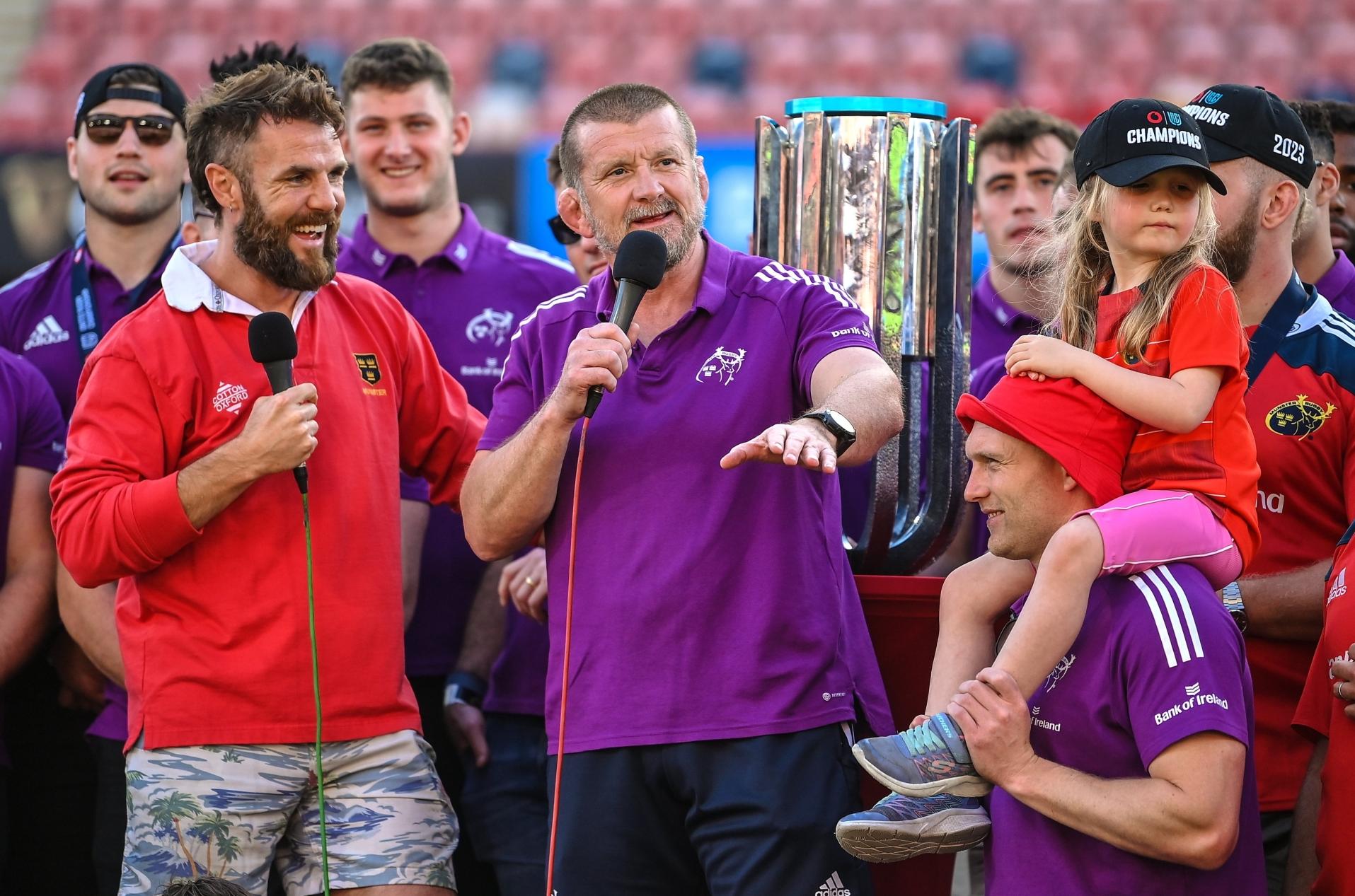
Graham Rowntree is a very rare breed of head coach in that he has coached a team to a major trophy in the recent past. You might think that coaches with a trophy on their CV are ten a penny but, far from it. It’s almost impossibly difficult to win a trophy in this sport, given how punishing any mismatch in quality is. Rugby is a game where the favourite wins way, way more often than not. When you consider the implications of that over a full knockout season in a world where you compete for two elite trophies and two elite trophies only, you get a good idea of just how difficult it is to lift silverware in this game.
As a further illustration, here is the list of head coaches who have won a major club trophy – Champions Cup, TOP 14, Premiership, Super Rugby and URC/PRO14 – since the 2019 World Cup.
- Ronan O’Gara
- Stuart Lancaster/Leo Cullen
- Philip Saint Andre
- Ugo Mola
- John Dobson
- Steve Borthwick
- Rob Baxter
- Mark McCall
- Scott Robinson
- Graham Rowntree
In the ultra-conservative world of coaching hires, that recent record of success is the gold standard because every other coach you could realistically hire is a “risk”. When any big club or union goes looking for a new coach, the guys at the top of their list are the winners. The logic is simple. “They won there so they can win here”. Look at the money Bristol threw at Pat Lam after he won the PRO12 with Connacht. Look at how Declan Kidney got a full director of rugby gig with London Irish after five years out of the game in part due to the monumental trophies he won with Munster and Ireland in the noughties. Again, look at the logic.
“They won there, so they can win here”.
So when Munster lifted the URC trophy in May right when head coach Graham Rowntree was progressing into the last year of an initial two-year deal, his value skyrocketed. Not just because he coached his way to a trophy, but because he coached his way to a trophy at Munster.
Why is that a big deal? Munster are one of the biggest clubs in the sport, which comes with its own pressure, but when you consider that Munster were also one of the biggest clubs in the world that hadn’t won anything in a decade, that can become an inertia of expectation, pressure, let down, and failure.
When Rowntree took over, Munster were also arguably at their lowest ebb in the eleven years since they last won a trophy.
To turn that around in his first season was remarkable. Sure, he didn’t do it alone – his coaching hires were outstanding – but when you consider how Rowntree went about changing Munster in the post-Van Graan era, it’s even more remarkable.
***
In the summer of 2022, Graham Rowntree sat down with Mike Prendergast and George Murray and, realising that by the time they had their feet under them properly, they’d have around six weeks of a pre-season to work with before the URC started. They had a choice to make.
Gradual change or radical change.
Gradual change would mean keeping large swathes of what they knew didn’t work from the previous few seasons and gradually building in the changes they wanted. So it would be mostly what Munster had done under Van Graan and Larkham with a few changes here or there.
This is what I thought they would do at the time, given the risks to results that come with radical change in a short period of time.
But the decision they made that summer was, essentially, why would we keep doing what had brought the club to the lows of the previous season away to Leinster and Ulster?
Radical change it would have to be.
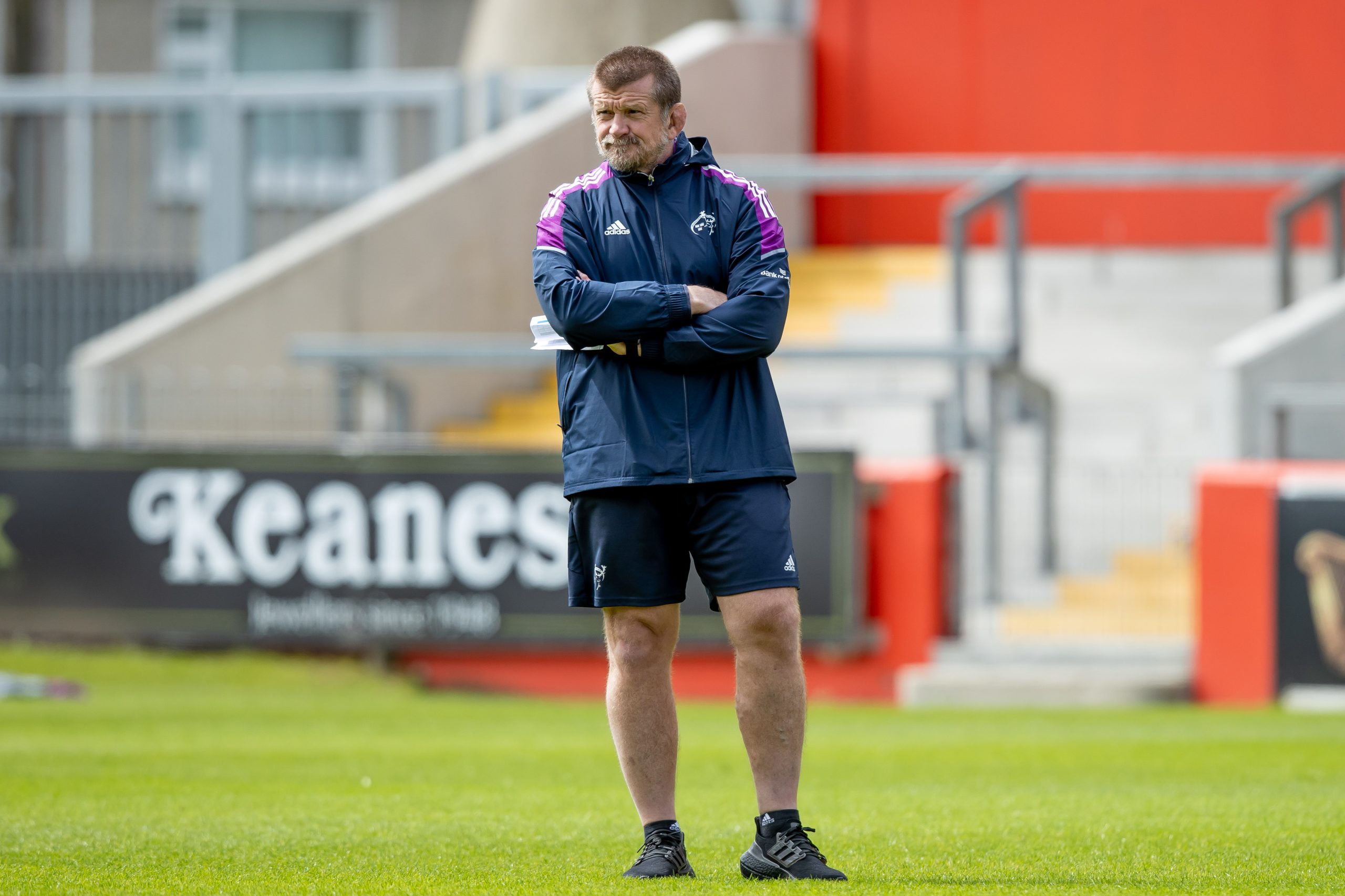
If you listened to any of the press conferences from early last season, you’ll have heard all the coaches speaking about the change in the pace of Munster’s training from previous years. Not only that, Rowntree and his staff were making massive style changes to how Munster were playing. In six short weeks, Munster went from a reactive, defensive counter-transition team to a high-volume possession on-ball team.
The transition did not run smoothly.
***
The initial four months of Rowntree’s tenure were incredibly difficult.
Any coach – especially a new coach – has a certain amount of credit in the bank with the playing group. Wins bump the credit. Losses drain it.
Munster’s start to the season was so bad that Rowntree had to use the dreaded line that no coach ever wants to have to use a few weeks into the season – “trust us”. Munster’s radical style switch – in combination with 10 core players that had been training in that style during the limited preseason getting lifted out of the squad to play for Emerging Ireland – produced disjointed, wonky, flat-out bad performances that produced loss after loss after loss.
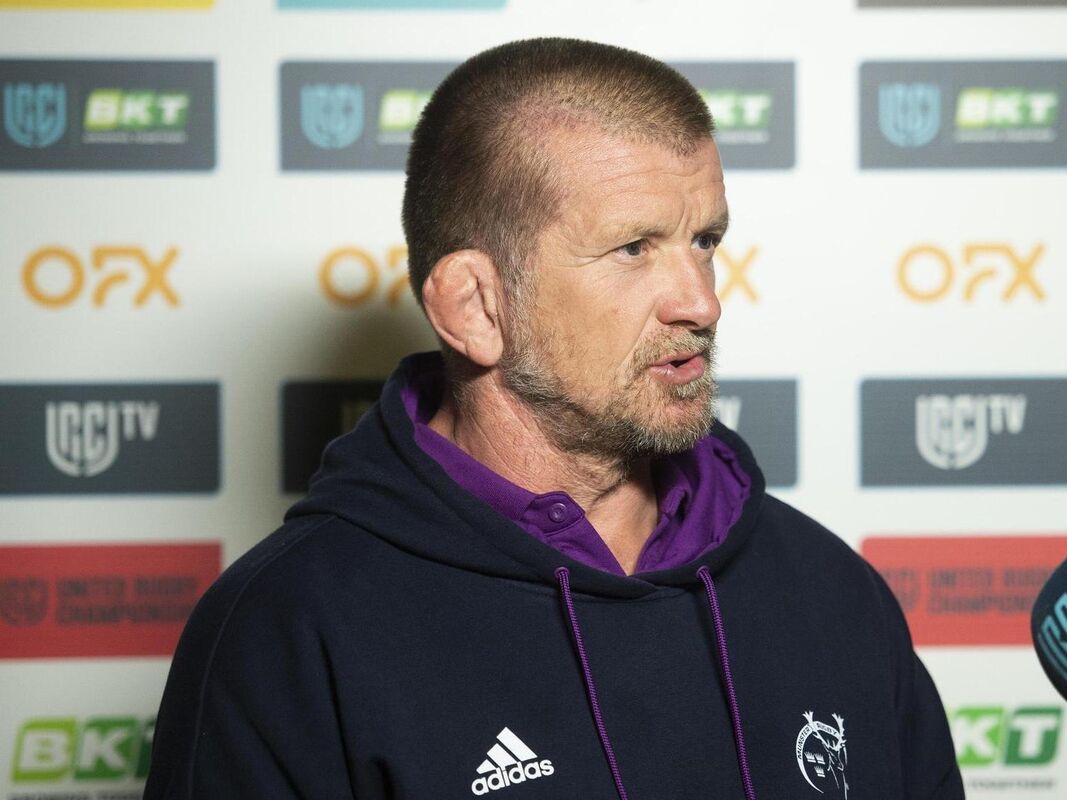
The pressure was on. Again, it would have been easy for Rowntree and his coaching group to step back from the attacking change they were insisting on in an attempt to stabilise results. They didn’t. They steered into the spin and reaped the rewards.
After a dog-rough September and October, I remember speaking to Graham Rowntree on a presser ahead of that momentous game in Páirc Ui Chaoimh and he didn’t seem like a man under pressure. He seemed like a man who knew that, if he and his team stuck to their guns, if they trusted him, they would see results. How right he was.
Seven months later, Graham Rowntree had his head in his hands as fireworks went off in the Cape Town Stadium and Munster were confirmed as the URC champions after going unbeaten for six away games in a row to close out the most remarkable season I can remember.
When it would have been easy for a first-time head coach to doubt himself and his team, when it would have been easy to take the pressure off himself by backsliding to a more familiar approach, Rowntree took the hard way and he reaped the rewards.
***
The initial two-year deal he signed in the Spring of 2022 was not a resounding declaration of faith from the IRFU. It was, in my opinion, an audition. When Van Graan decided to exit his contract before the new one he signed in 2021 took effect, Munster and the IRFU had to go into the coaching market at the worst possible time – right in the middle of the season when anyone with a “winners” CV was already on contract but, on a larger scale, just far enough out from the World Cup that meant going after a test coach looking for a landing spot after a cycle was a year out. For reference, look at Stuart Lancaster’s announced leaving (summer 2022) and his departure at the end of the 2022/23 season in place for Jacques Neinaber to replace him post-World Cup.
By signing Rowntree to a two-year deal, Munster and the IRFU were keeping their options open, to a certain extent. Munster needed a coach now, there weren’t a host of top coaches banging the door down for the job, in part because of the timing, and the perceived difficulty of the job.
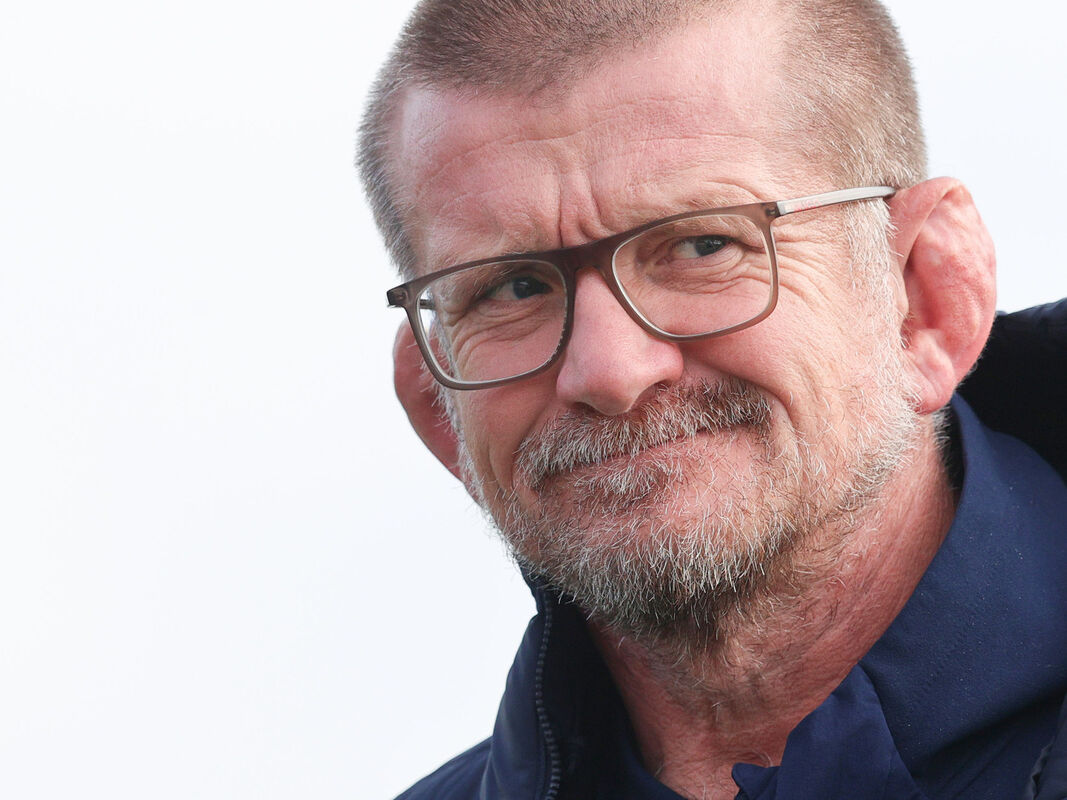
Rowntree stuck it out through the entire process, even when the IRFU Performance Director took his usual extended holiday leave. Eventually, Munster lost patience with the slow pace of the hiring process and made a push to hire Rowntree as a matter of urgency, which the IRFU assented to.
The two-year deal, in that light, was a compromise. The IRFU wanted to wait and see more applicants, by all accounts – because they pay the wages of the head coach and hold the contract – but Munster couldn’t wait that long with fans (and players) getting restless.
Munster knew what they had in Rowntree. He knew the club, loved the club (ask him about his tattoo) and knew what it took to turn it around while also giving Munster all the benefits of continuity. Externally, Rowntree was often lumped in as a “Van Graan hire” but this was just a technicality – Rowntree had a clear vision of what he wanted to do differently from the man who originally brought him to the club.
There’s no doubting it was a risk – all clubs want to sign “winners”, and this was Rowntree’s first head coach gig – but it was a calculated one. Rowntree was about as experienced a unit coach as you could find and his pitch to the IRFU/Munster in the meetings was intriguing.
Rowntree’s new two-year deal – essentially a three-year deal – is a proper reward for a proper coach of a proper club. He bet on himself, bet on Munster and when the wheel spun around to red, we all got what we were waiting for.
