


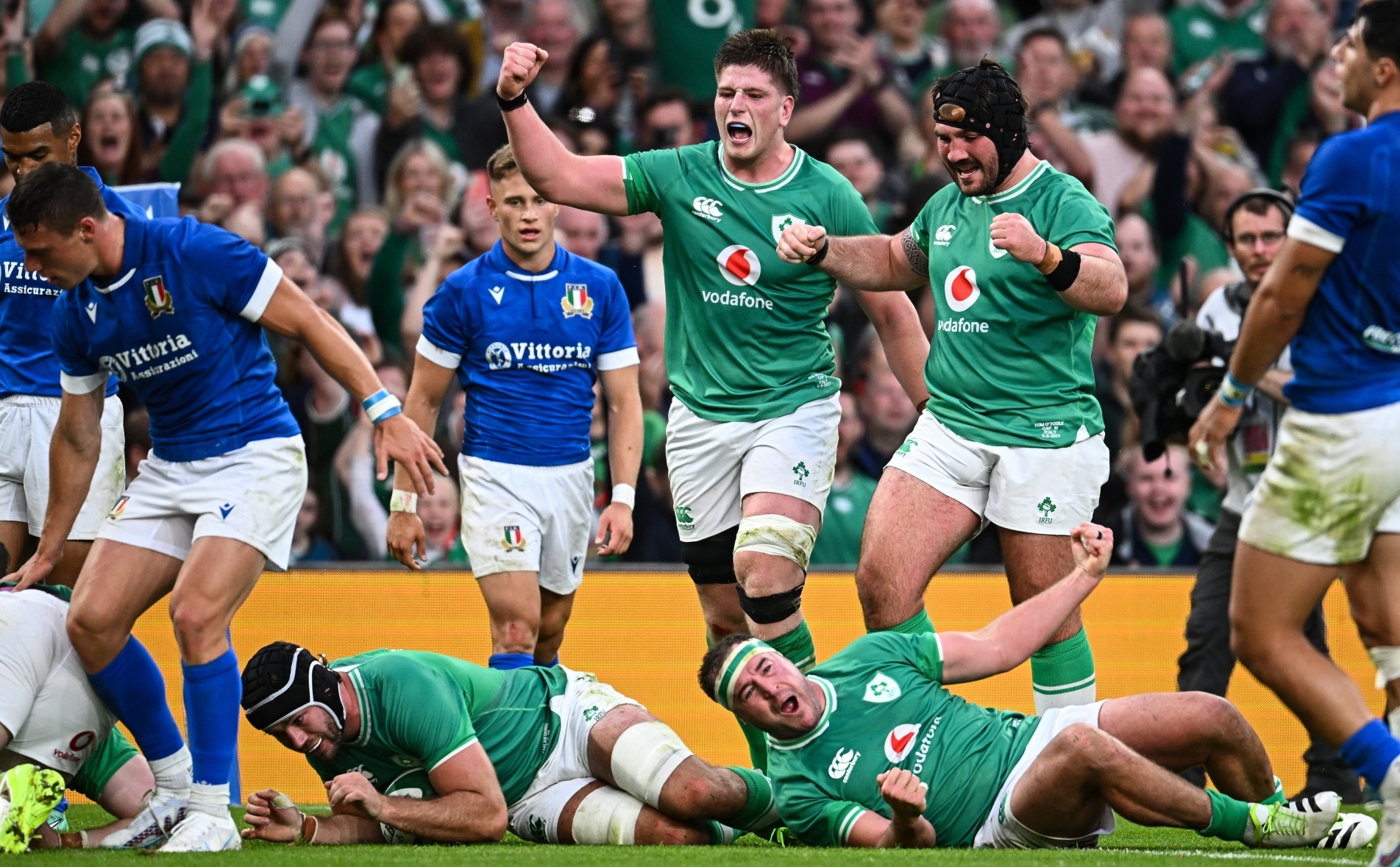
Suppose you have watched provincial or Irish test rugby any time over the last two seasons. Let’s assume you have because you’re here reading this. In that case, you’ll be familiar with one penalty in particular – the maul obstruction penalty, usually awarded against the loosehead on the touchline side of a close-range maul.
It’s incredibly frustrating because, of course, it’s an offensive penalty conceded within spitting distance of the tryline but it keeps happening for both province and country, despite repeated infringements.
Why is that?
Well, I thought I’d have a look.
The first one that jumped to mind for me was the penalty Munster conceded late enough into the game while behind on the scoreboard against the Stormers in the URC final to really sting.
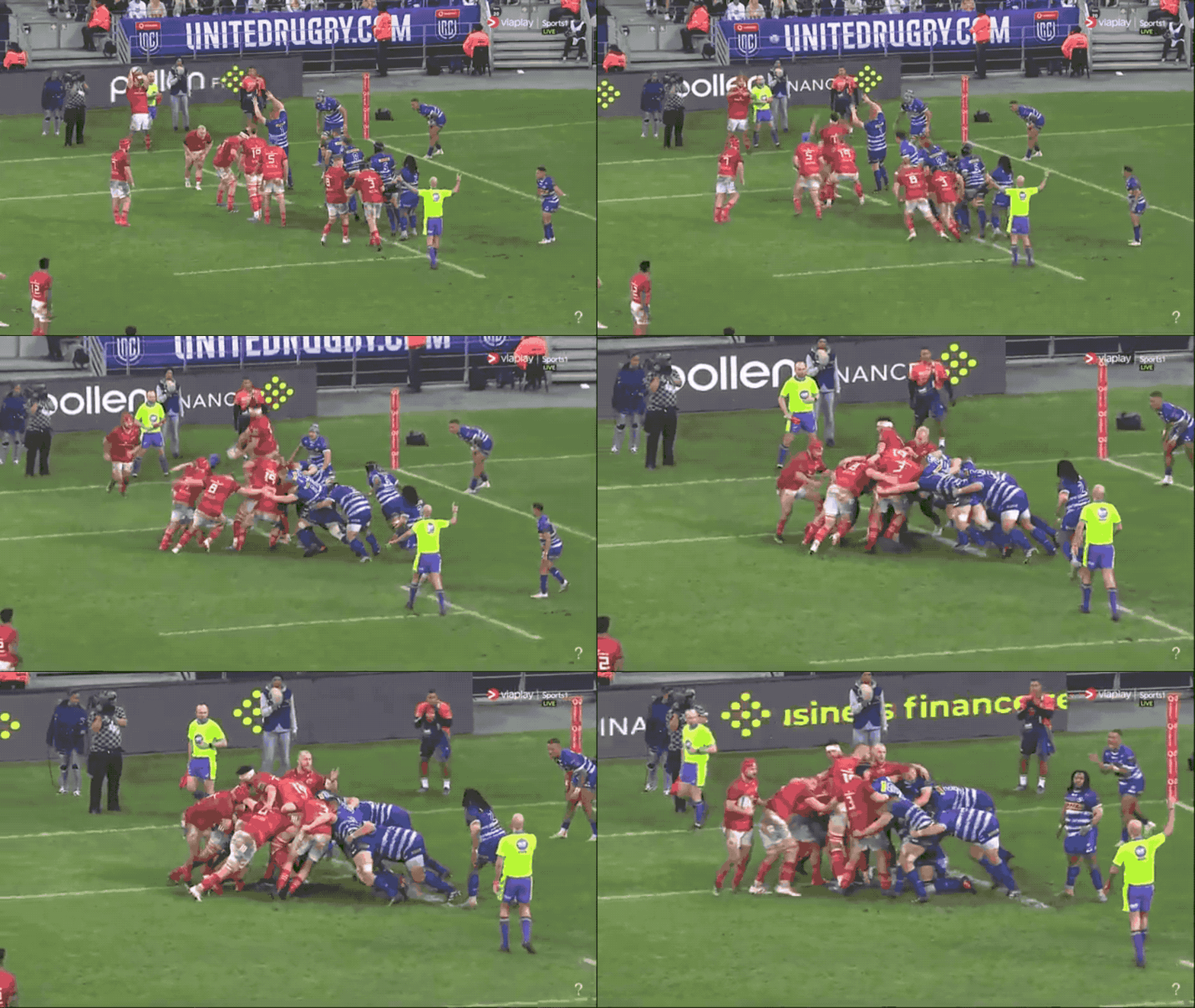
This is a typical example of this penalty. Barron throws to a pod at the front – making it all but impossible for Stormers to disrupt in the air – with Beirne transiting to the touchline side from the middle and Archer binding on Snyman with Coombes and Hodnett completing the build on the back ahead of the transfer.
But Loughman is penalised for sliding in behind Kleyn, obstructing the Stormers’ defence. Look at Munster’s action after the drop though – they are looking to slide around Loughman and surge up the 5m tramline, which is unguarded after the guard-forward on the touchline side makes his entry.
I will tell you this – both Ireland and all of the four provinces will continue to be penalised for this because we have no intention of changing it, even if it costs multiple close-range opportunities in a game. At a fundamental level, it is how we maul.
Let’s fast-forward to Ireland v Italy in the first warm-up game of our World Cup campaign. We don’t maul this – it’s a maul feint – but watch the actions of Henderson and O’Toole at the back of the maul.

Both of them form an arrowhead behind Baird and prevent competition for the ball in almost the exact same way as Loughman did above. But, because it’s not on the 5m line and at the tail of the maul, it’s not called and, it’s rarely called that far out from the tryline.
At a base level, what this maul action looks to do is “spike” an arrowhead into the wall of the counter-shove and then hinge around that point of entry to the infield or touchline side and, if that doesn’t work on the first shove the very action of moving the “wound” to the left and then right (infield and touchline) forces the defensive maul backwards. It is staggeringly effective. You can see O’Toole driving in and around to force a lane to open – Doris breaks into that space off the back of the maul and gets a pass away.
Watch the same action here, this time with Baird as the inside lifer and Henderson jumping.
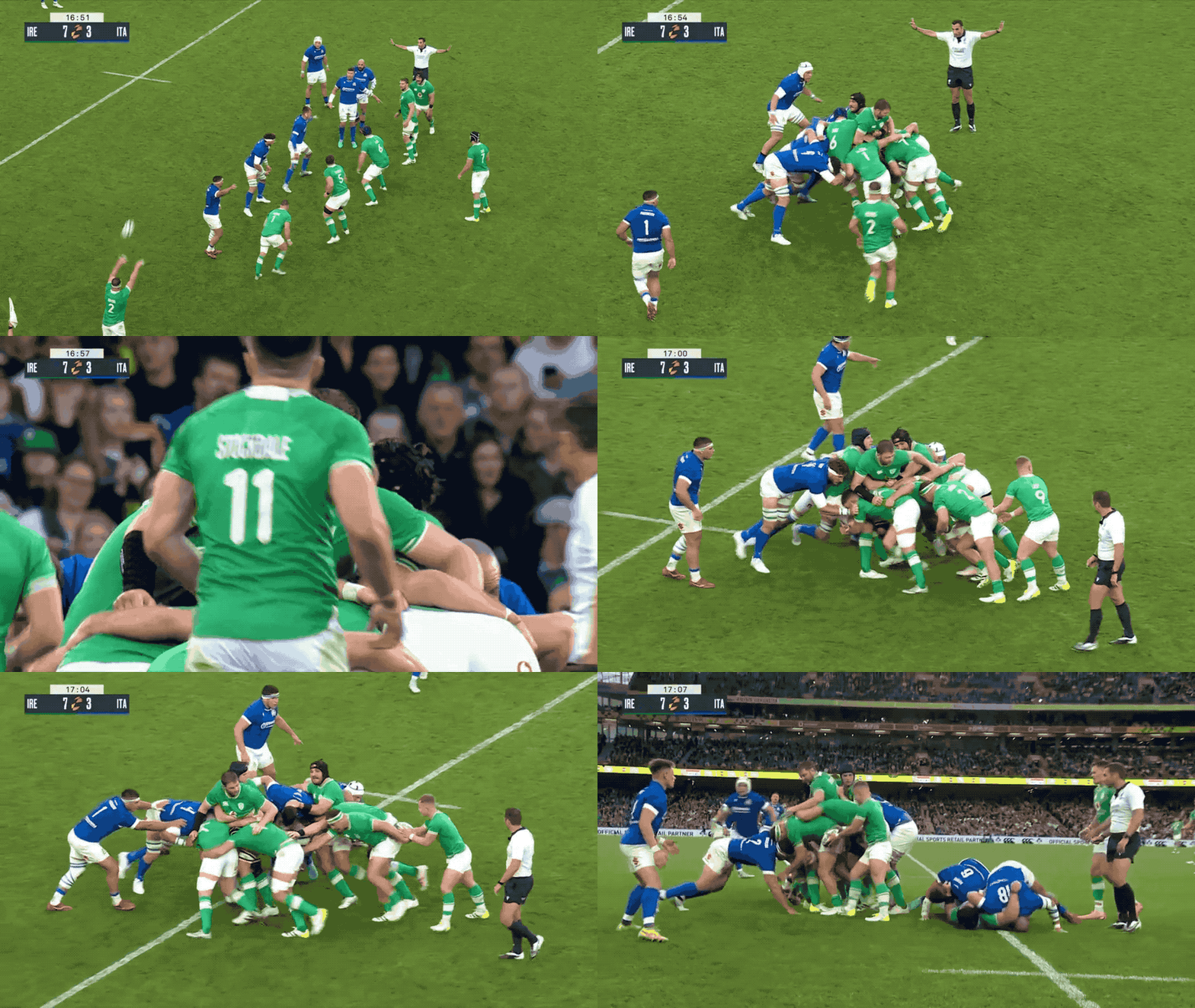
On the drop, Baird and O’Toole swipe in behind Henderson and prevent competition for the ball in almost the same way that we’ll see penalised in a few minutes. Ireland first try to hinge infield around O’Toole but then come back around to hinge around Baird who, along with Kilcoyne, block off the Italian shove and almost “launch” the sting of the maul into the space created.
You can see that action here plain as day;

Baird’s initial body position behind Henderson allows him to drive into the Italian counter-shove and lever the maul around him. In any maul – or pushing contest – whoever can provide the smallest surface where the pressure meets will drive through the wider surface if the pressure is anyway equivalent.
Irish lifters want to swing in behind the lifter to create that smaller “arrowhead” that will always drive through the opponents’ counter shove – if they approach the shove conventionally. More on that later.
Let’s have a look at the penalised maul.
It’s very similar to Munster’s maul that was blown up in the first GIF. Front throw, loosehead lifting, and a player transiting across the lift to hit the touchline lifter – watch the detail from Conan to sell a possible short pass to the Italian guard – before driving in to help Kilcoyne form the “hinge”.

Ireland try to surge around that very side and, if it wasn’t blown up, we would have scored – it’s a certainty.
You can see Baird and Kilcoyne forming the arrowhead here and how, almost immediately, it isolated two Italian defenders on the touchline side that will soon be overwhelmed by the sting of the maul swinging around onto them.

It’s the perfect build against a set defensive maul because, if you get away with the arrowhead, they have no legal response to the action if they approach it conventionally. In a shoving match, you will always lose here and, if you try to catch the sting of the maul as it goes past, you’re done for side entry and risk a penalty try/yellow card turd sandwich.
A few minutes later, Ireland were back on the 5m line again and what do you think we did? The exact same build. This time, with no whistle for the arrowhead entry – which Kilcoyne does just as much in my opinion – the sting of Ireland’s maul almost sprints over the line.

It’s unstoppable. Italy’s attempted counter-jump doesn’t help their defensive effort – and it masks Kilcoyne and Baird swinging in – but you can see how effective it is. Kilcoyne arrows in, Conan feints a pass and binds on Kilcoyne and the whole maul hinges around the puncture in the Italian counter-shove.
You can see the hinge here;

Italy can’t defend the maul like this because it’s undefendable when you approach it like a regular maul. The only way to stop Ireland from mauling like this is to target your pressure directly onto the bind of one of the arrowhead lifters.
Later in the game, Italy were able to repel Ireland from close-range mauls twice (Ireland ended up scoring on later phases on one but conceded a turnover in the example to come) by attacking one of the lifters – Cian Healy.
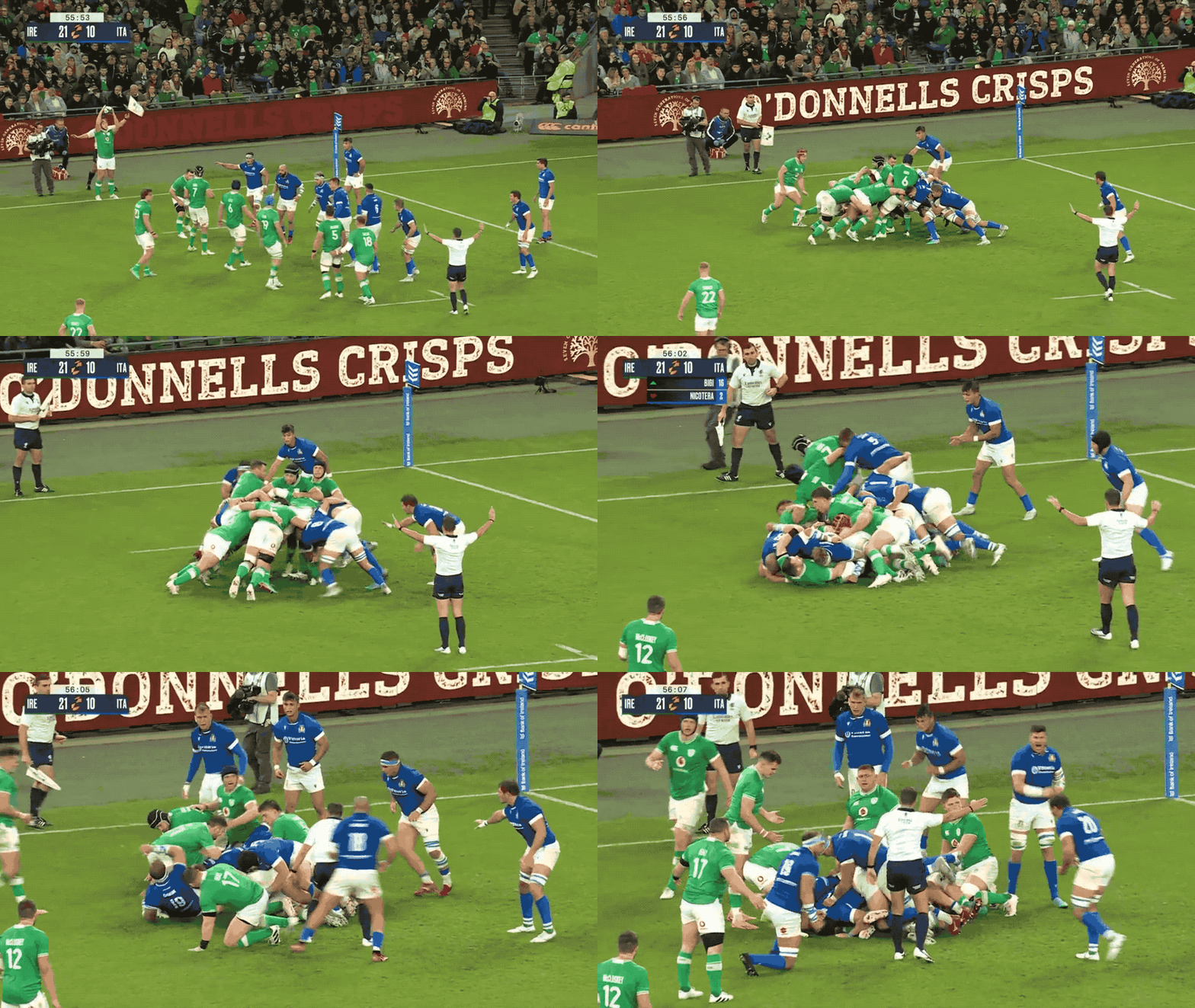
You can see Healy dropping in behind Doris and starting to lever the maul around onto Baird but the touchline defenders in the Italian maul directly attack his bind. When Healy is pushed out of the maul, the Irish shove loses that “anchor” and, as a result, Italy can turn the pressure and drive the entire thing to the floor.
In the later maul, the exact same principle worked in the same way. Italy were able to attack Doris as the touchline arrowhead and that broke up the Irish shove as it hinged around him directly. Ireland still got the sting away but Italy were able to drive that to a standstill before the tryline – Ireland still scored eventually but the direct maul try was stopped.
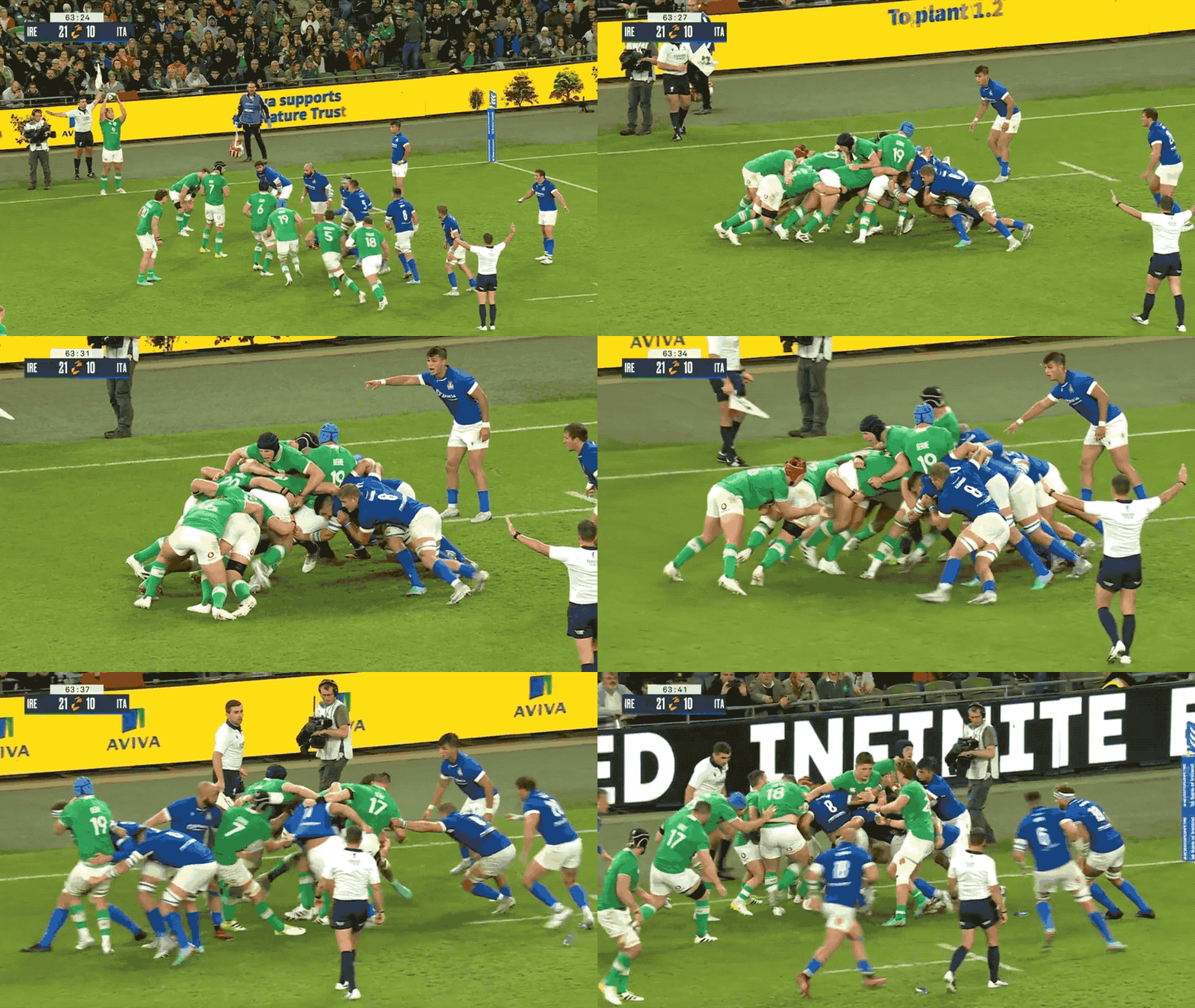
This action on Green #7 is the only solution to Ireland’s arrowhead maul if the assistant referee doesn’t call it.
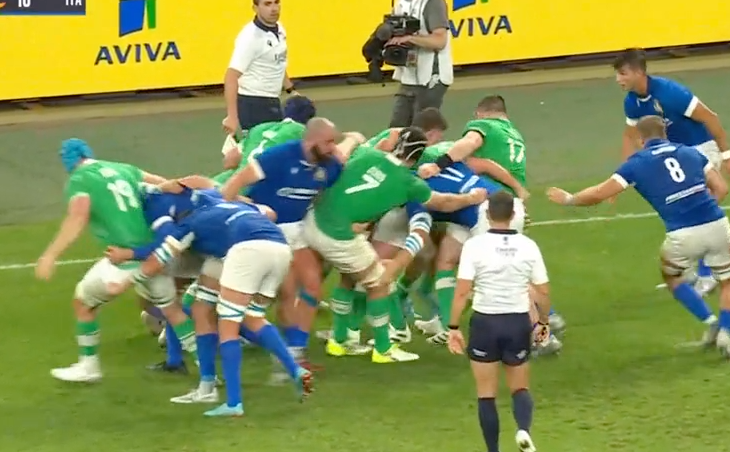
If you can do that – especially as the bigger pack – you take away a key Irish weapon. So let’s hope it stays an Italian quirk of the second half of a warmup game and not something that comes back to bite us in the World Cup proper.
