


“Kick your f**king three!”
I can’t remember what game in Thomond Park I heard that at, exactly, but that doesn’t really matter. You’ve heard this at dozens of games. Maybe you’re the one shouting it. I know that, mentally, I’ve done the same.
I’ll set the scene for you. Munster have won a penalty in an important game. Maybe the scores are tied. The tee stays on the sideline. The crowd starts to buzz. “We’re going down the line”. Crowley kicks into the corner. It’s a good kick; 7m out from the tryline. Munster get set for the lineout and… it’s overthrown. The opposition takes the loose ball, resets and boots the ball downfield. All anyone sees in that moment is the three points we would have had (because nobody ever imagines missing the kick in these scenarios) compared to the zero points we earned from that botched kick to the corner.
You know it’s more complex than that, I know it’s more complex than that, but that’s how it feels in the direct aftermath.
Of course, in the modern game, the maths around the three-pointer kick at goal isn’t as simple as make vs miss.
To start this conversation, I want to get the super obvious stuff out of the way first; five points + two points = seven points, and that is more than three points. I did pass level maths in the Leaving Cert, but I’m pretty sure that checks out. Even five points on its own is – and I’ve double checked this – still more than three points.
On the face of it, this is why teams are making the drive down the line more often than they ever have before, because it leads to more points, and more points win games.
This is the Big Dumb Answer as to why teams are choosing to go down the line more than kick threes, but, as I’ve mentioned, it’s actually far more complex than that.
***
Traditionally and historically, especially in tight test matches, the mantra was “take the points” – meaning teams would almost always kick for goal to bank the three points from a penalty.
In the past few decades, going to the corner was generally reserved for desperate situations (when you were losing and needed a try badly) or when a team had a dud goal-kicker. However, over time, the balance has shifted. Today, even in closely contested games, it’s common to see captains pointing to the touchline instead of the posts, reflecting the more aggressive, try-oriented mindset.
Of course, this has some fairly obvious negative examples, some from the very recent past.

I maintain that Leinster were 100% correct in going down the line in this instance, if we take their decision on its merits at the time it was made. If you look at the outcome and compare it to a hypothetical situation where they take the penalty, tie the game and then win it in extra time, Northampton were down a forward due to the yellow card, and Leinster’s entire game is based around getting those short-range lineouts and then driving to a position where a try is inevitable, either directly or indirectly.
You’d back them to have done the same here from the 5m line and go at least two points up, possibly four, with no time for Northampton to recover.
Not scoring from that sequence makes the call to turn down three points look ridiculous, of course, but it was the right decision in context.
Of course, culturally, if you’re a Munster fan of a certain vintage, and you’re reading this, taking the three is associated with winning games and, almost more importantly, losing games when you aren’t able to.
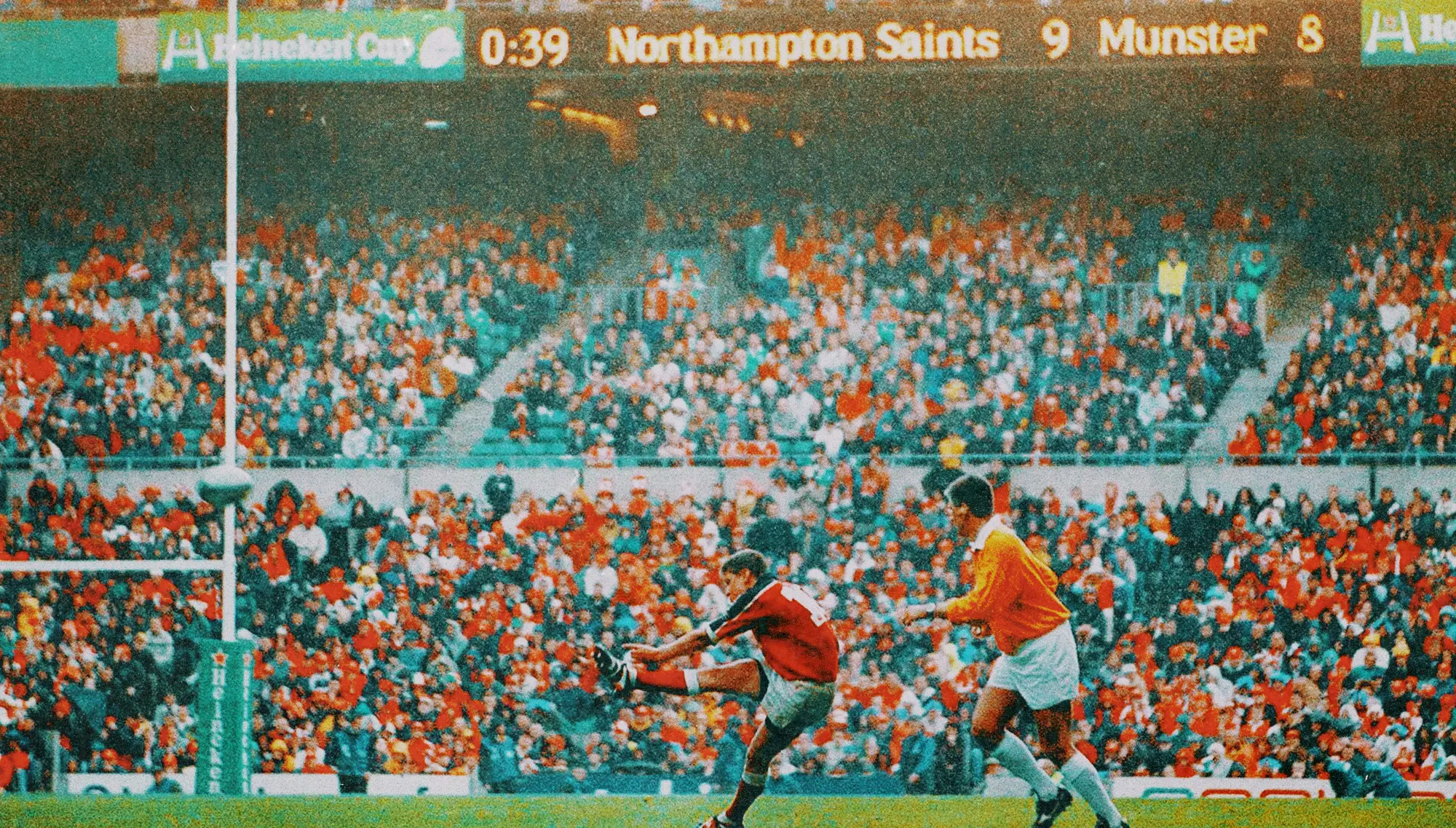
But even that Munster side knew that they would have to move beyond the three-pointer to get where they needed to go. O’Gara spoke in his autobiography about the Munster squad at the time realising that they needed to score more tries to win in Europe, something that would play out directly in the 2006 Heineken Cup final.
“We made a bad start, but we regained our composure straightaway, and I think it was a good call when we elected to go for the corner with a couple of penalties. We needed to make a statement. I think you need tries to win finals, and the boys tore into them, with Trevor’s try being the result of our good work‑rate.”
By the 2010s and especially the 2020s, there was a clear trend of more tries and fewer penalties being scored across all the major club and test competitions. By way of an example, the Six Nations hit an all-time high for try scoring in 2025 with 108 tries scored (the first time the tournament ever broken 100) and a corresponding drop in penalty goals.
Here’s another truism that I think is worth understanding;
The team that scores more tries now wins an overwhelming majority of matches, underscoring how critical tries have become.
This was even true back in 2014 when, for example, 75% of Six Nations games were won by the team scoring the most tries (and only one game was won by a team that scored fewer tries than its opponent). Penalty goals, while obviously still important, are no longer seen as a sustainable path to victory if the opposition is scoring tries against you. While penalties can keep the scoreboard ticking over, tries ultimately decide games.
Tries vs. Penalties in International Rugby:
The Six Nations, as I mentioned, has seen record try numbers and a general decline (2023 aside) in penalty goals in recent years. In 2025, 108 tries were scored across five rounds, while only 43 penalty goals were attempted, which is a pretty striking stat. The chief analyst of that Six Nations report concluded that “the penalty is now being regarded more as a vehicle for strategic possession than a direct method of accumulating points.” Italy (who finished above Wales for their best Six Nations finish in years) attempted the most penalty kicks (17) in the tournament. France, who won the Six Nations, attempted only 9 and runner-up England just 5, relying far more on tries for their points
This exemplifies what we’re seeing as a broader pattern: the top sides in test rugby are emphasising try-scoring, while teams that rely heavily on penalty goals struggle to keep up on the scoreboard. This comes back to how many opportunities you get to score and how efficiently you can take those opportunities.
Maul and Drive
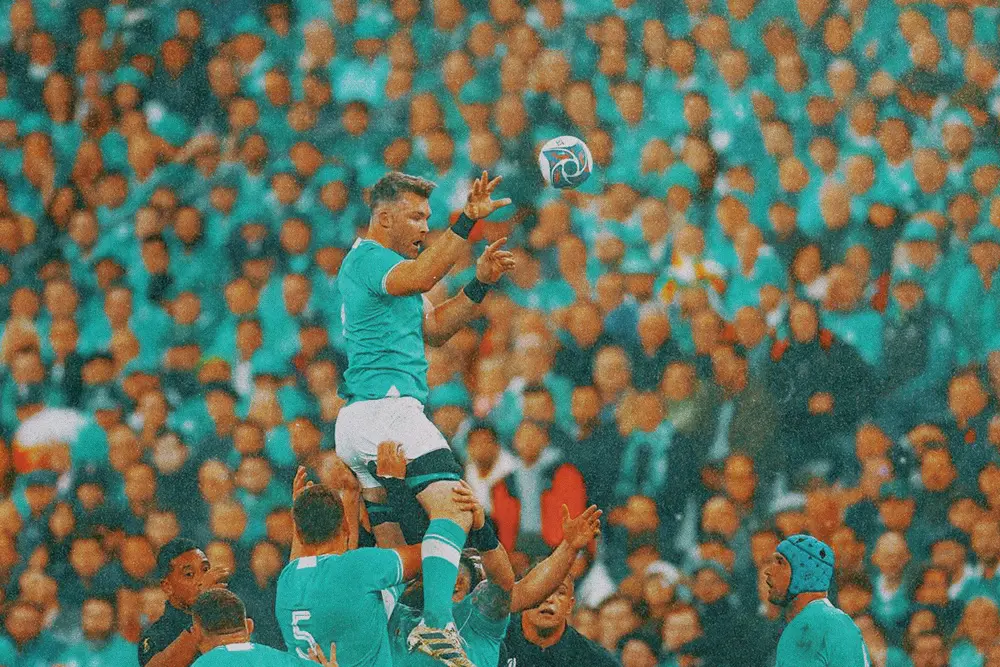
A huge proportion of tries now originate from the lineout, showing how profitable the kick-to-the-corner can be. In the 2019 Rugby World Cup, nearly half (49%) of all tries scored came from lineout possession.
Lineouts inside the opposition 22 (and especially within 5–10 meters of the try line) have an excellent success rate in line with this. World Rugby’s own analysis of RWC 2019 found that a lineout within 10 meters of the try line led to a try roughly one out of every three attempts.
In other words, a team kicking to the corner had about a 33% chance of eventually scoring a try from that attacking lineout sequence. This one-in-three probability is very meaningful when you consider a converted try yields 7 points so it gives an expected value comparable to or higher than a moderately difficult penalty kick (which might be worth ~2–3 points on average, depending on the kicker’s success rate). It’s also been noted that for a team with a reliable goal-kicker (say ~78% success, like Owen Farrell, yielding ~2.3 points per penalty attempt), the break-even try-scoring probability to justify not taking the three is around 33%.
Lineout drives at 5m distance are hovering around that mark, and many teams believe they can exceed it, especially if they have a dominant maul or penetrative round-the-corner close-range game.
Closely related to the above, the driving maul from a lineout has become arguably the most efficient try-scoring method in the sport. In RWC 2019, of those close-range lineout tries, about half were scored directly by the forwards driving over in the maul (the rest came from ensuing phases after the lineout win).
Correspondingly, teams are attempting fewer penalty shots at goal than before, except in certain tight-game situations. If we compare eras, we see a decline in the ratio of penalty goals to tries. In the early 2010s, there were Six Nations tournaments where total tries sank to a low (2013 saw only 37 tries in 15 matches), and penalty goals carried a lot of the scoring load. But, fast forward to the 2020s, and that has reversed. 2023 saw 91 tries in the Six Nations, and 2025 saw 108 tries, while penalty goal counts dropped relatively. The 2024 Rugby Championship and domestic leagues like Super Rugby have also featured high try-scoring rates, partly because southern teams have long been willing to run or kick to touch rather than take three points.
When we also factor in that evolving laws and referee interpretations have tilted the balance toward maul offence. For example, maul defence is tightly officiated; if defenders collapse a maul or commit repeated infringements near the try line, referees will almost always issue penalties, and often yellow cards or even a penalty try. This reduces the risk of coming away empty-handed if your lineout is accurate – which has been Munster’s Achilles heel in the last three seasons – so an illegal stop can simply result in automatic seven points. Teams know that if they go to the corner and the opposition deliberately kills the maul, they might be handed 7 points and a one-man advantage.
Overall, referees tend to favour the attacking team in goal-line situations. In practicality, this means playing long advantages to allow a try to be scored and sanctioning cynical defence.
Strategic Game Situations
Teams also consider context. This is directly related to that Leinster penalty decision.
Early in a match or when a game is still close, many sides now prefer to build a try-scoring lead rather than accumulate a narrow lead based on penalties to go three, six, nine points up. They recognise that unconverted tries (10 points) create a cushion that three kickable penalties (9 points) cannot match. Plus, with the offensive firepower in modern rugby, a 9-0 lead can evaporate quickly if the opponent scores a try, whereas, say, a 14-0 lead puts huge pressure on the opponent. As a result, teams often try to “twist the knife” when on top, rather than settle for a single score.
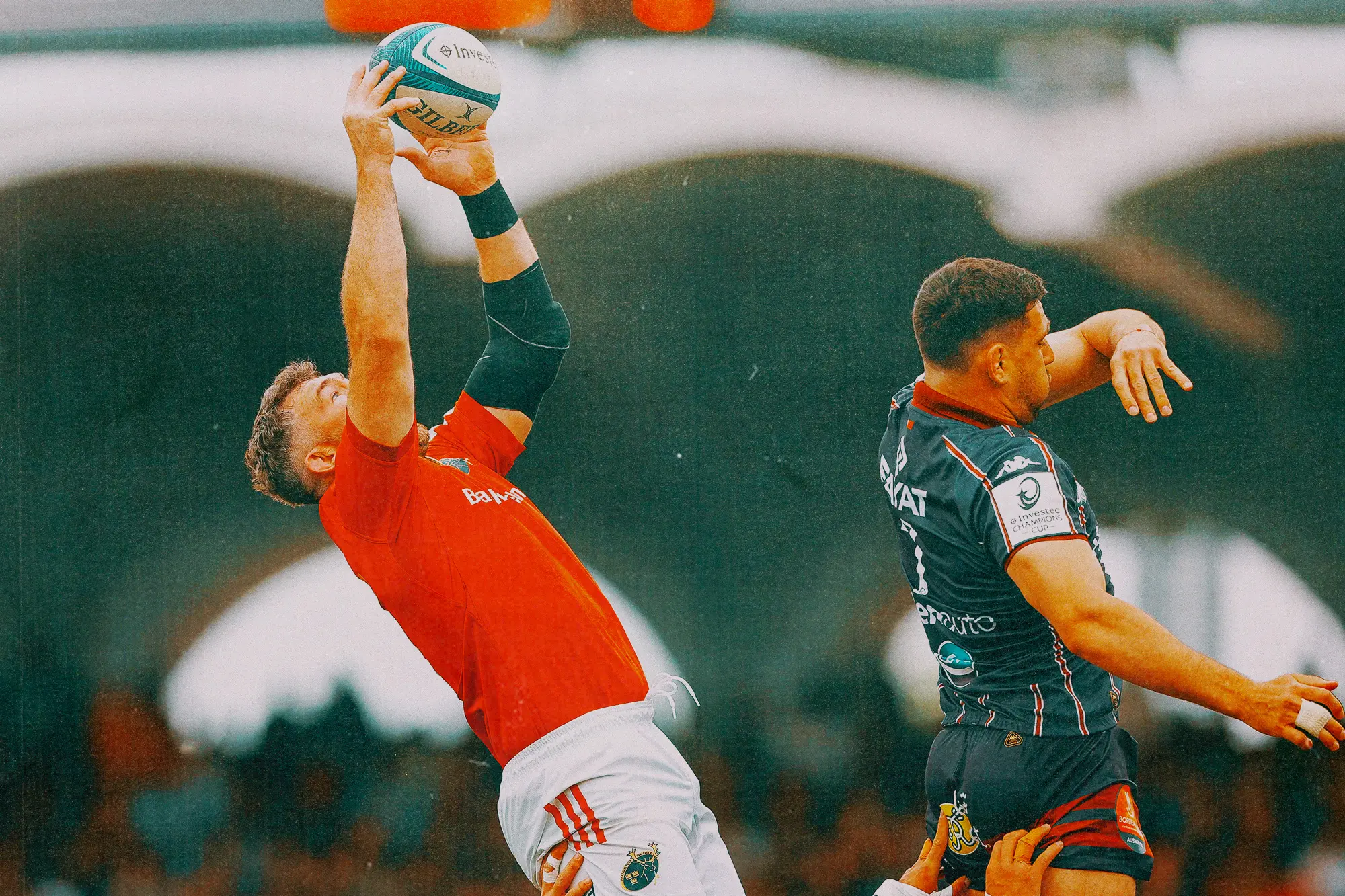
There are, of course, moments when prudence prevails, for instance, in knockout rugby or when leading by a slim margin late in a game, teams may still take the points on offer. But, broadly speaking, the bias has shifted toward “if we’re in the opposition 22, we back ourselves to come away with 7.”
This is especially true when chasing a game or trying to secure a bonus point.
The Ticking Clock
My pet theory is that if rugby games were 10/20 minutes longer, taking the three points on offer would always be the smart option. As it stands, when we break the game down, you’re really looking at sixteen five-minute blocks to make up 80 minutes, with approximately 38 minutes of ball-in-play time in 2025. That will eventually creep up to the 40-minute mark in the next two or three seasons.
What this means is that winning “blocks” of time by scoring tries and then preventing the opposition from scoring is a winning strategy that plays into the decision tree around kickable penalties. But, before we get to that, we need to assess what a kickable penalty actually is.
The biggest factor is position. Across the last few years, the stats breakdown like this;
- Central kicks, within ~30 m: usually 85–95% success for top kickers.
- Mid-distance kicks (~40 m, slight angle): accuracy falls to 70s–80%.
- Long-range/acute angle kicks: significantly lower, possibly 50–70%, depending on skill.
Elite kickers usually land between 85/90% of their kicks across a season, with obvious scope for the bad runs that all kickers sometimes go on.
But the big factor is where the penalties are being attempted from, which directly relates to where penalties are being conceded (or forced). When we consider that, your effective penalty range, where most kickers would be expected to land three points 80% of the time, is in this range.
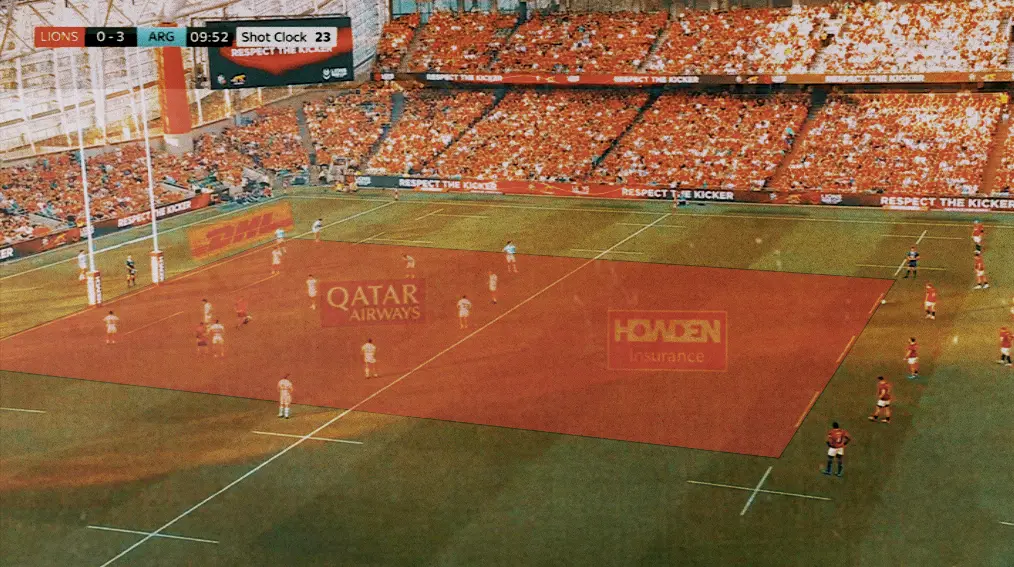
You can see Finn Smith taking a penalty right on the lip of this kickable range. In context, this was the right decision after the Lions had a try chalked off for a knock-on; this penalty was an opportunity to convert 3.2 minutes of offensive clock time that spanned the entire second five-minute block from five to ten minutes into three points.
But what happened after this penalty was scored?
The Lions tried to exit and did a decent job of it until an excellent Argentinian kick forced a deep kick to touch from the Lions’ backfield. It was like the Lions had simply kicked to touch, which everyone says you must do, but in doing so they gave Argentina a lineout halfway between the 10m line and 22. What happened next? They scored.
The Lions scored three points but lost territory on the restart, so the differential on that sequence,e if we view them together, is the Lions going -4 points. Scored three points but conceded seven points.
This is part of modern decision-making because of the risk associated with the modern restart. In essence, if you are converting 22 entries at near enough to three points per entry anyway, taking the three points is only strategically viable in very specific circumstances, such as capping a long run of possession with a gimme score or going more than two converted tries ahead with less than 20 minutes of game time to play.
At any other point, you’re trading three points for a loss of possession and position, which, against good sides, increases your own risk of conceding dramatically.
