


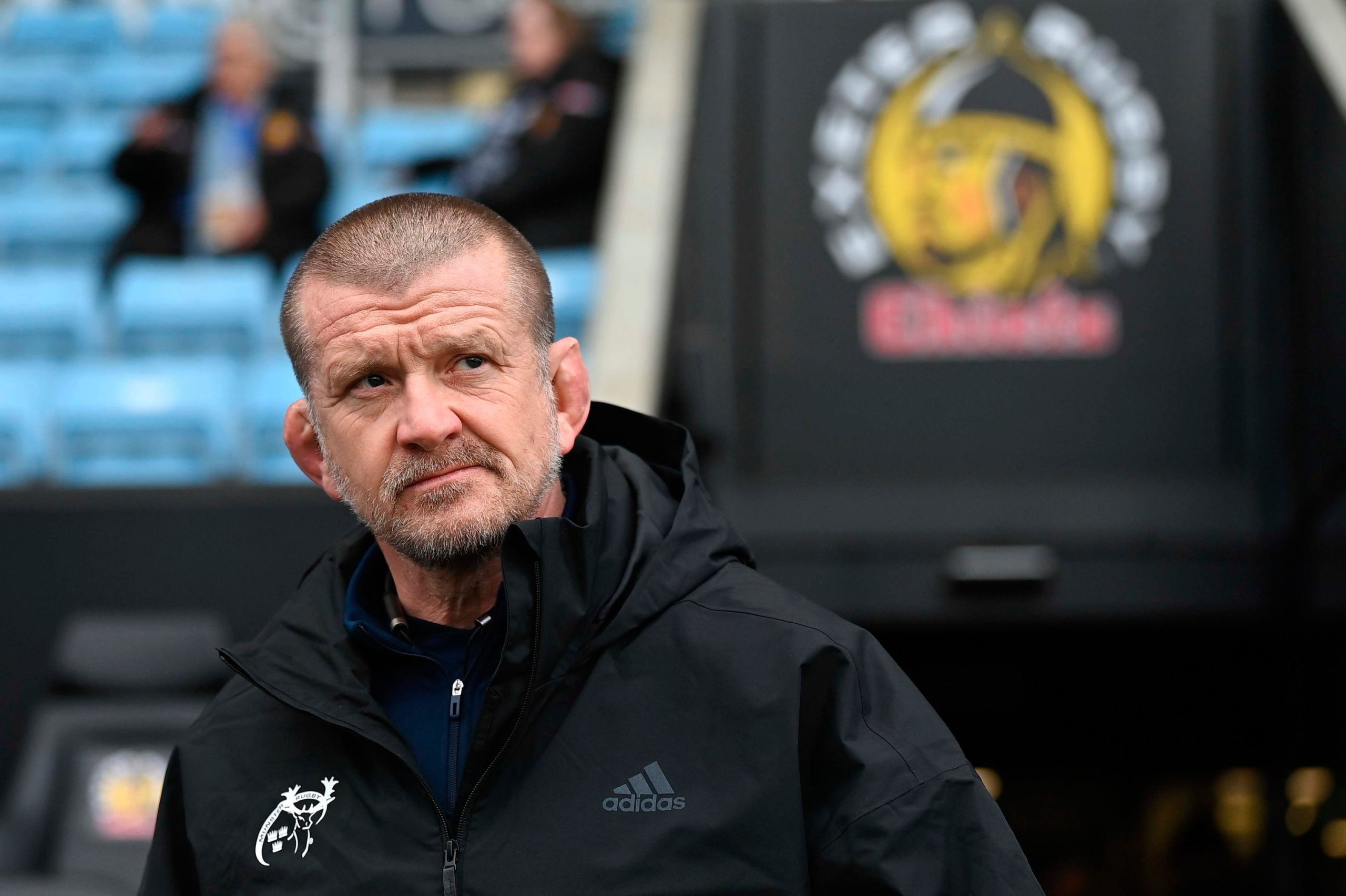
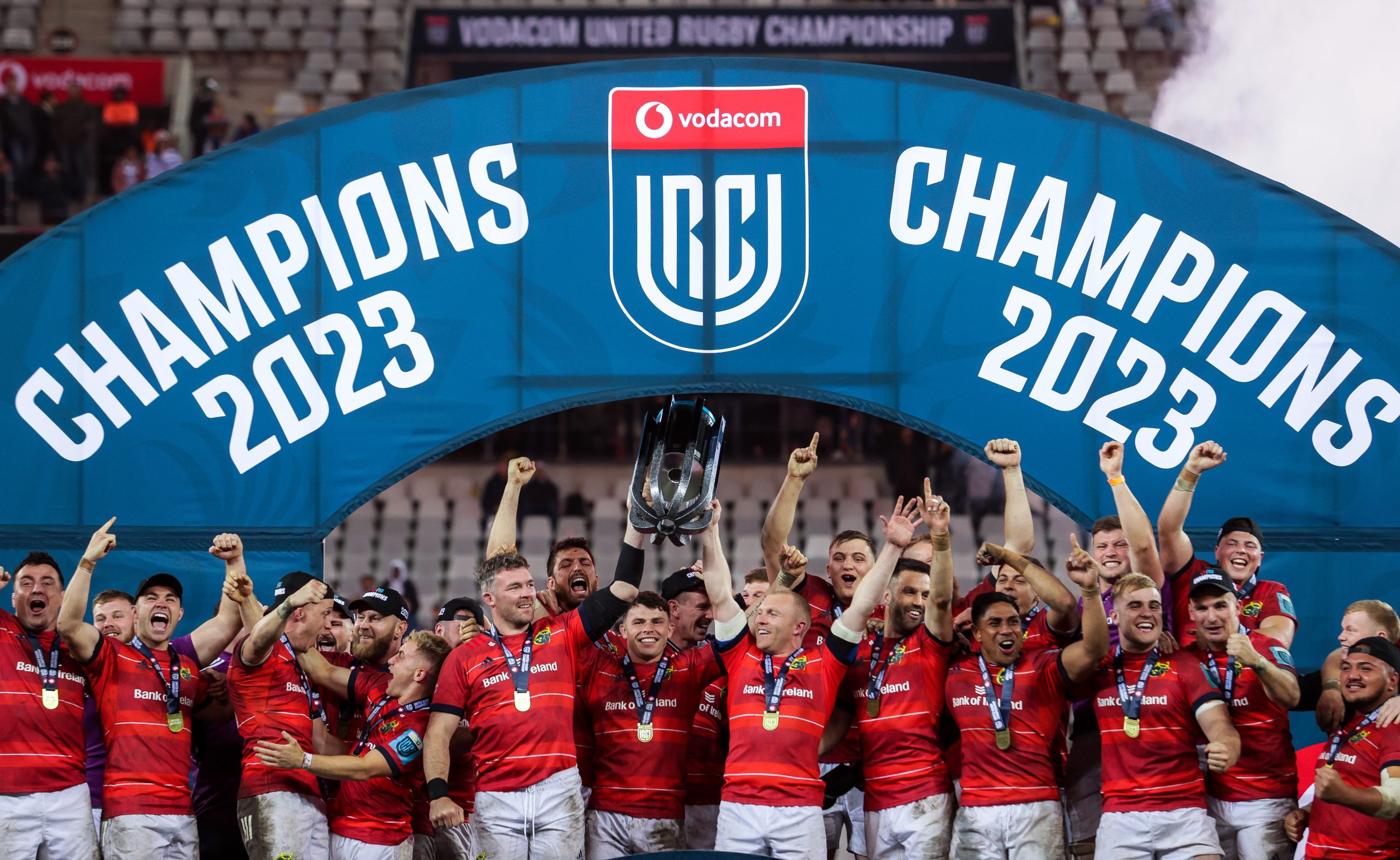
Developing a team into a winning, top-three in Europe side that regularly contests for finals is rarely illustrated by a straight line going up (or down). When Munster won the URC last season, you could be forgiven for thinking that Munster’s “transition” from the Van Graan era to Rowntree’s was completed on the 27th of May 2023.
Far from it.
If anything, Munster winning that trophy while the vast majority of the “transition” had yet to be completed (or even fully started in earnest) was even more impressive than doing it away from home in every single knockout round.
When we look back at year one of Rowntree – which could only be planned for from April 2022 when he was hired – it was as much about embedding a new system of playing and training while seeing who didn’t fit, as it was about signing new names.
Munster shed ten players in Rowntree’s first off-season, with three senior players – Chris Farrell, Dan Goggin and James French – released during the season and one – Malakai Fekitoa – being released a year early from a two-year deal in July 2023. Fekitoa was signed in the weird space between when Van Graan was committed to the next two seasons in 2021 and when he handed in his six-month notice in December 2021. Fekitoa technically signed on the dotted line when we didn’t have a head coach in situ (and wouldn’t for months afterwards) and it’s not that much of a surprise that he didn’t fit with what Munster were doing under Prendergast’s attacking system until well after he and Munster had negotiated a way out of the province for him.
Straight away, that made midfield cover a priority for Rowntree during his first year once it became clear that Fekitoa wasn’t going to work out in the long term. Remember when Jack Crowley was playing at #12 despite Fekitoa being fully fit? That’s the time we’re talking about when the decision was made.
Munster had long identified Alex Nankivell as a potential midfield signing and didn’t have much of an issue getting dispensation to sign him given the issue with Fekitoa and the fact that Munster had nothing at all coming through in the midfield slots for at least another two or three seasons.
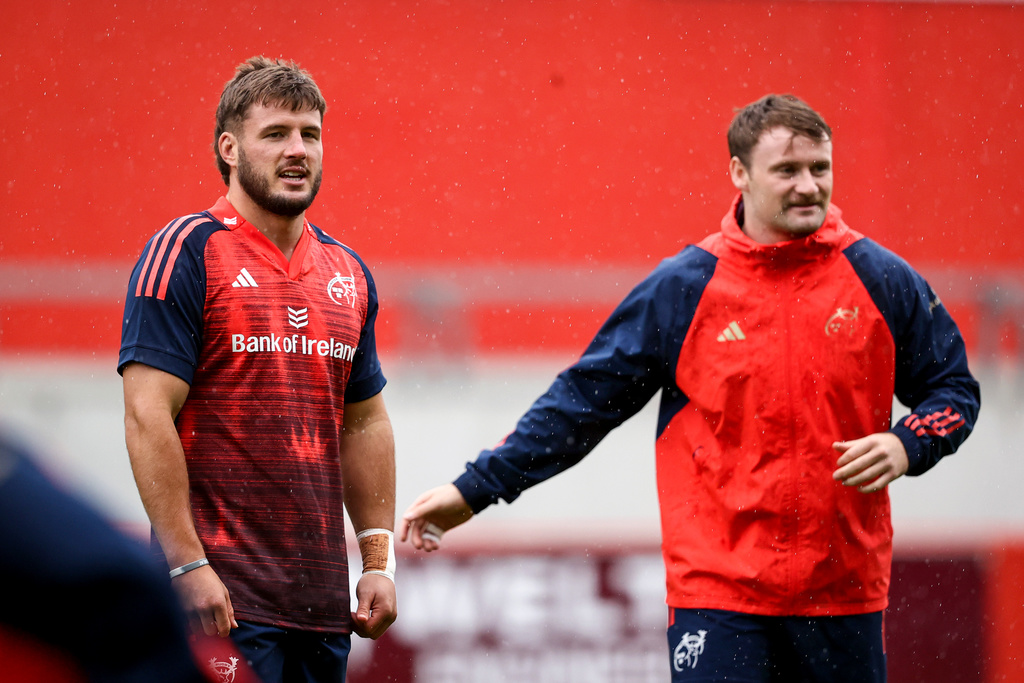
Rowntree also signed Sean O’Brien as a midfield/wing hybrid with the knowledge that we needed depth in both spots, especially with Keith Earls likely to retire. It wasn’t foreseen that Andrew Conway would have to retire (after signing a two-year extension) but that’s well within the realm of Things That Happen To Wingers In Their 30s so O’Brien has ended up being more valuable than we thought he might be in his first year.
But we were still miles off where we needed to be from a squad perspective.
Munster’s now regular mid-season injury plague has struck right on time in the last six weeks and it’s meant we’ve had to go deep into our squad layers and academy to field teams. This has meant we have zero depth in core positions, right when we’d need it.
Joey Carbery’s injury means Jack Crowley has had to play almost every minute available. Ben Healy leaving Munster in the offseason because test rugby was closed off to him in Ireland plays a part in that depth issue, without a doubt, but regardless of the reasoning, it meant Munster have Crowley at #10, an academy player in Tony Butler and Rory Scannell, who can cover the position in a very general sense.
Keith Earls and Andrew Conway retiring in the back three, combined with Mike Haley’s six-month hip injury and Zebo’s intermittent availability has meant we’ve been filling the spots at wing and fullback with Nash and Daly – who would have been playing anyway, in my opinion – and a mix of O’Brien, McCarthy and 19-year-old Ben O’Connor.
By far the biggest injury issue has been in the second row where Kleyn and Snyman’s long-term unavailability in part due to the World Cup but mostly due to the injuries they picked up at the World Cup or right after, has meant we’ve had to lean heavily on Edwin Edogbo, Fineen Wycherley and Tadhg Beirne, often with no second-row cover on the bench forcing them to pull 80-minute shifts.
Is it any surprise Edogbo then picked up a knock? Or that Wycherley soon followed? It’s got to the point where Gavin Coombes is now covering the second-row until injuries heal up, especially with Ahern looking like a game-changer as a half-lock in the back row.
The injury crisis at lock has opened up unbelievable minutes for Brian Gleeson in his first year as a professional. It’s unfair to expect him – or Ben O’Connor, or the likes of Ruadhan Quinn or Evan O’Connell – to turn games of this level off the bench. In a way, you’re delighted to see them having good moments here and there but the real benefit for them comes next season and the season after.
That makes the importance of Edwin Edogbo to this Munster side even more profound.
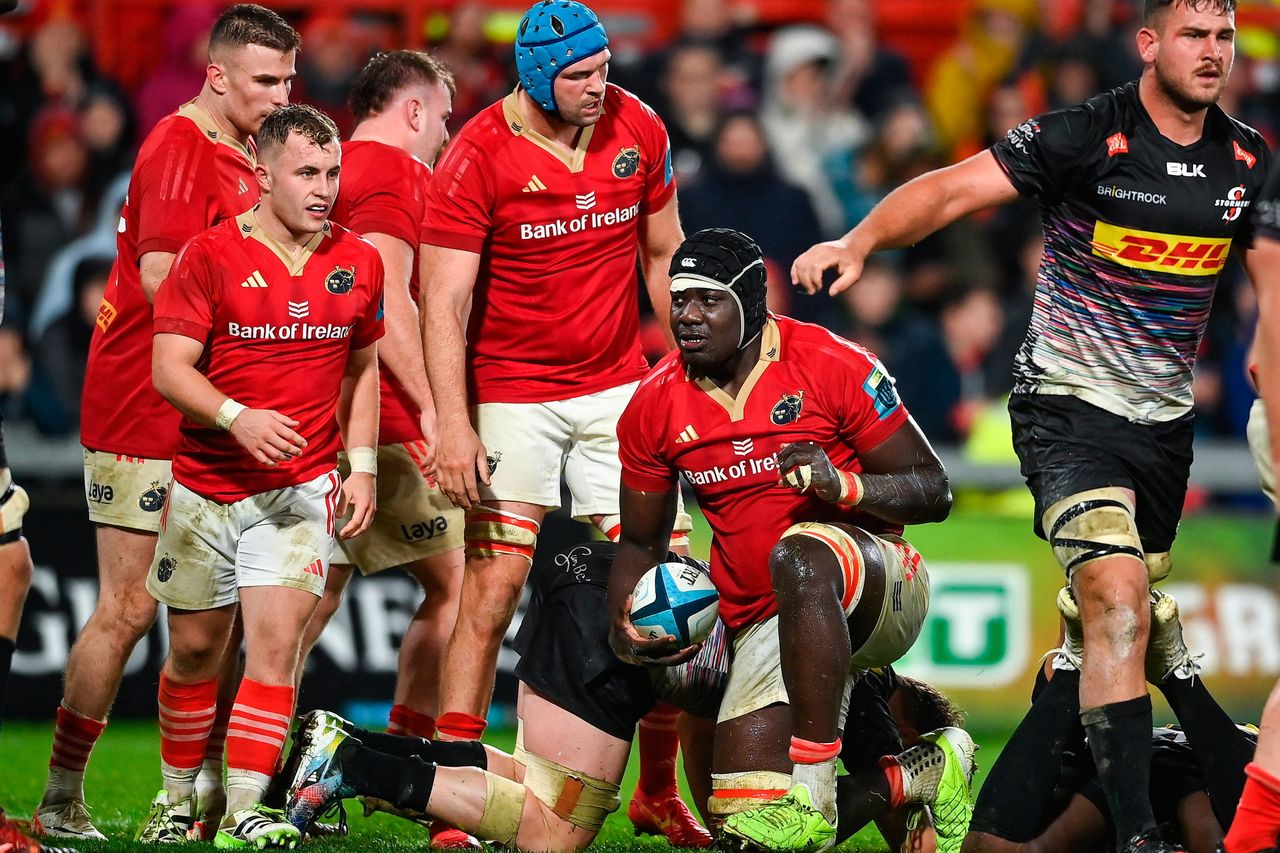
In an ideal world, Edogbo would be picking up 15-20 minutes behind and alongside Beirne, Kleyn and Snyman but instead, we need him to be a core member of our Big Six across the middle of the field against Leinster on St Stephen’s Day and why we missed him against Bayonne and Exeter.
Why are we so reliant on a 21-year-old academy lock who’ll only jump onto a senior deal next summer?
Because he is a perfect system fit.
Know Yourself
In year two of Munster’s transformation under Rowntree, it’s becoming clear where we need to reshape the squad. This “contract window” is the first one where Rowntree and his coaching staff will have significant funds to work with and a very solid idea of what works in our system and what doesn’t.
First of all – what funds? To understand that we also have to understand contract cycles and why they’re important in rugby. Oli Jager’s recent move to Munster was something of an outlier because he was allowed to leave his contract at the Crusaders a year early. Most of the time, you’re waiting for well-paid squad members who no longer fit your system to expire, and for the players you want to sign to come up on their deals elsewhere.
This season, Munster have Dave Kilcoyne, Joey Carbery, RG Snyman, Simon Zebo, Jack Daly, Stephen Archer, John Ryan, Keynan Knox, Scott Buckley, Chris Moore and Jack O’Sullivan on expiring provincial contracts. Peter O’Mahony and Conor Murray are on expiring central contracts so their signing or departure does not affect Munster’s budget unless we want to spend money on retaining them ourselves.
Last season, Munster lost a relatively small amount of our provincial budget in the off-season. Ben Healy was on approximately €100k while Malakai Fekitoa was on €250-300k. We lost younger, down-chart players to retirement and moves to England in deals worth around €120k, there or thereabouts.
Nankivell took over Fekitoa’s money – approximately – while the excess of the other contracts more or less covered John Ryan and Sean O’Brien.
This contract season, Munster expects to have close to €800k to work with, along with access to the 1014. The 1014 are a wealthy group of Munster fans who, individually or in a group, fund the signing of marquee Munster players. The names on this list are pretty much top secret but let me assure you of this – they are high-net-worth individuals who love Munster and love watching Munster succeed with the players their unrivalled spending power brings to the club.
RG Snyman and Damian De Allende were funded directly by the 1014. If Munster makes a compelling case to this group, there is no rugby player on this planet that they cannot afford if Munster can get the dispensation from the IRFU.
This is the first time Rowntree can truly reshape the squad as he sees fit in line with our system.
So what does the system demand that we do not currently have?
I think they are, in order of importance;
- A throwing dominant hooker with power hooker qualities to beef up our rotation, add to our close-range finishing power and be comfortable playing in our “big six” pod of three off #9 and #10.
- A scrum-dominant super-heavyweight loosehead prop to pair with Oli Jager. The ideal profile is 6’3″+ and 125kg+.
- A backup #10 comfortable benching for Jack Crowley in the medium term. Ideally, this would be a veteran player but that might bump the price and we don’t want to be spending more than €120k on this.
- A lock/half-lock hybrid who can role duplicate with Ahern.
- A heavyweight power winger but I’d be comfortable bumping this until summer 2025.
The hooker and the loosehead prop are, for me, self-explanatory. As an on-ball team, Munster expects to have more scrums than the average team on both sides of the ball. The stats back that up – we’ve had the most scrums in the URC this season with a good retention rate – 3rd in the URC with 96%.
The problem is that we’re not winning enough penalties. We are 13th in the URC when it comes to winning scrum penalties and this is costing us a “fear factor” that should come as a byproduct of our on-ball style.
Essentially, we’re going to play with a lot of phases, one of the natural things to occur when you handle the ball a lot is knock-ons. If you have a scrum that actively attacks the opposition – as opposed to just holding steady as now – then you can control your possession and heavily influence the sequence that happens next if you make an error. A massive scrum allows you to play with more expansivity so a super-heavyweight loosehead, in combination with Jager, would allow us to add those qualities to what is already a solid scrum.
A hooker – someone with the profile of Johan Grobbelaar – would add to our scrummaging rotation but also lock down our lineout throwing which, along with some poor scheming – has been a thorn in our side whenever Barron leaves the field.
These are all system-fit signings that improve our ability to utilise our framework all the way down through our layers.
The oncoming transition gives Munster a chance to supercharge the transformation into a side that can compete at the very top and empower a new generation of young Munster players to take ownership of the team at last.
It’s an exciting prospect.
