The scrum is now more meaningful than it has been in years. The maxim of “No Scrum, No Win” is a cliche at this point because it’s true. For a while, it was perhaps less true — think between 2018 and 2023 — but in the last year or so, it has come right back into focus as the core area of the game.
The South Africans are leading the way on this, at club and test level, but the new meta of the game in 2025 has determined that, without a top-level scrum — or one that can handle a top-level scrum — you’re going to be behind the eight ball almost immediately.
When I talk about the modern meta of the game, this is what I’m talking about. The “meta” of any given sport always relies on two things: a law tweak and an example.
So, essentially, if there is a significant tweak in the law, it will usually empower a few teams to take advantage of the conditions that the tweak brings into play. These advantages can sometimes only be seen well after the law adjustment has taken place, and before long, everyone is doing it, or trying to.
The two big tweaks in the last 18 months have been the kick escorting law and the inability to take a scrum option from a free-kick, essentially removing that gimmick the Springboks showed in the 2023 World Cup to take a scrum from a mark.
On the face of it, this was an attempt to depower the scrum, but all it really did was pull down the total number of scrums, while the change in the kicking law was an attempt to cut down on obstruction and encourage more broken field play.
When combined, they’ve actually brought a bigger focus on tactical kicking and, as a result, a higher value to dominant scrummaging.
Why?
On the face of it, the kick escorting tweak plus no scrum from free-kicks pushes the scrum game in a direction that naturally inflates the percentage of scrums ending in penalties, even if the total number of scrums doesn’t explode.
What the escort tweak actually does
From Autumn 2024 into 2025, refs were told to clamp down on kick escorts — retreating defenders who form a “wall” in front of the catcher and block chasers. You now have to “allow access” to the chaser: you can support your catcher, but not protect them by standing in their lane.
Result:
More genuine 1-v-1 aerial contests.
Less structured blocking around the catcher.
More pressure on both the catcher and the chaser.
Coaches immediately said: This will mean more contestable kicking, more chaos, and potentially more scrums off spills.
Why that can push penalty percentage per scrum up
Even if the total scrums don’t spike, the type of scrum you get shifts.
Think about where these kicks land:
Most contestables are aimed at the 15m channel or just outside the 22.
When the ball is spilt or knocked on under that pressure, the resulting scrum is often:
near a touchline,
in a prime attacking zone (just inside the 22/30m out),
or deep in your own half after a botched catch.
Those scrums are:
High-stakes platforms
Attacking side calls a proper shove to win either a clean strike ball or a penalty shot.
Defending side is under the pump, especially close to their line.
Both packs are more willing to push technical/legal limits.
Referee hot-zone
Refs are conditioned to be hyper-fussy on 5m and red-zone scrums because the next action is often three points or seven.
So the same marginal angle/hit/wheel that might be “play on” at halfway is more likely to be penalised nearer to your 22 or 5m line.
Physically messier scenarios
High-ball spills → players running back and forth → fatigue before the scrum is even set.
Fatigued packs = more collapses, more resets, more temptation to pre-engage or hinge = more infringements.
So the law tweaks — especially with an entire off-season to condition to them and make grander plans — traded some of last season’s softer scrums for high-stress scrums in nasty field positions after intense aerial battles with both packs hyper-focused on being played on-side.
High-stress scrums already had a higher penalty rate, so now, if they make up a bigger share of all scrums, your penalties per scrum trend up even if total volume is flat or slightly down.
Add in “no scrum from free-kick,” and you skew it further
The no scrum from FK change strips out another chunk of low-risk scrums: the old “we like this match-up, FK → scrum” call in midfield.
Those:
inflated last season’s raw scrum count;
tended to be fairly tidy, because the team calling them wanted the ball, not necessarily penalties, usually.
Take them away, and the scrum population you’re left with is disproportionately:
Knock-on/spillage scrums after contestable kicks (this is the escort tweak).
5m scrums after maul stops or goal-line pressure.
Defensive scrums under severe stress in your own third.
Those are exactly the ones that have already produced a lot of penalties.
So, on the face of it:
Escort tweak → more genuine aerial contests in dangerous zones → more of the remaining scrums are 5m / red-zone / high-stress.
No scrum from FK → removes a bunch of safe scrums from the middle of the pitch, especially after a soft scrum free-kick that referees often just wanted to play on from.
The net effect of this is that the mix of scrums shifts towards the ugly, high-leverage ones, so the percentage of scrums that end in penalties goes up, even if the total number of scrums doesn’t.
In an earlier Big Reset piece, I tracked the number of scrums in last season’s URC, all the way from Round 1, through the knockouts and into the Grand Final.
There were 2139 scrums in the URC last year, with 515 scrum penalties awarded for a total of 24.1% of scrums ending in a penalty.
After six rounds of the URC, what are our trends looking like for this season?
Short answer: if the current URC trends hold, there’ll be fewer scrums this season than last — but more of them are ending in penalties, so the “scrum as currency” idea I spoke about is actually amplified.
Over 18 rounds (144 games), that’s approximately 14.9 scrums per game and ≈ approximately 3.6 scrum penalties per game.
This season so far
In the URC up until Round 6:
Scrums so far: 580
Scrum penalties so far: 153
Games played: 46 (6 rounds, 2 games postponed)
So:
Scrums per game so far:
580 ÷ 46 ≈ 12.6 scrums per game
Scrum penalties per game so far:
153 ÷ 46 ≈ 3.3 scrum penalties per game
Penalty rate per scrum:
153 ÷ 580 ≈ 26.4% of scrums ending in a penalty
Compared to last season:
Scrums per game: 12.6 now vs 14.9 last season → about 15% fewer scrums per game so far.
Penalties per game: 3.3 now vs 3.6 → slightly fewer scrum penalties per game.
But penalties per scrum are higher: 26.4% now vs 24.1%.
So the work I did in that piece — framing the URC as the highest-volume, most whistle-heavy scrum environment — still holds conceptually, but the mix has shifted:
There are fewer total scrums, but each scrum is even more likely to end in a penalty than last year.
If trends continue, will there be more scrums this year?
If the current averages hold over a full 18-round URC:
Projected total scrums this season
12.6 scrums/game × 144 games ≈ 1,816 scrums.
Projected scrum penalties this season
3.3 scrum pens/game × 144 games ≈ ~479 scrum penalties.
Compared to last season:
Total scrums: 1,816 (projected) vs 2,139 → about 323 fewer, again roughly a 15% drop.
Total scrum penalties: ~479 vs 515 → only ~7% fewer sanctioned scrums.
So – if the current pattern holds, the URC will actually have fewer scrums than last season.
But because refs are blowing a higher percentage of scrums, the overall “penalty economy” of the scrum is hardly dropping at all.
If the weather really bites across December, January and February — as it almost does — you can expect that number to climb. But even if it trends upwards to 14/15 scrums per game, the league is still likely to finish with slightly fewer total scrums than last year, which only makes each individual scrum — and the penalty risk attached to it — even more valuable.
What that says about the scrum relative to expectations
The numbers back up the logic I laid out in that Big Reset article, albeit from an inverse angle:
In the off-season, I argued that in a league with lots of scrums and a high whistle rate, a McMillan-style penalty-generating scrum is a massive force multiplier.
This season’s early data says:
Volume is slightly down, but the whistle is even sharper at scrum time.
So the value of being on the right side of those calls is arguably higher, because there are fewer “dead” scrums and more that turn into points/territory.
In other words, the environment has nudged a bit from “win the volume, and you’ll get loads of scrum pens” to “you might get slightly fewer scrums, but one in four-plus is going to be a penalty — so your technical edge and discipline matter even more.”
In a league trending towards fewer scrums but a higher penalty rate, being one of the teams that lose the penalty battle at scrum time is going to hurt you disproportionately in tight games.
What Does This Say About Recruitment?
If rumours are to be believed, Munster have been given dispensation to sign a NIQ tighthead for next season, not just in the short term with Michael Ala’alatoa.
Just assuming that is the case right now — it makes a lot of sense. From a development perspective, any tighthead you’d look to develop internally takes approximately six years once they enter the higher end of possible identification, from around the PTS/NTS level at 18/19 onwards, with critical testing points after they leave school and when they first start to scrummage against adults competitively at AIL level. In the NTS, they will be exposed to certain live drills during the preseason and at points during the season, but during high traffic weeks, those reps can be limited as preparation moves towards the game at the weekend.
Even then, it takes all but the freakiest freaks (a deeply professional term) to become a regular URC-level option — never mind European or test level — to emerge before the age of 21.
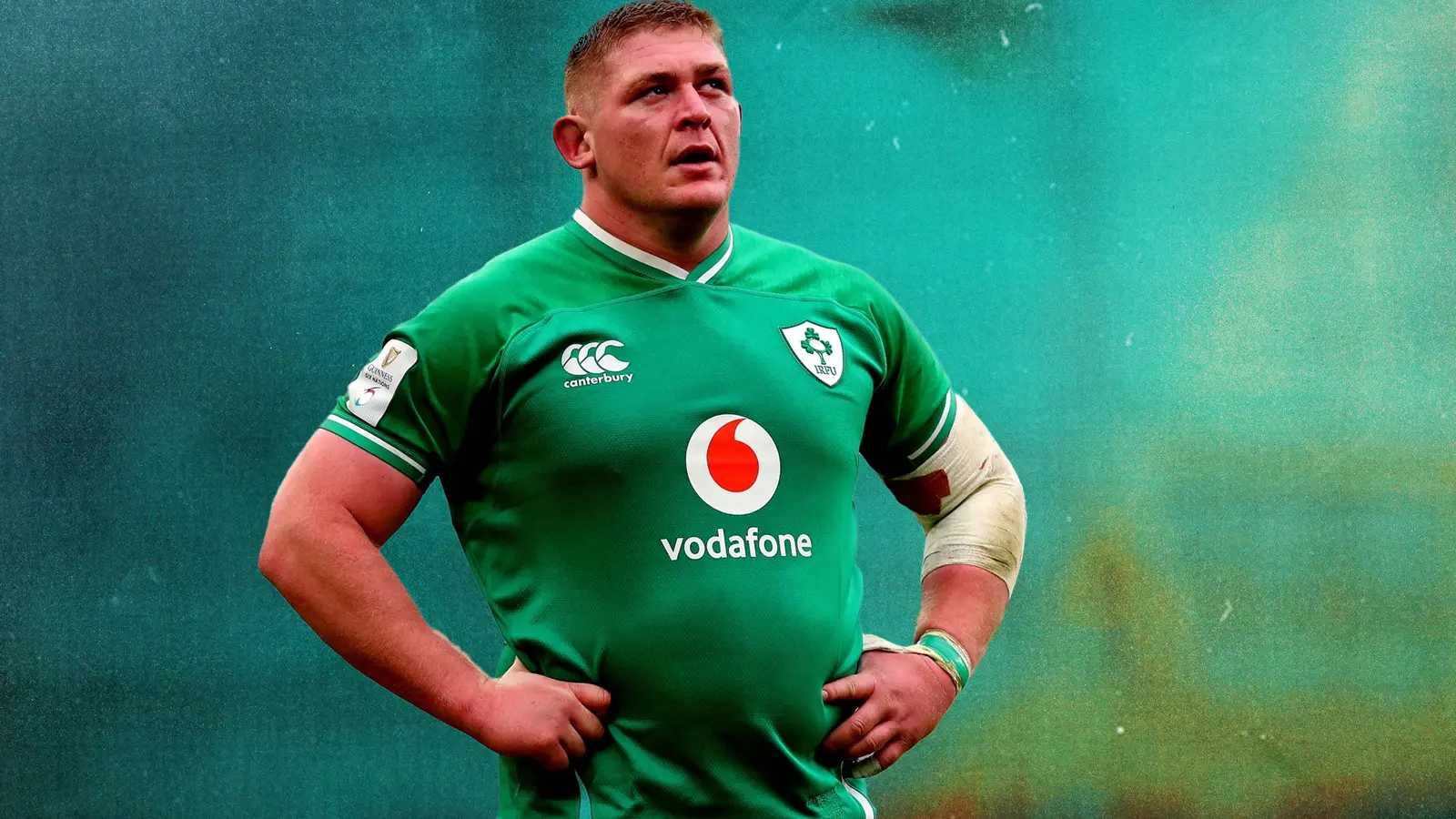
Tadhg Furlong, the last generational level prop to come through the Irish system, only really became a proper starting option at around 23/24 years of age in 2016/17, although he had a significant scaling-up process between 2014/2015/16, after being included as a development player in the 2015 World Cup squad.
Leinster knew what they had at that point: a generational talent. Andrew Porter was, arguably, the same, albeit earlier — he was relied on as the 1B to Furlong from the age of 21 but only became a certain starter for both Leinster and Ireland after switching to loosehead at 25/26.
The common denominator here is that both were generational freaks, with Porter arguably the most physically ready tighthead prop we’ve seen in the Irish system since the advent of professionalism.
If we compare those emergences with the current top end of the game, both up to the 2023 World Cup and immediately after, we see the following. I chose Wilco Louw, Frans Malherbe, and Thomas Du Toit.
Franchise starter window:
Malherbe ~21, Louw ~22–23, Du Toit early but properly at 22 (at tighthead), Furlong ~23–24.
Test “real option” window:
All of them are 23–24 when they become genuine Test-level tightheads.
“Bedrock” / dominant phase:
Malherbe ~26–27+, Du Toit mid-20s, Furlong similar, Porter around 25+ once fully settled.
These current and recent Springbok tightheads are visible very young (19–21), but the real emergence as dominant Test scrummagers is still early-to-mid 20s, with their absolute peak often not until 26–30.
If these are our baselines for development for modern, elite-level tightheads, any possible development at Munster with the likes of Ronan Foxe, Jamie Conway or whoever, is currently two or three seasons away, even at established “generational” levels. In reality, we should be looking at Foxe and one of the younger options as viable projects by around 2027/28.
The best time to be scaling up a tighthead for regular use this season or next is at least five years ago. The next best time is now.
At Munster, that option was Keynan Knox, who, unfortunately, never got going at Munster through a mixture of injury and the coaching staff losing confidence in his ability to kick on.
There were incredibly high hopes for Knox. Back in 2019, Johann Van Graan told me in person that Knox would almost certainly play for Ireland “as long as he was able to sort out his defence and continue his scrummaging development”. It’s fair to say that neither of those happened, again, due to those four-to-six week knocks he kept picking up.
Again, this is pretty common for young tightheads — injury is part of the job. Furlong’s early career was dogged by them. He did his shoulder in Year 1 of the academy and missed pretty much the entire year, bar the 20s World Cup — he played two of those. He lacerated a kidney (yeah, really) in Year 2 and then had his appendix out in Year 3, so he came into his first season as a full professional with very little rugby under his belt. Knox’s injuries weren’t as dramatic, but they were constant across his four seasons he spent at the club. By November 2022, Munster weren’t convinced that any further investment would pay off as they had hoped. Knox has spent the last two seasons in PROD2 — first at Bourgoin, who were relegated, and then this season at Nevers, who currently lie sixth in the PROD2.
This is the thing you need to understand about elite tightheads: they have a 0% miss percentage. If you are elite or have the capacity to become elite, it is immediately obvious to everyone, both at your current club and any potential suitors.
I tried to find an example of a tighthead who is or who went on to be elite that was released by their club — not directly signed from that club by a club of equal or higher stature — in the last ten years, and I found… nobody. You could argue Bath’s Will Stuart fits that bill, but he wasn’t released; Bath signed him from Wasps in 2019.
Before that, you’re looking at WP Nel bouncing around between Western Province/Boland and then Free State, before going to Edinburgh in 2012 and later becoming a 60-cap Scottish international. Going back to the 2000s — in the one prop bench era — you’re looking at Munster allowing Mike Ross to leave for Harlequins, before later going on to be Leinster and Ireland’s starting tighthead until 2017. Even then, the economy of the game was different in 2006. Had the two-prop bench rule come into place three years earlier, he’d likely never have left in the first place.
So, essentially, the chances of missing an elite tighthead prospect are almost zero because they are fundamentally unmissable.
When a tighthead leaves any club, apply Jose Mourinho’s logic: “See where they play, how they play, if they play.”
That is tighthead ‘eritage.
So if Munster are looking to recruit, we’re going to be looking for undeniable players who are ready now. That means you’re competing with French teams, who are always looking for players from the Southern Hemisphere, and who place a huge premium on those rare physical and mental traits that always mark out elite tightheads. At the top end of the market, you’re looking at spending anything from €400k to €600k for an elite, proven tighthead anywhere close to the prime of their career. Their current clubs don’t want to release them, and you’re almost certainly competing against other big-budget clubs that all want that player for the same reason you do.
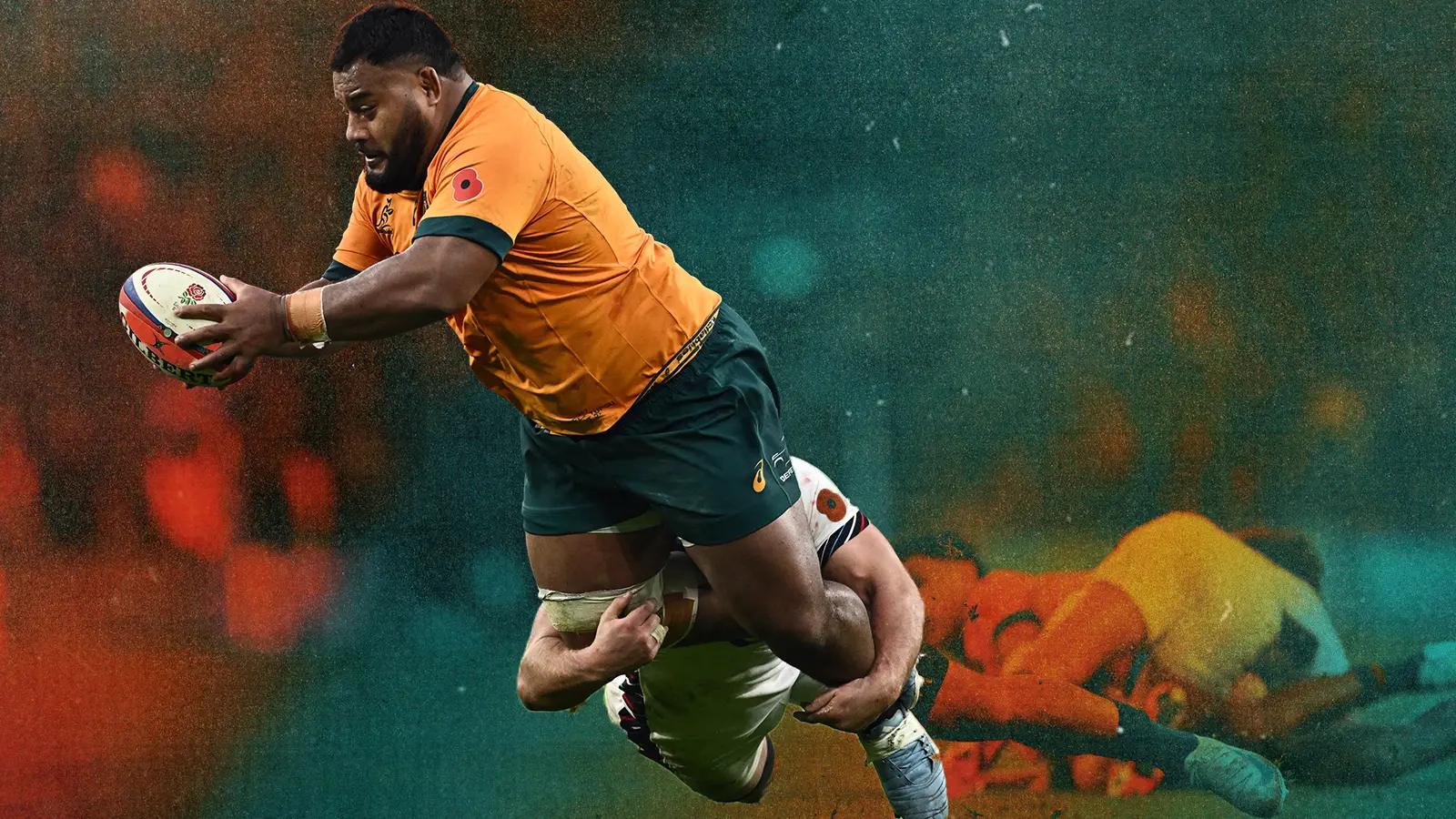
Wilco Louw, for example, was reported to be on around £450k–£500k a year at Harlequins long before he was the regular Springbok he is today, back in 2023. Bath are currently reported to be paying Thomas Du Toit close to £500k a year. Racing 92 are paying Taniela Tupou something in the region of €600k.
That’s the price point you’re talking about if you want to go down the proven route, or even the potentially elite route. As Harlequins showed with the signing of Wilco Louw, if they look like they could be elite, you will have to pay them as if they already are.
So who’s out there? I already covered this in a general way a few weeks ago — here — but I’ve gotten more clarity in the interim. Who would I sign?
Short answer: I’d be recruiting a penalty-positive, low-variance scrummaging tighthead first, and everything else second.
Given the way the URC is trending — fewer scrums overall, higher % of them ending in penalties, and Munster currently running a –14 scrum penalty differential — our TH1 next year to rotate with a hopefully fit and healthy Oli Jager and ascending Ronan Foxe, has to be someone who stops the bleeding at set-piece and starts paying us back in territory.
Let’s break that down into the profile.
Scrummaging profile: “penalty-positive anchor”
Non-negotiable: he has to be a genuine anchor who:
Rarely concedes on our own ball, and
Regularly forces penalties (or at least stable, ugly ball) on opposition feeds — especially in the red zone.
In URC 24/25 terms, you want a prop whose personal numbers would push Munster from:
98–100% own-ball, double-digit pens won, single-digit conceded, net positive.
On the technical side, that usually looks like:
Short, violent engagement rather than a big “hit and chase”.
Really heavy through the right hip / right shoulder – can sit square and not get pulled into the hole when the loosehead plays around the corner.
Outstanding bind discipline: inside hand locked long and high on the hooker/lock seam, outside hand legal but “sticky” – someone who just doesn’t get done for early shove, hinging or boring.
Very good at holding shape on 5m scrums: chest up, minimal angle, happy to absorb three or four resets without panicking or changing picture for the ref.
In other words, not a “chaos” tighthead who wins you one huge penalty then gives the next three back — a guy whose penalty ledger trends green over a whole season.
Physical profile: heavy, durable, built for SA wars
In the URC, you’re effectively recruiting for:
Stormers/Bulls/Sharks/Edinburgh/Leinster
…and then letting that standard filter down to everyone else.
So I’d be looking for:
125kg+, legit mass, but carried in a way that lets him still work for 55–60 minutes.
A frame that has already stood up to Test/URC/ Top14 South African opposition, if possible — you want as little “projection risk” as possible.
Durability matters too. In a competition where:
You’re getting ~12–14 scrums per game,
And one in four is ending in a penalty…
…you need a tighthead who isn’t constantly nursing small soft-tissue stuff that forces early changes. The worst thing for Munster right now is going into those last 20 minutes — when red-alert scrums are most common and most costly — with your second-choice tighthead already on, gassed, and the ref smelling blood.
Ref + law profile: a “clean picture” tighthead
Because scrums are now fewer but more high-leverage, you want someone who:
Carries a reputation (and footage) as a technically tidy, legal scrummager.
Is very comfortable with current directives:
No scrum from FK → the ones that remain are more pressurised.
Escort/“allow access” tweak → more contestable kicks → more scrums in awkward field position.
Strict timing and stability guidelines → less tolerance for messy engagements.
I’d be profiling:
A prop with a low historic penalty count per minute.
Very few cards at the scrum;
Someone who, on tape, keeps a square body, straight shove and consistent bind picture — refs love “easy reads”, and you want him to look right even when everyone’s on the edge.
Essentially: if you’re going to live in games where 26–27% of scrums become penalties, you want your tighthead to be the one making the ref’s life simple — and making the loosehead look like the messy one.
Around-the-field “nice to haves” (in order of priority)
I’d treat everything below as secondary, but still important:
Maul defence and entry
Big deal for Munster: we’ll face lots of maul-heavy sides.
I’d value a tighthead who is very good at entry and long-lever maul disruption — a guy who can go from scrum straight into maul war without dropping intensity.
Ruck work rate
He doesn’t have to be a 15-rucks-a-half merchant, but he must be:
Reliable as a first cleaner after his own carry, and
Good at “post-scrum” rucks when the ball is played away, and D tries to counter on that second and third breakdown.
Carrying profile
I’d rather have a tighthead who gives you 3–5 hard, short carries a half at 100% dominance than a guy who drifts to tramlines and wants tip passes.
Think: heavy decoy, tough inside-ball carrier, scrum-to-carry threat close in, not a midfield playmaker.
Handling & link play
Nice bonus if he can pass and offload, but for where Munster are right now, if I have to pick between “legit scrum weapon who passes like a brick” and “lovely all-court player with 50:50 scrum”, I’m taking the brick every time.
Squad-building angle: TH1 vs TH2
I’d structure recruitment so that:
TH1 (the signing we’re talking about) is:
26–30 years old — in or entering his scrummaging prime.
Proven against URC / Test-level packs.
Built to start the biggest Knockouts + SA away games.
TH2 is:
Either a slightly more mobile, high-work-rate type who can close with tempo when the game breaks up with that same scrummaging power — Jager, essentially — or
A young project with scary scrummaging upside you can bring through behind this guy. Maybe that’s Foxe after this season.
The key is: TH1 must give you a positive scrum penalty ledger over the season. Even a swing of +6 to +8 versus the current -14 is massive in the URC:
That’s a handful of extra red-zone pens,
A handful of pressure-relieving exits,
And probably an extra 6–12 league points over the course of a year, never mind an edge in knockout rugby.
The value is going up and up here.
One-line spec for the recruitment sheet
If you wanted to hand this to Ian Costello and Clayton McMillan back in August, I’d sum it up like this:
“We need a 125kg+, penalty-positive tighthead in his prime who can anchor versus South African packs, looks clean to referees in high-pressure scrums, and turns our scrum from a penalty drain into at least a break-even or better weapon. Ball-carry and work rate are important, but scrummaging dominance and discipline are non-negotiable.”
That’s the type.
So who fits the bill?
Tier 1 – Unicorns (perfect fit, very hard deals)
1. Tyrel Lomax (Hurricanes/All Blacks)
Fit for Munster:
127–130kg, 1.92m — big, long-lever tighthead.
First-choice All Black tighthead pre-injury, RWC 2023 finalist, proven vs Springboks.
Exactly what we want: penalty-positive anchor, clean technical picture, SA-tested, age 30 in 2026.
Why it’s difficult:
Centrally contracted to NZR through 2026.
He’s in their long-term plans as the cornerstone tighthead with Pasilo Tosi and Fletcher Newell
Realistically, only available if he walks away from NZ — huge money and lifestyle pitch needed.
2. Frans Malherbe (Stormers/Springboks)
Fit for Munster:
Gold-standard scrummager, template for the “hold square and win penalties” style.
130kg+, three-time World Cup winner, utterly battle-tested vs URC and Test packs.
If you want to transform Munster’s scrum identity overnight, this is the archetype.
Stormers might well be looking beyond him with the signing of Wilco Louw — they have money, but probably don’t want to pay both Malherbe and Louw.
Risks/difficulty:
Contracted with Stormers to 2026; one-club, one-city guy with deep roots.
Age profile: he’ll be mid-30s by then – we’d be hopefully buying 1–2 years max at peak level.
Injury profile: has had back and conditioning issues; a real risk we’d sign him as the decline kicks in, if it hasn’t already.
Any deal would be expensive, short-term and medically high-risk.
Tier 2 – Serious NIQ targets (realistic-ish)
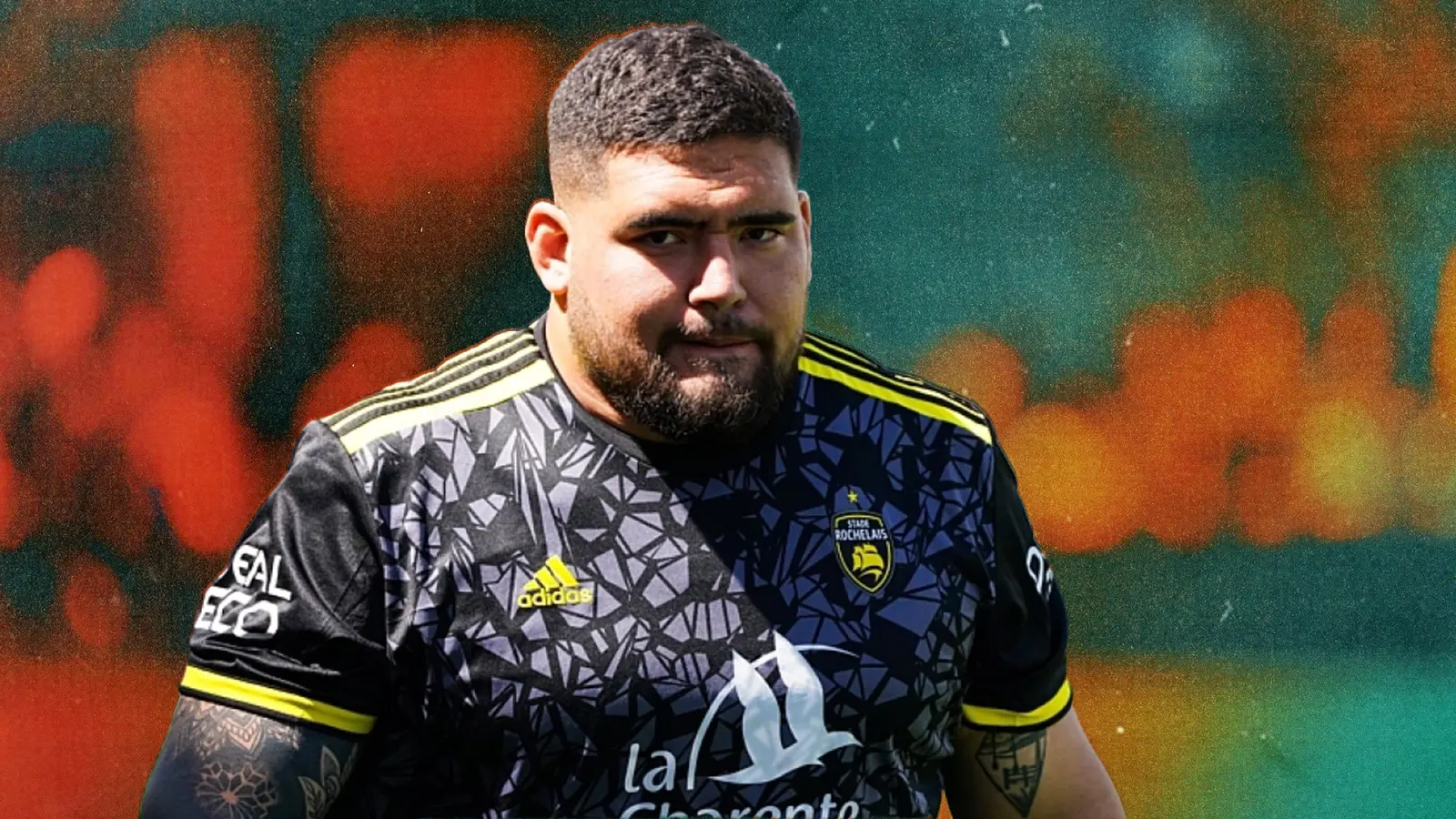
3. Joel Sclavi (La Rochelle/Argentina)
Fit:
135kg+, classic destroyer tighthead.
Used by La Rochelle as a scrum weapon in big European games.
European refs, URC-style packs – zero adaptation needed.
Age in 2026: early 30s → right in scrum prime.
Why he’s attractive:
Stylistically, almost exactly what Munster need: heavy, penalty-generating, low-variance TH1.
Under contract until summer 2026.
4. Josh Iosefa-Scott (Exeter Chiefs)
Fit:
135–140kg, big square scrummager, increasingly Exeter’s “close it out and win penalties” tighthead.
Age 30 in 2026 – perfect window.
Strong Premiership evidence that he can be a territorial weapon at scrum time, not just a survivor.
Why he’s attractive:
No central-union lock-in like an Irish/NZ/SA player.
Feels like a guy you could make the centre of a 3–4 year scrum project and turn into a URC/European level nightmare
Tier 3 – Value/Opportunity play
5. George Dyer (Chiefs/Waikato/All Blacks XV)
Why He’s Attractive
26 in 2025 – we’d be signing him right as he enters his scrummaging prime (27–30 for Munster’s key window).
~124kg at ~1.87–1.89m – proper TH build; big enough to anchor, mobile enough to play Munster’s phase game.
Already understands McMillan’s systems and language, so the learning curve coming into Munster’s structures is shorter than for a random import. A pre-existing relationship with McMillan and Vercoe might make a deal easier.
Close-in carrier, solid defender, not a tramline runner: scrum first, collisions second, everything else after.
Caveats
Not yet Malherbe/Lomax/Sclavi tier:
He’s shown he can win big scrums, but he doesn’t have a 5–7 year track record of Test-level set-piece dominance yet. From a negative perspective, the All Blacks have been looking for scrum dominant props, and they haven’t capped him at that level, yet.
Signing him is a bet on trajectory, not a finished “best tighthead in the world” product.
Re-signed with the Chiefs on a multi-year deal; most noise suggests through 2027, so it’s not a simple 2026 free-agent grab, and his recent involvement with the All Blacks Northern tour might make a deal difficult to sell.
At ~124kg, he’s big, but not Sclavi/Tupou scale — if you want a pure “nuke scrums for 20 minutes” guy, you might still want a heavier TH2 alongside him. Maybe that’s Jager.
Adaption: No evidence he can’t do it, but URC + winter + SA packs is a different weekly grind to SRP.
You’d probably plan a season of bedding-in before expecting him to flip your scrum numbers on his own. Can we afford to wait that long with the money involved?
6. Feao Fotuaika (Force / ex-Lyon / Queensland)
Fit:
Big, heavy tighthead with a clear power-scrummaging profile.
Top 14 and Super Rugby experience – used to big packs and different whistles.
Caveats:
A notch below the Sclavi / Iosefa-Scott / Lomax tier in terms of proven elite dominance.
He’s flitted between loosehead and tighthead quite a bit, which suggests he’s not so dominant at tighthead that he’s unselectable anywhere else.
More of a value signing than a guaranteed “best scrum in the league” guy.
He’s already 32.
7. Carlu Sadie (France-based, ex-Sharks/Lions)
Why he fits
He’s a 130kg+ South African tighthead with a long-standing rep as one of the strongest scrummagers around. He goes forward, rarely goes back, and he’s a massive ball carrier, too.
The South African press still talk about him as a Bok-hopeful level talent; there was a whole saga about a return to the Bulls that collapsed because his French club wanted to keep him, but he’s got all the qualities we’re looking for on paper.
Caveats
This is more of a high-upside project than a proven Malherbe/Lomax type:
When he’s on, he looks exactly like what we want.
When he’s off, discipline/fitness/consistency become questions.
Contract situation is messy (French club bought him out to keep him, then litigation/Bulls saga), but a few rumours are floating around that they want to tidy up their JIFF quotient, so even though he’s contracted until 2028, there could well be a release that could be activated if it suits everyone.
Of course, these names don’t cover the various guys who might be available mid-contract for one reason or another — everything from cost-cutting, system-fit, JIFF regulations or personal issues — but the same rules hold. Any deal worth doing is going to be highly competitive, highly expensive, and potentially transformative for 2026/27.