




Our regular season record against Leinster finished six match points to four. If you offered that to anyone in Munster all the way back in September, they’d have bitten your hand off for it and asked for the other for dessert.
However, we lost again in Thomond Park to Leinster, and the hard facts of the matter are that we haven’t beaten them at home since 2018. Worse again, they’ve never looked more beatable in those last seven seasons than they did in this game, but we couldn’t get over the line, in part due to the same old failings, a few new ones.
What was true in the last few years is still true today; we’re not quite at the level we need to be physically to chase down a deficit against this Leinster team. Leinster did an excellent job of overwhelming a skittish and visibly nervous referee officiating the biggest game of his young professional career at this point, and turned the last 20 minutes into a slugfest where it became about tight collision winning. We don’t have the horses for that game as it stands.
We are currently constructed to play at pace, and to width — a high skill game. Our execution of that game varies. At times, it looks really sharp, like here.
That’s what you need to do against a team as dug-in as Leinster were at this point, and we did well to score this at all.
But I sometimes feel that our plan relies on an absence of cynicism from the opposition, a dry track and all that combined with rigid refereeing. We need this kind of stuff at the ruck refereed perfectly, because if it isn’t, we don’t have the power to win the collisions you need to win to counter it.
But the same would be true if it were lashing rain. I sometimes feel like we are trying so hard to produce a big win at Thomond Park that we end up running ourselves to a standstill. Last night, with the game on the line, we were using John Ryan as our primary ball carrier off #9 over and over again, only to see him double-tackled and stuffed at the ruck.
But that’s what happens when you’re trying to chase a team like Leinster in the last few minutes; you need to be perfect in a game that doesn’t really allow for perfection.
Big Moments
Not for the first time, we got our first five minutes in this game badly wrong. Too often, it feels like we’re looking for a big moment early on to set the tone. Here, that eagerness played into a five-minute sequence where we conceded five penalties in a row, and that gave Leinster the platform to score what would be the try that would ultimately decide the game.
We knew coming in that the only thing you can’t do against Leinster is to give them repeated penalty access. Without that penalty access, they struggle to gain ground, but look at how we defended this lineout.
Beirne and Milne shoot through the lineout to stuff Gibson Park, but Leinster maul instead leaving Edogbo on his own to defend five Leinster forwards bound to a maul. Of course, it ends in a collapse, giving Leinster cheap 22 access.
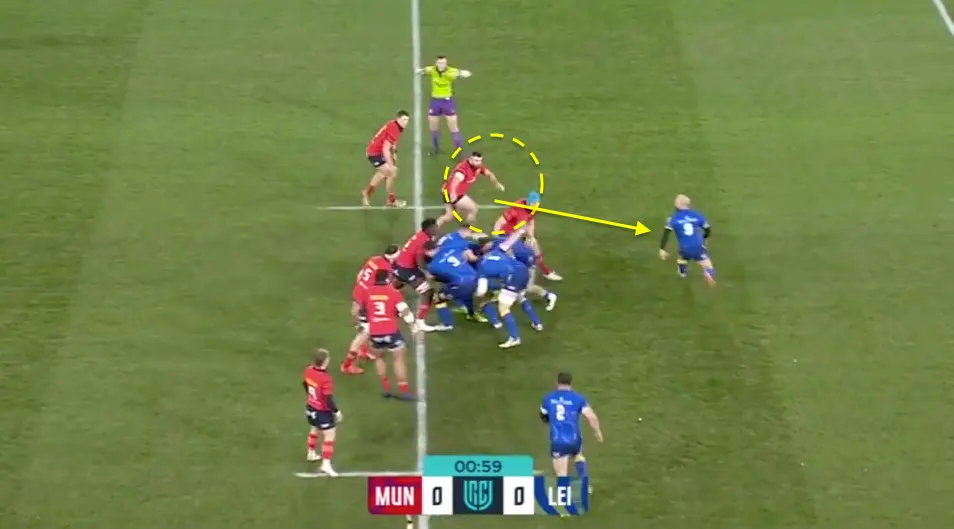
They scored, ultimately, because of a highly debatable scrum penalty by Porter, but that, again, is almost completely referee-dependent.
What rankles is that it seemed to me that we got our tactics wrong, as if we were spooked by the early try concession and the scrum trouble into going away from the kicking game that we know works against this team. But part of that comes back to where we were playing; almost all of our rugby was in our “go” zone, inside the Leinster 10m line.
When we break down the game into what we know about Leinster, we find an incredibly interesting data line.
The scoreboard doesn’t match the balance of play, because Munster’s red-zone conversion collapsed
- Munster: 8 x 22m entries for 8 points → 1.0 point per entry (one try, one penalty, no conversion).
- Leinster: 6 x 22m entries for 13 points → 2.17 points per entry (one try converted + two penalties).
Munster won most of the “engine room” indicators (carries, passes, post-contact metres, linebreaks, turnovers won) but still produced a game of playing Leinster-at-their-worst outcome: heavy attacking volume with almost no scoreboard return. This is an old failing: red zone conversion. We’re getting into the 22, we’re generating good position, but when the ruck is a mess — for whatever reason that may be — we don’t have the power to reliably hurt them in tight collisions. That was the game right there.
We built volume, not leverage
Munster’s attacking profile is enormous:
- Carries: 138–86
- Post-contact metres: 232m–152m
- Linebreaks: 4–1
But the key conversion bridge is missing: those 4 linebreaks delivered one try and no secondary scoring. That typically points to one (or a mix) of:
- linebreaks happening too far out (not turning into “immediate-entry” chances),
- Leinster scramble killing the second phase after the break,
- or Munster making decisive errors at the end, and the turnover numbers support that.
Ruck volume and ruck speed: Munster were dragged into a high-attrition, low-tempo game
- Rucks won: Munster 111, Leinster 57 (Munster had to play almost double the breakdowns).
- Ruck speed distribution:
- 0–3s: 47% vs 50%
- 6+s: 21% vs 13%
That 6+ seconds band is the poison for finishing: Munster had roughly 23 slow rucks (21% of 111) versus Leinster roughly 7 (13% of 57). In practical terms, our attack repeatedly restarted from static, which is exactly the environment Leinster’s defensive system wants.
- Munster produced one linebreak every ~27.8 rucks (4/111).
- Leinster produced one linebreak every 57 rucks (1/57).
Munster “won” the LBR battle — but still couldn’t cash it in.
Leinster’s identity is written all over this: absorb, squeeze, take points, win the set-piece moments
Leinster defended for long stretches and did it effectively:
- Tackles made: 161 (Munster 105)
- Tackle completion: 95% (Munster 91%)
That is the Leinster profile I keep landing on: you can out-carry them and out-phase them, but if you can’t dislocate their line or force repeat penalties in the 22, you end up with “effort metres” rather than points. We had lots of effort, tonnes of it, but not enough finishing. This has been our Achilles heel so far this season, and it’s turning our outstanding defence into a backstop, rather than a platform.
The match-winning edge is set-piece + scoreboard management
Set piece:
- Scrum win %: Munster 67% vs Leinster 100%
- Scrum count: Leinster had more scrums (9–6) and won them all.
In a 13–8 game, that scrum gap is massive. Even outside of the general penalty count, Leinster’s two penalty goals were sourced from pressure platforms (scrum, maul) while Munster’s repeated attacking possessions did not turn into points.
Add the small but decisive kicking gap:
Both scored a try, but Leinster converted, and Munster didn’t. That’s a 2-point swing in a 5-point margin.
Kicking profile reinforces the story
- Kicks: Munster 20, Leinster 24
- Kick-to-pass: Munster 1:9.5 vs Leinster 1:5.2
We played a far more ball-in-hand, phase-heavy game. Leinster played the more pragmatic “pressure” game. In a match with 35 combined turnovers lost (18–17), pragmatism usually wins: you reduce your exposure to random errors, and you back your set-piece/defence to supply points.
This is a good example; a high tax, low margin for error play under pressure leading to a key turnover in a good position.
We’re at the point where the closer we get to the tryline, the less effective we are; until that changes, nothing else will.
We didn’t break up Leinster’s lines with our kicking, so we ended up banging into tacklers and counter-rucks all night long.
The “Leinster lens”
This is Leinster doing what I described in the Red Eye: their attack can be held to modest output (6 entries, 1 linebreak, 1 try), but their defensive floor + set-piece control allows them to win tight games even when the opposition wins “the balance of play”, whatever that means to you is debatable.
For Munster, the headline is blunt:
We generated enough volume to win, but delivered bottom-tier 22 conversion and lost the one set-piece battleground that reliably creates easy points in tight games (the scrum).
Leinster were happy to defend for long stretches, because they trusted three things:
- they would win key set-piece moments,
- they would win the “next error” contest,
- Munster wouldn’t turn pressure into repeatable scores.
That is a very Leinster way to win away from home or in tight games: concede territory, not points. We won the collision battle outside the 22 — post-contact metres are a collision proxy. But the question is: what did it buy us?
If those post-contact metres don’t lead to:
- fast ball,
- a fractured defensive line,
- or a penalty count that becomes automatic points,
… then they’re just expensive metres. Leinster’s defence often turns “dominant-ish” carries into slow rucks because of how quickly they fold and reload, and counter-ruck.
Ultimately, we played like the game was going to open up, and Leinster played like it wouldn’t
In a match where we lost 18 turnovers, risk management is the key driver of positive outcomes. Leinster gave themselves more possession starts in favourable areas and fewer “live-ball” situations where a single error becomes defending 60 metres of space. That’s the game right there.
We gave a team that loves to defend in depth around the ruck too much scope to do just that, and didn’t have the heft to defeat them in that space.
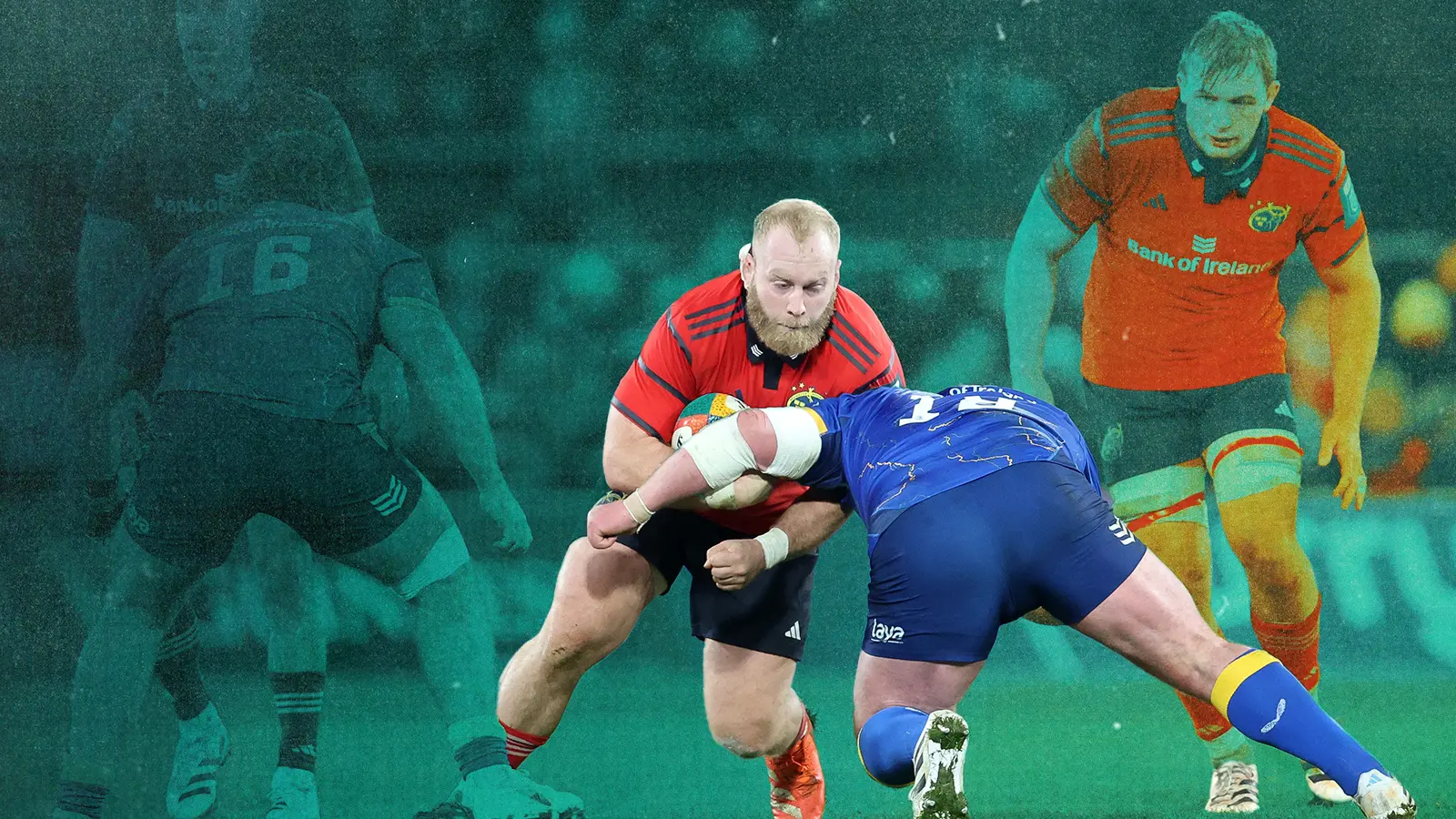
Until that changes, we will continue to lose against teams that produce positive outcomes in the scrum, and who can win tight collisions in close.
Leinster didn’t win because they attacked better; they won because they made our attack incredibly expensive. We did the hard part — we carried, we dented, we got into the 22 — but Leinster controlled what happened after contact. Slow ball, set defence, scrum dominance, and the discipline to take their points: that’s the formula that turns being outplayed into winning 13–8.
Wally Ratings
| Players | Rating |
|---|---|
| 1. Michael Milne | ★★ |
| 2. Lee Barron | ★★★ |
| 3. Michael Ala'alatoa | ★★ |
| 4. Edwin Edogbo | ★★★ |
| 5. Tom Ahern | ★★★★ |
| 6. Tadhg Beirne | ★★ |
| 7. Jack O'Donoghue | ★★ |
| 8. Gavin Coombes | ★★ |
| 9. Craig Casey | ★★ |
| 10. Jack Crowley | ★★ |
| 11. Thaakir Abrahams | ★★ |
| 12. Alex Nankivell | ★★★ |
| 13. Tom Farrell | ★★ |
| 14. Shane Daly | ★★★ |
| 15. Mike Haley | ★★ |
| 16. Diarmuid Barron | ★★★ |
| 17. Jeremy Loughman | ★★★ |
| 18. John Ryan | ★★★ |
| 19. Jean Kleyn | ★★★ |
| 20. Fineen Wycherley | ★★★ |
| 21. Paddy Patterson | ★★ |
| 22. Dan Kelly | ★★★ |
| 23. John Hodnett | ★★ |
Star Rating Key:
★★★★★ — Outstanding performance.
★★★★ — Very good performance
★★★ — Decent performance
★★ — Below par
★ — Poor
I thought Crowley and Casey had below-par games, relative to their ability. Some of their kicking was off, sure, but the biggest issue was trying to play through the mess at the ruck, which comes back to tight collision winning and how flat — from a shape perspective — our attack was in general.
I felt our backrow was mostly outplayed in the attack vs defence game that this descended into, which is something of a common theme this season.
Our starting front row was mixed. Milne and Ala’alatoa fell on the wrong side of the referee at the scrum, Ala’alatoa in particular, until the referee realised that there was too much going on for him to make a solid decision on. Lee Barron seemed to come under a lot of pressure in those scrums — as is often the way with taller hookers — but his throwing was really, really good. I felt he lacked a bit of heft at the ruck at key moments.
Edwin Edogbo had some really positive moments in his 50-odd minutes. He’s an excellent defender. This stop on McCarthy — a stone-cold brick wall of a tackle — was a real highlight, as is his consistent ability to stop up anyone in a choke tackle.
I think an early tweak to his knee limited his attacking output, but, in general, I think an impact sub role might be the best usage of him — a little like how Leinster used Joe McCarthy in the formative years of his career. One thing is for sure, there is a proper player here.
My star performer was Tom Ahern, who had a career-high performance in the context of this game and our general performance in the pack.
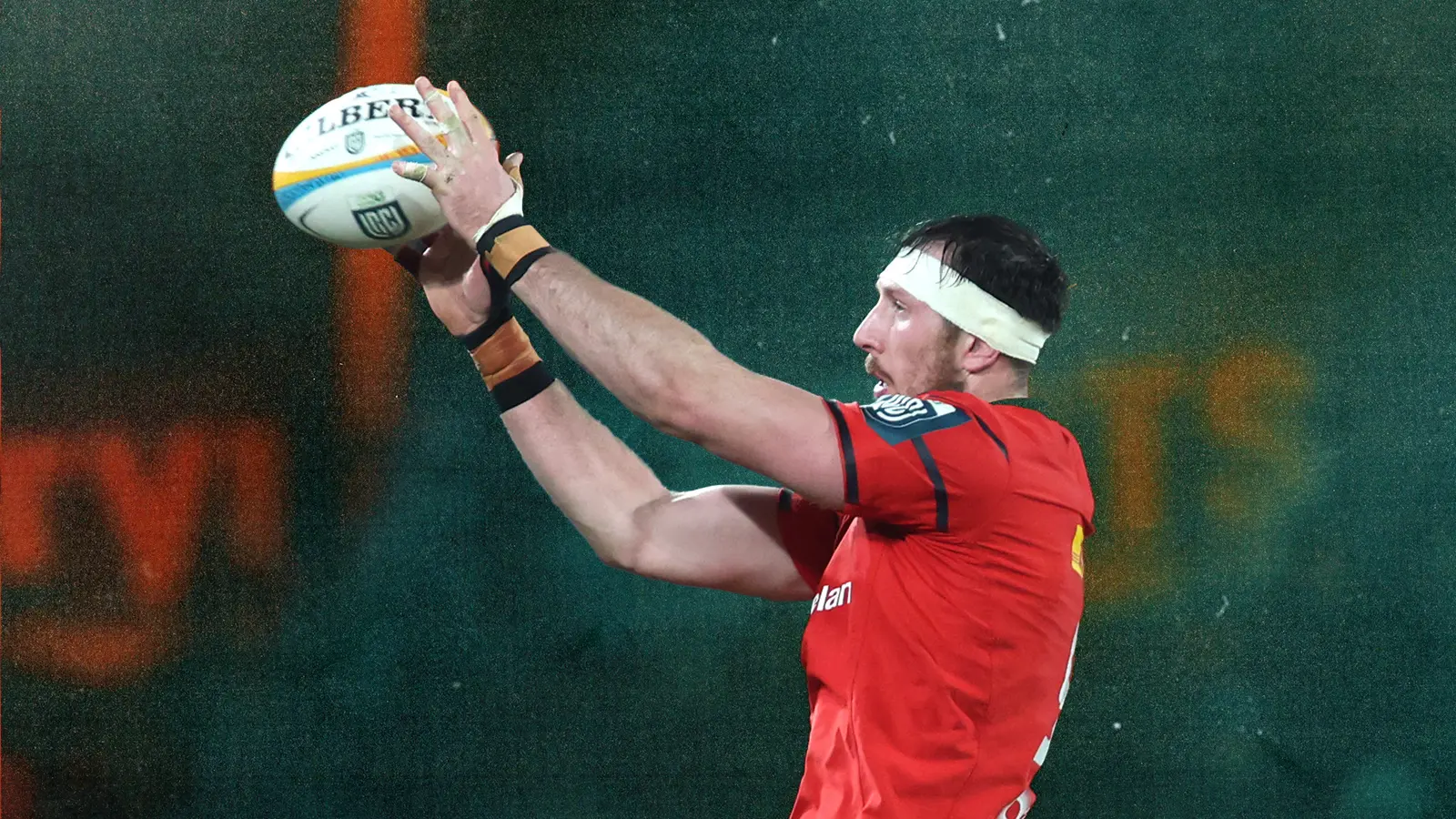
He called an outstanding lineout and came up with multiple big moments on both sides of the ball. In a country crying out for lineout specialists, Ahern showed he’s got the goods.
***
All in all, I was pretty positive coming out of this game, although I’m not sure if that’s due to the relative disappointment of the last few games against Leinster in Thomond Park. In previous years, we’ve been nowhere close or, if we have, it’s been against a second-string Leinster team or whatever that amounted to between 2020 and 2024.
We lost this time because we couldn’t convert our opportunities and, arguably, we were one or two decisions — or non-decisions — away from winning this one late on. We can’t control those decisions, unfortunately, but we know where the issues lie; we need offensive power and collision winning, along with a more visibly dominant scrum.
With that in situ, we can compete with anyone. Without it, we’ll continue to be punchy, scrappy, and capable of beating most teams on our day, but it really needs to be our day in almost every facet. That requires bringing the right players in to build on what we know we already have.
If anything, that’s what this game showed: a map to where we want to be by showing us where the potholes are.
