


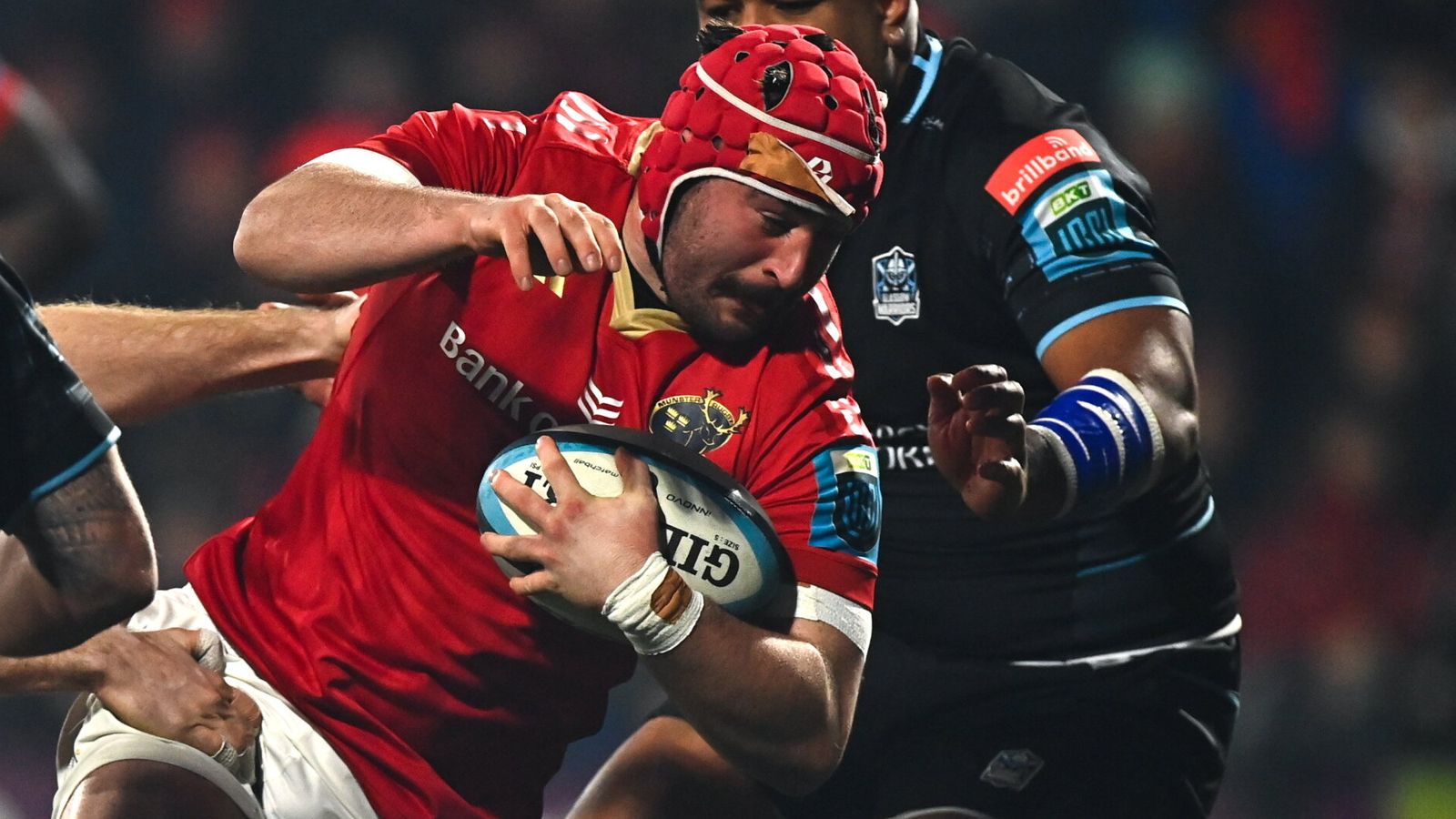
It’s rare enough that you pick up a bonus point win that was never really in doubt and still come away with a sick feeling close enough to the sting of a loss to hurt. Like, properly hurt.
That was this game.
As a live win/lose contest, it was over around 20 minutes in. Munster built a 19-0 lead with three outstanding tries that would be cool enough to win any one game on their own but they all happened inside the quarter more or less. Glasgow wouldn’t be able to break Munster down with the limited attacking system they brought to Cork, so, even early on, this was a game of bonus points. How many could we get, and how many could we prevent them from getting?
This is where the hurt comes in.
Now, I will say that we did well to prevent them from getting two bonus points – one was bad enough – but the manner of our concessions will rankle.
We conceded five maul tries, essentially, and it got to the point that every penalty we conceded anywhere in our half began to be met by groans from the crowd. Groanier than usual.
Not another maul.
This won’t be a surprise to us, though. We knew coming into the game that this is what Glasgow do. Their on-ball scheme against Irish clubs is almost entirely constructed to generate penalties that they can then kick down the line for a short-range lineout maul.
They are incredibly good at it. So, on the one hand, our maul defence was really poor but, on the other, Glasgow’s execution of of those mauls is really good. Have a look at this example;
It’s a front slide from the loosehead with two dummy feints executed perfectly but can you spot the two moments that lose this engagement for us?
There’s this one, where Coombes bits in two hard on the second feint to the centre as a back lifter on Ahern. This exposes Beirne and Loughman at the tail of the lineout.
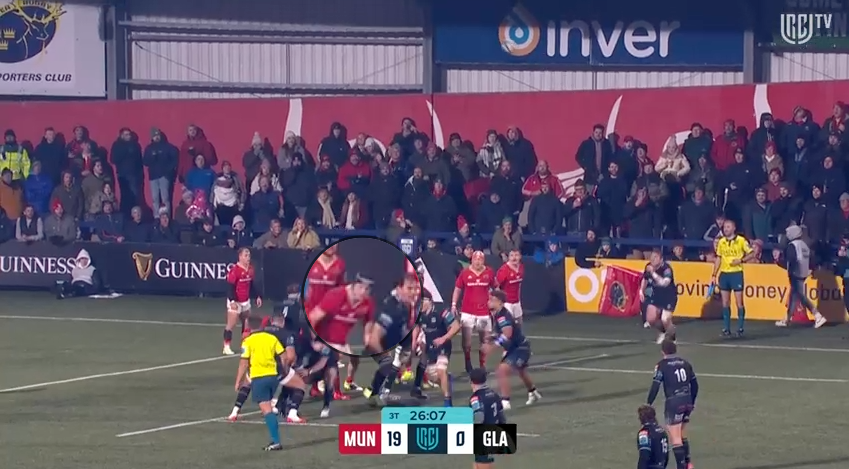
And then when you see Loughman trying to disrupt the ball transfer once they hit that pod at the tail with a unit of three pre-bound “drivers” rushing in behind the Glasgow lift with nothing but plastic grass ahead of them.
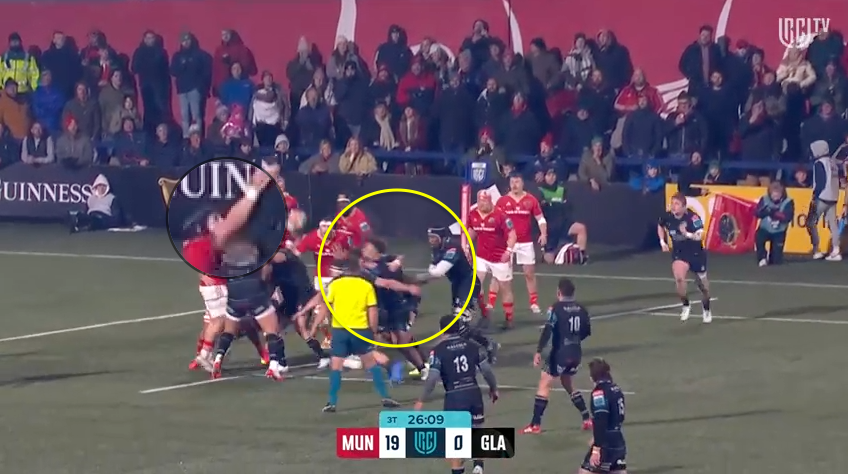
The only way this doesn’t end up in a try is a portal to another dimension opened up in front of this maul, right before the tryline.
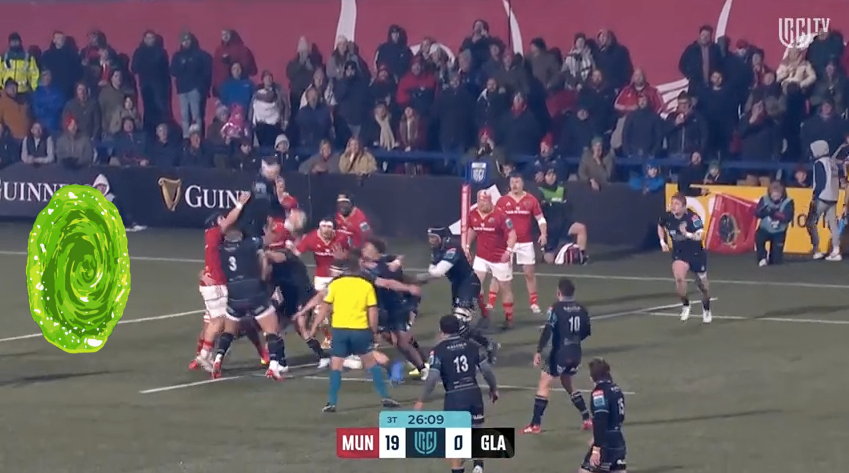
It’s fundamentally sharp maul work combined with below-average lineout defence. Three feints cluster our defence to the middle of the lineout and the throw from Matthews takes seven defenders out of the play immediately.
Every segment of maul defence is gestated in your defence of the lineout that precedes it. If you compete in the air and don’t affect the ball, you have fewer defenders on the floor to guard the maul. If you stay on the ground, you guarantee the opposition’s possession – bar a throwing error – but you, in theory, should be set for the counter-shove before they can engage their offensive shove.
We didn’t compete in the air on a lot of these mauls but still lost the vast majority of these close-range engagements. That will be the most disappointing thing in our review.
Glasgow’s second maul try is a really good example of what I’m talking about.
We give Glasgow the front, they take it relatively comfortably and still score.
Now, we might well complain that the referee’s timing to a first stop and then the “use it” is incredibly generous – something we’ve experienced with South African referees previously on tour to South Africa – but our defence of their build initially is poor.
One consistently odd thing I spotted on our maul defence sets was this kind of action on our touchline side defence – a one-shoulder lean. You might think it’s just a quirk of this particular maul set but no, it happened on almost everyone of them.
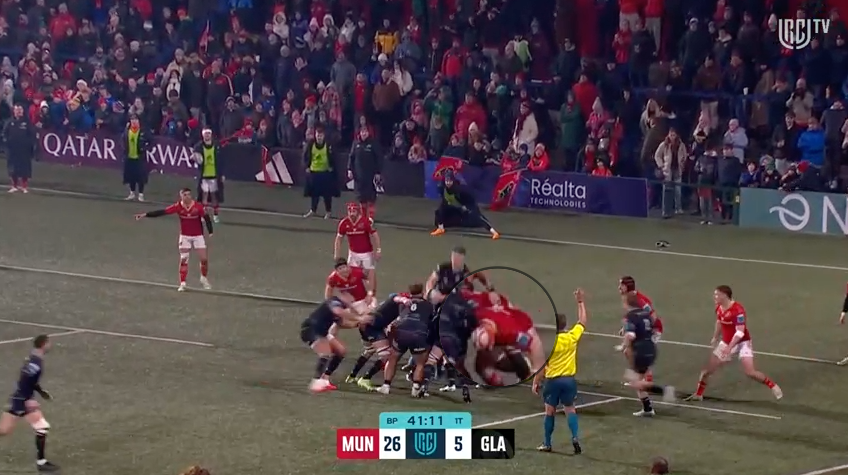
Archer isn’t applying any real pressure here initially so we’re defending this maul eight on three and a half on the drop. Against a maul side as good as Glasgow, that’s asking for trouble. Where does Glasgow surge into first? Right onto Archer’s side because that’s where the weak spot is.
By the time Archer engages fully, Glasgow are already moving sideways. We still have three forwards guarding the flanks at this stage, even when Glasgow start moving.
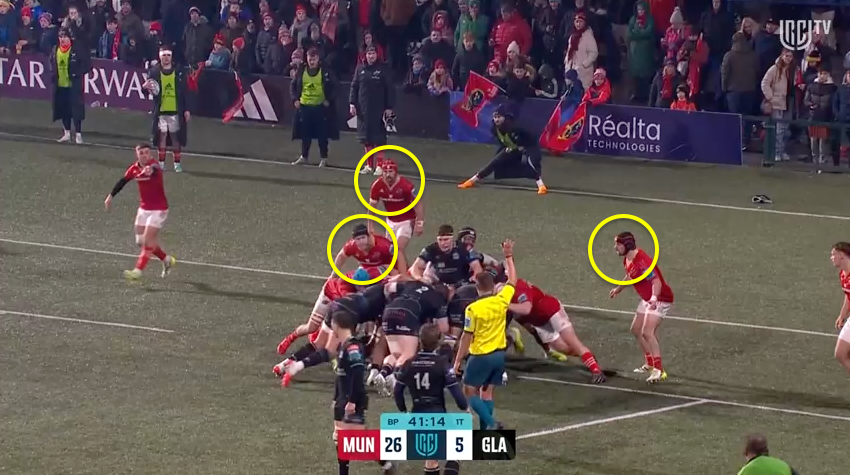
We stayed on the floor to ensure we could control the first engagement but we under-shoved and then left too many defenders guarding a break that was never coming.
As the maul develops, we can see what our overall plan is; a pinch stop. Beirne angles up and drives towards the touchline from the infield side with Archer and Barron meeting that pressure from the touchline side.
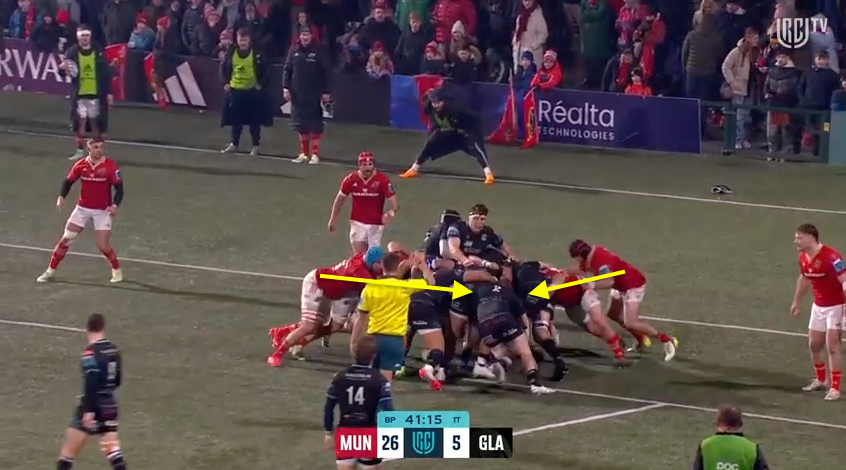
Is this why Archer leant in on one shoulder? To bait this action and, with the pinch coming in on both sides, hold Glasgow to a first stop and a break? If so, it worked – initially. Sean O’Brien added his weight to the touchline shove and Glasgow were held to a first stop with zero momentum with ten offensive maulers against eight defenders.
When the referee called first stop, Sean O’Brien looked up and released the pressure on his side.
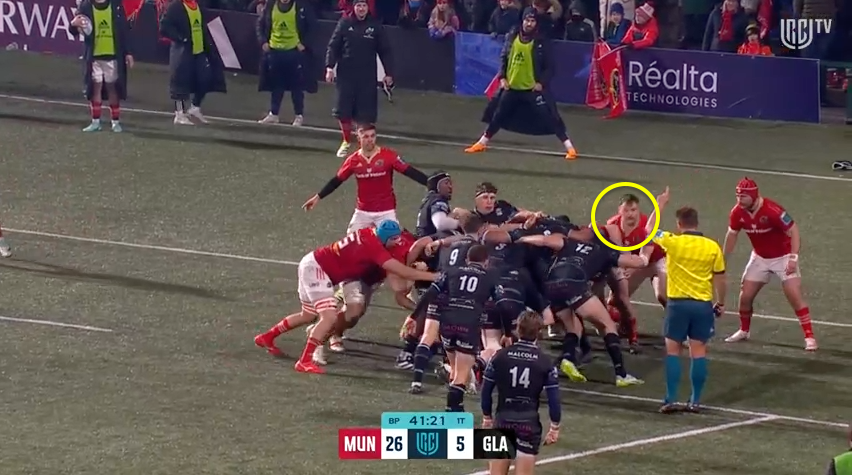
What happened next? Glasgow moved through that weak spot and scored again.
Later in the half, we saw the exact same concept… except Glasgow were down to 14 men. It didn’t matter. Watch for the concepts I’ve discussed.
What do we see initially? One early mistake. Coombes makes a grab for the leg of the infield lifter as leverage but misses it – he loses his balance, which gives Glasgow early momentum and ripples weakness across to the touchline side.
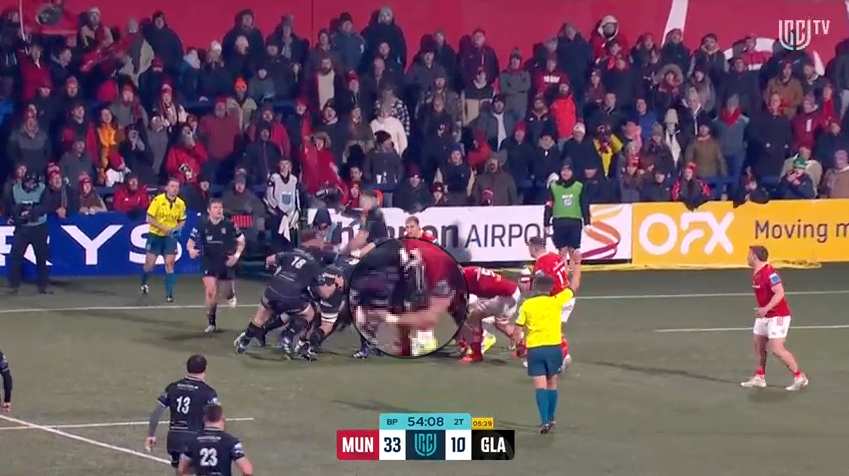
Look at Beirne on Beirne’s shoulder; he’s not applying any pressure to the Glasgow maul directly because he wants to swing up the side of the maul from this extended position.
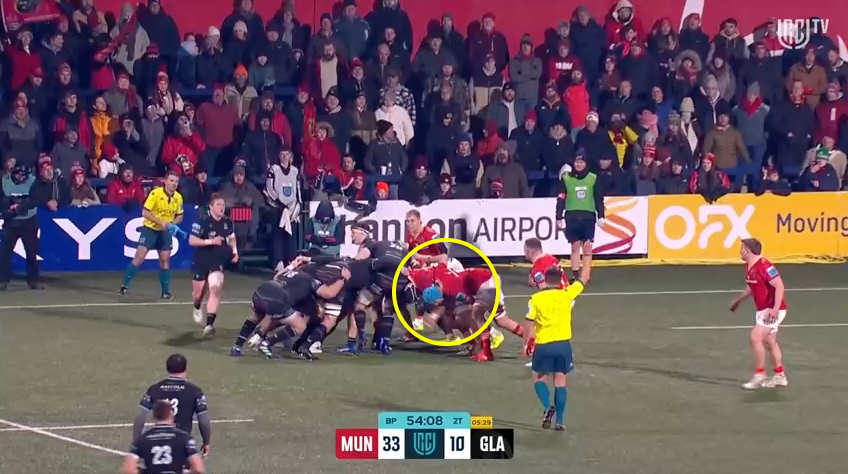
As the maul develops, he does just that and gets into an elevated position up the side of the maul but look at the drive position Glasgow have – they are low, tightly bound and are in full control of this set. For me, Kilcoyne and Buckley enter this maul too late and from the wrong side.
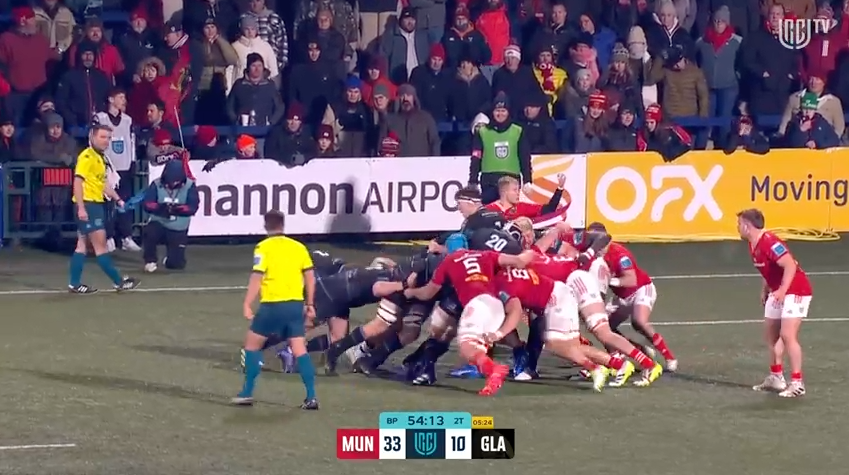
Kilcoyne or Buckley has to enter from the touchline side to exert the pinch-stop but there’s too much movement for Kilcoyne to find a legal entry point.
When Beirne is told to leave – he was still on his original bind and legal for me, but at this stage, it didn’t matter – Glasgow surge through and even though we got it to ground, another defensive error costs us when Beirne rolled away right into Ahern’s line so he can’t get low enough to make the stop.
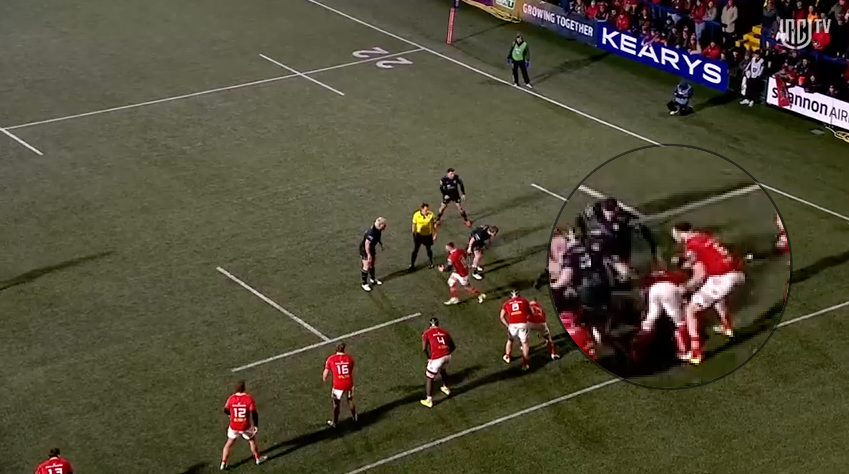
Want to see the bonus point?
Go on. Here’s the maul from our #22 that led to the 5m lineout they’d eventually win a penalty try from.
A few small things here really hurt against a good mauling side. They get set almost immediately on the drop because they don’t have a complex lineout scheme so they get power on early.
Edogbo is a little too close to the drop initially so he can’t lock it out properly.
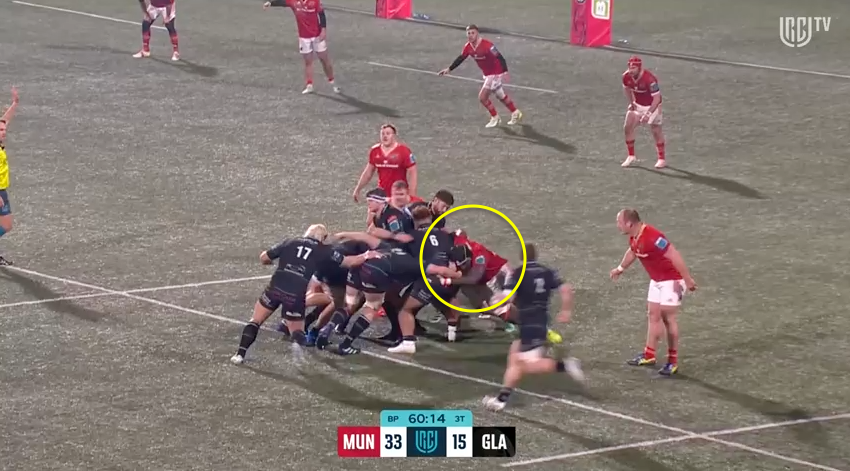
He does well to readjust and tears out a good load of Glasgow maulers with him but when Van Der Westhuizen mistakes a Glasgow trip for a Munster pulldown, they’d get another chance.
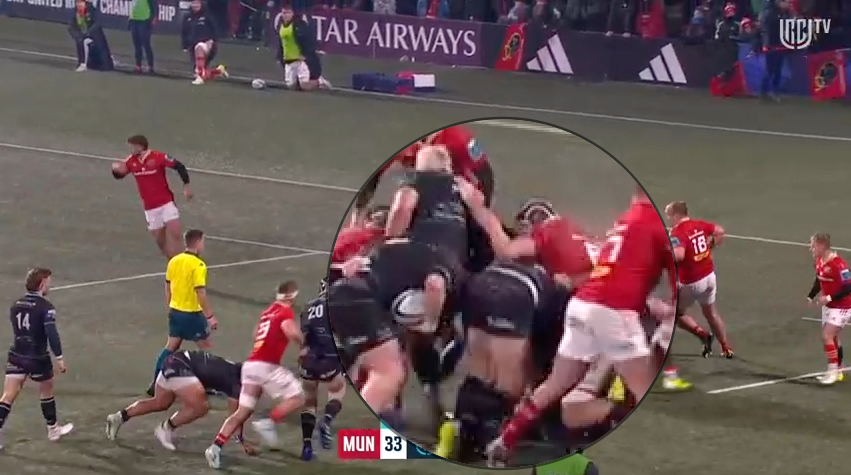
This is where things start to get messy for our “pinch stop” action. You’ll see everything we spoke about on this sequence leading up to the penalty try being awarded.
First thing – Kendellen and Wycherley are too disconnected on this set when we’re keeping three forwards over to guard the break.
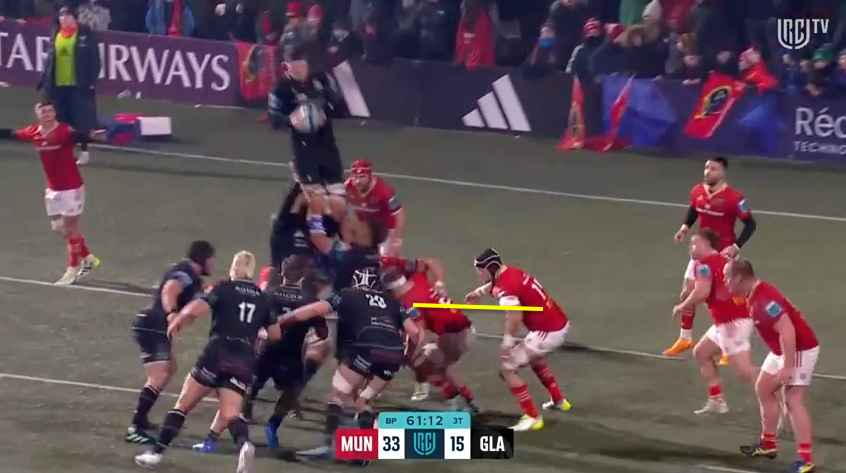
Wycherley comes in late as a result and does pretty well from a power perspective. We get the pinch on from both sides, force Glasgow infield sideways but Beirne gets adjudged to have collapsed late in the set.
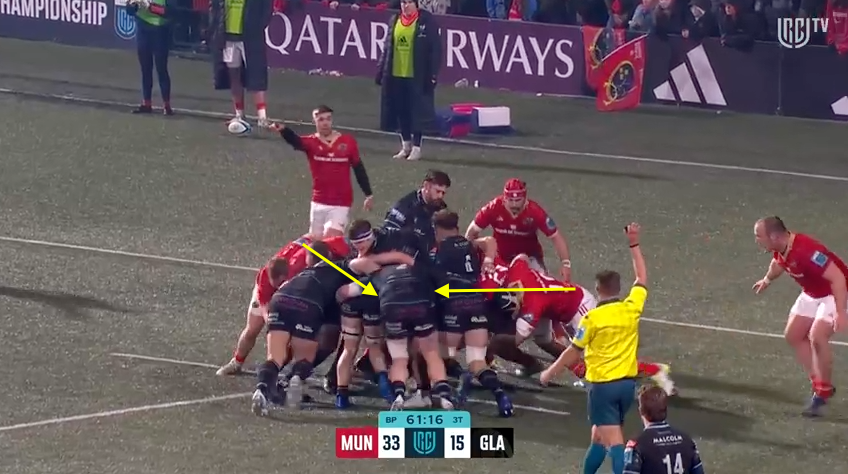
Did he? No, I don’t think so – but the picture is already set that we can’t handle Glasgow in the maul so we’re going to be punished more often than not by the referee in this scenario. And rightly so.
When we get behind the maul, we can see the issue – Buckley enters outside Kilcoyne to create the pinch angle but, in doing so, ignores the gap that Glasgow are driving through to move across the pitch.
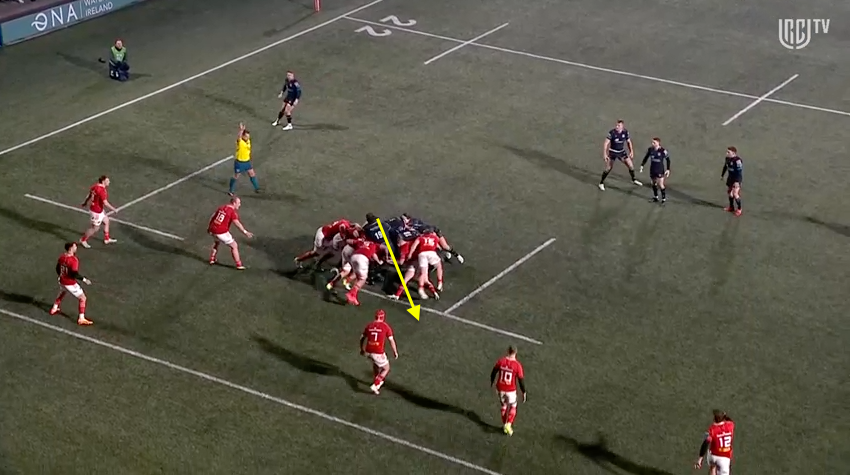
Small little things, really, but it seems to stem from the adjustment we’ve made to pinch mauls. It leaves us with very little margin for error, especially given that we like leaving a lot of forwards over to guard those 5m breaks.
To be very clear, we won this game with a bonus point but the maul defence issues were by far the biggest thing to stand out for me on the watchback, especially with the games we have to come against Bayonne (big maul team), Exeter (big maul team) and Leinster (big maul team). All of this maul work is 100% fixable but it needs a focus after the last two weeks.
From an offensive perspective, we’re as good a team as there is anywhere in Europe.
Forget about “linebreaks”. A linebreak can be anything from a creative attacking sequence to a defender slipping. When you look at Munster playing, you’re seeing the kind of attacking variety on multiple phases that is a nightmare for defences to manage.
You’ve seen the highlights of the game, so I’m not going to just repost them but watch this from Munster in the build-up to the first try by Edwin Edogbo.
Multiple threats, multiple handlers, not one single phase with a predictable outcome as it reaches the gainline, accurate passing in and out of pods, multiple players running offload lines – this is really good stuff.
Thomas Ahern’s first try off a maul in the 22 gave an idea as to how we can break down teams without having to hammer away at mauls or close range pick and goes.
Now, we still need those close-range actions to be better but when we can move with pace and power like this with a skyscraper in shorts lurking on the wing, we become a team that hurts the opposition in multiple ways and from anywhere.
You don’t just stumble on this kind of attacking play by throwing the odd offload. This is a philosophy and an active decision that burns time week to week but we’re seeing the value in it.
This offensive work isn’t just ball retention to look for penalties. We’re keeping the ball in hand for multiple phases to pressure and stress the opposition because we’re looking to score clean from everywhere. We’ll take penalties when they pop up, sure, but the difference in approach between both sides could not be more stark.
Offensive work like this looks great in December but it’s devastating in May – and that’s what this team is building to. If we can shore up our lineout and maul on both sides of the ball, we’ll have the beating of anyone, anywhere.
| Name | Rating |
|---|---|
| Jeremy Loughman | ★★★ |
| Diarmuid Barron | ★★★ |
| Stephen Archer | ★★★ |
| Edwin Edogbo | ★★★★ |
| Tadhg Beirne | ★★★★ |
| Tom Ahern | ★★★★★ |
| John Hodnett | ★★★★ |
| Gavin Coombes | ★★★★ |
| Craig Casey | ★★★★ |
| Jack Crowley | ★★★★ |
| Sean O'Brien | ★★★ |
| Alex Nankivell | ★★★★ |
| Antoine Frisch | ★★★ |
| Calvin Nash | ★★★ |
| Shane Daly | ★★★★ |
| Scott Buckley | ★★ |
| Dave Kilcoyne | ★★★ |
| Oli Jager | ★★★ |
| Fineen Wycherley | ★★★ |
| Brian Gleeson | DNP |
| Conor Murray | ★★★ |
| Rory Scannell | N/A |
| Alex Kendellen | ★★★ |
