


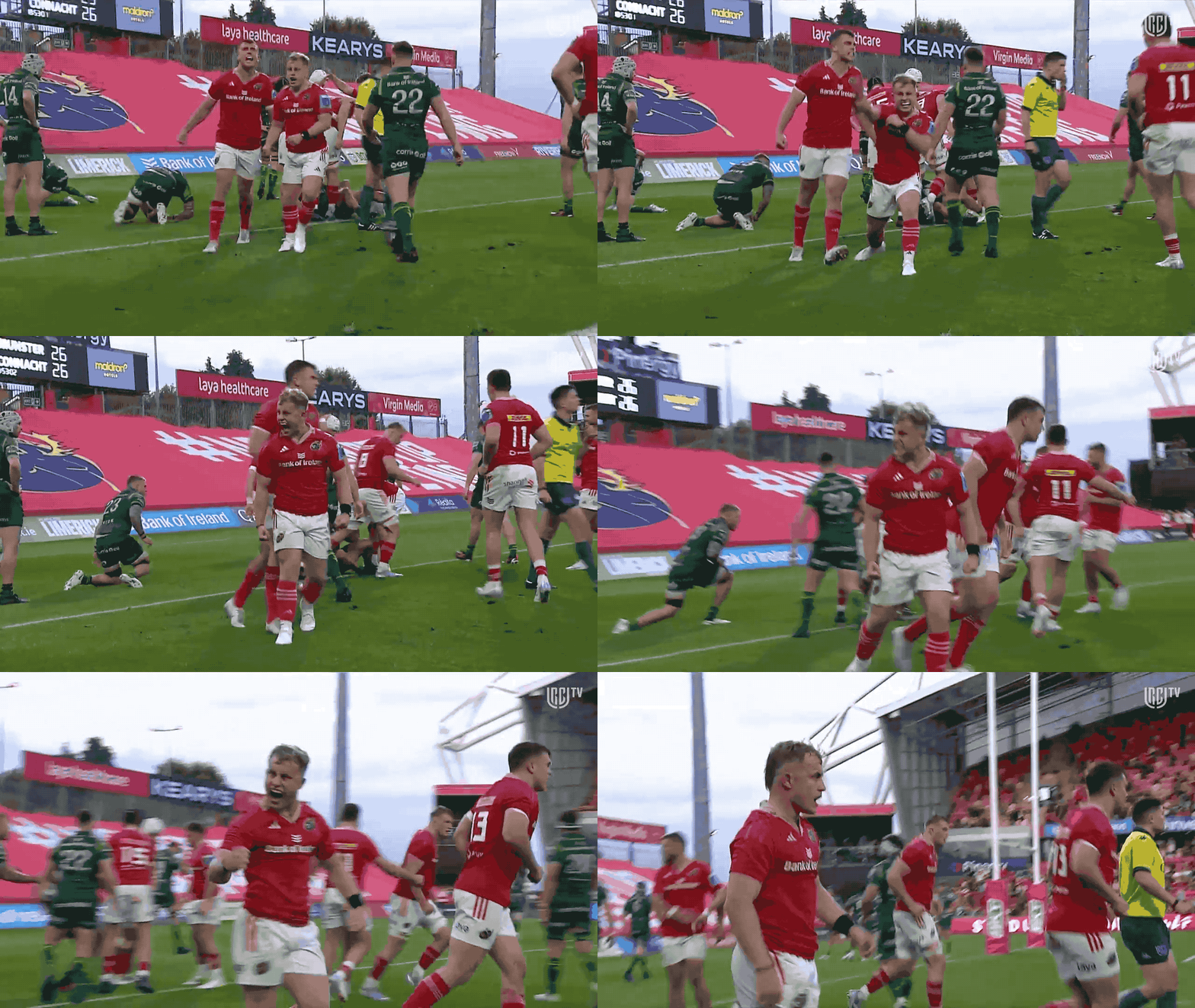

On the face of it, this game produced as many questions as it did answers. How much drama can a guy take on the first day of the season? That’s a question I asked myself a few times as I walked out of Thomond Park, into the LIT car park and snail crawled out towards the McDonalds’ drive-through in the Jetland Centre.
This game felt like an early season shakedown with all the errors and score-trading you’d expect, while also feeling like a do-or-die game in mid-December or later. It was an absolute rollercoaster ride, as a result, and assessing it purely through the lens of defensive errors that need to be fixed or a set piece that needs shaping up misses the grander point somewhat.
This was A Great Match.
Sure, it sent my blood pressure and heart rate through the roof on the East Stand. Yeah, it had my emotions swirling around like a brick in a washing machine. Yeah, I did despise the loud Connacht support cheering every try that pushed them ahead. Did I stand and punch the air when Tony Butler boofed over the winner from the 5m tramline like it was nothing? You bet your ass I did. Did I do the same as Craig Casey kicked the ball into the crowd to end the game?
What do you think?
Modern rugby analysis can sometimes wire your brain into thinking that a game like this is “bad” instead of something that sometimes happens between two teams on a given night. That, while entertaining, a high-scoring game is as much about defensive errors as it is attacking excellence.
I tried to think about why that was on the way home from McDonalds.
Was it the defensive slip-ups? The score trading? Does the Joe Schmidt school marm-esque language warp of the late 00s/early 10s take the blame for this with his “accuracy”, “work-ons” and “body ball” stuff that nobody seemed to talk about before he arrived here?
I sometimes feel that the rugby analysis bubble became so conditioned to the hyper-efficient 28-10 bonus-point-wrapped-up-inside-the-50-minute-mark home league procession that anything outside that is seen as a failure, even in victory. I hit on that one going past the Woodlands.
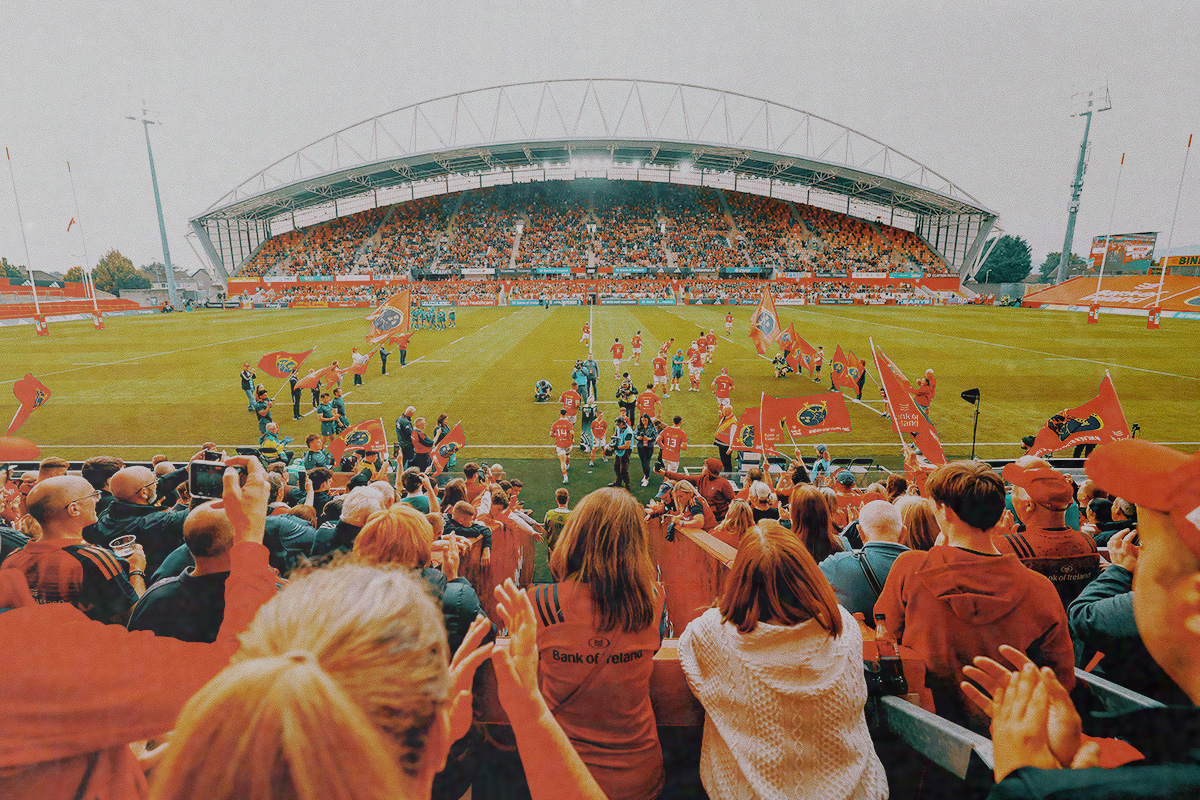
Living in the moment, just the moment, the roars of joy and relief that washed over me from the East Stand were what I imagined this game was meant to be about. Then I opened my phone and saw a video my fiance sent of our little girl cheering in her high chair when Shane Daly scored the winning try and I nearly floated out of my trainers.
Maybe this is what it’s all about. Winning this game, finding a way, moving on to the next.
But it’s September. It’s the first round of the URC and I’ve just pulled in home.
Maybe I need to eat my McSpicy chicken burger and go to bed.
***
In the cold light of day, you start to see the problems. I won’t overfocus on them, but I will acknowledge they existed in this game. The first thing that became apparent was that Connacht looked sharper than we did early on. Their combinations were tighter and their set piece functioned better; they looked a game ahead of where we’re at.
They were taking their moments when individual errors in the Munster defence produced opportunities whereas we always seemed like the last, killer pass was shrouded in fog.
This was a good example after some excellent pod interplay and snipe/pop sequences got Munster to the 5m line.
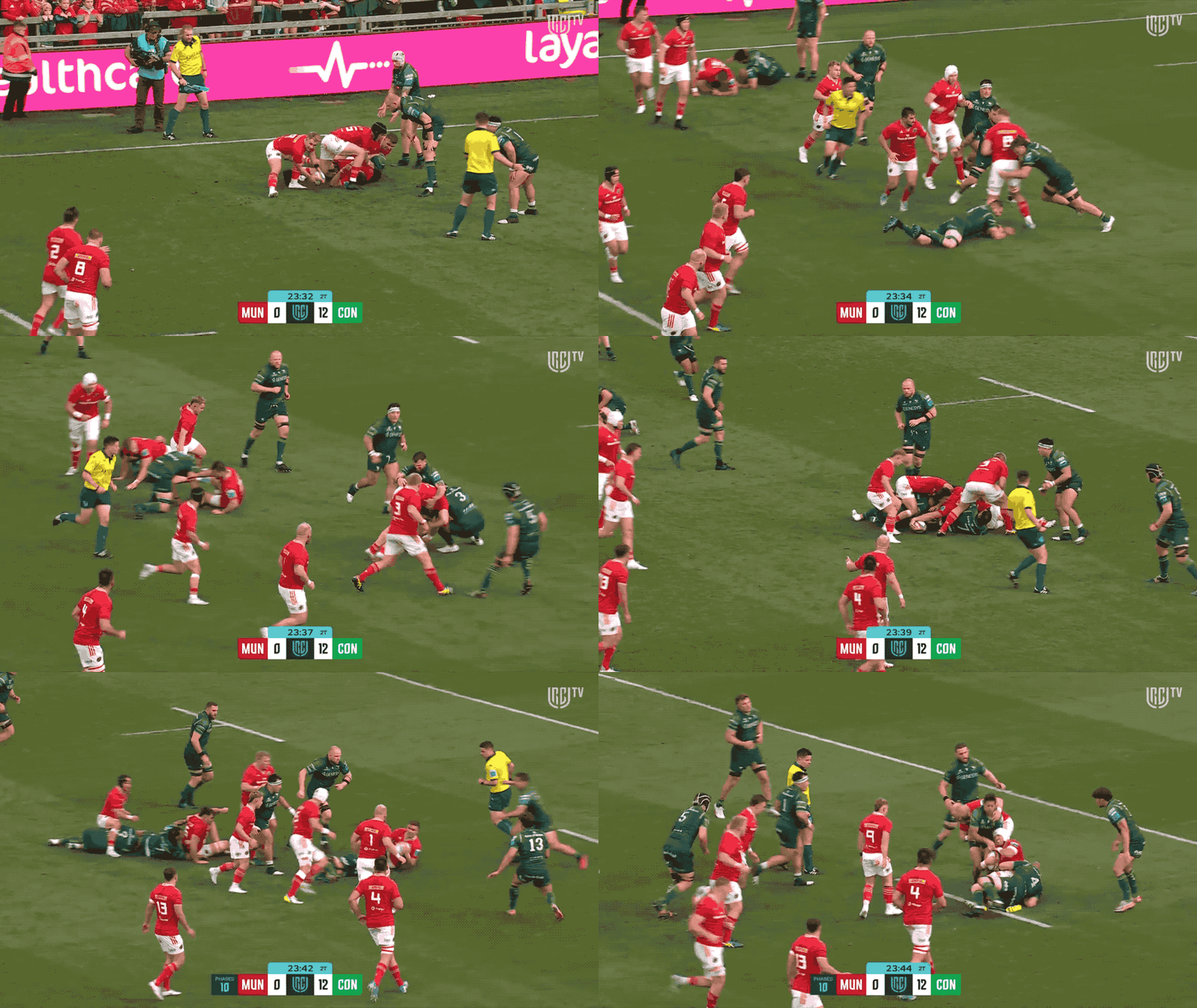
This is a good example of Munster’s general principles around our central shape, in this case flowing through variations. Barron pops to Coombes, and Coombes takes contact before popping it back to Barron, Barron hits Quinn. Casey calls for a snipe run from Daly, who makes good ground before throwing a pass off the deck to Wycherley on the loop.
A flying nothing – not a decoy line, not a ruck entry – from John Ryan killed what would have been a pass straight to Jean Kleyn for a mismatch carry under the posts against Cathal Forde and Piers O’Conor.
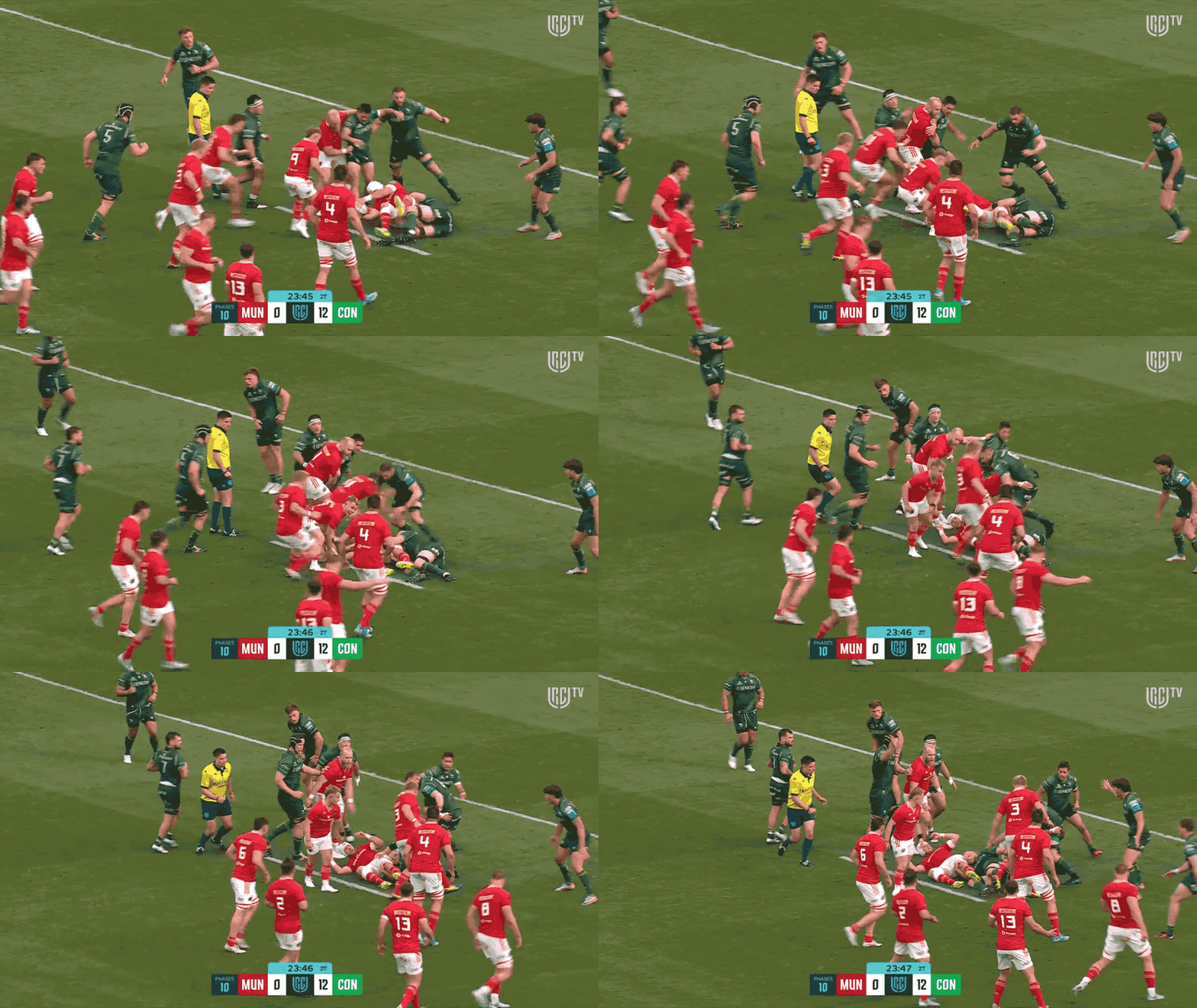
That was a very frustrating moment in the stadium and it comes down to indecisiveness from Ryan. That’s preseason jankiness for you.
This opportunity was created on a post-transition sequence where we successfully attacked two principles of Connacht’s defence:
- They love triple involvements on a tackle
- That leaves them short if they can’t force a turnover
Watch this sequence;
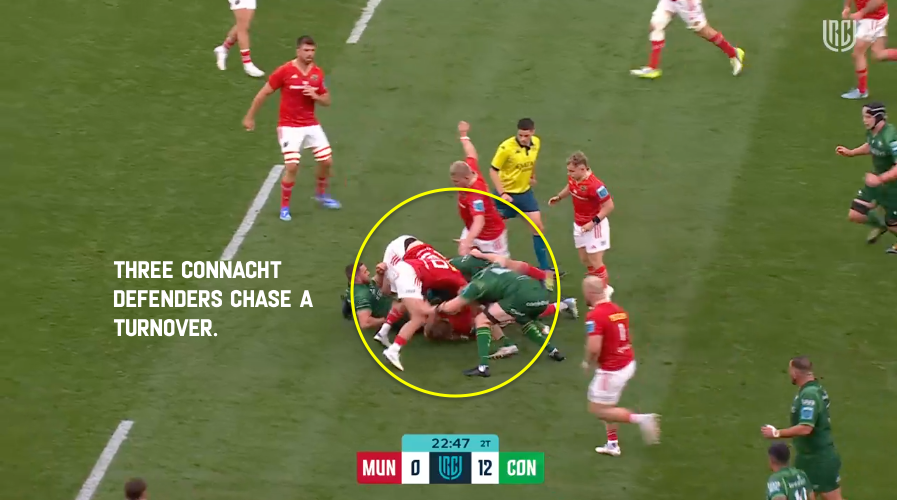
Casey’s pass to Haley isn’t great – a little high – and Haley doubles down on it by throwing a wobbler to Coombes, who gets taken man and ball as he’s about to pass into the layer to Farrell.
Look at how Connacht over-chased the ruck – they smelled a big moment on turnover – but lost three defenders in doing so. You can already see the space opening up behind the ruck.
When Munster got the ball back, we had swung a huge backline overlap into place. Casey’s excellent pass to Nankivell opened up a great linebreak. Farrell cut open Ioane on the edge and almost engineered a try from just outside our 10m line.
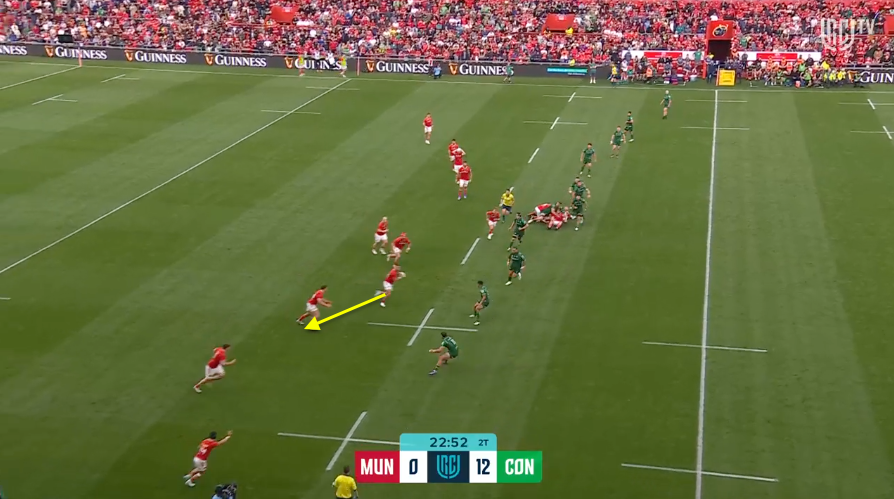
That linebreak was a great example of what really worked for us in this game. Last season we averaged 5.8 linebreaks per game across the URC season but in this game, we made ten.
Here’s another good example of our intent in this game.
After Nankivell’s opening try, Munster took the restart and lined up for a kick exit with Daly in a chase position. Casey signalled to him to move centrally.
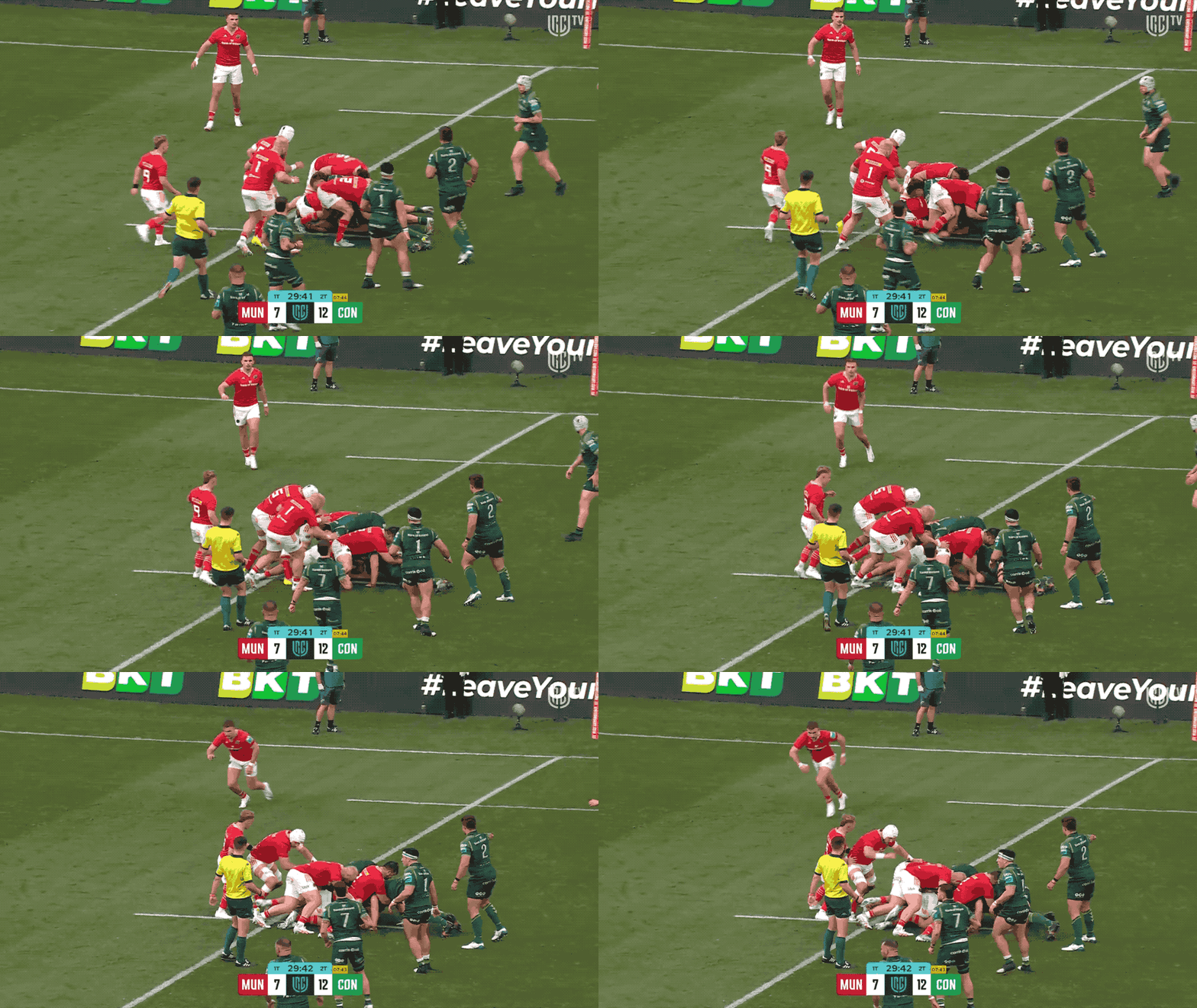
This lined him up to attack a Billy Burns chip over the top of the Connacht defensive line, right at the space alongside the previous ruck. You can watch the breakout from there;
Look at how Tom Farrell draws out the defender for an isolation with a diagonal drift before straightening up and propelling himself off the inside shoulder with a fend – he’s a top-class midfielder.
We should have finished this on the first break and probably would have if it hadn’t been for Forde’s crafty slowing down of the ball on the last tackle. We were held up over the line a few phases later – something that’s all too common for this pack in the last two seasons – but scored off the resulting dropout.
We wiped out a 12-0 deficit in no time off the back of strong, ambitious attacking work. Two defensive errors right before halftime would send Connacht back into the lead, which was the story of the game.
Kleyn took himself out of the next phase of defence with a missed tackle and then Ruadhan Quinn got caught on a snipe when he was momentarily unsighted by the referee and sat down on an aggressive darting run by the impressive Ben Murphy.
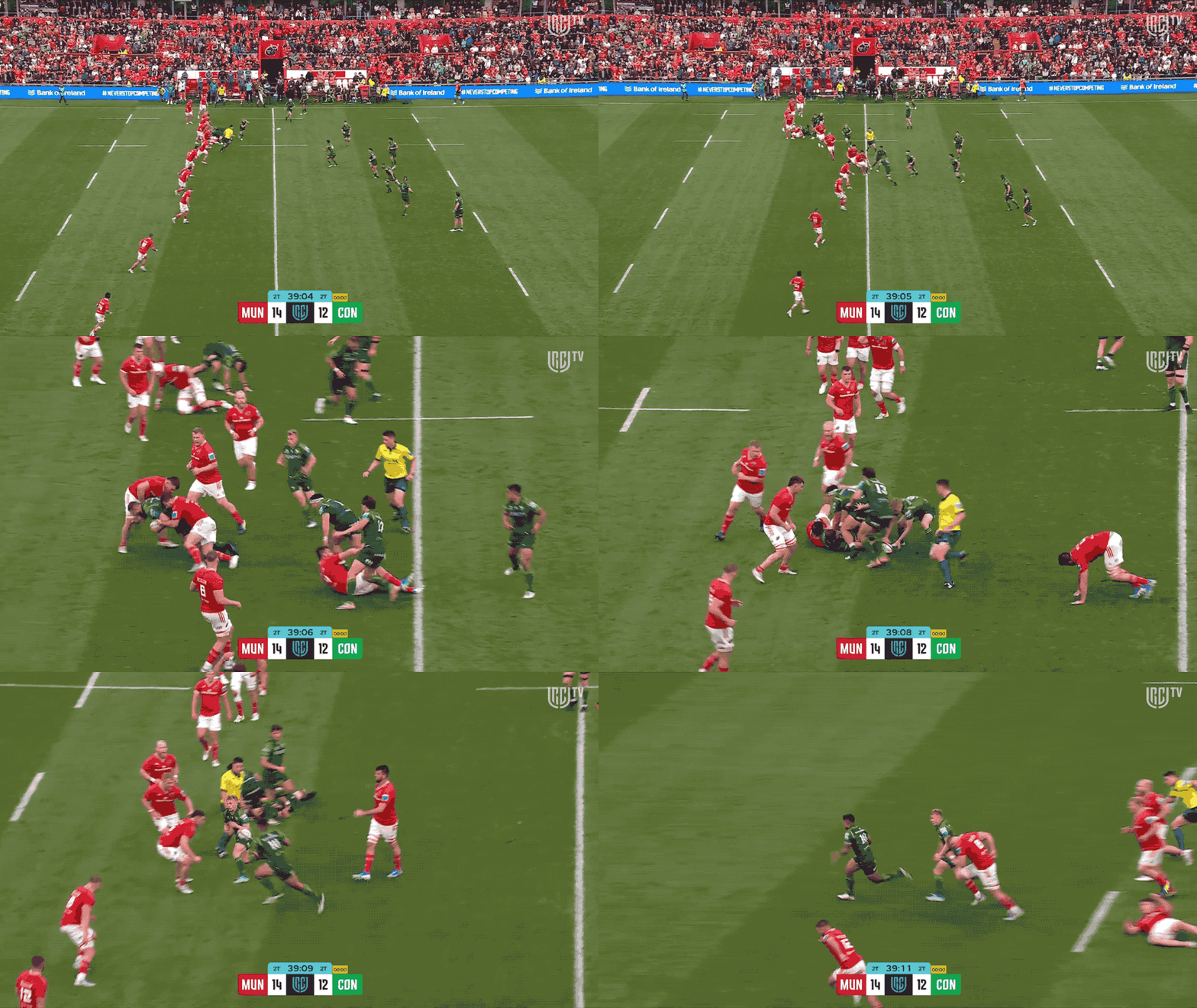
Connacht executed the linebreak really well but the reality is that without two errors here – Kleyn’s fall and Quinn’s sit down – they don’t break up the middle of the pitch.
Munster took the lead again in the second half but fell behind again on a badly defended goal line dropout defensive set where we overstacked on a side of the ruck with only one Connacht attacker, shot out on Ioane needlessly and then saw Connacht slip into the backfield far too easily.
We took the lead back again off a scrum free-kick – something we’ve clearly been working on in preseason – and the speed and quality of this try is really worth watching. Casey’s break, Butler’s pass, Farrell’s slow down to stall the defensive push, the combo from Haley and Daly, the offload from O’Donoghue, and the power finish from Coombes – all exactly what they needed to be to score this from half-way.
This is good stuff.
It was undone by two poor missed tackles on a nothing Connacht attack on the next sequence – once by Butler on the edge with O’Conor and then again off the resulting scrum five – but we never stopped scrapping. The heads never dropped. On the very next play, Butler produced this superb pass off the lineout to get us around the corner and in place to push forward for the winner.
That takes real guts for a young lad who just made back-to-back errors but guts defined this game for Munster. It’s one thing to dig deep when you’re playing well, it’s another thing entirely to do it when you’re conceding on every other defensive set.
***
Before the game, I wondered about Connacht’s game-state approach to this game and whether they’d continue their on-ball work from last season; they did, with 10.5 passes per kick and a pass-per-carry ratio of 1.45. Connacht kicked less often than last season and played with real width, all while only committing 8 turnovers.
Connacht didn’t create a whole tonne – unforced Munster errors in defence were their biggest asset – but their ball retention kept them in position to take advantage of those positional mistakes.
Munster were in that low kicking counter-transition/on-ball zone with 8.5 passes per kick and a pass-per-carry rate of 1.35. The big difference between the teams was that Munster conceded 16 turnovers on 45% possession, which tells the story of most of the game.
We played a slightly narrower game to bait Connacht’s 2+/3+ tackler defence before hurting them in the 3/4 space repeatedly. That showed up again and again and if we can tighten up our ball retention on those central drives, we have a backline that can cause any side trouble. I think if our accuracy was better, we win this game far more comfortably than we did but that comes back to the fundamental issues we’ve seen with this team time and again.
Lineout accuracy, lineout calling, and collision work in tight; these are the things that are holding this team back from ascending into that “top four in Europe” bracket. We saw these issues in this game once again with some daft calling against a team we had to have known would be putting two pods up into the air in the middle and at the tail.
They knew that we threw to the tail third most in the league last season and clogged that area of the lineout on our first two throws. Did we know that they knew that and that they selected a back-five specifically to target that tendency? You’d wonder. We have good throwers, good jumpers and good lifters – so why are we pulling that dreaded two-man decoy cut-out throw to the tail that shows up on every single opposition lineout preview, but remains on our lineout menu for use without fail?
You’d also wonder why it seems like the closer we get to the 5m line, the harder it seems to be for us to score. Our latch and drive work is too loose and too often badly timed. We’re really good at the “hard” stuff – breaking up the field from between the 10m lines – but when it comes to converting those opportunities when we get to the tryline, our collision work isn’t what it needs to be in the forwards.
We got away with it here in probably the most difficult season opener we’ve had in ten years but it’s on the list of things that need to be shaken down by the time we get fully into gear this campaign.
| Players | Rating |
|---|---|
| Jeremy Loughman | ★★★ |
| Diarmuid Barron | ★★★ |
| John Ryan | ★★ |
| Jean Kleyn | ★★ |
| Fineen Wycherley | ★★★ |
| Ruadhan Quinn | ★★ |
| John Hodnett | ★★★ |
| Gavin Coombes | ★★★★ |
| Craig Casey | ★★★★★ |
| Billy Burns | ★★★ |
| Shane Daly | ★★★★ |
| Alex Nankivell | ★★★★ |
| Tom Farrell | ★★★★ |
| Thaakir Abrahams | ★★★ |
| Mike Haley | ★★★★★ |
| Niall Scannell | ★★★ |
| Josh Wycherley | ★★★ |
| Oli Jager | ★★★ |
| Jack O'Donoghue | ★★★ |
| Alex Kendellen | ★★★ |
| Ethan Coughlan | DNP |
| Tony Butler | ★★★★ |
| Sean O'Brien | ★★★ |
