


I grew up on a half-finished housing estate on a cul de sac in a small village in West Cork on the road to the beautiful places. It was one of those villages where I imagined people driving on their holidays to Clon, Bantry, Schull, or Castlehaven and beyond thinking “who the hell lives here“? We lived here. There. It was fun.
We had a half-finished house overgrown with trees to fool around in, an abandoned caravan at the top of a rough dirt road that looped behind the finished houses and, in the middle, a large patch of dirt that had become overgrown enough to become a lush, grass-covered hill. We called it… The Hill. Amazing name, I know.
The challenge of The Hill© was to run down the northward slope, which was steep but not steep enough that it was impossible to run down. Fall, and you would tumble down into the thick, bouncy moor grass that had taken root below it and maybe flirt with a few nettles if you were unlucky. It didn’t hurt. Well, bar the odd nettle.
Succeed, and you would still tumble into the grass but you would do so having beaten The Hill™.
When you were running down it, there was always a brief moment when your momentum and scurrying legs seemed to be in perfect commune with gravity and you felt like you’d never run faster in your life. But then the pace would overtake you, your legs would stake out, catch the grass and you’d fly off your feet.
You always had a good chance to do it on your first go, but by the third or fourth try with tired legs, you’d almost always fail.
The last few weeks of Munster’s season have had the feeling of that moment when our legs, momentum and the gravity of the league, as it ran to a close, were in sync with each other. We weren’t perfect against Connacht, Edinburgh, Ulster or the Ospreys but we were on our feet and moving. On Saturday, it felt like gravity sapped our legs right when we needed that extra few seconds of strength and we tumbled into the grass. This time it hurt.
***
You only realise how long the season is when you stop. I was texting Ash as I stood in the Chip House in Rathkeale (try the Gary White Special) as I waited for my battered sausage and curry chips. Bizarrely, an elderly man in a Glasgow jersey was standing behind me. Only in Rathkeale.
“I’m knackered”, I text her. I was a few minutes away from home but Ash was in bed with our daughter who had woken up early with a bad dream. Maybe she saw the result while in Slumberland. I’d have woken up crying too.
“You’ve been on the go since last year without a break more or less,” she replied. “Since last July”.
She was right. I’ve been working for 11 months straight, week to week, even while on holiday.
“Do you want me to bring back something?”
Ash is typing.
“No it’s ok xxx”
Ash is typing.
“Maybe some of those curry chips actually x”
I am just emotionally and mentally tired going week to week to week. You can have a week off here and there, of course, but you’re just trying to catch up on rest and usually, you’re only half off regardless. You’re still tipping away at this or that, always knowing the next big week is around the corner. I’ve had so many people DM me and email me since Saturday wondering why and how Munster looked so tired.
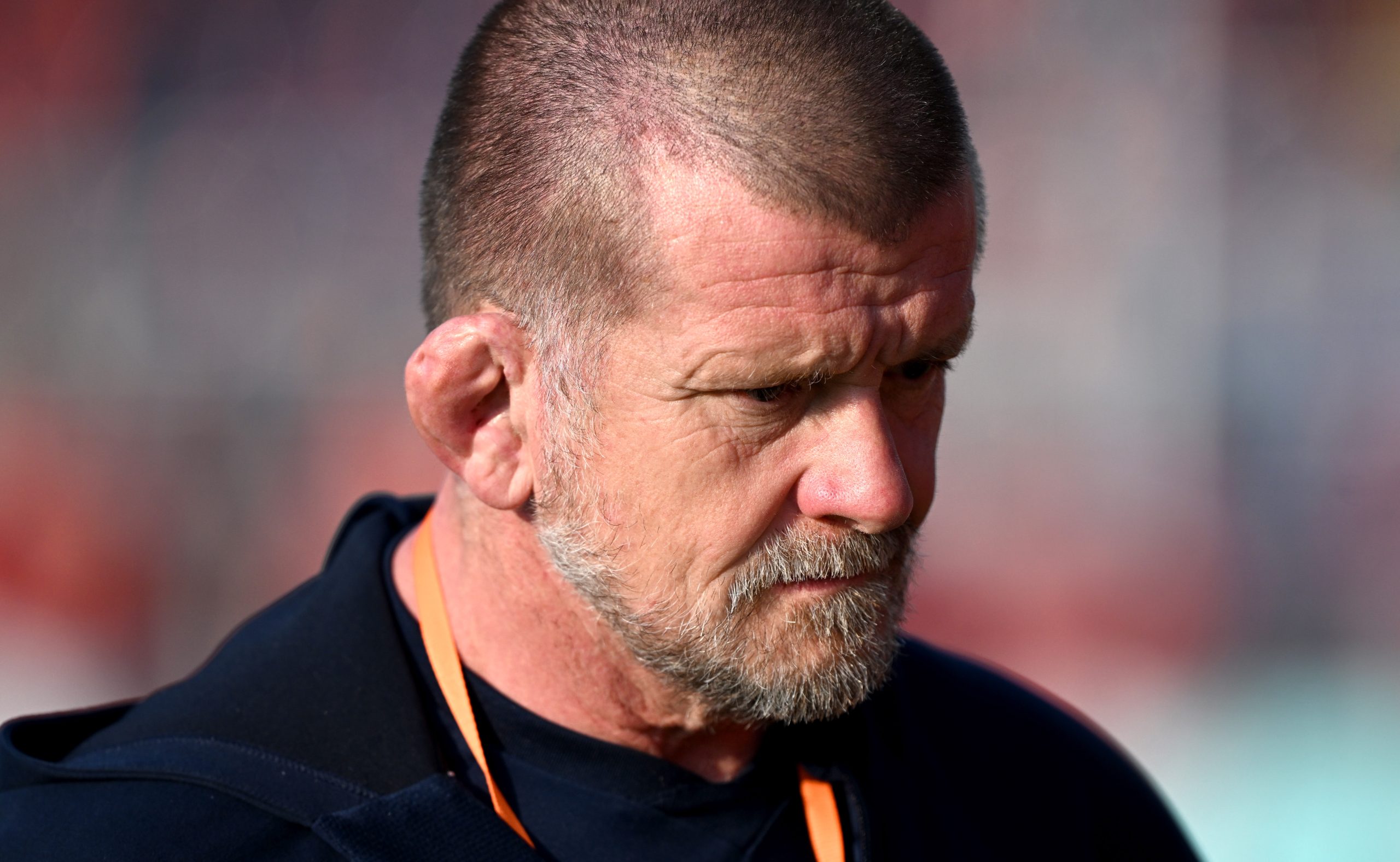
Munster have been on the go week to week with only a week off here and there since March 1st. When you go through the fixtures you’ll see a few two-week periods between games here and there but those aren’t really two weeks off. After the game on Friday/Saturday/Sunday, the next day is mostly a write-off as you recover. Depending on the day of the game, you can rest without any form of group training until the Friday/Saturday of that week. On Sunday, you need to be gearing back up because, on the Monday of the next week, you’re right back in game mode.
Munster looked like a team that had gone week to week, back to back, with more or less the same core group of players for a few weeks too long on Saturday. Too many guys – forwards and backs – looked leggy. Almost like they’d done too much during the week, even if that much was just what they needed to keep the engine warm. We’re at that stage of the season where it’s about balancing every calorie in and out to make sure you’re good to go at the weekend. It feels like we got that balance wrong, even if balancing core areas of the tight five was impossible with the run-in.
Tadhg Beirne has over 2000 minutes of rugby on him this season alone but what was the alternative? When Ahern’s season ended with an ankle injury against Ulster, Beirne would have to play every minute of the Ospreys game if it was anywhere close because we don’t have any other locks anywhere near his level.
We’ve been managing RG Snyman through the end of the season since after the South African tour. He’s only played two 80-minute games since he came back from injury. Ideally, we’d be pairing and rotating Beirne, Snyman and Ahern with Kleyn and Edogbo to help keep all five players fresh but by the end, we were down to just two of those until we were almost forced to use Fineen Wycherley, a SQUAD 2 level guy who’s had a tonne of injuries himself this year.
Gavin Coombes has played 1600 minutes. Jeremy Loughman has 1354 minutes. Niall Scannell has 830 minutes since the end of January alone. Jack Crowley has played 1983 minutes since last July. Alex Nankivell has close to the same.
In the last few months, we’ve had a must-win tour of South Africa that we couldn’t rotate for. We’ve had must-win home games against Connacht and Ulster and a game away from home against a fully loaded Edinburgh side that went deep into the 80. Then we had the Ospreys in a KO game. In that time alone we lost Alex Nankivell, Josh Wycherley, Thomas Ahern, Joey Carbery and Calvin Nash, with numerous other guys being managed to keep them on the field.
That’s why we looked tired.
We’ve had no scope to rotate since beating Cardiff at the end of March because our grip on the top four was so tenuous, especially with the South African tour looming. The squad mix with the same 25 players being involved in different configurations of starting and benching week to week was as much about energy management at the end as it was about tactical management post-South Africa.
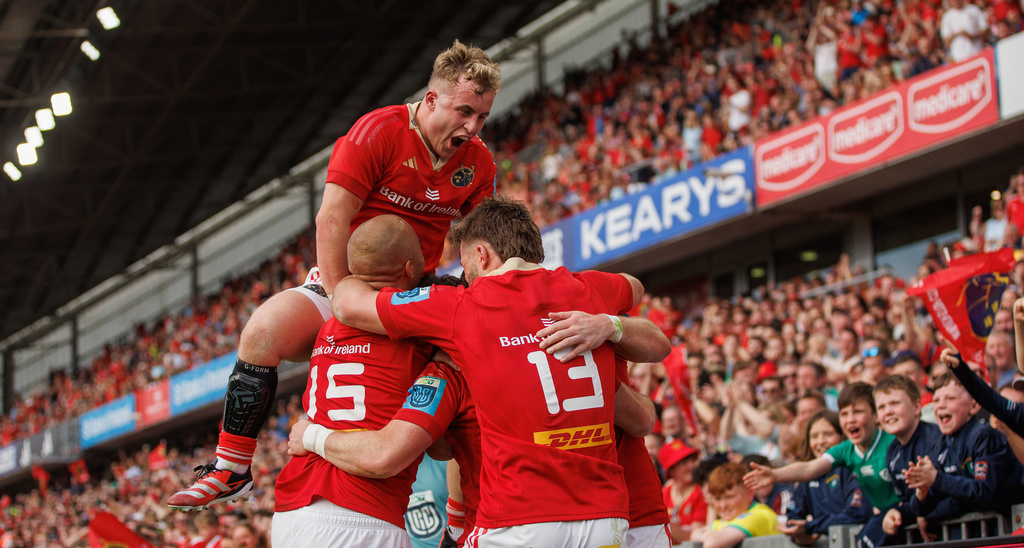
By last week, that number had dropped to 23/24 with multiple guys carrying injuries or knocks.
But that’s the game. Rugby at this level is as much about luck, the balance between freshness and battle-hardened and executing your plan with these in mind on the day. When it comes down to it, Glasgow executed their plan, got a few bounces of the ball and came in that tiny bit fresher. They picked up all the moments they needed along the way to win this game.
We looked tired, nervous, flat, indecisive and consistently let our moments slide through a mix of overplaying and the wrong man in the wrong place in the wrong game state.
***
With 19 minutes on the clock, I had a really bad feeling about how this game would go.
Richie Gray had been yellow-carded nine minutes prior for killing the ball on the Glasgow tryline. We took three points instead of pushing for a try which, in hindsight, was a mistake. We needed to make Glasgow chase the game so we could drag them on-ball. They had been coasting to that point by kicking almost all of their possession, which I don’t think we wanted. Our starting build was there to play counter-transition rugby but we needed Glasgow to burn off some phases instead of sitting in deep defence. Instead, we were the ones using a lot of energy and not getting anything for it.
That first three-pointer is a good illustration of why taking the three isn’t always the right decision. It took us five minutes and 11 seconds to earn that three points. That’s five minutes of carrying, mauling and rucking that was rewarded with something a bounce of a ball could erase and later would erase.
I get the logic of taking the three and then getting the ball back but it just allowed Glasgow to gain 65 metres off the restart. We would only score once more in the game which, again, is hindsight but it felt like a bad use of our very limited energy to me.
Anyway – back to 19:30. We had just turned over a Glasgow scrum in their 22 and, three points up, this was our chance to bang seven points on the scoreboard against 14 men and force them to come out and play at the restart.
What followed was 41 seconds of pain.
This is genuinely awful stuff. Wycherley and O’Donoghue look terrible in this instance – as they did in the same fixture last season when both started – and Scannell is not much better when it comes to impacting a niggly, aggressive team intent on making the breakdown a mess.
We never really looked like scoring at any stage here, despite playing on a transition 10m out. Our tight work near the goal line has been our Achilles heel all season and so it went again here. From there, other issues began to rear their heads; a general lack of pace and athleticism in transition, which allowed Glasgow to kick long at us all game, earning cheap territory which, combined with our physicality issues at the breakdown, made almost every attacking sequence a chore.
We’ve been really good on transition this year but Glasgow cottoned on pretty quickly that any kick down the middle of the field wasn’t going to move too far away from the line they kicked it on. I think Glasgow identified Mike Haley as a bit of a black hole with the ball in hand on transition and aimed most of their kicks right at him.
I felt we were a little leaden-legged in the outside backline all night. This dropout play was really well done but I can’t help but wonder what Simon Zebo from 2017 does here, or if it was Simon Zebo making the pass to Calvin Nash.
Time and again we created opportunities in the wider channels but we couldn’t create the separation we badly needed – on this one, we had to get an extra few metres on the first carry to give us a cleanout to hit.
And on this one, I think Hodnett wants to commit a defender before popping that out to Daly but he should have regardless, even if Daly wasn’t going to finish from that range. Nankivell could have added value after the pass.
Snyman should have taken that pass, even if it was rubbish. Ultimately, Glasgow’s competition at the breakdown meant that the windows of opportunity were either right over the top of them – and we didn’t have the size for that – or in the small windows of space that existed outside their small forwards’ cover radius and their midfield scramble range.
Glasgow backed their speed on the edges in transition on both sides of the ball, kicked to expose our lack of speed and athleticism, picked up a handy intercept try and rolled the dice hard at the breakdown. They came up all sixes. We needed our bench impact to… impact and it didn’t. Coombes had some good moments, as did Jager but we just couldn’t find the right gear to expose where Glasgow were weak.
That, ultimately, is how we lost this one. The similarities to the game we lost to Glasgow in Thomond Park last season – even down to the same referee – will rankle.
Glasgow’s kick-to-pass ratio was similar, as was ours. Glasgow kicked 23 times last year, 25 times this year. We had 14 turnovers last year, 18 this year. They won six turnovers last season, and seven this season. Our lineout ran at 71% last season, and 75% this season. We had three scrums last season, four this season, they had fourteen scrums last year, and sixteen this year.
It’s like they were the same game happening just over a year apart.
And that’s what will sting the most as the season ends with a home loss; that we’ve seen it before.
| Players | Rating |
|---|---|
| Jeremy Loughman | ★★★ |
| Niall Scannell | ★ |
| Stephen Archer | ★★★ |
| Fineen Wycherley | ★ |
| Tadhg Beirne | ★★★★ |
| Peter O'Mahony | ★ |
| John Hodnett | ★★★ |
| Jack O'Donoghue | ★ |
| Craig Casey | ★★ |
| Jack Crowley | ★★ |
| Simon Zebo | ★★ |
| Alex Nankivell | ★★ |
| Antoine Frisch | ★★★ |
| Shane Daly | ★★ |
| Mike Haley | ★ |
| Diarmuid Barron | ★★ |
| John Ryan | ★★ |
| Oli Jager | ★★★ |
| RG Snyman | ★ |
| Gavin Coombes | ★★★ |
| Conor Murray | ★★ |
| Sean O'Brien | ★★ |
| Alex Kendellen | ★★★ |
