


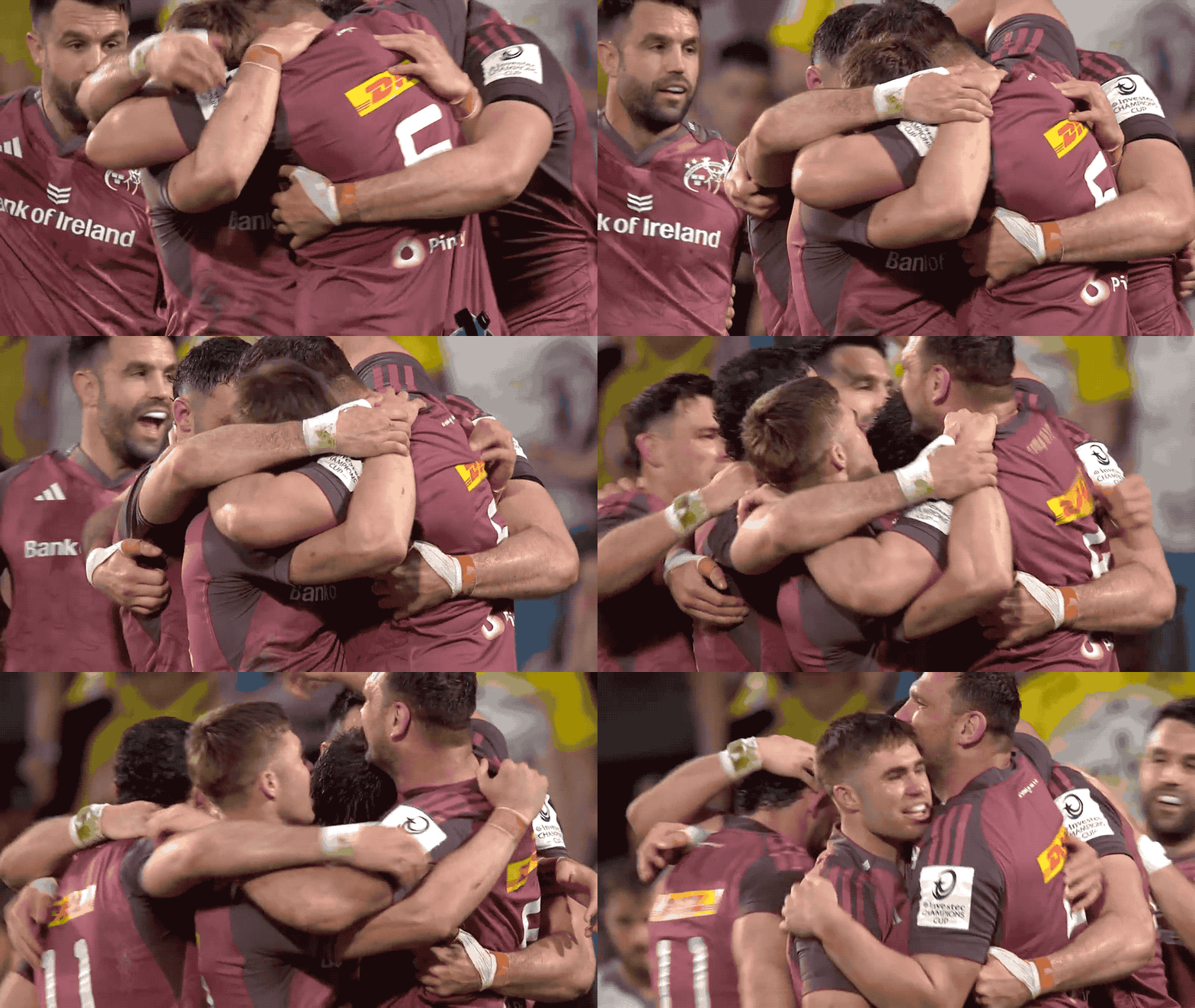
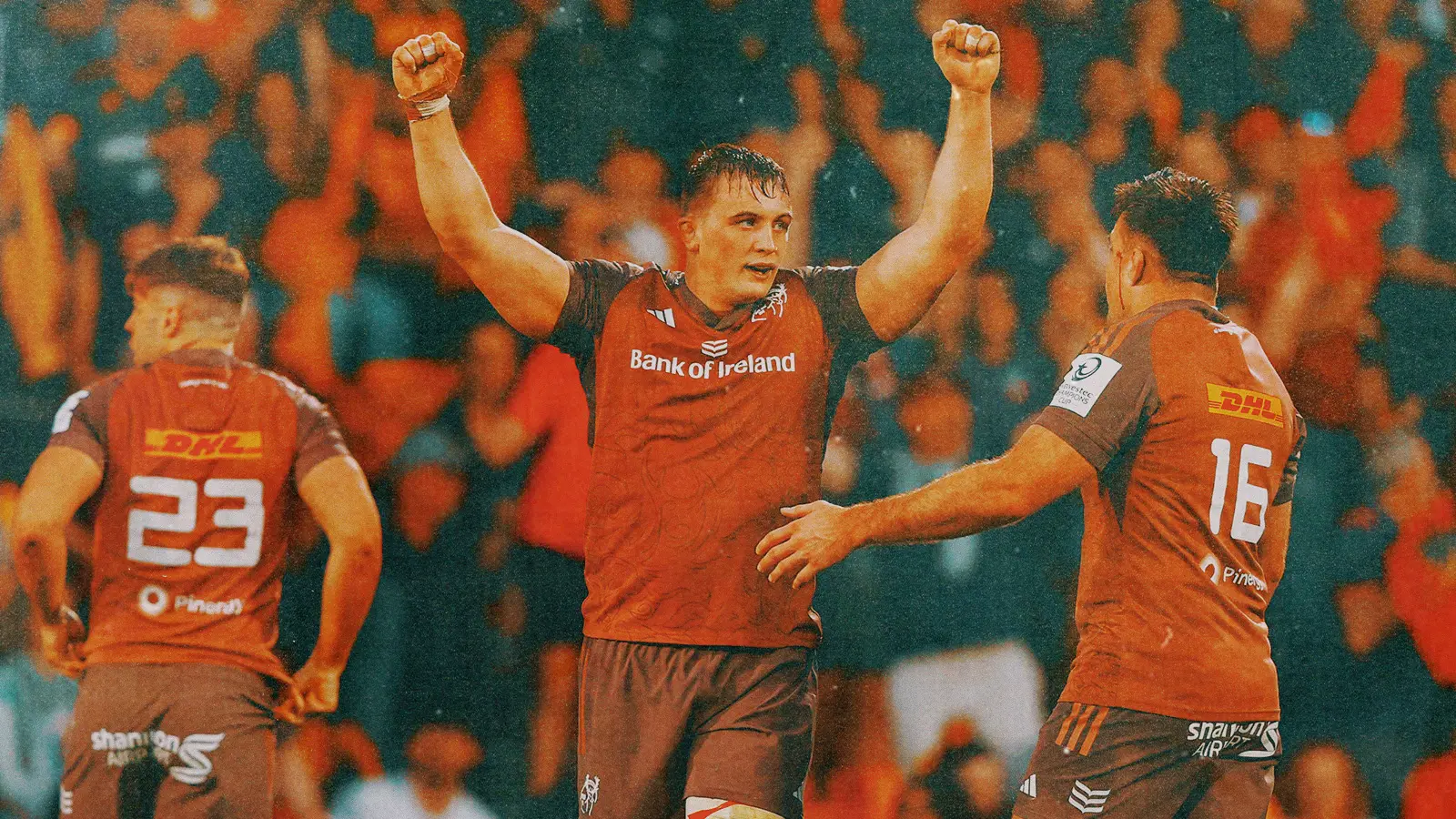
On one hand, this was an away Round of 16 win in France, enough to make the last eight of the European Cup. And that’s that. On to the next. There are bigger fish to fry. Park it and move on.
On the other hand, any journey that a team goes on from being one of the chasing pack to being the one they all chase is built on moments. Some of these moments are small, so imperceptible that nobody outside the playing group would even notice them. Some moments are private, and you only find out in someone’s autobiography, after the fact. Some happen for the world to see and start bringing people along with you because they see the significance of it.
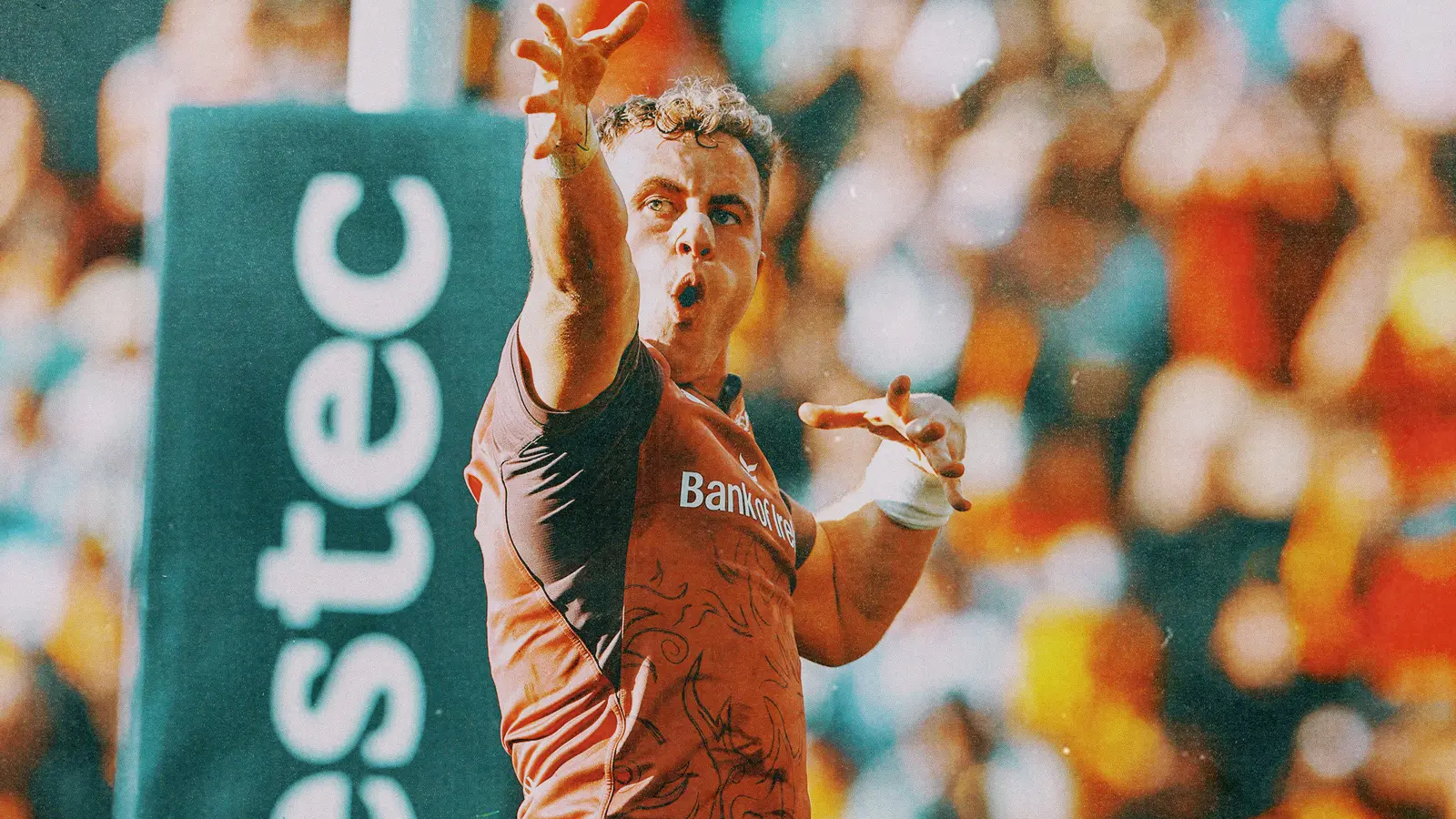
Saturday night was one of those moments.
Not an end to itself. Not a special “just beat O’Gara” trophy.
But it’s something worth celebrating all the same.
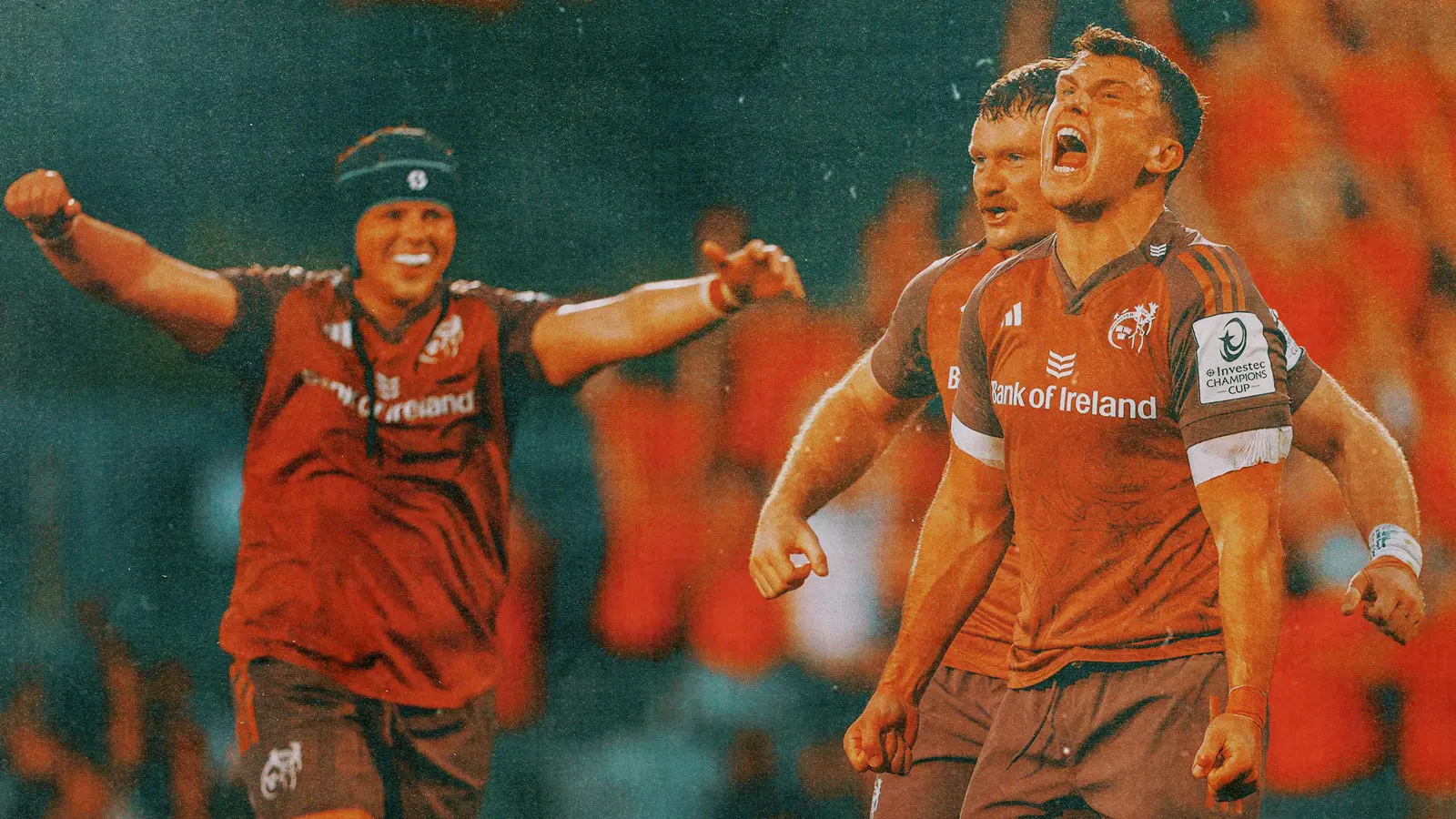
We know well at this club what big wins in the south of France can mean. It means a Big Story. The story of this competition. The one that, if you ask me, turned this trophy into something worth having in the early days of it, because we were so heartbroken that we couldn’t win it.
The most dangerous thing in European rugby is Munster starting another Big Story.
Munster Rugby has always been at its best when there’s a buzzy, floaty feel around the club and its fanbase. That feeling of the second pint hitting the spot, the craic being exactly at the right pitch and getting ready to call for the third pint. When Munster are on the chase, it’s intoxicating. Is it a bandwagon? Absolutely. But it’s all the better for it. The thousands of people who swarmed La Rochelle since Thursday night left a lasting impression on the town, the La Rochelle supporters and the tournament itself. That impression?
That this is what this tournament looks like at its best.
There’s been a lot of soul-searching in the last few years about what this competition means in 2025. The format is awful and confusing. There are too many blowouts, even in the knockout stages, and there is something farcical about teams with €15m budgets, be they French or Irish, playing teams constructed on half of that, and nobody talks about it.
A competition defined in its best days by magic is now the two teams with the biggest budget meeting each other in the final, with a procession of home games booked in December and January. No jeopardy. No shocks. Just capitalistic inevitability.
So the competition needs a story. It needs Munster. The real Munster. The team that turned belief into reality in the 2000s, against all the odds. On Saturday night, we got to see that again.
We needed 23 players to believe beyond all doubt that they were better than a team packed full of French internationals and modern greats of the European game. We needed them to believe that, while La Rochelle were on a bad run, they wouldn’t be able to live with the desire, physicality and intensity that we would bring for 82 minutes, 90 minutes, however long it would take.
They believed, and they made it reality.
We’ve seen this story before. We’ve seen what a group of Munster players that maybe weren’t getting as many opportunities as they should have had in a green jersey did in the late 90s before hammering it home in the 2000s. The same – the exact same – could be said of Munster today.
Bitterness goes a long way, but not all the way. Real belief married with guys playing to 100% of their potential when it counts takes you where you need to go.
Whatever happens next weekend will happen. UBB are probably better than La Rochelle, but maybe not as tough mentally. We can work with that, but that’s for next weekend. We know that if we bring that intensity, that desire and that game IQ to the south of France next week, with a bit of luck, we can upset the odds again.
All this team needs is a shot and a relatively fair hand with injuries. With our best team on the pitch, we can scare anyone. With the belief of old, we can scare the whole of Europe. We shouldn’t forget, either, that ten of this squad played against Edinburgh a few weeks ago. Fourteen of them against Zebre back in September. We’ve seen the worst of what they can bring.
Now we’ve seen something approaching their best.
But whatever happens, this win over the recent back-to-back champions in their backyard in a physical slugfest should give us all the belief we need to know that maybe we’re not as far away from the top of the table as we thought.
From undesirable to undeniable, that’s the Munster story.
We’ve done it once before, we can do it again. Saturday night showed that for all to see.
***
Munster approached this game with the exact structure that was needed to win this game by frustrating and “off-balling” La Rochelle for long periods, all fuelled by a mixture of long and middle-distance tactical kicking.
You can see this in the general kicking stats that have plagued La Rochelle in their winless run to date – their opponents have found a lot of success in kicking to La Rochelle and then holding them in place. A lot easier on a wet winter day on a soft pitch, as has been the case in the last few months, but doable with a mighty defensive scramble on a hard, dry track.
I have three examples I’d like to show you to illustrate this from distinct moments in the game.
First up, our maul defence was incredibly good for almost the entire game and it turned a thing that might have been an enormous source of La Rochelle penalties and momentum into mostly a non-factor.
Here’s a good example from early in the game when La Rochelle would have been fresh and looking to put a marker down. Again, see what sticks out to you.
What sticks out to me is the power of Oli Jager on the touchline side of this maul, getting a dominant shove on Reda Wardi along with Jean Kleyn. This is probably our strongest and heaviest pairing in this sequence and we used them really well to get that initial jolt of forward momentum.
On the other side, Beirne swam up the outside edge to (a) stop La Rochelle pouring around that corner immediately and (b) worry them that he was going to end up right by their rip and ball transfer.
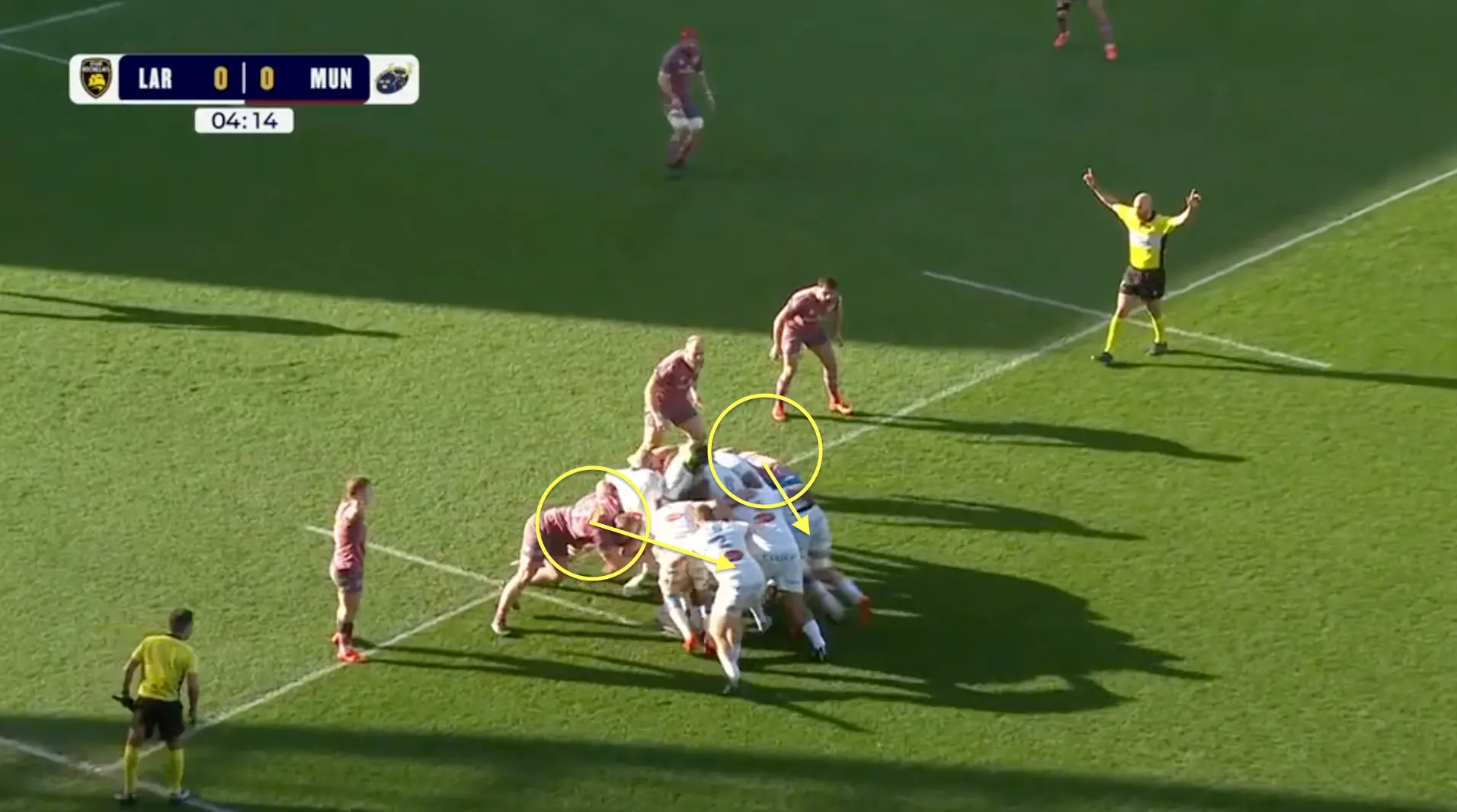
Look at these body angles from Kleyn, in particular. Jager started the counter-shove with the work on Wardi, but Kleyn took all that pressure and dug right into that maul “engine” to take all the power away from guys like Skelton, Atonio and Aldritt.
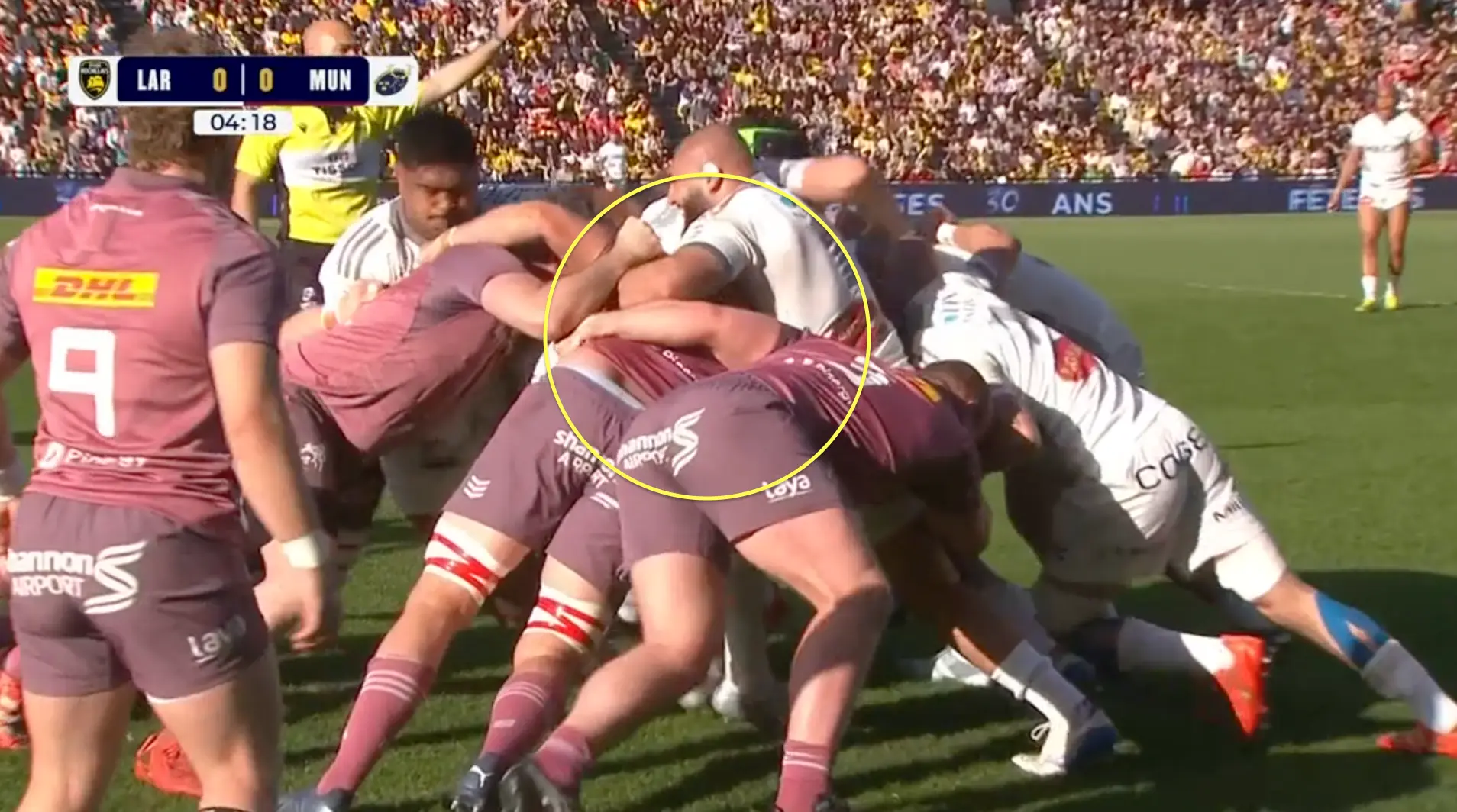
That allowed us to stuff them five vs eight for the initial part of the maul. They got some outside momentum after the first stop but we shut that down with Loughman, Barron, and Hodnett covering. From there, we got to showcase our own power.
Look at Coombes sending Bourgarit back over the maul on the first break. Then O’Mahony and Hodnett denying Wardi, before Hodnett beats everyone to their feet and wins the turnover.
Immediately, that told you we were on it when it came to La Rochelle’s threats. We knew where they were dangerous, how they wanted to use that threat and how we might be able to shut it down. Even then, Hodnett’s breakdown steal here only hammered home the message we wanted to send on phase play – every ruck is a danger, stay on your feet, burn more calories.
The next clip is from the lineout that game from this penalty. We took one ruck up the middle to allow Crowley to kick from a central position at a backfield defender in that middle-long range. The idea here was to either force a direct contestable under the high ball at best or, at worst, give a defensive platform where we could pin La Rochelle around their own 22 and hijack their high pass per carry game that teams have been attacking all season long.
Watch the whole clip through and I’ll pick out a few bits – see if you’re seeing the same thing that I am.
First things first, look at the space that Munster are giving behind the ruck. We want no easy offside penalties here and only conceded them in the aftermath of a La Rochelle break, which we were determined not to give up.
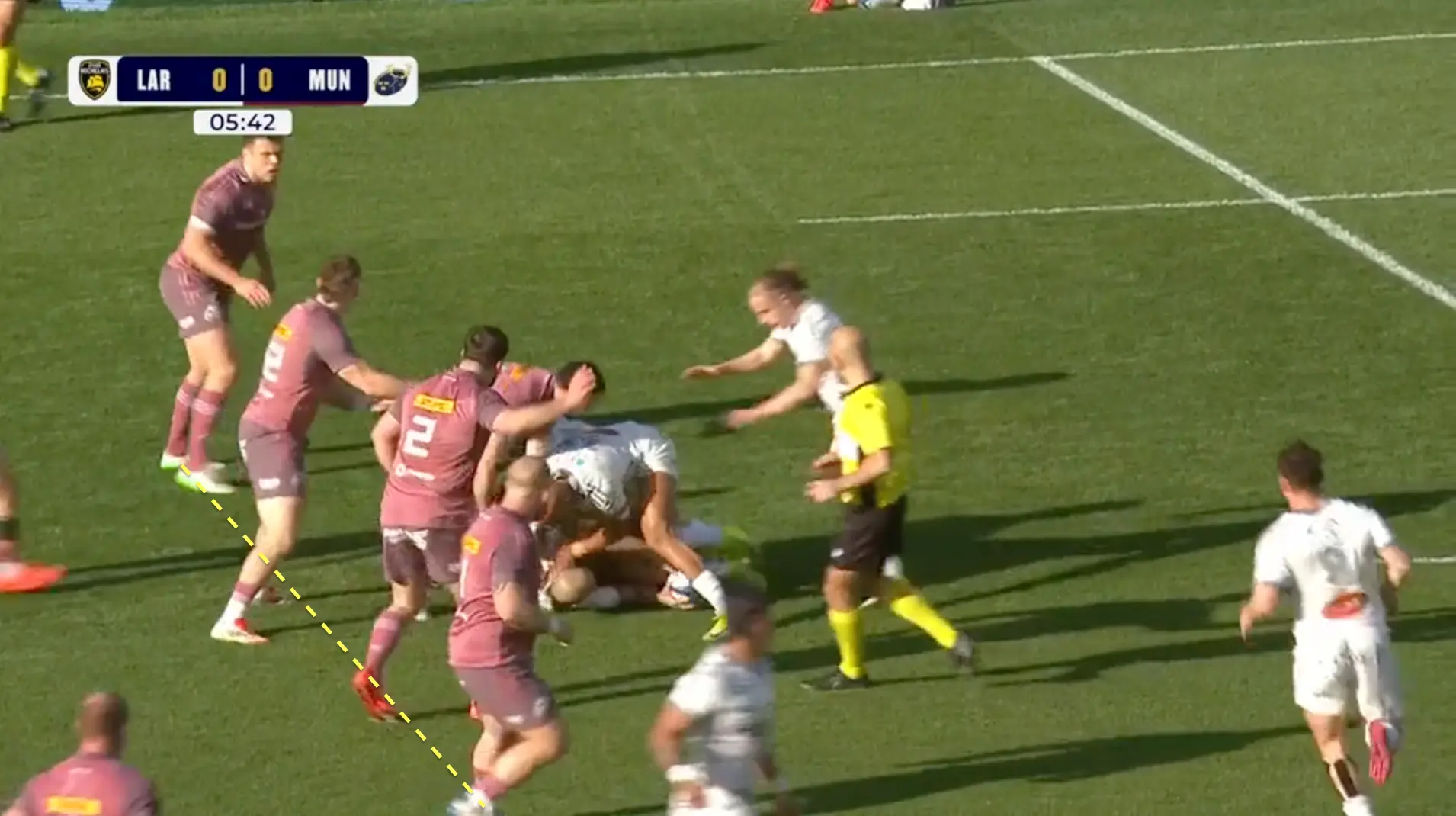
This positioning takes away some of your line speed – from a practical perspective, you’re a footstep further away from the ball handler – but we had no intention of blitzing La Rochelle. They are a high Pass Per Carry team who we know over the last few weeks have tried to pass around teams who off-ball them through kick pressure and a blitz defence.
We didn’t want to give them those corners to work around.
Our defensive line stepped up to the line of the ball carrier but tapered it. This wasn’t a hyper aggressive outside in blitz – we wanted to leave plenty of scope for the potential pass out of the screen to get covered.
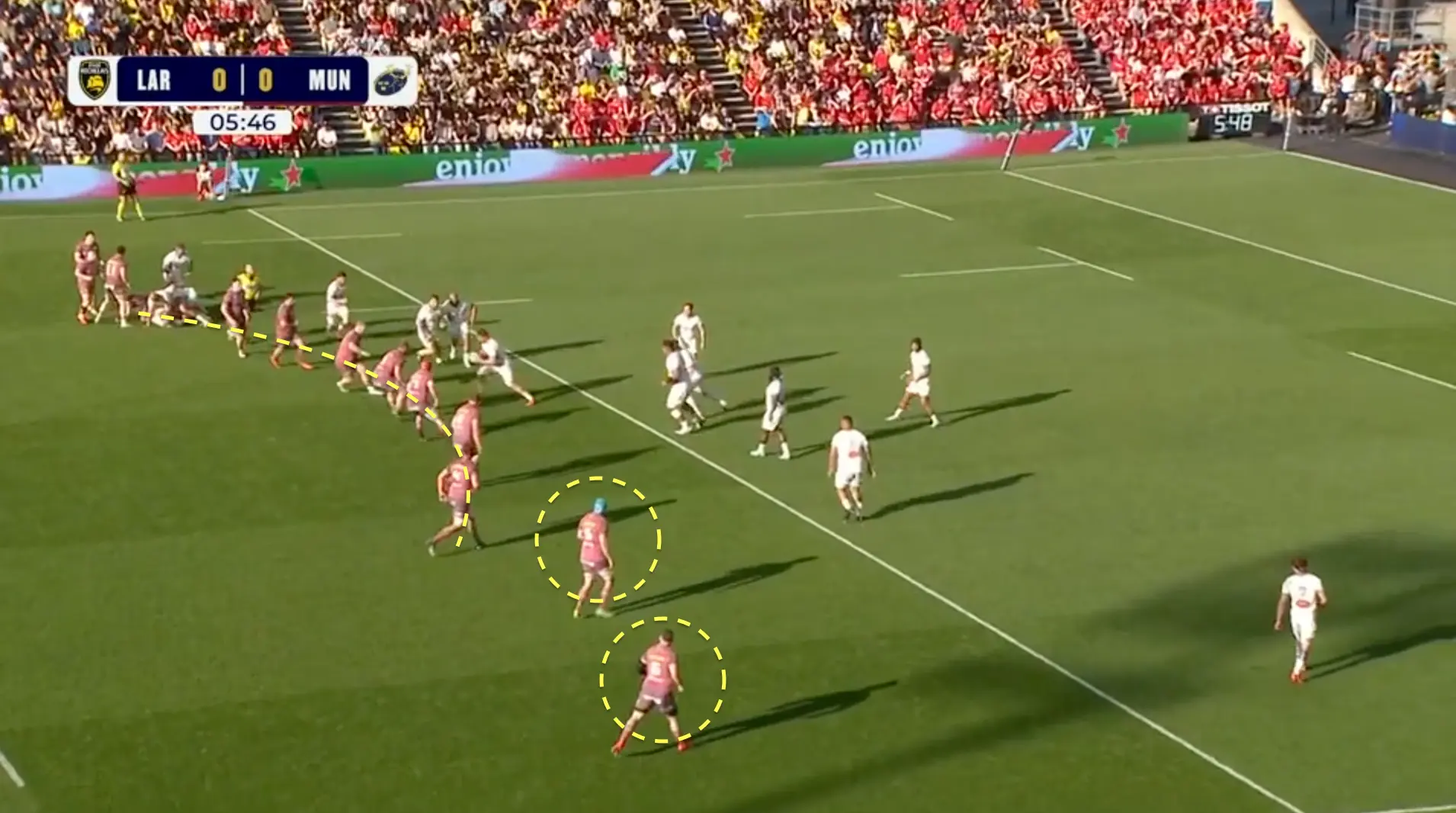
Once the tackle was made – almost always a two man hit – the secondary defender had to either jackal or counter-ruck to draw La Rochelle’s forwards to the breakdown. Actually chasing the jackal turnover wasn’t the intent here, even though it might look like it was. It was to sell the idea that every ruck would be contested, so they couldn’t be left under-resourced.
We stole plenty of ball regardless, but the threat of it was almost as useful.
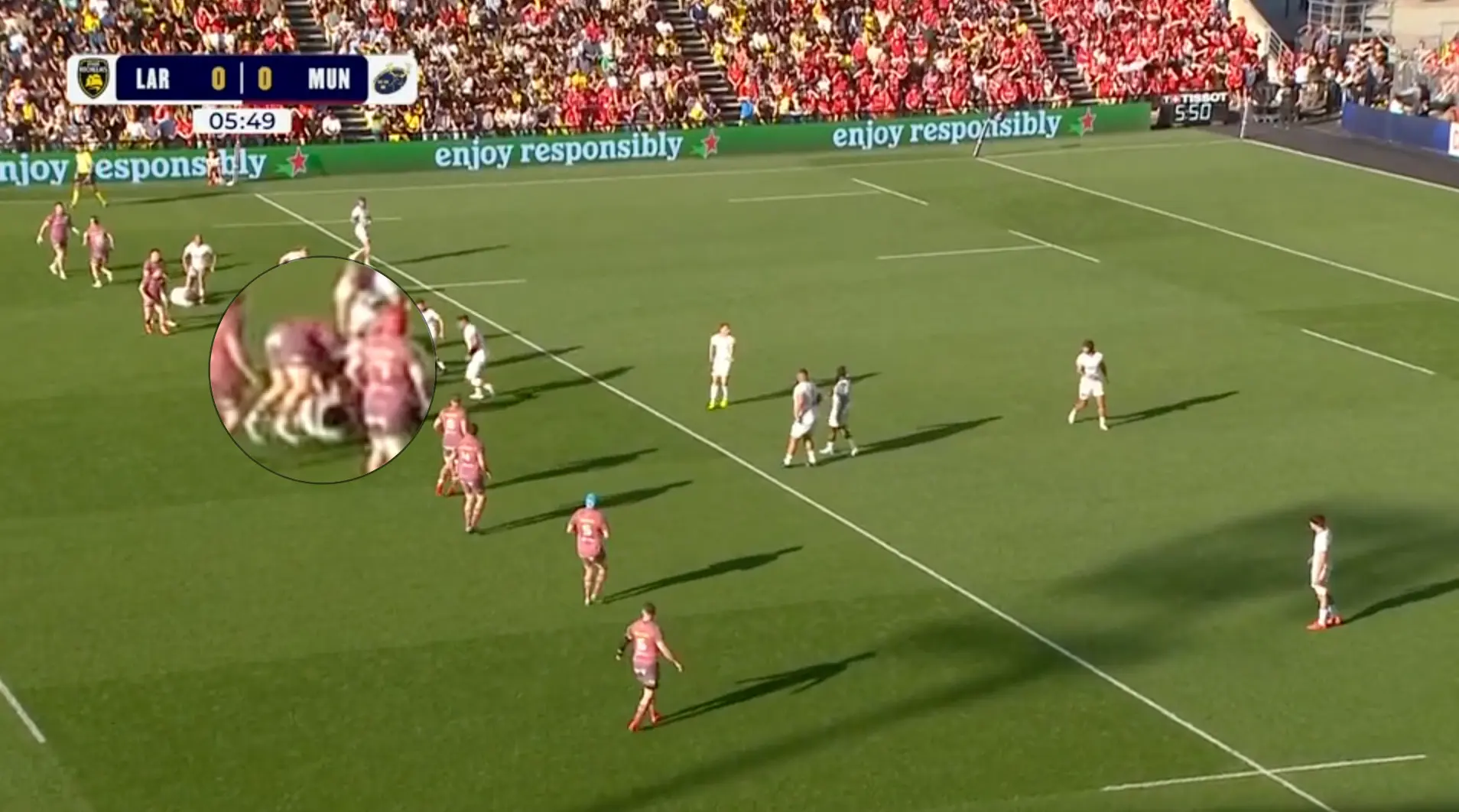
This concept left La Rochelle with no other option but to kick the ball over the top as they had run out of numbers trying to resource the previous two rucks. When West takes this ball, he’s got huge pressure on his line, which has already flattened out in advance of a chip over the top.
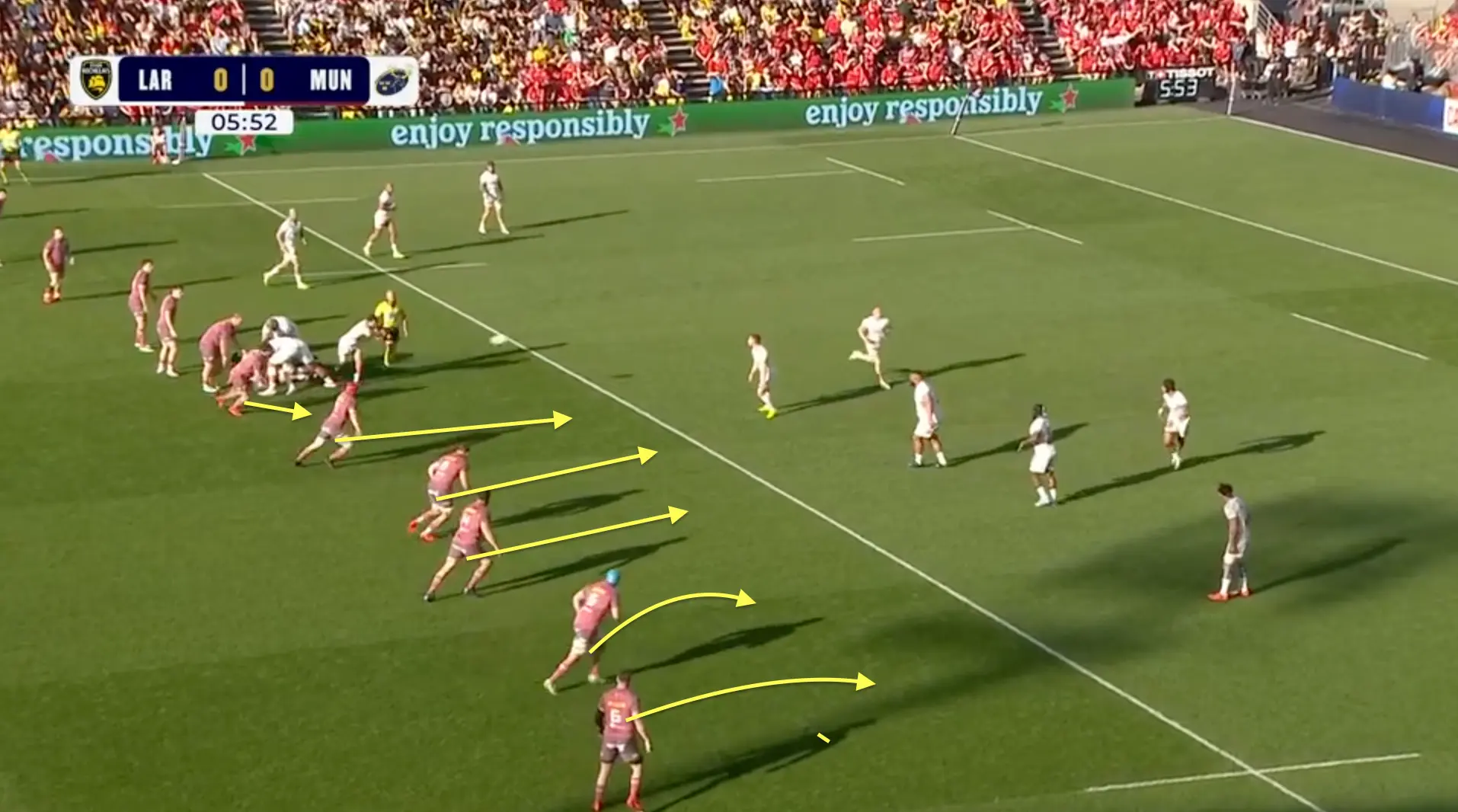
Nash takes the bouncing ball in the back field, Casey knows that the back three on that side have had to chase the kick so he does the smart thing; pops the ball back down into the space he knows they can’t be covering.
This is a big defensive win for Munster, who got La Rochelle burning rucks deep in their own half for no territorial gain.
The final defensive set showcased these concepts in full. La Rochelle had a maul feint that we had to defend fully, but we adjusted really well off the break. Look at the concepts we discussed – keeping the gap to avoid easy offsides, two man tackles with one acting as bait to draw numbers off their feet and imposing our physicality on the opposition.
Look at Kendellen’s back-to-back chop tackles on bigger men. Look at Coombes getting a one-on-one stop with Skelton. Look at Scannell nailing a picture perfect tackle on Atonio, who La Rochelle somehow finagled back onto the field for the end-game.
We packed our primary line quite narrow to keep Aldritt, Skelton and Atonio from busting through a one on one, but we knew too that we’d have to back our defence from the previous ruck to scramble like lunatics to cover that narrow spacing.
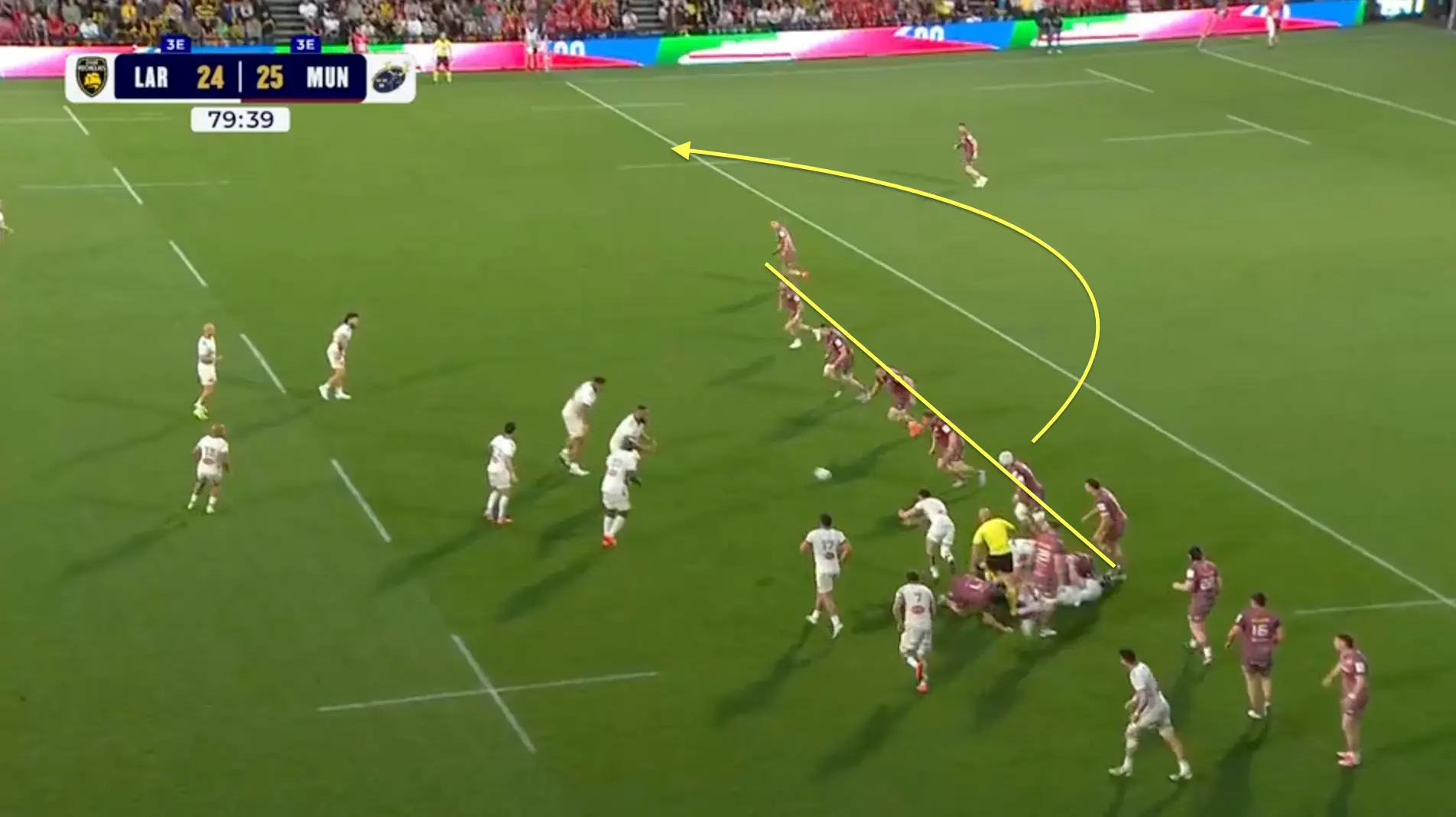
Right before the match winning penalty, we see that defensive fold in action with Beirne and Murray – two key players in the turnover – lurking on the openside of the ruck.
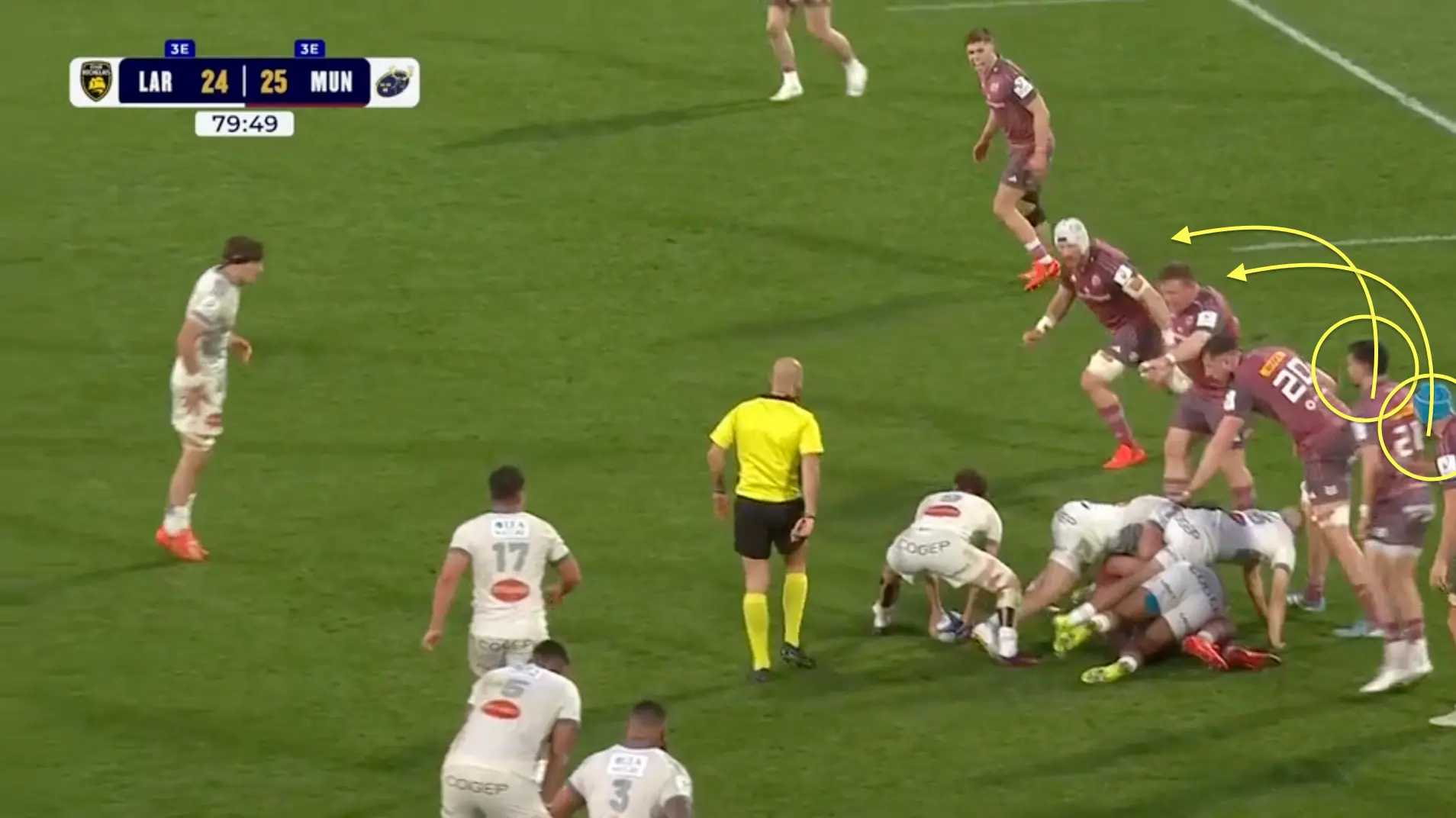
This is where Fineen Wycherley’s completely legal and monster stop won the game for Munster. Jegou tried to buy a penalty with his carry – there’s no way for Wycherley to tackle him legally without having one arm over at least one of Jegou’s shoulders – but Fineen got such a strong brace on him that Cancoriet had to assist.
That meant two La Rochelle forwards were burned by one Munster forward.
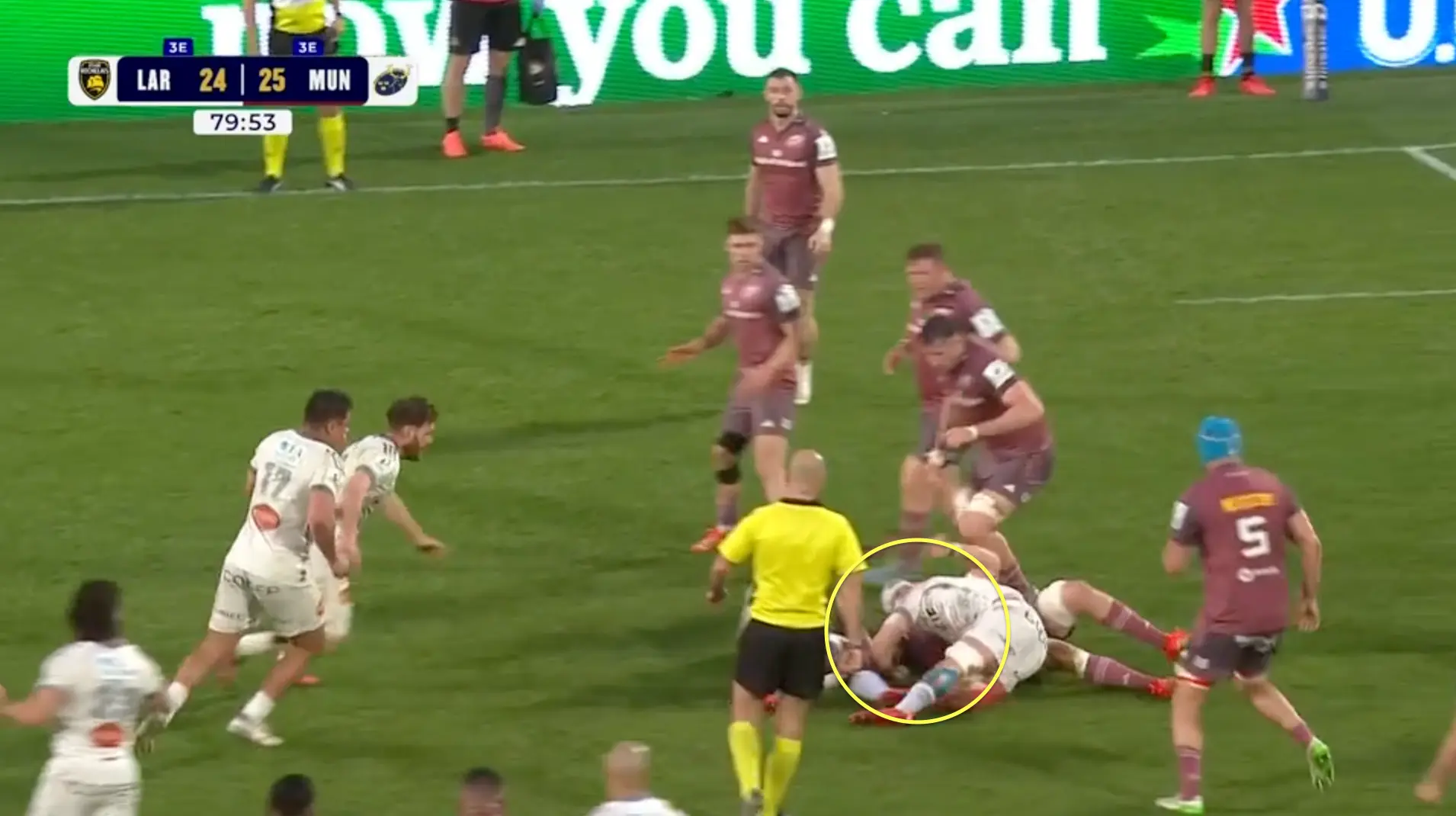
Munster contested the ball on the floor; Jegou rolled away to stop it.
Penalty.
Game over.
And it was fully deserved.
This wasn’t some smash and grab job against an ambushed opponent. Sure, we rode our luck at times, as you have to against a side with La Rochelle’s quality and power. For every ounce of bravery and heart Munster showed, there was an equal share of tactical intelligence and discipline. Whatever about La Rochelle’s recent form, you won’t beat them by showing up sloppy and gun-slinging.
Our strategy: We had to defend tightly, disrupt their set pieces, kick strategically, and counter-attack when opportunities arose.
We knew we could do it. We believed we had the firepower in the room to make it happen, and we did.
Munster know that, in the cold light of day, all this win does in reality is give you access to an even more difficult knockout game but it means more than that too. This season has been the very definition of up and down. If you told me after that loss to Zebre that we’d beat La Rochelle away from home in a European knockout game in six months’ time, I’d have had a tough time believing you.
If you told me that we’d do that after sacking the then head coach in October, I’d have an even tougher time.
But that’s what Munster has always been about.
Believe, even when it doesn’t make sense.
Believe, even when nobody else does.
Who knows where this season will go from here? We’re still not fully safe in the URC and Bordeaux will be raging hot favourites this weekend coming. Nothing is certain.
But what this win has done is put Munster into Europe’s head once again. The thing they thought was dead and gone is walking the roads once again.
This Munster Zombie is hard to put down, harder to kill, and travels in hordes.
| Players | Rating |
|---|---|
| 1. Jeremy Loughman | ★★★ |
| 2. Diarmuid Barron | ★★★★★ |
| 3. Oli Jager | ★★★★★ |
| 4. Jean Kleyn | ★★★★★ |
| 5. Tadhg Beirne | ★★★★★ |
| 6. Peter O'Mahony | ★★★★ |
| 7. John Hodnett | ★★★★★ |
| 8. Gavin Coombes | ★★★★★ |
| 9. Craig Casey | ★★★★★ |
| 10. Jack Crowley | ★★★★★ |
| 11. Andrew Smith | ★★★★ |
| 12. Sean O'Brien | ★★★★ |
| 13. Tom Farrell | ★★★★ |
| 14. Calvin Nash | ★★★★★ |
| 15. Thaakir Abrahams | ★★★★★ |
| 16. Niall Scannell | ★★★ |
| 17. Josh Wycherley | ★★★★★ |
| 18. Stephen Archer | ★★★ |
| 19. Fineen Wycherley | ★★★★ |
| 20. Tom Ahern | ★★★★ |
| 21. Conor Murray | ★★★★ |
| 22. Rory Scannell | ★★★ |
| 23. Alex Kendellen | ★★★★ |
